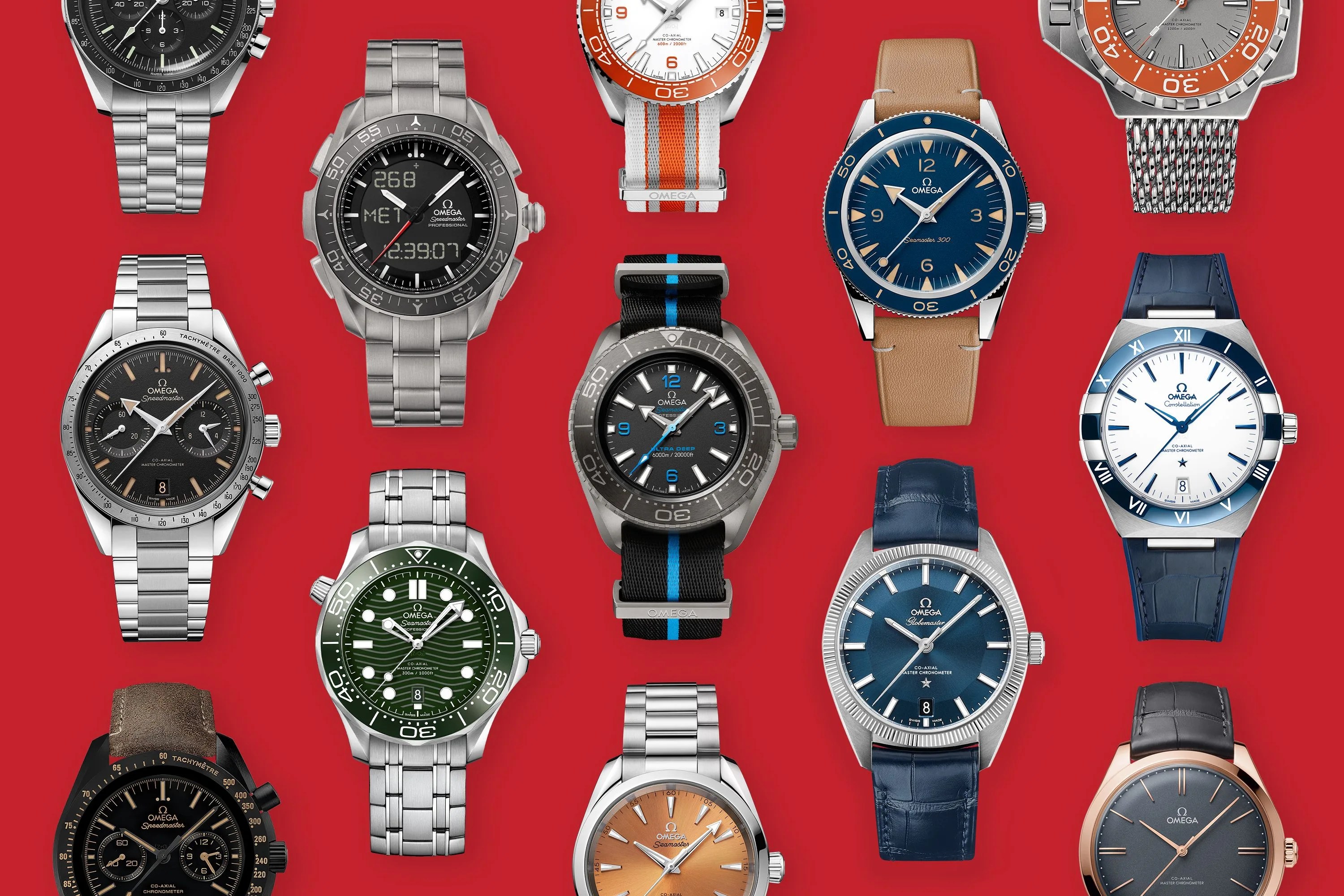
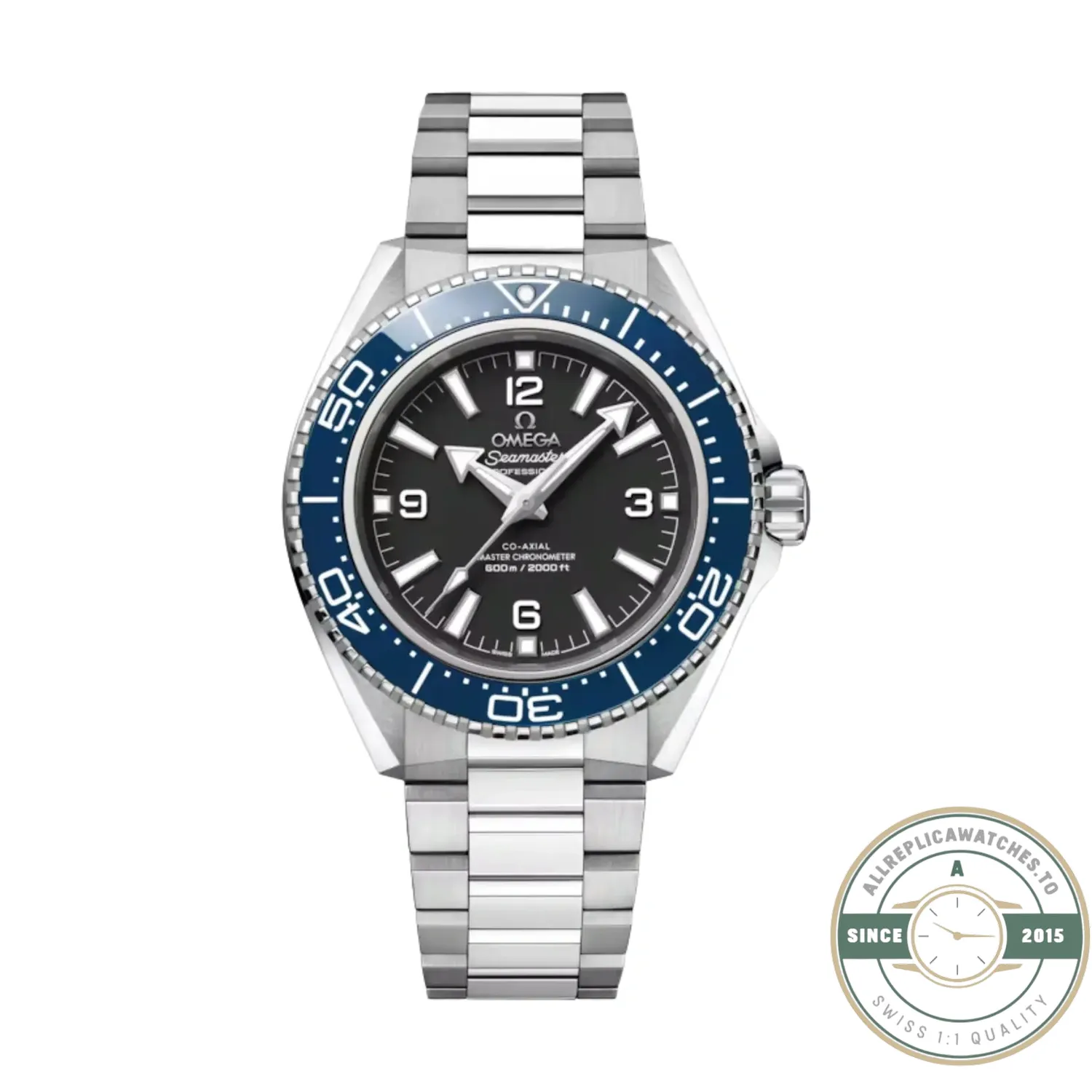
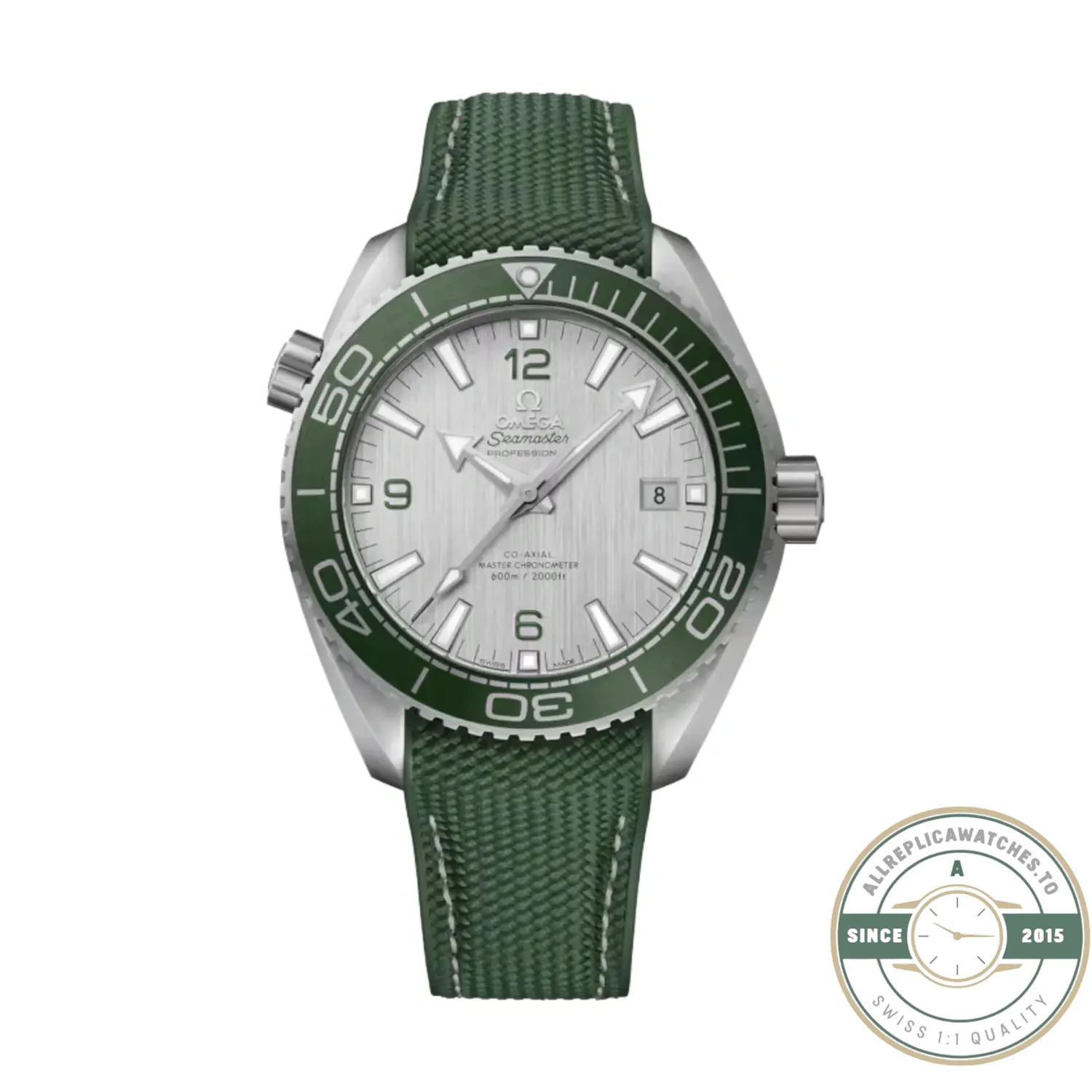
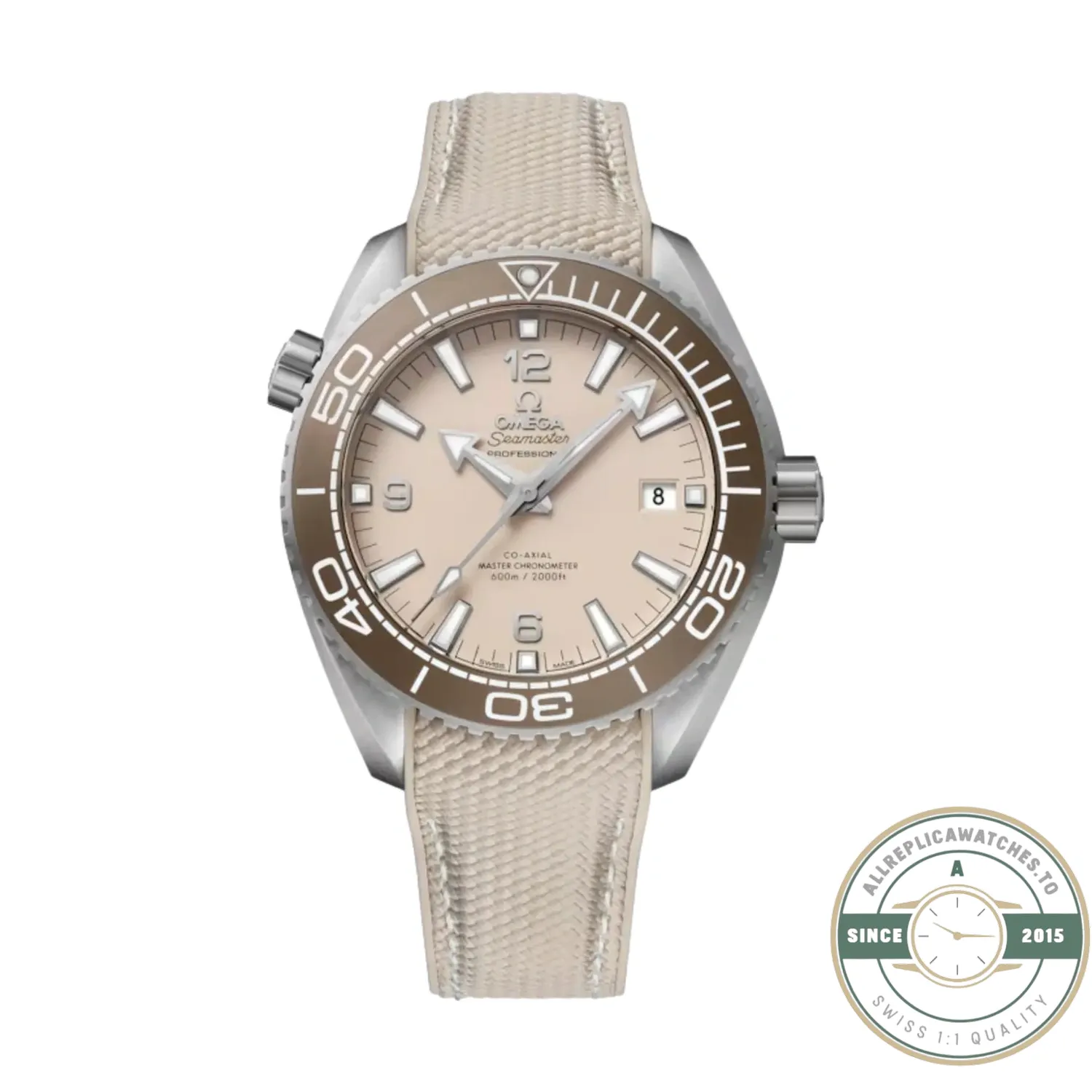
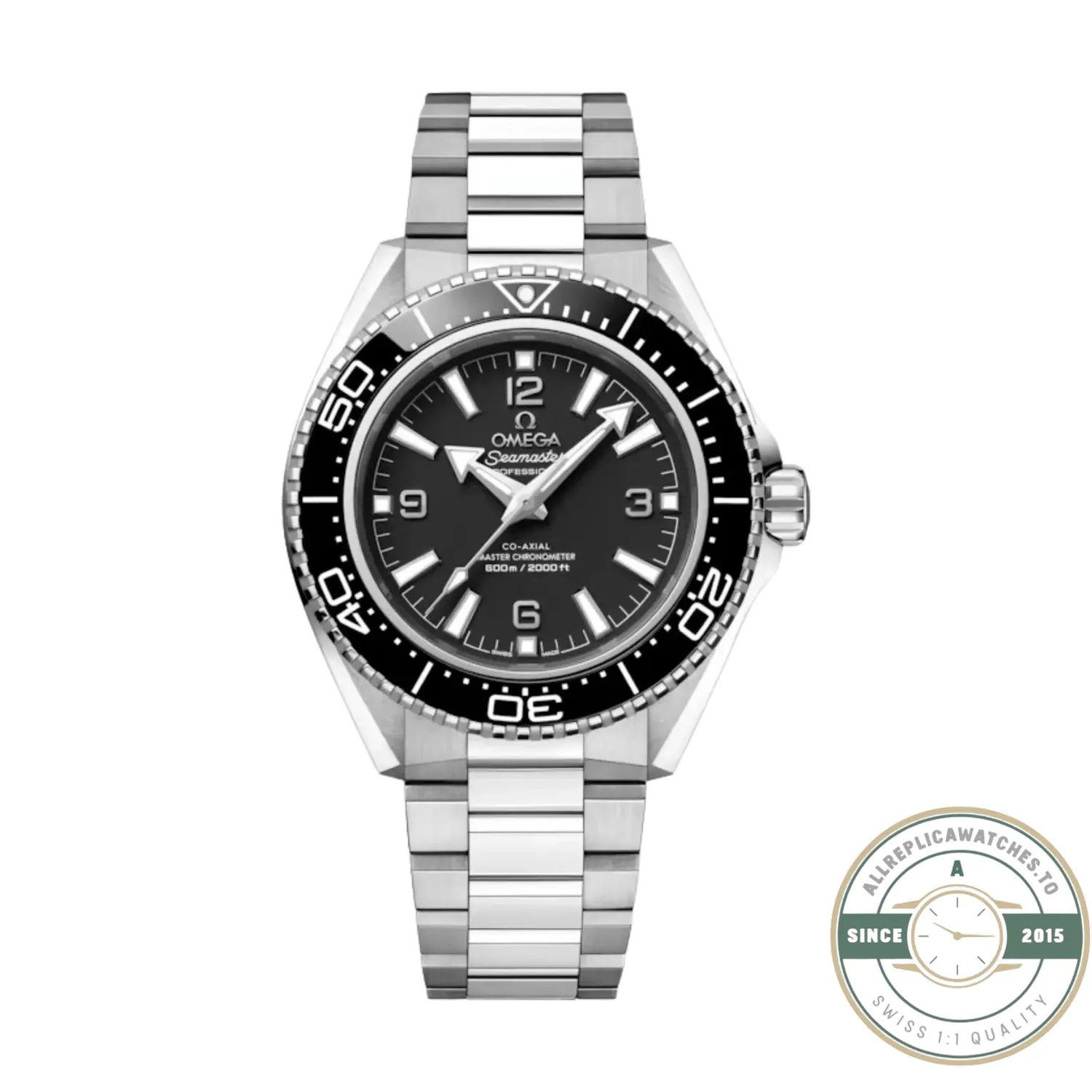
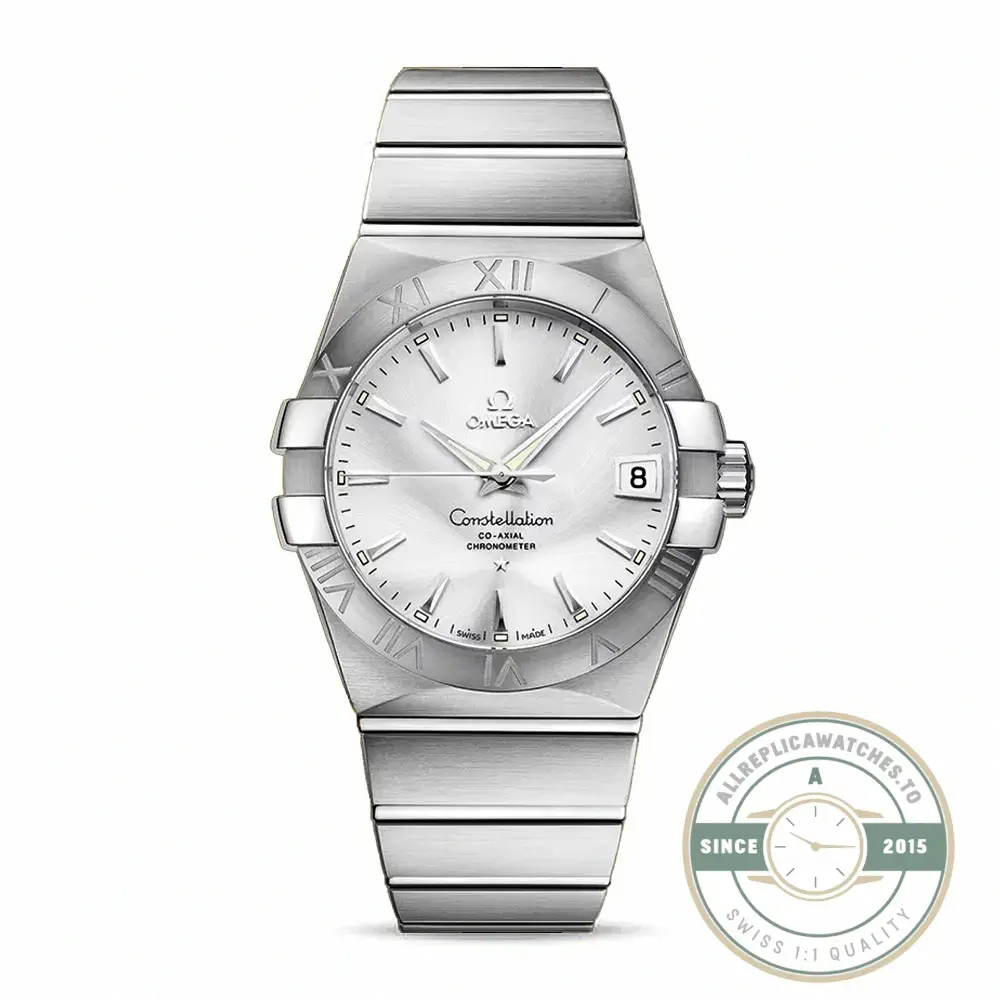
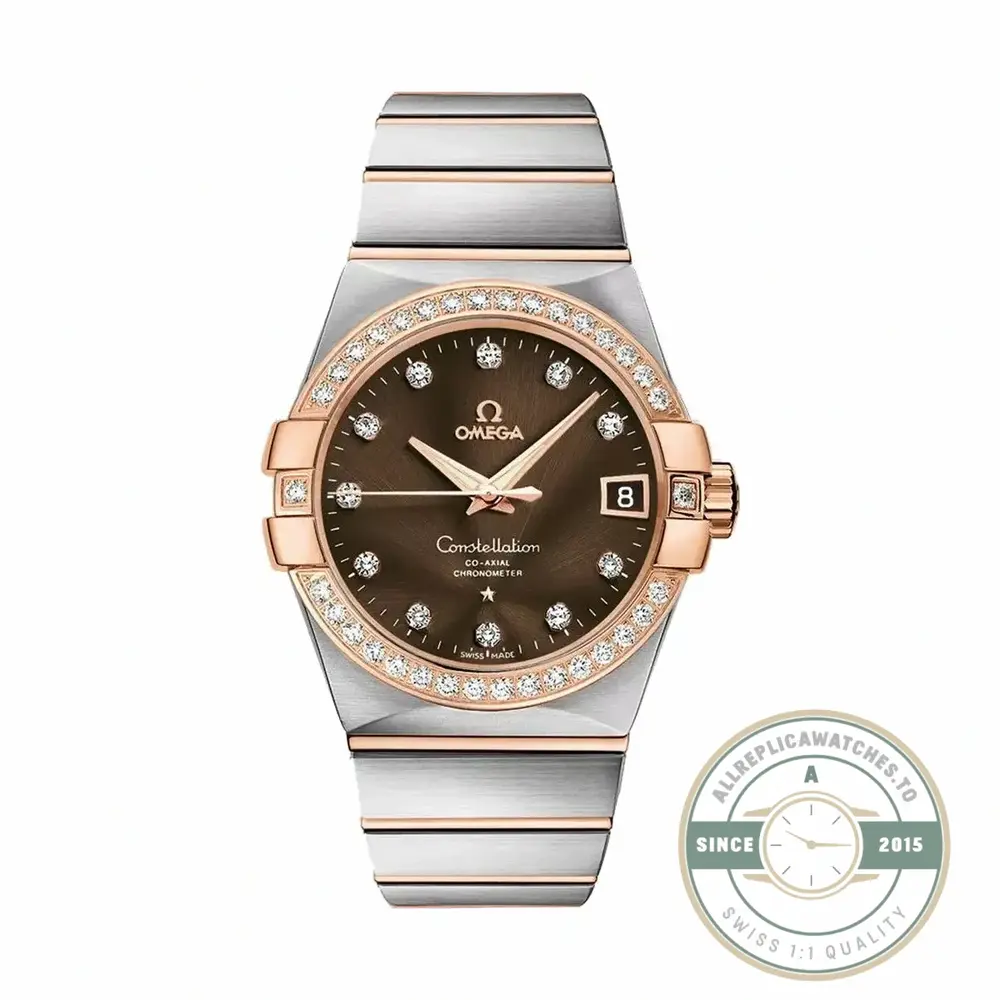
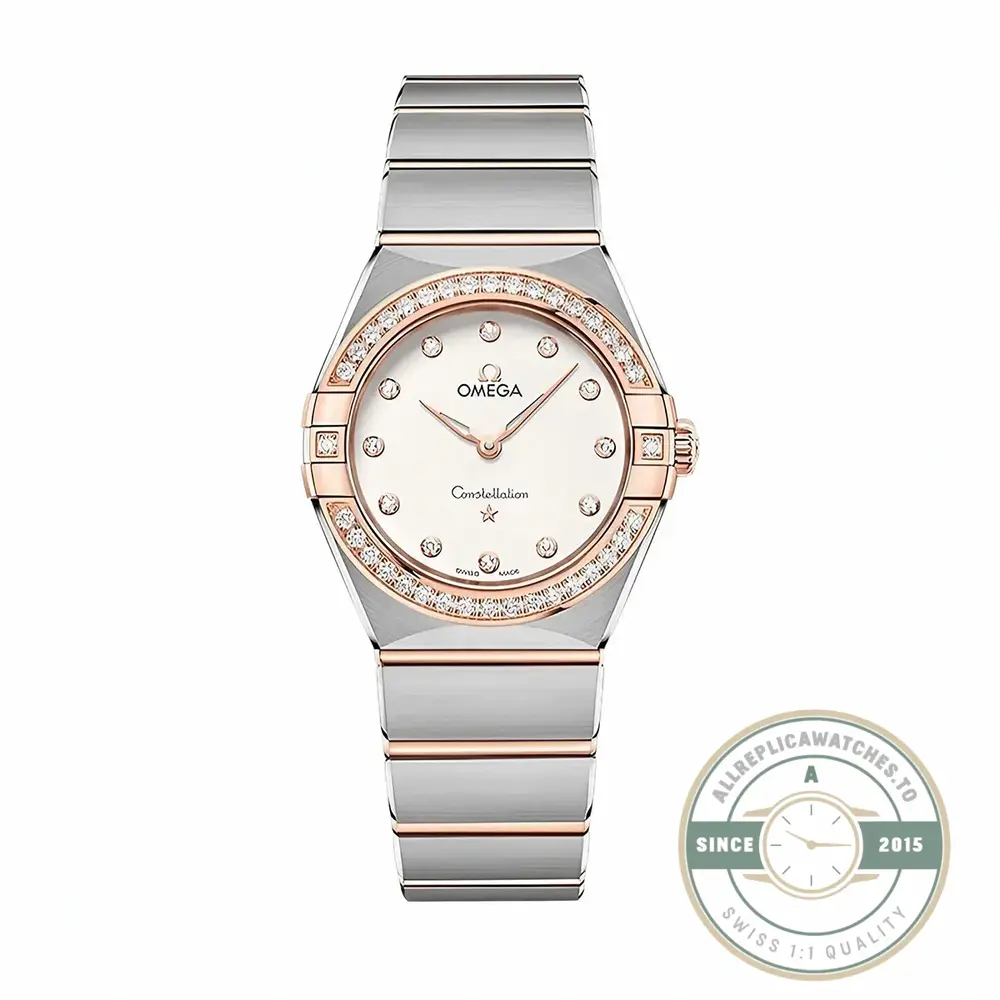
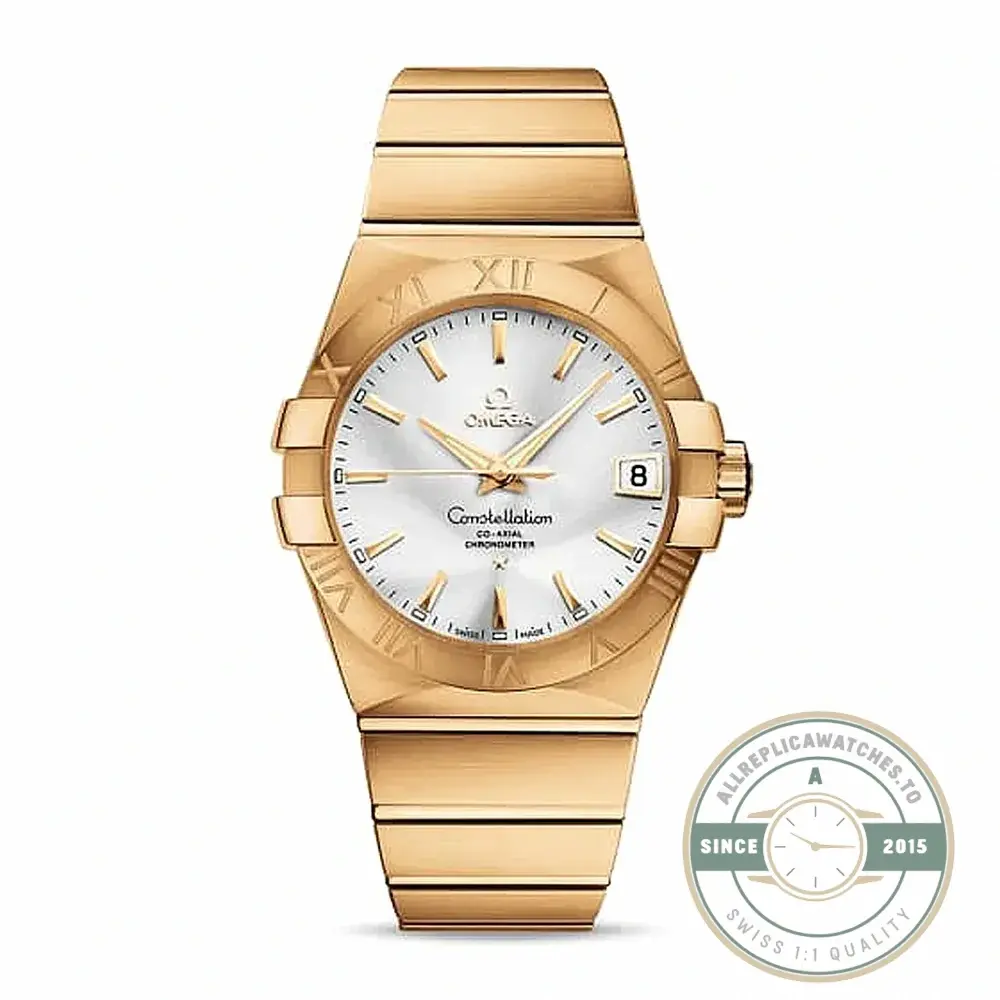
Best Omega Super Clone — Every Collection Ranked, VSF Dominance Explained, and Your Complete 2026 Buying Roadmap
Last updated: March 2026 • 24-minute read • 50+ Omega super clones ranked across all collections
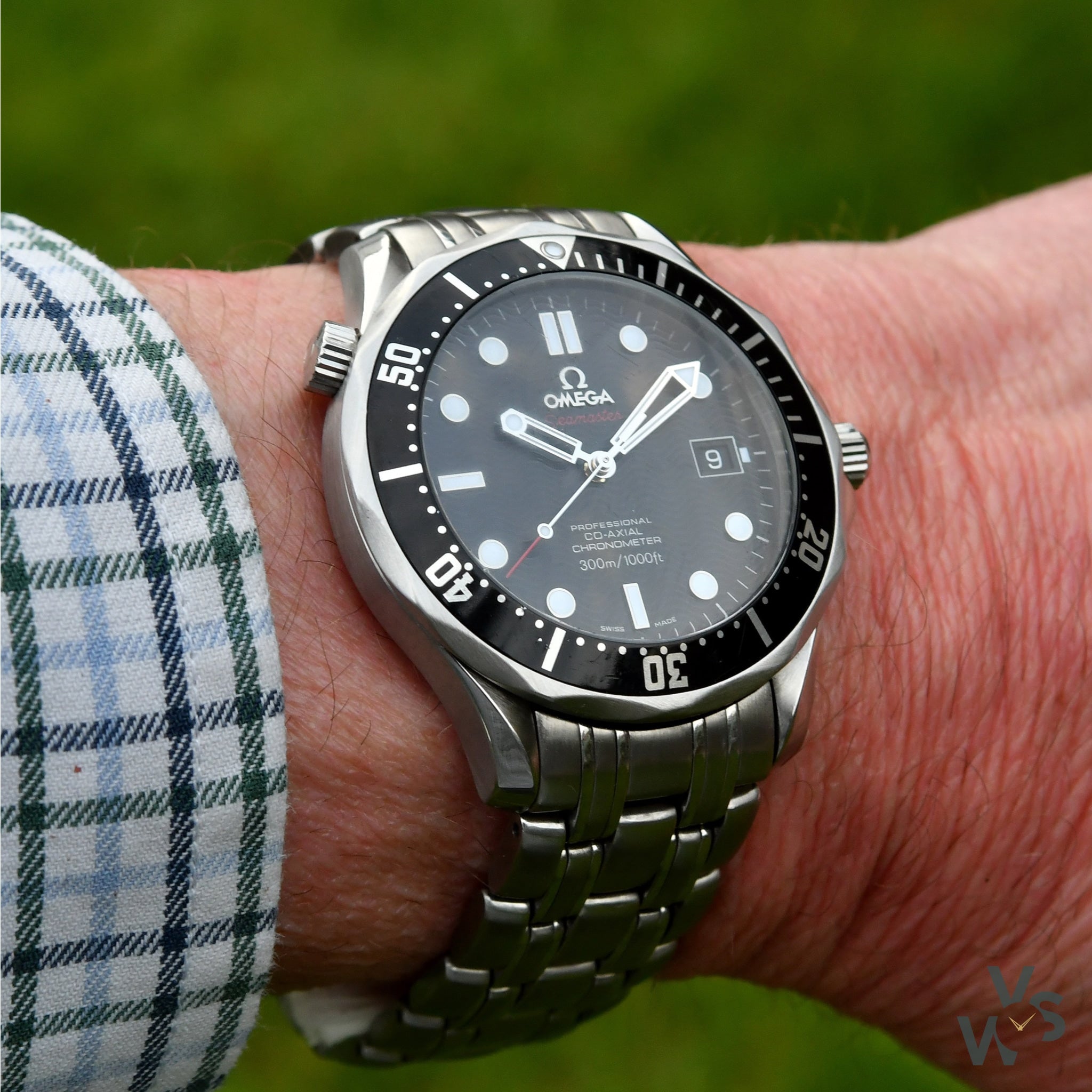
Omega occupies a unique position in the super clone hierarchy. While Rolex gets the most attention and Patek Philippe gets the most reverence, Omega produces what many experienced collectors consider the single best super clone in the industry: the VSF Seamaster Diver 300M. At approximately 95% accuracy versus genuine, with a clone movement, real ceramic, and finishing that requires magnification to fault — the VSF Diver 300M is the benchmark. But Omega’s super clone story extends far beyond one watch. The Seamaster family (Diver 300M, Planet Ocean, Aqua Terra), the Speedmaster, and the Constellation each offer different value propositions. This guide ranks every Omega super clone worth buying, explains why VSF dominates, compares Omega to Rolex in the super clone context, and gives you a clear purchasing roadmap based on your budget, wrist size, and style.
Omega is the second most popular brand in the super clone market after Rolex, but it holds a distinction that Rolex doesn’t: the single most accurate super clone ever produced. The VSF Seamaster Diver 300M achieves approximately 95% accuracy against genuine — higher than any Clean Factory Rolex, any 3KF Patek, or any ZF Audemars Piguet. This isn’t because VSF is universally better than those factories; it’s because the Seamaster Diver 300M’s design characteristics (ceramic dial, ceramic bezel, ceramic caseback) play to VSF’s manufacturing strengths.
Omega’s super clone ecosystem has clear tiers. The top tier is VSF’s Seamaster collection — the Diver 300M, Aqua Terra, and Planet Ocean — which ranges from 90-95% accuracy with clone movements. The middle tier is OMF’s Speedmaster at 85-88% with modified automatic movements. The lower tier includes Constellation replicas from TW and SBF at 82-85%. Below that, budget factories produce watches at 70-75% that I don’t recommend. Which tier an Omega replica watch comes from matters more than which model you choose.
What makes Omega special as a super clone brand: the genuine retail prices are lower than Rolex, Patek, or AP (Seamaster Diver 300M is ~$5,400 vs Submariner at ~$9,100), which means fewer people will question why you’re wearing one. A Patek Nautilus on a 22-year-old raises eyebrows. An Omega Seamaster on a 22-year-old is perfectly normal. This “believability factor” is a real consideration when choosing a super clone brand.
The Master Ranking — Every Model
#
Model
Factory
Movement
Accuracy
Buy?
1
Seamaster Diver 300M Blue
VSF
VS8800
95%
MUST BUY
2
Seamaster Diver 300M Black
VSF
VS8800
95%
Top Tier
3
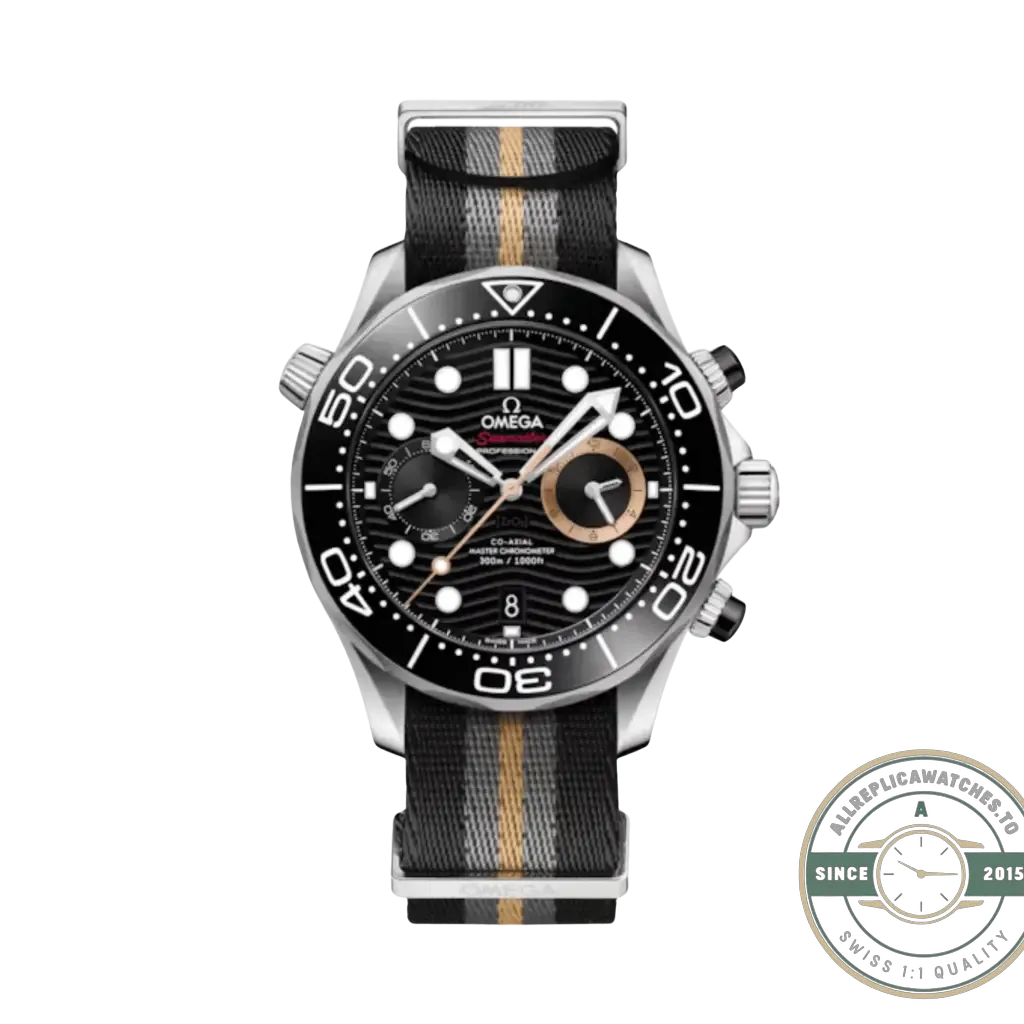
Diver 300M No Time to Die
VSF
VS8806
93%
Bond Pick
4
Aqua Terra 150M Blue
VSF
VS8900
92%
Dress-Dive
5
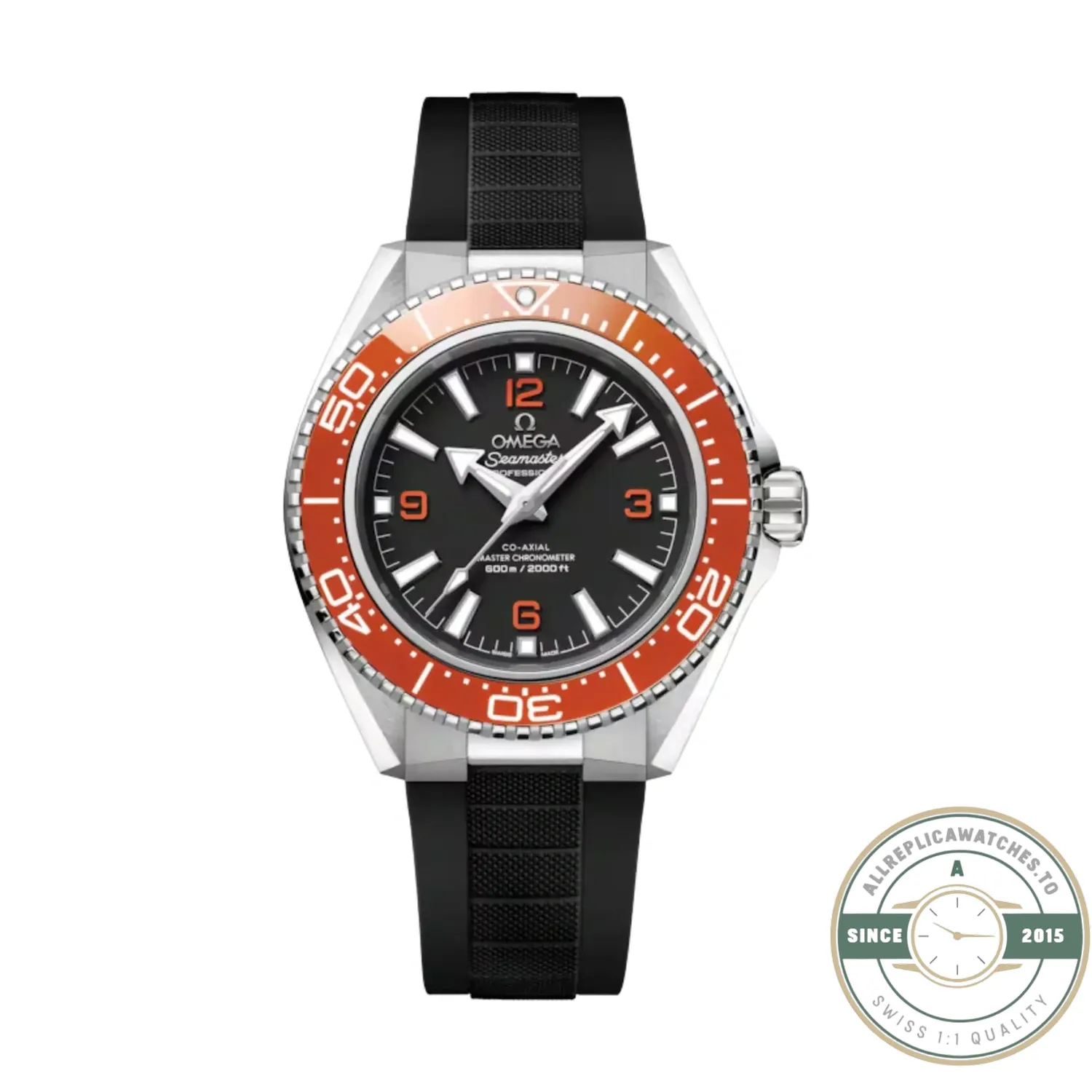
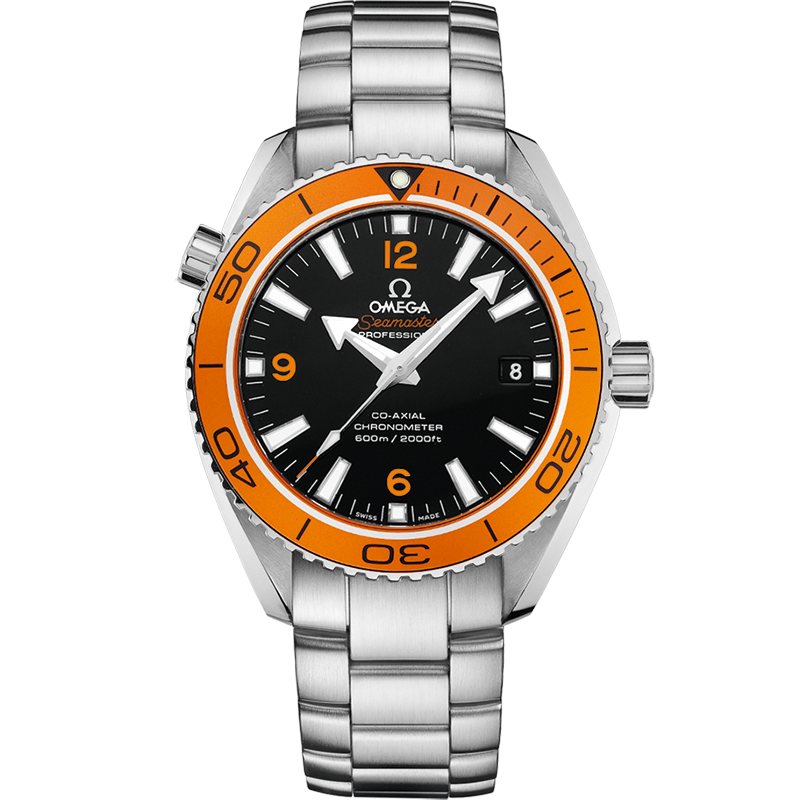
Planet Ocean 600M Orange
VSF
VS8900
90%
Statement
6
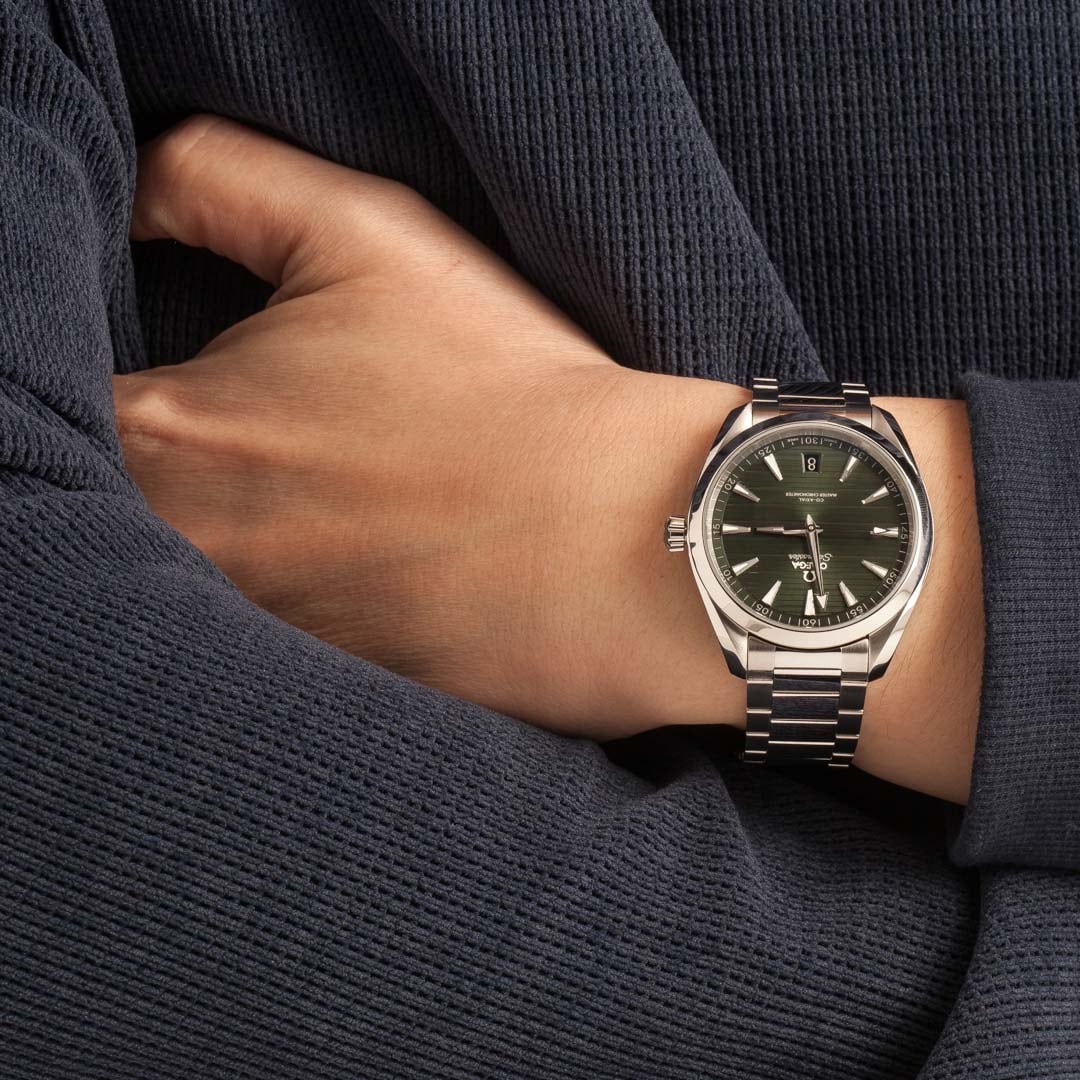
Diver 300M Green
VSF
VS8800
90%
Trendy
7
Seamaster 300 Heritage
SBF
Miyota Dec.
88%
Vintage Lover
8
Speedmaster Moonwatch
OMF
Asian 7750
88%
Legend
9
Constellation Manhattan
TW
Miyota Dec.
85%
Dress Watch
10
Speedmaster Snoopy
OMF/OS
Asian 7750
85%
Conversation
VSF — How They Became the King
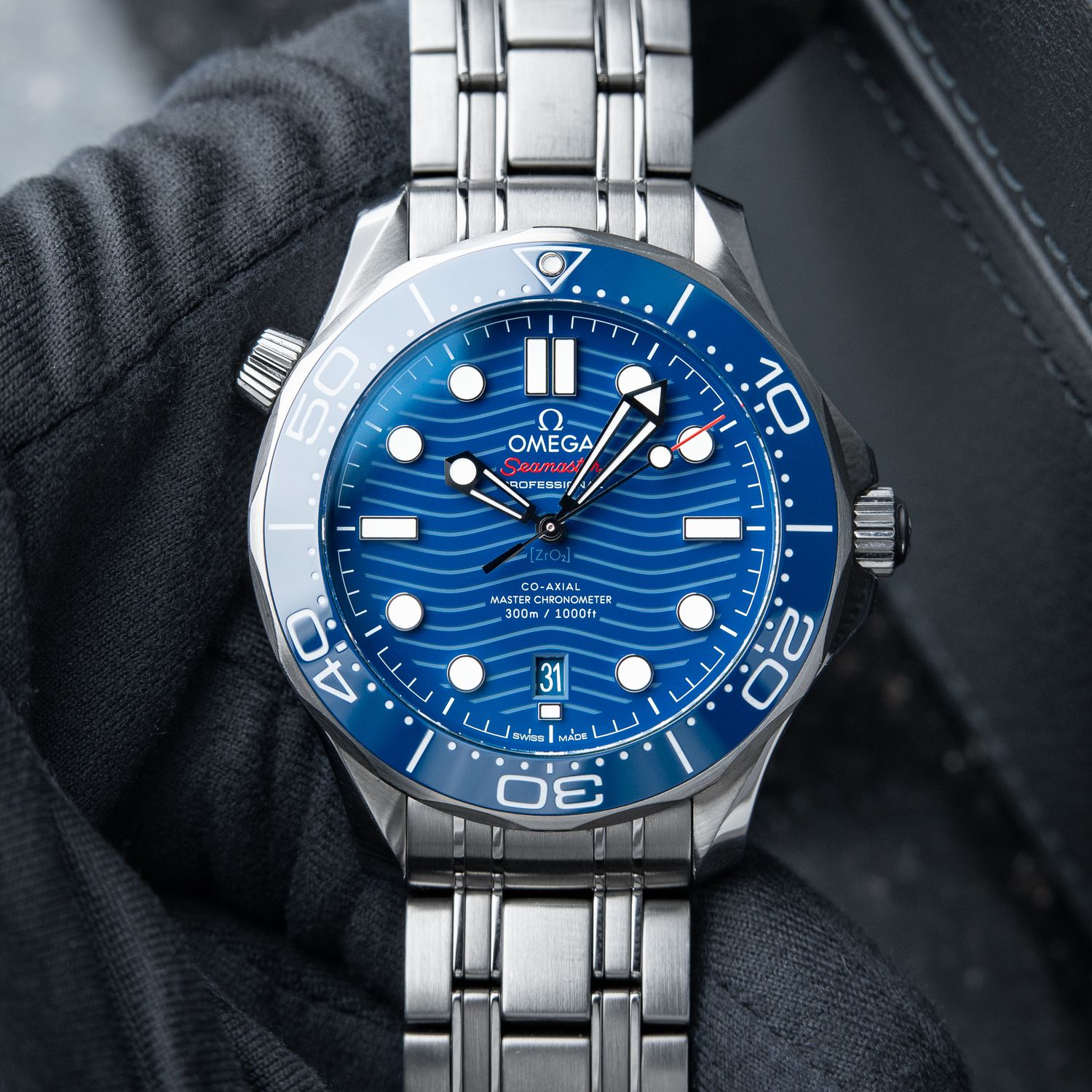
Omega Seamaster Diver 300M collection showing blue black and green dials
VS Factory’s dominance of the Omega super clone market isn’t accidental — it’s the result of strategic investment decisions made years ago. While most factories chose to focus on Rolex (the highest-volume brand), VSF identified a gap: no factory was producing Omega replicas with clone movements. Every Omega replica on the market used decorated Miyota or Asian movements that looked nothing like the genuine Omega calibers when viewed through the caseback.
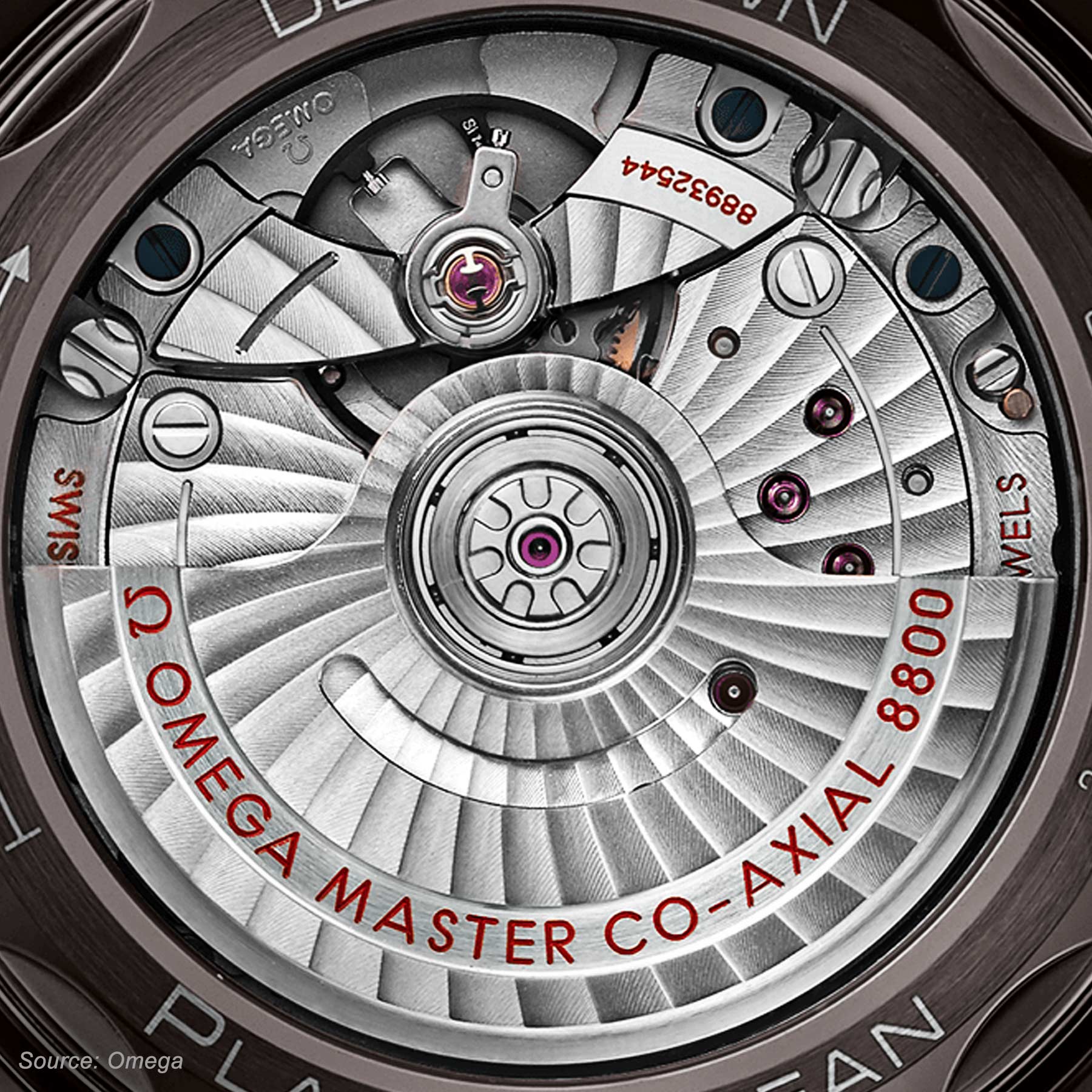
VSF invested in developing the VS8800 — a clone of Omega’s Co-Axial Cal. 8800 that replicates the plate layout, bridge design, and rotor appearance. This was expensive (clone movement development costs millions of yuan in tooling alone) but created a competitive moat that no other factory has crossed. Today, VSF is the only factory producing clone Omega movements, which is why every serious Omega buyer defaults to VSF.
The second investment was in ceramic production. VSF developed in-house ceramic capabilities for bezels, dials, and casebacks — all genuine ceramic (ZrO2), not coatings. This means VSF’s Seamaster has the correct ceramic weight, hardness, color, and texture. Combined with the clone movement, these two investments — ceramic and movement — give VSF a lead that other factories would need years and significant capital to replicate. That ceramic is also the first place a cheaper replica Omega Seamaster gives itself away.
Market Reality: VSF’s Omega products typically cost 15-25% more than the next-best factory. This premium is justified. The gap between a VSF Diver 300M (95%) and an ORF Diver 300M (85%) is enormous — it’s the difference between “indistinguishable on the wrist” and “looks right from across the room.” Always buy VSF for Seamaster. The premium pays for itself in accuracy and reliability.
Budget Guide — What Your Money Gets
Budget Tier
Best Omega Option
Accuracy
Notes
Under $200
Don’t buy Omega at this tier
60-70%
DHGate quality, not worth it
$200-350
ORF Diver 300M or MKS Seamaster
80-85%
Decent casual wear, Miyota movement
$350-500
VSF Diver 300M or Aqua Terra
92-95%
Sweet spot — best value in the industry
$500+
VSF Planet Ocean, Speedmaster Snoopy
85-90%
Specialty pieces, complications
Omega vs Rolex — Super Clone Edition
In the genuine market, Rolex vs Omega is a settled debate for most people: Rolex has more brand cachet, higher resale, and stronger recognition. But in the super clone market, the comparison flips in interesting ways.
Factor
Omega (VSF)
Rolex (Clean/BT)
Best Accuracy
95% (Diver 300M)
93% (Submariner)
Brand Recognition
High
Highest
Believability
Higher — less scrutiny
Lower — everyone looks
Design Variety
4+ collections
Mostly sport models
Movement (Clone)
VS8800 — excellent
VR3135/3235 — excellent
Genuine Retail Price
~$5,400 (accessible)
~$9,100 (questions asked)
The “believability factor” deserves emphasis. Rolex watches — especially Submariners and Daytonas — attract attention. People look. People form opinions. An Omega Seamaster is a successful professional’s watch that nobody questions. For some buyers, this psychological comfort is worth more than Rolex’s brand cachet. That is the quiet argument for replica Omega watches as daily wearers rather than the obvious Rolex pick.
→ Dress watch: Do you want sporty-dress or pure dress?
→ Sporty-dress:VSF Aqua Terra (92% accuracy)
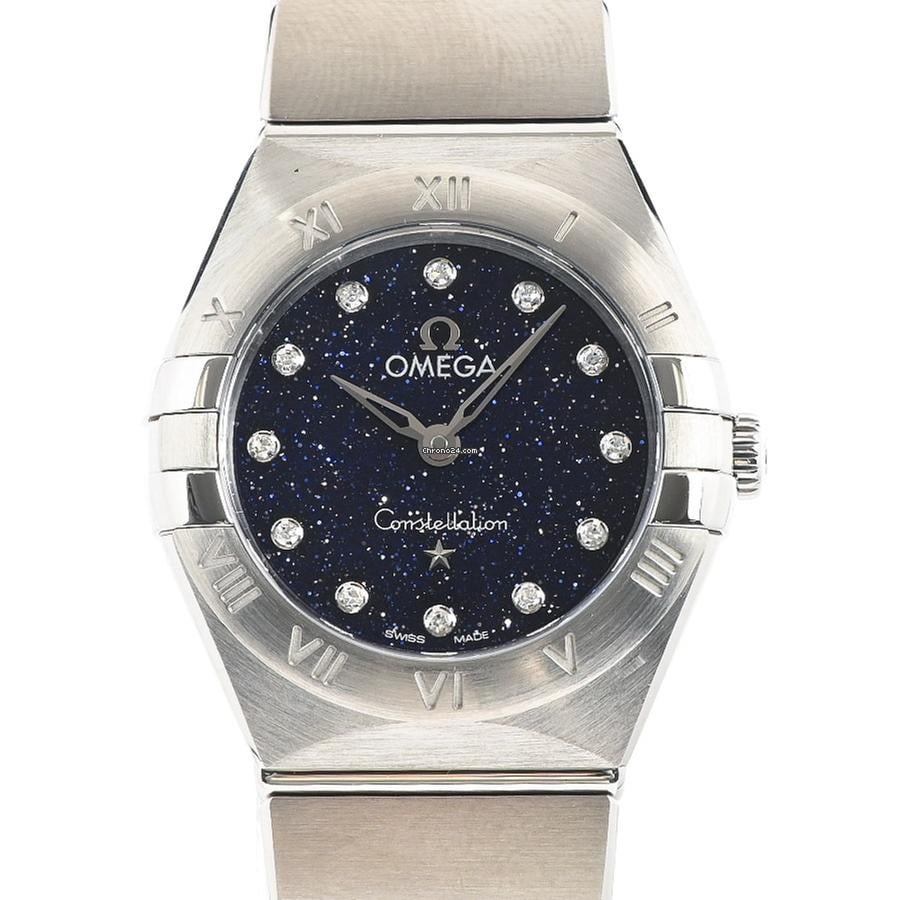
→ Pure dress:TW Constellation Manhattan (85% accuracy)
For most people, the answer is: VSF Seamaster Diver 300M in blue on steel bracelet. It’s the best super clone in the industry, it works with every outfit, and it has enough water resistance for swimming. If that’s too sporty for your lifestyle, the VSF Aqua Terra is the dress-adjacent alternative at only slightly lower accuracy.
Building an Omega Collection
If you’re building a multi-watch collection with Omega as the focus, here’s the optimal order:
Watch 1: VSF Seamaster Diver 300M Blue on bracelet — your daily wearer, covers 80% of situations.
Watch 2: OMF Speedmaster Moonwatch Hesalite — adds a chronograph and the most important watch story in history. Wear it on NATO for variety. Whichever Omega Speedmaster replica you pick for this slot, keep it OMF — the other factories are a visible step behind.
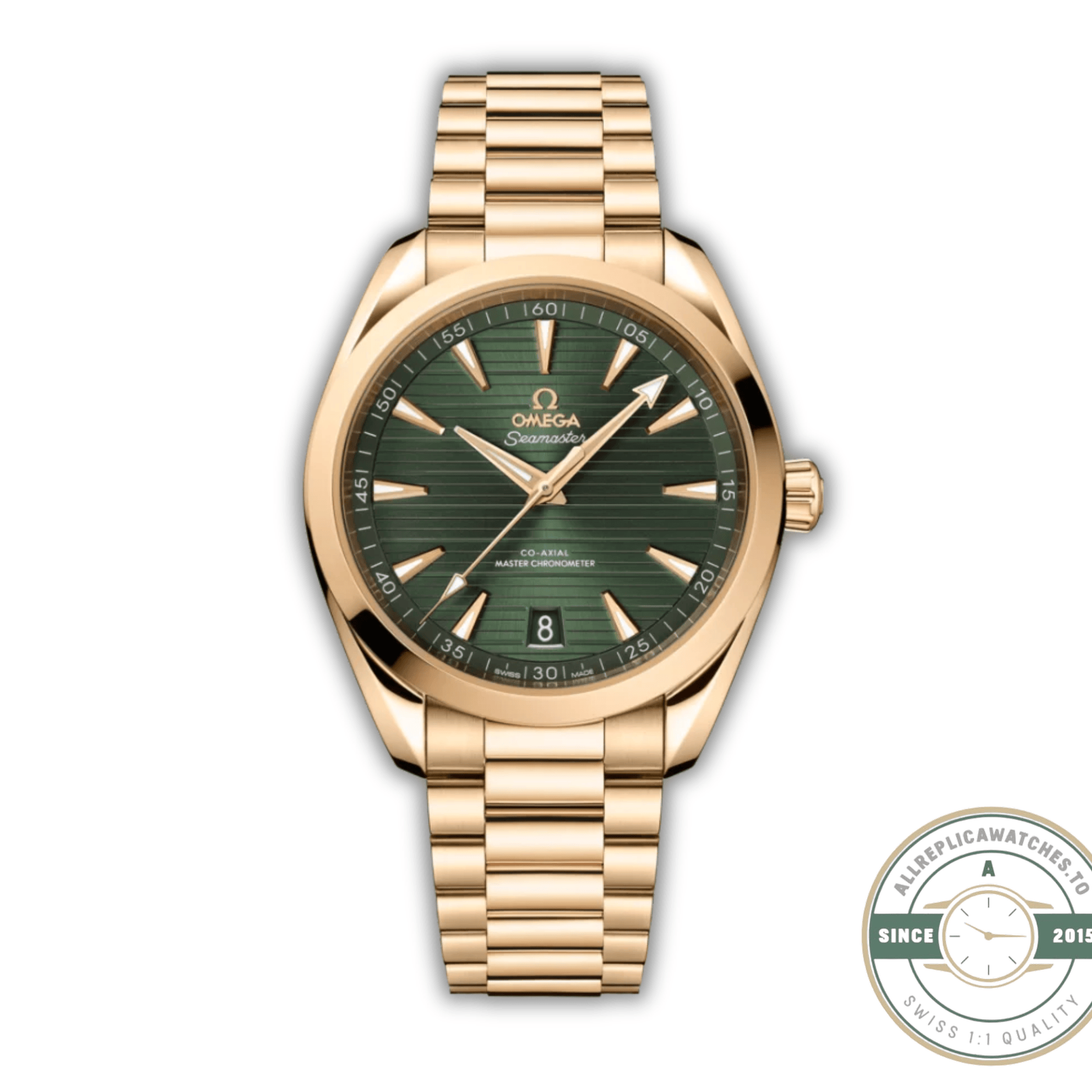
Watch 3: VSF Aqua Terra Black on bracelet — your dress option. Works for formal events where the Diver 300M might be too sporty.
Watch 4: VSF Planet Ocean Orange on rubber — your weekend adventure watch. Different personality from the Diver 300M, more presence.
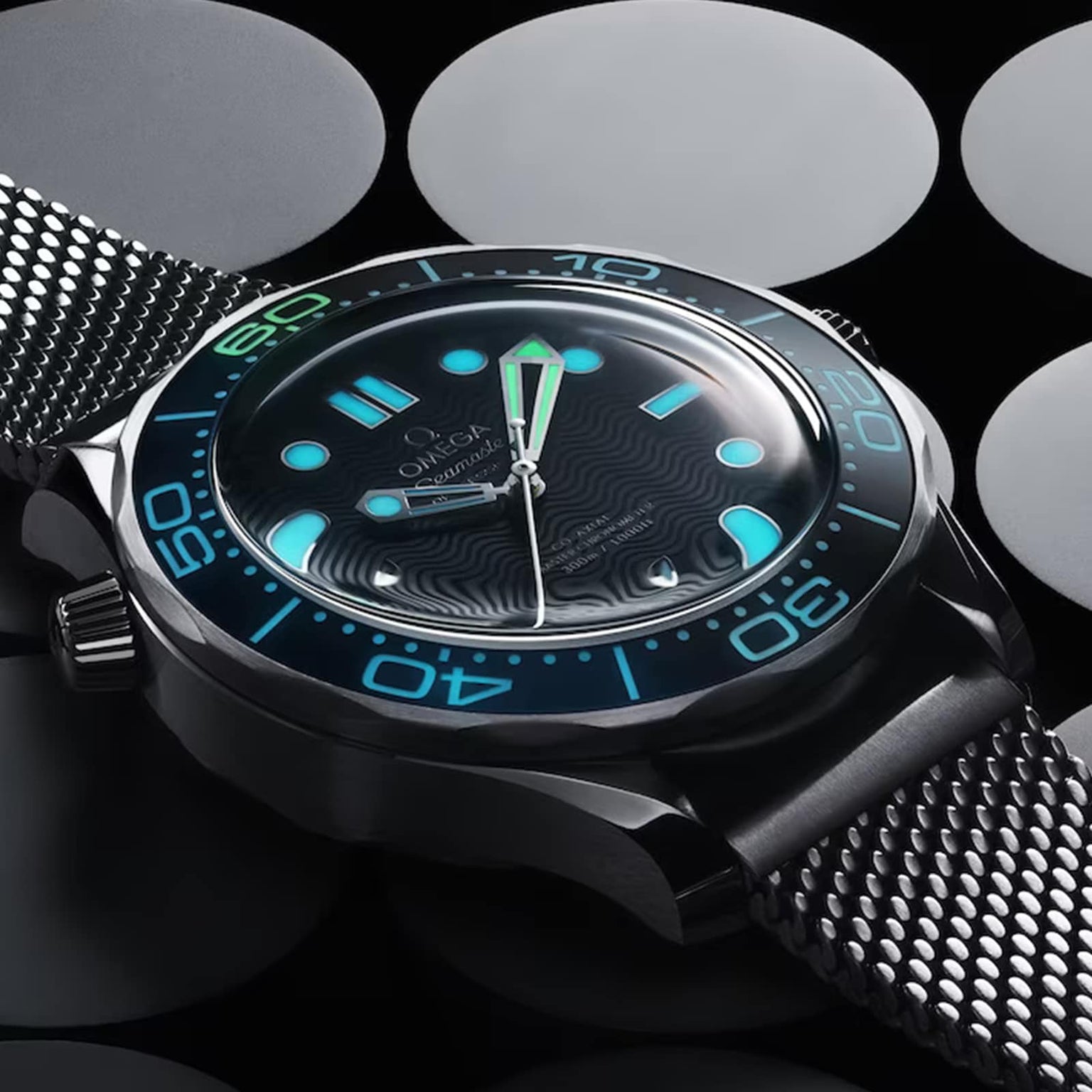
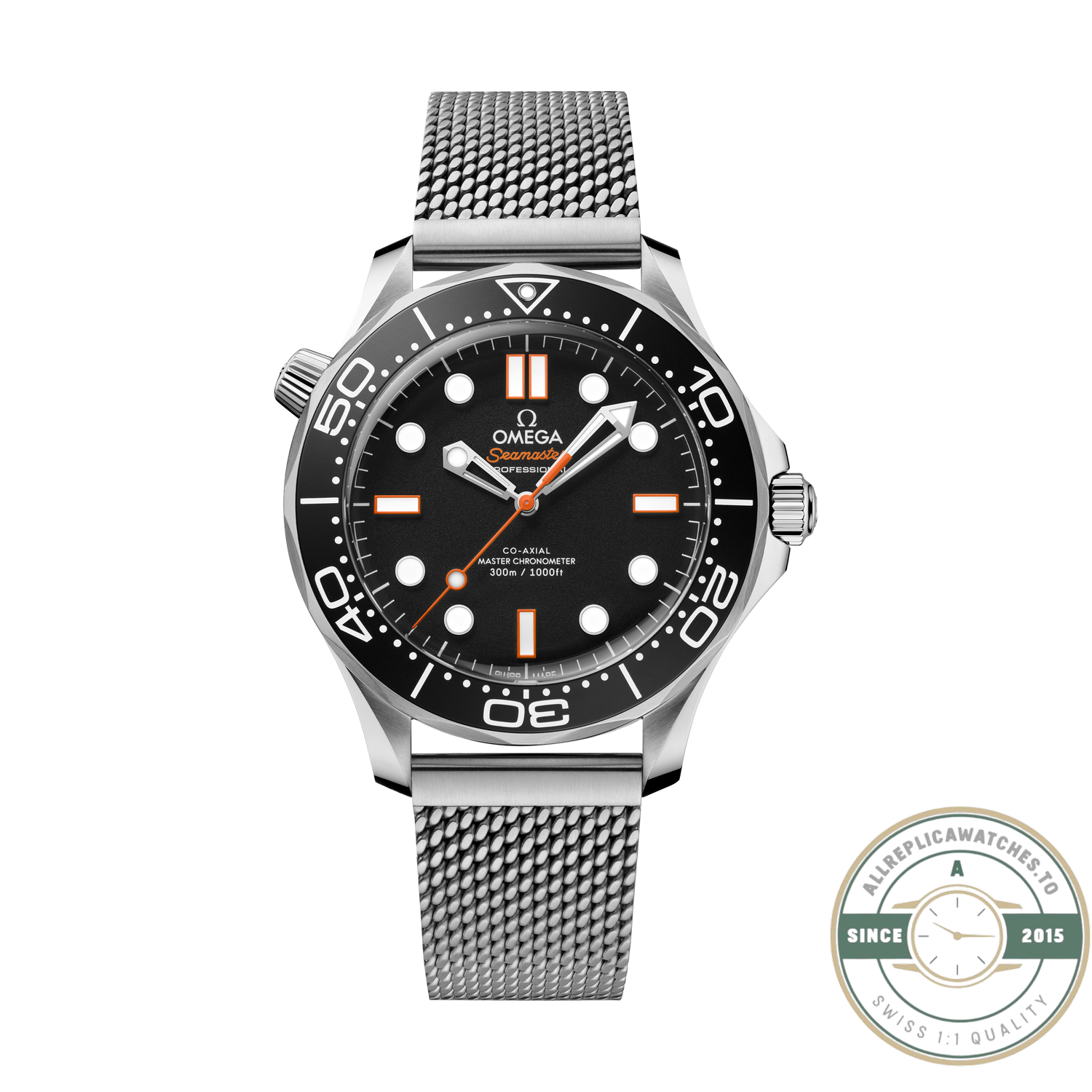
Watch 5: VSF Diver 300M No Time to Die (titanium/mesh) — the Bond edition for rotation variety. Lighter than steel, different look.
This five-watch Omega collection covers every scenario from black-tie events to beach vacations, costs less than one genuine Seamaster, and looks spectacular displayed together.
Movement Comparison — All Calibers
Clone Movement
Genuine Caliber
Power Reserve
Accuracy
Serviceability
VS8800
Cal. 8800
48h
±5 s/d
Excellent
VS8900
Cal. 8900
48h
±5 s/d
Excellent
Asian 7750 (OMF)
Cal. 3861
42h
±10 s/d
Good
Miyota 8215 (ORF)
—
40h
±15 s/d
Excellent (cheap parts)
Omega Models to Avoid as Super Clones
Not every Omega super clone is worth buying. Some models have fundamental issues that make them poor purchases:
Two-tone anything — Gold plating wears. On a Seamaster where the gold elements are minimal (crown, some indices), it’s manageable. On a full two-tone Constellation or Seamaster with gold bezel, claws, and bracelet links, the plating wear becomes visible within months of daily wear.
Speedmaster Reduced — Too small a market for any good factory to invest. Available versions are 70% accuracy at best. Buy the Moonwatch Professional instead.
De Ville collection — Almost no factory produces convincing De Ville replicas. The ultra-thin profile and dress-watch finishing requirements exceed current manufacturing capabilities at super clone price points.
Ultra Deep — Novelty only. The genuine’s extreme engineering (special alloy case, insane crystal thickness) isn’t replicated. You get a big, heavy watch that looks like an Ultra Deep but functions as a standard 50m water-resistant watch.
Anything under $200 — DHGate-tier Omega replicas are uniformly bad. Wrong proportions, cheap movements, poor materials. Save up for VSF or don’t buy Omega.
FAQ — 15 Omega Questions
Q: What’s the single best Omega super clone I can buy right now?
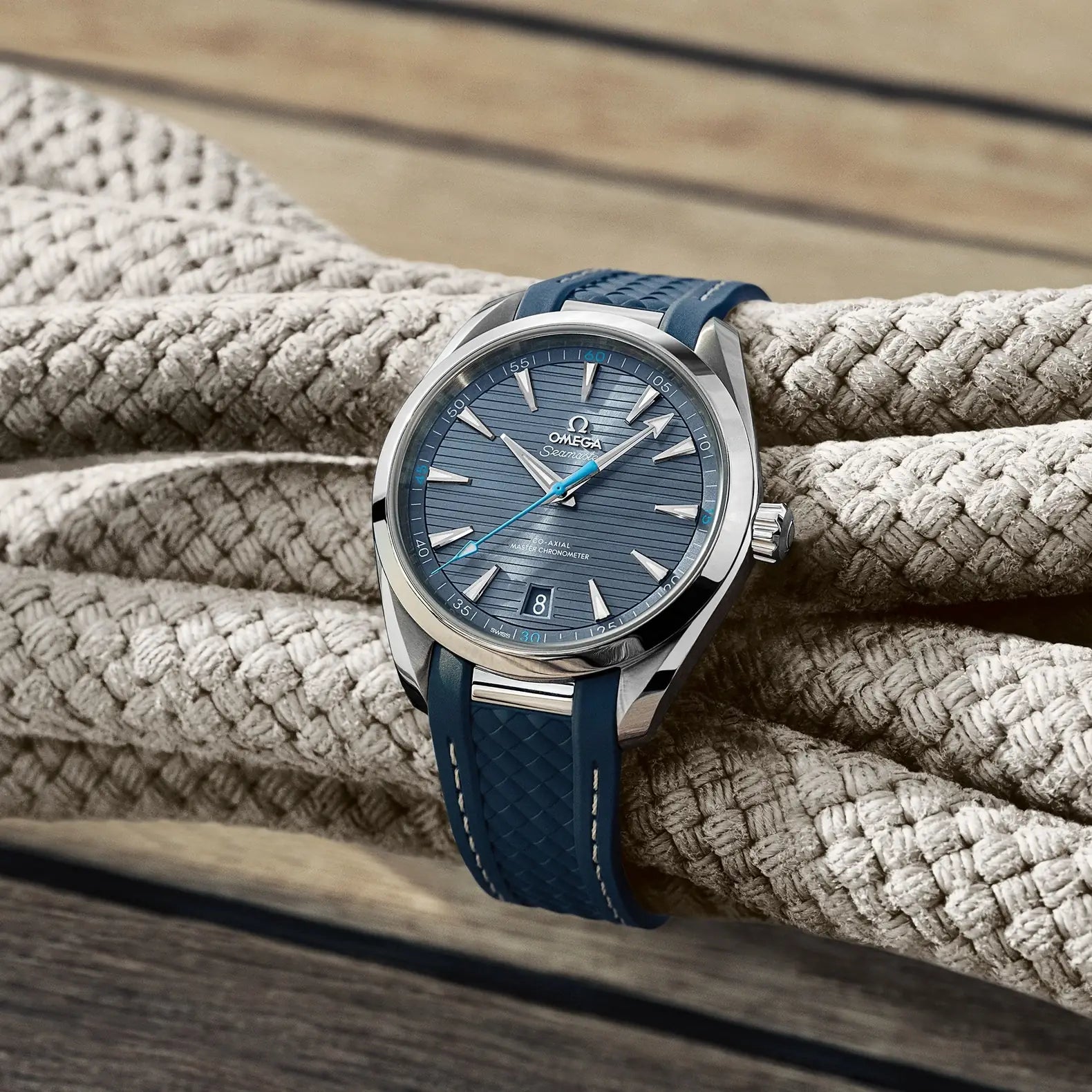
VSF Seamaster Diver 300M in blue (210.30.42.20.03.001) on steel bracelet. It’s the most accurate super clone in the industry at 95%, has a reliable clone movement, real ceramic construction, and a design that works everywhere. This isn’t opinion — it’s the consensus of the collector community.
Q: Is VSF really better than Clean Factory?
For Omega, absolutely. VSF is to Omega what Clean Factory is to Rolex — the dominant factory. Clean doesn’t make Omega. VSF doesn’t make Rolex. Each factory specializes. Comparing VSF’s best Omega (95%) to Clean’s best Rolex (93%), VSF edges ahead on pure accuracy percentage, though both are exceptional.
Q: Omega Seamaster or Rolex Submariner as my first super clone?
Both are excellent. The Seamaster wins on accuracy (95% vs 93%), believability (Omega is less scrutinized than Rolex), and design interest (wave dial, ceramic caseback). The Submariner wins on brand recognition and resale in the secondary replica market. My recommendation: Seamaster for your first, Submariner for your second.
Q: How long will a VSF Omega last?
With regular service (every 3-5 years), indefinitely. The VS8800 movement is mechanically robust, and the ceramic case elements (bezel, dial) don’t degrade. The steel case and bracelet will develop normal wear marks over time. Owners who’ve had VSF Omegas for 3+ years report consistent performance with no major issues.
Q: Can I buy a genuine Omega bracelet for my VSF?
Yes — genuine Omega bracelets and straps fit VSF cases because VSF matches the lug width and spring bar specifications exactly. A genuine Omega rubber strap (approximately $200 from authorized dealers) on a VSF case is a popular upgrade that eliminates the only component where VSF falls slightly short of genuine.
Q: What Omega should I avoid as a super clone?
Two-tone models (plating wears), the De Ville collection (no good factories), the Speedmaster Reduced (low accuracy), and anything under $200 (DHGate quality). Stick to VSF for Seamaster, OMF for Speedmaster, and TW for Constellation — these are the proven combinations.
Q: Is the Aqua Terra better than the Diver 300M?
As a watch design, it’s personal preference — the AT is dressier, the Diver is sportier. As a super clone, the Diver 300M is slightly more accurate (95% vs 92%) because VSF’s wave dial and ceramic bezel execution are their absolute best work. The AT is excellent at 92% and better for formal environments. Many collectors own both.
Q: Will VSF improve further?
Incrementally. VSF is already at 95% for the Diver 300M — the remaining 5% involves movement finishing details, bracelet clasp refinement, and lume application precision. These are micro-improvements. VSF is more likely to expand their Omega lineup (new references, new dial colors) than dramatically increase accuracy on existing models.
Q: MoonSwatch vs Omega Speedmaster super clone?
Completely different products. The MoonSwatch is a genuine Swatch x Omega collaboration at $260 retail — it’s a plastic quartz watch with Speedmaster styling. The OMF Speedmaster super clone is a mechanical chronograph replicating the $6,900 genuine. The MoonSwatch is fun fashion; the super clone is a serious watch. They serve different purposes.
Q: How do I verify I received a genuine VSF product?
Three checks: (1) Weight — VSF Diver 300M on bracelet should be 183g ±3g. (2) Movement — look through the caseback. VS8800 has specific bridge shapes and rotor text that differ from Miyota-based movements. (3) Wave dial — hold at a shallow angle. VSF’s waves have consistent depth across the entire dial. If all three check out, you have VSF.
Q: Is the Speedmaster worth it given the movement limitations?
If you love the Speedmaster design and story — yes. The automatic-vs-manual-wind difference is real but doesn’t affect daily enjoyment. The chronograph works, the watch looks correct, and you’re wearing one of the most important timepieces in history. Buy it for the experience, not for perfection.
Q: Can I service a VSF Omega at a regular watchmaker?
Yes — any competent independent watchmaker familiar with Asian clone movements can service a VS8800. Standard service (clean, oil, regulate, replace gaskets) runs $80-120. Parts are available from VSF parts suppliers. Don’t take it to an Omega boutique — they’ll identify it as non-genuine and may refuse to return it.
Q: Green or blue dial for the Diver 300M?
Blue is the classic — it’s the color most associated with the Seamaster and VSF’s blue dial match is near-perfect (within half a shade of genuine). Green is the trendy choice and genuinely beautiful in person, but VSF’s green is slightly more olive than genuine’s forest green. For your first Seamaster, blue. For a second or if you already own blue watches, green adds variety.
Q: Is there a women’s Omega super clone?
Limited options. The Constellation Manhattan in 29mm exists from a few factories at approximately 80% accuracy. The Aqua Terra in 34mm is sometimes available. But the women’s super clone market is much smaller than men’s, and accuracy levels are lower. For women’s watches, the GF Cartier Ballon Bleu or Tank is generally a better super clone choice than Omega.
Q: What’s next for VSF?
The community expects VSF to expand their Omega lineup — new dial colors for the Diver 300M (the white dial is highly requested), potentially a display-back Aqua Terra with visible movement, and possibly entry into the Speedmaster segment with a proper chronograph clone movement. None of this is confirmed — VSF doesn’t announce plans — but the business logic points in these directions.
Final Verdict — Your Omega Buying Roadmap
If you buy one Omega: VSF Seamaster Diver 300M Blue on steel bracelet. The best super clone in the industry.
If you buy two: Add the OMF Speedmaster Moonwatch. Diver + chronograph covers every situation.
If you buy three: Add the VSF Aqua Terra for formal events. Now you have sport, chrono, and dress.
Omega in the super clone world is the thinking person’s choice. Less scrutiny than Rolex, higher accuracy than Patek or AP, more design variety than any other brand. VSF made Omega the benchmark — and once you strap a VSF Seamaster to your wrist, you’ll understand why.
Omega Constellation Replica — Manhattan, Globemaster, Two-Tone Elegance, and the Dress Watch Omega Wants You to Forget About
Last updated: March 2026 • 18-minute read • Every Constellation reference and factory reviewed
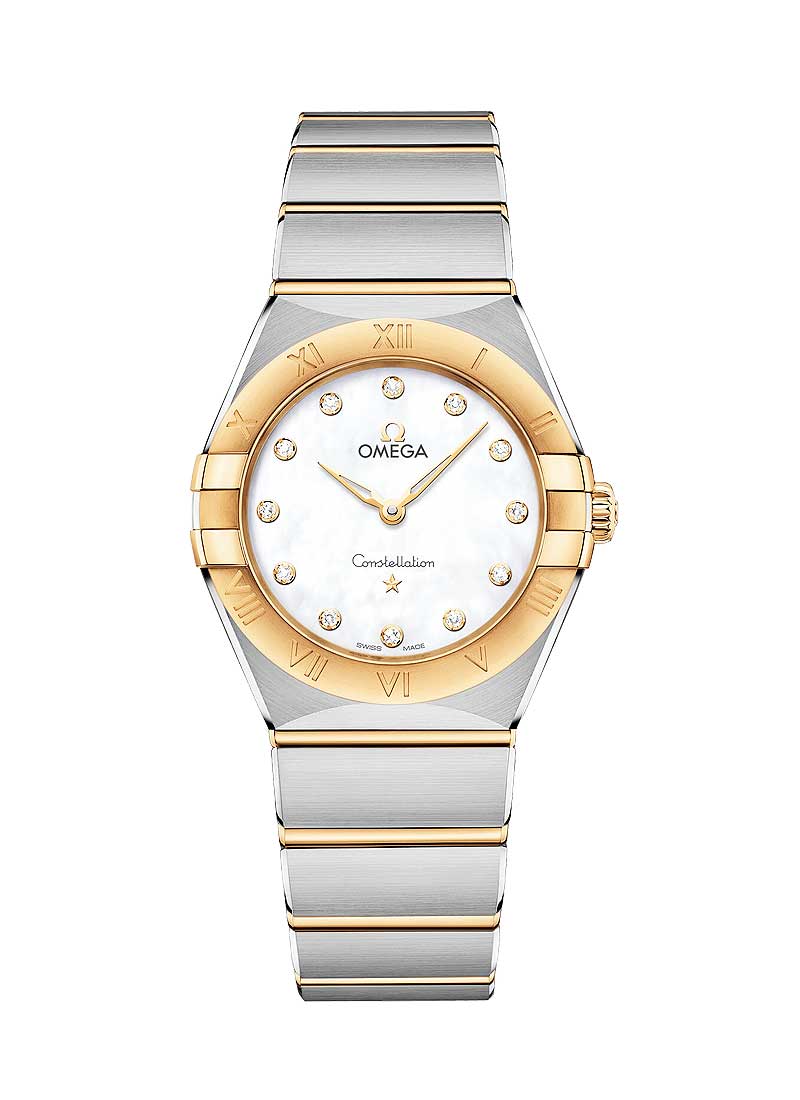
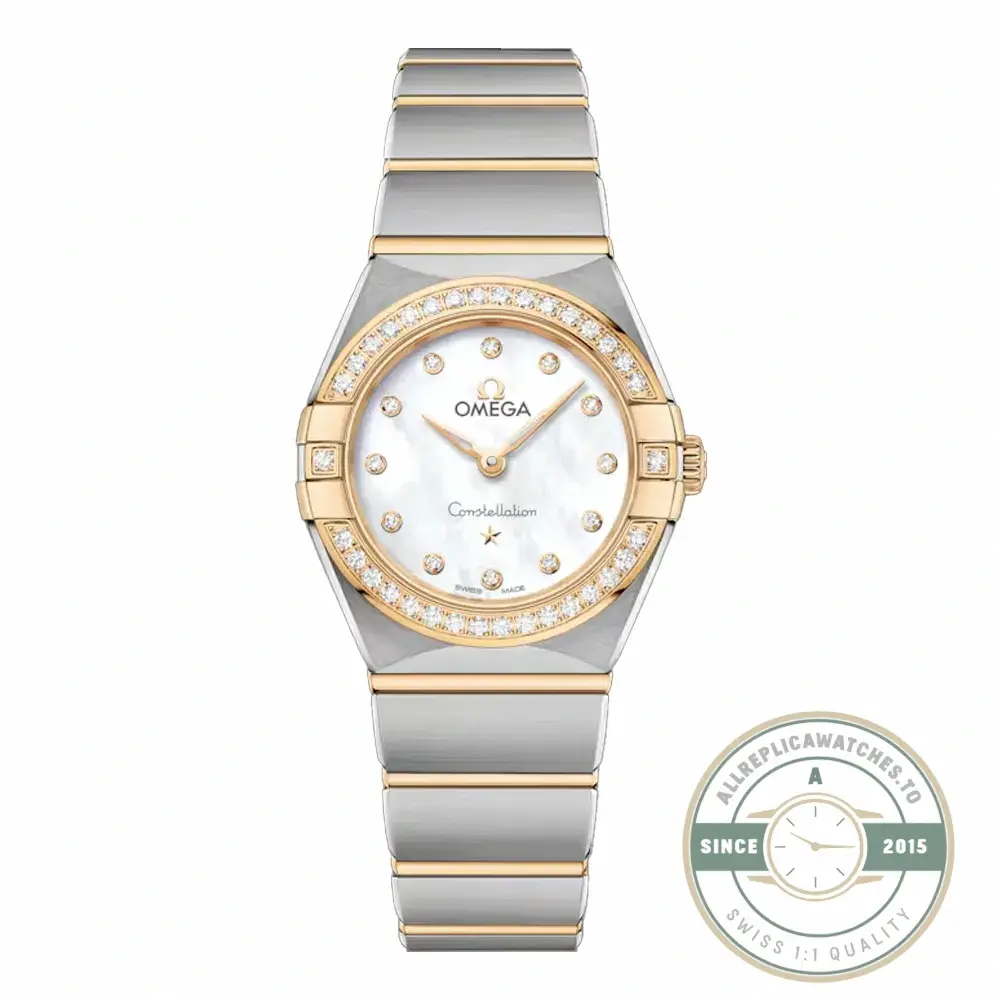
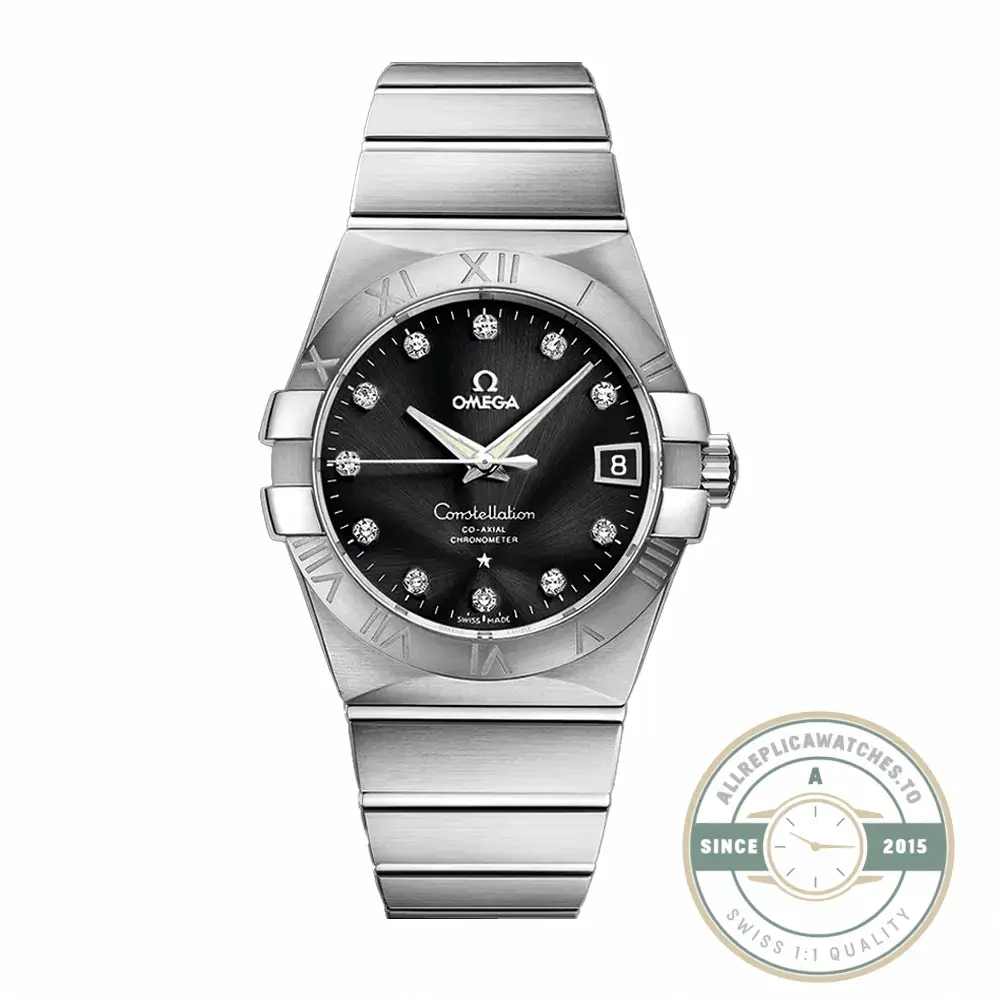
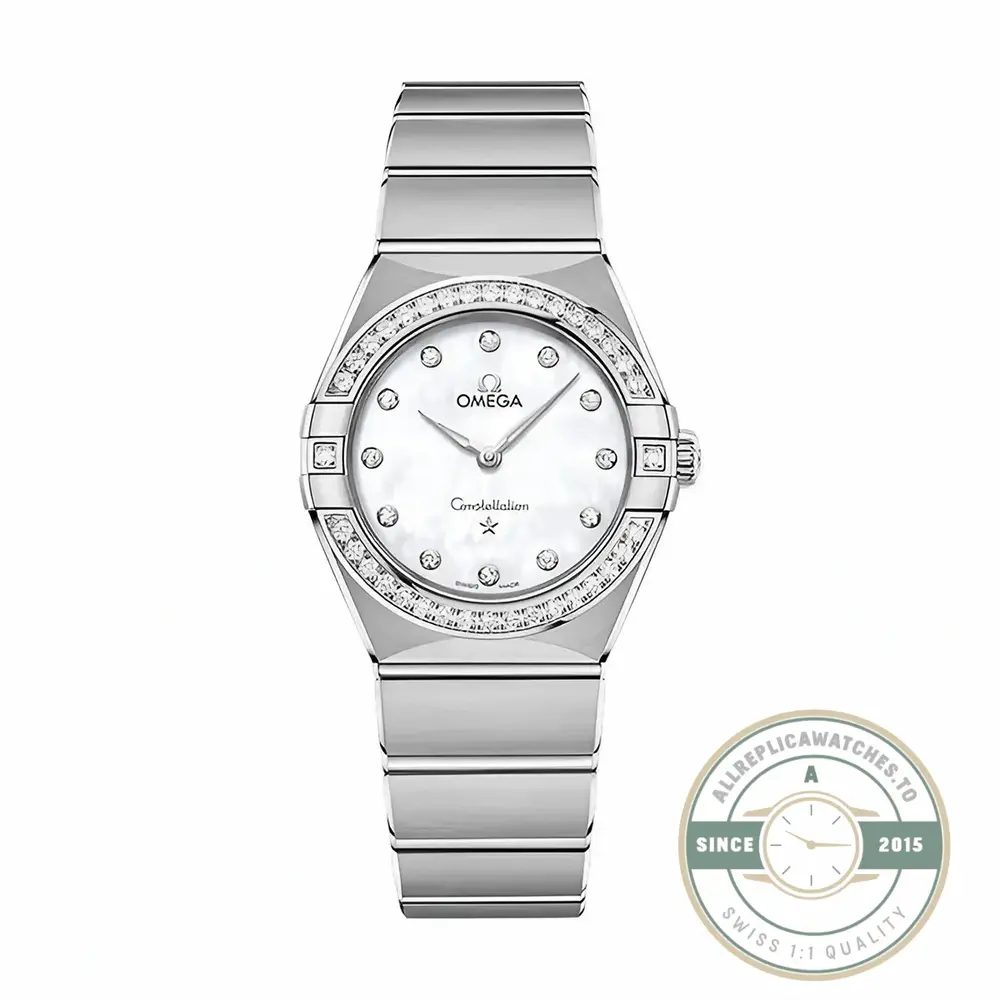
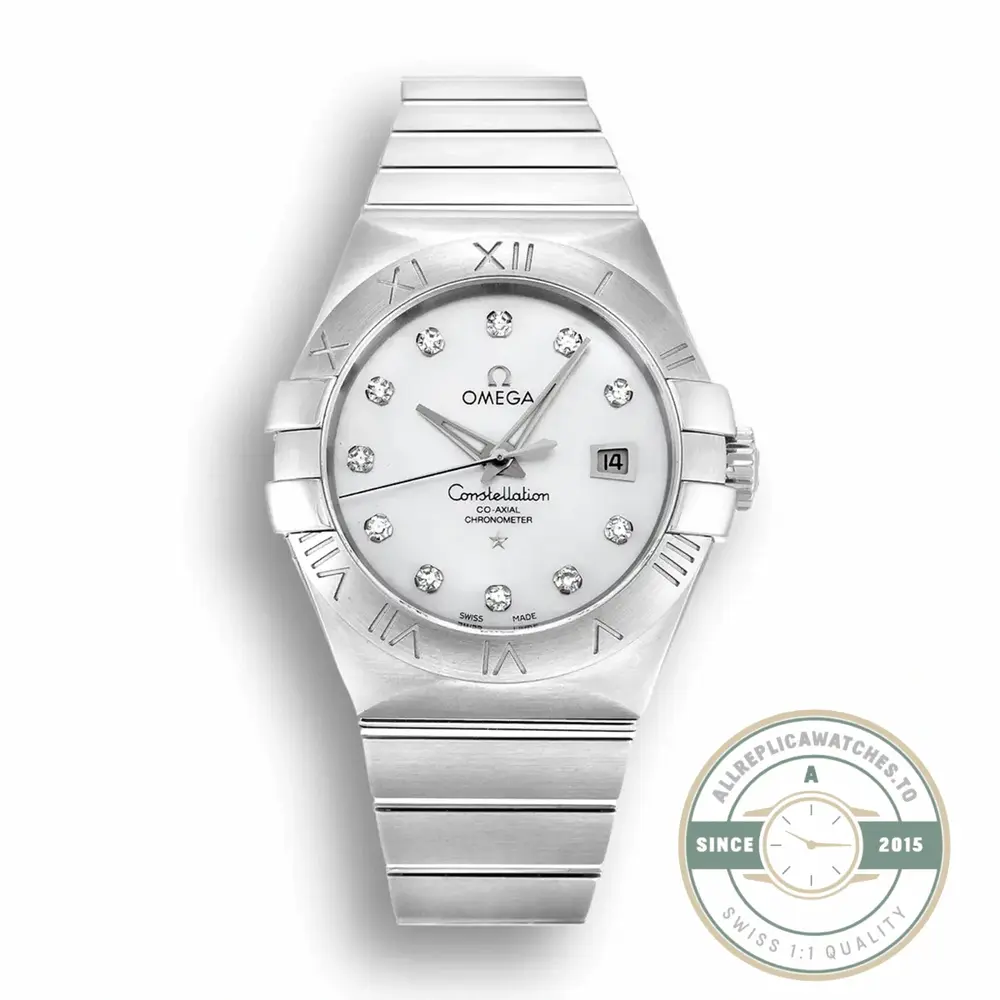
The Omega Constellation is the collection that Omega’s marketing department wishes didn’t exist — because it doesn’t fit the adventure narrative. No astronauts wore it. No James Bond strapped one on. No one took it 600 meters underwater. Instead, the Constellation has spent 70 years being one of the finest dress watches in the world — refined, elegant, and completely overshadowed by its louder siblings. The current Constellation Manhattan (launched 2019) is a beautifully designed luxury timepiece with the signature “claws” at 3 and 9 o’clock, a pie-pan dial, and the same Co-Axial Master Chronometer movement found in the Seamaster collection. In the super clone world, the Constellation occupies a niche: it’s for buyers who want Omega quality without the sports-watch aesthetic. Factory options are limited but the best versions are surprisingly good. This guide covers the Manhattan, the Globemaster, factory rankings, and why the Constellation might be the smartest Omega purchase you make.
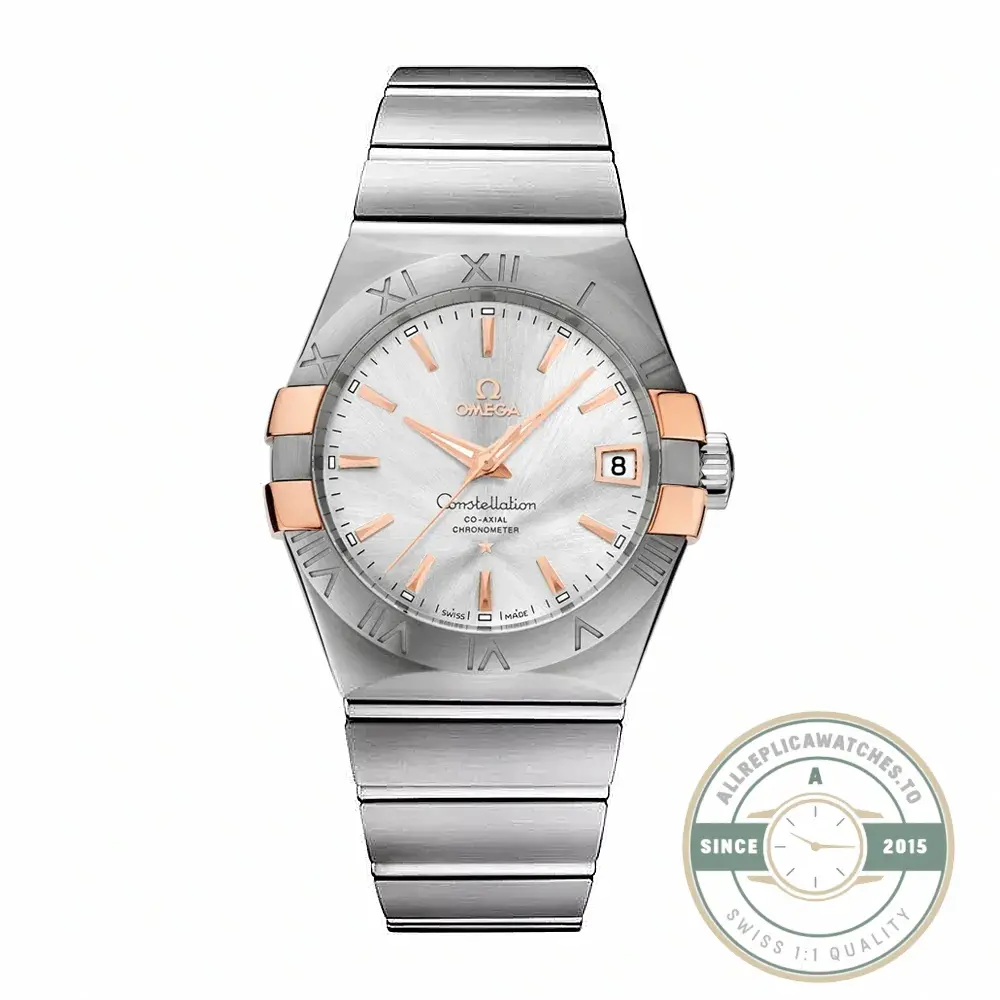
Omega Constellation Manhattan blue dial on steel bracelet
The Constellation Story
Omega launched the Constellation in 1952 as their flagship precision timepiece — a watch that represented the brand’s absolute best in accuracy and finishing. The name came from the observatory dials that Omega submitted for chronometer testing, and the caseback featured an observatory dome surrounded by eight stars (representing Omega’s chronometer records). For three decades, the Constellation was Omega’s most prestigious line.
The 1982 redesign introduced the “claws” — four metal tabs at 3 and 9 o’clock that grip the sapphire crystal in place. Originally functional (they secured the crystal against the gasket), the claws became the Constellation’s visual signature and have been part of every generation since. The name “Manhattan” was added to the current generation (2019) to differentiate it from previous Constellation designs.
Today, the Constellation Manhattan is positioned as Omega’s luxury dress watch — competing directly with the Rolex Datejust, Cartier Santos, and Jaeger-LeCoultre Reverso. It’s available in sizes from 25mm (women’s) to 41mm (men’s), in steel, two-tone, and full gold, with dials ranging from conservative silver to dramatic green. The movement is the same Co-Axial Master Chronometer caliber found in the Seamaster collection — identical precision in a completely different package.
Manhattan — Current Generation
Omega Constellation Manhattan two-tone Sedna gold and steel
The current Constellation Manhattan 41mm (reference 131.30.41.21.06.001 for the grey dial on steel) is a handsome watch that doesn’t get enough attention. The case is 41mm x 12mm — slimmer than both the Diver 300M (13.5mm) and the Aqua Terra (13.2mm). This thinness means it slides under shirt cuffs effortlessly, which is the entire point of a dress watch. The integrated bracelet flows from the case with smooth transitions, no abrupt angles, no visible end-link gaps.
The dial is the Constellation’s strongest design element. The “pie-pan” shape — a subtle concavity where the outer edge of the dial sits slightly higher than the center — creates a depth effect that flat dials can’t achieve. The applied hour markers are rhodium-plated on steel versions, with diamond-cut edges that catch light sharply. The date window at 6 o’clock is framed rather than naked. The overall impression is classic, restrained, and expensive-looking.
The bezel on the Manhattan is fixed (non-rotating) with a polished finish — no ceramic, no tachymeter, no diving scale. Just clean, polished metal. The claws at 3 and 9 are integrated into the bezel, creating a visual bridge between the case and the crystal. On the current generation, the claws are slimmer and more refined than earlier versions.
The Claws — Constellation DNA
The claws are what make a Constellation a Constellation. These four small metal extensions at 3 and 9 o’clock (two on each side) originally served to hold the sapphire crystal firmly against the rubber gasket. On modern Constellations, the claws are more decorative than functional — modern caseback construction doesn’t require external crystal clamps — but they remain the single most recognizable design element in the entire Omega lineup.
For super clone purposes, the claws are a key accuracy indicator. The genuine’s claws have precisely machined edges with mirror polish on the outer surface and brushed sides. They should sit flush against the crystal without any gap. The angle, taper, and polish quality of the claws vary significantly between factory versions — this is one of the easiest spots to differentiate a good Constellation replica from a bad one.
Design Insight: The claws are polarizing. Some people love them — they make the Constellation instantly identifiable. Others think they look like an afterthought, metal bits tacked onto the crystal. My take: once you see them in person, especially on the current Manhattan with its refined claw profile, they grow on you. They give the Constellation a visual anchor that distinguishes it from every other dress watch on the market.
Globemaster — The Fluted Bezel
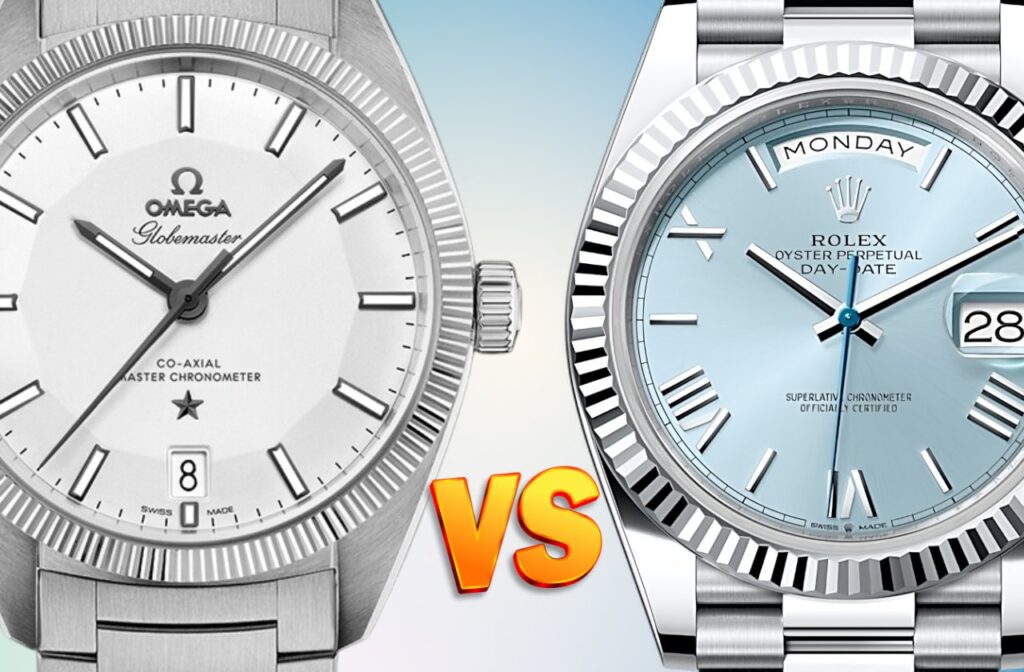
The Constellation Globemaster is a distinct sub-collection that takes direct aim at the Rolex Datejust. The key feature: a fluted bezel — the same design element that defines the Datejust. Omega’s version uses an eight-sided fluted pattern (compared to Rolex’s finer fluting) and adds the pie-pan dial from vintage Constellations. The result is a watch that looks expensive and has clear design references that collectors recognize.
The Globemaster was historically significant: it was the first watch to receive the Master Chronometer certification from METAS (the Swiss Federal Institute of Metrology) in 2015. This means it passed tests for magnetic resistance (15,000 gauss), accuracy under magnetic exposure, water resistance, and power reserve — all in addition to COSC chronometer certification. It’s the most rigorously tested watch movement certification in the industry.
Super clone Globemasters exist from a few factories but accuracy is around 80%. The fluted bezel machining is the main challenge — achieving the correct number of flutes with consistent depth and angle is technically demanding. If you want a fluted-bezel dress watch super clone, a Clean Factory Datejust (92% accuracy) is the better choice. The Globemaster super clone is more of a niche product for dedicated Omega collectors.
Dial Colors — Every Option
Dial Color
Case Material
Replica Available
Accuracy
Verdict
Silver / Grey
Steel
✓ TW/SBF
85%
Best Pick
Blue Sunburst
Steel
✓ TW/SBF
84%
Classic
Green
Steel
Limited
82%
Trendy
Champagne
Two-Tone
Limited
80%
Formal
Black
Steel
✓ TW/SBF
84%
Versatile
Shop the Replica Constellation Super Clone Collection
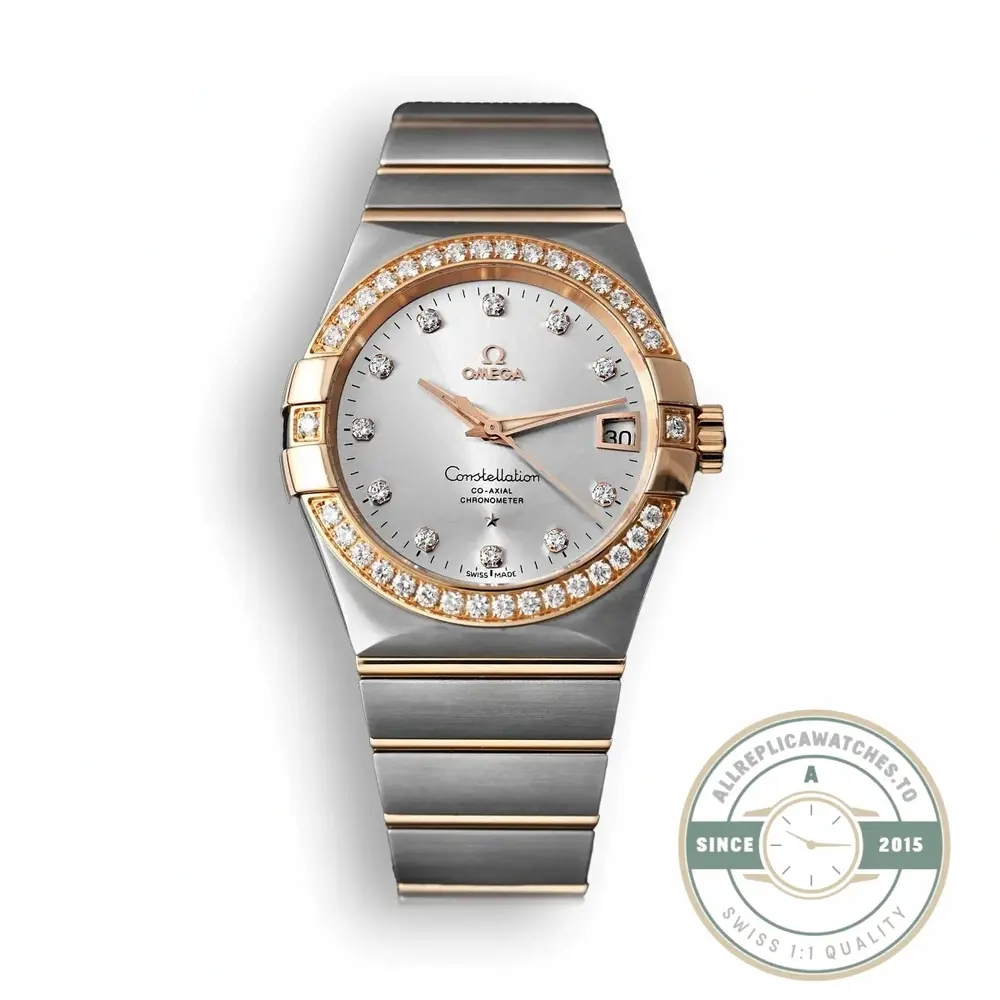
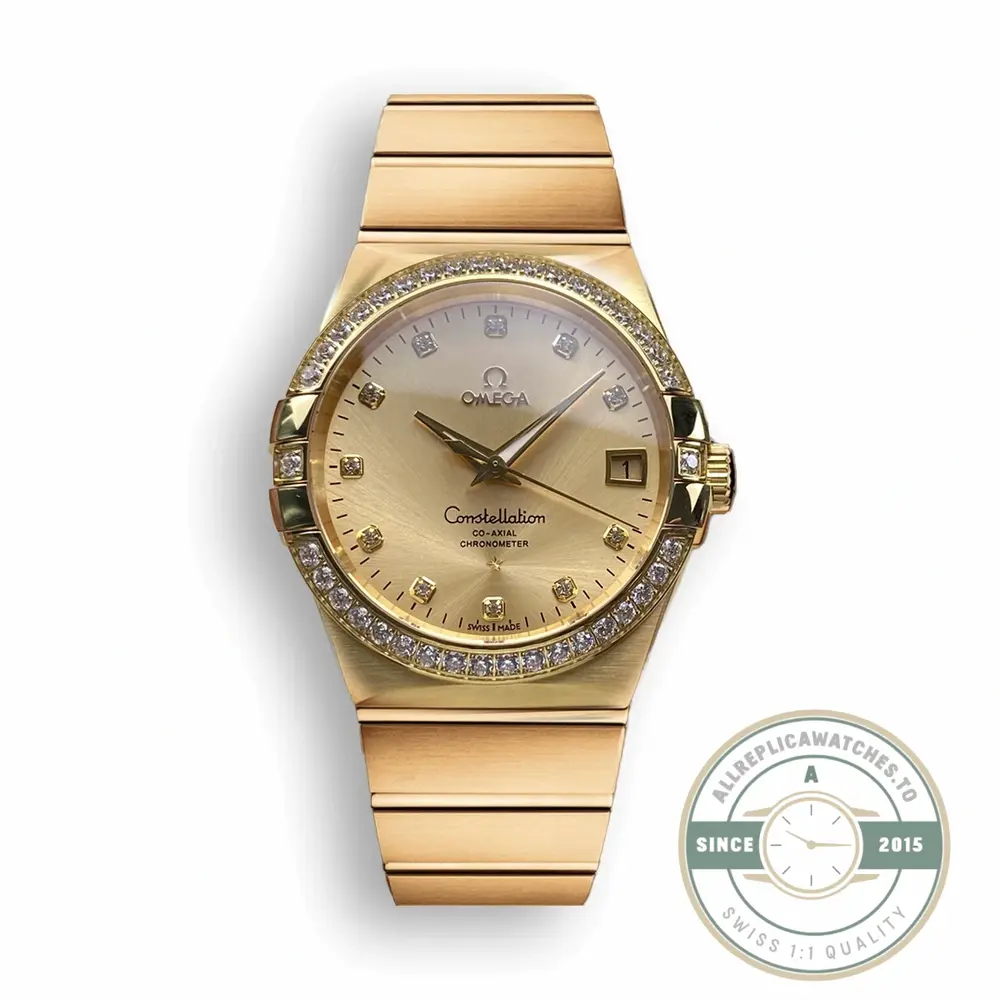
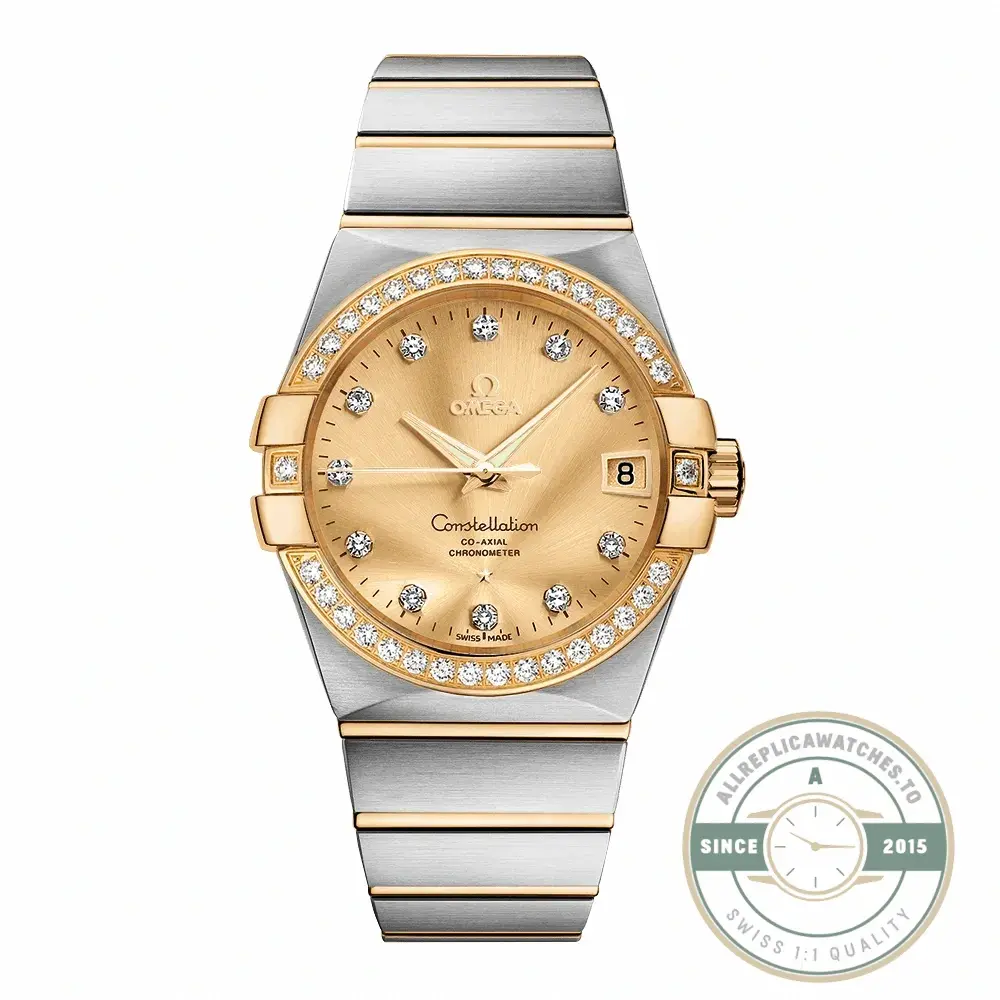
The Constellation is arguably the Omega that looks best in two-tone. The design — with its claws, polished bezel, and integrated bracelet — was practically designed for the steel-and-gold treatment. Omega uses Sedna gold (their proprietary rose gold alloy) or yellow gold for the gold elements. The two-tone versions add gold to the claws, bezel, crown, alternate bracelet links, and the applied hour markers.
Super clone two-tone Constellations face the same challenge as all two-tone replicas: the gold plating. Genuine Omega uses solid gold (18K Sedna) for the gold elements. Super clones use gold plating over steel, which has a different depth of color and will wear over time with daily use. The initial appearance can be close (within 85% for the best factories), but after 6-12 months of daily wear, the plating on high-contact areas (clasp, crown, claw edges) will show wear. This is acceptable if you understand the trade-off.
Buying Tip: If you want a two-tone Constellation that lasts, consider having a local jeweler re-plate the gold elements every 12-18 months. A PVD re-plating typically costs $50-80 and restores the gold to near-new condition. This is standard maintenance for two-tone replicas and extends the watch’s lifespan significantly.
Factory Rankings
The Constellation super clone market is smaller than Seamaster or Speedmaster — fewer factories produce it, and the best versions max out at approximately 85% accuracy. This is because the Constellation’s design emphasizes finishing quality (polished surfaces, precise claw machining, dial detailing) over features, and finishing is where super clones face their steepest challenge.
Factory
Best Model
Movement
Accuracy
TW Factory
Manhattan 41mm Steel
Miyota 8900 Decorated
85%
SBF
Manhattan 39mm
Miyota Decorated
82%
Budget (Various)
Mixed
Miyota 8215
70%
TW Factory leads the Constellation segment with the most accurate Manhattan reproduction. Their 41mm steel version with grey or blue dial is the best option. The claws are well-machined with correct proportions, the dial has appropriate pie-pan concavity, and the bracelet has the correct link shape and taper. The movement is a decorated Miyota, not a clone Omega caliber — the display caseback shows a movement that’s visually different from the genuine Cal. 8900.
Constellation vs Aqua Terra
Both are Omega dress-sport watches at 41mm. The Aqua Terra has a teak-concept dial with vertical grooves and 150m water resistance — it’s a dressy Seamaster. The Constellation has a pie-pan dial, claws, and a more formal personality — it’s a pure dress watch that happens to be waterproof. The Aqua Terra is more versatile because the teak dial reads sportier; the Constellation is better for formal occasions.
As super clones, the VSF Aqua Terra (92%) significantly outperforms the TW Constellation (85%). The VSF uses a clone Omega movement; the TW uses a decorated Miyota. If accuracy is your priority, the Aqua Terra is the clear winner. If design preference points you toward the Constellation’s claws and pie-pan dial, the 85% accuracy is still very good for a dress watch.
Constellation vs Datejust
Omega Constellation and Rolex Datejust dress watch side comparison
This is the real competition. The Rolex Datejust and Omega Constellation are the two most important luxury dress watches in the world. Both come in steel, two-tone, and full gold. Both are 41mm (DJ41) or similar sizes. Both have integrated bracelets and date complications. The Datejust has the fluted bezel and Jubilee bracelet; the Constellation has the claws and pie-pan dial.
In the genuine market, the Datejust has more brand cachet and higher resale value. In the super clone market, the Clean Factory Datejust (92% accuracy) dominates the TW Constellation (85%) — it’s not close. If you’re choosing between these two as super clones and accuracy matters most, the Datejust wins handily. The Constellation is for people who specifically want the Omega aesthetic and don’t mind the accuracy gap.
FAQ — 12 Constellation Questions
Q: Is the Constellation a good super clone purchase?
It depends on why you’re buying. If you specifically want the Constellation design — claws, pie-pan dial, that unique aesthetic — then yes, the TW Factory version at 85% is a solid watch. If you just want a dress watch super clone and don’t care about the specific brand/model, a Clean Datejust or VSF Aqua Terra offers better accuracy for similar money.
Q: What size should I get — 39mm or 41mm?
The 41mm is the most popular men’s size and has the best super clone options. The 39mm is available from SBF but at lower accuracy (82%). For wrists under 6.5 inches, the 39mm is more proportional. For 6.5 inches and above, the 41mm works perfectly. The Constellation wears its size well because of the slim 12mm profile.
Q: How are the claws on the TW Factory version?
Good — not perfect. The claws have the correct proportions and sit flush against the crystal. The polish on the outer surface is close to genuine. Where they fall slightly short: the edges of the claws are marginally less defined than genuine, and the brushed sides have slightly coarser grain. These are differences visible only under magnification or with a genuine next to it.
Q: Is the pie-pan dial accurate?
TW Factory’s pie-pan dial has the correct concavity — the outer ring sits approximately 0.5mm higher than the center, creating the signature depth effect. The transition between the raised ring and the center is smooth on both TW and genuine. The dial finishing (sunburst pattern, applied markers) is where differences appear under close inspection, but on the wrist, the pie-pan effect looks correct.
Q: Steel or two-tone?
Steel for a super clone — always. The gold plating on two-tone versions will wear over time, and the Constellation is a watch where you notice worn plating because the claws and bezel are prominent gold elements. Full steel at 85% accuracy is better than two-tone at 80% with plating concerns. If you absolutely want the two-tone look, budget for re-plating every 12-18 months.
Q: Which dial color is best?
The grey/silver dial is the safest and most accurate choice — TW’s grey sunburst matches genuine closely and the color is less likely to reveal shade differences than blue or green. Blue is the second choice — beautiful and classic. Green is trendy but harder for factories to match precisely. Champagne requires the two-tone case to look right, which adds plating concerns.
Q: Is the Constellation considered a “real watch” by collectors?
Yes — and it’s increasingly respected. The Constellation has always had a strong following in Asia and Europe, and the Manhattan redesign brought it credibility with the broader collector community. It won’t get the same attention as a Seamaster or Speedmaster, but knowledgeable watch people recognize the Constellation as a serious piece with genuine heritage.
Q: Can I wear it swimming?
The genuine Constellation Manhattan has 50m water resistance — splash-proof but not swimming-ready. The super clone version has approximately 30m water resistance (gasket quality). It will survive hand washing, rain, and the occasional accidental submersion. For swimming, use a Seamaster — that’s literally what it’s designed for.
Q: Constellation or Cartier Santos as a dress watch?
Different aesthetics entirely. The Santos is square, the Constellation is round. The Santos has exposed screws, the Constellation has claws. Both are excellent dress watches. In the super clone market, the GF Cartier Santos (88% accuracy) slightly outperforms the TW Constellation (85%). Choose based on whether you prefer round or square case shapes.
Q: What’s the bracelet quality like?
TW Factory’s Constellation bracelet is good for the segment — the link shape is correct, the taper is appropriate, and the clasp works smoothly. The integrated design means the bracelet flows from the case without visible end links (there are no SELs — it’s a one-piece construction). The polish quality on the bracelet’s polished center links is close to genuine. Not VSF-level finishing, but appropriate for an 85% super clone.
Q: Why doesn’t VSF make the Constellation?
Market size. VSF focuses on watches with the highest demand — Seamaster Diver 300M, Aqua Terra, Planet Ocean — where the R&D investment in clone movements and precision tooling is justified by volume. The Constellation sells fewer units in the replica market, so the business case for VSF-level investment doesn’t exist yet. If Constellation demand increases significantly, VSF may enter the market.
Q: Is the Globemaster worth buying as a super clone?
Not really — the Globemaster super clone market is small and accuracy tops out around 80%. The fluted bezel machining is the main weakness. If you want a fluted-bezel dress watch super clone, a Clean Datejust (92%) is significantly better. Buy the Globemaster only if you’re a dedicated Omega collector who must have every collection represented.
Final Verdict
The Omega Constellation is the anti-hype choice — and that’s exactly what some people want. While everyone else is wearing Submariners and Seamasters, the Constellation wearer chose refinement over recognition. The TW Factory Manhattan at 85% accuracy delivers a convincing dress watch with the signature claws, correct pie-pan dial, and solid build quality.
Get the 41mm steel with grey or blue dial. Skip the two-tone unless you’re comfortable with plating maintenance. Wear it with your best suit and a quiet confidence that comes from knowing you chose substance over spectacle. That’s the Constellation philosophy — and it’s been working for 70 years.
Omega Planet Ocean Replica — 600M, Ultra Deep, GMT, VSF Build Quality, and Why This Is the Diver’s Diver
Last updated: March 2026 • 20-minute read • Every Planet Ocean reference and factory analyzed
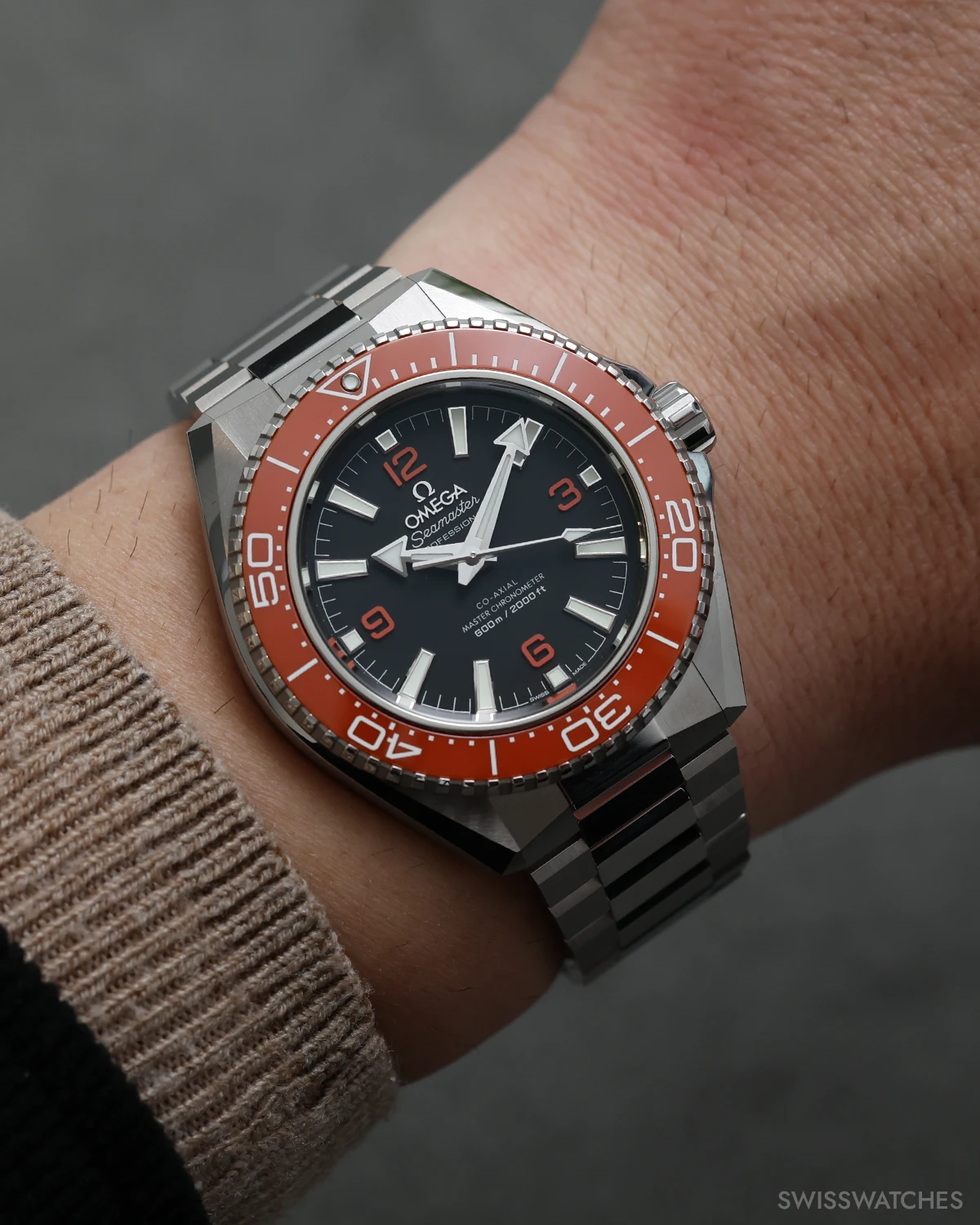
The Omega Seamaster Planet Ocean sits in the sweet spot between luxury sport watch and legitimate diving instrument. While the Diver 300M gets the James Bond attention and the Speedmaster gets the NASA mythology, the Planet Ocean is the Omega you strap on when you actually plan to go underwater. At 600 meters water resistance, 43.5mm of case diameter, and over 200 grams on the wrist, this is a watch that means business. The orange bezel — the Planet Ocean’s most iconic look — has been a Seamaster signature since the collection launched in 2005. In the super clone world, VSF produces the definitive Planet Ocean, using the same ceramic materials, the same VS8900 clone movement architecture, and the same attention to detail that made their Diver 300M legendary. This guide covers the 600M, the insane Ultra Deep, the GMT complication, factory comparisons, and how the Planet Ocean fits into your collection alongside — or instead of — the Diver 300M.
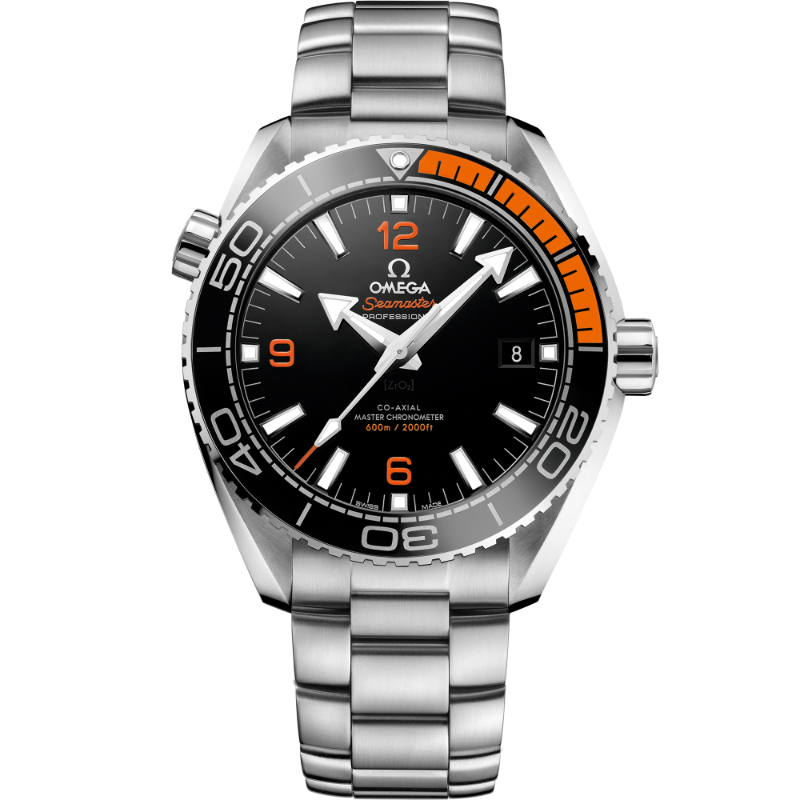
Omega Seamaster Planet Ocean 600M with iconic orange bezel on steel
The Planet Ocean Identity
Omega launched the Planet Ocean in 2005 to fill a gap in their Seamaster lineup. The Diver 300M was an excellent daily-wear diver but lacked the sheer presence and depth rating that serious dive watch enthusiasts demanded. The Planet Ocean answered with 600 meters of water resistance, a larger case, and a design language that emphasized tool-watch functionality over dressy refinement. The Planet Ocean has never left the Seamaster family, which is why an Omega Seamaster Planet Ocean replica is catalogued alongside the Diver 300M rather than on a page of its own.
The name itself — Planet Ocean — came from Omega’s partnership with oceanographer and environmentalist Jacques Cousteau’s foundation, though the connection was more marketing than technical. What matters is the result: a watch built around the Cal. 8500/8900 Co-Axial movement with anti-magnetic properties (Master Chronometer certification, resistant to magnetic fields up to 15,000 gauss), a unidirectional ceramic bezel with Liquidmetal-filled diving scale, and a helium escape valve for saturation diving operations.
The Planet Ocean carved its own niche. People who find the Rolex Sea-Dweller too conservative and the Panerai Submersible too niche gravitate toward the Planet Ocean. It’s big without being absurd, colorful without being loud (the orange bezel walks that line perfectly), and technically impressive without being complicated. Among dive watch enthusiasts — people who actually dive — the Planet Ocean has earned genuine respect, which is rare for a watch that’s primarily bought as a fashion accessory.
600M — The Core Collection
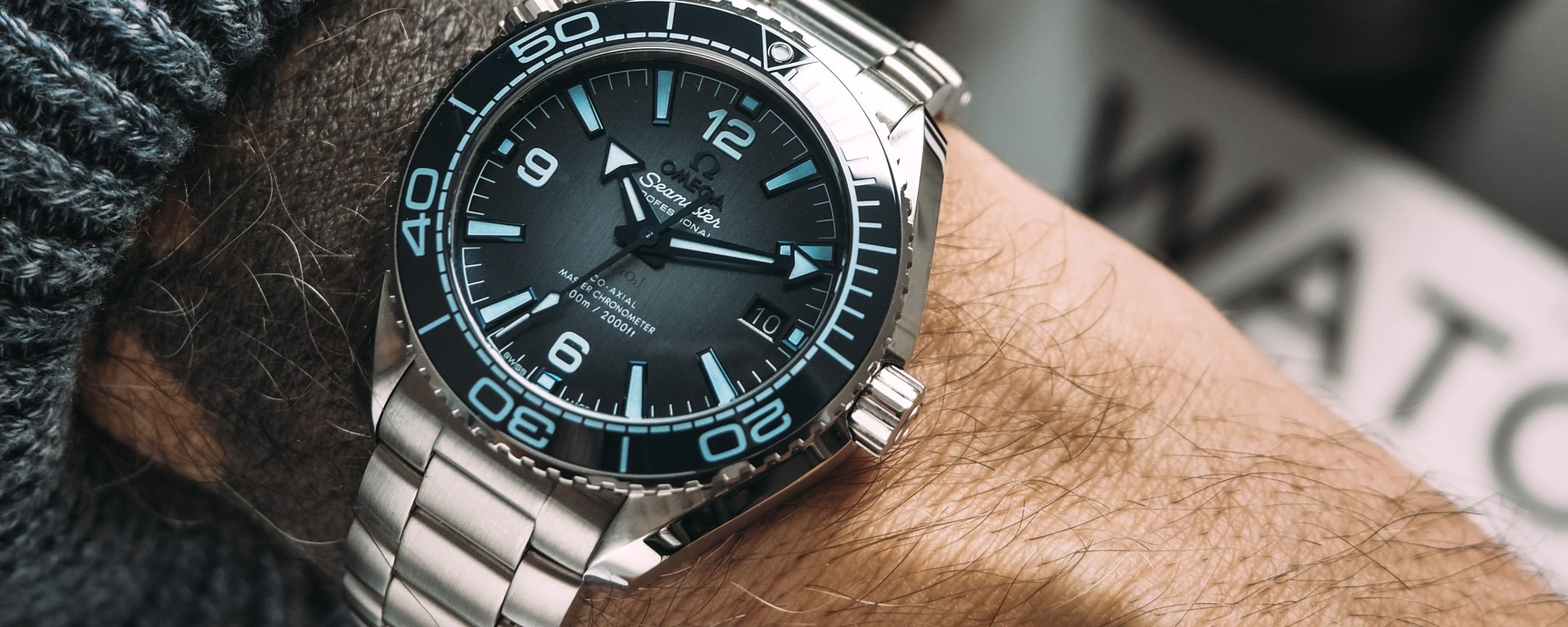
Omega Planet Ocean 600M blue ceramic dial close-up wrist shot
The current Planet Ocean 600M (reference 215.30.44.21.01.001 for the 43.5mm black) uses Omega’s latest case design with improved ergonomics. At 43.5mm wide and 16mm thick, this is a substantial watch. The lug-to-lug is 51mm, which means it wears large — you need at least a 7-inch wrist for this to look proportional. Smaller wrists should consider the 39.5mm version (reference 215.30.40.20.01.001), though the super clone options for the smaller size are limited.
The case construction is impressive even in the genuine. Alternating brushed and polished surfaces, an integrated helium escape valve at 10 o’clock, screw-down crown with the Omega seahorse logo, and crown guards that flow into the case profile. The caseback is stamped (not display) on the steel versions, with the Planet Ocean wave pattern and hippocampus embossed in the metal.
Inside beats the Cal. 8900 — Omega’s top-tier automatic with Co-Axial escapement, two barrels for 60-hour power reserve, and free-sprung balance. The 8900 is the movement Omega uses in their most important non-chronograph watches, and it’s been incredibly reliable in genuine form. VSF’s clone of the 8900 (the VS8900) is a close replica of the plate layout and bridge architecture, though it uses a single barrel rather than two (resulting in approximately 48 hours of power reserve vs genuine’s 60).
The Orange Bezel — Signature Look
The orange-on-black combination is the Planet Ocean’s visual identity. When someone who knows watches sees an orange ceramic bezel, they think Planet Ocean — it’s that strongly associated. The orange is ceramic, not paint, which means it’s scratch-proof and colorfast (it won’t fade from UV exposure over years). The Liquidmetal-filled diving scale markings are white against the orange, creating high contrast that’s actually functional for diving timing.
VSF’s orange ceramic bezel is close to the genuine’s color — a specific burnt orange rather than bright traffic-cone orange. The difference between VSF and genuine orange is approximately half a shade, visible only in direct comparison under controlled lighting. In daily wearing conditions — sunlight, office light, bar light — the colors are indistinguishable. The Liquidmetal fill quality on VSF’s bezel is clean with minimal bleeding at the numeral edges.
Style Tip: The orange bezel Planet Ocean is a statement piece. It pairs brilliantly with casual outfits — denim, navy chinos, earth-tone shirts — but looks out of place with formal suits. If you need one Planet Ocean for all occasions, the black bezel/black dial is more versatile. If you already own a conservative watch (Submariner, Datejust) and want something with personality for weekends, the orange bezel is the answer.
All Dial Variants Ranked
Variant
Size
VSF Available
Accuracy
Verdict
Black / Orange Bezel
43.5mm
✓
90%
Iconic — #1 Pick
Black / Black Bezel
43.5mm
✓
90%
Stealth Option
Blue / Blue Bezel
43.5mm
✓
88%
Diver 300M Alternative
Black / Orange (39.5mm)
39.5mm
Limited
85%
Smaller Wrists
Two-Tone (Sedna Gold)
43.5mm
ORF
82%
Gold Tone Issues
GMT Deep Black
45.5mm
ORF
83%
Travel Watch
Ultra Deep — 6000M Madness
In 2022, Omega released the Seamaster Planet Ocean Ultra Deep — a watch rated to 6,000 meters (yes, six thousand). To put that in perspective: the Mariana Trench, the deepest point in any ocean, is approximately 10,994 meters. The Ultra Deep can survive depths that no recreational or professional diver will ever reach. It’s pure engineering ego — and it’s magnificent.
The Ultra Deep is 45.5mm wide and 18.12mm thick, making it the largest and heaviest watch in the entire Omega collection. The case uses Omega’s proprietary O-MEGASTEEL alloy, and the crystal is a dome of sapphire thick enough to withstand 6,000 meters of water pressure. The bezel is ceramic with Liquidmetal, and the movement is the Cal. 8912 visible through a sapphire caseback (at 6,000m rating, the caseback engineering is extraordinary).
Super clone versions of the Ultra Deep exist from ORF, but they’re novelty pieces rather than serious reproductions. The engineering required for the genuine’s depth rating — special case alloy, extreme crystal thickness, proprietary caseback seal system — isn’t replicated. The super clone looks like an Ultra Deep and wears like one (very heavy), but it’s functionally a 50-meter water resistant watch in an Ultra Deep costume. Buy it if you love the design and the absurdity of a 6,000m dive watch. Don’t buy it expecting genuine engineering.
Planet Ocean GMT
The Planet Ocean GMT adds a second timezone hand (the orange-tipped GMT hand) and a 24-hour bi-color bezel. The reference is 215.30.44.22.01.001 for the 43.5mm black version. The GMT hand tracks a second timezone on the bezel, while the main hour hand can be independently adjusted for local time — true GMT functionality, same as the Rolex GMT-Master II.
ORF produces the most common Planet Ocean GMT super clone. The GMT complication works correctly — the orange GMT hand moves independently and the bezel has the correct bi-color (orange/black or blue/black depending on the reference). Accuracy is approximately 83% — the GMT complication adds complexity that factories haven’t perfected. The main tells: the GMT hand’s orange tip color is slightly off compared to genuine, and the movement (a modified Asian movement with GMT module) isn’t as smooth in time-zone adjustment as the genuine Cal. 8906.
Omega Planet Ocean 600M on wrist with orange bezel steel bracelet
VSF’s Planet Ocean sits at approximately 90% accuracy — slightly below their 95% Diver 300M. The difference comes from the larger case, which has more surface area where finishing transitions (brushed/polished boundaries) can deviate from genuine. But 90% is still excellent, and in many ways the Planet Ocean’s design is more forgiving than the Diver 300M’s because the larger proportions make micro-details less noticeable on the wrist. Every VSF bezel color of this reference sits in the same Omega Planet Ocean clone range.
The ceramic bezel is genuine ceramic — ZrO2 composition with the correct hardness and surface texture. VSF’s orange bezel color is their best work outside of the Diver 300M’s blue. The Liquidmetal-filled diving scale is crisp, with legible numerals and a clean 12 o’clock triangle marker. The bezel action is firm with 120 clicks, same as the genuine.
The VS8900 movement inside the Planet Ocean is a cousin of the VS8800 used in the Diver 300M. Architecture is similar — clone of the genuine Cal. 8900 plate layout with single barrel (48-hour power reserve). The caseback is stamped steel (no display), so movement accuracy-to-genuine matters less than in a display-back watch. What matters: the movement runs accurately (±5 s/d typical), winds smoothly, and the date changes crisply at midnight.
Build Quality Note: The Planet Ocean’s bracelet is arguably VSF’s best. The wider links (compared to the Diver 300M) have more surface area for finishing, and VSF uses that area well — the alternating brushed/polished pattern is accurate, the clasp is solid with a well-functioning diver’s extension, and the bracelet drapes around the wrist without the “stiff” feeling that budget bracelets have. At 43.5mm on a matching bracelet, the complete package has genuine Omega-level wrist presence.
Planet Ocean vs Diver 300M — Which One?
This is the most common question in the Omega Seamaster world: should I buy the Diver 300M or the Planet Ocean? The answer depends on your wrist, your wardrobe, and your personality.
Factor
Diver 300M
Planet Ocean
Size
42mm x 13.5mm
43.5mm x 16mm
Weight
185g
205g
Super Clone Accuracy
95% (VSF)
90% (VSF)
Versatility
Higher
Lower — casual/sport
Wrist Presence
Moderate
Strong
Signature Feature
Wave dial + Bond
Orange bezel + size
Best For
First Omega / daily
Statement / weekend
If you own one watch: Diver 300M. It’s more versatile, higher accuracy as a super clone, and works with everything. If you own three watches and want variety: the Planet Ocean fills the “big, bold, weekend” slot perfectly. The orange bezel Planet Ocean next to a black Submariner and a blue Diver 300M gives you three completely different vibes for three different days. The Planet Ocean and the Diver 300M both sit in the Omega Seamaster replica category, so the two cases can be compared side by side.
Planet Ocean vs Submariner — Different Philosophies
The Submariner is a 40mm (or 41mm with the current 126610) stealth diver. It’s designed to disappear on the wrist — to be the watch that works with everything without drawing attention. The Planet Ocean is the opposite philosophy: 43.5mm of “look at me” with an orange bezel that catches every eye in the room. They’re both dive watches, but they approach the concept from completely different directions.
As super clones, the Clean Submariner (93% accuracy) edges the VSF Planet Ocean (90% accuracy), but the Planet Ocean is more visually complex — more bezel colors, larger case details, more finishing surfaces — which means the 90% achievement is arguably more impressive from an engineering standpoint. Both are excellent purchases. The choice is purely personal: do you want quiet confidence (Submariner) or expressive sport luxury (Planet Ocean)? If the answer is Omega, the catalogue of Omega watch replica builds runs well beyond the divers.
Planet Ocean QC Checklist
Check
Details
Critical?
Bezel Color
Orange should be burnt orange, not traffic-cone bright
Yes
Bezel Alignment
12 triangle centered, no offset
Yes
Dial Printing
Clean text, no smearing on “Planet Ocean” or depth rating
Yes
HEV (Helium Valve)
Flush with case, screws down properly
Low
Case Finishing
Brushed/polished transitions clean, no cross-contamination
Medium
Bracelet Endlinks
Flush with case, no visible gap at lug junction
Yes
Timegrapher
Rate ±8 s/d; amplitude 260+; beat error < 0.5ms
Yes
FAQ — 15 Planet Ocean Questions
Q: Is the Planet Ocean too big for my wrist?
At 43.5mm with a 51mm lug-to-lug, you need at least a 7-inch wrist for the Planet Ocean to look proportional. Under 6.75 inches, the lugs may overhang, which looks awkward. If your wrist is 6.5-6.75 inches, the 39.5mm Planet Ocean is a better fit — but super clone options for that size are limited. Try measuring your wrist and comparing to the lug-to-lug measurement.
Q: Can I swim with a VSF Planet Ocean?
Yes — same as the Diver 300M. VSF’s water resistance is approximately 50 meters (not the genuine’s 600m), which covers swimming, snorkeling, and showering. The helium escape valve functions but isn’t relevant for recreational use. Have a watchmaker check the gaskets if you plan to swim regularly.
Q: Orange or black bezel?
If the Planet Ocean is your only watch: black bezel — more versatile. If you have a conservative daily watch and want the Planet Ocean as a weekend/casual piece: orange — it’s the reason this watch exists, it’s the signature, and it’s spectacular in person. You’ll never regret the orange.
Q: Planet Ocean vs Rolex Sea-Dweller — which is better as a super clone?
The Clean/ZF Sea-Dweller super clone is marginally more accurate (~92% vs 90%) because Clean has perfected the Rolex case shape. But the Planet Ocean is the more visually interesting watch — the orange bezel, the different design language, the Seamaster heritage. Both are excellent. The Sea-Dweller is for Rolex loyalists; the Planet Ocean is for people who want something different.
Q: Is the bracelet or rubber strap better for the Planet Ocean?
The bracelet is the default choice — VSF’s Planet Ocean bracelet is their best. But at 43.5mm on a steel bracelet, the total weight exceeds 200g, which some people find tiring for all-day wear. The rubber strap drops the weight significantly and gives a sportier look. Many Planet Ocean owners eventually try both and settle on rubber for summer and bracelet for winter.
Q: Does the VS8900 movement differ from the VS8800?
They share the same fundamental architecture — both are clone Omega movements based on modified Hangzhou calibers. The VS8900 is configured for the larger Planet Ocean case and has slightly different bridge geometry to match the genuine Cal. 8900’s appearance. Performance is identical: 48-hour power reserve, ±5 s/d accuracy, hacking seconds, quickset date.
Q: Is the Planet Ocean GMT worth it?
If you travel frequently and want GMT functionality in an Omega package, it’s a solid choice at 83% accuracy (ORF). But if pure super clone quality is your priority, the standard time-only Planet Ocean from VSF (90%) is better. The GMT complication adds complexity that current factories haven’t mastered to the same level as the base model.
Q: How does the Ultra Deep wear?
Like strapping a hockey puck to your wrist. At 45.5mm x 18mm, it’s the largest watch most people will ever wear. If you have large wrists (7.5+ inches) and enjoy attention, it’s a conversation piece. If you prefer subtle, look elsewhere. The ORF Ultra Deep is fun as a novelty but it’s not a daily wearer for most people.
Q: How does the ceramic bezel hold up over time?
Ceramic is essentially scratch-proof for daily wear. VSF uses real ceramic (not coated steel), so the bezel will look the same after years of wear. The only thing that can scratch ceramic is another ceramic surface or something harder (diamond, sapphire). The Liquidmetal-filled markings may develop minor wear at the edges after years of heavy use, but this takes a very long time.
Q: Is the Planet Ocean a good first super clone?
It can be — if you have the wrist for it and prefer a bigger, bolder watch. Most first-time buyers are better served by the Diver 300M (more versatile, higher accuracy) or a Clean Submariner (universal design). The Planet Ocean is a better second or third purchase, when you already have a versatile daily watch and want something with more personality for casual wear.
Q: What’s the lume like?
VSF uses C3 SuperLuminova — same green glow as the Diver 300M. On the Planet Ocean, the indices are larger, so the lume patches are bigger, which means more visible glow in the dark. The lume brightness is approximately 80% of genuine in the first hour. The Planet Ocean is one of the most legible VSF watches in low light because of those large, generously lumed indices.
Q: Planet Ocean or Panerai Submersible — which diver?
Completely different watches that happen to be dive-rated. The Panerai Submersible is 42-47mm with a cushion case, crown guard bridge, and Italian military heritage. The Planet Ocean is a Swiss sports watch with Omega’s Co-Axial technology. The Planet Ocean is more mainstream; the Panerai is more niche. Super clone quality: VSF Planet Ocean (90%) vs VSF Panerai (88%). Both are great — it comes down to which design language speaks to you.
Q: Can I replace the rubber strap with a NATO?
Yes. The Planet Ocean uses 22mm lug width (21mm for the 39.5mm model). A NATO strap threads between the spring bars and case, which works perfectly with the Planet Ocean’s case design. The combination of a 43.5mm tool diver on a NATO strap is extremely popular in the dive watch community. Orange-accent NATOs that match the bezel are available for $15-25.
Q: VSF or ORF for the Planet Ocean?
VSF for the standard time-only models (600M in black or orange). ORF for the GMT versions and two-tone models. VSF’s standard Planet Ocean is 90% accurate with a clone movement; ORF’s is 83% with a Miyota. The price difference (VSF costs more) is justified by the movement quality and overall finishing. For the standard Planet Ocean, always choose VSF if available.
Q: How heavy is the Planet Ocean on the wrist?
On the steel bracelet: approximately 205 grams (VSF). That’s 20 grams heavier than the Diver 300M and 50 grams heavier than a Submariner. You’ll feel it on your wrist — and many Planet Ocean owners say that weight is part of the appeal. It feels like a serious tool. On rubber, it drops to approximately 140 grams, which is much more comfortable for extended wear.
Final Verdict
The Planet Ocean is the Seamaster for people who want more — more size, more presence, more visual impact. VSF’s 43.5mm black/orange is a 90% accurate reproduction that captures everything that makes the Planet Ocean special: the iconic orange bezel, the ceramic quality, the tool-watch gravitas, and the VS8900 movement reliability.
It’s not a subtle watch. It’s not trying to be. It’s the watch you wear when you want to announce your presence — and when you strap a Planet Ocean to your wrist, you’ll understand why Omega chose to name it after the entire ocean planet we live on.
Omega Speedmaster Replica — Moonwatch Professional, Racing, Dark Side of the Moon, and the Factory Showdown You Need to Read
Last updated: March 2026 • 22-minute read • Every Speedmaster reference and factory compared
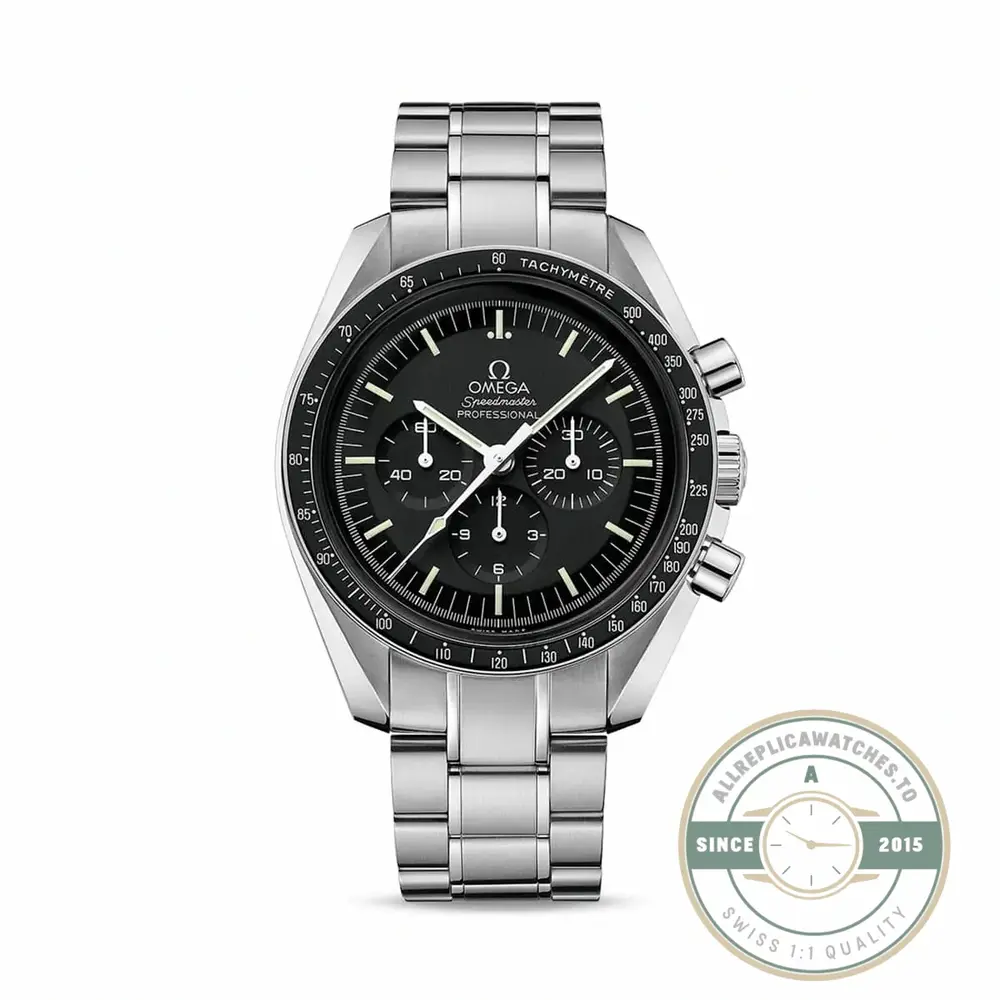
The Omega Speedmaster is the most storied chronograph in watchmaking history. NASA strapped it to astronauts’ wrists for the Apollo 11 moon landing in 1969, and the “Moonwatch” legend has defined this watch for over half a century. The Speedmaster Moonwatch Professional (ref. 310.30.42.50.01.001) remains one of the best-looking manual-wind chronographs ever designed — 42mm, hesalite crystal, the caliber 3861 beating inside. The super clone market for Speedmasters is more nuanced than Rolex or Omega Seamaster because the Speedmaster’s manual-wind chronograph movement is genuinely difficult to replicate. No factory has produced a clone Cal. 3861. Instead, factories use modified Asian chronograph movements — and the results range from impressive to mediocre. This guide covers every Speedmaster variant worth knowing, the factory hierarchy, movement realities, and exactly how to set your expectations before ordering.
Omega Speedmaster Moonwatch Professional black dial chronograph steel
The Moonwatch Legacy
In 1962, NASA began looking for a chronograph that astronauts could use for EVA timing during space missions. They tested watches from several manufacturers — Rolex, Longines, Hamilton, and Omega among them. Only the Omega Speedmaster survived every test: extreme temperature cycling (-18°C to +93°C in seconds), high humidity, vibration, shock, decompression, and magnetic fields. The Speedmaster was certified as “Flight Qualified for All Manned Space Missions” in 1965, and four years later, Buzz Aldrin wore his Speedmaster reference ST 105.012 on the lunar surface during Apollo 11.
That story alone would make the Speedmaster a legend. But the Apollo 13 incident cemented its status forever. When the service module exploded and the crew lost power, astronaut Jack Swigert used his Speedmaster to time the critical 14-second engine burn that corrected their trajectory for re-entry. Without that timing — which had to be exact — the crew would have skipped off the atmosphere and drifted into space. Omega later created the “Silver Snoopy Award” edition to commemorate NASA’s recognition of the Speedmaster’s role in saving three lives.
This history matters for the replica market because it explains why the Speedmaster has a collector base that cares deeply about specific details: the step dial, the DON bezel, the hesalite crystal, the exact tachymeter font. Speedmaster collectors are among the most knowledgeable in the watch world, which means replica scrutiny is intense. But it also means that a good Speedmaster replica has an incredible story behind it — and that story adds value to the wearing experience in a way that pure aesthetics can’t match.
Moonwatch Professional — The Icon
Omega Speedmaster Professional hesalite crystal face detail macro
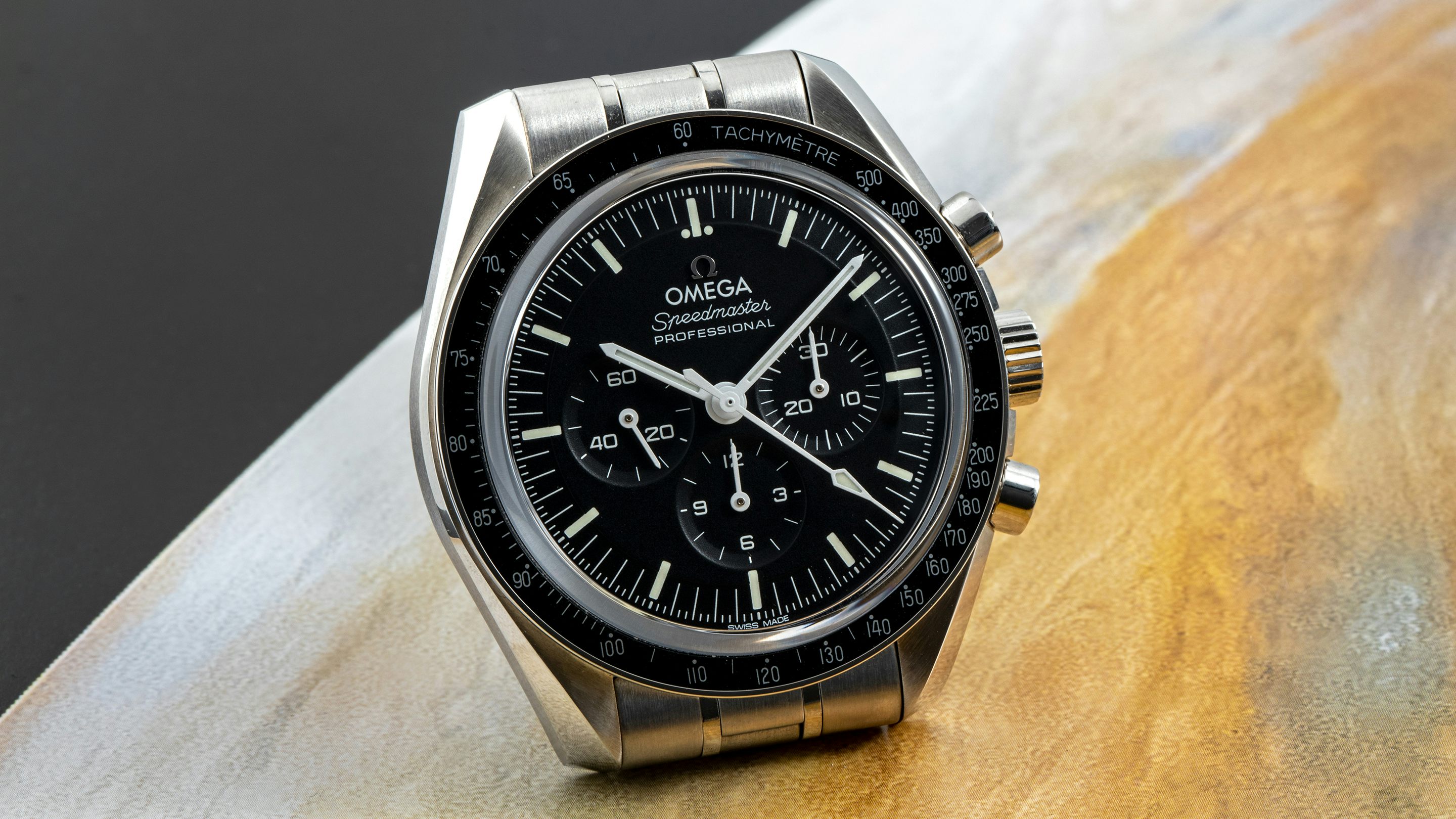
The current Moonwatch Professional (reference 310.30.42.50.01.001) launched in 2021 with the new Co-Axial Master Chronometer Cal. 3861, replacing the legendary Cal. 1861 that had been used (in various iterations) since 1968. The case is 42mm, the bezel is ceramic with a tachymeter scale in Liquidmetal, and the crystal is hesalite (acrylic) — the same material used on the original flight-qualified watches. Omega also offers a sapphire sandwich version (sapphire front and caseback) for those who want to see the movement.
The Moonwatch is 42mm x 13.2mm with a lug-to-lug of 47mm. Those proportions make it sit beautifully on wrists from 6.25 inches up. The case shape features the distinctive asymmetric profile with crown guards at 3 o’clock — a design element that’s been part of the Speedmaster since 1963 (ref. 105.003). The pushers at 2 and 4 are pump-style (push/release) for the chronograph start/stop and reset functions.
The dial is black with a step — meaning the sub-dials are recessed below the main dial surface. This step dial design creates a three-dimensional effect and is one of the most scrutinized details by collectors. The three sub-dials are: running seconds at 9, 30-minute counter at 3, and 12-hour counter at 6. The hour markers are applied (raised) with luminous fill, and the hands feature the iconic sword-shaped hour hand and baton minute hand.
For super clone purposes, the Moonwatch Professional is the most commonly replicated Speedmaster. Almost every Omega Moonwatch replica on the market is a version of this reference, which makes the factory the only real variable. OMF (OM Factory) produces the highest-quality version, with the correct case dimensions, ceramic bezel, and dial proportions. The hesalite crystal on OMF’s version has the correct slight dome shape and the way it distorts edges at extreme angles — a subtle detail that sapphire doesn’t replicate.
Dark Side of the Moon
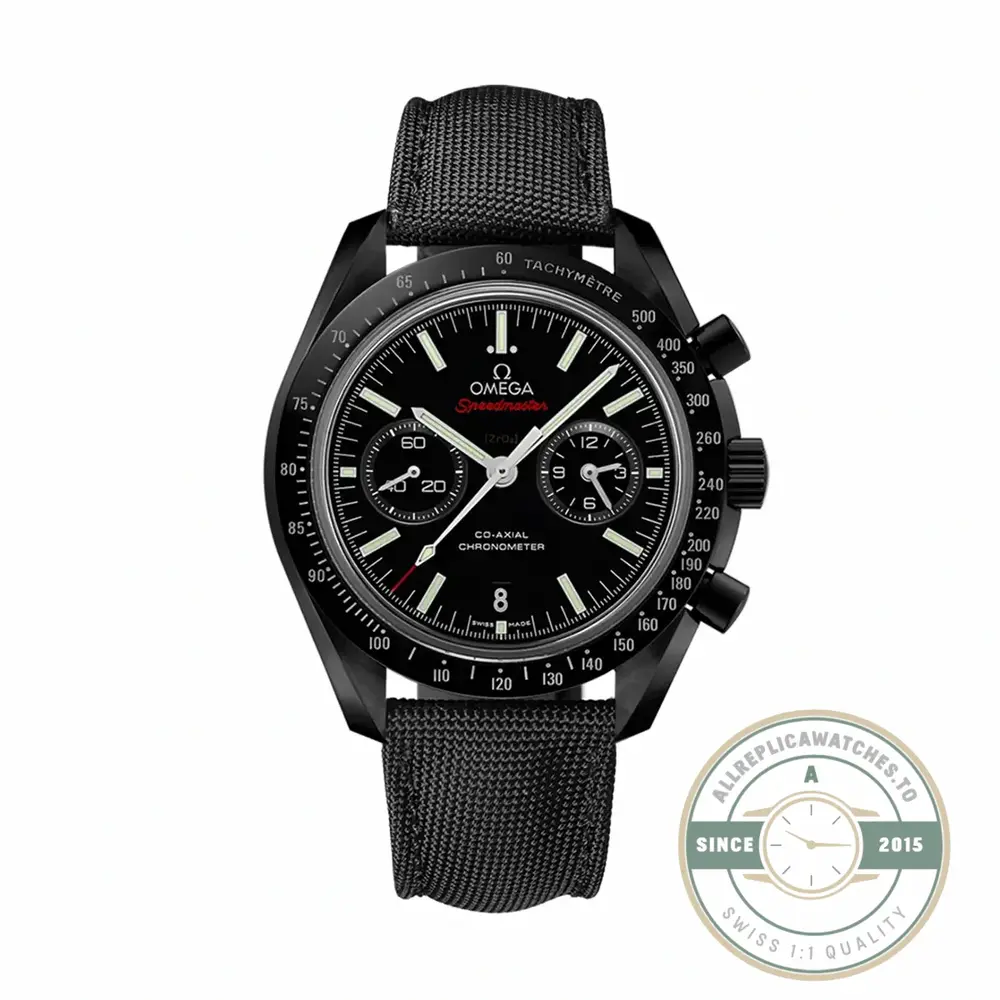
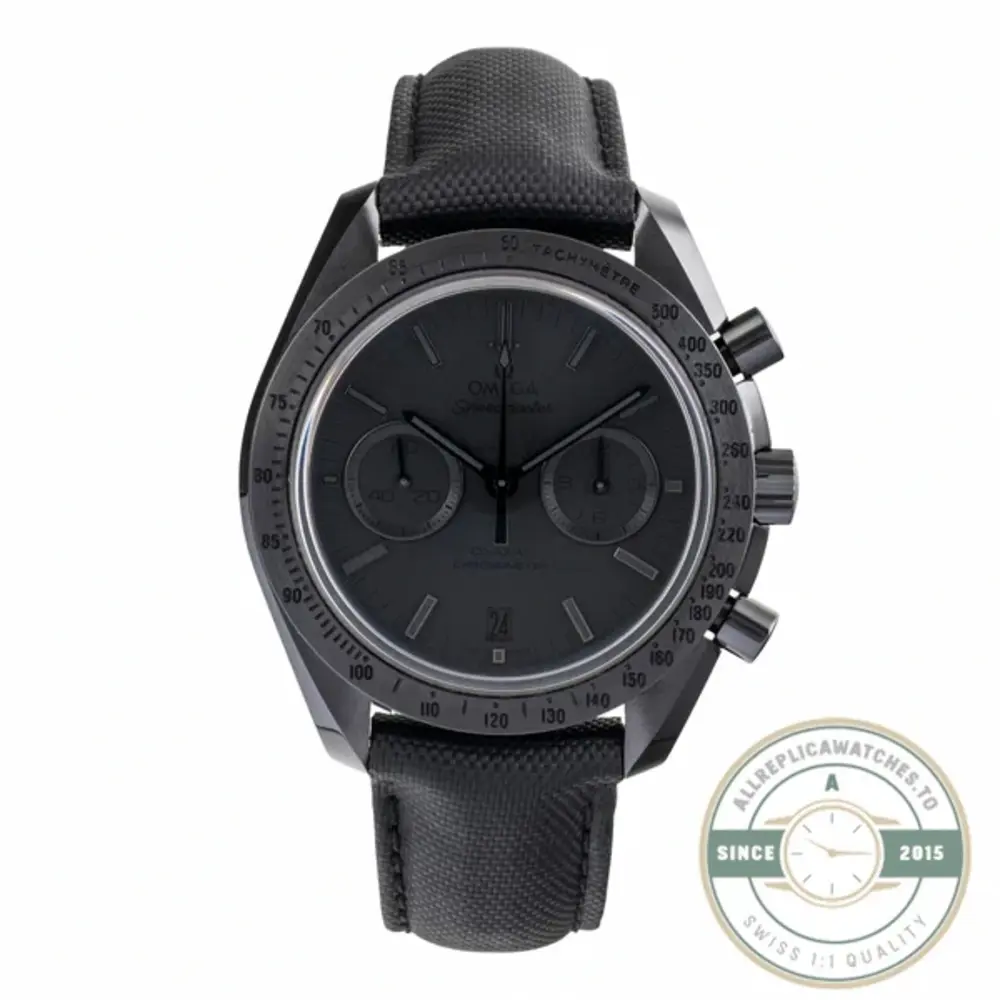
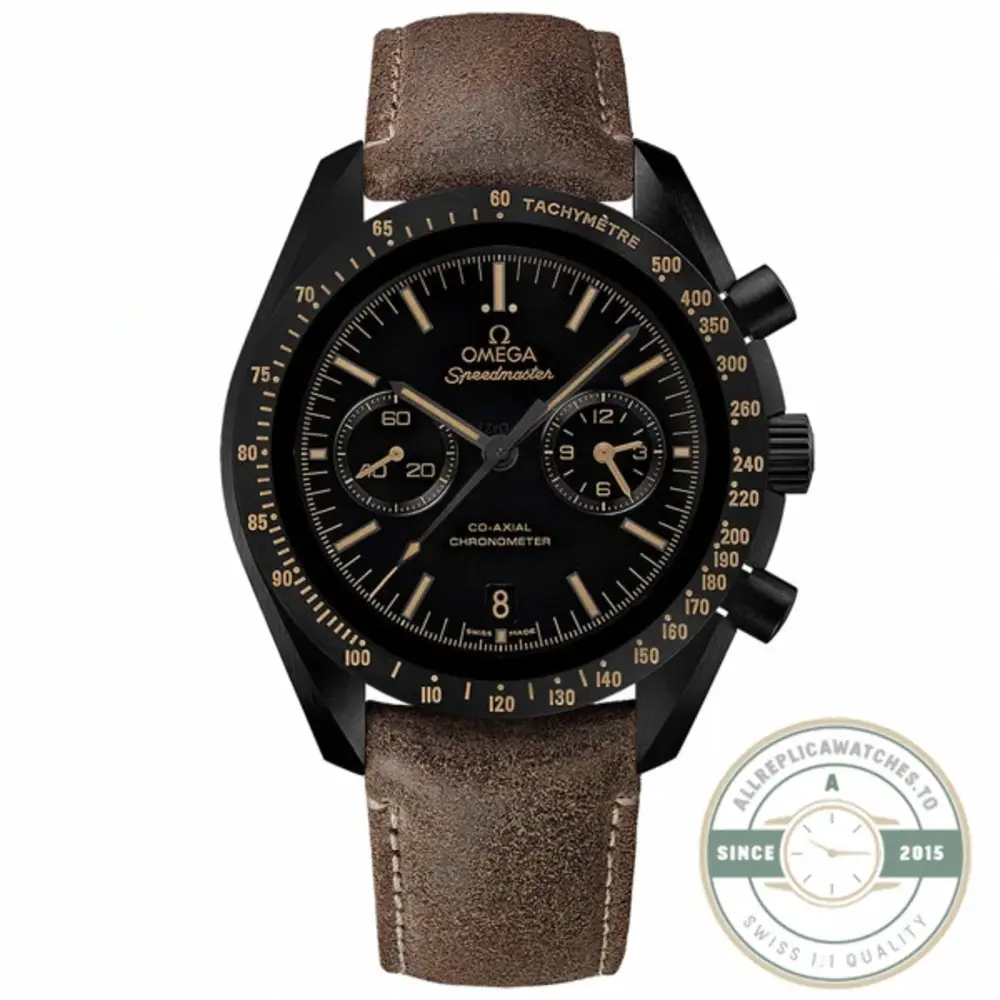
The Speedmaster Dark Side of the Moon (DSOTM) is a full ceramic version — case, bezel, and caseback are all black ceramic. At 44.25mm, it’s larger than the Moonwatch Professional and has a more modern, aggressive aesthetic. The movement is the Co-Axial Cal. 9300 — an automatic chronograph, not manual-wind like the Moonwatch. The DSOTM comes in several variants: standard black, “Pitch Black” (completely matte black with black lume), “Vintage Black” (aged lume), and limited editions.
The DSOTM is popular in the super clone market partly because the full ceramic case hides finishing imperfections better than polished steel. The matte black ceramic surface is more forgiving visually than the mirror-polished surfaces on a Moonwatch Professional. OMF’s DSOTM uses actual ceramic (not DLC-coated steel), matching the genuine’s weight characteristics — ceramic is lighter than steel but heavier than titanium.
The movement inside OMF’s DSOTM is a modified Asian 9300 clone — it’s automatic, has a functioning chronograph, and is visible through the sapphire caseback. The movement finishing is the weak point: genuine Cal. 9300 has elaborate decoration that the clone doesn’t fully replicate. But through the black ceramic caseback at normal viewing distance, the impression is convincing.
Speedmaster Racing & Reduced
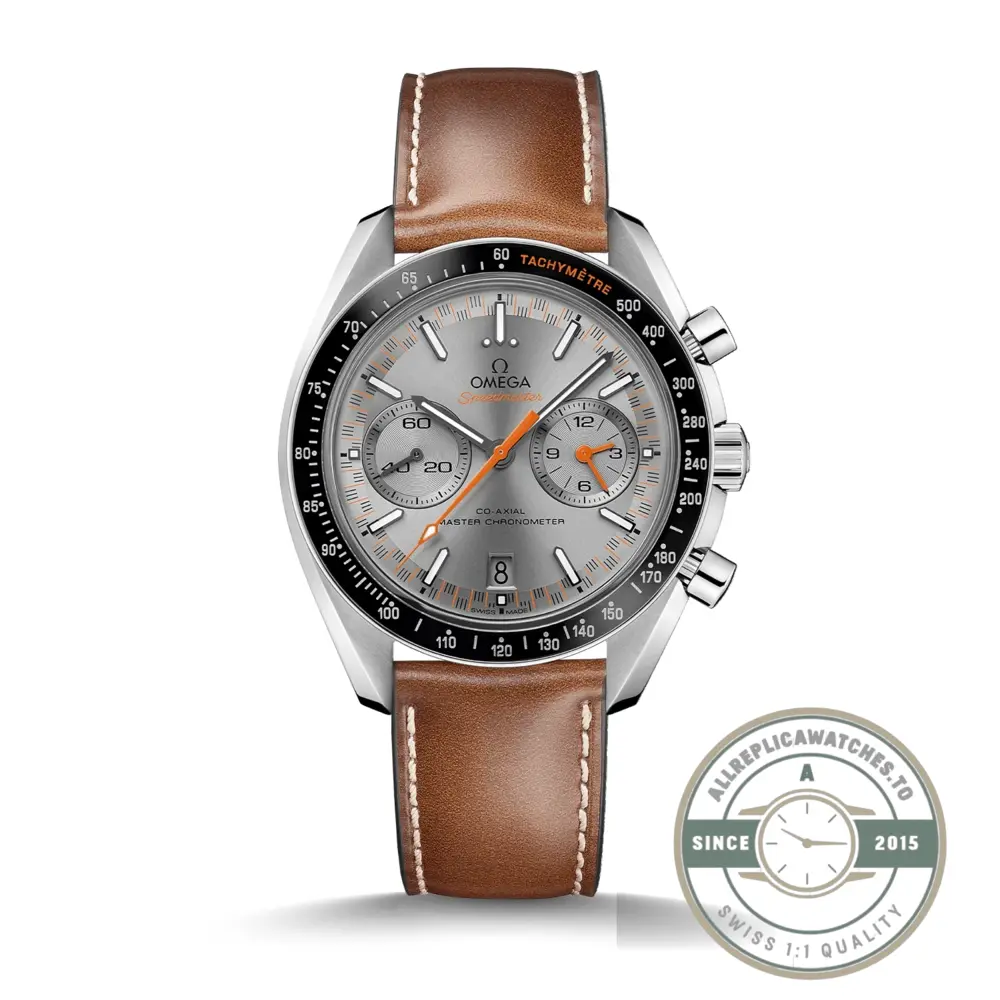
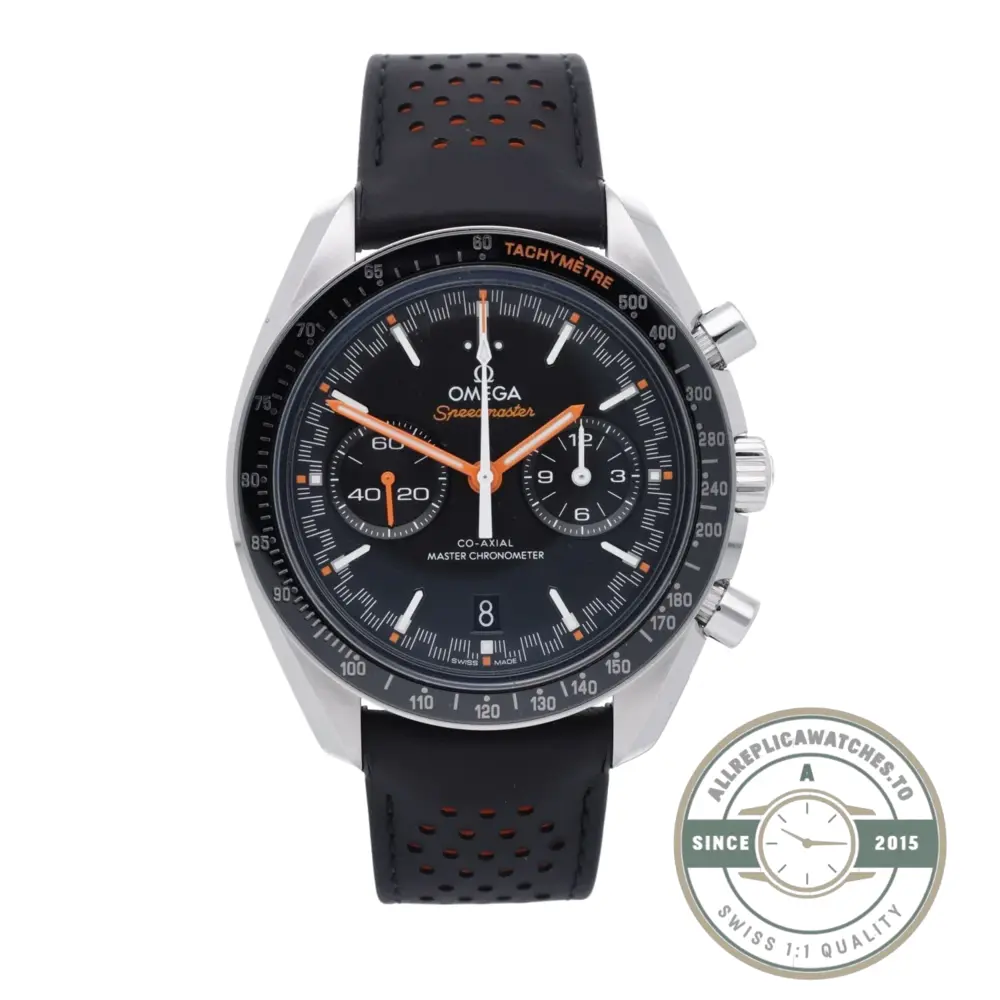
The Speedmaster Racing is a separate sub-collection within the Speedmaster family — not the same as the Moonwatch. The Racing uses the Co-Axial Cal. 3330 (automatic) and features a distinctive multi-colored tachymeter bezel and a more colorful, sport-oriented dial. At 40mm, it’s slightly smaller than the Moonwatch and wears differently on the wrist — sportier, more casual.
The Speedmaster Reduced (ref. 3510.50.00) is the smaller, automatic version of the classic Speedmaster — 39mm with an integrated automatic chronograph movement. Omega discontinued it years ago, but it remains popular on the secondary market. Replica-wise, the Reduced is available from several factories at budget quality (~75% accuracy), but no top-tier factory produces a premium version. If you want a smaller Speedmaster super clone, the Racing is the better option.
Silver Snoopy Award — The Grail
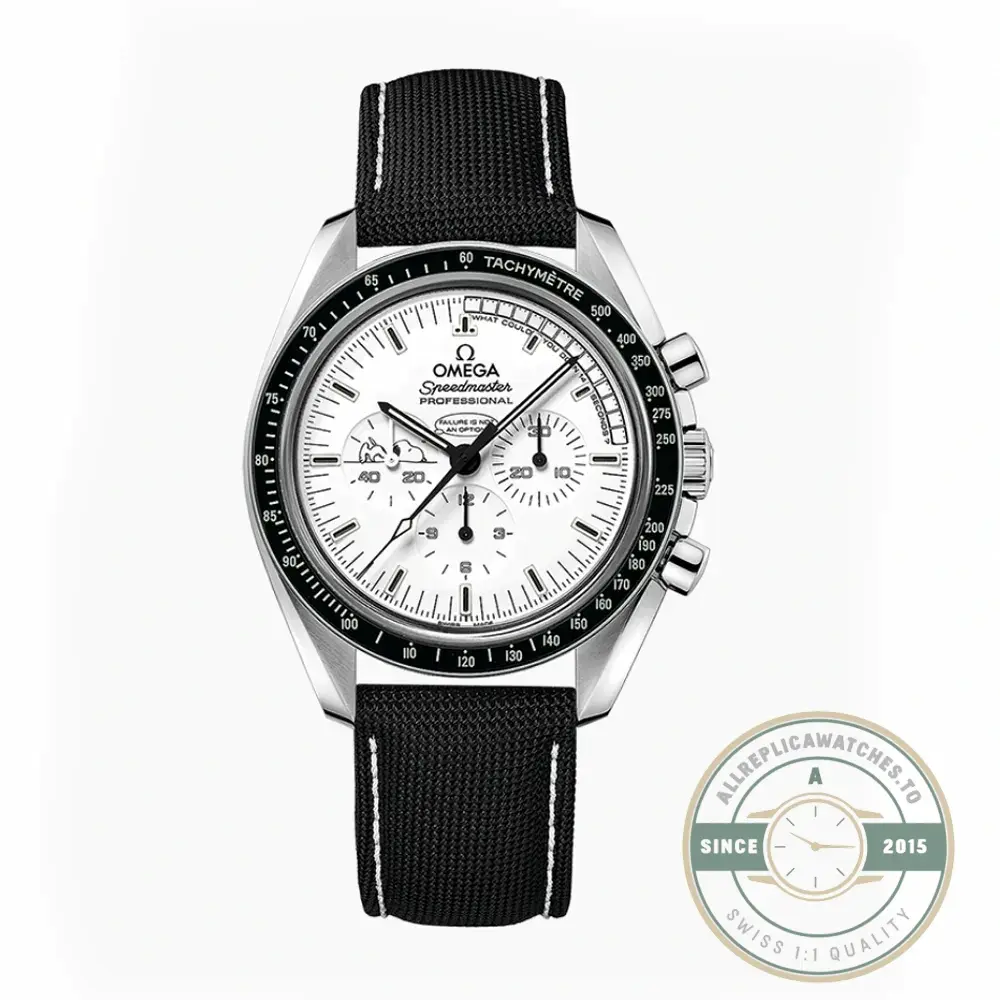
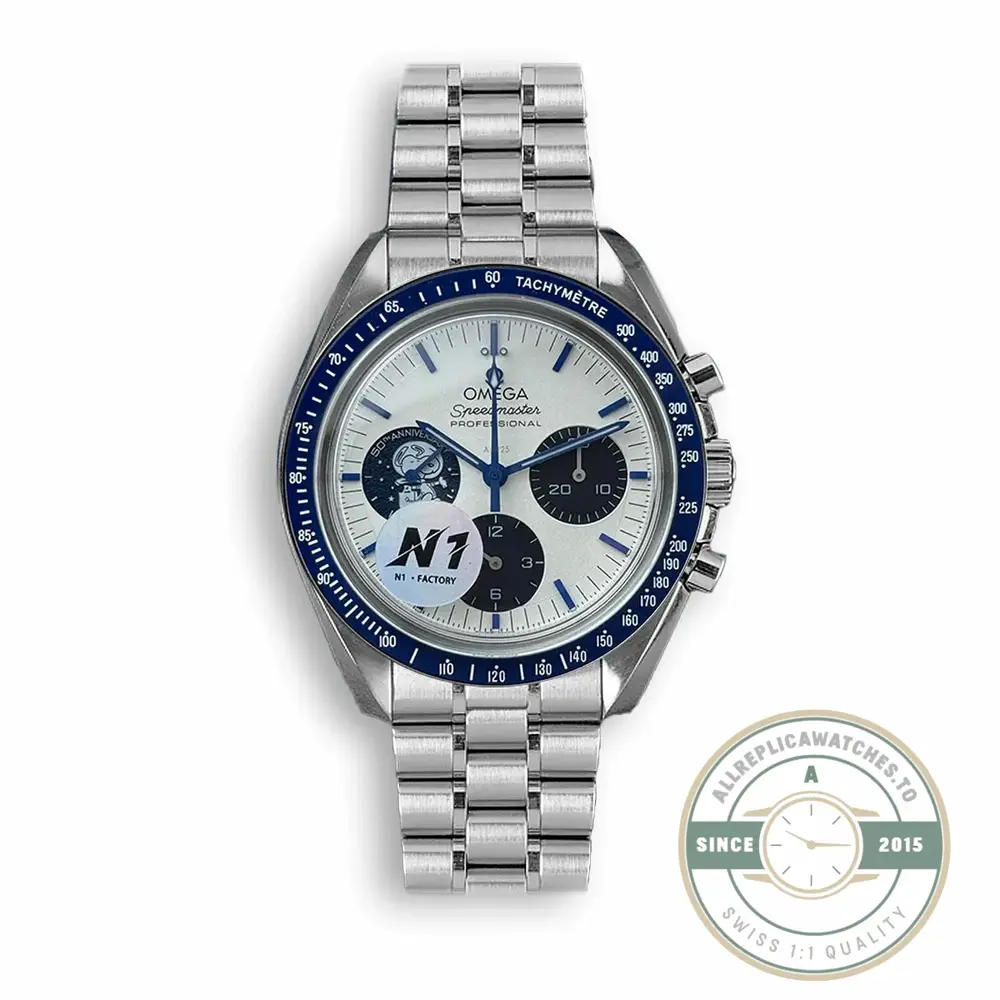
Omega Speedmaster Silver Snoopy Award 50th Anniversary Edition
The Speedmaster “Silver Snoopy Award” 50th Anniversary (reference 310.32.42.50.02.001) is the most desired modern Speedmaster. The silver/blue color scheme — silver dial with blue sub-dials, blue ceramic bezel, and a Snoopy medallion on the caseback — is stunning. But the real party trick is the caseback animation: when the chronograph is running, a small Snoopy figure orbits the moon on the caseback. This micro-animation uses the chronograph’s running seconds gear to drive the Snoopy orbit. Retail is approximately $14,100, but secondary market prices have reached $30,000+.
The super clone Snoopy exists — OMF produces a version — but with important caveats. The caseback animation works (Snoopy orbits when the chrono runs), but the movement of the figure is slightly less smooth than genuine. The silver dial color is close but genuine uses a proprietary silver finish that has a specific sheen under sunlight. The blue ceramic bezel color is accurate. The Snoopy medallion on the caseback is well-executed with clear detail. Overall accuracy is approximately 85% — lower than a VSF Seamaster but still impressive for a watch this complicated.
Is the Snoopy worth buying as a super clone? If you love the design and the story, yes. The caseback animation is a genuine conversation piece — people will ask to see it, and it works. Just know that this isn’t a VSF-level reproduction where you need a loupe to find differences. The Snoopy super clone is an 85% watch that captures the spirit of the original.
Factory Rankings — OMF, JHF, OS
Factory
Best Model
Movement
Accuracy
Notes
OMF (OM Factory)
Moonwatch Pro
Asian 7750 mod
88%
Best Overall
JHF (JH Factory)
DSOTM Ceramic
Asian 9300 clone
83%
Good DSOTM
OS Factory
Snoopy
Asian 7750 mod
85%
Snoopy Specialist
Budget (Various)
Mixed
Miyota quartz/auto
65-70%
Avoid
OMF leads the Speedmaster segment, but the gap between OMF’s best Speedmaster and VSF’s best Seamaster is significant. The Speedmaster super clone market is approximately 5-7 years behind the Seamaster/Submariner market in terms of movement technology and overall accuracy. No factory has produced a true clone of the Cal. 3861 (manual-wind column-wheel chronograph), and this limitation means every Speedmaster super clone uses a modified automatic chronograph movement — which changes the winding experience, the pushbutton feel, and the view through the caseback.
Honest Assessment: If you’re choosing between a VSF Seamaster Diver 300M and an OMF Speedmaster, the Seamaster is the objectively better super clone — 95% accuracy vs 88%, clone movement vs modified generic, and better overall finishing. The Speedmaster wins on story and design appeal. Buy the Speedmaster because you love the Moonwatch legend, not because you expect VSF-level accuracy.
Shop the Replica Speedmaster Super Clone Collection
Here’s the truth about Speedmaster super clone movements, and I’m going to be direct because this is where unrealistic expectations cause the most disappointment.
The genuine Speedmaster Moonwatch Professional uses the Cal. 3861 — a manual-winding column-wheel chronograph. You wind it by hand (no rotor), the pusher feel is crisp (column wheel), and the movement architecture is completely different from any automatic chronograph. No factory has cloned this movement. Period. The engineering required to produce a manual-wind column-wheel chronograph at replica price points doesn’t make business sense for factories.
Instead, OMF and other factories use modified versions of the Asian 7750 — an automatic cam-lever chronograph based on the Valjoux 7750 architecture. This means: (1) the watch is automatic, not manual-wind — there’s a rotor inside, and you don’t need to wind it daily; (2) the chronograph feel is different — cam-lever pushbutton engagement feels mushier than column-wheel; (3) the sub-dial layout is modified — the Asian 7750’s native sub-dial positions don’t match the Speedmaster’s, so factories use spacer rings and modified dial feet to reposition the sub-dials.
The practical impact: the chronograph works fine for timing things. Start, stop, reset — all functional. But if you hand a genuine Speedmaster and an OMF Speedmaster to someone who knows watches, the pushbutton feel and the winding behavior will immediately identify the replica. This is the fundamental limitation of current Speedmaster super clones.
Hesalite vs Sapphire Crystal
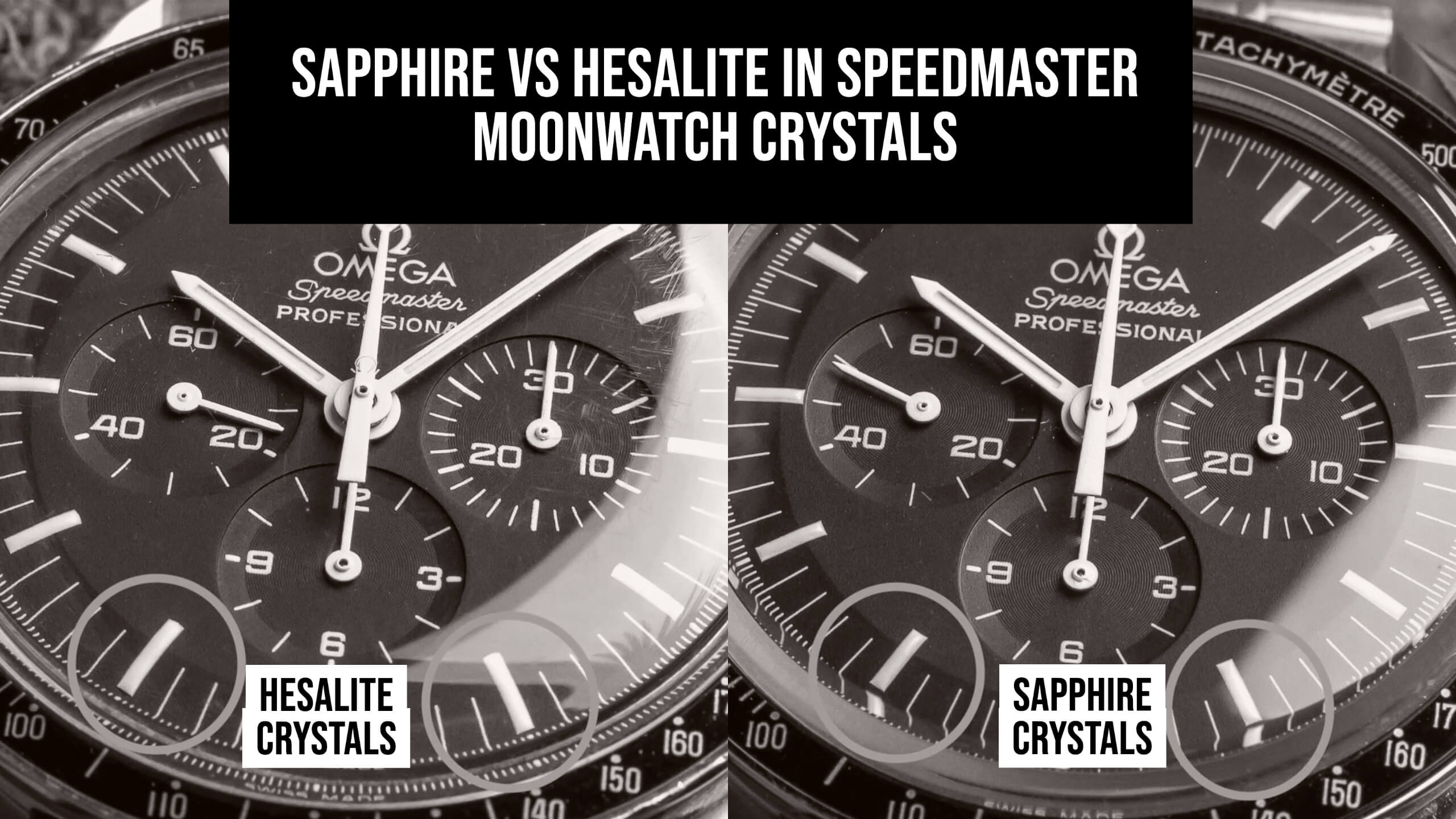
The original Moonwatch uses a hesalite (acrylic/plexiglass) crystal — not sapphire. This is a deliberate choice that Omega has maintained for decades because hesalite was the material used on the flight-qualified watches. Hesalite has a distinct warm, slightly soft visual quality — it absorbs light rather than reflecting it sharply like sapphire. Under certain angles, hesalite creates a subtle glow effect on the dial that sapphire doesn’t.
OMF’s Moonwatch uses actual hesalite — acrylic, not sapphire — which gives it the correct visual character. The dome shape (hesalite is slightly domed, sapphire is flat) is accurately reproduced. The downside of hesalite: it scratches easily. A month of daily wear will produce micro-scratches visible under direct light. The upside: polyWatch scratch remover (a $10 tube of paste) buffs hesalite scratches out in minutes. Sapphire is scratch-resistant but can’t be polished if it does scratch.
Omega offers a “sapphire sandwich” version of the Moonwatch — sapphire on front and back, allowing you to see the movement. OMF produces this version too, with a mineral crystal caseback (not sapphire, but visually similar). If you want to see the movement through the back, go sapphire sandwich. If you want the authentic Moonwatch experience, go hesalite. Purists will tell you hesalite is the only correct choice.
Every Reference Ranked
Model
Size
Best Factory
Accuracy
Buy?
Moonwatch Pro (Hesalite)
42mm
OMF
88%
Yes — #1 Pick
Moonwatch Pro (Sapphire)
42mm
OMF
85%
Good — movement visible
Silver Snoopy Award
42mm
OMF/OS
85%
Yes — if you love Snoopy
DSOTM Black Ceramic
44.25mm
OMF/JHF
83%
Good — stealth look
Racing 40mm
40mm
OMF
80%
OK — smaller wrists
Reduced 39mm
39mm
Various
70%
Skip — budget only
Speedmaster QC Checklist
Speedmaster QC requires more attention than a Seamaster because the chronograph adds complexity and more things that can be wrong.
Check
Details
Critical?
Chronograph Function
Ask dealer to start/stop/reset chronograph in video
Yes
Sub-Dial Alignment
All three sub-dials level, not tilted
Yes
Chrono Reset
Hands snap back to 12 exactly, no offset
Yes
Tachymeter Bezel
Aligned with dial, no rotation offset
Medium
Step Dial
Sub-dials recessed below main dial surface
Medium
Pusher Feel
Smooth operation, no sticking or grinding
Medium
Timegrapher
Rate ±15 s/d OK for 7750; amplitude 250+; beat error < 0.8ms
Yes
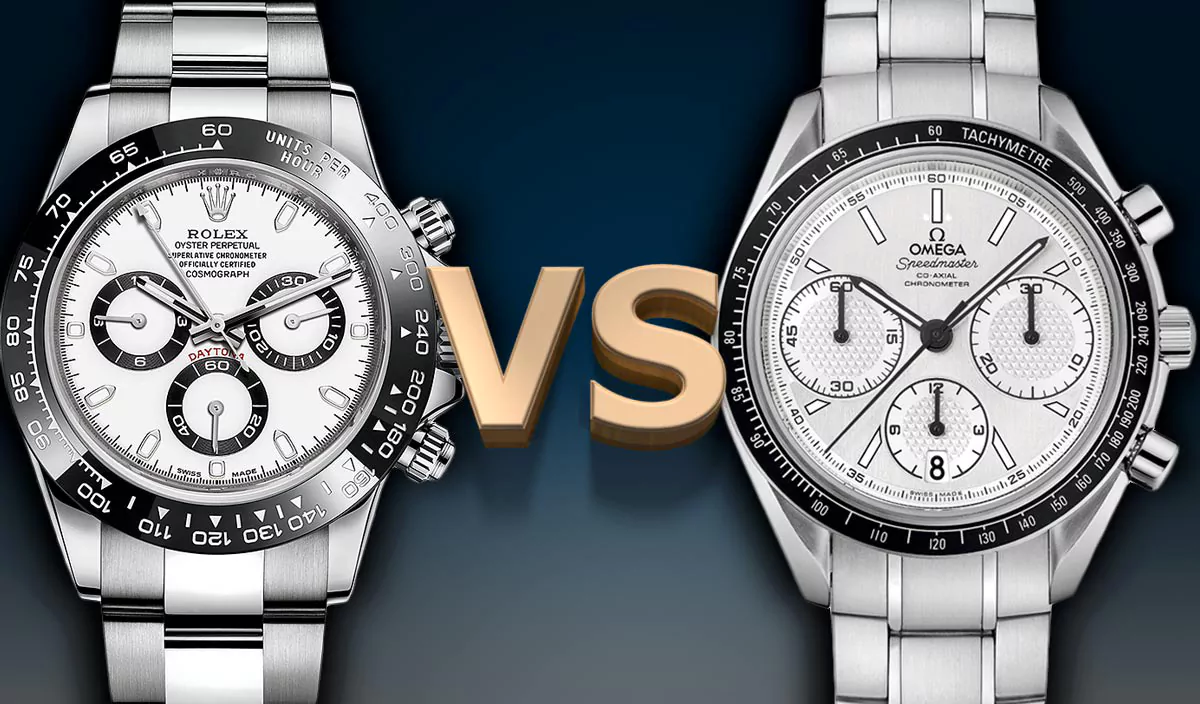
Speedmaster vs Daytona — The Eternal Rivalry
Omega Speedmaster and Rolex Daytona chronograph comparison side by side
Every watch collector has an opinion on Speedmaster vs Daytona. In the genuine market, both are iconic chronographs at different price points (Speedmaster ~$6,900, Daytona ~$14,800 retail). In the super clone market, the comparison shifts dramatically because the reproduction quality differs.
The Clean Factory/BT Factory Daytona has a significant advantage: the 4130 clone movement is a far more accurate reproduction of the genuine Rolex Cal. 4130 than any Speedmaster clone is of the Cal. 3861. This means the Daytona super clone has correct pushbutton feel, correct sub-dial positions without spacers, and a caseback view (if visible) that matches genuine architecture. The Speedmaster clone uses a fundamentally different movement type (auto vs manual-wind), which creates detectable differences in operation.
If you’re choosing based on which super clone is more accurate: Daytona wins. If you’re choosing based on design preference and story: that’s personal. The Speedmaster has the moon landing. The Daytona has Paul Newman. Both are correct choices. Many collectors own both — the Daytona for understated elegance, the Speedmaster for its chunky, tool-watch personality.
FAQ — 15 Speedmaster Questions
Q: Is the OMF Speedmaster automatic or manual-wind?
Automatic. OMF uses a modified Asian 7750 (or similar automatic chronograph). The genuine Moonwatch Professional is manual-wind. This is the most fundamental difference and cannot be changed without a completely new movement design.
Q: Does the chronograph actually work?
Yes. Start, stop, reset — all functional. The chronograph seconds hand sweeps smoothly, the minute counter advances correctly, and the hour counter works on the 12-hour sub-dial. The Asian 7750 chronograph module is well-proven and reliable.
Q: Can I tell it’s a replica by pressing the pushers?
A watch enthusiast who has used a genuine Speedmaster will notice the difference. The genuine’s column-wheel chronograph has a clean, crisp snap when you press the pushers. The OMF’s cam-lever mechanism has a mushier feel with more resistance. Casual users won’t notice — they’ll just think “it’s a chronograph button.”
Q: Why is the Speedmaster super clone less accurate than the Seamaster?
Two reasons: (1) chronograph complications are harder to replicate — more parts, more visible functions, more things to get wrong; (2) VSF invested in a clone Omega movement (VS8800) for the Seamaster, while no factory has invested in a clone Cal. 3861 for the Speedmaster. The Seamaster market is larger and justifies the R&D investment.
Q: Should I get the hesalite or sapphire version?
Hesalite if you want the authentic Moonwatch experience — it’s what the astronauts wore and it gives the dial a warm, slightly soft visual quality. Sapphire sandwich if you want to see the movement through the caseback and prefer scratch resistance. Purists choose hesalite. Pragmatists choose sapphire.
Q: Does the Snoopy caseback animation work on the replica?
Yes. The Snoopy figure orbits the moon on the caseback when the chronograph is running. The animation mechanism is driven by the chronograph seconds gear. OMF/OS versions work correctly — Snoopy moves smoothly around the Earth/Moon dial. The motion is slightly less fluid than genuine but the effect is the same and it’s a genuine party trick.
Q: How thick is the OMF Speedmaster?
OMF’s Moonwatch Pro is approximately 14mm thick — about 0.8mm thicker than the genuine (13.2mm). This difference comes from the automatic movement (which has a rotor) being thicker than the genuine’s manual-wind Cal. 3861. On the wrist, the additional height is barely noticeable unless you’re wearing a very tight-cuffed shirt.
Q: Can I put a NATO strap on the Speedmaster?
Yes — and you should. The Speedmaster is legendary on a NATO strap (the astronauts wore it on a Velcro strap over their spacesuits). The lug width is 20mm. A high-quality nylon NATO in grey or bond (grey/black stripe) costs $15-30 and completely changes the look. Many Speedmaster owners alternate between the steel bracelet and a NATO depending on the day.
Q: Is the DSOTM better than the Moonwatch as a super clone?
In some ways, yes. The full ceramic case hides micro-finishing imperfections that are visible on polished steel. The DSOTM uses an automatic Cal. 9300 clone which is closer to the genuine’s automatic movement than the Moonwatch’s manual-wind discrepancy. And the all-black aesthetic is more forgiving visually. The trade-off: it’s 44.25mm, which is large on most wrists.
Q: How reliable is the Asian 7750 movement?
The Asian 7750 has been in production for decades and is well-understood. Reliability is generally good — typical lifespan without service is 3-5 years of daily wear. The chronograph function is the most likely thing to need attention over time (reset misalignment is the most common issue). Parts are widely available and any competent watchmaker can service it.
Q: Speedmaster or Seamaster — which Omega should I buy first?
As a super clone: the Seamaster Diver 300M from VSF — it’s more accurate, has a better clone movement, and is more versatile for daily wear. As a watch design: the Speedmaster — it’s one of the most important watches ever made, and wearing it connects you to a story no other watch can match. If you can only buy one, Seamaster. If you can buy two, add the Speedmaster. Both are in our range of Omega replica watches, so you can compare them before deciding.
Q: Will the Speedmaster super clone market improve?
Gradually, yes. The trend in the super clone industry is toward genuine clone movements — VSF did it for Omega (VS8800), Clean did it for Rolex (VR3135). Eventually a factory may develop a clone Cal. 3861 for the Speedmaster. But manual-wind column-wheel chronographs are expensive to reverse-engineer, and the Speedmaster market is smaller than Submariner or Seamaster. Realistic timeline: 3-5 years, maybe longer.
Q: Is the bracelet good on the OMF Speedmaster?
Decent. The five-row link bracelet has the correct proportions and alternating brushed/polished finishing. The clasp works well and the micro-adjustment holes are present. Where it falls short compared to genuine: the links have slightly more play (rattle) and the clasp finishing is less refined. It’s a perfectly functional bracelet that looks right — it just doesn’t feel as premium as genuine Omega or as good as VSF’s Seamaster bracelet.
Q: Can I use the Speedmaster as a daily beater?
Yes. The OMF Speedmaster is robust enough for daily wear. The hesalite crystal will scratch (use polyWatch to remove scratches), the case will pick up desk-diving marks, and the chronograph will keep working through it all. Many owners deliberately beat up their Speedmaster and enjoy the patina — it’s a tool watch designed to be used, not babied.
Final Verdict
The Speedmaster super clone is an honest proposition: you get 88% of the most famous chronograph ever made, with a functioning chronograph, correct aesthetics, and a watch that tells one of the greatest stories in horological history. The movement is the compromise — automatic instead of manual-wind — but for most wearers, this is actually a convenience (no daily winding).
Buy the OMF Moonwatch Professional with hesalite crystal. Wear it on the bracelet during the week and a NATO on weekends. Tell someone about Apollo 13 when they notice it on your wrist. That’s the Speedmaster experience — and no amount of accuracy percentage can quantify what it feels like to wear a watch that went to the moon.
Omega Seamaster Replica — Diver 300M, Planet Ocean, Aqua Terra, VSF vs ORF, and the Complete Buyer’s Breakdown
Last updated: March 2026 • 26-minute read • 40+ Seamaster builds compared across 5 factories
Omega Seamaster replica watches represent one of the smartest entry points into the super clone world — and one of the most rewarding. Unlike Rolex or Patek, where a single reference dominates conversation, the Seamaster family spans at least four distinct sub-collections: the Diver 300M (the James Bond watch), Planet Ocean, Aqua Terra, and the heritage-inspired Seamaster 300. Each sub-collection has its own design language, movement, and factory specialization. VSF (VS Factory) has emerged as the undisputed champion of the Seamaster Diver 300M, producing what many collectors consider the single most accurate super clone relative to its genuine counterpart. This guide covers every Seamaster sub-collection, every dial variant worth buying, the factory hierarchy, the critical VS8800 clone movement, and exactly how to order and QC your first (or fifth) Seamaster super clone.
Omega Seamaster Diver 300M blue ceramic bezel on steel bracelet
The Seamaster DNA — 75 Years of Ocean Heritage
Omega launched the Seamaster in 1948, originally designed as a robust everyday watch for the British military — not a diver’s instrument. The CK 2518 Seamaster that debuted that year was waterproof and shock-resistant, borrowing technology from the watches Omega supplied to the Royal Navy during World War II. It took another 15 years before Omega created a purpose-built dive watch, the Seamaster 300, in 1957.
What happened between 1957 and today is the story of how one watch family branched into four distinct sub-collections. The Seamaster 300 stayed as the heritage diver. The Diver 300M arrived in 1993 and became the modern dive watch — and then James Bond strapped one on in GoldenEye (1995), changing everything. The Planet Ocean came in 2005 as the serious tool watch for actual diving. And the Aqua Terra launched that same year as the luxury daily-wear piece with water resistance you’ll never need but is nice to have.
Each sub-collection has its own personality, size range, and target customer. But all four share two things: the Seamaster caseback hippocampus logo (a sea horse — Omega’s maritime emblem since 1948) and the increasingly impressive in-house Co-Axial Master Chronometer movements. This dual identity — heritage pedigree plus cutting-edge movement technology — is why the Seamaster family outsells every other Omega collection combined, including the Speedmaster.
Diver 300M — The James Bond Reference
Omega Seamaster Diver 300M wave pattern dial black ceramic
The current-generation Seamaster Diver 300M (reference 210.30.42.20.03.001 for the blue on steel) debuted in 2018 with a complete redesign that made every previous version look dated. The key changes: ceramic bezel with enamel-filled diving scale instead of aluminum, a laser-engraved wave pattern on the ceramic dial (replacing the older painted wave motif), and a ceramic caseback with the hippocampus rendered in relief. Case diameter stayed at 42mm but Omega refined the proportions, specifically the lug-to-lug distance (50mm), making it wear more compact than the measurements suggest.
The wave pattern dial is the Seamaster’s signature. On the genuine, Omega uses a laser to etch a repeating wave pattern into the ceramic dial surface. This pattern catches light differently depending on the angle — from straight on, the waves are subtle; from the side, they become pronounced. The waves are a visual tribute to the original 1990s Seamaster that had painted wave motifs, but the laser-etched ceramic version is significantly more refined.
VSF’s reproduction of this dial is the primary reason they dominate the Seamaster market. Their wave pattern has the correct depth, spacing, and light-catch behavior. Side-by-side with genuine at arm’s length, you genuinely cannot tell them apart. Under a loupe, the genuine’s laser cuts are fractionally cleaner at the wave troughs, but this is a difference you need magnification and a genuine reference piece to identify.
Collector’s Note: The Seamaster Diver 300M is often called the best “value” genuine Omega — retail is approximately $5,400 for the steel/blue version. But the super clone version from VSF is widely considered the most accurate super clone in the entire industry, percentage-wise closer to genuine than any other factory’s product. If you’re buying one super clone watch to start your collection, many experienced collectors will tell you to start here.
Case Construction and Finishing
The Diver 300M case is 42mm x 13.5mm with a lug-to-lug of 50mm. It’s 316L stainless steel with alternating brushed and polished surfaces — the case sides are brushed, the bezel edge is polished, the crown guards are polished, and the caseback is a mix. VSF matches these finishing transitions with remarkable precision. The helium escape valve at 10 o’clock is functional (it actually works — not a decoration) and VSF replicates the valve mechanism with the correct screw-down action and a seal that’s waterproof to at least 50 meters (genuine is rated to 300m).
Weight is 185 grams on the bracelet — VSF hits 183 grams, which is functionally identical on the wrist. This weight is noticeable but comfortable, heavier than a Submariner (155g) but lighter than a Planet Ocean (200g+). The case profile when viewed from the side shows a gradual taper from the bezel down to the caseback — VSF reproduces this taper accurately. One micro-detail: the polished bevel where the case meets the caseback is slightly wider on VSF than genuine by approximately 0.1mm. You will never notice this without calipers.
The Ceramic Bezel
Omega’s ceramic bezel is a feat of manufacturing. The diving scale markings and numerals are recessed into the ceramic and filled with white enamel (or Liquidmetal on some references). VSF’s ceramic bezel uses actual ceramic — not a coating — with the correct ZrO2 (zirconium dioxide) composition that gives it the slightly glossy, stone-like surface feel. The color match on blue bezels is within half a shade of genuine. The enamel-filled markings are crisp, with minimal bleeding at the edges.
Bezel action is unidirectional with 120 clicks per rotation, same as genuine. VSF’s click feel is firm and precise — not mushy, not too stiff. The bezel grip edge (the knurled edge you grab to rotate) has the correct pattern depth and spacing. One genuine detail that VSF handles well: the triangle marker at 12 on the bezel has a SuperLuminova pip inside it, and VSF’s pip matches the lume color and brightness of the dial markers.
Every Dial Variant Ranked
The Diver 300M comes in numerous dial/bezel combinations. Here’s how the VSF versions rank in terms of accuracy and desirability.
Dial / Bezel
Reference
VSF Accuracy
Popularity
Verdict
Blue / Blue Ceramic
210.30.42.20.03.001
★★★★★
🔥🔥🔥🔥🔥
Top Pick
Black / Black Ceramic
210.30.42.20.01.001
★★★★★
🔥🔥🔥🔥
Stealth Classic
Green / Green Ceramic
210.30.42.20.10.001
★★★★☆
🔥🔥🔥
Trendy Choice
White / White Ceramic
210.30.42.20.04.001
★★★★☆
🔥🔥🔥
Summer Piece
Two-Tone Blue (Sedna Gold)
210.22.42.20.03.001
★★★☆☆
🔥🔥
Mixed Bag
No Time to Die (Titanium)
210.90.42.20.01.001
★★★★☆
🔥🔥🔥🔥
007 Pick
The blue dial is the best-selling Seamaster Diver 300M — genuine and replica — and for good reason. VSF’s blue dial matches the genuine’s sunburst-under-wave texture almost perfectly. The blue shade shifts from deep navy in low light to vibrant cobalt in sunlight, just like the genuine. The black version is equally accurate but less popular simply because blue is the Seamaster’s signature color.
The green dial is a newer addition and VSF’s color match is close but not perfect — the green runs slightly more olive than the genuine’s forest green in certain lighting conditions. It’s still a beautiful watch and the difference requires a genuine next to it to identify. The “No Time to Die” edition in titanium/mesh is popular because of the Bond connection. VSF uses actual grade 2 titanium (not steel) for this version, which means it has the correct weight (noticeably lighter than steel) and the distinctive matte grey finish. The full dial lineup for every Omega Seamaster clone build is worth scanning before you settle on a favorite.
Insider Tip: The two-tone Sedna Gold version is the weakest VSF Seamaster. The rose gold plating on genuine Omega uses their proprietary Sedna gold alloy — a specific copper/palladium/gold composition that creates a unique warm pink tone. VSF’s plating is standard rose gold and appears slightly more yellow/copper than genuine Sedna gold, especially under warm lighting. If two-tone is your preference, ORF’s version actually has a better color match for the gold elements.
Planet Ocean — The Tool Watch
Omega Seamaster Planet Ocean 600M with orange bezel diving watch
The Planet Ocean is the Seamaster for people who think the Diver 300M is too refined. At 43.5mm and 16mm thick, the Planet Ocean is a chunk of steel on the wrist. It weighs over 200 grams on the bracelet and has 600-meter water resistance — serious enough for actual saturation diving, not just snorkeling on vacation. The bezel is ceramic with a Liquidmetal-filled diving scale, and the movement is the Co-Axial Master Chronometer Cal. 8900.
VSF produces the Planet Ocean 600M in the 43.5mm size with several dial variants. The accuracy level is slightly below the Diver 300M — about 90% vs 95% — primarily because the Planet Ocean’s larger case has more surface area where subtle finishing differences can appear. The ceramic bezel insert is excellent, the dial printing is clean, and the Liquidmetal-filled minute track is correctly rendered. Where VSF’s Planet Ocean falls short relative to their Diver 300M: the brushing grain direction on the case flanks is slightly coarser than genuine.
The Planet Ocean orange bezel version is the most popular — that orange-on-black combination has been a Seamaster signature since the original Planet Ocean launch. VSF’s orange ceramic bezel color is very close to genuine. The 39.5mm “small” Planet Ocean is less commonly replicated; if you want this size, you’re limited to fewer options and the accuracy drops to roughly 85%. Across the whole Seamaster Planet Ocean replica range the 43.5mm case is the safe default, simply because that is where the factories concentrate their tooling.
Feature
Diver 300M
Planet Ocean
Aqua Terra
Seamaster 300
Diameter
42mm
43.5mm
41mm
41mm
Thickness
13.5mm
16mm
13.2mm
13.8mm
WR
300m
600m
150m
300m
Movement
Cal. 8800
Cal. 8900
Cal. 8900
Cal. 8912
Best Factory
VSF
VSF
VSF
SBF
Accuracy vs Gen
95%
90%
92%
88%
Best For
First super clone
Big wrist / diver
Office / dress-dive
Vintage lover
Aqua Terra — The Everyday Luxury
The Aqua Terra is the Seamaster you wear with a suit. At 41mm and 13.2mm thick, it sits flat and thin on the wrist — closer to a dress watch than a diver. There’s no rotating bezel, no helium escape valve, no wave dial. Instead, the Aqua Terra has a teak-concept dial: vertical grooves inspired by the wooden decks of luxury sailboats. The hour markers are applied (raised metal), the date window is at 6 o’clock, and the overall impression is sophisticated rather than sporty.
Omega Seamaster Aqua Terra 150M green teak concept dial
VSF’s Aqua Terra is their second-best Omega after the Diver 300M. The teak-concept dial lines are correctly spaced and have the right depth. The applied hour markers are well-finished with clean edges. The date window at 6 has the correct font weight and positioning. Color variants include blue (most popular), black, green, and silver — VSF’s blue Aqua Terra dial color is excellent; the green version suffers from the same slightly-too-olive issue as the green Diver 300M.
The Aqua Terra bracelet is a tapered design that’s quite different from the Diver 300M’s wider, sportier bracelet. VSF’s AT bracelet has the correct link shape and taper, with the clasp machining being slightly less refined than genuine — the butterfly clasp has marginally less polish on the internal surfaces. This is invisible when wearing the watch.
One strong argument for the Aqua Terra: it’s the most versatile Seamaster. You can wear it to a board meeting, a beach barbecue, and a wedding without looking out of place. The Diver 300M is sportier, the Planet Ocean is bigger, the Seamaster 300 is more niche. The Aqua Terra works everywhere. At 150m water resistance, you’re still covered for swimming and snorkeling.
Seamaster 300 — Heritage Reborn
The Seamaster 300 (not the Diver 300M — different watch) is Omega’s tribute to their original 1957 dive watch, the CK 2913. The current version (reference 234.30.41.21.01.001) uses a sandwich dial construction where the indices are cut out of the top dial layer, revealing a luminous layer beneath. This gives the lume a different visual character than applied markers — more vintage, more tool-watch.
The bezel is ceramic with Liquidmetal-filled numerals, and the caseback features the vintage “naiad lock” — a system where the seahorse emblem on the caseback always stays upright when the caseback is screwed in. The crown is a large, knurled design reminiscent of vintage diving crowns. Inside beats the Cal. 8912, visible through the sapphire caseback.
SBF (S Factory) produces the best Seamaster 300 super clone. Their sandwich dial execution is convincing, with the correct lume-through-cutout visual effect. The case shape — which has softer, more curved lines than the angular Diver 300M — is accurately reproduced. The “naiad lock” caseback text alignment is correct. The main tell is the movement finishing: SBF uses a decorated Miyota base (not a clone Omega caliber), so the view through the caseback is less convincing to someone who knows what a genuine Cal. 8912 looks like.
VSF — The Omega King
Omega Co-Axial Master Chronometer movement caliber detail
VS Factory (VSF) dominates Omega replicas the way Clean Factory dominates Rolex. Their position isn’t just about accuracy — it’s about the complete package: dial quality, case construction, movement reliability, and bracelet finishing. VSF invested in developing their own clone movement (the VS8800) rather than decorating a generic Swiss or Japanese movement, which is the primary reason their Omega products stand above the competition.
VSF was raided by Chinese authorities in 2021, along with several other major factories, in a broad intellectual property enforcement sweep. They went dark for approximately four months, then gradually resumed production. The post-raid VSF products are generally considered equal to or slightly better than pre-raid quality — they apparently used the downtime to refine their molds and tooling.
The VSF production hierarchy for Omega products: Diver 300M (their best, arguably the best single super clone in existence) → Aqua Terra (excellent, 92% accuracy) → Planet Ocean (very good, 90%) → the occasional limited edition piece. VSF does not produce the Seamaster 300 heritage model or the Speedmaster — different factories handle those references.
Factory Insight: VSF’s competitive advantage isn’t just one thing — it’s systematic. They have dedicated ceramic processing (real ceramic, not coated steel), their own movement production line (VS8800/VS8900), proprietary lume application methods, and strict quality control that rejects pieces other factories would ship. This vertical integration is expensive, which is why VSF products typically cost 15-25% more than comparable factory offerings — and why they’re worth it.
ORF (OR Factory) positions itself as the VSF alternative at a lower price point. Their Diver 300M uses a decorated Miyota 8215 movement instead of a clone Omega caliber, which reduces cost but also means the movement visible through the caseback doesn’t match genuine Omega’s finishing or architecture. The external accuracy is roughly 85% — good but noticeably below VSF when placed side by side. ORF’s main advantage: their two-tone models (Sedna gold + steel) actually have a better gold color match than VSF’s.
SBF (S/Sea Best Factory) specializes in the Seamaster 300 heritage line and produces a decent Planet Ocean. Their strength is in vintage-inspired models where the aesthetic is more forgiving of minor imperfections. MKS Factory produces budget Seamasters that are serviceable at roughly 75% accuracy — fine as casual wear, not convincing under scrutiny.
Factory
Best Model
Movement
Accuracy
Recommendation
VSF
Diver 300M
VS8800 Clone
95%
Buy This One
ORF
Two-Tone Models
Miyota 8215
85%
Budget or Two-Tone
SBF
Seamaster 300
Miyota Decorated
88%
Heritage Models
MKS
Budget Seamaster
Miyota 8215
75%
Casual Only
VS8800 Clone Movement Deep Dive
The VS8800 is a clone of Omega’s Co-Axial Cal. 8800. “Clone” means VSF reverse-engineered the genuine movement’s architecture and manufactured their own version — it’s not a decorated Swiss ETA or Japanese Miyota with a fancy rotor. The VS8800 replicates the genuine’s plate layout, bridge design, and (critically) the visible elements that are seen through the sapphire caseback.
Specifications: 25,200 bph (3.5Hz), 48-hour power reserve (genuine is 55 hours — VSF is slightly lower), hacking seconds, quickset date, and hand-winding capability. The rotor has “Co-Axial Master Chronometer” text and the correct finishing pattern — Geneva stripes on the bridges, perlage on the mainplate. Under normal viewing conditions through the caseback, the VS8800 is very convincing. Under magnification, the Geneva stripes are less defined than genuine (machine-cut vs. hand-applied on genuine), and the text engraving on the rotor is slightly less crisp.
Reliability is strong. The VS8800 uses a modified Hangzhou base caliber with clone-specific modifications for the Omega architecture. Accuracy is typically +/-5 seconds per day out of the box, which is within COSC specification (genuine Cal. 8800 is METAS-certified to +/-2 seconds per day). A decent watchmaker can regulate a VS8800 to +/-2 seconds per day if you care about absolute precision.
Service Tip: The VS8800 is serviceable by any competent watchmaker familiar with Asian clone movements. Standard service interval is every 3-5 years (same as genuine). Parts are available — rotors, balance assemblies, stems, and crowns can be sourced from VSF parts suppliers. If your watchmaker charges $80-120 for a service, that’s reasonable. If they quote $300+, find a different watchmaker — they’re pricing for genuine Omega service difficulty, which doesn’t apply here.
Bracelet vs Rubber — Which Strap
The Diver 300M comes on three strap options: the steel bracelet, the rubber strap, and the NATO/mesh (for specific editions). VSF produces all three, but the bracelet and rubber are the main choices.
The steel bracelet uses five-row links with alternating brushed center links and polished outer links. VSF’s link proportions and finishing transitions are accurate. The clasp is a push-button deployment with a diver’s extension — VSF’s clasp operates smoothly and the extension mechanism works correctly. One genuine detail: the clasp has the Omega logo engraved on the outside — VSF’s engraving is slightly shallower than genuine, but this is the kind of micro-detail that requires a genuine next to it.
The rubber strap is where VSF arguably outperforms expectations. Their rubber compound is soft and flexible — not the rigid, cheap-feeling rubber that budget brands use. The strap has a ribbed texture on the inside (for sweat drainage) and a smooth finish on the outside with the Seamaster logo embossed near the clasp. VSF’s rubber strap is comfortable for all-day wear and doesn’t trap moisture. Many VSF owners order both bracelet and rubber and swap depending on the occasion — beachwear on rubber, office on steel.
Seamaster QC Checklist
When your QC photos arrive from the dealer, systematically check these points. The Seamaster is a forgiving watch for QC — VSF consistency is high — but it’s worth being thorough.
Check Point
What to Look For
RL if Bad?
Dial Wave Pattern
Waves should be even depth, no skipped/double lines
Yes
Bezel Alignment
12 o’clock triangle centered between crown guards
Yes
Date Window
Centered in window, font weight consistent
Maybe
Dial Color
Blue should be consistent, no fading or uneven spots
Yes
Lume Application
Even fill on hands and indices, no gaps or overflow
Rotor text aligned, bridges clean, no loose screws
Maybe
Genuine vs VSF — Side by Side
This is the comparison everyone wants. I’ve spent hours with both a genuine Seamaster Diver 300M blue and a VSF version, worn them alternately for weeks, and shown them to people who own genuine Omegas. Here’s what you need to know.
The dial is the hardest to distinguish. VSF’s wave pattern, color, and finishing are so close that even experienced Omega owners had to look twice. One told me “the blue is maybe slightly more saturated on one of these” and then pointed at the wrong one — he identified the VSF as genuine. In isolation (without a genuine next to it), the VSF dial is indistinguishable. The applied Omega logo on the dial — a raised, polished metal applique — has the same dimensions and polish quality on both.
The bezel is the second hardest. The ceramic color match is within a shade, the enamel fill quality is very close, and the bezel action (click feel and rotation smoothness) is comparable. The genuine’s bezel has a slightly more refined click — a touch crisper, with less lateral play — but this is a difference you notice only by switching between them rapidly.
The bracelet is where differences start becoming detectable — but only by feel. The genuine bracelet links have marginally smoother edges (better deburring), the clasp opens with a slightly more satisfying click (better spring temper), and the diver’s extension deploys more smoothly. These are tactile differences, not visual ones. A photograph of the bracelet won’t reveal them.
The movement, viewed through the caseback, is the most detectable difference for a trained eye. The genuine Cal. 8800’s Geneva stripes have a depth and luster that the VS8800 doesn’t quite match. The genuine rotor has DLC coating (diamond-like carbon) on certain surfaces that creates a distinctive dark grey finish — VSF’s rotor coating is close but not identical under strong light. For anyone who isn’t a watchmaker or serious collector with experience opening Omegas, the caseback view looks correct.
Bottom Line: If you placed a VSF Seamaster Diver 300M on a table at a dinner party with watch enthusiasts, the conversation would be about how much they like your Seamaster — not whether it’s genuine. That’s the level of execution VSF has achieved. The differences exist. They’re real. And they’re invisible in any normal wearing scenario.
FAQ — 20 Seamaster Questions Answered
Q: Is the VSF Seamaster really the best super clone?
In terms of percentage accuracy versus genuine, yes. The VSF Diver 300M achieves roughly 95% accuracy — a higher percentage than Clean Factory’s Submariner (~93%) or 3KF’s Nautilus (~94%). This doesn’t mean it’s “better” in absolute terms, because each brand has different complexity, but it’s the most faithful reproduction relative to its genuine counterpart.
Q: Can I swim with a VSF Seamaster?
Yes, with caveats. VSF’s water resistance is rated to approximately 50 meters (tested). That covers swimming, showering, and light snorkeling. Don’t take it scuba diving or into a sauna. If you want extra confidence, have a local watchmaker test and reseal the gaskets before submerging it.
Q: VSF vs ORF — is the price difference worth it?
Absolutely. ORF is roughly 30-40% cheaper but the gap in quality is significant — especially the movement (Miyota vs clone Omega), the dial wave pattern (less refined on ORF), and the ceramic bezel (ORF’s color is slightly off). If you’re buying one Seamaster, spend the extra for VSF. If you’re buying multiple watches on a budget and want an Omega in the rotation, ORF is serviceable.
Q: Blue or black dial — which should I buy?
Blue is the signature Seamaster color and the more versatile choice. It pairs with everything from a white T-shirt to a navy blazer. Black is equally accurate from VSF and a better choice if you own many blue-dial watches already or prefer a more understated look. Neither is wrong. If forced to pick one, blue — it’s the reason this watch became iconic.
Q: Is the VS8800 movement reliable long-term?
Reports from owners who’ve worn VSF Seamasters daily for 2-3+ years are overwhelmingly positive. The movement is robust, accuracy stays within ±8 seconds per day for most pieces without service, and catastrophic failures are rare. Service every 3-5 years is recommended, same as genuine. Parts availability for VS8800 is good — stems, crowns, rotors, and balance assemblies are all obtainable.
Q: How does the helium escape valve work on the VSF?
It’s functional — not decorative. The valve at 10 o’clock unscrews and allows helium to escape during decompression (relevant for saturation divers). In practical terms, you’ll never need it. But it screws down properly, creates a seal, and moves like the genuine. Some owners report it’s slightly stiffer to operate than genuine, but this loosens with use.
Q: Bracelet or rubber strap?
Both are excellent. The bracelet adds weight and a more classic look — it’s the default choice for daily wear. The rubber strap is lighter, more comfortable in heat, and gives a sportier vibe. Many owners buy one and eventually add the other. If buying your first, start with the bracelet — you can always add a rubber strap for $40-60 from aftermarket suppliers.
Q: Is 42mm too large?
The Seamaster Diver 300M wears smaller than 42mm because of the short lug-to-lug (50mm) and integrated case design. If you have a 6.5-inch wrist or larger, it’ll look proportional. Under 6.25 inches, consider the Aqua Terra (41mm) or the 38mm quartz Seamaster. The lug-to-lug measurement is more important than diameter for wrist fit.
Q: What’s the difference between Diver 300M and Planet Ocean?
Size and purpose. The Diver 300M (42mm, 13.5mm thick) is a refined sports watch — elegant enough for office wear. The Planet Ocean (43.5mm, 16mm thick) is a serious tool diver — bigger, heavier, 600m water resistance. Think Seamaster as your daily wear watch and Planet Ocean as your weekend adventure watch. Most people want the Diver 300M unless they specifically need a large, thick dive watch.
Q: Does the No Time to Die edition use real titanium?
VSF’s version does — it’s grade 2 titanium, the same material as genuine. This means it has the correct weight (noticeably lighter than steel versions), the right matte grey appearance, and the characteristic titanium feel on the wrist. The mesh bracelet is also titanium. ORF’s version uses titanium-coated steel, which has the right look but wrong weight.
Q: How do I tell if I received a genuine VSF and not a re-labeled ORF?
Three things to check: (1) the caseback — remove it or look through it. If you see a Miyota movement with a decorated rotor, it’s ORF, not VSF. VSF uses the VS8800 clone which has a completely different architecture. (2) Weight — VSF on bracelet is ~183g, ORF is typically 170-175g due to thinner links. (3) The wave pattern — hold the dial at a shallow angle. VSF’s waves have consistent depth across the entire dial; ORF’s waves tend to be shallower toward the outer edge.
Q: Can I change the strap/bracelet myself?
Yes. The Seamaster uses a standard spring bar system. A $5 spring bar tool is all you need. VSF includes the correct spring bars, and the bracelet/strap attachment points are identical to genuine — meaning you can also fit genuine Omega straps if you want to upgrade. YouTube has dozens of tutorials for Seamaster strap changes.
Q: What about the Seamaster 300M Chrono (chronograph version)?
No factory produces a convincing chronograph Seamaster 300M at the super clone level. Chronograph complications are harder to replicate accurately, and the market for the chrono version is small enough that factories haven’t invested in clone chronograph movements for this reference. If you want an Omega chronograph, the Speedmaster is where the market is — but that’s a different guide entirely.
Q: Is the lume good on VSF?
Very good. VSF uses C3 SuperLuminova (green glow) on the hands and indices, matching the genuine’s lume color. Brightness is approximately 80-85% of genuine in the first hour after charging and fades to approximately 70% overnight. The genuine has slightly more intense initial brightness due to thicker lume application, but in a dark room, both are easily readable and the color is the same.
Q: Seamaster vs Submariner — which super clone is better?
Different philosophies. The Clean Submariner is the brand recognition king — everyone recognizes a Submariner. The VSF Seamaster is the accuracy king — closer to genuine percentage-wise. If you want maximum social impact, Submariner. If you want the objectively more accurate reproduction and a watch that’s arguably more interesting design-wise (wave dial, ceramic caseback, helium valve), Seamaster. Both are excellent choices. Many collectors own both.
Q: Aqua Terra vs Diver 300M — which is more versatile?
The Aqua Terra is technically more versatile because it dresses up better — no diving bezel, cleaner dial, slimmer profile. But the Diver 300M is worn everywhere by genuine owners too — it’s acceptable in any setting except black-tie events. If you wear suits daily, Aqua Terra. If you dress casually or business casual, the Diver 300M works perfectly and is the more distinctive watch.
Q: What’s the green dial like in person?
VSF’s green Seamaster is stunning in natural light — the color shifts from deep forest green in shade to a brighter, more vivid green in sunlight. The wave pattern is especially eye-catching in green because the texture creates more visible light play than on the blue or black dials. The color is slightly more olive than genuine’s forest green, but this is barely noticeable without a side-by-side comparison.
Q: Can a jeweler spot the VSF as a replica?
A regular jeweler who handles multiple brands — probably not without opening the caseback and examining the movement closely. An Omega boutique employee or certified Omega watchmaker would likely identify it, primarily through the movement finishing and specific serial number verification. The external appearance alone is not enough for most professionals to confidently call it out.
Q: Do VSF Seamasters hold their value?
In the secondary replica market, VSF Seamasters hold value better than most super clones. A used VSF Diver 300M in good condition typically sells for 70-80% of what you paid, compared to 50-60% for lesser factory pieces. The VSF brand carries market recognition and trust, which supports resale value. That said, buy it to wear — not as an investment.
Q: What’s the best first super clone — Seamaster or Submariner?
The VSF Seamaster Diver 300M is arguably the better first purchase for three reasons: (1) higher accuracy vs genuine, so you get a more faithful representation of the real watch; (2) less scrutinized than Rolex — people are more likely to call out a fake Rolex than a fake Omega; (3) more interesting design with the wave dial, ceramic caseback, and helium valve. The Submariner is the default choice for a reason, but the Seamaster is the connoisseur’s pick.
Final Verdict
The Omega Seamaster family offers the most complete super clone lineup in the industry. Every sub-collection has a competent reproduction, and the VSF Diver 300M specifically achieves a level of accuracy that makes it the benchmark against which all other super clones are measured. It’s the watch I recommend to beginners and experienced collectors alike — the accuracy is stunning, the VS8800 movement is reliable, and the design is genuinely beautiful.
Start with the blue Diver 300M on steel bracelet. Wear it for a month. Then tell me you don’t understand what the super clone community has been talking about.
Best Patek Philippe Super Clone — Every Model Ranked, 3KF vs PPF vs ZF, and Your Complete Buying Roadmap
Last updated: March 2026 • 22-minute read • 50+ Patek builds evaluated across all collections
Best Patek Philippe super clone watches span five distinct collections — Nautilus, Aquanaut, Calatrava, Complications, and Grand Complications — each with different factory strengths and different buyer profiles. After evaluating over fifty Patek super clone builds across all collections and factories, this guide consolidates everything into one definitive buying roadmap. Which factory for which model, which model for which lifestyle, which complications actually work, and exactly how to navigate the ordering process for the most prestigious name in watchmaking. If you’re spending one article’s worth of research time on Patek super clones, make it this one.
Patek Philippe watch collection Nautilus Aquanaut lineup
The Patek Philippe Super Clone Landscape
Patek Philippe sits at the absolute summit of watchmaking. Founded in 1839, they’ve produced some of the most complicated, most expensive, and most coveted watches in history. The Grandmaster Chime sold for $31 million at auction. The Nautilus trades at five times retail. Genuine Patek ownership is gatekept by waitlists, relationships, and purchase histories that make Hermès look accessible.
The super clone market responds to this exclusivity with some of its most sophisticated production. Three factories compete seriously for the Patek market: 3KF dominates the Nautilus and Aquanaut lines with industry-leading dial and bracelet work. PPF offers competitive alternatives with wider model range. ZF handles dress watches (Calatrava) and World Time references where case polishing matters most. Understanding which factory excels at which collection is the key to a successful purchase. You can browse all of our Patek Philippe super clone watches by collection.
The Patek super clone market is also the most educated consumer base in the replica world. Buyers who seek Patek typically understand horology, can identify movement architectures, and evaluate quality at a level that casual buyers don’t. This creates a quality arms race — factories know their Patek customers will scrutinize every detail, which drives continuous improvement.
Master Model Ranking — Every Patek Rated
This table ranks every major Patek Philippe super clone reference by overall quality, factoring in dial accuracy, case precision, movement reliability, and complication functionality. Bookmark this — it’s the single most useful reference in this guide.
Patek Philippe Nautilus 5711 blue sunburst dial closeup
3K Factory has built their entire reputation on Patek Philippe. While other factories spread their R&D across multiple brands, 3KF concentrated on one: Patek. This focus shows in every component. Their Nautilus dial gradient is the most accurate in the industry. Their horizontal embossing has correct depth and spacing. Their bracelet integration — the junction where steel meets steel at the case-bracelet transition — is the tightest available. Their clone Cal. 324 SC through the display caseback shows convincing Geneva stripes and Patek text.
3KF’s production consistency is their hidden advantage. Because they produce high volumes of Nautilus 5711 units, their tooling is optimized and their assembly team is experienced. Unit-to-unit variation is lower on 3KF Nautilus than on any other super clone from any factory. This means your QC photos are more likely to look like the review photos you’ve seen online — there’s less of the “lottery” effect that plagues lower-volume production.
Best references from 3KF: Nautilus 5711 (any dial color), Aquanaut 5167A, Aquanaut 5168G, Nautilus 5712, Nautilus 5990. For these references, 3KF is the default recommendation — no reason to look elsewhere.
PPF — The Original Contender
Patek Philippe Nautilus 5711 olive green gradient dial
PP Factory was the king of Patek super clones before 3KF emerged. They built the original benchmark Nautilus 5711 and held that position for years. While 3KF has surpassed them in most measurable categories, PPF retains relevance for two reasons: wider model range and specific advantages on certain variants.
PPF produces Patek references that 3KF doesn’t prioritize — certain Calatrava variants, some complication models, and specific dial colors that 3KF may not offer. If the specific reference you want isn’t in 3KF’s catalog, PPF is the likely alternative. Their quality is genuinely good — an 8/10 factory that lost the top spot to 3KF’s 9.5/10 rather than declining in absolute terms.
When to choose PPF: The specific reference isn’t available from 3KF. You want a rose gold Nautilus variant where PPF’s plating is competitive. Your dealer has a strong relationship with PPF and limited 3KF access. For the standard 5711/1A blue, there’s no compelling reason to choose PPF over 3KF.
ZF — The Dress Watch Master
ZF Factory is known primarily for Audemars Piguet Royal Oaks, but their Patek Philippe work — specifically the Calatrava and World Time — deserves recognition. ZF’s case polishing capability is the best in the super clone industry. For dress watches where every case surface is mirror-polished (no brushing to hide imperfections), ZF’s finishing stands above 3KF and PPF.
The Calatrava is ZF’s Patek specialty. Their 5227J and 6119R show clean lacquer dials, sharp applied markers, and gold plating with appropriate warmth. The World Time 5131 benefits from ZF’s attention to dial artistry — the printed enamel map, the city ring text, and the 24-hour ring are all executed with care. For round-case Patek references, ZF is the factory to specify.
When to choose ZF: Calatrava in any reference. World Time 5131. Any round-case Patek where polishing quality is paramount. ZF doesn’t compete seriously on the Nautilus or Aquanaut — leave those to 3KF.
Shop the Replica Patek Philippe Super Clone Collection
Choosing your first Patek super clone should be straightforward. Answer these questions and the recommendation follows:
Do you wear suits daily?
→ Yes → Calatrava 5227J (ZF) — the perfect dress watch
→ No → continue below
Do you prefer metal bracelet or rubber strap?
→ Metal bracelet → Nautilus 5711/1A Blue (3KF) — the icon
→ Rubber strap → Aquanaut 5167A Black (3KF) — lighter, sportier
→ No preference → Nautilus 5711 (more versatile across settings)
Do you want the absolute safest choice with fewest possible tells?
→ Yes → Aquanaut 5167A (3KF) — rubber strap eliminates bracelet scrutiny
Do you want a complication?
→ Start with time-only first. Get a 5711 or 5167A, then add complications as a second piece.
Building a Patek Collection — 3 Watch Path
If you’re building a multi-watch Patek collection, here are three recommended paths based on lifestyle:
Path
Watch 1
Watch 2
Watch 3
Professional
5711 Blue (daily)
5227 Calatrava (formal)
5712 Moon Phase (weekend)
Active
5167A Black (daily)
5168G Green (weekends)
5711 Blue (events)
Collector
5711 Tiffany (icon)
5990 Chrono (function)
5131 World Time (art)
Cubitus, Grand Complications and Twenty-4
Three collections sit outside the five ranked above. The Patek Philippe Cubitus replica is the newest: launched in 2024 with a 45mm square case, horizontally embossed dial and integrated bracelet, it is the 5821 in steel or two-tone and the 5822P with grand date and moon phase. Our 26 pieces come in steel, two-tone, rose gold tone and a platinum look, on the clone Cal. 324 SC.
The Patek grand complications replica collection is where the clone makers reproduce the dials of Patek’s most complicated watches: the Celestial 6102 and 6104 sky charts, the 5159 and 5320 perpetual calendars and several tourbillon designs. Treat these 17 pieces as visual reproductions — ask your dealer for a function video before you order. The Patek Philippe Twenty-4 replica line is Patek’s ladies collection: the round 7300 Automatic 36mm and the rectangular 4910, in steel and rose gold tone, 14 pieces in all.
Movement Guide Across All Pateks
Patek Philippe movement Cal 324 display caseback detail
Collection
Clone Movement
Base
Power
Serviceability
Nautilus/Aquanaut time-only
Clone Cal. 324 SC
Miyota 9015
~42h
Excellent
Nautilus/Aquanaut chrono
Clone CH 28-520
Asian 7750
~46h
Good — chrono specialist
Calatrava
Clone Cal. 324 SC
Miyota 9015
~42h
Excellent
World Time
Clone Cal. 240 HU
Miyota 9015 + module
~40h
Good — module adds complexity
All Patek super clones share the same fundamental reliability — the Miyota 9015 platform is proven across millions of watch builds worldwide. The decoration varies by factory and model, but the functional components are standardized. Any competent watchmaker can service these movements by treating them as the Miyota 9015 they are underneath the cosmetic layer.
The Ordering Masterclass
Ordering a Patek super clone follows the same process as any super clone, but with Patek-specific considerations:
1. Specify factory AND reference: “3KF Nautilus 5711/1A-010 blue” is a complete order. Don’t just say “Nautilus” — the model number and factory matter. If your dealer suggests a different factory, ask why.
2. Expect longer waits for popular colors: 3KF Tiffany blue and green Nautilus models frequently have 2-3 week factory waits. Standard blue is usually available within a week. Plan accordingly.
3. QC more carefully than usual: Because the Patek community is highly educated, even minor flaws that would pass on other brands may bother you long-term. Check the embossing uniformity, the date font weight, and the bracelet-case junction with particular attention.
4. Request a timegrapher reading: The Miyota 9015 should show ±5-15 seconds/day on the timegrapher. If the reading shows significantly worse accuracy, request regulation before shipping.
Golden rule: Never rush a Patek purchase. The difference between a GL-worthy unit and a mediocre one is worth waiting an extra week for another QC round. 3KF’s consistency is high, but even the best factory produces occasional B-grade units. Your patience during QC directly determines your satisfaction with the watch.
FAQ — 20 Best Patek Questions
What is the single best Patek super clone to buy?
3KF Nautilus 5711/1A-010 blue. It’s the most refined super clone available from any brand, with the best dial work, bracelet, and QC consistency. If you only buy one Patek, make it this one.
3KF or PPF — bottom line?
3KF for Nautilus and Aquanaut — they lead in every measurable category. PPF only if the specific reference you want isn’t available from 3KF, or for certain rose gold variants where PPF’s plating is competitive.
Nautilus or Aquanaut for a first Patek?
Nautilus for versatility and iconic status. Aquanaut for active lifestyles and fewer scrutiny points (rubber strap vs metal bracelet). Both are 9.5/10 from 3KF. Choose based on your daily life, not which is “better.”
Is the Tiffany Blue Nautilus worth buying?
If you want a genuinely unobtainable watch (170 pieces produced, $6.5M auction record), the super clone is the only way to experience the Tiffany Nautilus. 3KF’s color match is excellent. Just be aware it attracts attention — this is the opposite of a stealth watch.
Should I get a complication or time-only?
Time-only first (5711 or 5167A). Complications are excellent as second pieces — the 5990 chronograph is fully functional and the 5712 moon phase adds character. But the time-only models are more refined, more reliable, and more consistent from QC.
Which factory for the Calatrava?
ZF Factory. Their case polishing is the best in the industry — critical for dress watches where every surface is mirror-finished. 3KF doesn’t focus on Calatrava; ZF does.
How does the Patek Nautilus compare to the AP Royal Oak?
Different design philosophies from the same designer (Gerald Genta). The Nautilus is softer, thinner, more “quiet luxury.” The Royal Oak is sharper, bolder, more “look at these screws.” In super clone quality, 3KF’s Nautilus and ZF’s Royal Oak are considered peers — both represent the best of their platforms.
What’s the biggest tell across all Patek super clones?
Weight. Super clones are 5-10g lighter than genuine (steel bracelet models). On the wrist in isolation, this isn’t perceptible — you’d need a scale or simultaneous comparison. The second most common tell is the crystal AR coating hue, visible only at extreme angles.
How long do Patek super clones last?
10+ years with regular servicing every 3-5 years. The Miyota 9015 base movement has a documented long-term track record. The steel case and bracelet don’t degrade. Gold plating on dress models (Calatrava) will show wear after 2-3 years of daily use.
Can I swim with a Nautilus super clone?
Yes. 3KF tests to 50m (genuine: 120m). Swimming and snorkeling are fine. Avoid diving. Have gaskets checked every 2 years. The Aquanaut is slightly better suited for water activities due to the rubber strap.
Is the horizontal embossing convincing?
On 3KF — yes. Correct line depth, spacing, and uniformity. The embossing interacts with the gradient correctly, creating the dynamic texture that defines the Nautilus. Under a loupe, line profiles show minor differences from genuine; at arm’s length, the effect is accurate.
What movement is inside all Patek super clones?
Time-only models: Miyota 9015 (clone Cal. 324 SC). Chronographs: Asian 7750. Both are proven platforms with decades of service history. Tell your watchmaker it’s a Miyota 9015 or 7750 for service purposes.
How accurate is the date font?
3KF’s date font is the best available — correct weight, centered in the window, matching Patek’s proprietary typeface closely. PPF’s date font is slightly bolder. The date font is one of the most scrutinized details on Nautilus replicas, and 3KF has invested specifically in matching it.
What should I check in QC photos?
For Nautilus/Aquanaut: dial gradient smoothness, embossing uniformity, case ear symmetry, horizontal groove alignment, date font, bracelet junction, clasp logo. For Calatrava: dial lacquer quality, marker alignment, case polish, caseback engravings.
How does ordering work?
Contact trusted dealer → specify factory + reference → pay → wait 3-14 days → receive QC photos of YOUR watch → GL (approve) or RL (reject with specific reason) → dealer ships → delivery in 10-20 days. Total: 2-5 weeks from order to wrist.
Patek or Rolex super clone — which is the better purchase?
Different categories entirely. Rolex (Clean Factory Submariner) excels as a tool watch — thicker, heavier, designed for rough use. Patek (3KF Nautilus) excels as a luxury sports watch — thinner, lighter, designed for elegant living. Your lifestyle determines the better choice: active outdoor → Rolex. Urban professional → Patek.
Is the Nautilus bracelet as good as the Royal Oak bracelet?
Both are excellent — 3KF’s Nautilus bracelet and ZF’s Royal Oak bracelet are considered the two best integrated bracelets in the super clone market. The Nautilus bracelet is flatter and drapes more; the Royal Oak is thicker and more rigid. Quality is comparable; character is different.
Can a watchmaker tell it’s a super clone?
A qualified watchmaker who opens the caseback will identify the Miyota 9015 movement immediately — no super clone movement matches genuine Patek’s internal architecture. From the outside (case, dial, bracelet), identification requires either genuine comparison pieces or specific expertise in replica detection.
What’s the best green Patek?
The Nautilus 5711 olive green for a bracelet watch; the Aquanaut 5168G Khaki Green for a rubber strap version. Both are excellent from 3KF. The Aquanaut green is larger (42.2mm vs 40mm) and more visually assertive. The Nautilus green is subtler and more versatile.
Is a Patek super clone a good gift?
For someone who appreciates watches — absolutely. The 5711 blue or Aquanaut 5167A black are safe choices with universal appeal. For someone unfamiliar with watches, the Patek name may not carry weight — they might prefer a more visually recognizable brand like Rolex. Know your recipient.
Final Word
Patek Philippe represents the absolute peak of watchmaking — and the super clone market has risen to meet that standard. 3KF’s Nautilus 5711 is widely considered the single best super clone watch available, period. Their Aquanaut matches that quality with the tactical advantage of a rubber strap. ZF delivers Calatrava elegance for formal occasions. The ordering process, while different from retail, protects you through QC photography — you approve your specific watch before it ships. Choose 3KF for sports models, ZF for dress models, match the reference to your lifestyle, and trust the QC process. Patek’s tagline says “You never actually own a Patek Philippe. You merely look after it for the next generation.” With a super clone, you get to experience what all the fuss is about — on your own wrist, right now.
Patek Philippe Complications Replica — Annual Calendar 5726, Nautilus Chrono 5990, World Time 5131, and What Actually Works
Last updated: March 2026 • 21-minute read • Complications functionality tested across 5 references
Patek Philippe complications replica watches push into territory where the super clone industry meets its most fascinating challenge: replicating not just the appearance but the mechanical function of advanced watchmaking. The Nautilus Annual Calendar (5726), the Nautilus Chronograph Travel Time (5990), and the World Time (5131) each pack genuine complications into Patek’s iconic designs — and super clone factories have developed creative solutions to replicate both their visual and functional aspects. This guide is brutally honest about what works, what’s cosmetic, what’s functional, and what you need to know before choosing a complication Patek over a simple time-only model.
Patek Philippe Nautilus Annual Calendar 5726A blue dial
Patek Complications — The Hierarchy
Patek Philippe organizes their collections into a clear hierarchy: Calatrava (time-only dress), Nautilus/Aquanaut (sports), Complications, and Grand Complications. Each step up adds mechanical sophistication — and in the super clone world, each step up also adds complexity to what factories must replicate. Understanding this hierarchy helps you set realistic expectations.
Annual Calendar — knows which months have 30 or 31 days, requiring only one manual correction per year (end of February). Less complex than a perpetual calendar but more useful than a simple date. Patek’s Annual Calendar was the first in the industry when launched in 1996.
Chronograph — elapsed time measurement with start, stop, reset functions. Patek’s chronographs use proprietary calibers with column-wheel construction — the most refined chronograph mechanism available. The Travel Time variant adds a second time zone.
World Time — displays all 24 time zones simultaneously on a single dial. The city ring rotates, the 24-hour ring follows, and you can read any time zone at a glance. Mechanically, it’s a module on top of a base movement — elegant but complex.
In super clone form, each complication presents a different challenge. The chronograph is the most functionally accurate — factories have decades of experience with 7750-based chronograph movements. The annual calendar is partially functional. The world time is primarily visual with limited mechanical function. Let me break down each reference. The annual calendars, chronographs and Travel Time models we stock are in our Patek complications super clone collection, while the Nautilus-cased 5726 and 5990 sit with the Nautilus 5726 and 5990 replicas.
5726A — Nautilus Annual Calendar
Patek Philippe Nautilus 5726 Annual Calendar with moon phase
The Nautilus Annual Calendar 5726A-001 is arguably the most desirable Nautilus variant — it combines the Nautilus’s iconic case and dial with day, date, month, and moon phase displays. The result is a Nautilus that shows more information than the basic 5711 while maintaining the collection’s sporty elegance. The case is 40.5mm (slightly larger than the 5711’s 40mm) and 11.3mm thick (vs 8.3mm) to accommodate the calendar module.
The dial layout places three windows at 10:30 (day), 12 (month), and 1:30 (date) positions, with a moon phase aperture between 4 and 5 o’clock. The horizontal embossing continues across the dial surface around these displays, maintaining the Nautilus visual identity. The date uses a pointer hand on a subdial rather than a window — a design choice that adds visual interest and allows the date to occupy less dial real estate than a window would.
What works on the super clone: The moon phase is fully functional — driven by the standard 59-tooth gear, it tracks the lunar cycle accurately. The date advances automatically at midnight. The day and month displays are set via correctors and advance manually — they don’t automatically track like a genuine annual calendar does. This means you’ll correct the day and month manually, treating it similarly to how you’d treat a perpetual calendar super clone.
What doesn’t work: The annual calendar mechanism itself — the gear train that knows February is shorter than March, that April has 30 days while May has 31 — is not present in the super clone. This is a programmed cam mechanism that requires precision watchmaking beyond current clone factory capabilities. The visual presentation is complete; the automated month-length intelligence is not.
5726A Feature
Super Clone
Genuine
Time
Functional
Functional
Date
Auto-advances daily
Auto-advances daily
Moon Phase
Functional — 29.5 day cycle
Functional — high precision
Day Display
Manual corrector
Auto-advances
Month Display
Manual corrector
Auto — knows month lengths
Annual Calendar Logic
Not present
Full — 1 correction/year
5990A — Nautilus Chrono Travel Time
The Nautilus 5990/1A is a flyback chronograph with a second time zone — two legitimate complications in one Nautilus. The 40.5mm case has pushers at 2, 4, 8, and 10 o’clock: the standard chronograph pushers at 2/4, and the Travel Time pushers at 8/10 that advance the local time hour hand forward or backward. The dial has two subdials (30 minutes at 6, 12 hours at 12), a date window at 3, and a day/night indicator at 9.
Patek Philippe Nautilus 5990 Chronograph Travel Time blue
The super clone 5990 uses a modified Asian 7750 movement — the same reliable base used in countless chronograph replicas. The chronograph functions work correctly: start, stop, reset. The 30-minute and 12-hour subdials function. The central chronograph seconds hand sweeps. This is well-established territory for clone factories — the 7750 has been producing working chronographs for decades.
The Travel Time function is partially replicated. The pushers at 8 and 10 o’clock are present and spring-loaded, but the dual-hour-hand mechanism (genuine has two superimposed hour hands, one for home time and one for local time) is simplified in the super clone. Some versions have a functional GMT hand that can be set independently; others have the second hour hand as decorative. Clarify with your dealer which version is current from the factory you’re ordering.
The 5990 is the most visually complex Nautilus variant. The dial is dense with information — subdials, date, day/night indicator, tachymeter scale — all presented over the horizontal embossing. 3KF handles this complexity well: the subdial printing is sharp, the hands are correctly proportioned, and the overall dial balance reads as organized rather than cluttered. The chronograph pushers have correct rubber accents matching the Nautilus’s design language.
5131 — World Time
The World Time 5131 is Patek’s most visually dramatic complication — a 39.5mm watch that displays all 24 time zones simultaneously. The outermost ring lists 24 cities representing each time zone. Inside that, a 24-hour ring rotates continuously. The center of the dial features a hand-painted or cloisonné enamel map. Reading it: find your city, look at the hour number aligned with it on the 24-hour ring — that’s the current time in that zone.
The super clone 5131 is primarily a visual experience. The city ring and 24-hour ring are present and correctly labeled. The 24-hour ring rotates with the movement, tracking the passage of time. Changing time zones (which on genuine involves pressing a button at 10 o’clock to advance the city ring) has simplified functionality on the super clone — it works but may require more deliberate pressure than genuine’s refined pusher mechanism.
Patek Philippe World Time 5131 cloisonne enamel dial map
The center enamel map is the most impressive visual element. Genuine Patek uses hand-painted cloisonné enamel — thin gold wire forming the outlines of continents, with colored enamel fired into each section. This is one of the rarest artisan techniques in watchmaking. The super clone uses printed map art — visually similar at arm’s length but lacking the dimensional quality of genuine enamel. Under magnification, printed art is flat while genuine cloisonné has raised gold wire boundaries between color zones.
Despite the functional limitations, the World Time super clone delivers a visual experience that few other watches match. The rotating 24-hour ring creates constant movement on the dial. The city names add an international, worldly character. The map centerpiece is a conversation piece regardless of its production method. For collectors who appreciate the World Time for its design concept rather than its practical utility, the super clone captures that design effectively.
Shop the Replica Complications Super Clone Collection
This is the reference table. Bookmark it. Print it. Before buying any Patek complication super clone, check this matrix to understand exactly what functions are mechanical (real) versus cosmetic (display-only):
Function
5726 Annual
5990 Chrono
5131 World
Hours/Minutes/Seconds
Full
Full
Full
Date
Auto
Auto
Auto
Moon Phase
Full
—
—
Chronograph
—
Full
—
Day Display
Manual
—
—
Month Display
Manual
—
—
Travel Time / GMT
—
Partial
—
24-Hour Ring Rotation
—
—
Auto
City Ring Advance
—
—
Partial
Green = fully functional | Yellow = manual or partial | Red = not present | — = not applicable
Factory Rankings for Complications
3KF leads for the 5726 Annual Calendar and 5990 Chronograph. Their Nautilus case and dial work is the industry benchmark, and the complication implementations — while simplified — are executed cleanly. 3KF’s chronograph movement in the 5990 is smooth and reliable.
PPF produces competitive versions of these references with slightly lower dial quality but sometimes better complication functionality — their 5990 Travel Time mechanism reportedly has better dual-time-zone operation on some batches. Worth considering if Travel Time function matters to you.
ZF produces the best World Time 5131 — their focus on dial artistry and case finishing serves this reference well. The printed enamel map on ZF’s version is sharper than other factories’ attempts, and the city ring text is more legible.
Patek Philippe complications collection watches
Simple vs Complication — The Smart Choice
Here’s the honest advice that most guides won’t give you: for most buyers, a simple time-only Patek super clone (5711 or 5167A) is a smarter purchase than a complication model. Here’s why:
Higher accuracy: The 5711 and 5167A have fewer components, which means fewer potential failure points. The Miyota 9015 in time-only mode is at its most reliable — no chronograph gears to wear, no calendar mechanism to jam, no complications to misalign.
Better QC consistency: 3KF produces far more 5711 units than 5726 or 5990 units. Higher production volume means more refined tooling, better-trained assembly, and more consistent quality control. The 5711 has been through more production iterations than any complication model.
Lower maintenance: Time-only watches need basic service every 3-5 years. Chronographs need more frequent service because the chronograph mechanism has additional wear points. Calendar complications have correctors that can wear. Each added complication is an added maintenance item.
The exception: If you specifically want the visual presentation of a complication Patek — the busy dial of the 5726, the sporty pushers of the 5990, the international character of the 5131 — and you understand that some functions are simplified, then the complication model delivers an experience the 5711 doesn’t match. The chronograph 5990 is particularly compelling because the chronograph function is fully operational.
My recommendation: Buy a 5711 first. If you fall in love with the Nautilus platform and want a second piece, the 5990 Chronograph adds a genuinely functional complication (working chrono) while maintaining the Nautilus design language. The 5726 Annual Calendar is third — beautiful dial, but the annual calendar function isn’t replicated mechanically.
QC for Complication Models
Complication-Specific QC Checklist:
All subdial hands: Centered and aligned with their scales
Pusher operation: Confirm with dealer that all pushers click and function
Chronograph reset: All chrono hands should return to zero cleanly
Moon phase disc: Clear printing, no smudges, correct position
Window displays: Day/month text legible, centered in windows
Dial printing: All text sharp, no bleeding or misalignment
Standard Nautilus checks: Case shape, embossing, bracelet, gradient
Request function video: See the chronograph start/stop or correctors advance
FAQ — 15 Complication Questions
Does the annual calendar actually work on the 5726 super clone?
Partially. Time, date, and moon phase work mechanically. The annual calendar intelligence — knowing month lengths automatically — is not present. Day and month are set via correctors. You’ll adjust manually at the end of short months.
Does the chronograph work on the 5990?
Yes. The chronograph — start, stop, reset — is fully functional. It uses a modified Asian 7750, a proven chronograph movement. The elapsed time measurement is accurate for everyday use. Subdials function correctly.
Does the Travel Time work on the 5990?
Varies by production batch. Some 3KF versions have a functional GMT hand adjustable via the pushers at 8/10. Others have the second hour hand as decorative. Ask your dealer about the current factory batch before ordering.
Is the World Time 5131 functional?
The 24-hour ring rotates automatically with the movement — it tracks time progression correctly. The city ring can be advanced via the button at 10 o’clock, though the action may be stiffer than genuine. The enamel map is printed rather than genuine cloisonné.
Which complication Patek is the best super clone purchase?
The 5990 Nautilus Chronograph. The chronograph is fully functional (unlike the annual calendar or world time mechanisms), the Nautilus design language is maintained, and 3KF’s execution is strong. You get a genuine working complication, not just a visual simulation.
Should I buy a complication or a simple 5711?
For most buyers, the 5711. It’s more refined, more reliable, and 3KF’s quality is most consistent on this reference. Only choose a complication if you specifically want the additional dial complexity or the chronograph function. The 5711 is the safer, higher-quality purchase.
Are complication super clones harder to service?
Yes, slightly. The chronograph 5990 uses a 7750-based movement — any experienced watchmaker handles these. The calendar complications have additional correctors and display mechanisms that add service complexity. Budget for slightly more expensive servicing compared to time-only models.
How thick are the complication models?
The 5726 is approximately 11.5mm (vs 5711’s 8.5mm). The 5990 is approximately 12.5mm. Both are noticeably thicker than the time-only 5711 — they won’t slip under shirt cuffs as easily. This thickness is consistent with genuine specifications; the complications need more vertical space.
Which factory makes the best 5726?
3KF. Their Nautilus case and dial quality carry over to the 5726, and the calendar displays are cleanly integrated into the dial layout. The moon phase disc quality is excellent — gold on deep blue, properly sized.
Is the 5131 World Time worth buying?
As a visual/collector piece — yes, if you appreciate the world time concept and the enamel map aesthetic. As a functional travel watch — no, a simple GMT offers better time zone utility. The 5131 is bought for its design, not its practicality.
Do the correctors on the 5726 feel solid?
On 3KF — yes. The correctors (recessed pushers in the case side) click positively and advance the displays by one increment per press. Use a wooden toothpick or corrector tool; never metal. The corrector feel is slightly stiffer than genuine but functional.
Can I use the 5990 chronograph for timing?
Yes. The chronograph measures elapsed time accurately — suitable for timing laps, cooking, meetings, parking meters. It’s not COSC-certified chronograph precision, but for everyday timing tasks it’s completely functional and reliable.
What’s the power reserve on complication models?
The 5726 (Miyota base): ~42 hours. The 5990 (7750 base): ~46 hours. The 5131: ~42 hours. All handle overnight off the wrist. The 7750 in the 5990 actually has slightly better power reserve than the Miyota-based models.
Are complication models on bracelet or strap?
The 5726 and 5990 come on integrated Nautilus bracelets — same steel bracelet as the 5711. The 5131 World Time comes on a leather strap (round case, not Nautilus). 3KF’s bracelet quality is the same across all Nautilus models.
Is the enamel map on the 5131 convincing?
At arm’s length — yes, the continent outlines and color zones read correctly. Under magnification — no, printed art lacks the dimensional quality of genuine cloisonné enamel (raised gold wire, fired enamel in individual cells). This is the most significant visual difference on the 5131 super clone.
Final Word
Patek Philippe complications in super clone form require honest expectations and informed choices. The 5990 Chronograph is the strongest buy — a fully functional chronograph in the Nautilus case. The 5726 Annual Calendar delivers beautiful visual complexity with a working moon phase, though the annual calendar intelligence is absent. The 5131 World Time is a visual masterpiece with limited functional depth. Know what you’re buying, understand the functionality matrix, and choose based on what matters most to you: if it’s function, get the 5990. If it’s visual impact, get the 5726 or 5131. If it’s pure Patek quality, get the 5711 and save complications for your second purchase.
Patek Philippe Calatrava Replica — 5227, 6119, the Dress Watch Standard, and Why Less Really Is More
Last updated: March 2026 • 18-minute read • Classic dress watch architecture analyzed
Patek Philippe Calatrava replica watches represent the purest expression of what a dress watch should be — a thin, round case with a clean dial, executed with such precision that simplicity itself becomes the complication. The Calatrava has been Patek’s signature round watch since 1932, and its design philosophy is radical in its restraint: no bezel complications, no integrated bracelet, no sport pretensions. Just time, displayed beautifully, on a leather strap that sits flat against a shirt cuff. This guide covers the 5227J Officer’s Case, the 6119R-001, factory options, the unique challenges of replicating simplicity, and why the Calatrava might be the most underrated super clone purchase available.
Patek Philippe Calatrava 5227J white dial yellow gold
The Calatrava Philosophy
In a world where watches compete for attention through size, complications, and visual complexity, the Calatrava makes the opposite argument. It whispers. A 39mm round case, a clean dial with stick or numeral markers, a leather strap, and nothing else. No chronograph pushers, no rotating bezel, no rubber accents. Just time, displayed with the precision and finishing that only Patek Philippe can justify at this level.
The Calatrava Cross — Patek Philippe’s logo, which itself is the Cross of Calatrava, a medieval Spanish military order — represents the essence of the brand’s philosophy: tradition, craftsmanship, and understated elegance. Since Charles and Jean-Adrien Patek adopted the Calatrava name in 1932, this collection has been the baseline against which all other dress watches are measured. Rolex’s Cellini, Vacheron Constantin’s Patrimony, A. Lange & Söhne’s Saxonia — all exist in the Calatrava’s shadow.
For the super clone buyer, the Calatrava offers something unique: a Patek Philippe that doesn’t scream “look at me.” The Nautilus and Aquanaut are Instagram watches — recognizable at distance, photographed constantly, discussed in every forum. The Calatrava is a boardroom watch — recognized only by those who understand what they’re looking at, appreciated in person rather than in photos, and associated with generational wealth rather than social media culture.
5227J — The Officer’s Case
Patek Philippe Calatrava 5227 Officer case hinged caseback
The Calatrava 5227J features what Patek calls the “Officer’s Case” — a hinged caseback that opens like a pocket watch cover to reveal the movement beneath. This is a detail from 19th-century military officer’s watches, where the hinged cover protected the movement from dust and debris in field conditions. On the 5227, it serves no protective purpose — it’s pure aesthetic heritage, connecting a modern wristwatch to watchmaking’s pocket watch origins.
The 5227J is 39mm in yellow gold (the “J” designates jaune, French for yellow), measuring 9.24mm thick. The case is beautifully proportioned — thin enough to slip under a shirt cuff without catching, large enough to be legible without reading glasses. The dial is lacquered white with applied gold hour markers and a railway-style minute track around the perimeter. The hands are dauphine-style — a classic dress watch hand shape with faceted surfaces that catch light.
The super clone version uses gold plating over steel (genuine is solid 18k gold). The plating is 3-5 microns — sufficient for 2-3 years of regular wear before showing through on high-contact areas. The hinged caseback mechanism works on the super clone — it opens and closes with the correct spring resistance, revealing the decorated clone movement beneath. The hinge itself is the most complex mechanical feature of the case and is executed adequately on current production. Our references, from the 5227 Officer’s Case to the hand-wound 6119, are in our Calatrava super clone collection.
5227J Specification
Super Clone
Genuine
Case Size
39mm x 9.5mm
39mm x 9.24mm
Case Material
316L steel, gold plated 3-5μm
18k yellow gold (solid)
Officer’s Caseback
Functional hinge, opens/closes correctly
Functional hinge with dust cover
Movement
Clone Cal. 324 SC (Miyota 9015)
Cal. 26-330 SC
Dial
Lacquered white, applied gold markers
Multi-layer lacquer, applied 18k markers
Weight
~65g (heavier — steel vs gold)
~78g (solid gold)
6119R — The New Generation
The 6119R-001 represents Patek’s updated Calatrava for a modern audience — slightly larger at 39mm (matching the 5227), with a charcoal grey sunburst dial in rose gold case. The design is subtly different from the 5227: the hour markers are faceted applied batons rather than sticks, the case profile is marginally thinner, and the crown is slightly larger for easier operation. The overall effect is a Calatrava that acknowledges contemporary sizing preferences while maintaining the collection’s DNA of elegant restraint.
Patek Philippe Calatrava 6119R rose gold charcoal dial
The charcoal sunburst dial is particularly appealing in super clone form. Sunburst finishing creates radiating lines from the dial center outward, producing a color-shifting effect as the watch moves — darker at certain angles, lighter at others. On the grey dial, this effect is subtle and sophisticated. The rose gold case complements the grey perfectly — warm metal against cool grey creates visual contrast that photographs well and wears even better.
The super clone 6119R uses rose gold plating that’s become increasingly refined. Current production achieves a warm pink gold tone that matches Patek’s 5N rose gold closely. The plating covers the entire case, crown, and deployant clasp buckle. Paired with a dark brown alligator-embossed leather strap, the 6119R super clone presents as a thoroughly modern dress watch with classic proportions.
The Challenge of Replicating Simplicity
Here’s the paradox of the Calatrava super clone: the simpler the watch, the harder it is to replicate convincingly. A Nautilus has textured dials, complex case geometry, and integrated bracelets that create visual noise — individual imperfections get lost in the overall complexity. A Calatrava has a smooth dial, a round case, and applied markers. Every element is individually visible and individually assessable. There’s nowhere to hide.
The dial lacquer is the most critical element. Genuine Patek uses multi-layer lacquer application — each layer is applied, dried, polished, then the next layer is added. The result is a dial with depth: you’re not looking at a surface, you’re looking into the dial. This depth creates the impression that the hour markers are floating above the dial rather than sitting on it. Super clone dials use fewer lacquer layers, resulting in a shallower depth effect. Under direct comparison, the difference is noticeable. In isolation, the super clone’s dial reads as clean and well-finished.
Applied markers on a Calatrava are under a magnifying glass — both figuratively and literally. Each marker must be perfectly straight, perfectly centered on its index, and at identical height. On a sports watch dial with textures and complications, a slightly tilted marker might not be noticed. On a Calatrava’s clean dial, a tilted marker is as obvious as a crooked picture on a white wall. Super clone factories address this with jig-guided placement — each marker sits in a pre-positioned slot during assembly — but hand-applied markers still show occasional alignment variation.
The silver lining: Dress watches are worn under shirt cuffs, viewed at arm’s length, and appreciated in subdued lighting. The conditions under which you wear a Calatrava — boardrooms, restaurants, social events — are exactly the conditions that minimize the visibility of super clone tells. This makes the Calatrava more forgiving in practice than you’d expect from its demanding design.
Dial Finishing — Every Detail Visible
Calatrava dials come in several finishes, each with different replication challenges:
Lacquered white: The classic 5227 dial. Multiple lacquer layers create a smooth, glossy surface that reflects light uniformly. Super clone versions use 2-3 layers (genuine uses 5-7), resulting in adequate gloss but less depth. The white color itself matches well — it’s a warm ivory-white rather than clinical white.
Sunburst grey/blue: The 6119R and similar modern references. Radial brushing creates directional light play. This finish is actually easier to replicate than smooth lacquer because the visual activity of the sunburst pattern masks minor imperfections. Super clone sunburst dials are generally very good.
Guilloche: Some Calatrava variants feature engine-turned guilloche patterns — geometric textures cut into the dial with a rose engine. These are the most challenging to replicate and are rare in super clone form. If a Calatrava has a guilloche dial, scrutinize the pattern carefully: genuine guilloche has depth and crispness that stamped replications often lack.
The hands on the Calatrava deserve attention. Dauphine hands (faceted, diamond-shaped cross-section) are the most common. Genuine Patek polishes each hand to a mirror finish on the flat surfaces with sharp edges between facets. Super clone hands are polished to a high standard but may show slightly softer edges between facets — the transitions between flat and angled surfaces aren’t quite as knife-sharp as genuine. Under normal viewing conditions, the hands read correctly — polished, reflective, and proportionally appropriate.
Patek Philippe Calatrava elegant dress watch leather strap
The Calatrava super clone market is smaller than the Nautilus or Aquanaut — fewer buyers seek dress watches, so fewer factories produce them. The options:
ZF Factory produces the most refined Calatrava super clones. Their case polishing — the full mirror finish that round dress watch cases require — is the best in the industry. Every surface of the Calatrava case is polished (no brushed sections, unlike sports watches), and ZF’s polishing consistency is high. The dial lacquer work and applied markers show careful attention. ZF is the recommendation for any Calatrava reference.
PPF makes Calatrava models with acceptable quality but less refined case polishing. Their dial work is good — clean lacquer, straight markers — but the case surfaces may show subtle swirl marks under close inspection that ZF avoids. For the price difference (minimal), ZF is the better choice.
3KF focuses almost exclusively on the Nautilus and Aquanaut lines. They don’t produce dedicated Calatrava references in the same volume or with the same attention as their sports watches. For Calatrava specifically, ZF is the factory to specify.
Calatrava Aspect
ZF
PPF
Case Polish
9/10
7.5/10
Dial Lacquer
8.5/10
8/10
Marker Alignment
9/10
8/10
Gold Plating
8.5/10
8/10
Movement Decor
8.5/10
7.5/10
Leather Strap Quality
Genuine Patek ships the Calatrava on hand-stitched alligator leather — one of the most expensive strap materials in watchmaking. The alligator scales show natural variation, the edges are folded and stitched (not glued), and the leather softens with wear to conform to the wrist shape. Genuine Patek straps cost $500-$1,500 to replace through authorized service.
Super clone Calatravas ship with alligator-embossed calfskin — leather that’s pressed with a pattern to mimic alligator scales. The visual effect at arm’s length is convincing; under close inspection, the scale pattern is too uniform (genuine alligator has natural scale size variation) and the leather feel is different. The good news: replacing the strap is the easiest upgrade available. Aftermarket genuine alligator straps in the correct width are available from independent strap makers. A quality aftermarket alligator strap transforms the super clone Calatrava’s wrist presence significantly.
Upgrade tip: A genuine alligator strap from a maker like ABP, Camille Fournet, or Jean Rousseau costs a fraction of what genuine Patek charges and is comparable in quality. Matching the correct lug width (typically 20mm) and selecting a strap with a Patek-compatible deployant clasp completes the look. This single upgrade makes the biggest impact on the Calatrava’s overall impression.
Calatrava vs Nautilus — Different Animals
Factor
Calatrava
Nautilus
Occasion
Formal — suits, events, boardroom
Versatile — casual to formal
Recognition
Low — only watch connoisseurs
Very high — widely recognized
Discretion
Maximum — ultimate stealth wealth
Moderate — watch people know
Comfort
Ultra-light (~55g), thin (9mm)
Heavier (148g), slightly thicker
Replica Value
Underrated — lower scrutiny risk
Higher scrutiny from enthusiasts
The Calatrava and Nautilus serve completely different roles in a collection. The Nautilus is the watch you wear when you want to be noticed wearing a Patek. The Calatrava is the watch you wear when you want to enjoy wearing a Patek without being noticed. Both are valid approaches — and both are available in super clone form at high quality.
Who Wears a Calatrava
The Calatrava super clone buyer is typically different from the Nautilus buyer. They’re often older (or have older tastes), work in traditional industries (finance, law, consulting), and value discretion. They might already own a sports watch and want something specifically for formal occasions. They appreciate watchmaking tradition — the Calatrava’s 90+ year history, its connection to pocket watch heritage, its position as the original Patek Philippe round watch.
If you wear suits three or more days a week, the Calatrava is the most appropriate Patek. If you attend client dinners, board meetings, or formal events regularly, the Calatrava communicates the right message: tradition, reliability, understated success. The Nautilus says “I’m successful and I want you to know.” The Calatrava says “I’m successful and I don’t need you to know.”
The Calatrava also makes an excellent dress watch for special occasions — weddings, galas, milestone celebrations. Its thin profile and leather strap sit perfectly under formal shirt cuffs, and the gold case catches candlelight in a way that steel sports watches don’t. For men who save their best watch for important moments rather than daily wear, the Calatrava is designed for exactly those moments.
FAQ — 15 Calatrava Questions
Which factory makes the best Calatrava replica?
ZF Factory. Their case polishing is the best in the industry — critical for dress watches where every surface is mirror-finished. Dial work, marker alignment, and gold plating quality all lead the market for Calatrava specifically.
How long does the gold plating last?
2-3 years of regular wear before showing through on high-contact areas (crown, caseback edges). With careful wear (removing before manual labor, rotating with other watches), plating can last significantly longer. The clasp is the first area to show wear.
Does the Officer’s Case hinged back work?
Yes. The hinge mechanism functions correctly — the caseback opens to reveal the decorated movement and closes with spring resistance. The hinge itself is adequate but slightly stiffer than genuine. Handle with care; the hinge is the most complex mechanical case feature.
Is the weight noticeably different from genuine?
Yes, but inverted from expectation: the steel super clone (with gold plating) weighs less than genuine solid gold. Gold is denser than steel. This means the genuine Calatrava is heavier (78g vs 65g). On the wrist, both feel light — the Calatrava is a thin, light watch in any material.
Should I upgrade the leather strap?
Highly recommended. The included alligator-embossed calfskin is adequate but not impressive. A genuine alligator strap from an independent maker dramatically improves the watch’s wrist presence and tactile experience. This is the single best upgrade for any Calatrava super clone.
Is the Calatrava good for daily wear?
For office/professional daily wear — excellent. For active daily wear (gym, outdoor activities) — no. The Calatrava is a dress watch; treat it as one. Save it for business days and formal occasions. For active days, wear your Nautilus, Aquanaut, or Submariner.
5227 or 6119 — which Calatrava should I buy?
The 5227J in yellow gold is the classic — pure Calatrava DNA, Officer’s Case detail, traditional white dial. The 6119R in rose gold with grey dial is more contemporary. If you lean traditional, 5227. If you prefer a modern aesthetic, 6119.
Can a non-watch person tell it’s a Patek?
Unlikely. The Calatrava has no prominent branding — the Patek Philippe text on the dial is readable only at close range, and the Calatrava Cross on the crown is tiny. To a non-watch person, it looks like “a nice gold watch.” That discretion is exactly the point.
How thin is the Calatrava?
ZF’s version is approximately 9.5mm thick (genuine: 9.24mm). This is thinner than any sports watch in the super clone market. The Calatrava disappears under a shirt cuff completely — you forget you’re wearing it, which is the ultimate dress watch achievement.
Is this a good first Patek super clone?
Only if you specifically need a dress watch. For most first-time Patek buyers, the Nautilus or Aquanaut offers more versatility and a more exciting visual experience. The Calatrava is best as a targeted addition to a collection — purchased when you need formal coverage.
What’s the biggest tell on a Calatrava super clone?
Weight difference (lighter than genuine gold) and dial lacquer depth (fewer layers than genuine). Both are detectable only through direct handling comparison. On the wrist in normal conditions, neither is apparent.
Can I get the Calatrava in steel?
Genuine Patek doesn’t produce the classic Calatrava in steel — it’s exclusively precious metals (yellow gold, rose gold, white gold, platinum). The super clone uses steel with gold plating to replicate the precious metal appearance. There’s no “steel Calatrava” option because it doesn’t exist in Patek’s genuine lineup.
How does it compare to a Cartier Tank replica?
Different dress watch philosophies. The Calatrava is round, traditional, Swiss precision. The Tank is rectangular, Art Deco, French elegance. The Calatrava communicates old money; the Tank communicates artistic taste. Both are excellent dress watches; choose based on your personal style and face shape preference.
Is water resistance adequate?
The Calatrava is rated for 30m (genuine) and tested to approximately 30m on the super clone. This means hand-washing is fine; swimming is not recommended. The Calatrava is not a water watch — remove it before any water activity beyond hand-washing.
What movement is inside?
Same clone Cal. 324 SC (Miyota 9015 base) as the Nautilus and Aquanaut. Approximately 42 hours power reserve. The movement decoration is particularly important on the 5227 since the hinged caseback invites examination — ZF’s decoration quality is adequate for this purpose.
Final Word
The Patek Philippe Calatrava is watchmaking’s argument that perfection lies in restraint. A round case, a clean dial, beautiful hands, and nothing else. The super clone version from ZF delivers this philosophy with remarkable fidelity — the case polishing, the dial lacquer, the applied markers, and the leather strap combine to create a dress watch that commands quiet respect in any boardroom or formal setting. It’s not the watch that gets photographed for Instagram. It’s the watch that earns a knowing nod from the person across the conference table who understands what they’re seeing. For the collector who values discretion as much as quality, the Calatrava is the ultimate expression of what a super clone can achieve.
Patek Philippe Aquanaut Replica — 5167A, 5168G, Khaki Green, and the Nautilus Alternative That Stands on Its Own
Last updated: March 2026 • 20-minute read • 15+ Aquanaut builds compared
Patek Philippe Aquanaut replica watches offer something the Nautilus doesn’t — a rubber strap, a rounder case, and a younger design identity that’s become the entry point to Patek for a new generation of collectors. The Aquanaut 5167A launched in 2007 as the Nautilus’s more casual sibling, and it’s since become one of the most desired Patek references in its own right. The super clone market has followed, with 3KF and ZF producing Aquanaut replicas that capture the distinctive “grenade” dial pattern, the tropical rubber strap, and the rounded octagonal case. This guide covers the 5167A in black and blue, the 5168G Khaki Green that broke the internet, the chronograph 5968A, factory rankings, and why the Aquanaut might actually be the smarter super clone purchase compared to the Nautilus.
Patek Philippe Aquanaut 5167A black dial rubber strap
The Aquanaut Identity
Patek Philippe launched the Aquanaut in 1997 as a younger, more accessible companion to the Nautilus. Where the Nautilus was steel and formality — Gerald Genta’s porthole in precious metal — the Aquanaut was rubber and activity. The case shape shares DNA with the Nautilus (rounded octagon, similar ear geometry) but softens it. The bracelet is replaced by a composite rubber strap. The horizontal embossing becomes a “grenade” checkered pattern. Everything about the Aquanaut says: same bloodline, different attitude.
For two decades, the Aquanaut lived in the Nautilus’s shadow — a perfectly good watch that collectors acknowledged but didn’t lust after. Then the same forces that turned the Nautilus into a phenomenon lifted the Aquanaut alongside it. Secondary market prices tripled. The Aquanaut Khaki Green (5168G) became a social media sensation. Suddenly, a watch Patek designed to be accessible became almost as impossible to acquire as its more famous sibling.
For the super clone buyer, the Aquanaut offers a strategic advantage: the rubber strap eliminates the integrated metal bracelet — the single most difficult component to replicate on luxury sports watches. Without a bracelet to scrutinize, the QC focus shifts entirely to case shape, dial quality, and movement decoration. Factories that might produce a B+ Nautilus bracelet can produce an A+ Aquanaut because the rubber strap is easier to get right and harder to get wrong.
5167A — The Core Aquanaut
Patek Philippe Aquanaut 5167A blue dial on wrist
The Aquanaut 5167A-001 is the foundation model: 40mm stainless steel case, black dial with the grenade embossing pattern, date window at 3 o’clock, and the signature “tropical” composite rubber strap. The case thickness is 8.1mm — marginally thinner than the Nautilus 5711 — making it one of the thinnest sports watches from any manufacturer. Genuine weight with strap: approximately 80 grams (dramatically lighter than the Nautilus’s 155g due to rubber vs steel).
The case shape is a rounded octagon — similar to the Nautilus but with softer transitions between the flat surfaces. The bezel has no screws (unlike AP’s Royal Oak), giving it a cleaner visual profile. The crown is integrated into the case side without crown guards, maintaining the smooth case contour. The “ears” at 3 and 9 o’clock are present but more subtle than the Nautilus’s — they blend into the case shape rather than protruding as distinct features.
3KF’s 5167A matches genuine dimensions closely: 40mm x 8.3mm (0.2mm thicker than gen’s 8.1mm — consistent with their Nautilus tolerance). The case finishing is excellent — brushed surfaces on the case sides, polished bezel, and the signature groove that circles the bezel perimeter. The fold-over clasp on the rubber strap carries the PP Cross logo, snaps securely, and has the correct rectangular profile. The 5167A, the 5168G and the ladies Luce models are all in our Patek Philippe Aquanaut replica collection.
5167A Specs
3KF Super Clone
Genuine Patek
Case Size
40mm x 8.3mm
40mm x 8.1mm
Movement
Clone Cal. 324 SC (Miyota 9015)
Cal. 26-330 SC
Weight
~75g (with rubber strap)
~80g
Strap Material
Composite rubber, correct texture pattern
Tropical composite, patented compound
Grenade Pattern
Embossed — correct depth and square size
Embossed — precision dial press
Water Resistance
50m tested
120m rated
5168G Khaki Green — The Game Changer
The Aquanaut 5168G-010 Khaki Green launched in 2019 and became an instant icon. The combination of a white gold case (42.2mm — slightly larger than the 5167’s 40mm), khaki green dial with the grenade pattern, and matching green rubber strap created a visual that photographed unlike anything else in Patek’s lineup. The green shifted from olive in shade to emerald in direct light, making it one of the most photogenic watches ever produced.
Patek Philippe Aquanaut 5168G Khaki Green dial closeup
Secondary market prices for the 5168G reached $120,000+ — nearly four times its retail price. The watch became a status symbol in its own right, separate from the Nautilus lineage. Celebrities, athletes, and finance professionals gravitated toward its combination of sporty luxury and distinctive color. The green Aquanaut said “I know watches” in a way that even the Nautilus didn’t quite achieve.
3KF’s 5168G captures the khaki green color with impressive accuracy. The gradient — darker at the edges, lighter at the center — shifts correctly with lighting angles. The grenade pattern under the green creates depth that makes the dial look three-dimensional rather than flat. The matching green rubber strap completes the monochromatic look. One note: genuine 5168G is white gold (44g case weight), while the super clone uses steel (slightly heavier). This weight difference is noticeable only if you’re holding genuine and replica simultaneously.
The 42.2mm size of the 5168G makes it more visually assertive than the 40mm 5167A. On wrists 6.5 inches and above, the larger case sits comfortably and the increased dial real estate gives the grenade pattern more room to breathe visually. On smaller wrists, the 40mm 5167A in standard black might be a more proportional choice.
Color reality: The 5168G green is notoriously hard to photograph accurately. Phone cameras tend to oversaturate it. In person, the green is more muted and military than photos suggest — closer to olive than emerald. 3KF’s version captures this “in-person” tone rather than the saturated version you see on Instagram.
5968A Chronograph — Sport Timing
The Aquanaut Travel Time Chronograph 5968A adds a flyback chronograph and a second time zone to the Aquanaut formula. At 42.2mm, it’s the same size as the 5168G but thicker (11.8mm genuine) due to the chronograph movement. The dial has two subdials (30-minute counter and 12-hour counter) plus the central chronograph seconds hand, with the grenade pattern visible in the background adding visual texture.
The super clone 5968A uses a modified Asian 7750 for the chronograph function — the same reliable base used in AP Offshore chronograph replicas. The chronograph functions work: start, stop, reset. The flyback function (resetting the chrono while it’s running) is present on some super clone versions but may not operate as smoothly as genuine’s caliber. The pushers at 2 and 4 o’clock have correct rubber accents matching the strap’s texture.
Available in blue dial with orange accents (the most popular combination, featuring orange chronograph seconds hand and minute track highlights) and black with green accents. The blue-orange version is particularly striking — the complementary color combination gives the sport chronograph a personality that the time-only Aquanaut models don’t have. 3KF produces both variants with good color matching.
The Grenade Dial Pattern
The Aquanaut’s dial texture is called the “grenade pattern” — a grid of raised checkerboard squares that resembles the surface of a defensive grenade (hence the name). Where the Nautilus has horizontal lines, the Aquanaut has a checkerboard. Where AP’s Royal Oak has the tapisserie (also a checkerboard, but with different proportions), the Aquanaut’s grenade pattern uses larger squares with more pronounced depth.
Patek Aquanaut grenade dial pattern texture macro detail
The grenade squares are approximately 1.2mm x 1.2mm — significantly larger than the Royal Oak’s tapisserie squares (~0.8mm). The depth of each square is approximately 0.15mm, creating a tactile texture you can feel with a fingernail. This larger, deeper pattern means the grenade is easier to replicate accurately than AP’s finer tapisserie — a factory advantage that results in higher average dial quality on Aquanaut super clones compared to Royal Oak super clones.
The pattern interacts with gradient color differently than the Nautilus’s horizontal embossing. Where the Nautilus creates directional light play (different when tilted left vs right), the grenade creates omnidirectional light play — it catches light from every angle simultaneously, creating a consistent shimmer effect. On the black dial 5167A, this shimmer makes the dial appear dark grey in bright light and true black in dim conditions. On the green 5168G, it creates the shifting olive-to-emerald color transition that made the watch famous.
3KF’s grenade pattern quality is the industry benchmark. Square depth is consistent edge-to-edge, square proportions are correct (truly square, not rectangular), and the pattern alignment is centered on the dial. The color gradient applied over the grenade pattern shows correct darkening at the edges with smooth transition — no abrupt color boundaries. Under a loupe, 3KF’s squares show clean edges; under normal viewing, the pattern reads exactly as intended.
Patek calls it a “tropical composite” strap — a proprietary rubber compound designed to resist UV degradation, saltwater, and perspiration. Genuine Patek’s strap has a specific durometer (hardness) and texture pattern: the outer surface has the same grenade checkered pattern as the dial, creating visual continuity from dial to wrist. The inner surface is smooth for comfort.
3KF’s rubber strap is the closest to genuine’s characteristics in the super clone market. The compound hardness feels right — firm enough to hold shape but flexible enough to conform to the wrist without pressure points. The grenade pattern on the strap’s outer surface matches the dial pattern in scale and depth. The strap taper (wider at the lugs, narrower at the clasp) follows genuine’s proportions. Color matching on the green and blue strap variants is accurate.
One advantage of the rubber strap: comfort in warm weather. Unlike a metal bracelet that traps sweat and can irritate skin in heat, the rubber strap breathes slightly better and is easier to clean (soap and water). The Aquanaut was designed for tropical environments — swimming, diving, beach activities — and the strap material reflects that intent. Both genuine and super clone versions handle pool chlorine and saltwater without degradation.
Strap Feature
3KF
Genuine
Grenade Pattern on Strap
9/10
Reference
Compound Hardness
8.5/10
Reference
Color Stability (UV)
8/10
Reference
Clasp Integration
9/10
Reference
Factory Rankings for Aquanaut
The Aquanaut super clone market is less crowded than the Nautilus — fewer factories produce it, but the ones that do have invested appropriately. Here’s the ranking:
3KF leads the Aquanaut just as they lead the Nautilus. Their 5167A and 5168G have the best grenade pattern accuracy, the most accurate case shape, and the closest-matching rubber strap. Their clone Cal. 324 SC is the same proven movement used in their Nautilus. For any Aquanaut reference, 3KF is the first recommendation.
ZF produces a competitive Aquanaut with particular strength in case finishing — their polished bezel has slightly better reflectivity than 3KF’s, and the brushed case sides show cleaner grain lines. ZF’s grenade pattern is good but not quite at 3KF’s level in terms of consistency across the dial surface. For the 5167A specifically, ZF is a solid alternative if 3KF availability is limited.
PPF makes Aquanaut models as well, but their quality lags behind 3KF and ZF on this specific reference. PPF’s grenade pattern has slightly shallow squares toward the dial edges, and their rubber compound is firmer than genuine’s — making the strap less comfortable for extended wear. PPF is a last resort for the Aquanaut.
Aquanaut Model
Best Factory
Runner-Up
Key Advantage
5167A Black
3KF
ZF
Best grenade pattern + strap
5167A Blue
3KF
ZF
Best blue gradient under grenade
5168G Khaki Green
3KF
—
Only factory with accurate green
5968A Chronograph
3KF
PPF
Working chrono + best dial layout
Nautilus vs Aquanaut — The Real Decision
Patek Philippe Nautilus 5711 and Aquanaut 5167 comparison
This is the question every Patek super clone buyer faces: Nautilus or Aquanaut? Both come from the same design family, both are produced at the highest level by 3KF, and both deliver the Patek Philippe experience on the wrist. The decision comes down to lifestyle, aesthetics, and — surprisingly — replica-specific advantages.
Factor
Nautilus 5711
Aquanaut 5167
Weight
~148g (steel bracelet)
~75g (rubber strap)
Comfort in Heat
Metal retains heat
Rubber breathes better
Formality
More formal — works with suits
Casual to smart casual
Replica Advantage
Bracelet is scrutinized
No bracelet = one fewer tell
Recognition
Extremely high
High among enthusiasts
Active Lifestyle
Decent — metal bracelet
Excellent — rubber strap
The replica-specific advantage is worth emphasizing: the Aquanaut’s rubber strap eliminates the integrated metal bracelet — the component that receives the most scrutiny on luxury sports watch replicas. The Nautilus bracelet is 3KF’s best work, but it’s still a metal bracelet that can be examined for link tolerances, finishing inconsistencies, and weight. The Aquanaut’s rubber strap is essentially immune to these scrutiny points. The case, dial, and movement get the same attention from 3KF regardless of model — so the Aquanaut delivers the same 3KF quality with one fewer potential weak point.
If you live in a warm climate, exercise regularly, or spend time near water — the Aquanaut is the practical choice. If you wear suits daily and value the weight and presence of a metal bracelet — the Nautilus fits your lifestyle better. If you’re buying your first Patek super clone and want the safest choice with the fewest possible tells — the Aquanaut might actually be the smarter purchase.
QC Protocol for Aquanaut
Aquanaut QC Checklist:
Grenade pattern: Uniform squares edge-to-edge, no shallow areas at dial perimeter
Dial gradient: Smooth darkening at edges, no abrupt color transitions
Case shape: Correct rounded octagon, symmetrical ears at 3 and 9
Bezel groove: Continuous perimeter groove, no breaks or misalignment
Date font: Patek-style font, centered in window, correct weight
Strap pattern: Grenade pattern on strap matches dial pattern in scale
Clasp logo: PP Cross centered and sharp on the fold-over clasp
Applied markers: Straight, secure, consistent lume fill
Caseback: Movement visible, rotor text legible, correct engravings
FAQ — 15 Aquanaut Questions
Which factory makes the best Aquanaut replica?
3KF. Same factory that leads the Nautilus market. Their 5167A and 5168G have the best grenade pattern, most accurate case shape, and closest rubber strap to genuine. ZF is a solid alternative for the 5167A.
Is the Aquanaut or Nautilus a better replica purchase?
The Aquanaut has a tactical advantage: the rubber strap eliminates the metal bracelet — the most scrutinized component on luxury sports watch replicas. Both get the same 3KF case and dial quality, but the Aquanaut has one fewer potential weak point.
How accurate is the Khaki Green color?
3KF’s green matches genuine well in natural daylight — the olive-to-emerald shift is present and correct. Under artificial light, there’s a minimal warmth difference. In-person appearance is more muted and military than Instagram photos suggest, which is accurate to genuine.
Can I swim with the Aquanaut super clone?
Yes. 3KF tests to 50m water resistance. Swimming, snorkeling, and water sports are fine. The rubber strap handles saltwater and chlorine without degradation. Avoid diving or prolonged deep submersion. Have gaskets checked every 2 years.
How does the rubber strap compare to genuine?
3KF’s rubber is close — correct pattern, good flexibility, and similar durometer to genuine. Genuine Patek’s compound is slightly softer and has marginally better UV stability over years. For daily wear comfort and appearance, 3KF’s strap is excellent.
What’s the biggest tell on an Aquanaut super clone?
Case weight difference — the steel super clone is slightly heavier than genuine’s steel (and noticeably heavier than the 5168G’s white gold). This is only detectable if comparing directly. On the wrist alone, neither case material feels out of place.
Does the 5968A chronograph work?
Yes. Start, stop, and reset functions all work correctly. The flyback function varies by production batch — some versions have it, others simulate it with a quick reset-restart. The chronograph keeps accurate elapsed time for everyday use.
5167A or 5168G — which size is better?
The 5167A at 40mm fits most wrists comfortably and is the classic Aquanaut. The 5168G at 42.2mm is more assertive and works best on wrists 6.5 inches and above. If unsure, the 40mm 5167A is the safer choice for proportional fit.
Can I replace the rubber strap?
Yes. Third-party rubber straps in various colors are available for the Aquanaut. 3KF also sells replacement straps. The lug width is standard, and the fold-over clasp is reusable. Swapping colors (black for blue, for example) is straightforward.
How thin is the Aquanaut compared to other sports watches?
At 8.3mm, the 3KF Aquanaut is one of the thinnest sports watches available — thinner than the Submariner (12.5mm), thinner than the Royal Oak (10.4mm), and essentially tied with the Nautilus (8.5mm). This thinness makes it disappear under shirt cuffs.
What movement is inside?
Same clone Cal. 324 SC (Miyota 9015 base) as the Nautilus. Approximately 42 hours power reserve, hacking seconds, hand-winding. The movement decoration through the display caseback matches Patek’s genuine caliber layout.
Is the grenade pattern convincing?
On 3KF — very much so. The squares are uniform, correctly sized (1.2mm), and the depth creates appropriate light play. The grenade pattern is actually easier to replicate than the Nautilus’s horizontal embossing, so quality tends to be consistently high on Aquanaut dials.
Is this a good first super clone?
Excellent first super clone. The rubber strap is more forgiving than metal bracelets, the 3KF quality is the highest available, and the Aquanaut’s casual character makes it appropriate for any setting except the most formal. The light weight (75g) also makes it ideal for people not used to wearing watches.
How long does the rubber strap last?
With regular wear, 3-5 years before showing significant wear or color fading (especially on colored straps). Replacement straps are inexpensive and easy to swap. Genuine Patek recommends strap replacement every 2-3 years — the super clone follows the same maintenance schedule.
Which color Aquanaut should I get first?
Black (5167A-001) is the most versatile — works with everything, shows the grenade pattern beautifully, and matches any wardrobe. The Khaki Green (5168G) is the most dramatic and photogenic but more situational. For a first Aquanaut, black is the safe classic; green is the statement piece.
Final Word
The Patek Philippe Aquanaut is the Nautilus’s cooler, more casual younger sibling — and in super clone form, it might actually be the smarter purchase. The rubber strap eliminates one of the most scrutinized replica components. The grenade dial pattern is easier to replicate at high quality than the Nautilus’s horizontal embossing. The lighter weight makes it more comfortable for daily wear. And 3KF’s execution on the Aquanaut matches their Nautilus standard — same factory, same quality commitment, same clone movement. Whether you choose the classic black 5167A, the Instagram-famous Khaki Green 5168G, or the sport-ready 5968A chronograph, you’re getting a watch that captures everything that makes Patek Philippe special: quiet confidence, understated luxury, and a design that gets better the longer you look at it.
Patek Philippe Nautilus Replica — 5711, 5712, Tiffany Blue, and Why the 3KF Super Clone Changed Everything
Last updated: March 2026 • 24-minute read • 30+ Nautilus builds examined across 4 factories
Patek Philippe Nautilus replica watches occupy the absolute peak of the super clone hierarchy — and for good reason. The genuine Nautilus 5711/1A has become the single most desired luxury sports watch on Earth, with secondary market prices that reached $180,000+ for a watch that retails at approximately $35,000. Patek discontinued the 5711 in 2021 and replaced it with the 5811, creating a frenzy that still hasn’t subsided. The super clone market responded with increasingly sophisticated reproductions, led by 3KF (3K Factory) whose Nautilus is widely considered the best single super clone watch available — regardless of brand. This guide covers the 5711/1A in every dial variant including the legendary Tiffany Blue, the moonphase 5712, the chronograph 5980, factory rankings, the distinctive horizontal embossing dial, and how to navigate QC on what might be the most scrutinized super clone in existence.
Patek Philippe Nautilus 5711/1A blue dial on steel bracelet
The Nautilus Phenomenon
Gerald Genta designed the Nautilus in 1976, the same year he designed the Royal Oak (1972’s design, released to market alongside the Nautilus four years later). Both watches share the same DNA: luxury sports watches with integrated bracelets, thin cases, and designs inspired by industrial objects — the Royal Oak by a porthole, the Nautilus by a ship’s porthole with the characteristic “ears” on the sides of the case that mimic a porthole’s hinged locking mechanism.
For decades, the Nautilus was expensive but accessible. You could walk into an authorized Patek Philippe dealer and buy a 5711 at retail if you were willing to wait a few months. Then around 2017-2018, something shifted. Celebrity endorsements, social media exposure, and a growing cohort of young collectors flush with tech money turned the Nautilus into a cultural symbol. Waitlists exploded. Secondary market premiums tripled. When Patek announced the 5711’s discontinuation in 2021, the hysteria peaked — a standard blue dial 5711 traded at five times retail.
This cultural context is relevant because it explains why the Nautilus super clone market is the most competitive and sophisticated in the industry. Factories know the Nautilus is the most scrutinized watch in the community. Every forum has a dedicated Nautilus identification thread. Every watch reviewer has a “how to spot a fake Nautilus” video. This scrutiny has paradoxically driven quality up — factories that produce convincing Nautilus replicas gain enormous market credibility, which incentivizes continuous improvement.
5711/1A — The One Everyone Wants
Patek Philippe Nautilus 5711 blue gradient sunburst dial
The 5711/1A-010 — blue-black gradient dial, steel case and bracelet — is the Nautilus. It’s 40mm wide, 8.3mm thin, and weighs approximately 155 grams on the wrist. The case features the distinctive octagonal bezel with rounded porthole “ears” at 3 and 9 o’clock, connected by a horizontal groove that runs across the case face. The integrated bracelet flows from the case with the same seamless transition philosophy as AP’s Royal Oak, though with different link geometry.
3KF’s 5711 — currently in its third generation — is the reference point. The case dimensions match genuine: 40mm x 8.3mm (3KF achieves 8.5mm — 0.2mm thick, which is within tolerance on the wrist). The case shape is correct, including the subtle curved profile when viewed from the side — the Nautilus case isn’t flat, it follows a gentle arc from lug tip to lug tip. This curvature is why the Nautilus sits so comfortably on the wrist despite being wider than most dress watches. 3KF replicates this curvature accurately.
The dial is where 3KF earned their reputation. The Nautilus dial has horizontal embossing — parallel lines that run across the entire dial surface, creating a texture that catches light differently from every angle. This embossing is applied to a gradient dial — darker at the outer edges, lighter toward the center — creating a three-dimensional depth effect. 3KF’s gradient matches genuine within a shade, and their embossing depth and spacing are the most accurate in the industry.
The date window at 3 o’clock has a distinctive Patek feature: a slightly enlarged window with a frame that follows the case design language. 3KF’s date window position, frame proportions, and font weight all match genuine. The font — a proprietary Patek typeface — is one of the hardest details to replicate because any deviation is immediately apparent when compared to genuine photos. 3KF’s current date font is the most accurate available. Every 5711 dial we stock is listed in our Patek Nautilus 5711 replica collection.
5711/1A Specification
3KF Super Clone
Genuine Patek
Case Diameter
40mm
40mm
Case Thickness
8.5mm
8.3mm
Movement
Clone Cal. 324 SC (Miyota 9015 base)
Cal. 26-330 SC (successor to Cal. 324)
Dial Gradient
95% accurate — slight edge difference in low light
Multi-layer galvanic gradient
Horizontal Embossing
Correct depth and spacing — best in industry
Machine-applied precision lines
Weight
~148g
~155g
Power Reserve
~42 hours
45 hours (Cal. 26-330 SC: 35-45h)
Water Resistance
50m tested
120m rated
The Tiffany Blue — Hype or Masterpiece
Patek Philippe Nautilus 5711 Tiffany Blue limited edition dial
In December 2021, Patek Philippe and Tiffany & Co. announced a final production run of 170 Nautilus 5711s with Tiffany blue dials — marking both the end of the 5711’s production and the LVMH acquisition of Tiffany. The last piece (serial #001/170) sold at auction for $6.5 million. The remaining 169 pieces went to Tiffany’s top clients at retail ($52,635), and promptly traded on the secondary market at $300,000-$500,000.
The super clone market responded within weeks. 3KF released a Tiffany blue 5711 with impressive color matching — the specific robin’s egg blue that Tiffany has trademarked (Pantone 1837) requires precise galvanic treatment, and 3KF’s version captures the hue accurately in daylight conditions. Under artificial lighting, there’s a very subtle warmth difference — genuine leans slightly greener, 3KF’s leans slightly more pure blue — but in photographs and in person under natural light, the match is striking.
The Tiffany blue Nautilus super clone serves a unique purpose in the replica world: it provides access to a watch that’s genuinely unobtainable. Even with unlimited money, buying a genuine Tiffany blue 5711 requires either knowing Tiffany’s most important clients personally or paying auction-house prices that exceed most luxury cars. The super clone isn’t replacing a purchase you’d otherwise make — it’s providing access to a design that’s effectively locked behind an impenetrable velvet rope.
The horizontal embossing on the Tiffany blue dial is identical in technique to the standard blue-black dial — same depth, same spacing. What changes is how the color interacts with the lines: the lighter blue creates more visible shadow definition in the grooves, making the embossing more prominent than on the darker standard blue. Some collectors prefer this enhanced texture visibility; others find it exposes the embossing to closer scrutiny. On 3KF’s version, the embossing quality holds up well under this increased visibility.
Reality check: Wearing a Tiffany blue Nautilus — genuine or replica — attracts attention. It’s one of the most recognizable watch dials in recent history. If you prefer subtlety, the standard blue-black or green dial achieves the Nautilus experience without the “I know what that is” reactions from watch enthusiasts.
5811/1G — The White Gold Successor
Patek replaced the steel 5711 with the 5811/1G — a white gold version with a slightly larger case (41.3mm vs 40mm) and subtle design refinements. The bezel profile is slightly different, the lugs are marginally thinner, and the bracelet links have been updated. The dial retains the horizontal embossing and gradient but in a blue-green tone that’s distinct from the 5711’s blue-black.
Super clone factories responded with 5811 versions, though these are newer and less refined than the 5711 copies. 3KF’s 5811 is available but the case shape precision isn’t yet at the level of their 5711 — the updated bezel geometry is still being dialed in. For most buyers, the 5711 remains the better super clone purchase: more refined production, better QC consistency, and the iconic design that made the Nautilus famous.
5712 — Moon Phase & Power Reserve
The Nautilus 5712/1A adds three subdials to the Nautilus formula: a date subdial at 7:30, a moon phase at 10:30, and a power reserve indicator at about 1 o’clock. The result is a more information-dense dial that retains the Nautilus’s horizontal embossing as its unifying texture. The 5712 is considered by many collectors to be the more interesting Nautilus — more visually complex, with the moon phase adding a poetic element to the sporty design language.
Patek Philippe Nautilus 5712/1A moonphase power reserve dial
3KF produces a 5712 with a functioning moon phase — driven by the same 59-tooth gear mechanism used in AP perpetual calendar replicas. The moon disc quality is excellent: gold moon against dark blue sky, properly sized within the aperture. The power reserve indicator is functional — it responds to the actual mainspring tension and shows the remaining power reserve accurately. The date subdial advances automatically at midnight.
The 5712 is slightly thicker than the 5711 (genuine: 9.0mm vs 8.3mm) due to the additional complication layer. 3KF’s 5712 measures approximately 9.3mm — within acceptable tolerance. The bracelet is identical to the 5711, as is the case shape from the front. The difference is all on the dial — three small windows into additional mechanical functions that transform the Nautilus from a pure time-only watch into a complication piece.
Feature
5711/1A
5712/1A
5811/1G
Case Size
40mm x 8.3mm
40mm x 9.0mm
41.3mm x 8.2mm
Complications
Date only
Date, moon phase, power reserve
Date only
Clone Quality
Best — 3KF V3
Excellent
Good — newer production
Recommended For
First Nautilus — iconic, proven
Second Nautilus — complication lovers
Modern Nautilus fans
The Horizontal Embossing — Nautilus DNA
If AP’s tapisserie defines the Royal Oak, the horizontal embossing defines the Nautilus. These parallel lines running across the dial surface create Patek’s signature texture — a subtle, directional pattern that interacts with light differently from every angle. Tilt the watch left and shadows fill the grooves; tilt right and highlights catch the line peaks. The result is a dial that’s never static — it breathes with movement.
Genuine Patek creates the embossing through a multi-step galvanic and mechanical process: the brass dial blank is first treated with a galvanic gradient (the dark-to-light color transition), then the horizontal lines are pressed using a specialized die. The line depth is approximately 0.08mm — shallower than AP’s tapisserie — with spacing of approximately 0.3mm between lines. This creates a denser pattern that reads as a unified texture rather than individual lines at arm’s length.
3KF’s embossing replicates the genuine specification closely: correct depth (within 0.01mm), correct spacing, and — critically — consistent line depth from the dial center to the edges. Lesser factories show line depth variation, with lines becoming shallower toward the dial periphery where the press applies less pressure. 3KF uses a updated pressing technique that maintains uniform depth across the full dial surface. Under a loupe, individual lines show clean V-profiles; under normal viewing, the texture reads correctly.
The gradient is the second critical element. Genuine Nautilus dials transition from near-black at the outer edges to medium blue at the center. This gradient is achieved through controlled galvanic deposition — varying the thickness of the color layer across the dial surface. 3KF’s gradient process produces a convincing transition that matches genuine in daylight and most indoor lighting. Under specific artificial light (warm tungsten bulbs), 3KF’s center blue can appear marginally lighter than genuine — but this requires side-by-side comparison to identify.
Patek Philippe Nautilus steel bracelet clasp and link detail
3K Factory (3KF) has invested more in Nautilus production tooling than any other factory has invested in any single watch reference. Their approach is unusual: rather than spreading their R&D across multiple brands, 3KF concentrated heavily on Patek Philippe — primarily the Nautilus 5711 and its variants. This specialization shows in every component.
The bracelet: 3KF’s Nautilus bracelet is the single best integrated bracelet in the super clone industry. The link-to-link transitions are smooth. The clasp — a fold-over design with a PP logo — has a solid snap and stays closed securely. The link surfaces alternate between brushed (flat faces) and polished (edges) with clean transitions between finishes. The bracelet flexibility is controlled — it articulates smoothly without feeling loose or rattly.
The case: The Nautilus case is deceptively complex. The “ears” at 3 and 9 o’clock create a shape that’s wider than the bezel, and the horizontal groove that runs across the case face must align precisely with the bezel groove. 3KF’s case achieves this alignment consistently. The case sides have alternating brushed and polished surfaces, with the polished chamfer running along the case edge providing visual definition. Case proportions — the ratio of bezel height to case side — match genuine.
The clone movement: 3KF developed their own clone Cal. 324 SC that visually matches Patek’s genuine caliber through the display caseback. The rotor carries the PP logo and “Patek Philippe Geneve” text, the bridges show Geneva stripes, and the overall movement architecture is laid out to match the genuine caliber’s visual footprint. Functionally, it’s a decorated Miyota 9015 — the same reliable platform used across the super clone industry.
Market position: 3KF’s Nautilus is frequently cited on watch forums as the single best super clone available from any brand. This reputation means demand is consistently high, and wait times for specific dial colors (especially Tiffany blue and green) can extend to 2-3 weeks from the factory.
PPF vs 3KF — The Great Debate
PPF (PP Factory) was the original Nautilus super clone leader before 3KF arrived. Their 5711 was the benchmark for years, and the community was split on whether 3KF’s challenge was genuine or hype. After extensive comparison, the consensus has settled: 3KF leads in most measurable categories, but PPF still has specific strengths worth noting.
Component
3KF
PPF
Notes
Dial Gradient
9.5/10
8.5/10
3KF’s gradient is more accurate at the dark edges
Embossing
9.5/10
8/10
3KF deeper and more uniform
Bracelet
9/10
8.5/10
3KF tighter links, better clasp action
Case Shape
9/10
9/10
Essentially identical — both excellent
Movement Decor
9/10
8/10
3KF better rotor text and Geneva stripes
Date Font
9/10
7.5/10
3KF’s font weight matches genuine better
QC Consistency
High
Moderate
3KF less unit-to-unit variation
PPF’s advantage: they’ve been in production longer, so their model range is wider. If you want a less common Nautilus variant that 3KF hasn’t produced, PPF might be your only super clone option. PPF also occasionally produces better rose gold plating on the 5711R variants. But for the standard 5711/1A-010 blue dial — the most popular Nautilus — 3KF is the clear recommendation.
Clone Cal. 324 SC Movement
3KF’s clone Cal. 324 SC is built on the Miyota 9015 platform with extensively custom decoration. The genuine Patek Cal. 26-330 SC (which replaced the Cal. 324 in newer production) features the Patek Philippe seal — one of the highest standards in watchmaking, requiring every component to be finished to specified standards. The clone obviously doesn’t meet those standards — but it does visually approximate the caliber’s appearance through the sapphire caseback.
Patek Philippe Nautilus display caseback Cal 324 movement
The 21k gold rotor mass (genuine uses 22k) carries “PATEK PHILIPPE” and “GENEVE” text with the PP Cross in the center. 3KF’s text quality has improved with each generation — current production shows sharp lettering with correct spacing. The rotor arm has a sunburst finish that catches light attractively when the rotor spins during wrist movement.
Bridge finishing follows the same pattern as other super clone movements: laser-applied Geneva stripes that look correct at normal viewing distance but show slightly sharper edges under magnification compared to genuine’s mechanically-applied stripes. The overall movement presentation through the caseback is convincing — it looks like a quality Swiss caliber, which is the intent.
All Dial Variants Ranked
Dial
Color Accuracy
Factory
Notes
Blue-Black Gradient
9.5/10
3KF
The classic — most refined, best QC
Tiffany Blue
9/10
3KF
Excellent match — slight warmth variance
Olive Green
8.5/10
3KF
Trending color — green gradient well-done
White
8.5/10
3KF / PPF
Clean — embossing visible, high legibility
Black
8.5/10
3KF
Stealthy — gradient less visible, still embossed
Brown (Chocolate)
8/10
PPF
Warm tone — less popular but distinctive
Nautilus QC Protocol
The Nautilus is the most QC’d super clone in the community — expect thorough photos from any reputable dealer. Here’s what to focus on:
Nautilus-Specific QC Checklist:
Dial gradient: Dark edges, lighter center — smooth transition, no abrupt color change
Embossing uniformity: Lines should be visible edge-to-edge with consistent depth
Case “ears”: Symmetrical at 3 and 9, aligned with the horizontal groove
Horizontal groove: Continuous line from one ear to the other — no break or misalignment
Date font: Correct weight and position in window (centered, not bold)
Bracelet-case junction: Seamless transition, no visible gap
Clasp logo: PP Cross sharp and centered on the clasp cover
Applied markers: Hour indices straight, lume plots centered
Caseback: Correct engravings, movement visible through sapphire
Crystal edges: Flush with the bezel, no overhang or gap
The Ordering Experience
Ordering a Nautilus super clone follows the same process as any super clone purchase: contact dealer, specify model and factory (3KF 5711/1A-010 blue, for example), pay, wait for QC photos, approve or reject, then ship. A few Nautilus-specific notes:
Wait times: 3KF Nautilus models — especially Tiffany blue and green dials — can have 2-3 week wait times due to consistent demand. The standard blue-black is usually available within a week. Plan accordingly if you have a timeline in mind.
QC thoroughness: Because the Nautilus community is educated and demanding, dealers provide more detailed QC photos for Nautilus orders than for most other models. Expect 10-15 photos covering every angle. Some dealers proactively send video. Take advantage of this — evaluate each photo against the checklist above.
Rejection rate: QC rejections on 3KF Nautilus are lower than average because 3KF’s production consistency is high. If you do RL a unit, be specific about the reason. “The dial gradient breaks at 7 o’clock rather than blending smoothly” is actionable. “It doesn’t look right” is not. Most GL’d 3KF Nautilus units satisfy their buyers.
First purchase advice: Order the 5711/1A-010 blue-black from 3KF. It’s the most refined super clone available, the QC comparison material online is extensive, and the blue-black gradient is the original Nautilus — the design that started everything. Once you experience 3KF’s quality, you’ll understand why the community rates it so highly.
FAQ — 20 Nautilus Questions
Which factory makes the best Nautilus replica?
3KF (3K Factory). Their V3 5711 is widely considered the best single super clone watch available — any brand, any reference. The dial gradient, horizontal embossing, bracelet, and case shape are all class-leading.
Is the Tiffany Blue Nautilus replica accurate?
3KF’s Tiffany blue matches genuine’s Pantone 1837 closely in natural light. Under warm artificial light, there’s a very subtle warmth difference. In photographs and daily wear, the color match is excellent — you’d need genuine side-by-side to spot the variance.
3KF or PPF — which should I choose?
3KF for the 5711/1A in any standard color — they lead in dial work, embossing, and bracelet quality. PPF if you need a specific variant that 3KF doesn’t produce, or for some rose gold models where PPF’s plating is competitive.
How thin is the Nautilus super clone?
3KF’s 5711 is approximately 8.5mm thick — genuine is 8.3mm. The 0.2mm difference is imperceptible on the wrist. The Nautilus is one of the thinnest sports watches available in both genuine and replica form, and this thinness is a defining characteristic that 3KF preserves.
What’s the biggest tell on a Nautilus super clone?
Weight — the super clone is approximately 7g lighter than genuine (148g vs 155g). This is only noticeable on a scale or when holding both simultaneously. On the wrist in isolation, neither feels noticeably heavy or light — both are in the comfortable 145-160g range for a 40mm steel watch.
Does the 5712 moon phase actually work?
Yes. The moon phase is driven by a 59-tooth gear that tracks the lunar cycle accurately. The power reserve indicator also functions — it shows actual mainspring tension. The date subdial advances automatically. All three complications work mechanically.
Should I get the 5711 or 5712?
5711 for your first Nautilus — it’s the icon, it’s thinner, and 3KF’s version is more refined. The 5712 is an excellent second Nautilus — the moon phase adds character, the dial is more complex, and it offers a different wearing experience from the pure time-only 5711.
How does the Nautilus bracelet compare to the Royal Oak bracelet?
Different design philosophy. The Nautilus bracelet has flatter links with a smoother flex characteristic — it drapes over the wrist. The Royal Oak bracelet has thicker links with more rigid articulation. Both are excellent in super clone form; 3KF’s Nautilus bracelet and ZF’s Royal Oak bracelet are considered the two best integrated bracelets available.
Is the horizontal embossing convincing on the super clone?
On 3KF — yes. The line depth, spacing, and uniformity match genuine’s specifications closely. The embossing interacts with light correctly, creating the dynamic texture that defines the Nautilus dial. Under a loupe, line profiles are slightly different, but at wearing distance the effect is accurate.
Can I swim with the Nautilus?
3KF tests to 50m water resistance (genuine is rated 120m). Swimming is fine. Avoid diving or prolonged submersion. Have the gaskets checked every 2 years. The Nautilus was designed as a sports watch — swimming is within its design brief.
Nautilus vs Royal Oak — which replica is better?
Different watches for different tastes. The Nautilus is thinner, softer in design language, more “stealth wealth.” The Royal Oak is more angular, more visually assertive with its octagonal bezel screws. In super clone quality, 3KF’s Nautilus and ZF’s Royal Oak are considered peers — both represent the best of their respective platforms.
How accurate is the date font?
3KF’s date font is the most accurate available — correct weight, correct size, centered in the window. PPF’s date font is slightly bolder than genuine. The date font is one of the most scrutinized details in the Nautilus community, and 3KF invested specifically in matching it.
What about the 5811 — should I wait for that?
If you specifically want the updated design (41.3mm, revised bezel), 3KF’s 5811 is available but less refined than their 5711. The 5711 is the more proven purchase. Unless the 5811’s specific design changes matter to you, the 5711 delivers a better super clone experience today.
What movement is inside the Nautilus super clone?
A decorated Miyota 9015 (clone Cal. 324 SC). Same proven platform as AP super clones. ~42 hour power reserve, hacking seconds, hand-winding capability. The decoration through the display caseback visually matches Patek’s genuine caliber layout.
How long does delivery take?
Factory wait: 3-14 days (longer for Tiffany blue and green). QC and shipping: 10-20 days after GL. Total: 2-5 weeks from order to delivery. Plan for approximately one month to be safe, especially for popular dial colors.
Can a watchmaker service a Nautilus super clone?
Yes. Same approach as any super clone: tell the watchmaker it’s a Miyota 9015 with cosmetic modifications. The functional components are standard 9015 parts. Service every 3-5 years for optimal longevity.
Is the Nautilus comfortable for daily wear?
Extremely. The thin profile (8.5mm) slides under shirt cuffs effortlessly. The integrated bracelet distributes weight evenly. The 40mm diameter suits most wrist sizes (6.25″ and above). The Nautilus was designed for daily wear — both genuine and super clone deliver on that promise.
What’s the best green Nautilus super clone?
3KF’s olive green (5711/1A-014) has an excellent gradient from dark olive at the edges to lighter green at the center. The color shifts attractively in different lighting — more khaki in warm light, more forest green in daylight. It’s the trendiest Nautilus color and 3KF’s execution is strong.
Is this a good first super clone watch?
The 3KF Nautilus 5711 is arguably the best first super clone for someone who appreciates understated luxury. It’s thin, comfortable, versatile (works with suits and casual wear), and the quality level is the highest available. If your style leans toward quiet elegance rather than bold statement, start here.
How does the Nautilus compare to a Rolex Submariner replica?
Completely different watches. The Submariner is a tool watch — thicker, heavier, designed for diving. The Nautilus is a luxury sports watch — thinner, lighter, designed for elegance with athletic capability. The Submariner is more versatile in rough conditions; the Nautilus is more refined in social settings. Both are excellent super clones; choose based on lifestyle.
Final Word
The Patek Philippe Nautilus is the watch that redefined what a steel luxury watch could mean. 3KF has redefined what a super clone can achieve. Their 5711 captures the Nautilus’s essential character — the gradient dial, the horizontal embossing, the impossibly thin case, the integrated bracelet that flows like water — with a fidelity that’s earned universal respect in the replica community. Whether you choose the iconic blue-black, the legendary Tiffany blue, or the modern olive green, you’re getting a watch that delivers the Nautilus experience: quiet, confident, and unmistakably special.