Rolex Size Guide: Every Model Matched to Your Wrist
Most modern Rolex sports models are 40–41mm, the Datejust comes in 36mm and 41mm, and the dressy and ladies’ models run from 28mm to 36mm. But case diameter alone does not tell you how a watch wears — lug-to-lug length and thickness matter just as much. This guide gives the exact dimensions of every current Rolex, shows which size suits which wrist, and helps you pick the right fit before you order, whether you are buying genuine or a super clone.
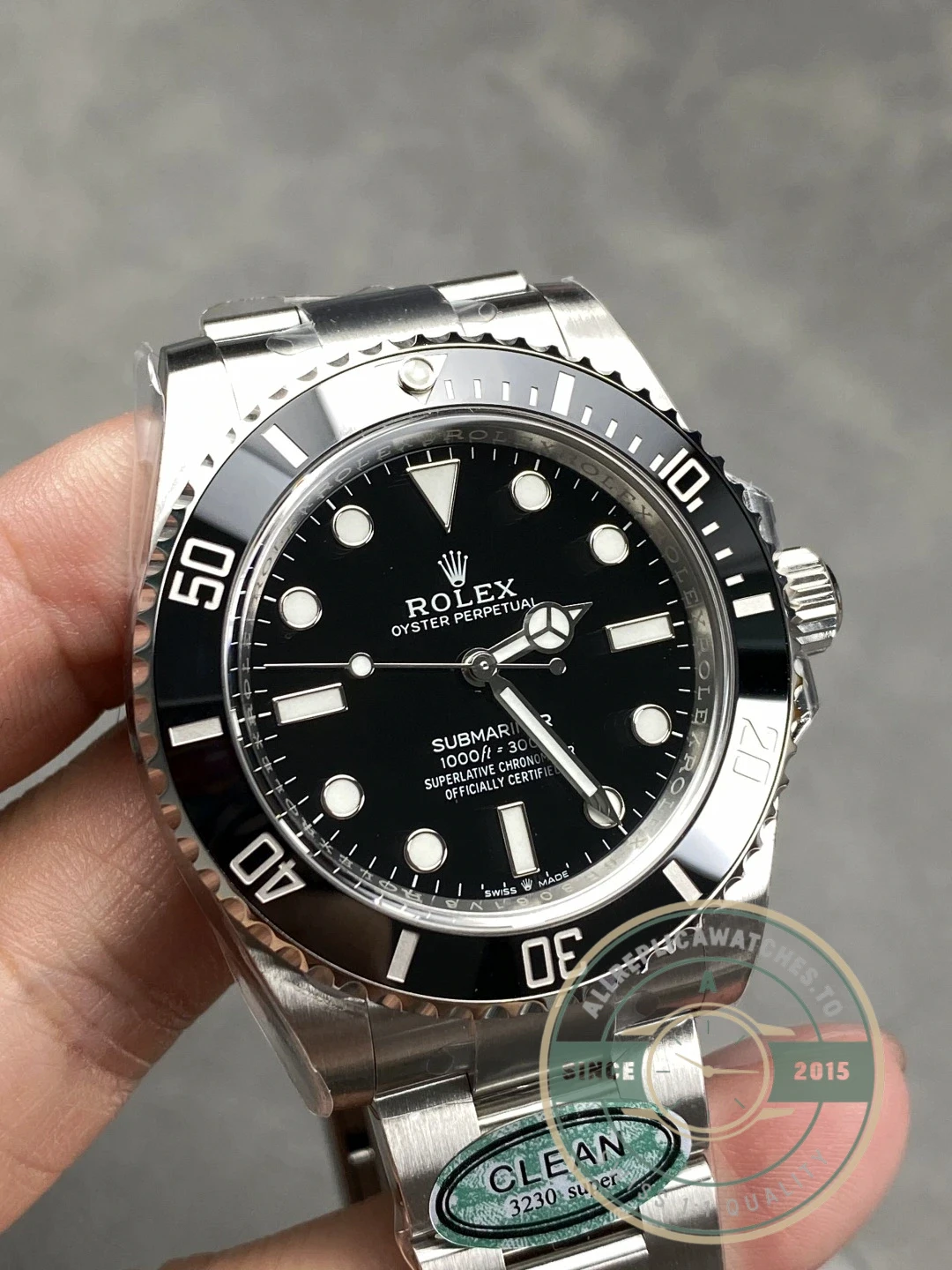
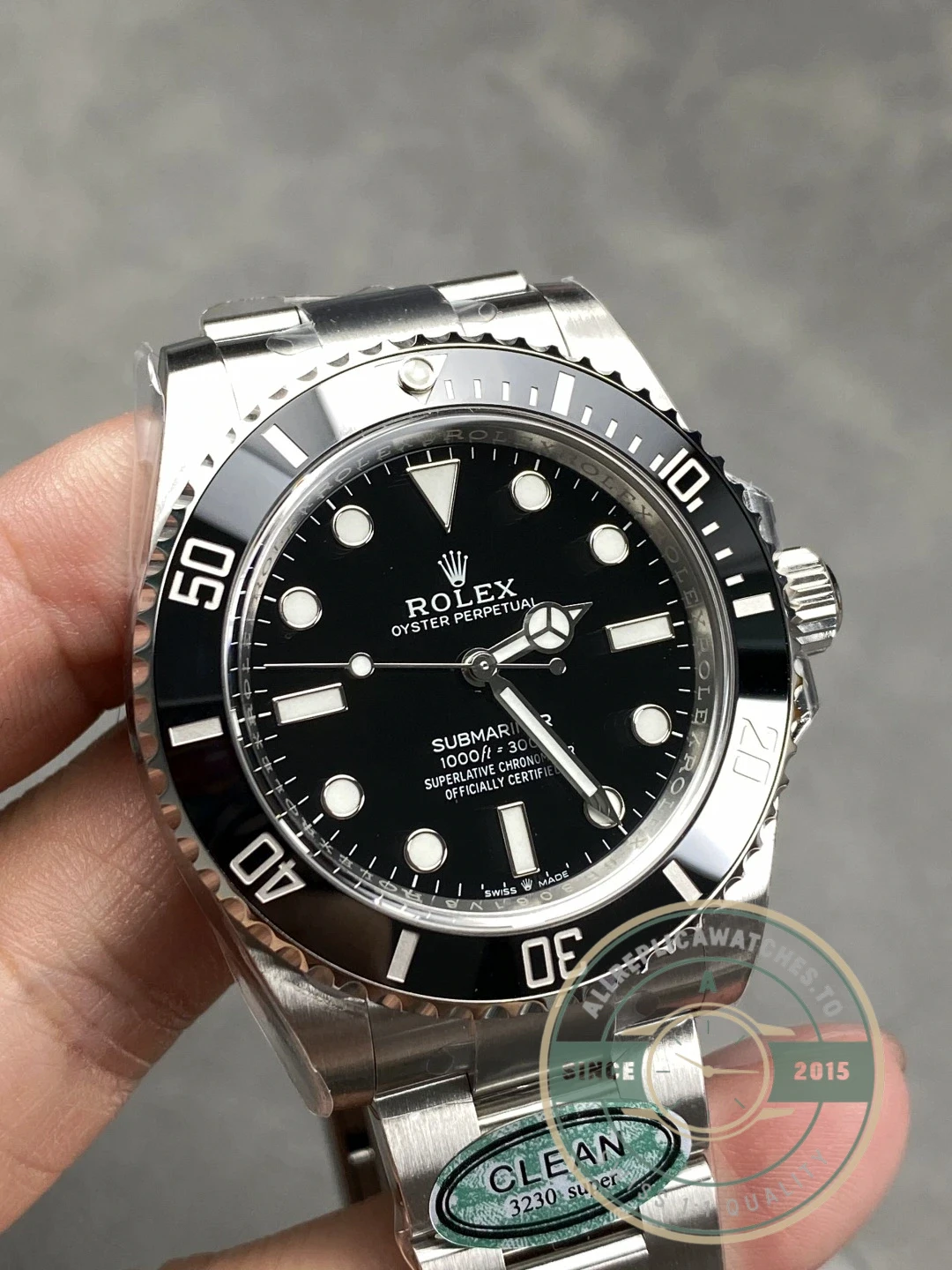
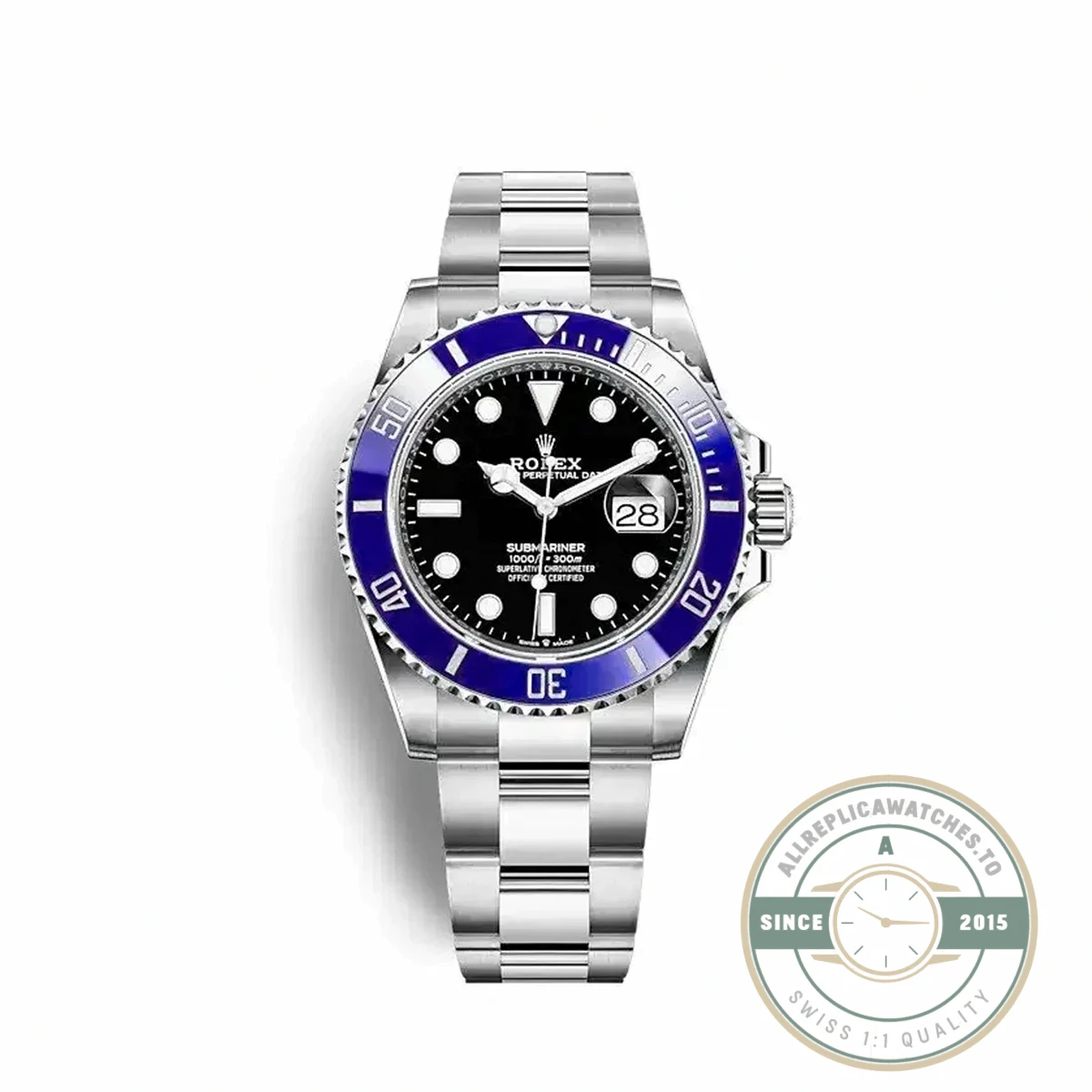
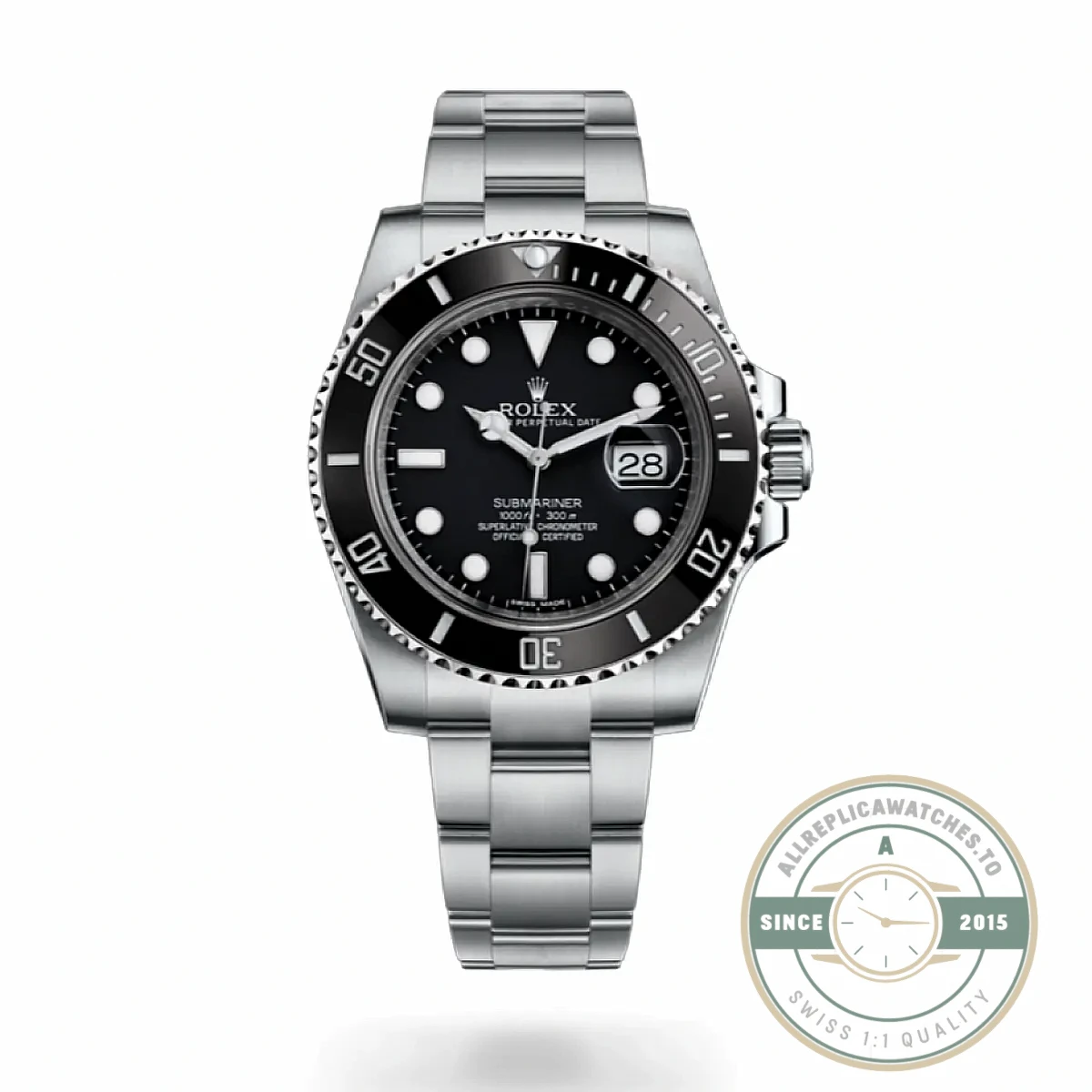
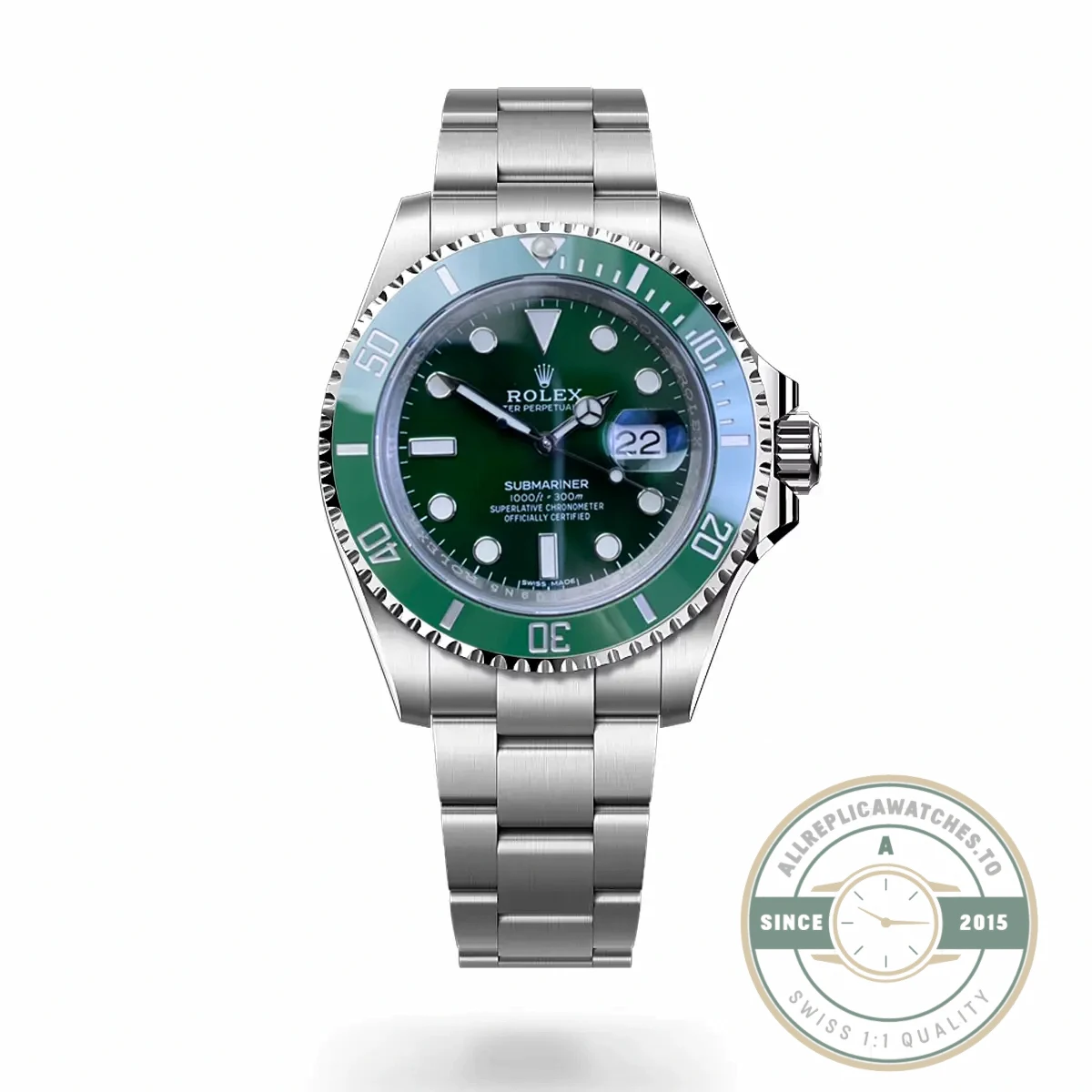
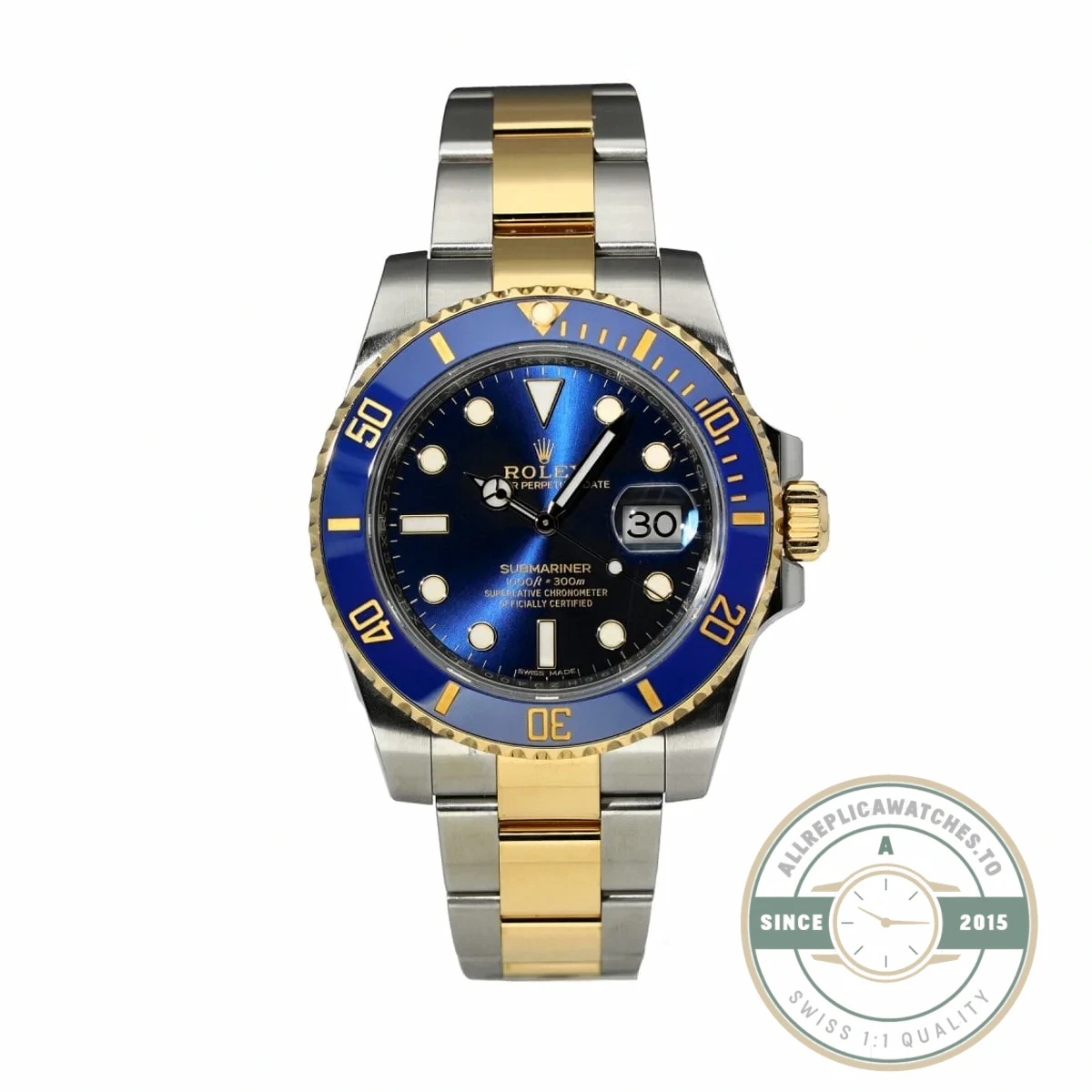
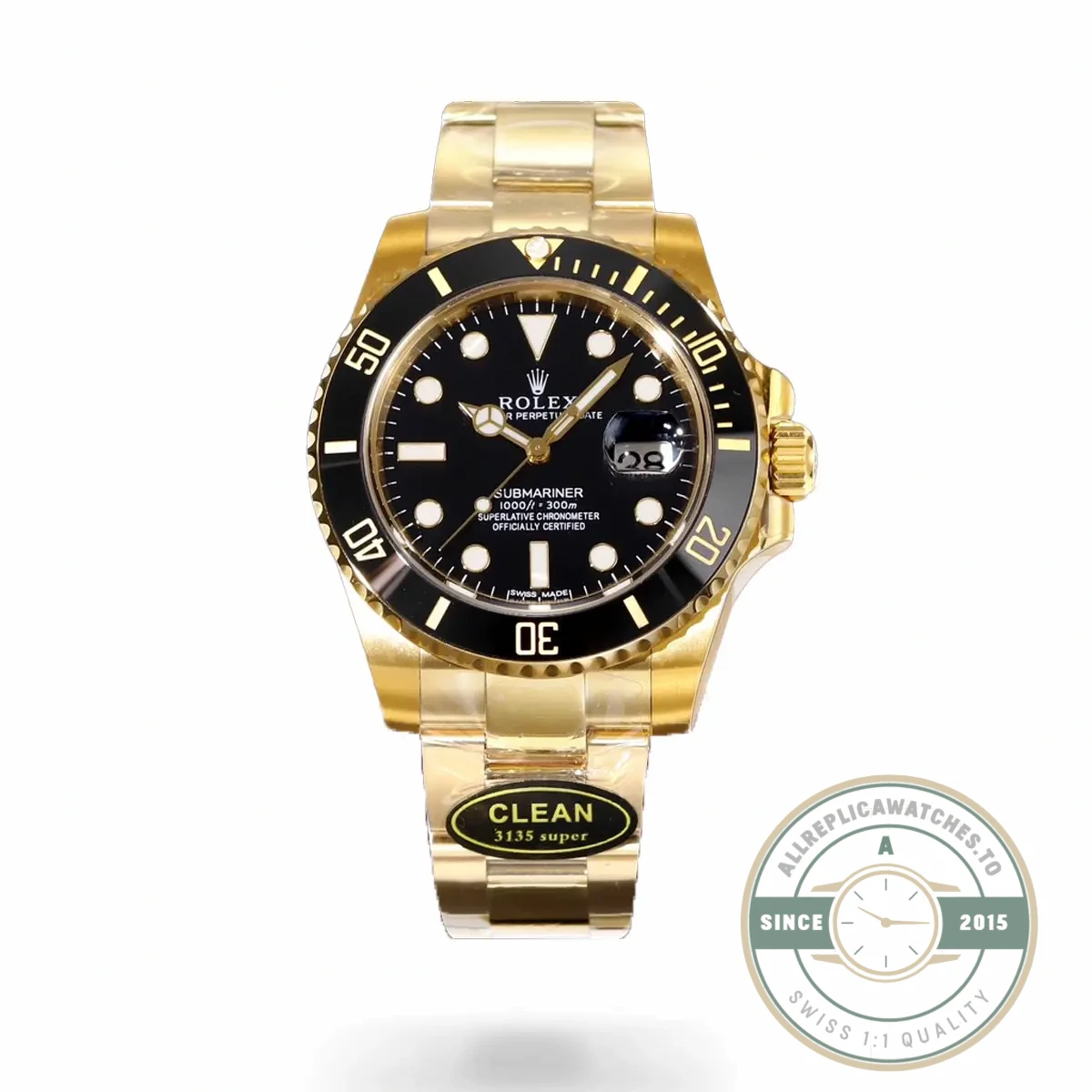
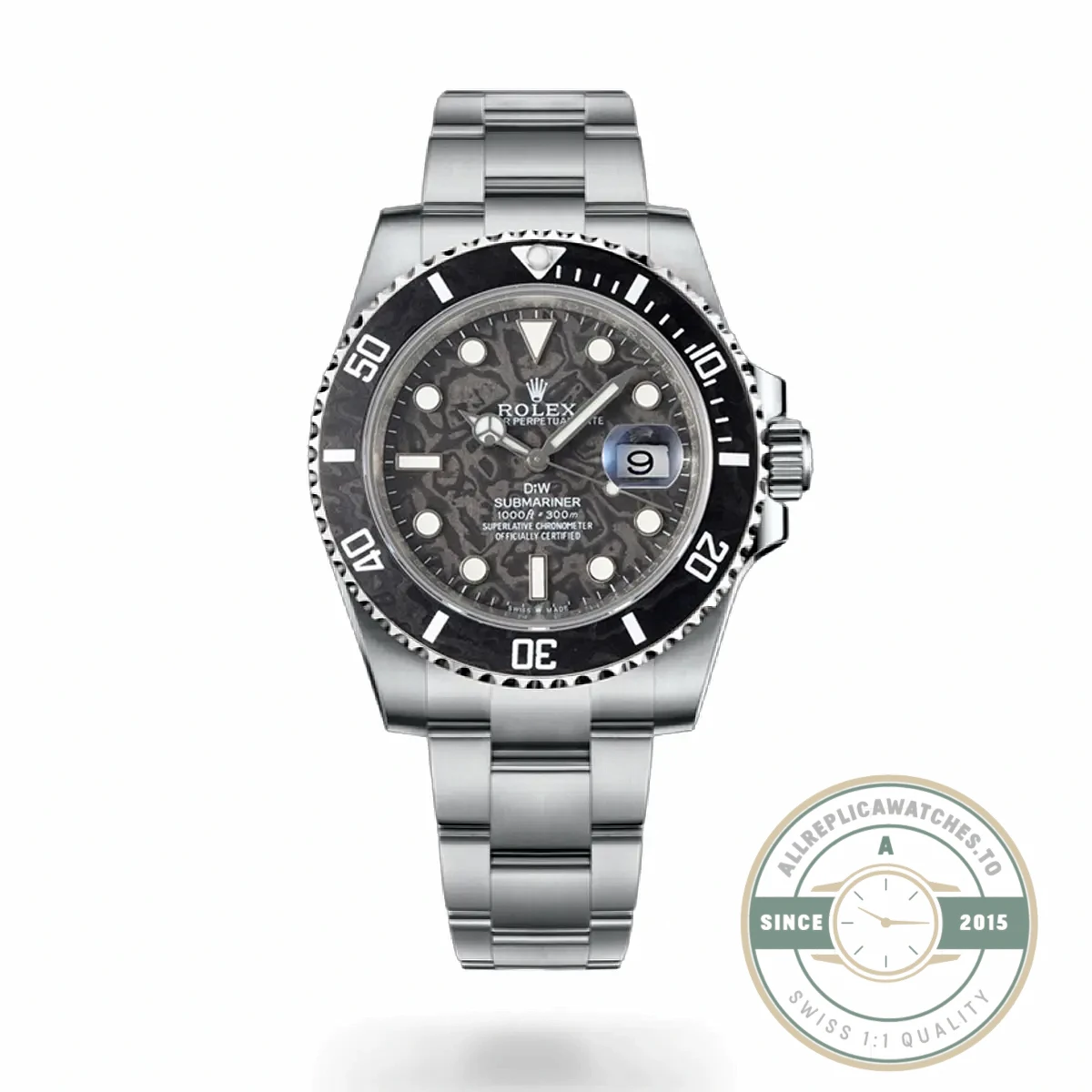
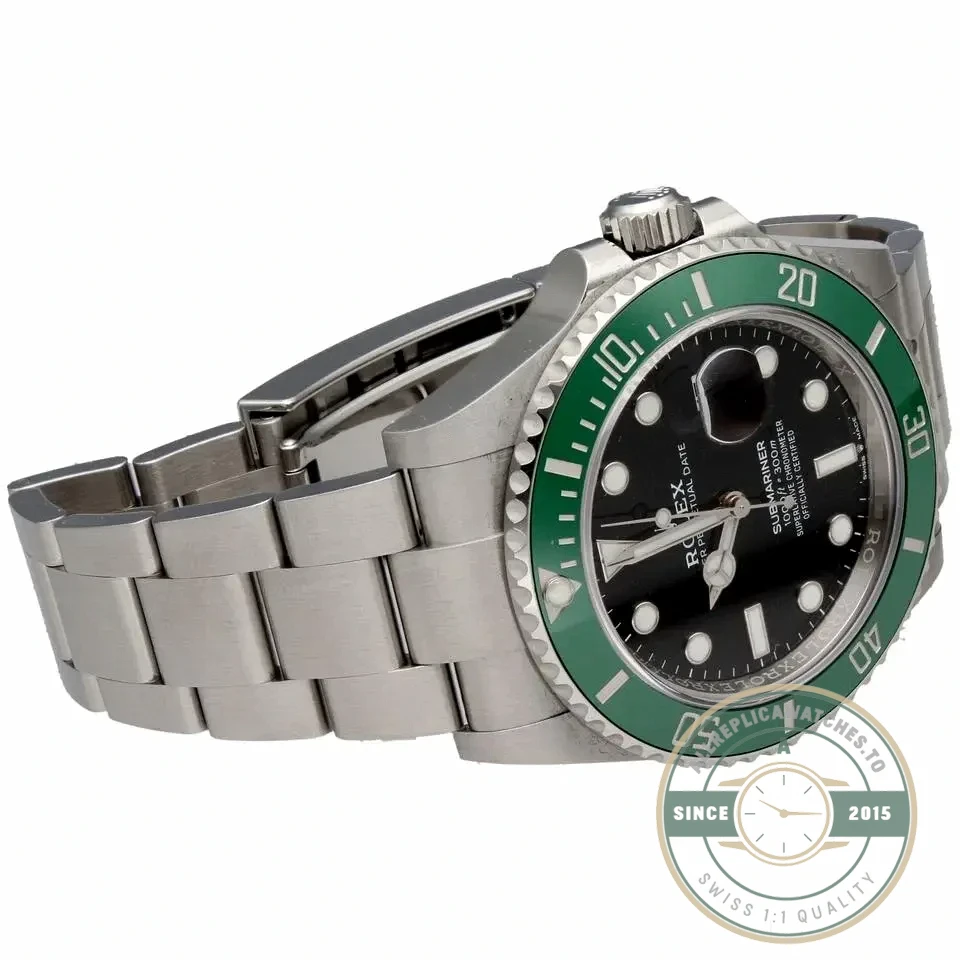
A 41mm Submariner in hand — the modern sports-model size.
First, Measure Your Wrist
Before any size chart is useful, you need one number: your wrist circumference. Wrap a soft tape measure (or a strip of paper you then measure) around your wrist just below the wrist bone, where you would wear the watch, and note the figure in centimetres. Most adult wrists fall between 14cm and 20cm. As a rough guide, a wrist under 16cm is small, 16–18cm is medium, and over 18cm is large.
That single number does most of the work, but two case dimensions decide the actual fit more than diameter does. Lug-to-lug — the length from the top lug tip to the bottom — must not overhang the edges of your wrist, or the watch looks and feels too big regardless of its diameter. Thickness decides how the watch sits under a cuff and how “chunky” it feels. Keep all three in mind — wrist size, lug-to-lug and thickness — and the diameter becomes the easy part.
How Rolex Sizing Has Changed
Rolex sizing has drifted upward over the decades, which is why vintage and modern references feel so different on the wrist. For most of the twentieth century, 34–36mm was a normal men’s size — the Datejust and Day-Date defined elegance at 36mm, and even the Submariner began life compact. As tastes moved toward larger watches in the 2000s, Rolex followed: the Submariner grew to 41mm in 2020, the Datejust gained its 41mm version, and the Sky-Dweller arrived at a substantial 42mm.
At the same time, Rolex never abandoned the classic sizes, and in recent years the smaller dimensions have come back into fashion. The 36mm Oyster Perpetual and Datejust are more popular now than they have been in years, embraced as unisex watches by buyers who want a timeless, versatile proportion. The practical takeaway: do not assume “bigger is better.” The right Rolex size is the one that fits your wrist and your taste, and Rolex offers more of the range than almost any other brand.
Every Rolex Model’s Size
Here are the case sizes Rolex currently offers across the range, with approximate thickness. This is the reference to bookmark:
Model
Case sizes
Approx. thickness
Wears as
Oyster Perpetual
28 / 31 / 34 / 36 / 41mm
~11–12mm
True to size
Datejust
31 / 36 / 41mm
~12mm
True to size
Lady-Datejust
28mm
~11mm
Petite
Submariner
41mm (older 40mm)
~12.5mm
Slightly large
GMT-Master II
40mm
~12mm
True to size
Daytona
40mm
~12mm
Compact for a chrono
Day-Date (President)
36 / 40mm
~12mm
True to size
Sky-Dweller
42mm
~14mm
Large, substantial
Explorer
36 / 40mm
~11.5mm
True to size
Explorer II
42mm
~12.5mm
Large
Yacht-Master
37 / 40 / 42mm
~12mm
True to size
Sea-Dweller
43mm
~15mm
Large, thick
Deepsea
44mm
~17mm
Very large
Air-King
40mm
~13mm
True to size
Sports Models — Submariner, GMT, Daytona
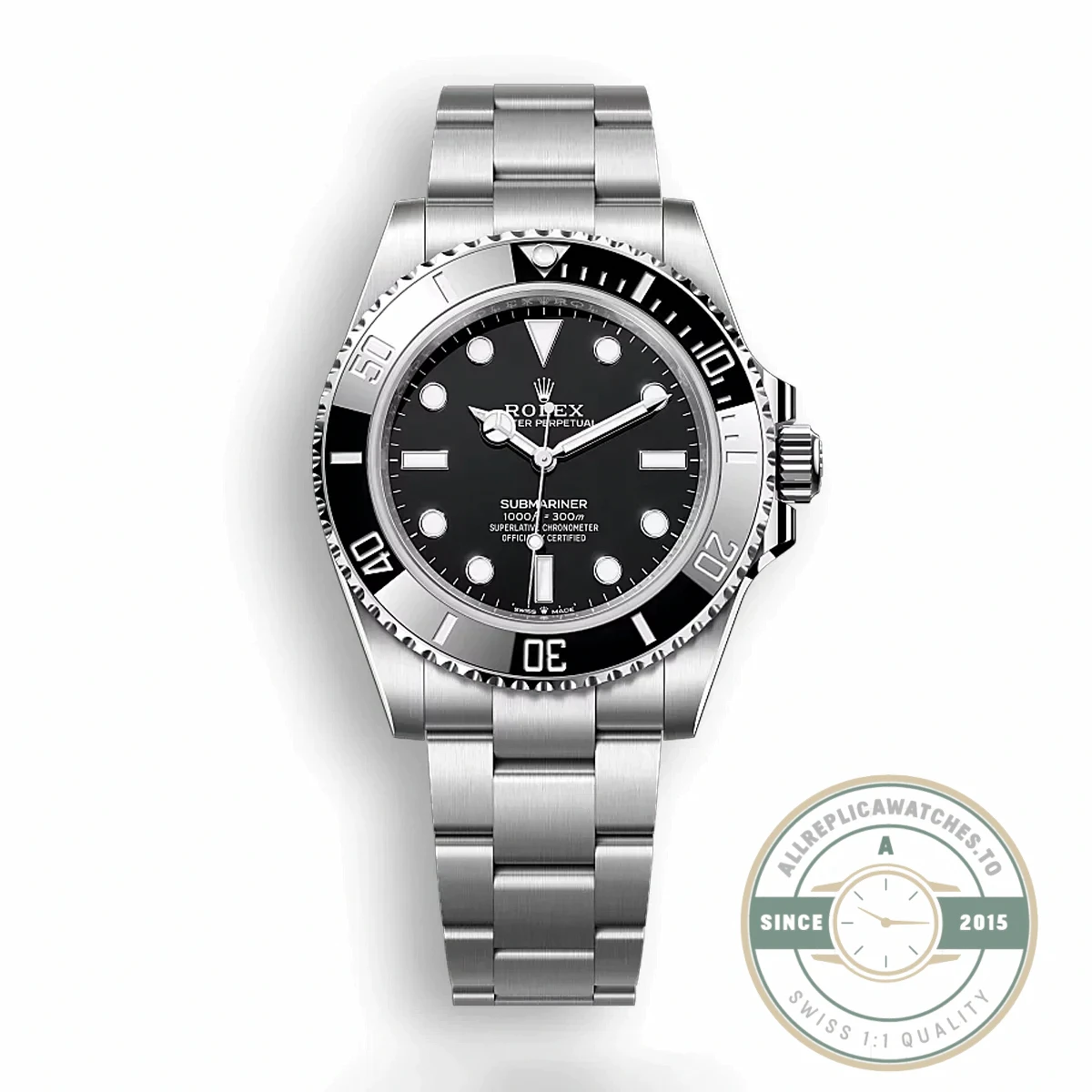
The core steel sports Rolex sit in a tight band. The Submariner is 41mm today (40mm on pre-2020 references) and, thanks to its broad bezel and case, wears a touch larger than its number — it suits a medium-to-large wrist best. The GMT-Master II at 40mm wears true to size and is one of the most universally flattering Rolex sports watches. The Daytona, also 40mm, actually wears compact for a chronograph because its pushers and bezel keep the proportions tight — it works on a surprising range of wrists.
The Sea-Dweller (43mm) and Deepsea (44mm) are the big divers: thick and heavy, they need a larger wrist to look right. The Explorer at 36mm or 40mm is the understated all-rounder that fits almost everyone. Browse the full range in the Submariner collection.
The Datejust is the Rolex most people agonise over, because it comes in two main sizes and both are “correct.” The Datejust 36 is the timeless, slightly vintage-leaning size — it suits smaller and medium wrists beautifully and reads as a true classic, and it works equally well on men and women. The Datejust 41 is the modern, more substantial choice, better suited to medium-to-large wrists and to anyone who wants a contemporary presence.
Neither is more “right” than the other — it is genuinely a matter of wrist size and taste. If your wrist is under 17cm or you lean classic, the 36 is the safe, elegant pick. If your wrist is 17cm or larger or you want a modern look, the 41 is the one. There is also a 31mm Datejust and the 28mm Lady-Datejust for smaller wrists. See the full range in the Datejust collection.
Day-Date, Oyster Perpetual & Ladies’ Sizes
The Day-Date President comes in 36mm and 40mm. The 36mm is the traditional, elegant size that defined the model; the 40mm is the modern, bolder version. The Oyster Perpetual is the most flexible family for sizing, offered in 28, 31, 34, 36 and 41mm, so there is an OP for every wrist — the 36mm and 41mm are the most popular unisex choices, while the smaller sizes suit petite wrists.
For smaller wrists specifically, the 28mm Lady-Datejust, the 31mm Datejust and the 28–34mm Oyster Perpetual are the natural picks — elegant, proportionate and comfortable. Many of these also come fully iced out; see the Day-Date and diamond collections.
Match the Model to Your Wrist
Put it all together and the recommendation by wrist size is straightforward:
Wrist size
Ideal case size
Best models
Small (under 16cm)
36–40mm
Datejust 36, OP 36, Explorer 36, Day-Date 36, GMT, Daytona
Medium (16–18cm)
40–41mm
Submariner, GMT, Daytona, Datejust 41, OP 41, Air-King
Large (over 18cm)
41–44mm
Datejust 41, Sky-Dweller, Explorer II, Sea-Dweller, Deepsea
These are guidelines, not rules — personal taste matters, and smaller or larger watches can look great if you like the proportion. But if you are buying without trying on, matching your wrist to this chart is the surest way to be happy with the fit.
Men’s, Women’s & Unisex Sizing
Rolex no longer thinks of most of its watches as strictly men’s or women’s — it thinks in sizes, and buyers of any gender wear across the range. That said, there are natural tendencies. The 28mm Lady-Datejust and smaller Oyster Perpetual sizes (28, 31mm) are traditionally women’s watches, elegant and petite. The 34 and 36mm sizes are the great unisex middle ground — a 36mm Datejust or Oyster Perpetual looks equally at home on a man’s or a woman’s wrist, which is a large part of why those sizes have surged in popularity.
From 40mm up, the sports and larger dress models — Submariner, GMT, Daytona, Datejust 41, Sky-Dweller — are most often worn as men’s watches, though plenty of women wear a 40mm GMT or Daytona and look fantastic in them. The honest rule is to ignore the label and go by the fit: choose the diameter and lug-to-lug that sit well on your own wrist, and the watch will look right regardless of which section of the catalogue it came from.
Thickness & Comfort
Diameter gets all the attention, but thickness is what you feel all day. A thin watch like an Oyster Perpetual (~11mm) or a Datejust (~12mm) slides under a shirt cuff effortlessly and disappears on the wrist. A thick diver like the Sea-Dweller (~15mm) or the Deepsea (~17mm) is a deliberate, substantial presence that will catch on cuffs and feel heavy — which is part of the appeal for some buyers and a dealbreaker for others.
If you wear long sleeves often or want an everyday watch you forget you are wearing, lean thinner: a Datejust, an Oyster Perpetual, a Daytona or a GMT. If you want a watch you feel and that makes a statement, the thicker sports models deliver that. On a super clone the dimensions match the genuine references closely, so the same guidance applies — pick the thickness that fits your lifestyle, not just the diameter that looks good in a photo.
Frequently Asked Questions
What size is a Rolex Submariner? The current Submariner is 41mm; pre-2020 references are 40mm. It wears slightly larger than its diameter thanks to the broad case and bezel, suiting medium-to-large wrists.
Is the Datejust 36 or 41 better? Neither is objectively better — it depends on your wrist and taste. The 36 is the timeless classic for smaller and medium wrists; the 41 is the modern, more substantial choice for medium-to-large wrists.
What Rolex size is best for a small wrist? 36–40mm. The Datejust 36, Oyster Perpetual 36, Explorer 36 and Day-Date 36 all suit wrists under 16cm, and the 40mm GMT and Daytona also wear well.
What is lug-to-lug and why does it matter? Lug-to-lug is the length from the top to the bottom lug. It determines whether the watch overhangs your wrist, so it affects fit more than diameter — a watch whose lugs extend past your wrist edges will always look too big.
Which Rolex is the thickest? The Deepsea at around 17mm, followed by the Sea-Dweller at around 15mm and the Sky-Dweller at around 14mm. The thinnest are the Oyster Perpetual and Explorer at around 11mm.
Do super clones match the genuine dimensions? Yes — a flagship super clone reproduces the case diameter, lug-to-lug and thickness of the reference closely, so this size guide applies whether you are choosing a genuine Rolex or a super clone.
Found your size?
Browse flagship Rolex super clones in every size — matched to the genuine dimensions, with QC photos on request.
With Cartier, the whole story is on the dial. The Roman numerals, the sword-shaped blue hands, the railway-track minute ring, the hidden “Cartier” secret signature, and the blue sapphire cabochon on the crown — get these right and the watch reads as a Cartier from across a room. A cheap fake fails most of them; a flagship super clone reproduces nearly all. This guide walks every difference between a fake Cartier and a real one, model by model, and is honest about where a good super clone matches genuine and where it does not.
Straight talk: there are three things here — a genuine Cartier, a cheap fake, and a flagship super clone. A cheap fake gives itself away on the dial and the cabochon instantly. A flagship super clone nails the dial, the crown and the case, and only the finest details and the movement separate it from genuine. Knowing the difference is what stops you overpaying for junk.
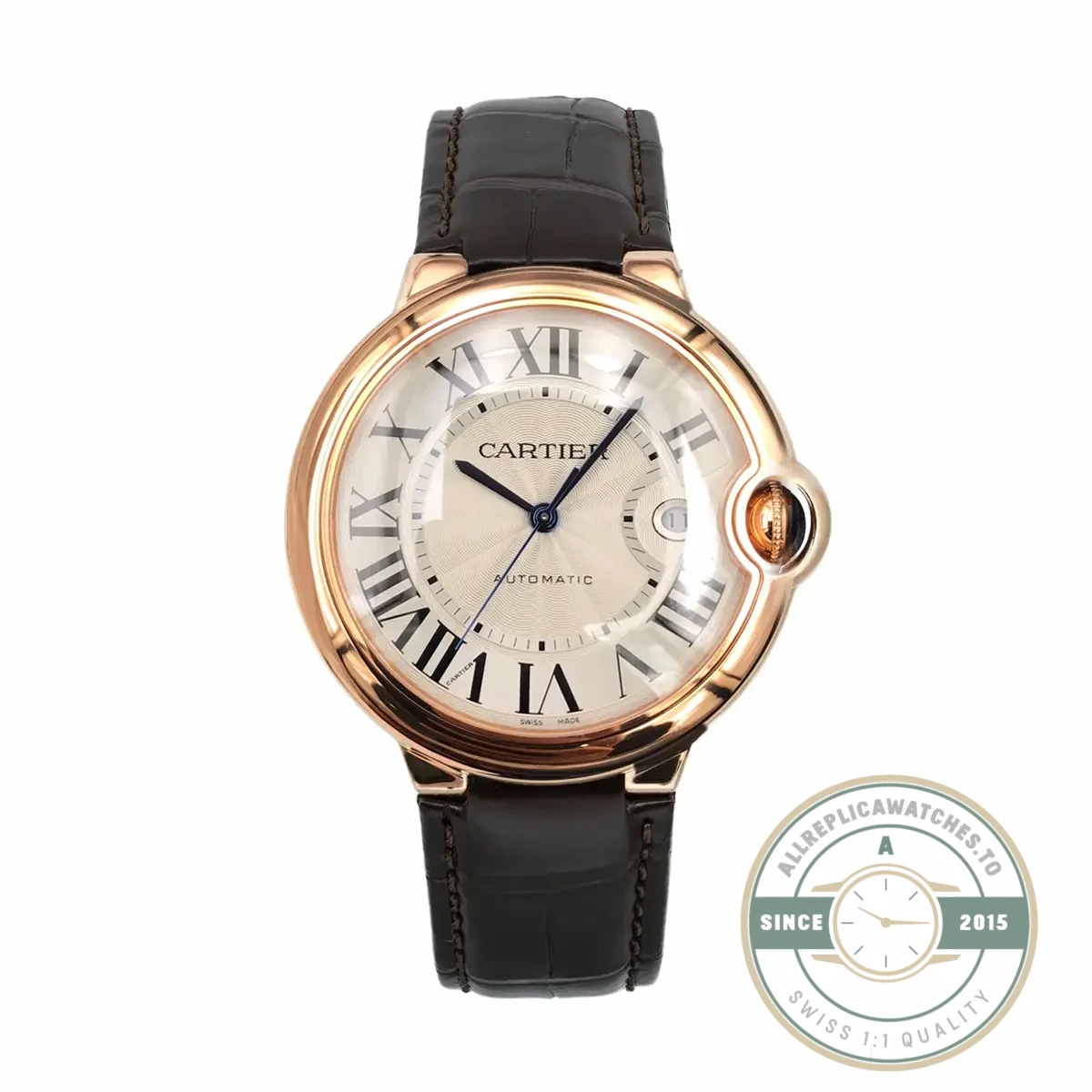
A Ballon Bleu super clone — Roman numerals, blue hands and the cabochon that define a Cartier.
The Quick Answer
Forget weight and sweep tests — most Cartiers are dress watches, and many are quartz, so those tricks do not apply. With Cartier, you read the dial and the crown. On the dial, check the Roman numerals (correct Cartier font, even spacing), the sword-shaped blue hands, the railway-track minute ring, and — the classic tell — the secret signature, Cartier’s name hidden inside one of the numerals. On the crown, check the cabochon: a genuine Cartier uses a real synthetic-sapphire cabochon with depth and a correct blue, while a cheap fake uses flat, plastic-looking glass.
Here is how the three tiers line up across the checks that matter on a Cartier:
Checkpoint
Genuine Cartier
Cheap fake
Flagship super clone
Roman numerals
Correct font, even
Wrong font, uneven
Correct, crisp
Secret signature
Hidden in a numeral
Missing or crude
Reproduced
Cabochon crown
Real sapphire, deep blue
Flat plastic/glass
Synthetic sapphire, correct
Chemin de fer track
Fine, even railway ring
Thick, irregular
Fine, correct
Blue hands
Even, sword-shaped
Wrong shape/shade
Correct shape & blue
Why Cartier Is the Most Copied Jewellery Watch
Cartier occupies a different space from Rolex or Patek. It is as much a jeweller as a watchmaker, and its icons — the Santos (one of the first purpose-built wristwatches, from 1904), the Tank (1917, inspired by the Renault tanks of the First World War), the Ballon Bleu and the Panthère — are defined by design rather than by a complicated movement. That is precisely why they are so heavily replicated: the value lives in the shape, the Roman-numeral dial and the cabochon, not in a hand-finished caliber hidden behind the case.
It also explains why a good Cartier super clone can be so convincing. Where a Patek lives or dies on the movement a factory cannot copy at scale, a Cartier lives on surfaces a factory can reproduce — the dial printing, the case geometry, the blued hands, the sapphire cabochon. Get those right and you have captured most of what makes the watch a Cartier. The flip side is that cheap fakes are everywhere, because the design is so recognisable that a lazy copy still “reads” as a Cartier from a distance — which is exactly why knowing the real tells matters.
The Dial & the Secret Signature
The dial is where cheap fakes die. Cartier’s Roman numerals have a very specific typeface — the proportions, the serifs and the spacing are consistent across the whole lineup, and a cheap fake almost always gets the font subtly wrong: numerals too fat, too thin, or unevenly spaced around the dial. Look next at the railway-track (chemin de fer) minute ring, which should be fine and perfectly even; on a weak fake it is thick, blobby or irregular.
The famous tell is the secret signature. Since the early 2000s Cartier has hidden the word “Cartier” inside one of the Roman numerals — most often the “VII” or the “X” — printed so small you need magnification to see it. A cheap fake either omits it entirely or prints a crude, unreadable version. A flagship super clone reproduces it correctly, which is exactly why the secret signature, once a reliable authentication test, no longer separates the best clones from genuine — it only eliminates the cheap tier. The same goes for the sword-shaped blued-steel hands: they should be a clean, even blue with the correct taper, not a painted navy on a cheap build.
The Crown & the Cabochon
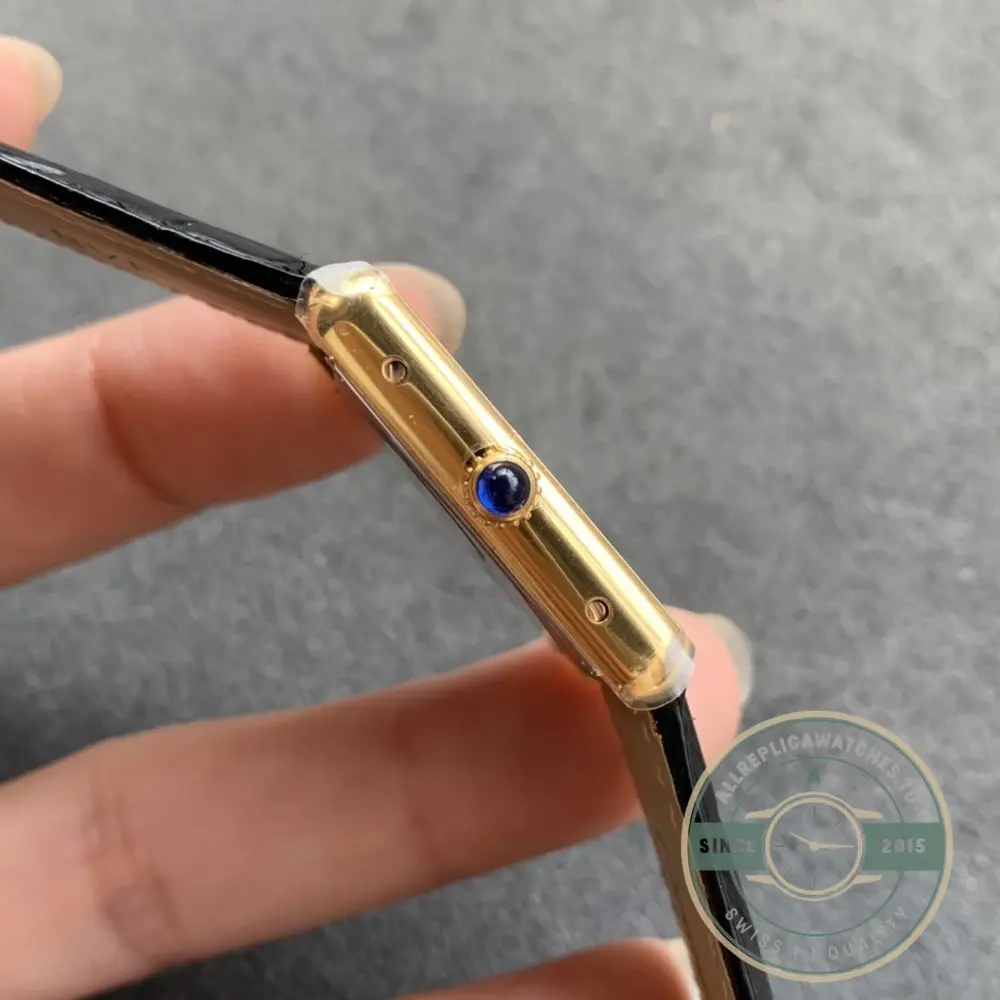
The blue sapphire cabochon — one of Cartier’s hardest tells to fake well.
The crown is a signature Cartier detail and a superb tell. A genuine Cartier crown is set with a cabochon — a domed, polished synthetic sapphire (blue spinel on many references) with real depth and a rich, slightly purple-blue colour. Tilt it under light and the stone has dimension; it is not flat. A cheap fake uses a lump of blue glass or plastic that looks flat, too bright, or the wrong shade entirely, and often sits crookedly in the crown.
On a flagship super clone the cabochon is a proper synthetic sapphire, correctly coloured and seated, which is why the crown — like the dial — no longer gives the best clones away. Check the crown’s shape too: the fluting and the way it meets the case should be clean and symmetrical. Together with the dial, the cabochon is the fastest way to separate a cheap Cartier fake from a flagship build in a single glance.
Case, Screws & Bracelet
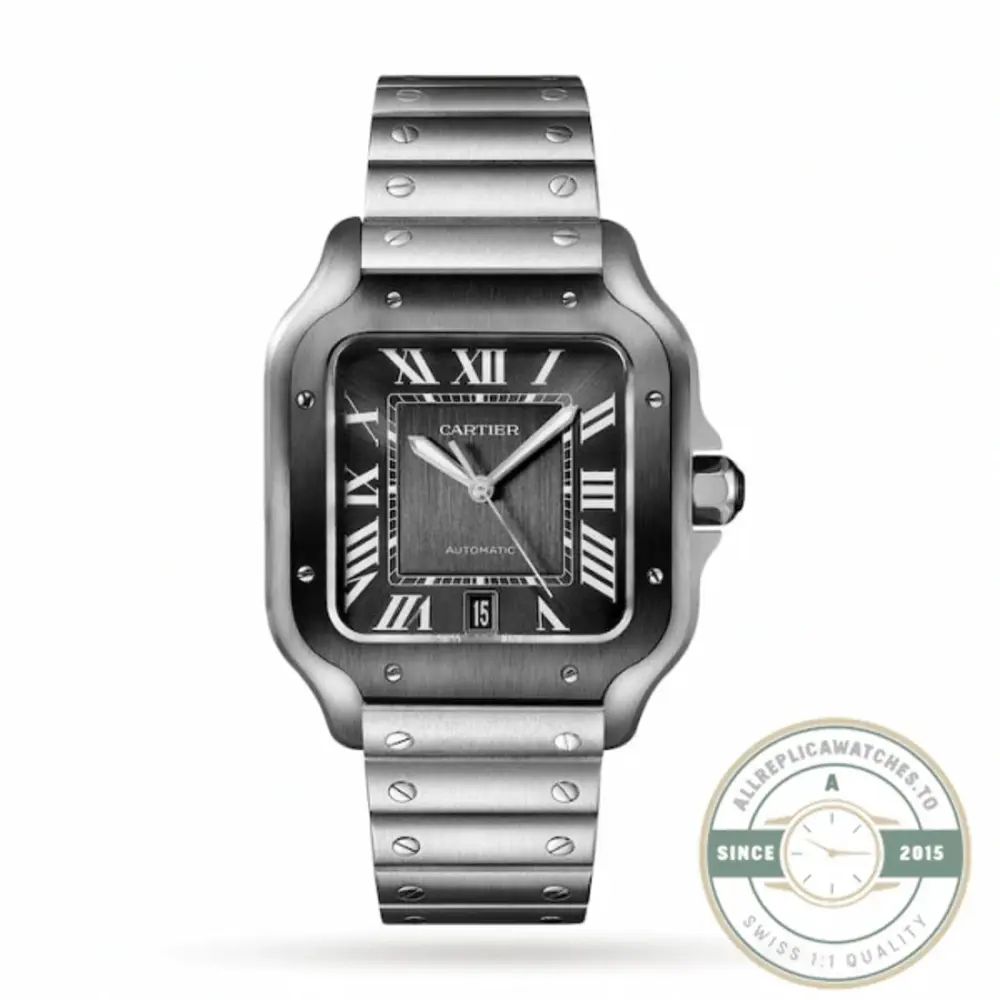
Cartier case finishing is clean and geometric, and this is where mid-tier fakes slip. On a Santos, the exposed screws on the bezel and bracelet are a defining feature — on a genuine watch and a flagship clone they are evenly finished and (on current models) part of the functional SmartLink and QuickSwitch systems, with correct slot alignment. On a cheap fake the screws are decorative, misaligned or crudely cut. On a Tank, the brushed and polished surfaces of the case meet in crisp lines, and the proportions of the rectangular case must be exact — a fake often gets the width-to-height ratio subtly wrong.
The bracelet and strap are the next test. A Cartier metal bracelet is solid and well-articulated with tight tolerances between links, while a cheap fake rattles and feels hollow. On leather-strap models, the strap is dense, cleanly stitched and correctly Cartier-signed on the buckle. These are details you can judge from good QC photos, which is why you should always ask for them before buying a Cartier super clone.
Movement & Caseback
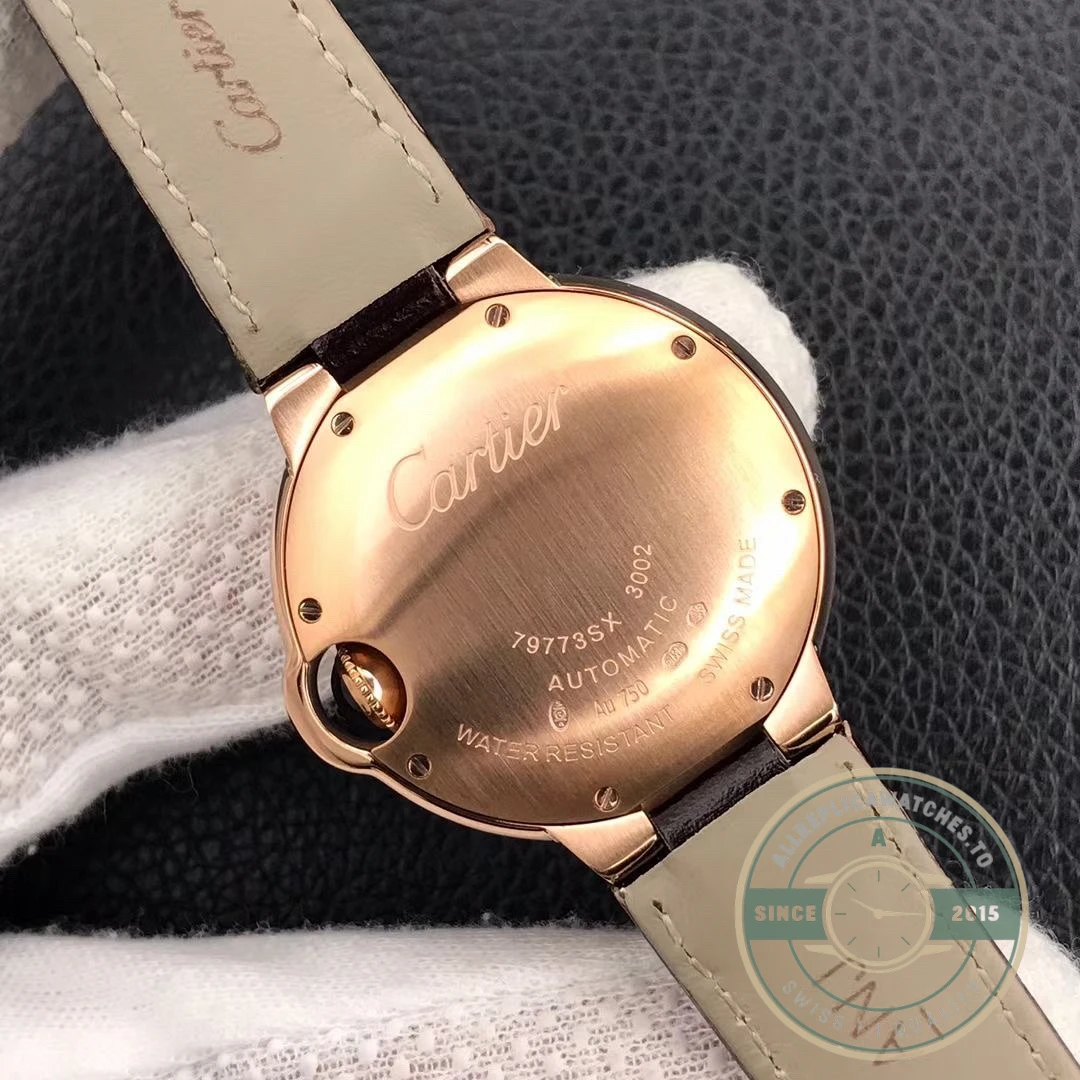
Caseback engraving and screws — the finishing should be crisp and correct.
Cartier is not a movement-first brand the way Patek is — many references are quartz, and the mechanical ones use solid but unexotic automatic calibers. So the movement is less of a dramatic tell than on a Patek, but it still matters. On a flagship super clone, mechanical models typically run a reliable automatic (a Miyota 9015-based caliber), while thin dress pieces use quartz, matching how Cartier itself builds the line. The key check is behaviour: a quartz model should tick in clean one-second steps, and an automatic should sweep smoothly — a mismatch between what the dial says and how the hand moves is a red flag.
The caseback is the other check. Cartier engravings — the reference, the “Cartier” signature, the hallmarks — should be crisp, correctly spaced and at the right depth. On a cheap fake they are shallow, uneven or wrongly positioned. On a flagship clone they are clean and correct. If a model should have a specific caseback layout and the one in front of you does not match, treat it as a warning.
Cartier Santos Fake vs Real
The Santos is the most replicated Cartier, so it is where factories have invested the most. On a Santos, focus on three things: the exposed screws (evenly finished, correctly aligned, and functional on current models), the SmartLink bracelet and QuickSwitch system (the bracelet should adjust and swap cleanly), and the dial with its Roman numerals and secret signature. A flagship Santos super clone nails all three; a cheap fake gives itself away on the screws and the bracelet feel alone. Browse the current range in the Santos collection.
Shop the Replica Santos de Cartier Super Clone Collection
On a Tank, the giveaways are the case proportions and the Roman numeral dial. The rectangular case has an exact width-to-height ratio and clean brushed-to-polished transitions on the brancards (the vertical side bars); a fake often gets the proportions or the finishing subtly wrong. On a Ballon Bleu, the signature is the protected crown set into the side of the round case, with the cabochon nestled in its guard — the shape and finishing of that crown guard are a fast tell, along with the guilloché dial texture. Both models follow the same dial, cabochon and engraving rules as every Cartier. Explore the Tank and Ballon Bleu collections.
What No Cartier Fake Fully Passes
Two things separate every replica from a genuine Cartier, and an honest guide names them:
1. Engraving and finishing precision. A flagship clone reproduces the secret signature, the cabochon and the engravings — but under strong magnification the finest details (the crispness of the micro-print, the exact depth and spacing of the caseback engraving) are not quite at genuine level. A watchmaker with a loupe can see it.
2. Papers, serials and service records. A genuine Cartier is backed by its serial, its papers and Cartier’s service network. No replica matches those records — a boutique service or an authentication check against Cartier’s database is the definitive test.
Everything else — the Roman numerals, the secret signature, the cabochon, the chemin de fer, the case and bracelet — a flagship super clone now reproduces convincingly. These two it does not, and we would rather say so than pretend otherwise.
Cheap Fake vs Flagship Super Clone
Tier
Passes
Fails on
Genuine Cartier
Everything
—
Flagship super clone
Dial, cabochon, case, bracelet
Finest engraving, papers/serials
Cheap fake
Little
Dial, cabochon, screws, finishing
The takeaway of any Cartier fake-vs-real comparison is that “fake” is not one thing. A cheap fake gives itself away on the dial and the cabochon from across a table; a flagship super clone passes the dial, the crown, the case and the bracelet, and only magnification and paperwork place it as a replica. If you want the Santos, Tank or Ballon Bleu look — and you buy it honestly as a replica, not a genuine Cartier — the flagship super clone is the only tier worth your money. For the full breakdown of Cartier factories and models, read our best Cartier super clone guide.
Super Clone vs a Genuine Cartier
It is worth being clear about the trade. A genuine Santos, Tank or Ballon Bleu runs from a few thousand dollars into much more for gold and jewelled versions, backed by Cartier’s name, papers and boutique service. A flagship super clone gives you the Roman-numeral dial, the sapphire cabochon, the clean case and the bracelet for a fraction of that.
What you give up is the finest finishing under magnification, the papers and serials, and any resale value as a genuine Cartier. What you keep is the entire look and feel on the wrist — the instantly recognisable design that is the whole point of a Cartier. Because Cartier’s value is in its design rather than a hidden movement, a flagship super clone captures more of the genuine experience than it can on a movement-first brand, and buying it honestly as a replica is the sensible way to enjoy it. For the best factory and model picks, read our best Cartier super clone guide.
Frequently Asked Questions
How can you tell a fake Cartier? Read the dial and the crown. Check the Roman numeral font and spacing, the fine railway-track minute ring, the hidden secret signature in a numeral, the sword-shaped blue hands, and the sapphire cabochon on the crown. Cheap fakes get these wrong; a flagship clone reproduces them.
What is the Cartier secret signature? It is the word “Cartier” micro-printed inside one of the Roman numerals — usually the “VII” or the “X” — visible only under magnification. It has been used since the early 2000s as an authentication feature.
Is the cabochon on the crown a good tell? Yes. A genuine Cartier cabochon is a domed synthetic sapphire with depth and a rich blue. A cheap fake uses flat blue glass or plastic. A flagship super clone uses a correct synthetic-sapphire cabochon.
Can a super clone Cartier fool a jeweller? From the dial side, often yes. A watchmaker with a loupe inspecting the micro-engraving, or a boutique checking serials and papers, can identify it. The finest finishing and the records are the lines a replica cannot cross.
Which Cartier is most faked? The Santos, Ballon Bleu, Tank and Panthère, by a wide margin — the most recognisable Cartier designs, so factories have invested the most R&D in copying them.
Are Cartier watches quartz or automatic? Both. Many Cartier dress watches are quartz, while sportier and larger models are automatic. A good super clone matches the genuine: quartz where the real one is quartz, automatic where it is automatic.
Want the tier that passes the checks?
Browse flagship Cartier super clones — correct dials, sapphire cabochons and clean case finishing, with QC photos on request.
Patek Nautilus 5980 & 5990 Super Clone: The Chronograph Guide
The Nautilus 5980 is Patek’s sports chronograph — the steel Nautilus with a flyback chronograph and a mono-counter at six o’clock — and the 5990 is its travel-ready sibling, adding a dual-time Travel Time function. Together they are the most complicated steel Nautilus pieces most buyers will want, and among the most convincing Patek super clones made. This guide covers the references, the difference between the 5980 and the 5990, the clone movement inside, and what to check before buying.
The honest version: a 5980 or 5990 super clone reproduces the dial, case, bracelet and chronograph behaviour of Patek’s sports chronograph, but it runs a decorated clone caliber — not a hand-finished Patek movement. We say so, then show you where the copy is excellent.
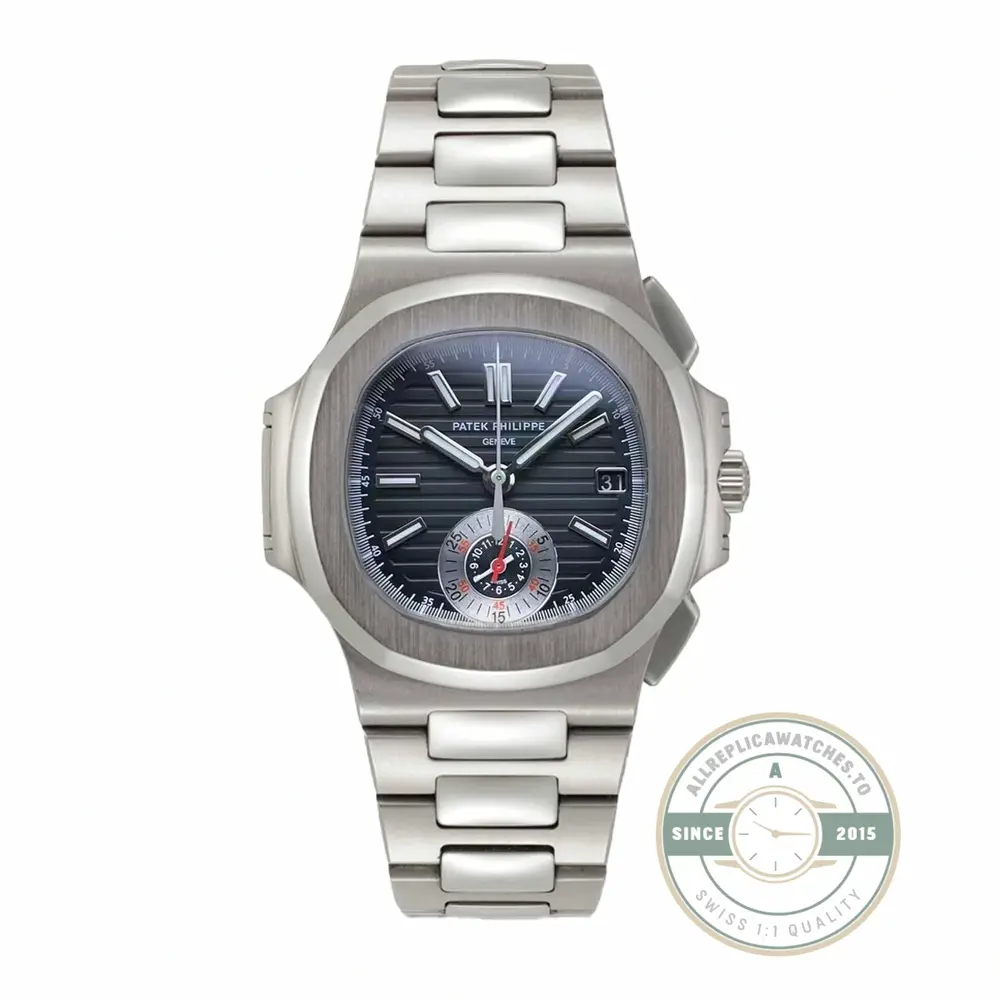
The Nautilus 5980/1A super clone — Patek’s steel sports chronograph.
What Is the Nautilus 5980?
Launched in 2006, the 5980 was the first Nautilus with a self-winding chronograph, and it instantly became one of the most wanted steel sports watches in the world. Its signature is the mono-counter at six o’clock — a single subdial that combines the 60-minute and 12-hour chronograph totalisers into one register — paired with a flyback function that lets you reset and restart the chronograph in a single press. The case keeps the classic 40.5mm Nautilus shape with its hinged “ears,” and the dial carries the embossed horizontal relief that defines the line.
On a super clone, the 5980 is one of the strongest Patek pieces available, because the factories have poured development into the steel Nautilus more than almost any other reference. The chronograph works, the mono-counter reads correctly, and the embossed dial and case finishing are reproduced closely — which is exactly why it is one of the most popular Patek super clones.
The Nautilus Chronograph Story
The Nautilus itself was designed by Gérald Genta in 1976 — the porthole-inspired case, the hinged ears, the integrated bracelet — and it became, alongside the Audemars Piguet Royal Oak, the watch that made luxury steel sports watches a category of their own. For thirty years it stayed time-only. The chronograph did not arrive until 2006, when the 5980/1A added a self-winding flyback chronograph and the distinctive mono-counter, turning the Nautilus into a genuine sports chronograph for the first time.
That late arrival is part of why the 5980 is so coveted: it is the Nautilus with the most mechanical character, and for years it was nearly impossible to buy at retail. The 5990 Travel Time Chronograph followed in 2014, layering a dual-time complication on top. Together they sit at the complicated end of the steel Nautilus range — which is exactly why a convincing super clone of either is such an achievement, and such a popular one.
References & Variants
The 5980 family has run through several references and materials over the years. These are the ones worth knowing:
Reference
Material
Dial
Notable
5980/1A
Steel, bracelet
Black / blue
The classic steel sports chrono
5980/60G
White gold, strap
Blue
Dressier gold version
5980R
Rose gold
Brown / black
Warm-tone precious metal
5990/1A
Steel, bracelet
Blue / black
Travel Time + chronograph
5980 vs 5990 — Which Chronograph?
The 5980 and the 5990 look like cousins, and they are, but they do different jobs. The 5980 is a pure sports chronograph: mono-counter, flyback, clean dial. The 5990 is the Nautilus Travel Time Chronograph — it keeps the chronograph but adds a dual-time (Travel Time) complication, with two pushers on the left of the case to jump the local hour forward and back, plus day/night indicators for home and local time. It is busier on the dial and the case, and it is the choice if you travel and want a second timezone on the wrist.
5980
5990
Function
Flyback chronograph
Chronograph + Travel Time
Left pushers
None
Two (local hour ±)
Dial
Cleaner, mono-counter
Busier, day/night indicators
Best for
Classic sports chrono
Travellers
In short: pick the 5980 if you want the cleaner, more classic sports chronograph; pick the 5990 if you want the travel complication and do not mind a more complex dial. On super clones, both are reproduced, with the 5980 being the simpler and generally more convincing of the two because it has fewer functions to get exactly right.
The Movement
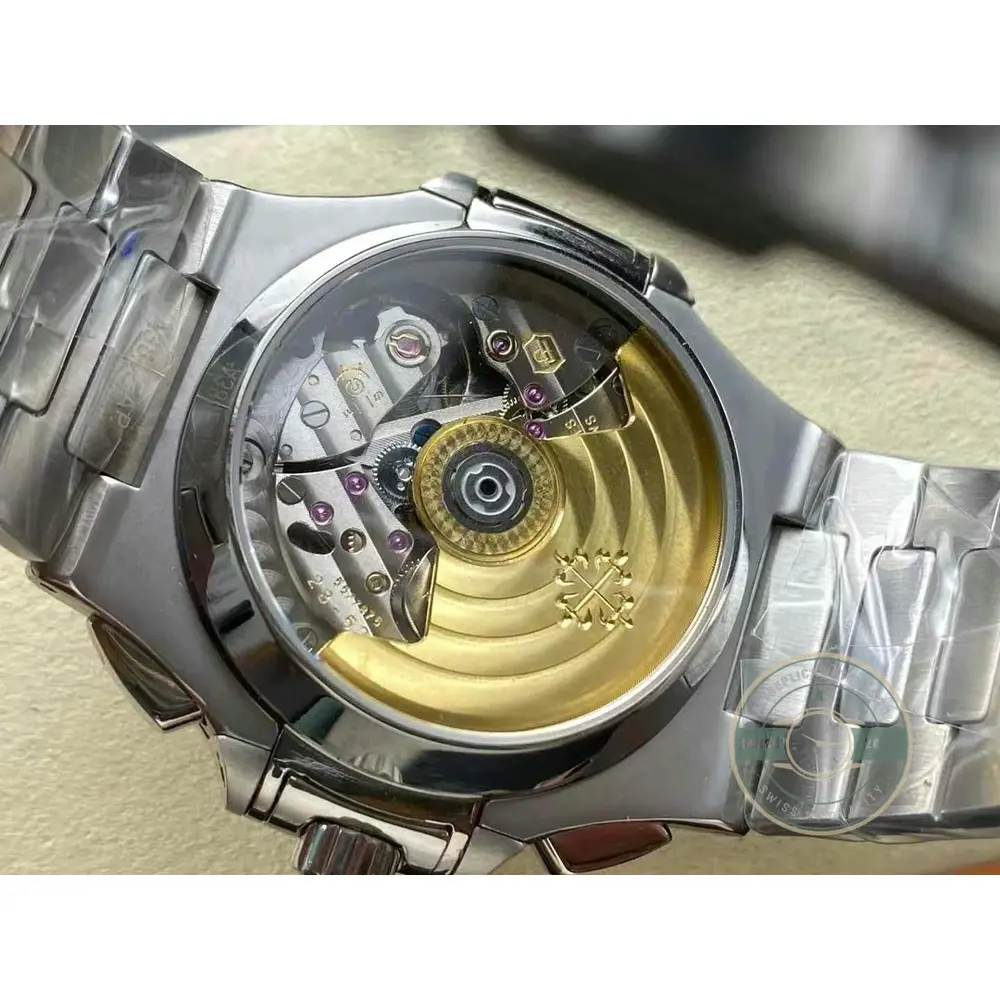
The genuine 5980 runs Patek’s in-house CH 28-520 C, an integrated automatic flyback chronograph. A flagship super clone reproduces it with a clone CH 28-520 built on a reliable chronograph platform (a 7750-type base), decorated to resemble the genuine caliber and holding roughly a 46-hour power reserve. A real chronograph clone like this gives you crisp pusher engagement, a smooth running-seconds hand and a correctly resetting mono-counter — the behaviour that a cheap module-based fake cannot match.
The clone chronograph through the caseback — decorated with the Calatrava-cross rotor.
Be clear about the honest limit, though. The decoration you see through the display caseback — the striping, the Calatrava-cross rotor — reproduces the look of Patek finishing, but it is machine-applied rather than hand-finished to the Patek Philippe Seal standard. Treat quoted power-reserve figures as vendor numbers, and remember that a clone CH 28-520 copies the architecture and behaviour of Patek’s chronograph but is not a genuine Patek movement. For the full movement picture across the brand, see our best Patek super clone guide.
Dial & Case
The Nautilus case profile — the ears and the brushed-to-polished transition.
The 5980’s dial carries the Nautilus signature: the embossed horizontal relief that catches light across the face, with the mono-counter set cleanly into it at six o’clock and a date window at three. On a flagship super clone the relief is crisp and even, the applied markers are level and faceted, and the printing is sharp — the details that separate a good build from a cheap one. Watch the mono-counter in particular: its printing and the sub-register ring should be clean and correctly proportioned, not crowded or misaligned.
The case is pure Nautilus — the 40.5mm rounded-octagon shape with the hinged ears at three and nine, alternating satin-brushed tops with mirror-polished sides. The transition line between the two finishes is the key test: on a flagship clone it is razor-sharp and even, and the integrated bracelet repeats the same treatment link by link, tapering smoothly to the clasp. Pick it up and it should feel solid and well-articulated, with no rattle. These are the things to check in QC photos before you buy.
5980 vs 5711 — Chronograph or Time-Only?
Many buyers choosing a steel Nautilus are deciding between the 5980 chronograph and the time-only 5711. The 5711 is the purist’s Nautilus — thinner, cleaner, just hours, minutes, seconds and a date — and it is the more versatile dress-sport watch. The 5980 is sportier and more mechanical, with the chronograph pushers and the busier dial, and it wears a touch thicker. On super clones, the 5711 is slightly easier to get perfect because it is simpler, while the 5980 offers more watch for a similar price. If you want one steel Nautilus to do everything, the 5711 is the safe pick; if you want the sports chronograph character, the 5980 is the one.
Because the 5980 is a chronograph, there are a few extra things to verify beyond the usual Nautilus checks. First, the chronograph function: ask the dealer to confirm the pushers engage crisply and the mono-counter resets cleanly to zero — a flagship build does both. Second, the mono-counter printing, which is the fiddliest part of the dial to get right. Third, the movement through the caseback, which should be cleanly decorated with the Calatrava-cross rotor. And finally the case transitions and bracelet, exactly as on any Nautilus. Ask for QC photos covering all four before you commit, and request the factory and exact reference so you know what you are getting.
Super Clone vs a Genuine 5980
It is worth being clear about the trade. A genuine 5980/1A is a watch most people cannot buy at all — discontinued in steel, with secondary-market prices running into the tens of thousands, and a hand-finished in-house chronograph behind the glass. A flagship super clone gives you the embossed dial, the mono-counter, a working flyback-style chronograph and the full Nautilus case-and-bracelet presence for a four-figure sum.
What you give up is the hand-finished Patek caliber, the archive provenance and any resale value as a genuine watch. What you keep is the entire wrist experience — the look, the weight, the chronograph action and the finishing you actually see and touch. For a buyer who wants the Nautilus chronograph on the wrist rather than a vault asset, that is an easy trade, and buying it honestly as a replica is the only sensible way to do it.
How Much Does a 5980 Super Clone Cost?
A flagship 5980 or 5990 super clone sits in the four-figure range typical of a complicated steel-sports Patek clone — more than a time-only 5711 because of the chronograph, and well below the genuine, which trades for tens of thousands on the secondary market when it appears at all. As always, a “5980” offered for a couple of hundred dollars is a cheap fake with a module-based movement and a flat dial — not a real chronograph clone and not the embossed, sharply-finished build that makes the reference worth owning.
Living With a 5980
On the wrist, the 5980 is one of the most satisfying steel sports watches to own. At 40.5mm it wears broad but comfortable thanks to the integrated bracelet, and the chronograph gives you something to interact with that the time-only Nautilus does not. The flyback function is genuinely useful — one press resets and restarts the timing — and the mono-counter keeps the dial clean despite the complication. It is a watch that reads as dressy from a distance and sporty up close.
Caring for it is simple. Treat the clone chronograph like any mechanical movement: wind it gently, use the pushers deliberately rather than hammering them, and avoid running the chronograph continuously for days on end, which wears any chronograph faster. Keep it away from strong magnets, have it serviced every few years, and keep the bracelet clean with a soft brush. Do that and a flagship 5980 super clone will keep its sharp dial and crisp chronograph action for years. For the wider range of Patek references and the best factory for each, see our Patek super clone guide.
Frequently Asked Questions
What is the Patek Nautilus 5980? It is the steel Nautilus chronograph, launched in 2006, with a flyback chronograph and a mono-counter at six o’clock that combines the minute and hour totalisers into one subdial.
What is the difference between the 5980 and the 5990? The 5980 is a pure sports chronograph; the 5990 adds a dual-time Travel Time complication with two extra pushers on the left of the case, making it the traveller’s version.
What movement is in a 5980 super clone? A clone CH 28-520, a decorated chronograph built on a reliable 7750-type base with roughly a 46-hour reserve. It reproduces the look and behaviour of Patek’s caliber but is not a genuine Patek movement.
Is the 5980 chronograph on a super clone functional? On a flagship build, yes — the pushers engage crisply, the running seconds sweep, and the mono-counter resets cleanly. A cheap module-based fake feels mushy and resets imperfectly.
Should I buy the 5980 or the 5711? The 5711 is the cleaner, thinner, more versatile time-only Nautilus; the 5980 is the sportier chronograph with more on the dial. Choose by whether you want the chronograph character or the purist look.
What should I check before buying a 5980 super clone? The chronograph action and mono-counter reset, the embossed dial relief, the case brushed-to-polished transitions, and the decorated movement through the caseback. Ask for QC photos of all of them.
Find your Nautilus chronograph
Browse flagship Patek Nautilus 5980 and 5990 super clones — working chronograph, embossed dials and decorated calibers, with QC photos on request.
Fake Patek Philippe vs Real: How to Spot the Difference
The fastest way to spot a fake Patek Philippe is to turn it over: Patek’s whole identity is its hand-finished movement behind a display caseback, and that is the one thing no replica fully reproduces. From the dial side, a flagship super clone Nautilus or Aquanaut is astonishingly close. Through the sapphire back, a trained eye sees a decorated workhorse movement rather than a hand-finished Patek caliber. This guide walks every difference — dial, case, bracelet and movement — and is honest about exactly where a good super clone matches genuine and where it does not.
Straight talk: there are three things here — a genuine Patek, a cheap fake, and a flagship super clone. A cheap fake fails on the dial from a metre away. A flagship super clone passes the dial, case and bracelet checks and only reveals itself at the movement. Knowing the difference is what stops you overpaying for junk — and tells you exactly what a good Patek super clone is.
A flagship Nautilus super clone — the kind that passes every check except the movement.
The Quick Answer
With Patek, forget the tricks that work on other brands — weight and date-window magnification do not separate the tiers here. Two things do. First, the dial: a Nautilus or Aquanaut has a precise embossed horizontal pattern, and on a cheap fake that pattern is shallow, uneven or wrongly spaced. Second, and decisively, the movement behind the display caseback: genuine Patek finishing is hand-done to the Patek Philippe Seal standard, and no replica matches it.
So the ten-second version is: glance at the dial to eliminate cheap fakes, then flip the watch over. If there is no display caseback at all on a model that should have one, walk away. If there is, look at the finishing — that is where a flagship super clone, however good on the front, quietly reveals that it is a replica. Here is how the three tiers compare across the checks that matter:
Checkpoint
Genuine Patek
Cheap fake
Flagship super clone
Embossed dial
Crisp, even relief
Shallow, uneven
Crisp, correct
Case transitions
Razor-sharp brushed/polished
Soft, wavy
Sharp, correct
Bracelet / strap
Tight, solid, tapered
Loose, hollow
Solid, well-articulated
Dial printing
Razor-sharp
Bleeding, uneven
Sharp
Movement finishing
Hand-finished (PP Seal)
Generic, undecorated
Decorated base, machine-finished
Why Patek Is So Hard to Fake
It helps to understand why Patek, of all the big brands, is the one where the front is easy and the inside is a wall. Patek’s whole philosophy is hand-finishing. Since 2009 the brand has certified its own watches with the Patek Philippe Seal, a standard that governs not just accuracy but the finishing of every component — including parts no one will ever see. A single caliber can take hundreds of hours of hand-work: bevelling and polishing the edges of each bridge, hand-cutting the striping, mirror-polishing the countersinks around every jewel.
That is the opposite of what a replica factory does. A super clone is made at scale, so its decoration is applied by machine — fast, consistent and, from a phone photo, convincing. What it cannot do is reproduce the slow, irregular, human quality of hand-anglage and hand-polishing. This is why a flagship Patek super clone can match the dial, the case and the bracelet so closely and still be identified the moment the caseback is examined: the brand’s entire value lives in the one place a factory cannot copy at scale. Understanding that is the key to the whole fake-vs-real question for Patek.
The Movement — Patek’s Real Signature
Patek Philippe’s reputation is built on movement finishing, so this is the only tell that truly matters. A genuine Patek caliber is finished by hand to the Patek Philippe Seal standard: hand-chamfered and polished bridge edges (anglage), hand-applied Côtes de Genève striping, circular perlage, polished countersinks around every jewel, and a gold rotor engraved with the Calatrava cross. Under a loupe it looks like jewellery.
A super clone caseback — decorated and convincing, but machine-finished rather than hand-finished.
A super clone reproduces the look of this — a decorated rotor with the Calatrava cross, striping on the bridges, the right general layout. Flagship Patek super clones are built on reliable bases (a clone Cal. 324-style automatic on a Miyota platform, or a clone CH 28-520 chronograph on a 7750 platform) and dressed to resemble the genuine caliber. From a phone photo it can fool almost anyone. But the finishing is machine-applied, not hand-done: the bevels are not hand-polished, the striping is regular rather than subtly hand-cut, and the countersinks lack the mirror polish of a real Patek. This is the honest heart of the matter — a Patek super clone copies the architecture and decoration, but not the hundreds of hours of hand-finishing that define a genuine one.
The Dial
The dial is where cheap fakes die and flagship super clones shine. On a Nautilus, the signature is the embossed horizontal relief — raised ridges across the dial that catch light. On a genuine watch and a flagship clone these are crisp, even and correctly spaced; on a cheap fake they are shallow, flat or irregular. Look next at the applied markers and hands: they should be perfectly level, cleanly faceted and filled with even lume. A fake shows tilted markers, dull facets and messy lume. The printing — “PATEK PHILIPPE GENEVE,” the reference text, the date numerals — must be razor-sharp with no bleeding or uneven spacing.
A flagship super clone reproduces the embossed dial, the applied markers and the printing convincingly, which is exactly why the dial no longer separates the best clones from genuine. It is the tool that eliminates the cheap tier instantly, not the one that catches a flagship build.
Case & Bracelet
The Nautilus “ears” and integrated bracelet — a key finishing test.
The Nautilus and Aquanaut cases are defined by their finishing transitions, and this is where mid-tier replicas fail even when the dial is right. The Nautilus has its signature “ears” — the hinge-like protrusions at three and nine o’clock — and a case that alternates satin-brushed tops with mirror-polished sides. On a genuine watch and a flagship clone, the transition line between brushed and polished is razor-sharp and perfectly even. On a weaker build it is soft, wavy or inconsistent.
The integrated bracelet is the second test. Each link on a Nautilus or Aquanaut repeats the same brushed-top, polished-side treatment, and the taper from case to clasp must be smooth and symmetrical with tight tolerances between links. Pick the watch up: a flagship super clone has a solid, well-articulated bracelet with no rattle, while a cheap one feels loose and hollow. These are details you can judge clearly from good QC photos — which is why you should always ask for them before buying a Patek super clone.
Patek Nautilus Fake vs Real
The Nautilus — especially the 5711 and the 5980 chronograph — is the most replicated Patek, so it is where factories have invested the most. On a Nautilus, focus on three things: the embossed dial relief (crisp and even), the case transition between brushed and polished surfaces (sharp), and the movement through the caseback (the real limit). A flagship 5711 or 5980 super clone nails the first two; the third is where it remains a replica. Browse the current range in the Nautilus collection.
The Aquanaut shares the Nautilus DNA but trades the integrated metal bracelet for a composite “tropical” strap, and that strap is a fast tell. On a genuine watch and a flagship clone the embossed strap pattern lines up precisely with the dial’s relief and the rubber feels dense and high-quality; a cheap fake uses a thin, shiny strap with a mismatched pattern. The rounded-octagon case and the embossed dial follow the same rules as the Nautilus. See the Aquanaut collection.
What No Patek Replica Passes
Two things separate every replica from a genuine Patek, and an honest guide names them:
1. Hand-finished movement (the Patek Philippe Seal). A genuine Patek caliber is finished by hand to a standard no mass-produced clone can reach. A super clone decorates a reliable base movement to look the part, but the hand-anglage, the hand-cut striping and the mirror countersinks are not there. Under a loupe through the caseback, a watchmaker sees it immediately.
2. The archive and serials. Every genuine Patek is recorded in the manufacture’s archives, and an owner can request an Extract from the Archives confirming the movement and case numbers. No replica matches those records — this is the definitive authenticity test.
Everything else — the embossed dial, the case transitions, the bracelet, the Calatrava-cross rotor seen through the back — a flagship super clone now reproduces convincingly. These two it does not, and we would rather tell you plainly than pretend otherwise.
How to Buy a Patek Super Clone Safely
Because the tells on a Patek are concentrated in a few places, buying well comes down to knowing exactly what to ask for. Three habits protect you:
1. Demand a caseback QC photo. On a Patek more than any other brand, the movement photo tells you the tier. Ask for a clear, in-focus shot of the decorated rotor and bridges. A flagship build shows a cleanly decorated caliber with the Calatrava cross; a cheap one shows a bare or crudely finished movement.
2. Zoom in on the case transitions. Ask for a macro of the case flank where brushed meets polished. A razor-sharp, even line is the mark of a flagship build; a soft or wavy transition drops it a tier, no matter how good the dial looks.
3. Confirm the factory and reference. “A Nautilus” is not enough — ask which factory made it and which exact reference (5711, 5980, 5167). The best Patek super clones come from the specialists, and the reference decides which movement and dial you receive.
Cheap Fake vs Flagship Super Clone
Tier
Passes
Fails on
Genuine Patek
Everything
—
Flagship super clone
Dial, case, bracelet, rotor look
Hand-finishing, archive records
Cheap fake
Little
Dial, case, bracelet, movement
The takeaway of any Patek fake-vs-real comparison is that “fake” is not one thing. A cheap fake gives itself away on the dial from across a table — shallow embossing, bleeding print, a rattly bracelet. A flagship super clone passes the dial, the case and the bracelet, and only a trained eye with the caseback in view can place it as a replica. If you want the Nautilus or Aquanaut look — and you are honest with yourself that it is a replica, not a genuine Patek — the flagship super clone is the only tier worth buying. For the full breakdown of Patek factories and references, read our best Patek Philippe super clone guide.
Super Clone vs Genuine — the Honest Trade
It is worth saying plainly what you trade. A genuine steel Nautilus or Aquanaut is a six-figure object when you can find one at all — years on a waitlist, enormous grey-market premiums, and a hand-finished caliber behind the glass. A flagship super clone gives you the embossed dial, the sharp case finishing, the integrated bracelet and the decorated rotor for a tiny fraction of that.
What you give up is the hand-finished movement, the archive provenance and any resale value as a genuine Patek. What you keep is everything you interact with on the wrist: the look, the weight, the finishing transitions and the presence of one of the most wanted watches in the world. For a buyer who wants the Nautilus experience rather than an appreciating asset, that is an easy trade — and treating it honestly, as a replica rather than a Patek, is the only way to buy one well. If you want the full breakdown of Patek references and the best factory for each, read our best Patek super clone guide.
Frequently Asked Questions
How can you tell a fake Patek Philippe? Check the dial for crisp, even embossing and sharp printing, the case for razor-sharp brushed-to-polished transitions, and above all the movement through the display caseback. Genuine Patek finishing is hand-done; a replica’s is machine-applied.
What is the easiest way to spot a fake Nautilus? The embossed horizontal dial and the case “ears.” On a cheap fake the dial relief is shallow or uneven and the case transitions are soft. On a flagship super clone they are correct — then the movement is the only remaining tell.
Can a super clone Patek fool a jeweller? From the dial side, often yes. A watchmaker who opens the caseback and inspects the hand-finishing, or who checks the watch against Patek’s archives, will identify it. The movement finishing is the line a replica cannot cross.
Do Patek super clones have a display caseback? Flagship ones do, reproducing the decorated rotor with the Calatrava cross. That is actually part of the appeal — but the finishing under the glass is machine-done, not hand-finished like a genuine Patek.
Which Patek is most faked? The Nautilus (5711 and 5980) and the Aquanaut (5167/5968), by a wide margin. They are the most wanted steel sports Pateks, so factories have invested the most R&D in copying them.
What movement is in a Patek super clone? Flagship builds use a decorated clone caliber on a reliable base — a clone Cal. 324-type automatic or a clone CH 28-520 chronograph. It reproduces the look of Patek’s caliber but is not a genuine hand-finished Patek movement.
Want the tier that passes the checks?
Browse flagship Patek Philippe super clones — embossed dials, sharp case finishing and decorated calibers, with QC photos on request.
IWC Top Gun Super Clone: The Ceramic Pilot’s Watch Guide
The IWC Top Gun is the ceramic version of the Pilot’s Watch — matte black (or coloured) zirconium-ceramic cases named after the US Navy Fighter Weapons School, built to be lightweight, scratch-resistant and anti-magnetic. On a super clone, the whole challenge is the ceramic: getting the colour, the matte finish and the weight right. This guide covers every Top Gun edition, how the best super clones reproduce the ceramic and the chronograph movement, which factory to buy from, and what the pieces cost.
The honest version: a Top Gun super clone reproduces the look, the ceramic feel and the chronograph behaviour of IWC’s pilot line, but it is a replica running a clone caliber — not a genuine IWC movement. We say so plainly, and then we tell you exactly where the copy is excellent.
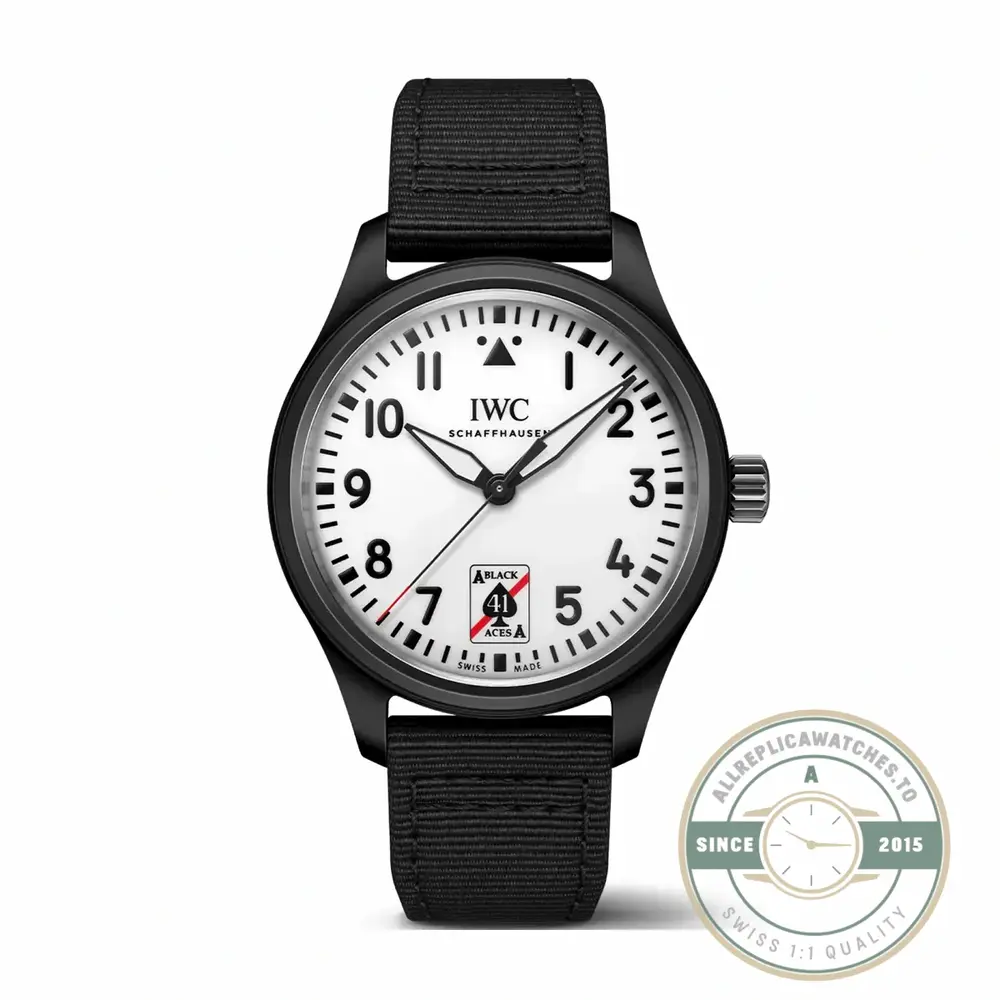
A Top Gun “Black Aces” super clone — black zirconium ceramic, white dial, squadron insignia.
What Is the IWC Top Gun?
“Top Gun” is IWC’s ceramic Pilot’s Watch line, named after the United States Navy Strike Fighter Tactics Instructor program — the real “Top Gun.” The defining feature is the case material: instead of the steel of a standard Big Pilot or Mark, the Top Gun uses matte zirconium-oxide ceramic, usually black, chosen because it is extremely hard, scratch-resistant, lightweight and non-reflective — exactly what a cockpit instrument wants. Later editions added coloured ceramic: sand (Mojave Desert), white (Lake Tahoe), green (Woodland) and more.
Within the line there are two main body types: the three-hand automatic (the Pilot’s Watch Automatic 41 Top Gun, like the Lake Tahoe and Mojave) and the chronograph (the Pilot’s Watch Chronograph Top Gun, including special-edition squadron pieces like Black Aces and Blue Angels). On a super clone, both are reproduced — and because the Top Gun’s whole identity is the ceramic and the clean pilot dial, a good copy is convincing in a way few watches are.
The Top Gun Story
IWC has built pilot’s watches since the 1930s, but the Top Gun line is a modern chapter. IWC became an official partner of the US Navy’s elite fighter-weapons school — the real “Top Gun” — and designed these watches around what a naval aviator actually needs: a case that resists the scratches and glare of a cockpit, a dial that reads at a glance, and a movement shielded against the magnetic fields around an aircraft. Black zirconium ceramic was the answer: hard, matte and non-reflective, with a soft-iron inner case for anti-magnetism.
From there the family grew into the editions collectors know today — the sand-coloured Mojave Desert, the white Lake Tahoe, the green Woodland, and the squadron chronographs Black Aces and Blue Angels, each tied to a real unit or location. That genuine aviation heritage, wrapped in a stealthy ceramic case, is a large part of why the Top Gun has become one of IWC’s most recognisable watches — and one of its most replicated.
Top Gun vs Standard Pilot’s Watch
Before choosing a Top Gun, it helps to know how it differs from a standard steel Pilot’s Watch like the Mark or the Big Pilot. They share the same dial language — the oversized crown, the triangle at twelve, the railway-track minutes — but the material changes the whole character of the watch.
Top Gun (ceramic)
Standard Pilot (steel)
Case material
Zirconium ceramic
Stainless steel
Weight
Light
Heavier
Scratch resistance
Very high
Moderate
Finish
Matte, non-reflective
Brushed / polished
Colour options
Black, sand, white, green
Steel only
The short version: pick the Top Gun if you want a lightweight, scratch-proof, modern pilot with a matte stealth look and the option of colour; pick a steel Mark or Big Pilot if you want the classic, heftier, more traditional feel and the ability to re-polish the case over time. On a super clone, the Top Gun is also where real ceramic separates a flagship build from a cheap one, which makes the material choice matter even more.
The Top Gun Editions
The Top Gun family has grown into a set of recognisable editions, mostly defined by ceramic colour and squadron theme. These are the ones worth knowing:
Edition
Ceramic colour
Type
Signature
Top Gun (standard)
Black
Auto / Chrono
The classic black-ceramic pilot
Mojave Desert
Sand / beige
Auto / Chrono
Desert-tone ceramic
Lake Tahoe
White
Automatic 41
All-white ceramic, blue crown
Woodland
Green
Automatic 41
Olive-green ceramic
Black Aces
Black
Automatic / Chrono
VFA-41 squadron insignia
Blue Angels
Black
Chronograph
US Navy flight demo team
The Ceramic Case — Where the Copy Is Won or Lost
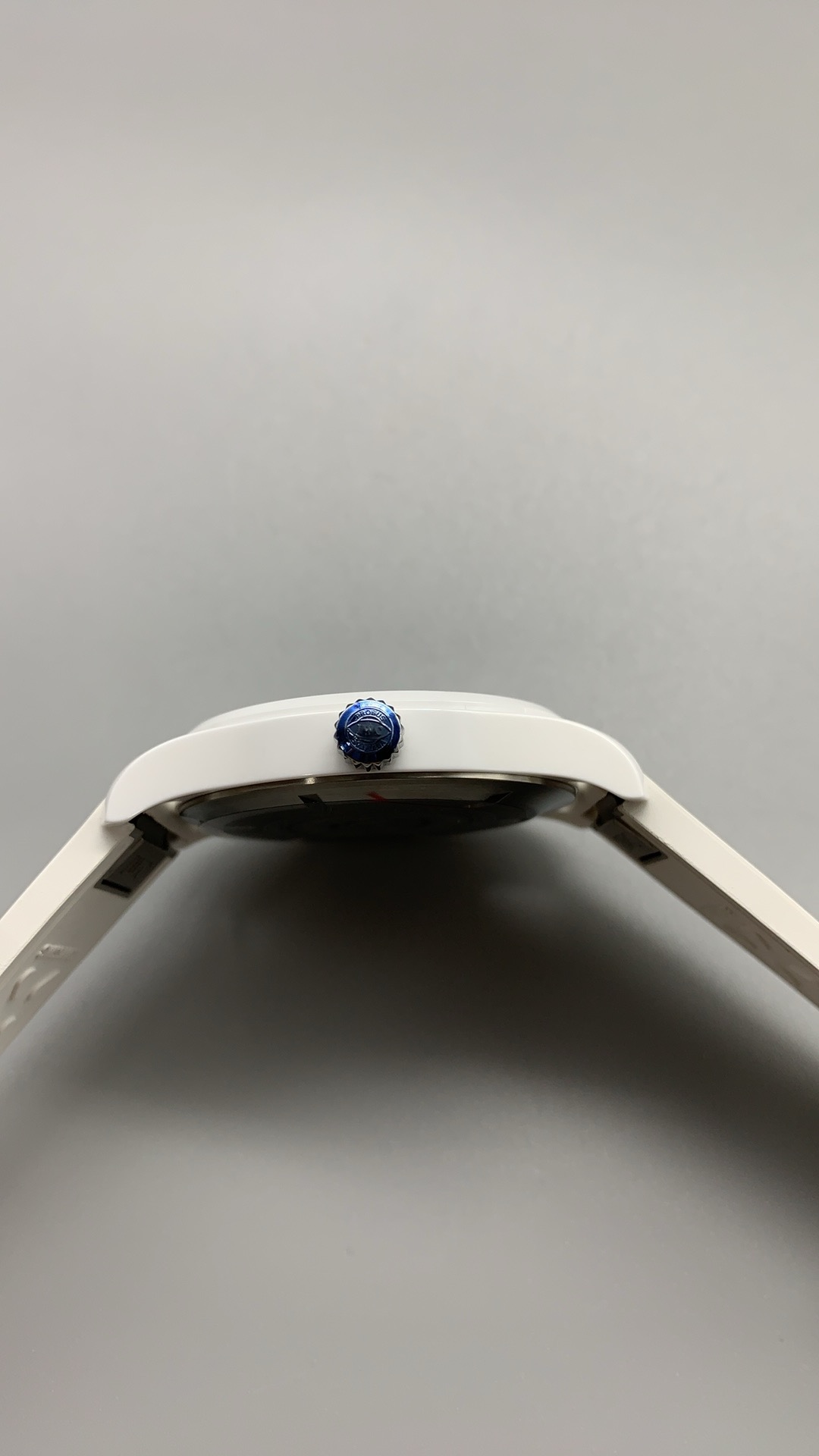
White zirconium ceramic on a Lake Tahoe super clone.
The ceramic is the whole point of a Top Gun, so it is also where a super clone proves itself. Genuine IWC ceramic is sintered zirconium oxide — fired at high temperature into a case that is harder than steel, resistant to scratches, and noticeably lighter on the wrist. A flagship super clone reproduces real ceramic, not painted or coated metal, which is the single most important thing to verify: the matte finish should be even and deep, with no glossy patches, and the case should feel light and slightly warm to the touch rather than cold like steel.
Colour accuracy is the second test, and it is what separates the tiers on the coloured editions. The sand of a Mojave Desert, the white of a Lake Tahoe and the green of a Woodland each have a specific tone, and a weak copy drifts off — a Lake Tahoe that is too grey, a Woodland that is too bright. On a good super clone the ceramic colour is matched closely and is consistent across the case, bezel and pushers. Because ceramic cannot be re-polished the way steel can, getting it right from the factory is everything — which is why the choice of factory matters more here than on almost any other watch.
The Movement
An IWC Pilot’s chronograph super clone — crisp pushers and subdials.
What drives a Top Gun depends on whether it is a three-hander or a chronograph. The chronograph editions — the Pilot’s Watch Chronograph Top Gun, Black Aces and Blue Angels — use a clone 69385, a column-wheel chronograph built to copy IWC’s in-house 69000-series caliber, with a power reserve in the 44–48 hour range. A real column-wheel clone gives crisp, defined pusher action and correctly resetting subdials — the feel that a module-based budget replica cannot match.
The three-hand automatics — the Lake Tahoe, Mojave and Woodland Automatic 41 — run a clone 82100, a decorated automatic copying IWC’s 82000-series with its signature Pellaton winding look, holding roughly 40–48 hours. Both are flagship-grade clone calibers rather than dressed-up Asian bases, which is exactly what you want behind a ceramic pilot. As always, treat quoted power-reserve figures as vendor numbers rather than lab results, and remember the honest line: a clone 69385 or 82100 reproduces the layout and behaviour of an IWC caliber, but it is not a genuine IWC movement.
Best Factory for an IWC Top Gun Super Clone
For IWC pilots, two factories lead. ZF Factory is the overall IWC benchmark — strongest on the Big Pilot and Portugieser, with excellent dials and case finishing — and its pilot work carries over to the Top Gun body. APS Factory is the specialist for the Pilot’s Chronograph, which makes it the natural choice for the chronograph Top Guns like Black Aces and Blue Angels. Both reproduce real ceramic and the correct clone calibers.
The rule for Top Gun specifically is to prioritise the ceramic quality and colour over everything else, because it is the one thing that cannot be fixed after the fact. Ask which factory made the piece and request QC photos that show the ceramic finish clearly, in natural light, before you buy. For the full breakdown of every IWC factory, read our best IWC super clone factory rankings.
Best Top Gun Models to Buy
If you want the purest statement, the standard black-ceramic Top Gun — automatic or chronograph — is the one to start with; it is the design the whole line is built on. For something more distinctive, the Lake Tahoe (white) and Mojave Desert (sand) are the most eye-catching, and the chronograph squadron editions — Black Aces and Blue Angels — carry the strongest aviation story. Browse the full range of IWC pilot super clones below, or see the whole IWC Pilot’s collection and our Big Pilot guide.
Telling a flagship Top Gun super clone from a cheap fake comes down to a few checks. The ceramic first: a real ceramic case is light, warm and evenly matte, while a painted-metal fake is cold, heavy and often glossy in patches. The dial next: IWC’s pilot dials use crisp railway-track minutes and clean, level applied numerals — a cheap fake shows bleeding print and tilted markers. On a chronograph, the pushers should engage with a defined click, not a mushy press. And the lume should be even and bright, following the dial’s layout exactly. Against a flagship build these all pass; against a budget piece they fall apart immediately.
A couple more checks seal it. The caseback on many Top Guns carries a squadron or edition engraving — on a flagship clone it is crisp and correctly positioned, not shallow or off-centre. The weight is a tell in itself: pick the watch up, and a real ceramic case feels surprisingly light, where a painted-steel fake feels heavy and cold. And the soft-iron inner case that gives IWC pilots their anti-magnetic character is something only the serious builds bother to reproduce. None of these is hard to judge from good QC photos — which is exactly why you should always ask for them before you buy.
How Much Does a Top Gun Super Clone Cost?
A flagship Top Gun super clone sits in the mid-hundreds to around a thousand dollars, depending on whether it is a three-hander or a chronograph and which factory built it. A genuine IWC Top Gun runs several thousand at retail and more for special editions, so the super clone delivers the ceramic-pilot look for a small fraction of the cost. As always, a “Top Gun” offered for under a couple of hundred dollars is painted metal with a generic movement — not real ceramic and not a clone caliber.
Super Clone vs a Genuine Top Gun
It is worth being clear about the trade. A genuine IWC Top Gun is a serious watch — in-house movement, certified ceramic, full warranty and resale value — at a price that runs from several thousand dollars into five figures for special editions. A flagship super clone gives you the ceramic case, the clean pilot dial and a chronograph that behaves correctly, for a small fraction of that.
What you give up is the in-house caliber, the IWC warranty and any resale value as a genuine watch. What you keep is almost everything you interact with: the light, scratch-proof ceramic on the wrist, the instantly recognisable Top Gun look, and a movement that sweeps and chronographs the way it should. For a buyer who wants the ceramic-pilot experience rather than an investment or a document trail, that is an easy trade — and it is the honest way to think about any super clone.
Caring for a Ceramic Top Gun
Ceramic changes how you care for the watch. The good news is that it is extremely scratch-resistant — far more than steel — so the matte case shrugs off the everyday abrasion that would mark a brushed steel pilot. It also will not corrode or discolour, and it stays comfortable against the skin because it does not conduct heat and cold the way metal does. For daily wear, a ceramic Top Gun is one of the most low-maintenance watches you can own.
The one thing to respect is that ceramic is hard but brittle. It resists scratching but can chip or crack under a sharp, concentrated impact — a hard drop onto tile or a direct knock against a stone edge. So treat the case with a little more care than you would steel: do not bang it on door frames, and store it where it will not knock against other watches. Cleaning is simple — a soft cloth, or warm water and a soft brush for the strap and case gaps. Keep it away from strong magnets to protect the clone movement, and a ceramic Top Gun will look exactly as it does today for years.
Frequently Asked Questions
What is the IWC Top Gun? It is IWC’s ceramic Pilot’s Watch line, named after the US Navy fighter-pilot program. The signature is a matte zirconium-ceramic case — black or coloured — that is hard, light and anti-reflective.
Is a Top Gun super clone made of real ceramic? A flagship super clone uses real sintered ceramic, not painted metal. That is the single most important thing to verify: real ceramic is light, warm to the touch and evenly matte.
What movement is in a Top Gun super clone? The chronograph editions use a clone 69385 column-wheel chronograph; the three-hand automatics use a clone 82100. Both copy IWC’s in-house calibers but are not genuine IWC movements.
Which factory makes the best IWC Top Gun? ZF is the overall IWC benchmark, and APS is the specialist for the Pilot’s Chronograph — the best choice for chronograph Top Guns like Black Aces and Blue Angels.
What are the Top Gun editions? The main ones are the standard black ceramic, Mojave Desert (sand), Lake Tahoe (white), Woodland (green), and the chronograph squadron editions Black Aces and Blue Angels.
Can you wear a Top Gun every day? Yes — ceramic is scratch-resistant and light, which makes the Top Gun one of the most wearable pilot’s watches. Just avoid hard knocks on the ceramic, which is hard but brittle.
Find your Top Gun
Browse flagship IWC Pilot and Top Gun super clones — real ceramic, clone calibers, QC photos on request.
Iced Out Rolex: Moissanite vs CZ, Bust Down & Prices
An iced out Rolex is a watch fully set with stones across the case, bezel and bracelet — and on a super clone, the single thing that decides whether it stays dazzling or turns cloudy in six months is the stone. Moissanite holds its fire for life; cheap cubic zirconia dulls. This guide covers the whole iced-out world: the stones and how they compare, factory-set versus bust down, setting quality, what an iced out super clone actually costs, and how to keep it looking new.
The honest version: an iced out super clone is a replica set with lab-made stones — moissanite or cubic zirconia, not mined diamonds — on a clone of a Rolex that Rolex itself may never have made in this configuration. It is built to look spectacular and wear every day, not to appraise as a diamond Rolex. Bought with that in mind, it is the best value in the whole iced-out game.
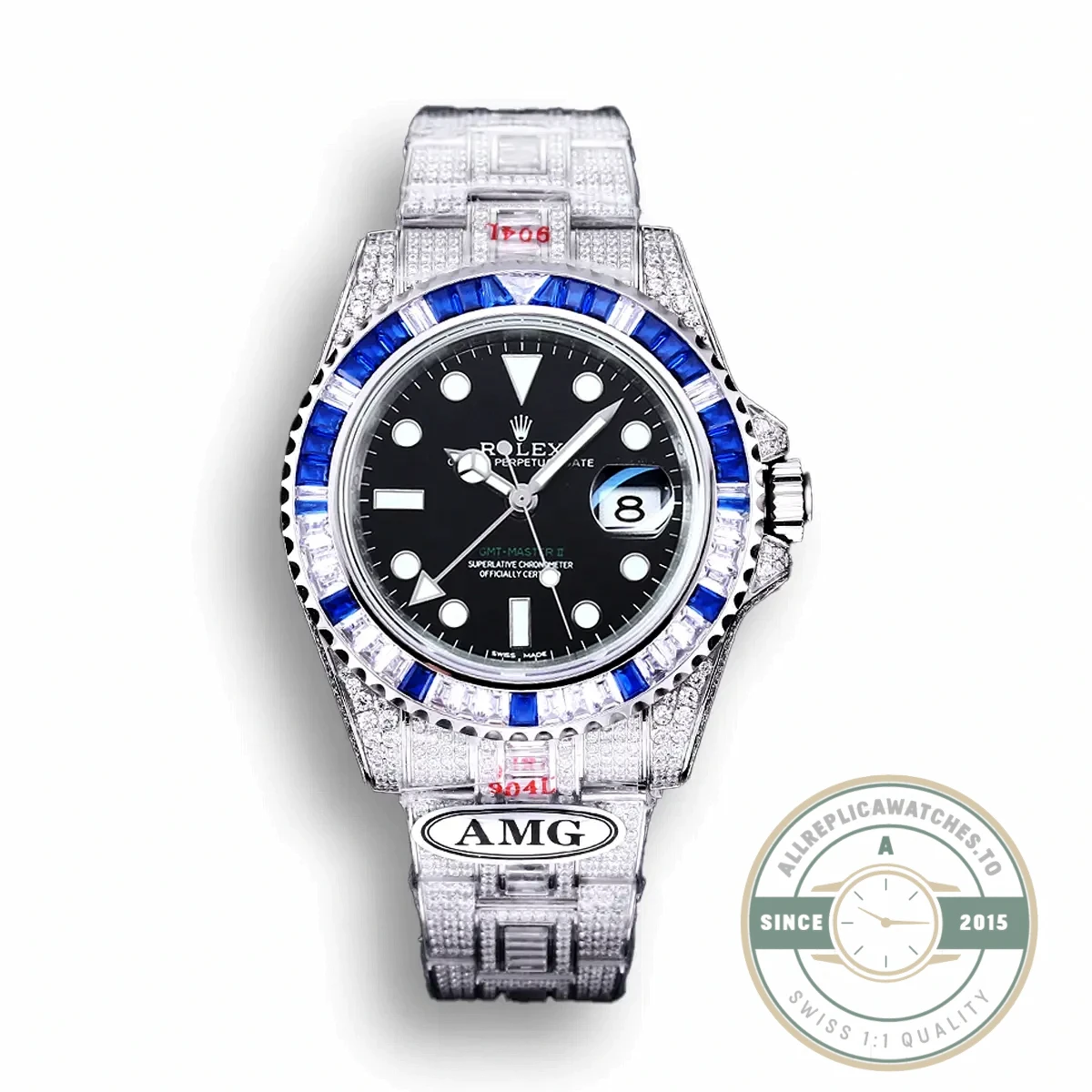
A fully iced-out GMT-Master super clone — pavé case and baguette bezel.
What Is an Iced Out Rolex?
“Iced out” means a watch covered in stones — not just a diamond-set bezel, but the full case, lugs, bracelet and often the dial, so the whole watch reads as a block of light. On a genuine Rolex, that means mined diamonds and a price that climbs into six figures for a fully-set Day-Date or Daytona. On a super clone, it means the same visual effect built with lab-made stones — moissanite or cubic zirconia — for a tiny fraction of the cost.
There are two routes to an iced-out watch, and the difference matters for durability. A factory-set piece has its stones set during the build, into a case and bracelet engineered to hold them. A bust down is a standard watch taken to a jeweller afterward and set with stones aftermarket. Both exist in the super clone world; factory-set is cleaner and more consistent, which is why it is what we focus on. We will come back to that distinction in detail below.
Moissanite vs CZ vs Lab Diamond
This is the decision that makes or breaks an iced out watch. Three stones dominate, and they are genuinely different in how they look on day one and how they look a year later. Get this right and nothing else about the ice matters as much.
Stone
Hardness (Mohs)
Sparkle
After 6–12 months
Moissanite
9.25
Very high fire, rainbow flash
Holds its brilliance, does not cloud
Lab diamond
10
Classic white brilliance
Permanent, hardest option
Cubic zirconia (CZ)
8–8.5
Bright at first
Dulls and can cloud with wear
Moissanite is the sweet spot for an iced out super clone, and it is what the best builds use. At 9.25 on the Mohs scale it is second only to diamond in hardness, so it resists the scratches and abrasion of daily wear, and its refractive index is actually higher than diamond — which is why moissanite throws that distinctive rainbow fire. It does not cloud. Lab diamond is harder still and the most “correct” look, but it costs more and the visual difference on the wrist is subtle. Cubic zirconia is the budget stone: it sparkles on day one, but it is softer, picks up surface abrasion, and dulls or clouds within months. If a listing is suspiciously cheap, it is set with CZ — and you will see the difference by next season.
Factory-Set vs Bust Down
A factory-set iced Submariner — stones set into a case built to hold them.
“Bust down” is the street term for a watch that has been taken apart and set with stones after the fact — originally a genuine watch sent to a jeweller, now often a replica given the same treatment. The look can be spectacular, but the method has real downsides: drilling and setting stones into a case that was not designed for it can weaken the metal, compromise water resistance, and leave uneven channels where stones sit at slightly different heights.
A factory-set iced out super clone avoids all of that. The case, lugs and bracelet links are manufactured to accept the stones from the start, so the settings sit flush and even, the metal keeps its integrity, and the whole piece looks intentional rather than modified. When you are comparing iced-out listings, this is the quality line that matters most after the choice of stone: a clean, even factory set versus a lumpy aftermarket bust down. Everything we list in the iced-out diamond collection is factory-set.
Setting Quality: What Separates a Good Ice Job
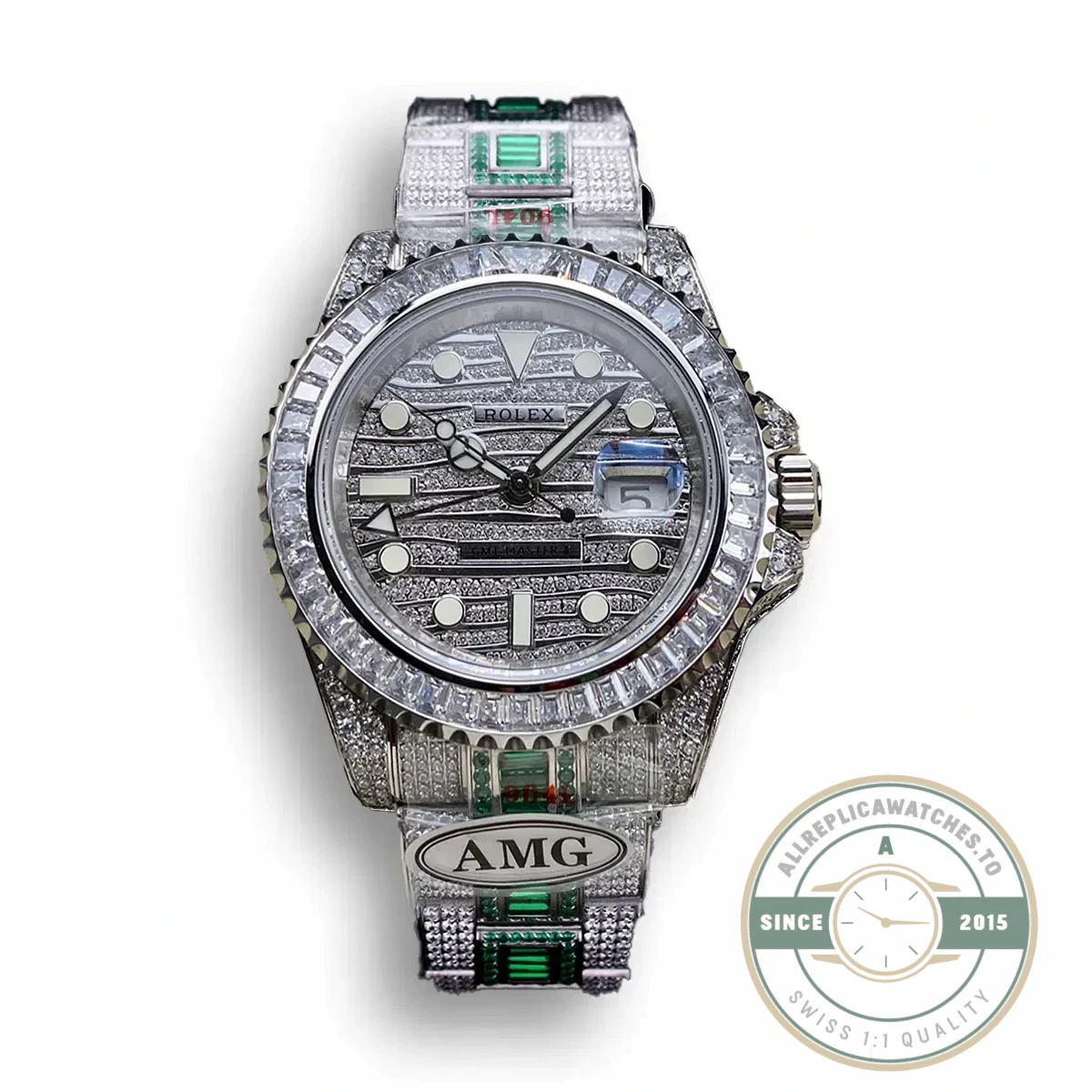
Pavé case and baguette bezel — even settings are the mark of a good ice job.
Once the stone is right, the setting is what separates a premium iced-out watch from a cheap one, and it is easy to judge from a good photo. Look first at consistency: every stone should sit at the same height, with no gaps and no tilted or missing stones. On a pavé case — the dense carpet of small round stones — the rows should be tight and even, with minimal metal showing between them. On a baguette bezel, the long rectangular stones should line up flush, edge to edge, with no light leaking between them.
The second thing to check is the metal around the stones. On a quality set, the prongs or beads holding each stone are small, neat and uniform; on a poor one they are chunky and uneven, and the stones look like they were pressed in rather than set. A good factory ice job has a clean, jewellery-grade finish; a bad one looks busy and rough under magnification. This is exactly the kind of detail worth asking for in QC photos before an iced-out order ships.
Baguette Bezels and Colour
The biggest shift in iced-out style over the last few years is colour. A plain all-white diamond bezel is timeless, but the pieces turning heads now use coloured baguette stones — long rectangular cuts that ring the bezel edge to edge. On a super clone these are lab-created coloured stones rather than mined gems, which is exactly what keeps the price sane while the look stays loud.
The popular combinations play off the dial. A blue baguette bezel over a blue-dial Submariner reads like a sapphire-set diver; a green baguette on a black dial nods to the emerald look; a Pepsi baguette on a GMT-Master keeps the red-and-blue identity while icing it completely. The loudest of all is the rainbow bezel, where the baguettes graduate through the spectrum around the dial — the single most recognisable flex in the iced-out world. Whatever the colour, judge it the same way: the tone should be even from stone to stone with no dull or mismatched pieces, and the baguettes should sit perfectly flush with no light leaking between them. An uneven coloured bezel is the fastest way a cheap ice job gives itself away.
Iced Dials and Diamond Markers
Icing is not only the case and bezel — the dial is where taste shows, and there are three levels. The most restrained is diamond hour markers, where stones replace the baton or dot indices while the dial itself stays clean. The boldest is a fully pavé dial, where the entire face is a carpet of small stones. In between sits the combination — a coloured dial with diamond markers — which many buyers find the most wearable.
On a super clone, judge the dial the way you judge the case: diamond markers should be evenly sized and set flush, and a pavé dial should have even coverage with the handset, logo and date window cut cleanly into it so the watch stays legible. The honest trade-off with a full pavé dial is exactly that legibility — all that sparkle can wash the hands out in bright light — which is why many of the best-looking iced pieces keep a black or coloured dial and let the case and bezel carry the ice.
Best Iced Out Rolex Models
Some models wear the ice better than others. The Day-Date President is the classic iced-out Rolex — the gold case and President bracelet were made for it, and a fully-set Day-Date on a champagne or black dial is the definitive flex. The Datejust is the most versatile, carrying a modest diamond bezel or a full ice job with equal ease, and it is the easiest iced piece to wear day to day. Among the sports models, the GMT-Master II and Submariner take coloured baguette bezels — blue, green, Pepsi — that turn an already-iconic watch into a statement, while keeping the dial clean for legibility. The Daytona is the ultimate iced chronograph, and a Rainbow-style Daytona is the loudest piece in the catalogue. If you want maximum impact, go gold and fully set; if you want something you can wear to the office, a diamond-bezel Datejust is the move. Browse the full iced-out range below, or see the diamond watches collection.
An iced out super clone costs a fraction of a genuine diamond Rolex — where the real thing runs well into five or six figures, a factory-set clone sits in the low thousands. Price tracks the stone and the amount of coverage:
What you are buying
Typical price
Diamond bezel only (otherwise standard)
~$899–999
Fully iced, moissanite, factory-set
~$1,100–1,300
Fully iced gold / Day-Date President
$1,300+
If you see a “fully iced out Rolex” for a couple of hundred dollars, it is CZ on a cheap base — it will look the part in the listing photo and dull within a season. The moissanite, factory-set tier is where the value actually sits.
Iced Super Clone vs a Genuine Diamond Rolex
It is worth being clear about exactly what you trade. A genuine iced Rolex — a factory diamond Day-Date or a Rainbow Daytona — is a six-figure object set with mined diamonds and backed by Rolex’s name and resale value. An iced super clone delivers the same visual impact for roughly one percent of the price, using lab stones on a clone base.
Genuine diamond Rolex
Iced super clone
Stones
Mined diamonds
Moissanite / lab stones
Price
$50,000–200,000+
~$1,100–1,300
Look at arm’s length
Full sparkle
Full sparkle
Resale value
Holds value
None as a Rolex
Wear anxiety
High — insure it
Low — just wear it
The honest summary: you give up mined-diamond provenance and any resale value, and you gain the freedom to wear something spectacular every day without a five-figure insurance policy or the fear of losing it. For a piece whose entire job is to be seen, most buyers find that trade an easy one.
Water Resistance & Daily Wear
Be realistic about water with any iced-out watch. Setting stones across a case means more seams and more potential entry points than a plain build, so we rate our iced-out pieces conservatively — treat them as carrying around 30m of water resistance: perfectly fine for daily wear, rain and hand-washing, but not for swimming or diving. That is true of iced watches generally, genuine ones included, where owners keep a fully-set piece well away from the pool regardless of its base rating.
For everyday wear, an iced out super clone is tougher than people expect — moissanite’s hardness means the stones shrug off the knocks of normal life — but it is still a dress-flex piece, not a tool watch. Wear it to be seen, not to the gym.
Caring for an Iced Out Rolex
The thing that dulls an iced-out watch fastest is not scratched stones — it is grime. Skin oil, lotion, dust and soap film build up behind the stones and kill the sparkle long before any stone wears. The fix is simple: every few weeks, a soft toothbrush, warm water and a drop of dish soap, brushed gently over the stones and rinsed, brings the fire straight back. Dry it fully with a soft cloth or air, paying attention to the gaps between stones where water hides.
Beyond cleaning, the rules are the ones that apply to any fine watch: keep it off hard surfaces, store it away from other jewellery that can knock the stones, and keep it away from magnets to protect the clone movement inside. Do that and a moissanite iced-out super clone looks as sharp in two years as it did the day it arrived. For the full picture of what is inside these watches, read our Rolex super clone guide and our clone movement guide.
Common Iced-Out Mistakes to Avoid
Most disappointing iced-out purchases come down to the same handful of errors. Avoid these and you will be happy with what arrives:
Buying on price alone. A suspiciously cheap “iced out Rolex” is CZ on a weak base. It photographs well and dulls within a season. Pay for moissanite — it is the whole point.
Mistaking a bust down for factory-set. Ask how the stones were set. Aftermarket bust-down work on a case not built for it looks uneven and can hurt water resistance.
Ignoring the movement. An iced watch is still a watch. Make sure a real clone caliber is inside, not a dressed-up Asian base — the ice should not distract you from what makes it tick.
Treating it like a diver. No iced watch, genuine or clone, belongs in a pool. Wear it dry and it will stay flawless for years.
Frequently Asked Questions
What stones are used on an iced out super clone? The best builds use moissanite — hardness 9.25, high rainbow fire, and it does not cloud. Cheaper ones use cubic zirconia, which is softer and dulls within months. Some premium pieces use lab diamond.
Is moissanite better than CZ for an iced out watch? Yes, clearly. Moissanite is harder, sparkles more, and keeps its brilliance for life, where CZ clouds and dulls with wear. For a watch you will actually wear, moissanite is worth the difference.
What is a bust down Rolex? A bust down is a watch set with stones aftermarket, rather than during manufacture. The look can be great, but aftermarket setting can weaken the case and hurt water resistance. A factory-set iced-out clone is cleaner and more durable.
How much does an iced out Rolex super clone cost? A fully iced, moissanite, factory-set super clone typically runs about $1,100–1,300; a diamond-bezel-only piece less, a fully-iced gold Day-Date more. Genuine iced Rolex costs five to six figures.
Can you wear an iced out super clone every day? Yes. Moissanite is hard enough to handle daily wear, and the watch runs a real clone movement inside. Just treat it as a dress-flex piece — fine for rain and hand-washing, not for swimming.
Will the stones fall out? On a quality factory-set piece, settings are even and secure. Avoid hard knocks, store it away from other jewellery, and have a loose stone re-set promptly if one ever works loose, exactly as you would with real jewellery.
Ready to ice out?
Browse factory-set, moissanite iced-out Rolex super clones — Day-Date, Datejust, GMT, Submariner and Daytona.
Rolex Clone Movement: VS3235 vs VR3235 vs DD4130 Explained
A Rolex clone movement is a mechanical caliber built to copy the architecture of a specific Rolex movement — its bridge layout, gear train, beat rate and power reserve — rather than a generic movement with a Rolex-style rotor bolted on. It is what separates a flagship super clone from an ordinary replica, and it is the single most important thing to get right when you buy. This guide explains every clone caliber that matters in 2027: the 3235 family (VS3235, VR3235 and the new JH3235), the Daytona chronograph clones (DD4130/4131), and what a clone genuinely reproduces versus what it cannot.
The honest version: every caliber here reproduces the behaviour of a Rolex movement — the 28,800 bph sweep, the long power reserve — but none of them is a genuine Rolex movement, and the one part they cannot copy is Rolex’s Parachrom hairspring. We will be specific about where the copy is excellent and where it stops.
A clone caliber through a sapphire caseback — decorated bridges, gold rotor, correct layout.
What Is a Rolex Clone Movement?
A clone movement is a caliber engineered to copy a specific Rolex movement’s internal design — not just its looks. That means reproducing the bridge and gear-train layout, the escapement geometry, the beat rate of 28,800 vibrations per hour, and a comparable power reserve. It is the opposite of an “Asian-base” movement, where a generic workhorse like a modified Miyota 8215, a Seagull ST, or a DG2813 gets a Rolex-engraved rotor and decorated plates added on top to look the part from the dial side.
The distinction matters because you feel it every day. A true clone caliber winds smoothly, holds time across positions, and runs for days off the wrist. An Asian-base movement looks correct in a photo but gives itself away with a shorter power reserve, a louder rotor and a less precise crown feel. When a dealer says “super clone,” they should mean a dedicated clone caliber — and you should ask which one. Here is the same kind of movement running inside a flagship build:
The Clone Movement Families
Clone calibers are named by who made them and which Rolex movement they copy. The letters identify the maker — VS is VS Factory’s movement division, VR is a widely-used movement line, DD is Dandong, JH is Jinghe — and the digits are the Rolex reference they follow. So “VS3235” means a 3235-architecture movement made by VS. Here are the families that actually matter:
Rolex caliber
Clone versions
Found in
3235 (3-hand + date)
VS3235, VR3235, JH3235
Submariner, Datejust, Sea-Dweller
4130 (Daytona chrono)
DD4130, DD4131, SA4130
Daytona
3285 (GMT)
VR3285, DD3285
GMT-Master II
3230 (no-date)
VR3230, Hangzhou 3230
Oyster Perpetual, no-date Submariner
VS3235 vs VR3235 vs JH3235
The 3235 is the movement inside most of the current three-hand-plus-date catalogue, so its clones are the ones you will meet most often. Three matter today, and they differ in maturity rather than basic design. The VS3235 is the free-sprung flagship with the longest claimed runtime; the VR3235 is the everywhere-movement with the deepest parts and service history; and the JH3235 is the newcomer that forums discuss as a free-sprung step forward — though, as of 2027, its maker and specification remain a single-source rumour rather than a confirmed product. Here is how they line up:
Point
VS3235
VR3235
JH3235
Balance
Free-sprung
Regulated lever
Free-sprung (reported)
Power reserve
~70h (claimed)
~40–48h
~70h (reported)
Maturity
Proven, known fixes
Most common, easy service
New, unproven
Best for
Daily wear, safest flagship
Value, serviceability
Early adopters
Our position, plainly: if you want the safest bet today, the VS3235 has the history and the free-sprung balance. The VR3235 is the sensible value pick — it is everywhere, so any watchmaker who has serviced aftermarket Rolex movements has serviced one. The JH3235 is interesting if you like being early, but we would not pay a premium for a specification that forums cannot yet confirm.
Free-Sprung vs Regulated Balance
A Submariner super clone — the natural home of the VS3235.
This is the single biggest technical difference between the flagship 3235 clones and the cheaper ones, so it is worth understanding. A mechanical watch keeps time because a balance wheel swings at a fixed rate. There are two ways to adjust that rate. The common one is a regulator: a small lever with a pin that pinches the hairspring and shortens or lengthens its working length. It is simple and fast to service, but the lever is held by friction against a spring that flexes eight times a second, so it can creep, and a knock can shift it.
The other way is a free-sprung balance. There is no lever and nothing touching the hairspring along its length. Instead the balance wheel itself carries tiny adjustable weights on its rim, and a watchmaker changes the rate by turning those. Two consequences follow, and they are why Rolex uses this design: stability, because nothing is held by friction so nothing can creep; and consistency across positions, because the hairspring breathes symmetrically without a pin restricting it. The VS3235 and the reported JH3235 copy this architecture; the VR3235 uses a regulated lever. The trade-off is service — adjusting weights on a balance rim is slower and needs a steadier hand than sliding a lever, so a watchmaker who has only worked on regulated movements will take longer.
The Hairspring: What a Clone Cannot Copy
Here is the honest limit of every clone caliber, no matter the factory or price. Rolex uses a Parachrom hairspring with a Breguet overcoil — the outermost turn of the hairspring is bent up and inward so it breathes concentrically around the centre. This overcoil is what keeps the rate consistent between positions at a level clones do not reach, and the Parachrom alloy resists magnetism and temperature in a way aftermarket springs do not.
Clone movements use a flat hairspring instead. Cosmetically it is irrelevant — on a Submariner or Datejust the caseback is solid, so you will never see it. Functionally it means a clone drifts a little more across extreme positions and over the last hours of the power reserve. For a watch you wear daily and wind every morning, you live permanently in the stable first half of the reserve and will not notice. It is simply the one part the copy stops at — and any guide that claims otherwise is selling you something.
Daytona Chronograph Clones: DD4130 & DD4131
The Daytona — its chronograph is the hardest Rolex caliber to clone.
The Daytona is a different problem entirely, because a working chronograph needs a column wheel and three functioning subdials rather than a simple date. This is why it separates serious factories from pretenders. The flagship clone is the DD4130 (a Dandong clone of Rolex’s 4130), with the DD4131 being the newer variant that mirrors Rolex’s own move to the 4131. Both aim to reproduce the integrated chronograph architecture — the column wheel and vertical clutch — rather than bolting a chronograph module onto a base movement.
In practice, a good DD4130 gives crisp pusher engagement, a smooth running-seconds hand, and correctly resetting subdials. A weak Daytona replica uses a basic movement with a module, which feels mushy on the pushers and can reset imperfectly. The caveat worth stating: no independent teardown confirms the clone uses a fully integrated system rather than a dressed base chrono, so treat “integrated column wheel” as community consensus rather than proven fact. Either way, the Daytona is the one model where the movement, not the case, decides the tier. Browse the current range in the Daytona collection.
Two complications need their own calibers, and getting them right is non-negotiable. The GMT-Master II uses a 3285-type movement — cloned as the VR3285 or DD3285 — whose defining feature is an independently jumping hour hand. You set local time in one-hour steps without stopping the movement, while the 24-hour hand keeps home time on the bezel. A budget GMT replica often skips this entirely, using a movement where the GMT hand is fixed or can only be set together with the main hands. If you actually travel with the watch and use the second timezone, that difference is the whole point of the model. A flagship GMT-Master clone gets the independent jump right; a cheap one does not.
The Sky-Dweller is the harder case. Its genuine caliber 9001 is an annual calendar — the movement knows the length of every month except February, so the date only needs correcting once a year — paired with the Ring Command bezel that switches what the crown adjusts. Cloning an annual calendar convincingly sits at the very edge of what factories do, which is why Sky-Dweller clones cost more and vary more in quality than a simple three-hander. The check is simple: if the annual-calendar date logic and the Ring Command bezel both work cleanly, you are looking at a genuine flagship effort rather than a dressed-up base movement.
Clone Caliber vs Asian-Base Movement — How to Tell
This is the comparison that decides whether you are buying a super clone or a dressed-up replica. A dedicated clone caliber copies a specific Rolex movement; an Asian-base takes a generic workhorse and adds Rolex cosmetics. They can look identical in a dial-side photo, so you have to judge them by behaviour:
Feature
Dedicated clone caliber
Asian-base movement
Base
Copies a specific Rolex caliber (3235 / 4130)
Miyota 8215 / Seagull ST / DG2813 + Rolex plates
Balance
Free-sprung (flagship) or close copy
Regulated lever
Power reserve
~70h (3235 type)
~40h
Beat rate
28,800 bph, smooth sweep
often 21,600 bph, slight stutter
Rotor & winding
Quiet, smooth
Louder, grittier
Best for
Daily wear, long term
Cheapest entry, trying a model
The fastest way to tell them apart without opening the case is the seconds sweep and the crown. A clone caliber sweeps smoothly and winds with a clean, defined feel; an Asian-base stutters six times a second and winds with a gritty, vague resistance. Neither is “bad” — an Asian-base serves a real purpose for someone testing whether a model suits their wrist before committing — but only one of them deserves the word “super clone,” and only one is worth a flagship price.
Power Reserve: Claims vs Reality
You will see power-reserve figures quoted everywhere — VS3235 “~70h,” Clean 4131 “~72h,” VR3235 “40–48h.” Here is the honest framing: these are vendor and community numbers, not independent lab results. The same VS3235 is quoted at anywhere from 65 to 72 hours depending on who is selling it, and real-world reserve depends on the individual movement, its state of wind and its service history. Genuine Rolex rates the 3235 at approximately 70 hours — so a flagship clone that targets ~70h is aiming at the right number, but you should treat any specific figure as a target rather than a guarantee.
What this means practically: the difference between a ~70-hour flagship and a ~45-hour value movement is real and useful — take the 70-hour watch off on Friday and it is still running Monday — but do not buy on a single quoted number. Buy on the balance type (free-sprung vs regulated) and the factory’s track record, which are far better predictors of how the watch behaves.
Which Clone Caliber Is in Which Watch
The caliber follows the model, exactly as it does on genuine Rolex. The three-hand-plus-date sports and classic pieces — the Submariner, the Datejust, the Sea-Dweller — carry a 3235-type clone, so this is where the VS3235 vs VR3235 choice applies. The GMT-Master II needs a 3285-type clone for its independent GMT hand, which is non-negotiable if you actually use the complication. The Daytona needs a 4130/4131 chronograph clone. And the time-only Oyster Perpetual and no-date Submariner use a 3230-type.
The one rule to carry away: match the caliber to the complication. A GMT with a basic movement where the GMT hand does not jump independently is a tier below what it claims, and a Daytona without a proper chronograph clone is just a pretty case. For the full picture of how movements, materials and factories fit together, read our Rolex super clone buyer’s guide.
Service, Magnetism and Longevity
A clone caliber is a real mechanical movement, and it rewards being treated like one. Like a genuine Rolex, it benefits from a service every few years — fresh lubrication, a clean and a re-regulation. The practical difference is who does it: a VR-type regulated movement can be serviced by almost any watchmaker who handles aftermarket automatics, because the parts are everywhere and the regulator is familiar. A free-sprung VS-type needs someone comfortable adjusting weights on the balance rim, so it is worth asking a watchmaker whether they have worked on free-sprung movements before you hand one over.
Magnetism is the one risk worth taking seriously. Because a clone uses a standard flat hairspring rather than Rolex’s antimagnetic Parachrom, it is a little more susceptible to magnetisation from the everyday sources that surround us — laptop speakers, phone cases, handbag clasps, tablet covers. A magnetised movement suddenly runs fast by minutes a day; the fix is a thirty-second pass with a cheap demagnetiser, but the habit of keeping the watch off magnets is cheaper still.
On longevity, the honest answer is that a well-made flagship clone can run reliably for years, but the figures people quote are anecdotal rather than lab-tested. Treat it as you would any mechanical watch: wind it gently, keep it dry beyond its rated resistance, avoid magnets, and service it when the seconds hand or the power reserve tells you something has drifted. Do that and a good clone caliber will long outlast the novelty of owning it.
How to Check Your Movement
Before any flagship purchase, ask for QC photos and, where possible, a timing reading. Three checks tell you most of what you need:
1. Confirm the caliber by name. “A Submariner” is not enough — ask whether it is a VS3235 or VR3235, and make sure it matches the price you are paying.
2. Watch the seconds hand. It should sweep smoothly at 28,800 bph. A visible six-tick-per-second stutter means an Asian-base movement, not a clone caliber.
3. Ask for a timegrapher reading. A QC photo of the timing machine tells you more than any quoted power-reserve figure — look for a rate within a few seconds a day and a healthy amplitude.
Frequently Asked Questions
What is a Rolex clone movement? A mechanical caliber built to copy the internal architecture of a specific Rolex movement — the layout, the 28,800 bph beat rate and a comparable power reserve — rather than a generic movement dressed to look the part. It is not a genuine Rolex movement.
What is the difference between VS3235 and VR3235? The VS3235 is free-sprung with a claimed ~70-hour reserve and a proven track record; the VR3235 uses a regulated balance with a shorter ~40–48h reserve but is more common and easier to service. The VS is the flagship choice, the VR the value choice.
Is the JH3235 real? It is discussed on forums as a free-sprung 3235 from Shanghai Jinghe, but as of 2027 the maker, designation and specification are single-source and unconfirmed. Treat it as emerging, not proven, and do not pay a premium for it yet.
Can a clone movement take genuine Rolex parts? Some sellers claim partial gen-part compatibility, but there is no independent confirmation, and the Parachrom hairspring specifically cannot be cloned or swapped. Assume a clone is serviced with clone parts.
What movement does a super clone Daytona use? A flagship Daytona uses a DD4130 or the newer DD4131 — a clone of Rolex’s integrated chronograph caliber. A real chronograph clone gives crisp pushers and correct subdials; a module-based replica does not.
How long does a clone movement last? A well-made flagship clone can run for years with normal care and occasional service. Longevity figures are anecdotal rather than lab-tested, so service it like any mechanical watch and keep it away from strong magnets.
Buy the caliber, not just the look
Every flagship super clone we sell is built on a dedicated clone caliber — matched to the model, with QC photos on request.
Fake Rolex vs Real: 12 Differences and How to Spot Them
The fastest way to spot a fake Rolex is the weight and the seconds hand: a genuine Submariner weighs around 153–155g and its second hand glides smoothly at 28,800 beats per hour, while a cheap fake feels light and stutters. But that test only catches the cheap ones. Heading into 2027, flagship super clones pass most expert checks — and the handful they cannot pass are invisible in daily wear. This guide walks every difference between a fake Rolex and a real one, grouped by how close you need to look.
Straight talk: there are three things on the table here — a genuine Rolex, a cheap street fake, and a flagship super clone. They are not the same. A cheap fake fails almost every check below; a flagship super clone passes almost all of them. Knowing the difference protects you from overpaying for junk — and tells you exactly what a good super clone does and does not replicate.
A flagship Datejust super clone — the kind that passes most authentication checks at a glance.
The Quick Answer: How to Spot a Fake Rolex
Weighing in QC — a flagship build should land in genuine territory.
If you only have ten seconds, run two checks. Pick it up — a real Rolex is dense; a Submariner should feel like roughly 155 grams of solid steel, and a light, hollow feel is the clearest sign of a cheap fake. Watch the second hand — a genuine Rolex sweeps smoothly at 28,800 beats per hour (eight ticks a second, so smooth it looks continuous); a cheap fake runs at 21,600 bph and visibly stutters.
Those two tests eliminate the street-market junk instantly. Everything past this point is about the harder question: telling a genuine Rolex from a flagship super clone, where the differences shrink to details most people never see. We have split all twelve differences into three levels, based on how close you have to get — and what tools you need — to catch them.
Level 1 — Visible From a Metre Away
These are the tells that give away a cheap fake in seconds, before you even touch the watch. A flagship super clone passes all three without issue; an entry-level fake fails every one.
Checkpoint
Genuine Rolex
Cheap fake
Flagship super clone
Weight
Dense, ~155g (Sub)
Light, ~110g, hollow
In genuine range
Second-hand sweep
Smooth, 28,800 bph
Visible stutter, 21,600
Smooth, 28,800 bph
Dial print
Razor-crisp, even
Fuzzy, misaligned text
Crisp, correctly spaced
The weight test is the oldest trick in the book, and it still works — but only against cheap builds. A genuine Submariner 126610LN weighs roughly 155g on the bracelet; entry-level fakes come in far lighter because they use thin alloy or hollow links. A flagship super clone in solid 904L lands right in genuine territory. The second-hand sweep is just as fast: eight ticks per second looks like a continuous glide, while a 21,600 bph movement stutters six times a second — obvious once you know to look.
Level 2 — Visible in the Hand
These differences need the watch in your hand at normal inspection distance. This is where mid-tier fakes fail and even some higher builds show a tell.
Checkpoint
Genuine Rolex
Cheap fake
Flagship super clone
Cyclops magnification
2.5x, fills the window
~1.5x, date looks small
2.5x, correct
AR coating flash
Blue-purple under light
Green flash or none
Blue-purple, correct
Ceramic bezel
Platinum-fill numerals, glossy
Painted, faded colour
Sintered ceramic, close match
Crown & winding feel
Smooth, precise threads
Gritty, loose
Smooth, near-genuine
The cyclops is the fastest in-hand check: a genuine 2.5x lens fills the date window and reads crisp from any angle, while a cheap fake under-magnifies so the date sits small and sunk. The anti-reflective coating is the next tell — tilt a genuine Rolex under a bright light and the crystal flashes a distinct blue-purple; a green flash, or none at all, signals mineral glass pretending to be sapphire. On both of these a flagship super clone matches the genuine, which is exactly why in-hand inspection no longer separates the best builds from the real thing.
Level 3 — Only Under a 10x Loupe
This is expert territory. These tells need magnification, specific lighting, or the caseback off. No one at a dinner, a meeting or the gym will ever see them — but a trained watchmaker will.
Checkpoint
Genuine Rolex
Flagship super clone
Rehaut engraving
Deep, crisp “ROLEX” + serial at 6
Present, slightly shallower under 10x
Laser-etched coronet
Tiny crown at 6 o’clock, dot matrix
Reproduced, correct size
Movement architecture
Parachrom hairspring, free-sprung
Clone caliber, flat hairspring
Rehaut engraving — the laser text on the inner ring between dial and crystal — is one of the first things a professional checks. The laser-etched coronet at six o’clock on the crystal, introduced in the early 2000s, is Rolex’s micro-authentication feature. Flagship builds reproduce both convincingly; the real gap only opens once the caseback comes off and a watchmaker sees the movement. This is the same super clone movement at the heart of the flagship tier — here is one running:
The caseback check — a clone caliber’s finishing is close, but the hairspring is the giveaway.
Rolex Submariner Fake vs Real
The Submariner is the most replicated watch on earth, so it is also where factories have invested the most. On a Submariner, focus on three model-specific tells: the bezel click count (genuine has exactly 120 firm clicks per rotation — cheap fakes feel loose or wrong-count), the crystal clarity around the cyclops, and the maxi-dial proportions (the lume plots and hands should be fat and even). A flagship Submariner super clone nails all three; a cheap fake gives itself away on the bezel action alone. Browse the current range in the Submariner collection.
On a Datejust, the giveaways are the fluted bezel and the Jubilee bracelet. Genuine fluting has precise, evenly machined grooves that catch light from every angle; cheap fakes look soft and rounded. The Jubilee’s five-link design should have correct proportions — centre links not too wide, smooth transitions. The cyclops over the date is the fast check, exactly as on the Submariner. A flagship Datejust super clone reproduces the fluting and bracelet convincingly. See the Datejust collection.
GMT-Master II and Day-Date. On a GMT-Master, the hardest thing to fake is the two-tone ceramic bezel — the Pepsi and Batman colour transition is a real tell, and the GMT hand must jump independently in hour steps. On a Day-Date, it is the gold: genuine solid gold has a correct weight and warm tone, and the day wheel must snap over instantly at midnight rather than crawl. Cheap fakes miss both; flagship builds reproduce the bezel transition and the instant day-change.
The Two Checks No Replica Passes
Across all twelve differences, two remain unbeatable regardless of factory, budget or technology — and any honest guide should name them:
1. The serial number database. Every genuine Rolex has a unique serial registered with Rolex. An authorised dealer or service centre can query it against the model, production year and sale record. No replica serial matches those records — this is the one definitive test.
2. The Parachrom hairspring. Genuine Rolex calibres use a free-sprung Parachrom hairspring with a Breguet overcoil, adjusted by Microstella nuts on the balance rim. Clone movements use a flat hairspring instead. It is invisible behind a solid caseback, but under a loupe with the movement open, a watchmaker sees it immediately.
Everything else on the list — weight, sweep, cyclops, AR coating, bezel, rehaut, coronet — a flagship super clone now reproduces. These two it does not, and we would rather tell you that than pretend otherwise.
The Scorecard: How Many Checks Each Tier Passes
Put the whole comparison together and the picture is clear. Out of the twelve checkpoints in this guide, here is roughly how each tier scores:
Tier
Checks passed (of 12)
Fails on
Genuine Rolex
12 / 12
—
Flagship super clone
9–10 / 12
Serial database, hairspring, rehaut depth under 10x
Mid replica
5–7 / 12
Cyclops, AR flash, bezel colour, movement finishing
Cheap fake
1–3 / 12
Weight, sweep, print — nearly everything
The jump from a cheap fake to a flagship super clone is not incremental — it is the difference between failing on sight and passing everything short of a serial check. That gap is exactly why the only replica tier worth buying is the flagship one.
Quick Decision Tree
Evaluating a watch and need a fast answer? Run these in order — each step eliminates a lower tier:
Step 1 — Heft it. Light and hollow? Entry-level fake. Stop here.
Step 3 — Check the cyclops. Date small and under-magnified? Mid-tier at best.
Step 4 — Tilt for the AR flash. Green or no flash? Not sapphire.
Step 5 — Loupe the rehaut and coronet. Missing or sloppy? Below flagship.
Step 6 — Serial check / open the caseback. The only definitive test for genuine vs replica.
Steps 1–4 eliminate all entry-level and most mid-tier fakes. Step 5 separates flagships. Step 6 is the only test that proves genuine.
Why the Gap Is Closing in 2027
Cyclops, AR flash and bezel colour — tells that no longer separate a flagship build from genuine.
The fake-vs-real picture shifts faster than most people realise, and it moves in one direction. Flagship factories now iterate on a three-to-four-month cycle: every tell that authenticators and forum members identify gets corrected in the next version. A detail that caught fakes a year ago is often fixed by the next release.
The movement is the clearest example. Free-sprung clone calibres like the VS3235 brought the 70-hour power reserve and the smooth 28,800 bph sweep that used to separate the top of the market from everything under it. Details that were reliable tells two years ago — cyclops magnification, AR coating colour, bezel accuracy — are no longer useful against a current flagship build. What remains is the serial database and the Parachrom hairspring, and those are structural: they are the parts a clone is not built to reproduce, which is why they are the honest limit rather than a gap waiting to close. If you want the full breakdown of movements and factories behind this shift, see our Rolex super clone guide.
Cheap Fake vs Flagship Super Clone — Where the Line Is
The real takeaway of any fake-vs-real comparison in 2027 is that “fake” is not one thing. A cheap fake fails at a metre; a flagship super clone passes every check a normal person could ever run and most that a professional runs short of opening the caseback. If you want the look, weight and movement behaviour of an icon — and you are honest with yourself that it is a replica, not a Rolex — the flagship super clone is the only tier worth your money. For the full breakdown of tiers, movements and factories, read our Rolex super clone buyer’s guide.
Frequently Asked Questions
What is the single fastest way to spot a fake Rolex? Weight plus the second-hand sweep. Pick it up — a Submariner should feel around 155g — then watch the seconds for three seconds. Light and stuttering means an entry-level fake.
How can you tell if a Rolex is real or fake without opening it? Run the cyclops check (2.5x, date fills the window), the AR flash (blue-purple), the dial print (razor-crisp), and the bezel action. These catch every cheap and most mid-tier fakes. The only definitive test is the serial number or the movement.
Can a flagship super clone pass all the checks? Almost. Current flagship builds pass 9–10 of the 12 here. They fail only on the serial-number database (no replica serial matches Rolex records) and the Parachrom hairspring under magnification.
Can a regular person tell a fake Rolex from real during normal wear? Against a flagship build — almost certainly not. The remaining differences are invisible during daily wear; no one across a table or at the gym is running a loupe over your wrist.
How do you spot a fake Rolex Submariner specifically? Three tells: the bezel click count (genuine has 120 firm clicks), the cyclops and crystal clarity, and the maxi-dial lume proportions. The bezel action alone exposes a cheap fake.
Can a jeweler tell a fake Rolex? A trained watchmaker — especially one who opens the caseback — can, through the serial database and the hairspring. A general jeweler glancing at the dial often cannot tell a flagship super clone from genuine.
Is the laser-etched crown on the crystal a reliable tell? Against cheap fakes, yes — they omit it or make it too large. Against flagship builds, no: current versions reproduce it with the correct size and dot structure.
Want the tier that passes the checks?
Browse flagship Rolex super clones — 904L steel, clone movements, ceramic bezels — sourced from the best factory for each model.
Rolex Super Clone Watches 2027: The Complete Buyer’s Guide
A Rolex super clone is the top tier of replica Rolex — a watch built to copy one exact reference down to the case weight, the ceramic bezel, the 904L steel and a dedicated clone movement that runs at the genuine’s beat rate. It is not a cheap fake, and it is not a Rolex. Heading into 2027, the gap between a flagship super clone and the real thing is narrower than it has ever been — but the factory map behind these watches has been turned upside down in the last eighteen months. This guide explains exactly what a super clone is, who makes the best ones now, what is inside them, and which models are worth buying.
The honest version: every “clone” calibre here reproduces the genuine Rolex caliber’s layout, beat rate and power reserve — it is not a Rolex movement, and no replica carries a genuine serial. We sell super clones as super clones. What the engineering buys you is the look, weight and behaviour of an icon on the wrist, not provenance.
A flagship Submariner super clone in hand — ceramic bezel, 904L case, crisp dial.
What Is a Rolex Super Clone Watch?
A super clone watch is a replica engineered to match one exact reference as closely as current manufacturing allows. The term only properly applies to flagship-tier builds — the ones using solid 904L steel, sintered ceramic bezels, correct case weight and a dedicated clone movement. Below that sit “mid” replicas (316L steel, modified ETA or Seagull movements) and street fakes (alloy cases, quartz or low-beat movements, printing flaws you can spot from a metre away).
“Super clone” is the word buyers actually search for, and it is the right one: it describes a clone of a specific Rolex caliber and case, not a generic look-alike. A flagship super clone Submariner should weigh within a few grams of a genuine one, tick at the same 28,800 beats per hour, and pass a glance across a dinner table without a second look. The difference between that and a $90 Canal Street fake is not a matter of degree — it is a different category of object entirely.
The honest limit matters too. A super clone copies how a Rolex looks and behaves; it does not copy Rolex’s serial-number records or the free-sprung Parachrom hairspring at the heart of a genuine caliber. That is the line, and every good dealer should state it plainly. We do.
Super Clone vs Replica vs Fake — The Three Tiers
Not every “replica Rolex” is a super clone. Knowing which tier you are looking at is the single most useful thing to understand before you spend a dollar — because the same model name can describe a $120 fake or a $900 super clone.
Modified ETA/Seagull 2836 or Hangzhou 3230, ~40–48h
Painted or less accurate bezel, case 0.5–1mm thick
Street fake
under ~$150
Alloy / thin 316L
Low-beat Asian auto or quartz
Painted bezel, wrong weight, visible flaws
Everything we list is flagship tier. The rest of this guide is about that top row — because that is where “super clone” actually means something.
Why Super Clones Are Surging Heading Into 2027
Two forces are driving record interest. The first is price. Genuine Rolex retail prices and grey-market premiums have climbed for years, pushing the most wanted sports models well beyond their list prices on the secondary market. A steel Daytona or a Pepsi GMT that is almost impossible to buy at a boutique has made the idea of a $1,000 flagship copy far more appealing to ordinary enthusiasts.
The second is quality. The clone movement is the story of the last two years: free-sprung VS3235 calibres, matured DD4130 chronograph clones, and factories iterating every few months to close the remaining visual tells. Independent authentication services have openly noted that flagship builds now pass the majority of their visual checks — the kind of statement that was unthinkable five years ago. As the copies got better, the audience shifted from people trying to fool others to enthusiasts who simply want the look and feel of an icon without the five-figure outlay.
Who Makes the Best Rolex Super Clone?
This is where most guides online are badly out of date. The factory that dominated ceramic-bezel Rolex for a decade — Clean Factory — was reportedly raided in July 2025 and was removed from the authoritative RWI community factory guide in February 2026. What is sold as “Clean” today is largely leftover stock or a new line, “Clean Plus,” whose link to the original factory is unverified. If an article still tells you Clean is the undisputed king, it was written before the landscape shifted.
Here is the real picture for 2027, mapped model by model to the factory that currently makes the best version:
Model
Best factory
Why it wins
Clone movement
Submariner 126610
VSF
Free-sprung VS3235, quiet winding, correct 904L case feel
VS3235
Daytona 116500LN
BTF
Case thickness & weight closest to genuine, crisp pushers, Panda contrast
DD4130
GMT-Master II (Pepsi / Batman)
VSF
Leads in-production now; accurate two-tone ceramic bezel
DD3285 / VR3285
Datejust 36 / 41
VSF / ex-Clean
Fluted bezel definition and Jubilee proportions; VSF movement reliability
VS3235 / VR3235
Day-Date President (gold)
GMF
Best gold weight and plating depth, correct heft
3235 clone
Sea-Dweller / Deepsea
VSF
Functional helium escape valve, correct case proportions
VS3235
The short version: for steel sports Rolex, VSF is the current workhorse leader. For the Daytona specifically, BTF owns the case. For gold and President models, GMF. Names you may remember — Noob, AR Factory — are gone or renamed: Noob has been dead since the 2021 raids, and ARF was itself reportedly raided in mid-2026 and now trades under a new name. We source each model from the factory that currently does it best, not from whoever a two-year-old blog recommended — and because factories rise and fall, the right question to ask any dealer is always “which factory, and which version?”
Inside a Super Clone: the Movement
The movement is what separates a super clone from a replica. A flagship Rolex super clone uses a dedicated clone calibre — most commonly the VS3235 for three-hand models and the DD4130/4131 for the Daytona chronograph. These reproduce the architecture of Rolex’s own calibres: the VS3235 copies the 3235 with a free-sprung balance and targets roughly a 70-hour power reserve, and it beats at the genuine 28,800 bph for the same smooth seconds sweep.
Why do clone movements differ so much? Because they start from two completely different places. A dedicated clone calibre (VS3235, DD4130/4131, DD3285) is engineered to copy the bridge layout, gear train and escapement geometry of a specific Rolex caliber. An Asian-base clone takes a generic workhorse — a modified Miyota 8215, a Seagull ST, or a DG2813 — and bolts a Rolex-style decorated rotor and plates on top. From the dial side they can look identical; mechanically they are different animals, and you feel it within a day.
Four things actually change between them:
The balance. Flagship 3235 clones use a free-sprung balance — rate is set by tiny adjustable weights on the balance rim, with no regulator lever to drift or shift after a knock. That is how the genuine runs. Cheaper clones use a regulated balance with a lever: easier to service, less stable.
The hairspring. The one part no clone reproduces is Rolex’s Parachrom hairspring with its Breguet overcoil; clones substitute a flat spring. It is invisible behind a solid caseback, but it is the honest technical limit of any super clone.
Power reserve. A clone 3235 targets ~70 hours; an Asian base runs 40–48. The practical difference: take a 70-hour watch off Friday night and it is still running Monday morning. (These are vendor/community figures, not lab-tested — treat them as targets.)
Beat rate & finishing. A good clone runs at the genuine 28,800 bph for that glass-smooth seconds sweep; a weak base runs 21,600 bph with a visible stutter. Flagship movements also wind quieter and have a more correct crown feel.
Here is how the two families compare at a glance:
Feature
Dedicated clone calibre (flagship)
Asian-base clone (budget)
Base
Built to copy a specific Rolex caliber (3235 / 4130)
Modified Miyota / Seagull / DG with Rolex-style plates
Balance
Free-sprung, no regulator lever
Regulated lever
Power reserve
~70 hours (claimed)
~40–48 hours
Beat rate
28,800 bph, smooth sweep
often 21,600 bph, slight stutter
Best for
Daily wear, long term
Trying a model before a flagship buy
A newer movement nicknamed the “JH3235” is discussed on forums as a free-sprung step forward, but as of today that is a single-source rumour, not a confirmed product. And to be completely clear: none of these calibres is a genuine Rolex movement — what they buy you is the behaviour of one.
This is the same super clone movement you will find inside our Daytona, GMT and Submariner pieces. Here is the clone chronograph through an open caseback — and one running on video:
The clone chronograph through a Daytona’s sapphire caseback — gold rotor, decorated bridges.
904L Steel, Weight & Build
~176g on the scale — right in genuine territory.
Flagship super clones use 904L steel — the same grade Rolex markets as Oystersteel. A common myth is that 904L is “harder” than the 316L used on cheaper replicas. It is actually slightly softer (roughly 150 vs 217 on the Brinell scale), which means it is a little more scratch-prone, not less. What 904L genuinely gives you is superior corrosion resistance and a deeper, warmer polish — the look and feel, not the toughness.
Weight is the fastest tell of tier. A genuine Submariner 126610LN (a 40mm watch, despite some listings calling it 41mm) weighs roughly 153–155g on the bracelet. A flagship super clone lands in the same range; a mid replica in 316L comes in noticeably lighter, and a street fake lighter still. When you pick up a good super clone, the heft is the first thing that feels right — followed by the bracelet, where the clasp action and the gap tolerances between links separate the tiers as clearly as anything on the dial.
Crystal, Cyclops & Bezel
Cyclops magnification and ceramic bezel on a Submariner super clone.
After the movement and the steel, the glass and bezel are where the flagship tier proves itself — and where cheap fakes fall apart first. These are also the details you can actually verify from a QC photo before you buy.
Sapphire crystal & AR coating. A flagship super clone uses a genuine sapphire crystal with an anti-reflective coating on the underside. The fastest check: tilt it under a light and the crystal should flash a faint blue-purple. A green flash, or no flash at all, means mineral glass pretending to be sapphire — an instant tier giveaway.
The 2.5x cyclops. Rolex’s cyclops lens magnifies the date 2.5x so it fills the window and reads crisp from any angle. Weak fakes under-magnify (around 1.5x), leaving the date looking small and sunk at the bottom of the window. On a good super clone the date snaps right to the edges of the lens.
The laser-etched coronet. Since the early 2000s Rolex lasers a tiny crown into the crystal at six o’clock, visible only at the right angle under magnification. Flagship builds reproduce it with the correct size and dot structure; entry fakes omit it or print one that is too large and too obvious.
Ceramic bezel & rehaut. Flagship Cerachrom-style ceramic inserts carry a platinum-dust fill in the numerals that shifts from silver to grey as you tilt the watch; cheap inserts look flat and slightly faded. The rehaut — the inner ring between dial and crystal — should show crisp, evenly spaced, centred “ROLEX” engraving with the serial at six o’clock.
Super Clone vs Genuine — What You Keep, What You Give Up
It helps to be clear-eyed about the trade. A flagship super clone keeps almost everything you interact with day to day: the weight, the ceramic bezel, the dial layout and printing, the bracelet feel, the smooth 28,800 bph sweep, and the water-resistant screw-down crown. What you give up is what you cannot see or will never use: the genuine Parachrom hairspring and its overcoil, the serial number registered in Rolex’s database, the official service network, and any resale value as a Rolex.
For most buyers that trade is the entire point. You are buying the experience of wearing the watch, not a store of value or a document trail. If what you want is an investment or a watch you will one day service at a Rolex boutique, no replica — however good — is the right purchase, and we will tell you so.
Best Rolex Super Clone Models to Buy
If you are buying your first super clone, start with a model that is both iconic and heavily developed by the factories — that is where the quality is highest. These are the collections worth your attention.
Submariner — the most replicated watch on earth and the safest first buy. Factories have poured the most R&D into it, so the flagship versions are exceptional, whether you want the classic black 126610LN, the green Hulk, or the no-date 124060. Browse the full range below, or see the Submariner super clone collection.
Daytona — the chronograph that separates serious factories from pretenders. BTF’s case and the DD4130 movement make the steel Panda a standout, and the open-caseback versions let you see the clone chronograph at work. See the Daytona super clone collection.
GMT-Master II — the Pepsi and Batman bezels are the hardest colours to get right, and the best current versions nail the two-tone ceramic transition. It is the ultimate travel-and-everyday icon. Explore the GMT-Master collection.
Datejust is the most versatile dress-sport option and the easiest to wear every day; Day-Date is the gold President flagship; and Sky-Dweller is the one with a genuinely working annual calendar. Explore Datejust, Day-Date and Sky-Dweller, or the full iced-out diamond range.
How Much Does a Rolex Super Clone Cost?
Price tracks tier almost perfectly. Flagship super clones — the only tier we sell — generally run from the high hundreds into the low thousands depending on complication and materials.
What you are buying
Typical super clone price
Steel three-hand (Submariner, Datejust, OP)
~$770–899
GMT-Master II / Sky-Dweller
~$899–999
Daytona chronograph
~$999–1,159
Iced-out / diamond / gold President
$1,100+
If a “super clone Rolex” is being offered for under $200, it is not a super clone — it is a street fake with the label borrowed.
How to Buy a Super Clone Safely
Three habits separate a happy buyer from a disappointed one:
1. Ask which factory and version. “A Submariner” is not enough information. The factory (VSF, BTF, GMF) and the version (V2, V3…) decide what you actually receive. Factories iterate constantly, fixing tells with each release, so a current version is a meaningfully different watch from one two years old.
2. Request QC photos. Before any flagship order ships, you should receive photos of your specific watch — dial macro, bezel alignment, a timing reading. This is standard practice, not an unusual ask, and any serious dealer offers it.
3. Match the movement to the model. A GMT needs a caliber with a true independent GMT hand; a Daytona needs a working chronograph clone. If the movement is wrong, the watch is a tier below what it claims — no matter how good the case looks.
Are Rolex Super Clones Legal?
For personal ownership, buying and wearing a super clone is a low-risk grey area in most countries — it is the manufacture and commercial resale of trademarked goods that carry legal weight, not an individual wearing one. Customs can occasionally seize a shipment of branded replicas. We ship discreetly and replace seized parcels per our policy, but the honest position is simple: a super clone is a replica, not a genuine Rolex, and you should buy it as exactly that.
Frequently Asked Questions
What is a super clone watch? A super clone is the highest tier of replica — a watch built to copy one exact reference using solid 904L steel, a ceramic bezel and a dedicated clone movement that runs at the genuine’s 28,800 bph. It is a very close copy, not a genuine Rolex.
Who makes the best Rolex super clone? For most steel sports models, VS Factory (VSF). For the Daytona, BT Factory (BTF). For gold and President models, GM Factory (GMF). Clean Factory, the former leader, was reportedly raided in 2025 and removed from the main community guide in early 2026.
Are super clone watches worth it? If you want the look, weight and movement behaviour of an icon without the five-figure price, a flagship super clone delivers more than any other tier. It will never be a Rolex, and it has no resale value as one — buy it to wear, not to invest.
Are super clone watches waterproof? A flagship super clone with a screw-down crown handles rain and hand-washing comfortably. Treat stated water resistance conservatively — gaskets on any replica are not independently pressure-tested, so we do not recommend diving or swimming with one.
How long does a super clone last? A well-made flagship piece with a clone VS3235 or DD4130 can run for years with normal care and occasional service. Longevity figures are anecdotal rather than lab-tested, so service it like any mechanical watch.
Can a jeweler tell a super clone from a real Rolex? A trained watchmaker with a loupe, and especially one who opens the caseback, can — the serial database and hairspring architecture give it away. Across a room or on the wrist, a flagship super clone goes unnoticed.
What is the difference between a super clone and a regular replica? Materials and movement. A super clone uses 904L steel and a dedicated clone caliber matched to the model; a regular replica uses 316L steel and a generic modified movement, and usually runs a shorter power reserve with a less accurate bezel.
Ready to find yours?
Browse the full range of flagship Rolex super clones, sourced from the best factory for each model.
Omega Seamaster 007 Replica Watches: All Seven Compared
There are seven replica watches Omega Seamaster 007 buyers are actually choosing between, and they are not colour variants of one watch. One is gold-plated. Two are titanium and are confused with each other constantly. One has a case that is neither steel nor titanium. Three are steel and differ by dial alone. None of that is legible in a listing thumbnail, which is why this corner of the Omega range produces more wrong orders than any other part of it. Read the table, find the line that describes the watch you came for, then open that card.
Start here. Every row names the one thing that separates that watch from the other six. If you already know you want titanium, or you already know you want the anniversary dial, the table is the whole article for you.
Buyer’s rule: four of the seven change the case metal, and metal is the decision you live with. Dial colour is what people shop on; weight, warmth and reflection are what they notice three months in. Settle the metal first and the list usually falls to one or two candidates.
The yellow-gold 210.62 on black rubber, the only warm-metal case in the group
The Yellow-Gold 210.62
This is the dress end of the group and the only one of the seven whose case is not a grey metal. Gold plating over the 42 mm case, a ceramic unidirectional bezel, a black dial with applied luminous indices, and black rubber closing on a yellow gold clasp. Warm metal against a black dial is the entire proposition of the reference, and the genuine was a 257-piece edition. The 007 gun logo is engraved into the caseback.
This is the Omega James Bond replica most people picture when they picture one, and gold changes how the watch reads at distance. Steel and titanium disappear under a cuff; gold does not, and that is either the point or the problem depending on why you are buying. Wear it where a watch is allowed to be noticed. If you want the Bond Seamaster that reads as jewellery rather than as equipment, it is this one and nothing else here.
The movement is a clone of Omega’s Cal. 8806. That is worth stating plainly because the rest of the Bond references in this catalogue run on the 8800 generation, and the 8806 is a no-date architecture with a different rotor signature through the caseback.
Shop the collection: the full Omega Seamaster replica collection runs well past the Bond references — Diver 300M, Planet Ocean 600M, Aqua Terra 150M and the heritage Seamaster 300, with the dive references sharing this same 42 mm case architecture.
Two Titanium 007s, and How to Tell Them Apart
Two of the seven are titanium and they get mixed up constantly. The difference is worth stating flatly, because the photographs do not carry it and the reference numbers differ by two digits.
210.90.42.20.01.001
210.92.42.20.01.001
Finish
Brushed across case, bracelet and clasp
Matte throughout, nothing reflective
Dial
Black with luminous applied indices
Black ceramic, laser-ablated markings
Bezel
Ceramic insert
Black ceramic, matched to the dial
Worn on
Titanium bracelet
NATO or titanium mesh
Caseback
Helium escape valve at ten o’clock
007 logo beside the serial information
Reads as
A lighter version of the steel diver
One continuous matte black face
The grade 2 titanium 007 Edition is the matte one by finish: a brushed surface across the case, across every link of the titanium bracelet and across the clasp hardware, with a black dial and luminous applied indices behind a ceramic bezel. Nothing on it is polished. At 42 mm it carries like a much smaller steel watch, and the helium escape valve at ten o’clock is the only break in the case profile.
The ceramic-dial titanium 007 takes that same lightness somewhere darker. Its dial is black ceramic with laser-ablated markings rather than printed or applied ones, the bezel insert is black ceramic to match, and the result is one matte black face with nothing reflective anywhere on it. Choose between the two on the dial: applied indices and a bracelet, or an ablated ceramic surface and a strap.
Hard truth: titanium is the right answer more often than buyers expect and the wrong answer for anyone who equates weight with quality. A titanium 42 mm diver weighs roughly what a steel 36 mm dress watch weighs. If heft is part of what you are buying, go steel and do not argue with yourself about it later.
The ceramic-dial titanium 007, matte from bezel to bracelet
The 007 Edition That Is Not Steel
The alloy-cased 007 Edition is the reference that catches buyers out, and it is the reason this article exists in the first place. It carries the 007 Edition dial detailing and the engraved caseback, it keeps the ceramic unidirectional bezel and the domed sapphire with anti-reflective treatment, and in a listing photograph it passes for the steel 007.
It is not steel. The case is a specialised alloy with a different surface tone and a different temperature against the skin, and that is precisely why the 210.90 references sit apart from the mainline 210.30 steel ones in Omega’s own numbering. If what you want is the density and the hard bright reflections of steel, take one of the three steel cards instead. Nothing about this one is a downgrade; it is simply a different material answering a different brief.
All seven, in stock
Swipe across to compare them at a glance, or open the collection for the rest of the Seamaster range.
The tropical-brown limited edition is the warm one, and the only brown dial in the group. A tropical brown face with patina-style markers on a steel mesh bracelet, aged on purpose in a way nothing else in the current range attempts, with the 007 limited-edition engraving on the back.
Faux patina divides people. Done badly it looks like a filter; done at this level the markers read as cream rather than yellow and the brown shifts toward bronze in warm light. The mesh bracelet is the right companion to it, because a polished link bracelet would fight the softness of the dial. Steel mesh stays quiet.
Shop the collection: the wider Omega replica catalogue carries the Speedmaster, Planet Ocean, Aqua Terra and Constellation families alongside these Diver 300M references, if the Bond association is not what you are shopping for.
The 60 Years of James Bond grey dial is the quiet one, and the only reference here whose bezel is steel rather than ceramic. Case, bezel and bracelet run as one continuous tone, and the pattern worked into the grey dial does all the work. It is the only one of the seven that puts the anniversary on the front of the watch where anyone can see it; the others keep their Bond references on the caseback.
It is offered on steel Milanese mesh or on rubber, and the two configurations wear differently enough that the choice is worth making deliberately rather than by price. Mesh adds weight and formality. Rubber drops both and makes it a summer watch. The dial, the case and the movement are identical either way.
Under the caseback is a clone of Omega’s Cal. 8800 built by VSF, designated VS8800, with a 48-hour power reserve. That is the clone’s figure rather than the genuine calibre’s, which is the only honest way to quote it.
Orange printing over a black dial on steel Milanese mesh
The Steel 007 With Orange Printing
The steel 007 with orange printing is the loud one: black dial, black bezel, an orange seconds hand and orange dial printing that pull the running seconds out of the dark face before you have read anything else. It sits on steel Milanese mesh, with a rubber option, and it runs the same VSF VS8800 with a 48-hour reserve as the anniversary reference above.
Orange on black is the most legible combination Omega puts on a dive dial and it is also the one that dates fastest. Buy it because you want to see the seconds hand move, not because you expect it to be the discreet watch in the drawer. It is the opposite of discreet and it is better for it.
Note on the name: this reference is sometimes listed under the No Time To Die name. It is not that watch. The film edition is the titanium 210.90 with a brown dial on a mesh bracelet, and this is a steel case with a black dial and orange printing. Check the reference, not the film title.
Choose the Metal, Not the Dial
Dial colour is what people shop on; case metal is what they live with. Every watch on this page is 42 mm, so size will not help you choose. Metal will. Gold plating, grade 2 titanium and stainless steel at identical dimensions behave nothing alike in weight, in how light comes off them, and in where they are appropriate. That gap is wider than the gap between any two dials in the table above.
If you want
Take
Because
A watch that reads as jewellery
The yellow-gold 210.62
Warm plated case, gold hands and indices, gold clasp on black rubber
The lightest thing on this page
Either titanium reference
Grade 2 titanium at 42 mm carries like a much smaller steel watch
One continuous matte black face
The ceramic-dial 210.92
Ablated ceramic dial and matched ceramic bezel, nothing reflective
Warmth without gold
The tropical brown 210.22
Aged cream markers on a brown dial, softened by steel mesh
The anniversary on the dial, not the back
The 60 Years grey 210.30
Steel bezel, one continuous tone, pattern worked into the dial
Maximum legibility
The orange-printed 210.30
Orange seconds and printing on a black dial, the clearest combination here
Steel reflections and real heft
Any of the three steel references
Density and hard bright surfaces that titanium and alloy do not give
Seven references, four metals, and a listing grid that flattens all of it into thumbnails the same size. This is the shortest way to identify which one you are looking at before you open the card.
Tell
What you are looking at
Reference
Warm metal anywhere on the case
The only plated reference in the group
210.62.42.20.01.001
Brushed grey case with a matching bracelet
Grade 2 titanium, applied indices
210.90.42.20.01.001
Matte dial with no reflection at all
Ceramic dial, laser-ablated markings
210.92.42.20.01.001
Looks like steel, listed as 210.90
Specialised alloy, not steel
210.90.42.20.01.002
Cream markers on a brown face
Applied patina, steel mesh
210.22.42.20.01.004
Steel bezel instead of a ceramic insert
The anniversary reference
210.30.42.20.06.002
Orange seconds hand over black
The loudest dial in the group
210.30.42.20.01.018
What All Seven Share Underneath
Strip the badging and each of these is the same 42 mm Diver 300M. None of the Bond treatment touches the mechanics: it changes the dial, it changes the caseback, and on four of the seven it changes the case metal. The movement differs between references, so take that figure from the card you are actually buying rather than from a summary page.
Worth knowing before you pay a premium for the name: what you are buying is a dial, a metal and an engraving, not a different watch. That is true of the genuine references too, and it is the honest frame for the whole category. For how the Diver 300M ranks against the rest of the brand, the Omega super clone collection ranking covers every family, and the Seamaster VSF Diver 300M breakdown goes deeper on the build itself.
If you are new to buying at this level, two guides are worth the time before you order: the QC photos guide, which is how you check a watch before it ships, and the replica watch factories guide, which explains why VSF keeps coming up on these pages and what the alternatives actually are.
FAQ — 15 Questions Answered
Q: Which James Bond replica watch should I buy first?
The orange-printed steel 210.30.42.20.01.018 or the 60 Years grey 210.30.42.20.06.002. Both are steel, both run the VSF VS8800, and both are offered on mesh or rubber. Steel is the safest first purchase because it behaves the way you expect a dive watch to behave.
Q: What is the difference between the two titanium 007s?
210.90.42.20.01.001 has a brushed titanium case and bracelet with applied luminous indices. 210.92.42.20.01.001 has a black ceramic dial with laser-ablated markings and comes on NATO or titanium mesh. Finish and dial, not size.
Q: Is the 210.90.42.20.01.002 made of steel?
No. It is a specialised alloy, which is why it sits in the 210.90 series rather than the 210.30 steel series. It looks like steel in a photograph and feels different on the wrist.
Q: Which one is the film edition everyone asks about?
It is the titanium 210.90 with a brown dial. Any steel black-and-orange reference listed under that film name is mislabelled. Buy by reference number.
Q: Do any of these have an engraved caseback?
The yellow-gold 210.62, the alloy 210.90.42.20.01.002, the tropical-brown 210.22 and the ceramic-dial titanium 210.92 all carry 007 engraving on the back. The 60 Years reference puts its anniversary marking on the dial instead.
Q: Mesh or rubber on the two steel references?
Mesh adds weight and reads more formal. Rubber drops the weight and makes the watch a summer piece. The case, dial and movement are identical, so this is comfort and occasion, not specification.
Q: What movement is in these?
The two newest steel references run a clone of Omega’s Cal. 8800 built by VSF, designated VS8800, with a 48-hour power reserve. The yellow-gold 210.62 runs a clone of the Cal. 8806. For the others, check the individual product page rather than assuming.
Q: Is 42 mm too large for a small wrist?
At 42 mm with short lugs the Diver 300M wears smaller than the number suggests, and the titanium references wear smaller still because of the weight. Wrists from 6.5 inches up generally have no trouble.
Q: Why is the gold one on rubber rather than a bracelet?
That is how the genuine reference was built. A gold-plated bracelet on a 42 mm dive case would be heavy and would push the watch further toward jewellery than Omega intended. The rubber keeps it wearable.
Q: Are these omega seamaster 007 fake watches or super clones?
They are super clones, which is a different tier from the cheap fakes sold on open marketplaces. The distinction is the movement, the case finishing and the dial printing. The factories guide linked above explains where the line sits.
Q: Which has the best lume?
The two references with applied luminous indices, the grade 2 titanium 210.90.42.20.01.001 and the yellow-gold 210.62, because applied markers hold more luminous material than printed or ablated ones.
Q: Can I swap straps between these?
Within the 42 mm Diver 300M case the lug width is common, so a mesh bracelet from one will physically fit another. Whether it looks right is a separate question: steel mesh on the gold case fights the warm metal.
Q: Is the tropical brown dial actually aged?
No. The brown tone and the cream markers are applied at manufacture to imitate the look older Seamaster dials develop. It is a design choice rather than a defect, and it is deliberate on the genuine reference too.
Q: Which Omega James Bond replica is the most discreet?
The 60 Years grey dial. Steel bezel, steel case and steel bracelet in one continuous tone, with the pattern in the dial doing the only visual work. Nothing on it announces itself across a room.
Q: Do these keep the 300-metre rating?
The Diver 300M architecture is rated to 300 metres and the case design carries the helium escape valve that goes with it. Treat any specific figure as the one printed on that card and confirm it on the product page before ordering.
Seven watches, one case, four metals. The reference number is the only thing on this page that cannot be mistaken for something else, so order by it. Browse the complete Omega Seamaster replica and super clone collection for the rest of the Diver 300M range, the Planet Ocean 600M and the Aqua Terra, or start from the full Omega catalogue.