Category: Uncategorized

  • Best Jaeger-LeCoultre Super Clone 2026: The Watchmakers Watchmaker on Your Wrist

    Best Jaeger-LeCoultre Super Clone 2026: The Watchmakers Watchmaker on Your Wrist

    Best Jaeger-LeCoultre Super Clone 2026 — The Watchmaker’s Watchmaker on Your Wrist

    Jaeger-LeCoultre is the brand that other luxury watch brands secretly admire. They’ve produced over 1,200 calibers, hold more than 400 patents, and have supplied movements to Patek Philippe, Audemars Piguet, and Vacheron Constantin. When the Holy Trinity needs something they can’t build themselves, they call Le Sentier. For the super clone buyer, this means wearing a watch from the source — the manufacture that sits behind the curtain of the industry’s most prestigious names.

    I’ve been in the watch industry for three decades. I’ve visited the JLC manufacture in the Vallee de Joux twice, handled their complications from the simplest Reverso to the most complex Hybris Mechanica, and I can tell you with absolute certainty: no other brand offers the depth of technical achievement that JLC does at their price level. They’re essentially a Patek-level manufacture charging a fraction of Patek prices. And in the super clone world, that value equation gets even more interesting.

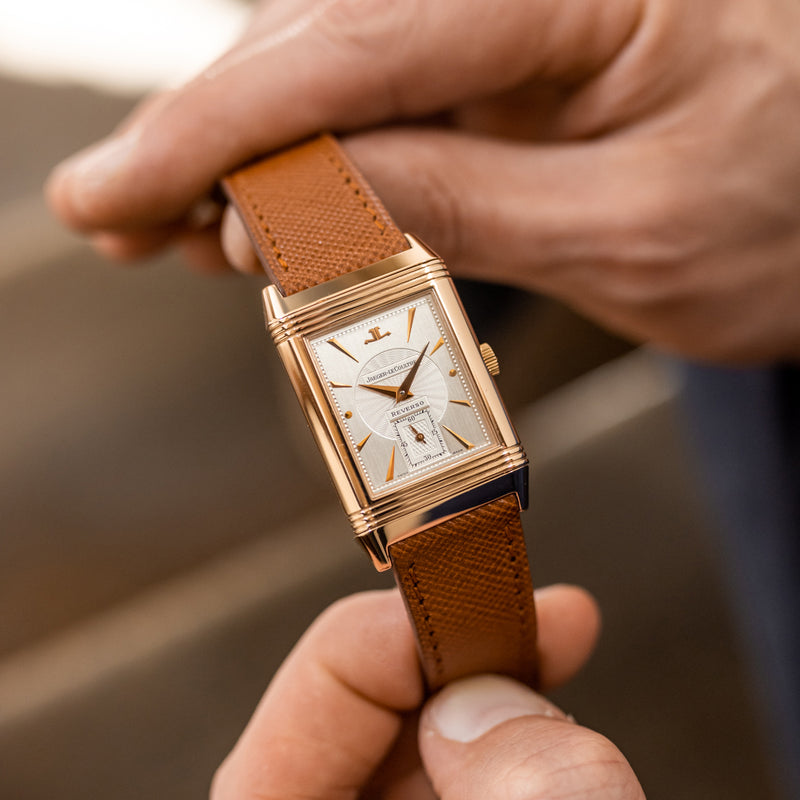
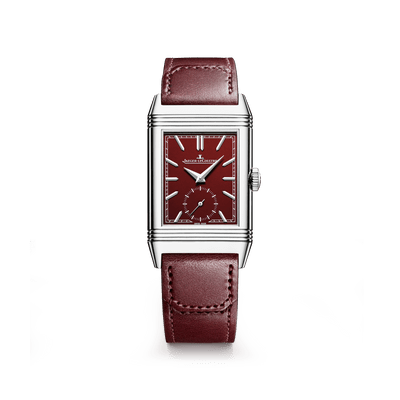
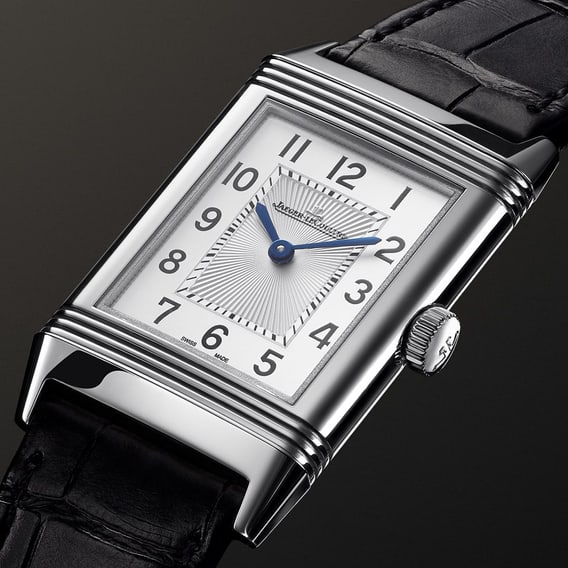
    Jaeger-LeCoultre Reverso luxury watch closeup showing the iconic rectangular case and Art Deco design
    Jaeger-LeCoultre Reverso luxury watch closeup showing the iconic rectangular case and Art Deco design

    Why JLC Is the Smart Money Choice for Super Clones

    Choosing JLC for a super clone collection is a strategically intelligent decision. Here’s why:

    Advantage What It Means
    Low Recognition Risk Far fewer people recognize JLC than Rolex, Omega, or AP — dramatically less scrutiny on your wrist
    High Insider Respect Watch enthusiasts rank JLC among the top 5 manufactures worldwide — instant credibility with the people who matter
    Design Diversity Rectangular (Reverso), round dress (Master), sports (Polaris), complication (Duometre) — every style covered
    Movement Heritage 1,200+ calibers, supplier to the Holy Trinity — deeper than any brand except possibly Patek
    Reasonable Genuine Prices $6K-$20K range (vs $30K-$80K for comparable Patek/AP) means super clones are even more accessible
    Distinctive Identity No JLC model looks like any other brand — the Reverso flip, the Master thinness, the Polaris triple crown

    The “low recognition risk” factor deserves emphasis. A Rolex Submariner on your wrist is recognized by taxi drivers, waiters, and your neighbor’s teenager. A JLC Master Ultra Thin on your wrist? Only people who actively follow horology will identify it. That selectivity is a massive advantage for replica buyers — less recognition means less questioning, which means more relaxed enjoyment of a beautiful watch.

    Industry Truth: JLC has supplied movements to Audemars Piguet, Patek Philippe, and Vacheron Constantin throughout the 20th century. When you wear a JLC, you’re wearing a watch from the brand that literally powered the Holy Trinity. The teacher wearing the teacher’s own watch — not the student’s homework.

    The Four Collections — Ranked for Super Clone Buyers

    Collection Super Clone Quality Availability Best For
    Reverso ★★★★ Excellent ★★★★ Good Maximum visual impact, dress occasions
    Master ★★★★★ Outstanding ★★★★★ Widely available Daily dress watch, versatile elegance
    Polaris ★★★★ Very good ★★★★ Good Sports/casual, active lifestyle
    Duometre ★★★ Good (visual) ★★ Limited Statement piece, connoisseur appeal

    The Master collection leads on super clone quality because its round case design and standard movement dimensions make it the easiest to replicate accurately. The Reverso is a close second but requires the flip mechanism to work correctly — a unique engineering challenge. The Polaris is well-replicated but the internal rotating bezel needs to function. The Duometre is a visual replica — the case and dial are accurate, but the Dual-Wing movement isn’t replicated.

    Reverso — The Flip Icon

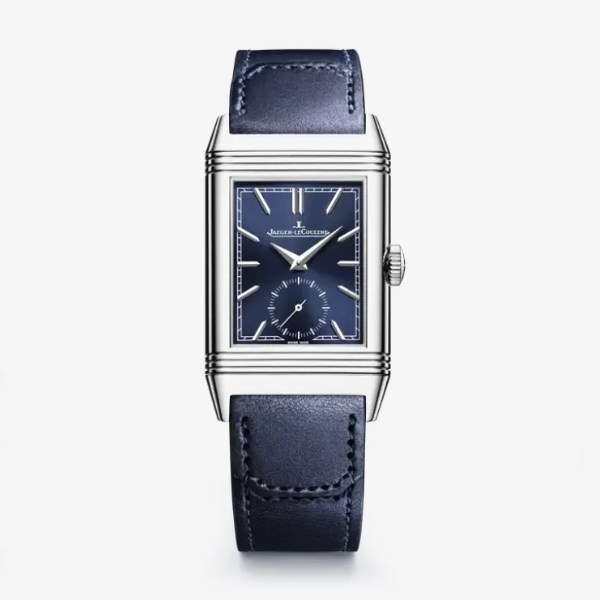
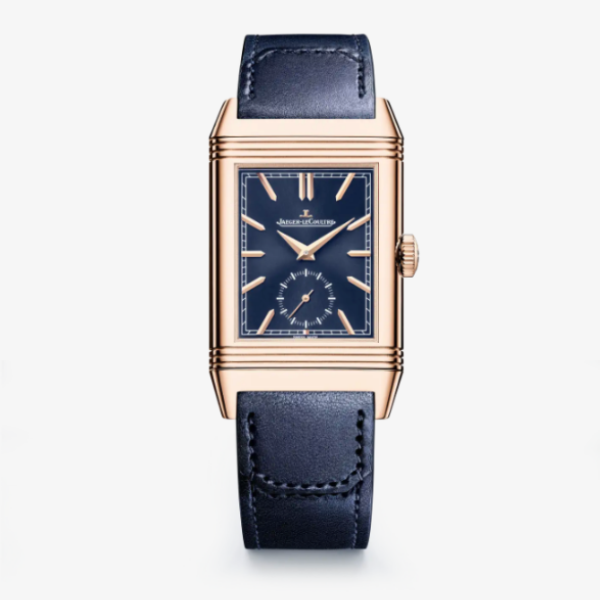
    The Reverso is JLC’s most famous creation — and possibly the most innovative case design in all of watchmaking. Born in 1931 for polo players who kept smashing their watch crystals, the reversible case became an Art Deco icon that transcended its sporting origins. Today, it’s the quintessential rectangular dress watch, with the flip mechanism adding a theatrical element that no other watch can match.

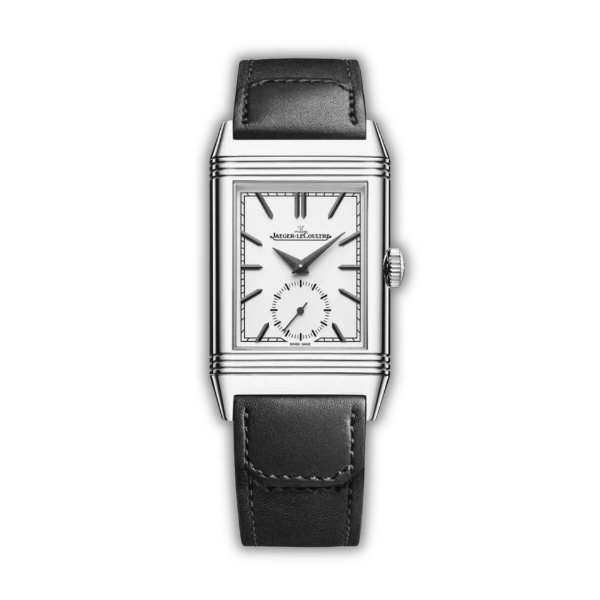
    For super clones, the Reverso Classic in steel is the recommended starting point. The flip mechanism on Tier 1 versions works with satisfying precision — slide, rotate, click. The silver dial with applied baton indexes captures the original’s elegance. The blank caseback offers engraving potential — initials, dates, or personal messages that make the watch truly yours.

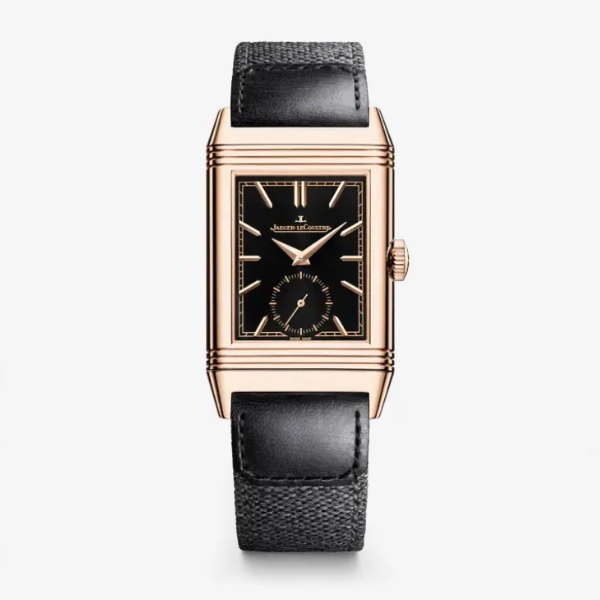
    The Tribute Duoface is the upgrade pick. Two dials — blue on one side, burgundy on the other — give you two watches in one case. The color matching on top super clones is impressive, with the burgundy achieving the correct wine-like depth rather than a flat red. The genuine Reverso Classic Medium runs the hand-wound 846 and the Tribute Duoface the 854A/2, and the super clone keeps that format — a clone of the genuine caliber, hand-wound, which you set and wind yourself, with no automatic rotor adding height to a case this flat. Both the Classic in steel and the Tribute Duoface sit in the Reverso replica line-up, same 1931 case architecture, one dial or two.

    Master — Understated Excellence

    The Master collection is JLC’s heart — the watches that embody the brand’s philosophy of quiet technical mastery. The Ultra Thin at 7.45mm, the Moon with its detailed moonphase display, the Control with its 43-hour power reserve — each Master model demonstrates what happens when the world’s most accomplished movement maker designs a dress watch. That reserve comes from the 899/1 caliber, and the Master Control replica models run from the plain date dial to the Geographic world-time layout — a clean round face where index alignment and hand finishing are the whole story, which is why the dial macro matters more here than on a moonphase.
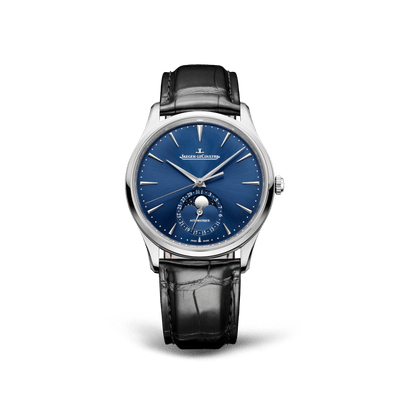
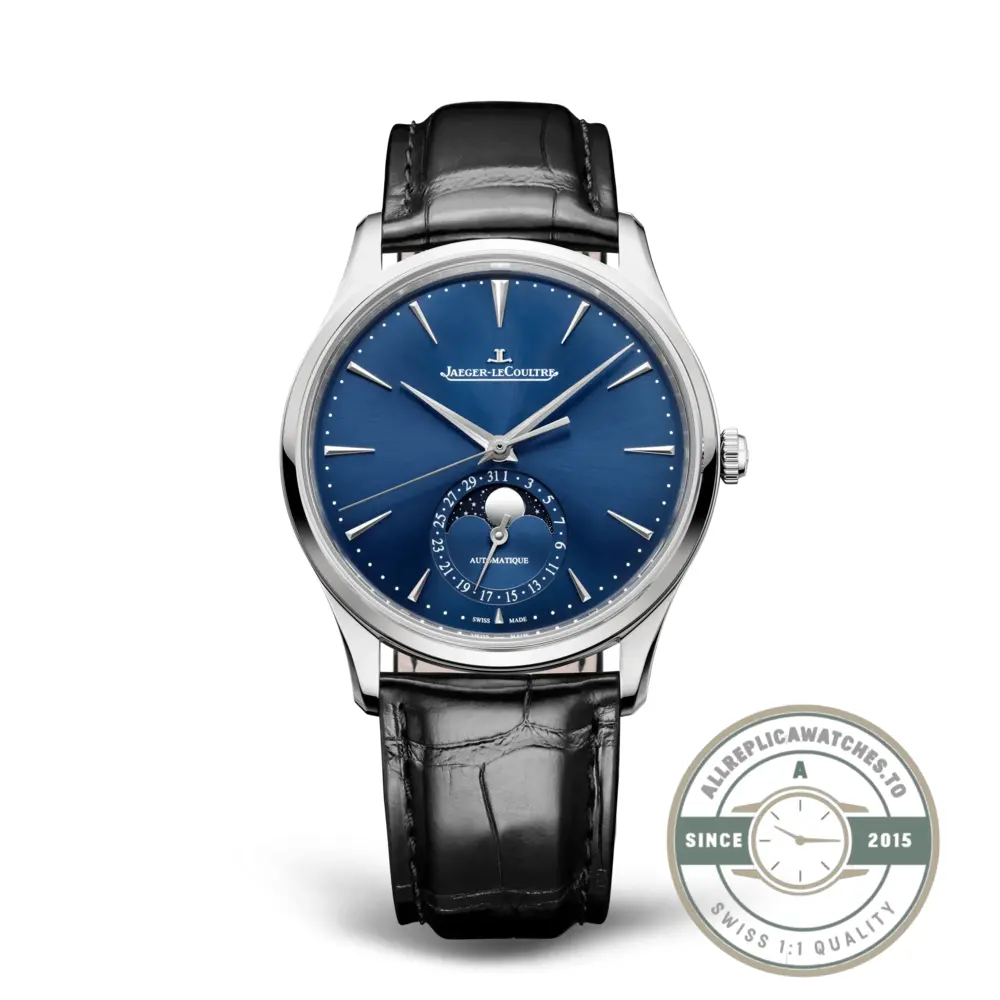
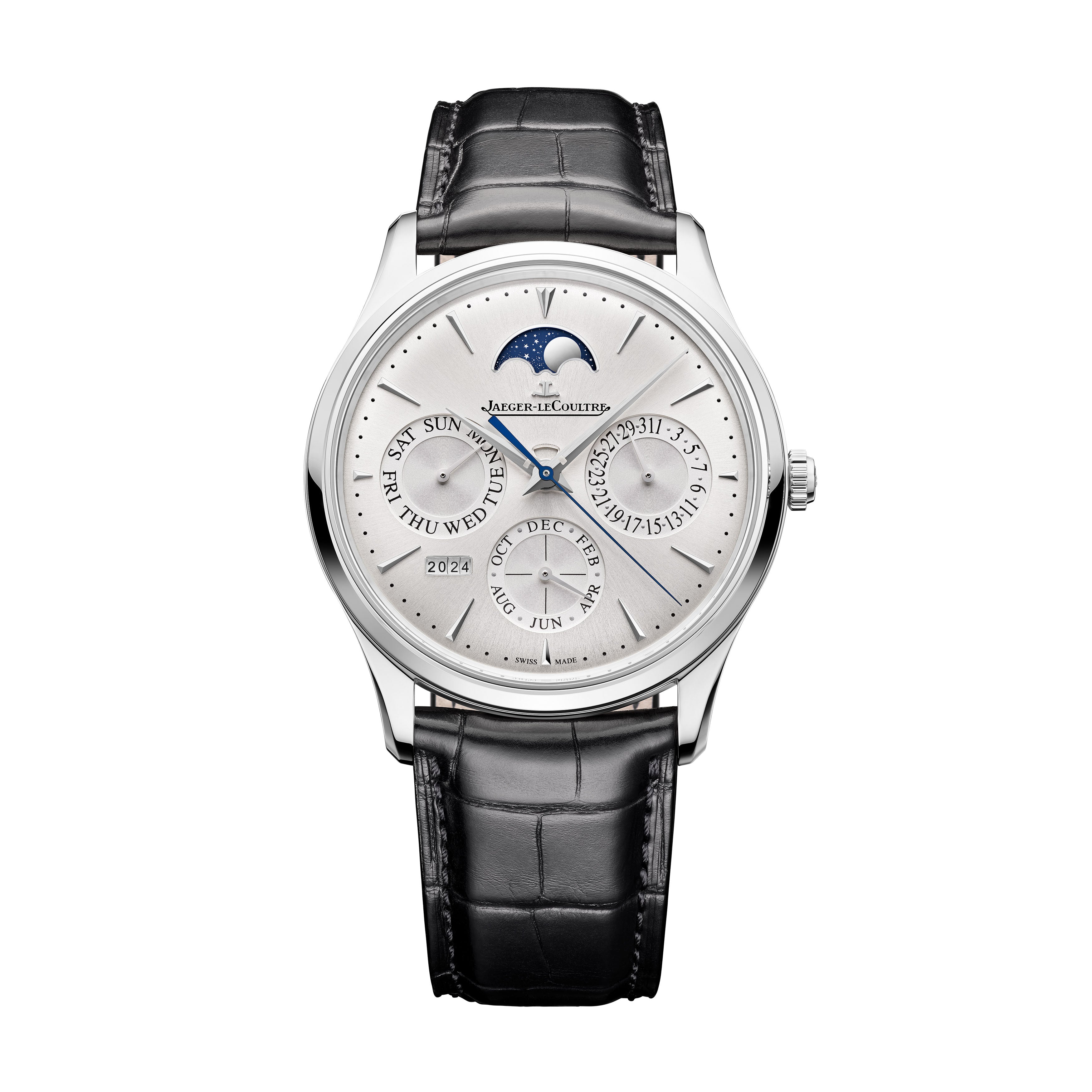
    Jaeger-LeCoultre Master Ultra Thin Moon with blue sector dial and moonphase at 6 o'clock
    Jaeger-LeCoultre Master Ultra Thin Moon with blue sector dial and moonphase at 6 o’clock

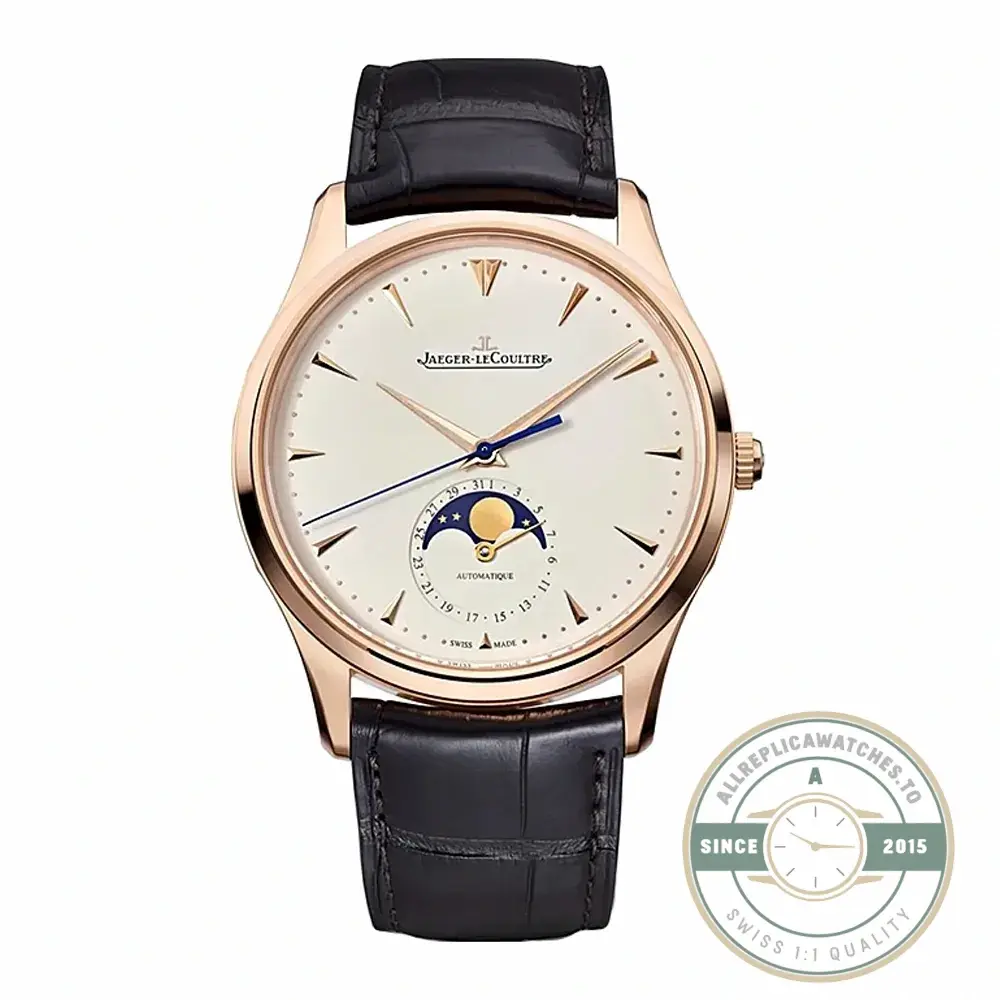
    The Master Ultra Thin Moon is the collection’s hero — and the best JLC super clone available in 2026. The blue sector dial version has become an icon, photographed more than any other JLC model. Factories have invested heavily in getting the blue color right, and the best versions achieve a deep, inky shade with proper gradient that shifts in the light.

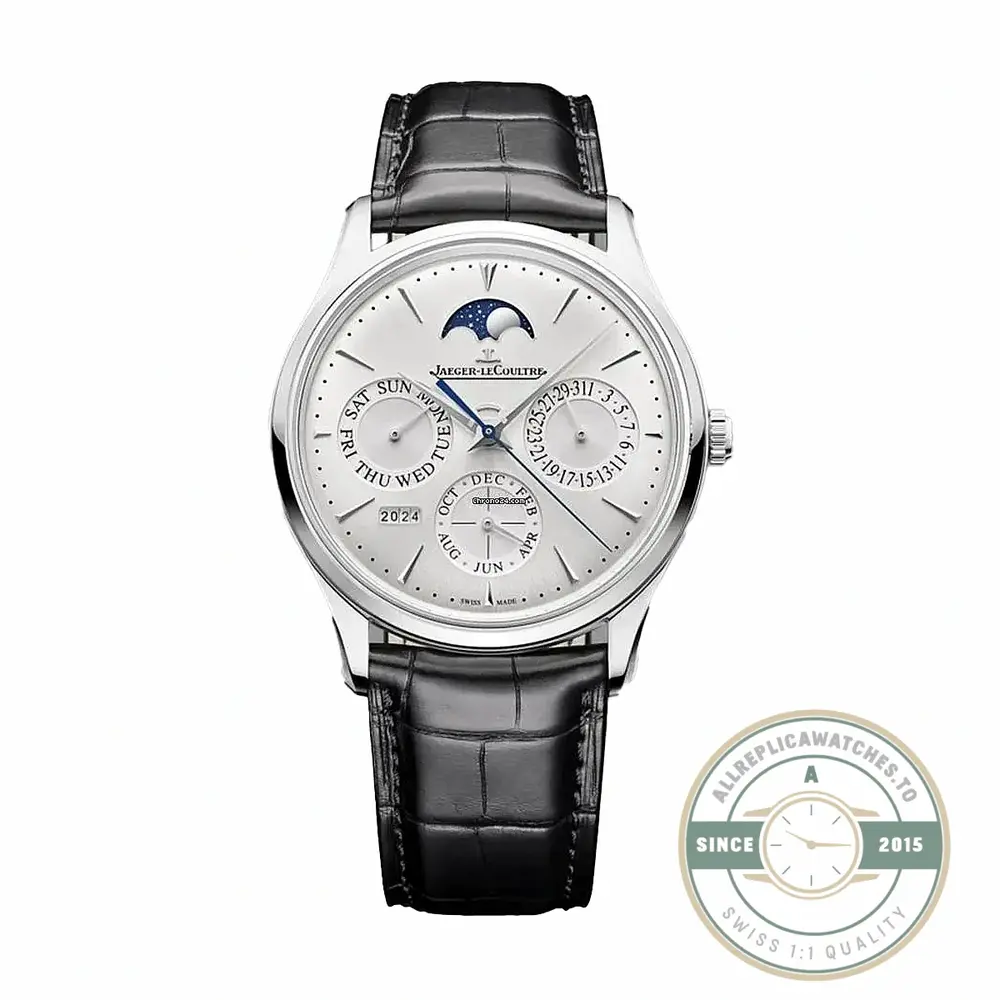
    The thin profile is what makes Master super clones special. At 8-8.5mm for the best versions (versus 7.45mm genuine), the watch slides under shirt cuffs with zero resistance. No other super clone in this category — dress watches from any brand — achieves this combination of thinness, dial quality, and overall refinement. The Ultra Thin Master replica page holds that end of the collection — the time-only and the Moon — built around the flat case architecture JLC opened up with the 1.85mm hand-wound 849. On a Master Ultra Thin the side profile photo with a ruler is the QC shot that decides it: under 9mm passes, 11mm is a different watch.

    Polaris — Refined Sports

    The Polaris proves JLC can build sports watches with the same authority they bring to dress pieces. The triple-crown design, internal rotating bezel, and bold dial colors create a watch that stands apart from every Seamaster, Submariner, and Aqua Terra on the market. It’s unmistakably a sports watch, but with JLC’s refinement running through every detail.

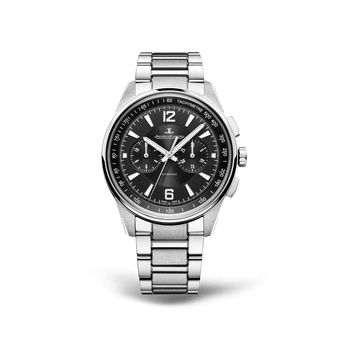
    The Polaris Date in blue is the recommended super clone. The 41mm case fits most wrists comfortably, the internal bezel functions correctly on Tier 1 versions, and the clone of the genuine Cal. 899 inside delivers reliable daily wear. For chronograph fans, the Polaris Chronograph with its left-side pushers at 8 and 10 o’clock offers functional timing with a unique layout. The 899 is the caliber behind the genuine Polaris Date and the 751 behind the Chronograph, and the Polaris replica page carries the Date and the Chronograph together, so the 42mm triple-crown case can be compared in both layouts before the order goes in.
    Duometre — Technical Summit

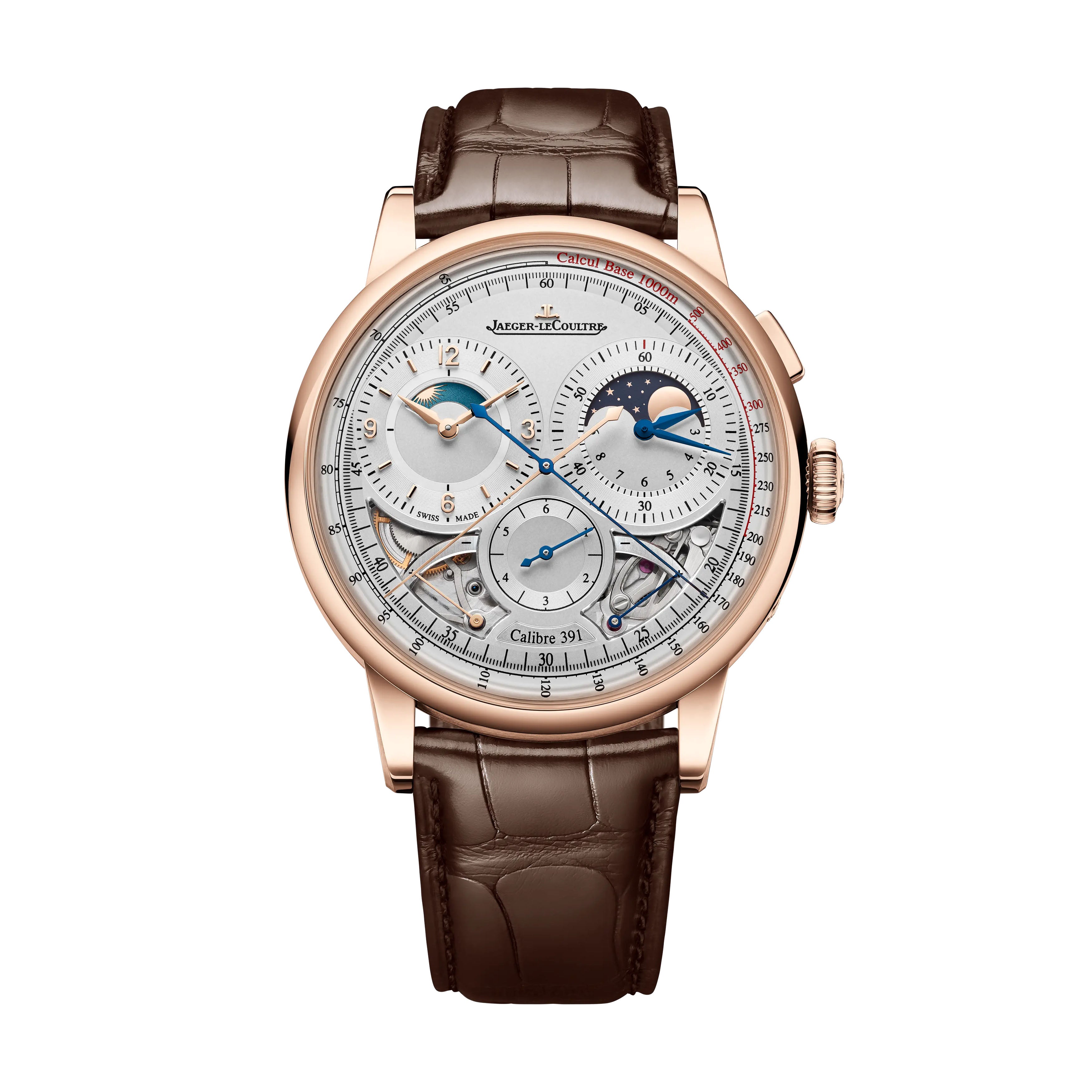
    The Duometre represents JLC at their most technically ambitious. The Dual-Wing architecture — two independent power sources sharing one balance wheel — is an engineering concept that only JLC has commercialized in this form. Super clones capture the visual impact of the distinctive left/right dial split and dual power reserves, though the internal mechanism uses a standard chronograph movement rather than the genuine Dual-Wing caliber.

    This is a connoisseur’s choice — the watch for someone who already has a Reverso and a Master and wants something that signals deep horological knowledge. The rose gold case finishing on top super clones is excellent, and the complex dial layout is reproduced with impressive accuracy.

    Top 5 JLC Super Clones for 2026

    Rank Model Why It’s Here Rating
    #1 Master Ultra Thin Moon (Blue) Best dial, thinnest case, iconic moonphase, perfect daily wear ★★★★★
    #2 Reverso Classic (Steel) Working flip mechanism, Art Deco icon, engraveable caseback ★★★★★
    #3 Polaris Date (Blue) Best sports option, functional inner bezel, versatile size ★★★★
    #4 Reverso Tribute Duoface Two dials (blue/burgundy), maximum conversation impact ★★★★
    #5 Master Ultra Thin (Time-Only) Purest minimalism, slimmest case, understated perfection ★★★★

    If I had to build a three-watch JLC collection from super clones, it would be: Master Ultra Thin Moon for daily dress wear, Reverso Classic for formal occasions and variety, and Polaris Date for weekends and active days. Three watches, every situation covered, zero overlap between them. Total investment: approximately $2,100-2,500 for three watches from the same brand that supplies movements to the Holy Trinity.

    Super Clone ($700-1000) vs DHGate ($40-80) — The JLC Reality

    JLC replicas suffer more from the super clone vs cheap replica gap than most brands, because JLC’s design language is built on subtlety. A cheap Submariner at least looks like a dive watch from a distance. A cheap Reverso that can’t flip looks like a broken rectangle. A cheap Master that’s 12mm thick instead of 8mm looks like a completely different watch.

    Feature Super Clone ($700-1000) DHGate ($40-80)
    Reverso Flip Smooth, clicks firmly, no wobble ✅ Loose, wobbly, or non-functional ❌
    Master Thickness 8-8.5mm (close to genuine 7.45mm) ✅ 11-13mm (obviously thick) ❌
    Polaris Inner Bezel Functions with indexed clicks ✅ Fixed or non-clicking ❌
    Dial Finish Multi-layer sunburst, correct colors ✅ Flat paint, wrong shade ❌
    Movement Clone of the genuine JLC caliber ✅ Chinese quartz or DG2813 ❌
    Crystal Sapphire with AR coating ✅ Mineral glass ❌
    Strap Genuine or quality synthetic leather ✅ Bonded leather, peels in weeks ❌
    Moonphase Detail Textured moon, applied stars ✅ Flat white circle, printed dots ❌
    Longevity 5-10+ years with service ✅ 3-12 months ❌

    The bottom line: cheap JLC replicas fail harder than cheap Rolex replicas. JLC’s design philosophy is built on precision and subtlety — two things that cheap manufacturing destroys first. A $50 “Reverso” that doesn’t flip properly isn’t a Reverso at all. A $700 super clone that flips with authority IS the Reverso experience.

    Hard Truth: JLC is the worst brand to cheap out on in the replica world. The entire appeal is refinement — thin cases, perfect dials, functional complications, crisp finishing. Remove those qualities and you’re left with a watch that fails at the one thing JLC does better than anyone. Spend the $700-1000 or don’t buy a JLC replica at all.

    Buying Guide — QC, Shipping, and Long-Term Service

    Model-Specific QC Focus:

    Model Priority QC Check Request
    Reverso Flip mechanism — smooth, clicks, no wobble 📹 Video of flip action
    Master UT Case thickness — must be under 9mm 📷 Side profile photo with ruler
    Master Moon Moonphase disc — textured, not flat 📷 Macro of moonphase at 6 o’clock
    Polaris Inner bezel — rotates with clicks via crown at 2 📹 Video of bezel rotation
    Duometre Dial layout — correct left/right split, subdial positions 📷 Dial macro shot

    Universal QC Requests (all models):

    • Dial macro — check text alignment, index positioning, color accuracy
    • Caseback — movement decoration visible through display back
    • Crown close-up — JLC logo should be crisp and correctly positioned
    • Strap/bracelet — leather quality and stitching for leather models, link fit for Polaris bracelet
    • Timegrapher reading — amplitude 270-310, rate within ±15 sec/day

    Shipping: JLC super clones ship in standard discrete packaging. Transit time: 10-21 days. Some dealers offer triangle shipping for added security. Always choose tracked shipping.

    Long-Term Service: The clone caliber in a Master or Polaris needs service every 5-7 years. Cost: $80-150 at an independent watchmaker. The chronograph movement in the Duometre Chronographe needs service every 4-5 years at $100-175. Total cost of ownership over 10 years: approximately $150-300 in maintenance — remarkably economical for a luxury watch experience.
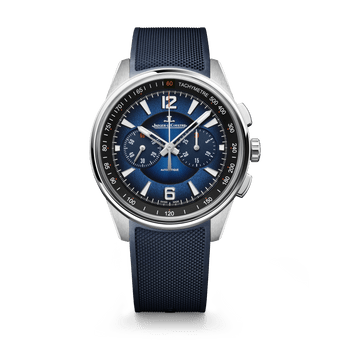
    Jaeger-LeCoultre Polaris in steel with blue dial — the sporty side of the watchmaker's watchmaker
    Jaeger-LeCoultre Polaris in steel with blue dial — the sporty side of the watchmaker’s watchmaker

    Building a JLC Super Clone Collection

    JLC is one of the few brands where you could build an entire collection — one brand, multiple models — and cover every wearing occasion without repetition. Here’s how to build strategically:

    One-Watch Collection: Master Ultra Thin Moon (Blue). It covers dress, smart casual, and date night. The moonphase adds romantic appeal, the blue dial adds character, and the thin case adds all-day comfort. If you own one JLC, this is it.

    Two-Watch Collection: Add the Reverso Classic. Now you have a round watch (Master) and a rectangular watch (Reverso) — maximum visual diversity. The Reverso handles formal events with Art Deco flair while the Master handles everything else.

    Three-Watch Collection: Add the Polaris Date. Now you’re covered: dress (Master), formal (Reverso), sport (Polaris). Three watches from the same brand, zero overlap, every occasion handled.

    Four-Watch Collection: Add the Reverso Tribute Duoface. This gives you a second Reverso with dual dials (blue/burgundy), upgrading your rectangular watch game and adding travel functionality with the second time zone.

    Notice how none of these additions feel redundant? That’s the advantage of JLC’s diverse collection — each model has a distinct purpose and aesthetic that doesn’t cannibalize the others. None of those four is a small watch, which is where the Rendez-Vous replica line comes in: six models from 29mm to 37.5mm in steel and rose gold, with Night & Day, Moon and Dazzling variants and diamond-set bezels. Same manufacture, same finishing standards, on a case sized for wrists the 42mm Polaris would swamp.

    FAQ — Best Jaeger-LeCoultre Super Clone

    Q: What’s the single best JLC super clone to buy right now?

    The Master Ultra Thin Moon in blue dial. It combines JLC’s signature thin case profile, a beautiful moonphase complication, the most desired dial color, and outstanding super clone quality from multiple factories. It works as both a daily wearer and a dress piece.

    Q: Is JLC as prestigious as Rolex or Audemars Piguet?

    In the watch industry, JLC commands equal or greater respect than Rolex and approaches AP and Patek in technical credibility. The difference is public recognition — Rolex is a household name, while JLC is known mainly to enthusiasts. This actually benefits replica buyers: less public recognition means less scrutiny.

    Q: How does JLC super clone quality compare to other brands?

    JLC super clones match the quality level of Rolex, Omega, and Vacheron Constantin replicas. The Master and Polaris lines particularly benefit from standard case geometries that factories handle well. The Reverso adds the unique challenge of the flip mechanism, which top factories have mastered.

    Q: Reverso or Master — which should I buy first?

    Master if you want a daily wearer. Reverso if you want maximum impact and conversation potential. The Master is more versatile and practical. The Reverso is more memorable and distinctive. Both are excellent first JLC choices. If pressed, I’d say Master for a first watch, Reverso for a second.

    Q: Can I pair a JLC with a Rolex in my collection?

    Perfect pairing. Rolex covers the sporty, recognizable, mainstream luxury segment. JLC covers the refined, insider, haute horlogerie segment. A Submariner for weekends and a Master for work is one of the smartest two-watch collections you can build. Zero overlap, maximum range.

    Q: Are JLC super clones good for smaller wrists?

    Excellent. The Master Ultra Thin at 39mm wears smaller than a typical 39mm watch due to its slim profile. The Reverso Medium at 40.1mm x 24.4mm hugs the wrist closely. Even the Polaris at 41mm has moderate lug-to-lug measurements. JLC’s sizing philosophy is naturally friendly to smaller wrists.

    Q: What movement is inside most JLC super clones?

    A clone of the genuine JLC caliber for that model — not a generic Japanese or Chinese ebauche. A Master Control Date runs a clone of the Cal. 899/1, a Master Ultra Thin Moon a clone of the Cal. 925/1, a Reverso Tribute Small Seconds a clone of the hand-wound Cal. 822/2, a Polaris Chronograph a clone of the Cal. 751. On JLC that matters more than on most brands, because the shape of the caliber is part of the design: the rectangular Reverso movement puts the small seconds exactly where the dial expects it, and a round automatic dropped into a case 27.4mm wide cannot. A generic Miyota or Seagull is what the $40-80 tier runs — it is not what sits inside a super clone.

    Q: How long will a JLC super clone last?

    With proper care and service every 5-7 years, a JLC super clone will last 15-20 years. The 316L steel case and sapphire crystal are virtually indestructible. The clone caliber is a conventional mechanical movement that an independent watchmaker can strip, clean and re-oil like any other. The leather strap will need replacement every 1-2 years of daily wear, which is true for genuine JLC straps as well.

    Q: Will anyone at a watch meetup spot a JLC super clone?

    At a casual watch meetup, a Tier 1 super clone will pass visual inspection. Watch enthusiasts examine dials, cases, and hands — all areas where top super clones excel. The giveaway sits under the caseback — the clone caliber copies the genuine architecture, but the finishing, the engraving and the serial do not survive a side-by-side with a movement from Le Sentier. Nobody at a meetup opens your caseback. The visual experience is what matters socially.

    Q: Should I buy a JLC or a Cartier for a dress watch?

    JLC if you value movement heritage and insider respect. Cartier if you value brand recognition and fashion credibility. The Master Ultra Thin is the better timepiece. The Tank is the better fashion statement. Both are excellent dress watches. The JLC will be appreciated by watch people. The Cartier will be recognized by everyone.

    Q: What’s the best strap upgrade for JLC super clones?

    Hirsch or Di-Modell alligator-pattern straps in 20mm width. These aftermarket straps cost $30-60 and dramatically improve the wrist experience. Match the color to the watch — dark brown for silver dials, black for blue dials. For the Polaris, consider a NATO strap in navy for a casual sport look.

    Q: Is the Polaris a good alternative to an Omega Seamaster super clone?

    Yes, with different strengths. The Seamaster has higher public recognition and slightly better super clone availability. The Polaris has greater movement heritage, a more distinctive design (triple crown, inner bezel), and lower scrutiny risk. For someone who values being different from the crowd, the Polaris wins.

    Q: Can a jeweler service a JLC super clone?

    Yes — any competent independent watchmaker can, because a clone of the genuine caliber strips, cleans, oils and regulates like any other conventional mechanical movement. Ask one thing before you hand it over: whether the watchmaker is willing to work without factory parts, since a mainspring or a balance staff gets matched by dimension from generic stock rather than ordered from Le Sentier. On a Reverso, ask for the flip cradle to be re-tensioned while the case is open. Service cost: $80-150 for a full overhaul. Avoid JLC boutiques and authorized service centers — stick with independents who understand the movement inside.

    Q: What makes JLC the “watchmaker’s watchmaker”?

    Three facts: they’ve produced over 1,200 different movement calibers (more than any other manufacture), they hold 400+ patents (including the Atmos clock concept), and they’ve supplied movements to Patek Philippe, AP, and Vacheron Constantin. When the world’s most prestigious brands need movements, they come to JLC. That’s the definition of “watchmaker’s watchmaker.”

    Q: Is a JLC super clone worth $700-1000?

    Consider what $700-1000 buys: a watch from the brand that supplies the Holy Trinity, with a quality mechanical movement, sapphire crystal, 316L steel case, and finishing that captures the genuine’s refined character. Compare that to $6,000-20,000 for the genuine. You’re getting 90-95% of the visual and wearing experience for 5-10% of the cost. The math speaks for itself.

    Q: Is a Jaeger-LeCoultre dupe the same thing as a super clone?

    No — a Jaeger-LeCoultre dupe is the $40-80 marketplace tier and a super clone is the $700-1000 tier, and on JLC that gap bites harder than it would on a dive watch, because the whole design language is built on subtlety. A $40-80 listing sold as a Jaeger-LeCoultre watches dupe gives you a Master case 11-13mm thick where the genuine is 7.45mm, a Reverso that wobbles or will not flip at all, flat paint on the dial, mineral glass, and Chinese quartz or a DG2813 inside. At $700-1000 the same two models arrive at 8-8.5mm, flip with a firm click, carry a multi-layer sunburst dial under sapphire, and run a clone of the genuine JLC caliber that any independent watchmaker services for $80-150 every 5-7 years. Neither tier is assembled in Le Sentier, but only one of them tries: the $40-80 movement has no relationship to the watch it sits in, while the super clone copies the caliber the model was designed around — the hand-wound 846 in a Reverso Classic Medium, the 899/1 in a Master Control — so what the extra money actually buys back is case height, dial finish, the flip mechanism and a movement shaped for the case it is in. The full JLC super clone range sits in the second tier.

    Q: What is a Jaeger-LeCoultre inspired watch, and is it the same as a replica?

    A Jaeger-LeCoultre inspired watch is a homage — another brand’s own name on the dial, JLC proportions borrowed, no JLC logo anywhere — which makes it a different object from a replica rather than a cheaper version of one. Shapes travel easily, so that segment has rectangular flip cases, round dress watches under 10mm, and sector dials with a moonphase at 6 o’clock, all sold openly under the maker’s own badge. What does not travel is the engineering behind them: 1,200 calibers and 400+ patents, a hand-wound movement 1.85mm thick like the 849, the 899/1 and its 43-hour reserve in the Master Control. So Jaeger-LeCoultre watches inspired and JLC super clone answer two separate questions — the homage takes the logo out of the conversation and asks you to live with a different name on the dial, while the super clone reproduces the model itself: the Reverso flip, the Master Ultra Thin at 8-8.5mm against 7.45mm genuine, the Polaris inner bezel that rotates with indexed clicks, JLC text and all. The JLC replica collection covers the second route.

    Jaeger-LeCoultre is the watch industry’s best-kept semi-secret — a manufacture with more technical achievements than brands charging three times more, wrapped in designs that range from Art Deco masterpieces to refined sports watches. The best super clones in 2026 capture that excellence with remarkable fidelity: thin cases that slide under cuffs, flip mechanisms that click with authority, internal bezels that rotate with precision, and dials that honor 190 years of Le Sentier craftsmanship. Whether you start with the iconic Reverso, the refined Master, or the sporty Polaris, you’re wearing a watch from the brand that taught the world how to make movements. Browse the complete Jaeger-LeCoultre replica collection and join the collectors who know that the watchmaker’s watchmaker makes the most rewarding watches of all.

  • Jaeger-LeCoultre Duometre Replica: Dual-Wing Architecture That Redefined Precision Timekeeping

    Jaeger-LeCoultre Duometre Replica: Dual-Wing Architecture That Redefined Precision Timekeeping

    Jaeger-LeCoultre Duometre Replica — Dual-Wing Architecture That Redefined Precision Timekeeping

    Most watches have one movement powering everything — time, date, chronograph, whatever complications they carry. The Jaeger-LeCoultre Duometre has two. Two separate power sources, two independent gear trains, sharing one regulating organ. JLC calls this “Dual-Wing” architecture. The rest of the industry calls it groundbreaking. When a complication runs on its own dedicated power supply, it doesn’t steal energy from the timekeeping train — meaning accuracy stays constant whether your chronograph is running or not. That’s not a theoretical advantage. It’s measurable precision.

    I encountered the Duometre concept for the first time at SIHH 2007, when JLC unveiled the Duometre a Chronographe. The technical presentation lasted an hour. An actual horologist explained the dual-barrel system using a cutaway movement model the size of a dinner plate. By the end, everyone in the room understood why this mattered — and why it was so difficult to achieve. Two independent power flows sharing one balance wheel isn’t something you bolt together from existing components. It requires a movement designed from scratch, with every gear, spring, and jewel calculated for dual-source operation.

    Jaeger-LeCoultre Duometre a Chronographe in rose gold with distinctive dual-power dial layout
    Jaeger-LeCoultre Duometre a Chronographe in rose gold with distinctive dual-power dial layout

    What Is Dual-Wing Architecture?

    In a standard chronograph watch, one mainspring barrel powers everything — the hours, minutes, seconds, and the chronograph function. When you start the chronograph, it draws power from the same barrel that’s keeping time. This causes a tiny but measurable drop in amplitude (the swing arc of the balance wheel), which affects timekeeping accuracy. Most people never notice because it’s measured in seconds per day. But JLC noticed.

    Dual-Wing architecture solves this by using two barrels with separate gear trains:

    Wing Powers Power Reserve
    Wing 1 (Timekeeping) Hours, minutes, seconds — the basic time display 50 hours
    Wing 2 (Complication) Chronograph / Calendar / Tourbillon — the complication 50 hours (independent)
    Shared Component One balance wheel regulates both wings simultaneously —

    The genius is in the sharing. Both wings feed into the same balance wheel, which oscillates at a constant rate regardless of which wing is drawing power. Because each wing has its own barrel and gear train, starting or stopping the chronograph (or any complication) has zero effect on the timekeeping wing’s power delivery. The balance wheel sees a consistent energy flow from both sides.

    For the collector, this translates to a watch that keeps perfect time whether the chronograph is running or not — a claim that no single-barrel chronograph can make with the same confidence. For the super clone buyer, it translates to a watch that represents JLC’s absolute highest technical achievement in a wristwatch format.

    Technical Context: Only three brands have produced watches with independent dual-power-source architecture: JLC (Duometre), F.P. Journe (Resonance), and A. Lange & Sohne (Datograph). Each uses a different approach to the same problem. JLC’s solution — shared balance wheel with dual gear trains — is the most mechanically elegant.

    Duometre a Chronographe — 1/6th Second Precision

    The Chronographe was the first Duometre, launched in 2007. It measures elapsed time to 1/6th of a second — each second on the chronograph subdial is divided into six increments. The foudroyante (jumping sixths) hand at 4 o’clock ticks six times per second, creating a mesmerizing visual effect that’s both technically impressive and genuinely useful for precise timing.

    The dial layout reflects the dual-wing concept: the left side belongs to Wing 1 (timekeeping — hours, minutes, power reserve indicator), and the right side belongs to Wing 2 (chronograph — elapsed minutes, foudroyante seconds, chronograph power reserve). This visual separation isn’t arbitrary — it’s a direct representation of the movement’s architecture.

    Specification Duometre a Chronographe
    Case 42mm x 14.3mm, 18k rose gold or platinum
    Movement Cal. 380 Dual-Wing, manual-wind
    Components 463 parts, 54 jewels
    Chronograph Precision 1/6th second (foudroyante)
    Power Reserves 2 × 50 hours (independent indicators)
    Frequency 21,600 bph (3Hz)
    Water Resistance 50m

    The movement contains 463 components — that’s about 50% more parts than a typical chronograph caliber. Every additional part adds potential failure points, which is why the Duometre undergoes JLC’s extended testing protocol. The 54 jewels (compared to ~30 in a standard chronograph) provide additional friction points with synthetic ruby bearings.

    Duometre Quantieme Lunaire — Calendar and Moon

    The Quantieme Lunaire applies the Dual-Wing concept to a calendar complication with moonphase. Wing 1 handles timekeeping. Wing 2 powers the complete calendar (day, date, month) and the moonphase display. The result is a calendar watch where the calendar complications don’t affect timekeeping accuracy — the same precision guarantee as the Chronographe, applied to a different complication family.

    Jaeger-LeCoultre Duometre Quantieme Lunaire with calendar display and moonphase complication
    Jaeger-LeCoultre Duometre Quantieme Lunaire with calendar display and moonphase complication

    The moonphase on the Quantieme Lunaire is one of the most detailed in the industry. JLC uses a multi-layer disc with actual surface texture on the moon, applied stars on a deep blue background, and a precision that’s accurate to one day in 122 years (compared to the standard moonphase accuracy of one day in 2.5 years). This is astronomical moonphase precision — far beyond what most brands achieve.

    The dial layout mirrors the Chronographe’s left/right split: Wing 1 (timekeeping) on the left, Wing 2 (calendar and moonphase) on the right. Two power reserve indicators — one for each wing — let you monitor both energy sources independently. If the calendar wing runs down, the timekeeping wing continues unaffected.

    Duometre Spherotourbillon — Gravity Defied

    This is JLC at their most ambitious. The Spherotourbillon adds a multi-axis tourbillon to the Dual-Wing architecture. While a standard tourbillon rotates the balance wheel in one plane (compensating for gravity in one position), the Spherotourbillon rotates in two planes simultaneously — the inner cage completes one rotation every 15 seconds while the outer cage rotates every 30 seconds. This compensates for gravity in all positions, not just the vertical ones.

    The Spherotourbillon is visible through an aperture at 6 o’clock, where the gyroscopic rotation of the dual-axis cage creates a hypnotic visual effect. It’s one of the most complex mechanical devices ever fitted in a wristwatch — and JLC builds it in their own manufacture in Le Sentier, where one watchmaker spends several weeks assembling each tourbillon cage by hand.

    Reality Check: The Spherotourbillon retails above $300,000 and is not replicated in the super clone market. No factory has attempted the multi-axis tourbillon mechanism — the precision required for the dual-cage rotation is beyond current replica manufacturing capability. It’s mentioned here for context on JLC’s technical range, not as a buying option.

    Dial Design — The Art of Symmetry

    The Duometre dial is one of the most distinctive in haute horlogerie. The visual split between Wing 1 (left) and Wing 2 (right) creates a bilateral symmetry that no other watch brand uses. It’s immediately recognizable — if you see a watch with this left/right layout and dual power reserve indicators, it’s a Duometre. No other brand structures their dials this way because no other brand uses Dual-Wing architecture.

    Design elements that define the Duometre aesthetic:

    Element Purpose
    Left/Right Split Represents the two independent power sources (Wings 1 and 2)
    Dual Power Reserve Independent monitoring of each wing’s energy level
    Off-Center Hour/Minute Main time display shifted left, making room for complication on right
    Applied Gold Indexes Hand-applied, each individually finished — haute horlogerie standard
    Guilloche Sectors Engine-turned texture on subdial areas for depth and light play

    The Duometre’s dial is complex but not cluttered. JLC achieves this through careful hierarchy — the time display is always the largest element, complications are contained in their subdials, and the power reserve indicators are tucked into logical positions near their respective wings. Your eye moves naturally from time → complication → power status without any confusion.

    Movement Architecture Explained

    The Duometre movements are among the most sophisticated calibers JLC has ever produced. Understanding the architecture helps you appreciate both the genuine and the challenge it presents for replication:

    Power Flow: Crown winds both barrels simultaneously through a differential mechanism. Each barrel has its own click spring and gear train. The power flows separately through each train until they converge at the shared balance wheel. Two rivers feeding one lake.

    The Balance Wheel: The shared balance wheel is the most critical component. It must oscillate at a constant rate regardless of the power balance between the two wings. JLC uses a free-sprung balance with four adjustable weights — the same technology found in their most precise observatory-grade timepieces.

    The Jumping Seconds (Chronographe): The foudroyante mechanism on the Chronographe uses a star wheel with six teeth. Every oscillation of the balance wheel advances the star wheel by one tooth, producing six jumps per second. This creates the distinctive staccato motion of the chronograph seconds hand.

    Through the display caseback, the Duometre movement is a visual feast — Geneva stripes on the bridges, polished beveled edges, gold chatons holding the jewels, and the dual barrel arrangement clearly visible. This is where JLC’s finishing reputation is most evident. Every surface is decorated to the Hallmark of Geneva standard.

    Super Clone Reality — What’s Possible and What Isn’t

    Honesty is important here: the Duometre cannot be replicated in full mechanical fidelity. The Dual-Wing architecture requires a movement engineered from scratch — it is not somewhere you arrive by modifying an existing base caliber, and not even a faithful clone of a conventional JLC chronograph caliber will give you two independent gear trains sharing one balance wheel. What a Duometre-shaped replica can reproduce is the visual experience:

    Feature Super Clone Capability Status
    Case design and finishing Excellent — 42mm rose gold-tone case accurately reproduced ✅
    Dial layout and printing Very good — left/right split, subdials, indexes ✅
    Chronograph function Works via standard chrono movement (not dual-wing) ✅ (functional)
    Dual power reserves Display only — one may be static or decorative ⚠️ (partial)
    Foudroyante (1/6th sec) Not replicated — requires dedicated mechanism ❌
    Dual-Wing architecture Not replicated — standard single-barrel movement inside ❌
    Movement decoration Good — decorated movement visible through caseback ✅

    The key understanding: a Duometre super clone captures the design, the visual character, and the wrist presence of the genuine. The chronograph functions. The dial layout is accurate. The case finishing is impressive. But the internal architecture is a standard chronograph movement, not a Dual-Wing caliber. This is transparent and expected — no one in the super clone market expects mechanical parity at this complication level.

    Honest Assessment: If you want the Duometre for its visual impact, its conversation-starting dial layout, and its association with JLC’s highest technical achievement — a super clone delivers that experience. If you want the actual Dual-Wing mechanical precision, only the genuine will satisfy. Know what you’re buying and buy accordingly.

    Duometre vs Datograph vs El Primero — Chronograph Legends

    Attribute JLC Duometre Lange Datograph Zenith El Primero
    Innovation Dual-Wing dual power Big date + flyback chrono First auto chronograph (1969)
    Precision 1/6th second 1/5th second 1/10th second
    Finishing ★★★★★ Geneva standard ★★★★★ Glashutte standard ★★★★ Industrial excellence
    Recognition ★★★ Enthusiasts ★★★★ Collectors ★★★★ Mainstream
    Super Clone Quality ★★★ Visual replica ★★★ Limited availability ★★★★ Good options

    Each of these watches represents a different philosophy of chronograph design. The El Primero is the pioneer — speed and heritage. The Datograph is the perfectionist — impeccable finishing and complication mastery from Saxony. The Duometre is the innovator — a fundamentally new approach to powering complications. For the super clone buyer, the El Primero offers the best mechanical fidelity, the Datograph the most prestige, and the Duometre the most distinctive visual presence.

    Wearing a Duometre — Statement Piece Rules

    The Duometre is not an everyday watch. At 42mm x 14.3mm in rose gold, it’s a statement piece — the kind of watch you wear when you want the watch to be noticed and appreciated. Here’s how to wear it well:

    Dress up, not down. The Duometre’s rose gold case and complex dial demand clothing that matches its level of refinement. Navy or charcoal suits, cashmere blazers, Italian leather shoes. This is not a jeans-and-sneakers watch.

    Let the watch talk. Skip the bold pocket square, the flashy cufflinks, the statement tie. The Duometre is the statement. Everything else should be understated — solid colors, minimal patterns, quiet accessories that don’t compete for attention.

    Occasion-appropriate. Board meetings, gallery openings, formal dinners, anniversary celebrations — these are Duometre occasions. Weekend brunch? Wear the Polaris. Tuesday at the office? Wear the Master. Saturday night at a private event? Now you reach for the Duometre.

    FAQ — Jaeger-LeCoultre Duometre Replica

    Q: Does the Duometre super clone have the actual Dual-Wing movement?

    No. The Dual-Wing architecture requires a bespoke movement that no replica factory produces. What circulates is a conventional column-wheel chronograph caliber housed in an accurately reproduced case with a visually correct dial layout. The chronograph functions work, but the dual independent power supply system is not replicated — and that gap is why the Duometre is not part of our Jaeger-LeCoultre range. We list the Reverso, Master and Polaris, where the movement inside is a clone of the genuine caliber and the dial tells the truth about it.

    Q: Does the foudroyante (1/6th second) work on the super clone?

    No. The foudroyante requires a dedicated star wheel mechanism running at six jumps per second. This is not present in standard chronograph movements. The subdial where the foudroyante would be typically shows a running seconds or a decorative hand. This is one of the features that only the genuine delivers.

    Q: Is the Duometre super clone worth buying given the mechanical limitations?

    If you value the visual design, the conversation-starting dial layout, and the association with JLC’s highest complication work — yes. The case finishing, dial quality, and overall wrist presence are excellent in Tier 1 super clones. If mechanical accuracy to the genuine is your primary concern, consider the Master Ultra Thin instead, where the super clone mechanism more closely matches the genuine’s simplicity.

    Q: What’s the case made of on a Duometre super clone?

    316L stainless steel with rose gold PVD coating. The genuine is solid 18k rose gold (which contributes to its $40,000+ retail). The PVD coating on super clones is well-executed and lasts 2-3 years of regular wear before showing any thinning. For occasional wear (which is appropriate for a Duometre), the coating will last significantly longer.

    Q: How thick is the Duometre super clone?

    Approximately 14.5-15mm — very close to the genuine’s 14.3mm. The thickness is inherent to the design — the Duometre was never intended to be slim. This is a substantial watch that makes its presence felt on the wrist. The thickness also means it sits above the shirt cuff rather than sliding underneath.

    Q: Do the dual power reserve indicators work?

    Typically one works (the main power reserve from the standard movement) and the other is decorative or set to a fixed position. This is a limitation of using a single-barrel movement to replicate a dual-barrel design. On the wrist, the visual effect of two power reserves is maintained — only someone who monitors them over hours would notice the discrepancy.

    Q: What movement is inside a Duometre Chronographe super clone?

    Not a JLC caliber — and that is the honest answer. A Duometre-shaped replica runs a conventional hand-wound column-wheel chronograph, a generic movement rather than a clone of JLC’s Dual-Wing caliber, because no factory builds one. It gives reliable start/stop/reset operation and manual winding, and it is usually decorated with Geneva stripes and visible through the display caseback. But what you see through the sapphire is not the architecture the dial above it describes.

    Q: How rare are Duometre super clones?

    Very. The Duometre is a niche model even in the genuine market, and only one or two factories have ever attempted it. Availability is inconsistent, and the mechanical compromise behind the dial is large — which is why we have chosen not to carry the Duometre ourselves. If you want JLC on the wrist with a movement that matches what the dial claims, the Reverso, Master and Polaris are the models we actually stock.

    Q: Is the Duometre a good conversation starter?

    One of the best in all of watchmaking. The left/right dial split, the dual power reserves, the concept of Dual-Wing architecture — these are topics that fascinate anyone with even a passing interest in mechanical engineering. Be prepared to explain what the watch does. People will ask.

    Q: How does the Duometre compare to other JLC models for super clones?

    In terms of mechanical fidelity to the genuine, the Reverso and Master offer closer replications because their genuine movements are simpler. The Duometre super clone is more of a visual and design homage than a mechanical reproduction. It’s the right choice for people who prioritize the aesthetic and status statement over mechanical accuracy.

    Q: Can I get the Quantieme Lunaire version as a super clone?

    Availability is extremely limited. The Chronographe version is more commonly replicated because the chronograph function translates directly to available movements. The Quantieme Lunaire’s calendar complication requires additional modules that fewer factories produce. It exists in the super clone market but requires patience and a reliable source to find.

    Q: What’s the best strap for a Duometre super clone?

    Dark brown or black alligator leather — matching the dress watch character. The genuine comes on JLC’s hand-stitched alligator with a folding deployant clasp. Super clones include a similar strap. For an upgrade, aftermarket straps from Hirsch or ABP Paris in genuine alligator dramatically improve the wrist experience.

    Q: Will a watchmaker service a Duometre super clone?

    Yes — the conventional hand-wound chronograph caliber inside a Duometre-shaped replica is a well-documented type that any competent independent watchmaker can service. Parts are readily available, and the service procedure is standardized. Cost: $100-175 for a full chronograph service including cleaning, oiling, and regulation. Service interval: every 4-5 years for a chronograph movement.

    Q: Is the Duometre too niche for most replica buyers?

    It’s a connoisseur’s piece — that’s exactly its appeal. If you want something that most people recognize, buy a Rolex. If you want something that the 1% of watch enthusiasts will respect deeply, buy a Duometre. The niche status is a feature for buyers who value exclusivity over recognition.

    Q: How does the Duometre fit into a collection?

    As the special occasion piece — the watch you reach for when you want maximum impact. It pairs well with a daily Polaris (sporty) and a versatile Master (dress). Three JLC models covering every scenario: sport, daily dress, and statement. That’s a complete collection from one of watchmaking’s most technically accomplished houses.

    The Duometre represents JLC at their most technically ambitious — a watch that fundamentally rethought how complications should be powered. While the Dual-Wing architecture itself isn’t replicated in super clones, the visual design, case finishing, and dial artistry are captured with impressive fidelity. It is also the one JLC we have decided not to make: the distance between that dial and any movement a factory can actually supply is too wide to put our name on. Read this as the story of a watch that redefined what “power” means in timekeeping, not as a listing. When you want a JLC you can wear, browse the full Jaeger-LeCoultre replica collection — Reverso, Master and Polaris, each with a clone of the genuine caliber inside.

  • Jaeger-LeCoultre Polaris Replica: The Sports Watch from the Brand That Invented the Alarm Wristwatch

    Jaeger-LeCoultre Polaris Replica: The Sports Watch from the Brand That Invented the Alarm Wristwatch

    Jaeger-LeCoultre Polaris Replica — The Sports Watch from the Brand That Invented the Alarm Wristwatch

    In 1968, Jaeger-LeCoultre created the Memovox Polaris — a dive watch with an integrated alarm that vibrated against the diver’s wrist underwater. It was the first automatic alarm dive watch ever produced. The alarm wasn’t a gimmick. It was a survival tool — reminding divers of decompression stops, air supply limits, and ascent timing when looking at a gauge was impractical. Fifty-six years later, the Polaris name lives on as JLC’s dedicated sports collection, and the DNA of that original tool watch runs through every piece.

    Most watch brands build their sports lines by making their dress watches bigger and adding dive bezels. JLC took a different path. The Polaris has its own design language — triple-crown configuration, internal rotating bezel, bold dial colors — that shares zero components with the Master collection. It’s a ground-up sports watch from a brand known for refined dress pieces, and that contrast is what makes it fascinating.

    Jaeger-LeCoultre Polaris Date with blue dial and steel case, showing the distinctive triple-crown design
    Jaeger-LeCoultre Polaris Date with blue dial and steel case, showing the distinctive triple-crown design

    The 1968 Memovox Polaris — Where It Started

    The original Memovox Polaris (reference E859) was a technical triumph. It combined three complications in one watch: time display, an internal rotating bezel for dive timing, and a mechanical alarm. The alarm function was activated by an inner case crown at 2 o’clock, and it worked by vibrating a metal membrane against the caseback — producing a buzz felt on the wrist rather than an audible ring. Underwater, where sound travels differently and ambient noise from breathing apparatus is constant, vibration was the only reliable alert method.

    The watch measured 42mm — large for 1968 — with a Super Compressor case rated to 200m. The dial featured a beautiful gradient from light center to dark edges (the “tropical” effect that collectors now pay premiums for), luminous triangle markers, and a yellow inner bezel ring for dive timing. Production ran from 1968 to 1970, with estimated numbers around 1,700 pieces.

    Auction Record: Original Memovox Polaris references in good condition regularly sell for $50,000-80,000 at auction. Exceptional examples with original box and papers have broken $100,000. The 1968 tropical dial variants — where the black dial has faded to a warm brown or blue over decades — command the highest premiums.

    That original Polaris established three design elements that carry forward to today’s collection: the internal rotating bezel (operated by a second crown), the bold dial colors, and the larger-than-typical case size. When JLC revived the Polaris name in 2018 for the 50th anniversary, they honored each of these elements.

    Modern Polaris — JLC Goes Sporty (2018-Present)

    The modern Polaris collection launched at SIHH 2018 with four models: Date, Chronograph, Geographic, and Memovox (alarm). It was JLC’s clearest statement that they could compete in the luxury sports watch market alongside the Omega Seamaster, the Breitling Superocean, and even the Blancpain Fifty Fathoms.

    The design language is distinctly JLC — refined enough for a boardroom but rugged enough for a sailboat. The 41mm cases sit between dress and tool watch territory. The three-crown setup (time at 3, inner bezel at 2, and function-specific at 10) gives each Polaris a distinctive profile that no other sports watch shares. And the movements inside are all JLC manufacture calibers, not modified ETA or Sellita units.

    Model Size Complication WR
    Polaris Date 41mm Date, inner bezel 200m
    Polaris Chronograph 42mm Chronograph, inner bezel 100m
    Polaris Geographic WT 42mm World time, inner bezel 100m
    Polaris Mariner Date 42mm Date, dive bezel 300m
    Polaris Mariner Memovox 42mm Alarm + date + dive 300m

    Polaris Date — The Entry Point

    The Polaris Date is the collection’s foundation model and the one most commonly replicated. At 41mm with 200m water resistance, it’s a genuine sports watch that can handle real-world activities. The internal rotating bezel, operated by the crown at 2 o’clock, tracks elapsed time with a triangular marker at 12 and minute graduations. The date window sits at 6 o’clock — an unusual placement that maintains dial symmetry.

    Dial options include black, blue, and green — all with a sunburst finish that catches light aggressively. The applied hour markers are oversized and lumed, as are the hands, giving the watch genuine legibility in low light. The screw-down crown at 3 o’clock ensures water resistance, while the inner bezel crown at 2 operates freely for quick access.

    The movement is JLC’s caliber 899 — a 70-hour automatic from the same family that powers the Master Control. This means the Polaris isn’t just wearing JLC’s sports clothes — it’s packing JLC’s dress watch heart, with all the refinement and accuracy that implies.

    Buying Insight: The blue dial Polaris Date is the bestseller in both genuine and super clone markets. The blue plays differently than Omega’s or Rolex’s blues — it’s a darker, more petrol-toned shade that shifts between navy and teal depending on the light angle. If you’re choosing your first Polaris, blue is the universally recommended option.

    Polaris Chronograph — Function Meets Heritage

    The Polaris Chronograph adds a dual-register chronograph to the internal bezel configuration. The chronograph seconds are displayed on a central hand, with a 30-minute counter at 3 o’clock and a running seconds subdial at 9. The chronograph pushers sit at 8 and 10 o’clock — unconventional positions that keep the right side of the case clean for the two crowns.

    Jaeger-LeCoultre Polaris Chronograph with sporty black dial and chronograph pushers
    Jaeger-LeCoultre Polaris Chronograph with sporty black dial and chronograph pushers

    The pusher placement at 8 and 10 is more than aesthetic. It’s functional — with the crowns at 2 and 3, putting pushers at the traditional 2 and 4 positions would create a cluttered right side with four protrusions. By mirroring the pushers to the left, JLC achieves visual balance and ergonomic separation. Each control has its own space on the case edge.

    Inside sits the caliber 751H, a column-wheel chronograph with 65-hour power reserve. The column wheel ensures smooth pusher actuation — none of the scratchy, imprecise feel that cheaper cam-lever chronographs produce. When you start the chronograph on a genuine Polaris, the central seconds hand sweeps forward with zero lag. When you stop it, it halts instantly. This is the standard that super clones must meet.

    Super clone chronograph versions use a clone of the genuine Cal. 751H, which keeps the column-wheel layout of the original instead of substituting a cheaper cam-lever base. The functional result is close to the genuine — smooth start/stop/reset with proper chrono hand sweep. The pushers on top replicas provide firm, satisfying clicks that feel purposeful rather than mushy.

    Polaris Geographic World Time

    The Geographic World Time is the traveler’s Polaris. It displays a second time zone via a subdial at 6 o’clock, with a 24-city disc around the perimeter showing the time in every major time zone. A day/night indicator helps you avoid calling London at 3 AM when it looks like 3 PM on your local dial.

    The world time function is operated through the crown at 10 o’clock — advance it one click to jump to the next time zone, and the city disc, second time zone, and day/night indicator all update simultaneously. It’s a true “quick-set” system that makes crossing time zones effortless.

    This is a niche model in the super clone market — fewer factories produce it due to the complication module complexity. But for frequent travelers who want something more sophisticated than a GMT hand, the Geographic World Time is unique. No other sports watch at this level offers a city disc world timer with the refinement of JLC finishing.

    Polaris Mariner — The True Dive Watch

    In 2021, JLC added the Mariner sub-collection — taking the Polaris concept and pushing it firmly into professional dive watch territory. The key changes: 300m water resistance (up from 200m), an external rotating bezel with ceramic insert (replacing the internal bezel), and a more robust case construction with crown guards.

    The Mariner Memovox is the standout — it revives the original 1968 concept of an alarm dive watch. The mechanical alarm buzzes against your wrist at a preset time, just as it did for divers in the late 1960s. The alarm function uses a separate crown and can be set to any position within a 12-hour range. It’s both a nostalgic nod to the original Polaris and a genuinely useful complication.

    Feature Polaris Date Polaris Mariner
    Water Resistance 200m 300m
    Bezel Internal rotating External ceramic
    Crown Configuration 2 crowns (time + bezel) 2-3 crowns (model dependent)
    Case Size 41mm 42mm
    Character Sporty-elegant Professional diver
    Super Clone Availability ★★★★ Good ★★★ Moderate

    Design Language — Three Crowns, Inner Bezel, and the JLC Touch

    What makes the Polaris visually distinctive from every other sports watch on the market:

    Triple Crown Configuration: Most watches have one crown. GMT watches sometimes have two. The Polaris has three — and each has a specific, functional purpose. This isn’t decoration; it’s engineering translated to the case edge. The visual effect is a watch that looks more complex and purposeful than its peers without actually being cluttered.

    Internal Rotating Bezel: While Rolex, Omega, and most dive brands use external bezels (ceramic or aluminum inserts), the Polaris keeps its timing bezel inside the crystal. This gives the watch a cleaner profile, protects the bezel from accidental rotation, and creates a more refined appearance. The trade-off: it requires a dedicated crown to operate, adding case complexity.

    Sector Dial Elements: The Polaris dial borrows the sector layout from the Master Control, with concentric zones delineating hours and minutes. This gives the watch a vintage character that connects it to JLC’s pre-war designs — a visual bridge between the 1930s and the 2020s.

    The “JLC Touch”: Even as a sports watch, the Polaris retains finishing details that betray its manufacture origins. The dial text is applied with precision. The hands are perfectly finished with crisp facets. The case edges transition from polished to brushed with deliberate geometric lines. These details separate the Polaris from its mainstream competitors.

    Super Clone Guide — What to Look For

    The Polaris has specific challenges for replica manufacturers that differ from typical sports watches:

    QC Point What Good Looks Like Red Flag
    Inner Bezel Smooth rotation via crown at 2, clicks at each minute Stiff rotation, no clicks, skipping ❌
    Crown Alignment All 2-3 crowns level with each other Crowns at different heights or angles ❌
    Dial Color Deep sunburst with correct shade Flat paint, wrong shade of blue/green ❌
    Lume Even application, consistent glow Patchy lume, missing plots ❌
    Date Position Centered in window at 6 o’clock Off-center or wrong font size ❌
    Case Transitions Sharp line between brushed and polished Blurred transitions, uneven brushing ❌

    The inner bezel mechanism is the critical test. On the genuine, the crown at 2 o’clock rotates the inner bezel ring with precisely indexed clicks — each click moves the bezel by one minute marker. On cheap replicas, the bezel either doesn’t rotate at all (it’s fixed and decorative) or rotates loosely without any clicking. Top super clones replicate the click mechanism with satisfying precision.

    Pro Tip: Request a video of the inner bezel operation in your QC check. The seller should rotate the crown at 2 o’clock while you watch the inner bezel ring turn. Each click should be visible as the triangle marker advances. If the seller can’t or won’t demonstrate this, the bezel likely doesn’t function correctly.

    Polaris vs Fifty Fathoms vs Aqua Terra — Sports Watch Alternatives

    Attribute JLC Polaris Blancpain Fifty Fathoms Omega Aqua Terra
    Character Refined sports Heritage diver Versatile sport
    Size 41-42mm 43-45mm 38-41mm
    Unique Feature Triple crown, inner bezel First modern dive watch Teak dial pattern
    Movement Heritage ★★★★★ (1,200+ calibers) ★★★★ ★★★★
    Recognition ★★★ (enthusiasts) ★★★ (enthusiasts) ★★★★★ (mainstream)
    Super Clone Quality ★★★★ ★★★ ★★★★★

    The Polaris occupies a sweet spot between the Omega Aqua Terra’s mainstream appeal and the Fifty Fathoms’ niche dive heritage. It’s sporty without being obviously a tool watch, refined without being a dress watch pretending to be tough. For the super clone buyer who wants something that watch enthusiasts will recognize and respect — but that won’t trigger the same “is that real?” scrutiny as a Submariner — the Polaris is an excellent choice.

    FAQ — Jaeger-LeCoultre Polaris Replica

    Q: Does the internal rotating bezel work on Polaris super clones?

    On Tier 1 super clones, yes. The crown at 2 o’clock rotates the inner bezel ring with indexed clicks. Each click advances the triangle marker by one minute position. The mechanism is mechanical — no spring-loaded shortcuts. Cheap replicas may have a fixed bezel or a loose one without clicks.

    Q: What size Polaris is best for most wrists?

    The Polaris Date at 41mm suits wrists from 6.5 to 8 inches. It wears smaller than its diameter suggests because the relatively short lugs keep the watch centered on the wrist. The 42mm Chronograph and Mariner are better for 7+ inch wrists. Under 6.5 inches, the 41mm Date is the maximum recommended size.

    Q: Can I actually dive with a Polaris super clone?

    The genuine Polaris Date is rated to 200m. Super clones typically achieve 30-50m of actual water resistance when properly assembled. That’s fine for swimming, snorkeling, and rain. Actual scuba diving? Not recommended. The crown seals and caseback gaskets on replicas aren’t pressure-tested to the same specifications. For pool and beach use, you’ll be fine.

    Q: How does the Polaris compare to the Reverso as a daily wearer?

    The Polaris is the better daily wearer by far. Higher water resistance, more robust case construction, better shock resistance, and sportier styling that works with casual outfits. The Reverso is a dress watch that can tolerate casual settings. The Polaris is a sports watch that can dress up for formal settings. Different tools for different priorities.

    Q: Which Polaris dial color is best for super clones?

    Blue. The factories have perfected the specific petrol-blue shade that JLC uses, and it’s the most popular option in both genuine and replica markets. Black is the safest choice — hardest to get wrong. Green is striking but less widely available in super clone versions. If you see a green Polaris from a Tier 1 factory, it’s worth considering for its rarity value.

    Q: Is the Polaris Chronograph worth the extra complexity?

    If you use timing functions regularly — cooking, parking meters, workouts — the chronograph adds genuine utility. The clone of the genuine Cal. 751H in super clones provides reliable chrono operation with smooth start/stop/reset. If you never time anything, the Date model’s cleaner dial and simpler movement make it the better choice.

    Q: What’s the lume quality like on Polaris super clones?

    Top super clones use quality luminous material on the hands and hour markers. The glow lasts 4-6 hours after exposure to light — shorter than genuine Super-LumiNova (which lasts 8+ hours) but sufficient for reading the time at night. The lume color should be blue-green, matching JLC’s standard. Avoid replicas with yellow or green-tinged lume.

    Q: How many crowns does the Polaris Date have?

    Two. The main crown at 3 o’clock (time setting and winding, screw-down) and the inner bezel crown at 2 o’clock (non-screw-down, rotates the internal bezel). The Chronograph and Geographic models add a third crown at 10 o’clock for their respective complications. The Mariner Memovox also has three crowns.

    Q: Is JLC a good brand for someone who already owns a Rolex replica?

    Perfect pairing. Rolex and JLC complement each other beautifully — Rolex provides mainstream recognition and tool-watch robustness, while JLC adds manufacture credibility and refined aesthetics. The Polaris serves a similar sporty purpose as a Submariner but with a completely different design philosophy. Zero overlap.

    Q: What strap options work with the Polaris?

    The Polaris comes on either a steel bracelet or a rubber strap. Both work equally well. The bracelet has the JLC-typical alternating brushed/polished links with a double-deployant clasp. The rubber strap is molded with a textile-like texture. For aftermarket options, any 21mm strap fits — NATO straps in particular give the Polaris a casual, sporty look that works brilliantly.

    Q: How does the Polaris compare to the IWC Aquatimer?

    Both use internal rotating bezels, but the execution differs. The IWC Aquatimer’s SafeDive system uses a dedicated clutch mechanism. The Polaris uses a simpler crown-operated system. In terms of movement heritage, JLC significantly outranks IWC. For daily wear and super clone quality, both are excellent choices with similar availability.

    Q: Will anyone recognize a JLC Polaris on my wrist?

    Watch enthusiasts will recognize it instantly and respect it deeply. The general public? Probably not. JLC doesn’t have the mainstream name recognition of Rolex or Omega. This is a feature, not a bug — for replica buyers, lower recognition means less scrutiny and more genuine appreciation from the people whose opinions matter.

    Q: What movement is inside a Polaris Date super clone?

    A clone of the genuine Cal. 899 — the automatic JLC puts in the Polaris Date, copied down to the rotor and bridge layout rather than swapped for a generic Japanese base. It runs at 28,800 bph with hacking seconds and manual winding, and holds ±10 seconds/day out of the box, improvable to ±5 seconds/day with regulation. The genuine is rated at 70 hours; for the clone, take the reserve from the product listing of the exact piece you are buying rather than from a general figure.

    Q: How does the Polaris super clone bracelet compare to genuine?

    Top super clones use solid 316L stainless steel links with proper brushed/polished alternation. The clasp uses a double-fold deployment with safety release. Weight is approximately 85-90% of the genuine bracelet. The main difference is in the clasp finishing — genuine JLC clasps have a slightly more refined micro-adjustment system. The visual and wearing experience is very close.

    Q: Is the Polaris a good investment for a super clone collection?

    The Polaris fills a unique niche — a manufacture sports watch from a brand respected at the highest levels of horology. It pairs with dress watches (Master, Patrimony) and complements rather than competes with mainstream sports watches (Submariner, Seamaster). For building a well-rounded collection, the Polaris is an excellent strategic addition.

    The Polaris proves that JLC can build a sports watch with the same authority they bring to dress watches and complications. The triple-crown design, the internal bezel, the bold dial colors — all of it serves a purpose while looking unmistakably JLC. Super clones at the $700-1000 level capture this purposeful design with functional inner bezels, a clone of the genuine JLC caliber inside, and case finishing that honors the original. Whether you choose the clean Date, the versatile Chronograph, or the adventurous Mariner, you’re wearing a sports watch from the brand that the Holy Trinity trusts with their movements. Explore the full Jaeger-LeCoultre replica collection and discover the sports watch that thinks like a dress watch.

  • Jaeger-LeCoultre Master Replica: The Watch That Proves Understated Is the Ultimate Power Move

    Jaeger-LeCoultre Master Replica: The Watch That Proves Understated Is the Ultimate Power Move

    Jaeger-LeCoultre Master Replica — The Watch That Proves Understated Is the Ultimate Power Move

    While the world chases oversized bezels and flashy chronographs, the Jaeger-LeCoultre Master collection does something radical — it whispers. A 39mm case. A clean white dial. Dauphine hands. No bezel complications, no skeleton cutouts, no date magnifiers. Just pure watchmaking displayed with the confidence of a brand that has produced over 1,200 calibers and holds more than 400 patents. The Master line is what happens when the watchmaker’s watchmaker decides to make a dress watch.

    I first encountered the Master Ultra Thin at an event in Le Sentier — JLC’s home in the Vallee de Joux, where the brand has operated since 1833. Antoine LeCoultre started making watch movements there, and his family never left. The factory sits in the same valley, surrounded by the same Jura mountains, producing watches with the same obsessive attention to detail that defined the company nearly two centuries ago. When the brand representative slipped the Master Ultra Thin onto my wrist, I understood immediately why collectors call JLC “the watchmaker’s watchmaker.” The case was impossibly thin, the dial impeccably clean, and the movement — visible through the caseback — was decorated with a care that most brands reserve for six-figure complications.

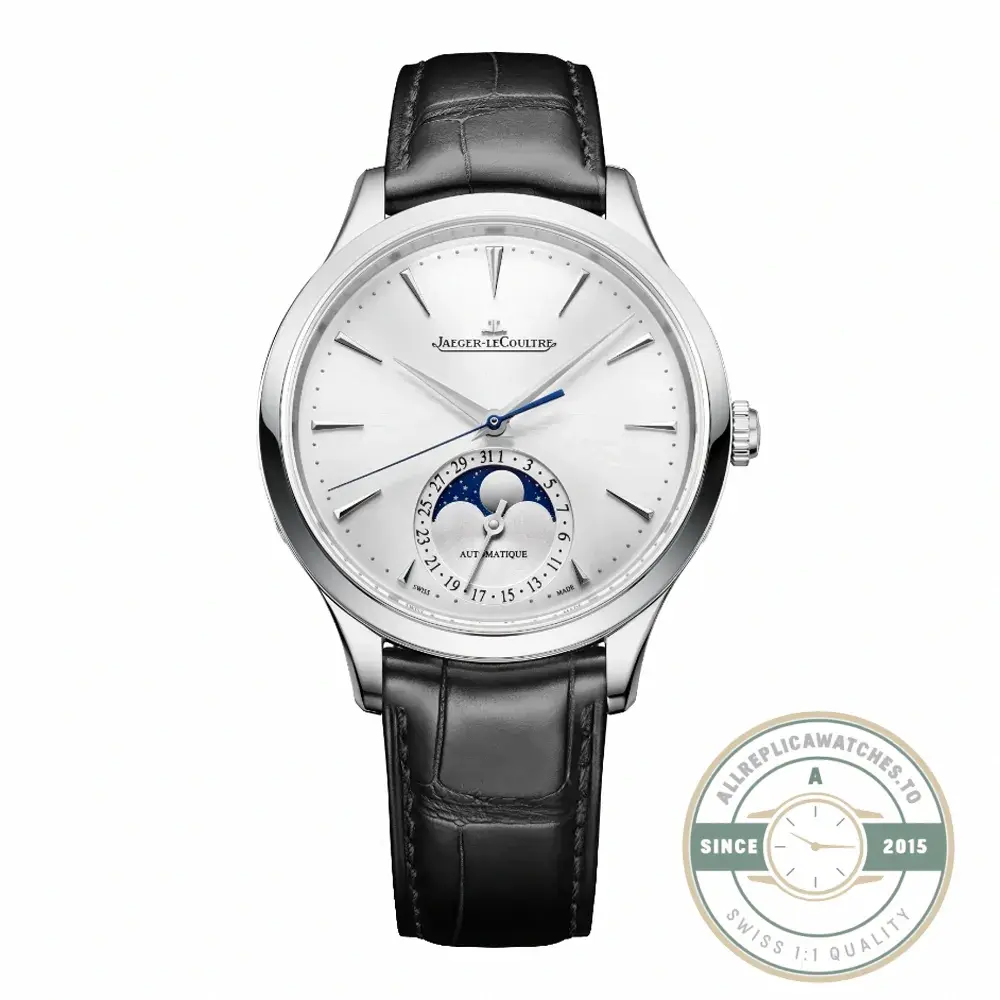
    Jaeger-LeCoultre Master Ultra Thin with clean silver dial and slim profile
    Jaeger-LeCoultre Master Ultra Thin with clean silver dial and slim profile

    The Master Control Philosophy

    The “Master” prefix at JLC means something specific: every watch bearing this name passes the Master 1000 Hours Control test. Introduced in 1992, this is an internal testing protocol that subjects each watch to 1,000 hours of testing across six criteria — water resistance, shock resistance, magnetic resistance, power reserve accuracy, accuracy in multiple positions, and accuracy across temperatures.

    For context: the COSC chronometer test, which most Swiss brands trumpet as a mark of quality, takes 15 days and tests accuracy in five positions. JLC’s Master Control takes over 40 days and tests everything COSC does plus additional environmental stress factors. It’s a certification that JLC doesn’t outsource — every test happens in their own facility in the Vallee de Joux.

    Industry Perspective: JLC has produced movements for Audemars Piguet, Patek Philippe, and Vacheron Constantin throughout its history. When the Holy Trinity needs calibers they can’t make themselves, they call Le Sentier. Owning a JLC Master means wearing a movement from the same source that powers some of the most expensive watches on Earth.

    This heritage matters for replica buyers because it establishes the Master collection’s position in the hierarchy. A JLC Master isn’t trying to be flashy — it’s trying to be correct. Perfect proportions, perfect finishing, perfect timekeeping. That philosophy makes it an ideal candidate for super clones because the design language is precise enough that factories know exactly what to aim for.

    Master Ultra Thin — Slim Perfection

    The Master Ultra Thin is JLC’s flagship dress watch and one of the most refined timepieces in production. The current reference Q1278420 measures 39mm in diameter and just 7.45mm thick. For perspective — that’s thinner than most smartphones. The watch practically disappears under a shirt cuff, revealing itself only when you want it to.

    Specification Master Ultra Thin
    Case Diameter 39mm
    Case Thickness 7.45mm
    Movement Cal. 849 (manual-wind, 1.85mm thin)
    Power Reserve 35 hours
    Crystal Sapphire, flat
    Water Resistance 50m
    Strap Alligator leather, pin buckle
    Dial Silver sunburst, applied indexes

    The genuine caliber 849 inside is just 1.85mm thin — one of the slimmest mechanical movements ever produced. This is hand-wound only, because an automatic rotor would add 2-3mm of thickness and defeat the entire purpose. The thinness defines the wearing experience. You don’t feel this watch on your wrist the way you feel a Submariner or a Royal Oak. You sense it. The weight is negligible, the profile is nonexistent, and the watch becomes an extension of your wrist rather than an object sitting on top of it.

    Super clones face their biggest challenge here. Getting a case to 7.45mm requires either a genuine ultra-thin movement or clever engineering. The best factories use a clone of the genuine Cal. 849 — the same hand-wound ultra-thin layout, with no rotor to add height — and land on cases between 8-8.5mm. That’s close enough that most people won’t notice the difference — especially since the case sits flush on the wrist in either case.

    Master Control — The Daily Driver

    The Master Control is the line’s practical core — the one designed for everyday wear. Where the Ultra Thin requires careful handling (thin cases and extreme sports don’t mix), the Master Control is built for real life. It features a 40mm case with 50m water resistance, an automatic movement, and a date function. Simple, correct, reliable.

    The current generation (introduced in 2020) features a sector dial design that divides the dial into concentric zones — a center circle for hours, an outer ring for minutes, and a railway track chapter ring at the edge. This design dates to the 1930s and adds visual complexity without adding clutter. The applied indexes are gold-toned and faceted, catching light at every angle.

    The caliber inside is the 899/1 — JLC’s workhorse automatic, rated at 43 hours of power reserve. That covers a night and a full working day off the wrist, so leaving the watch on the dresser after dinner never means resetting it in the morning. Worth knowing, because the 70-hour figure often quoted for the Master Control belongs to the newer 899AA and 899B, not to the 899/1.

    For super clone buyers, the Master Control is an excellent choice because its 40mm size and standard case thickness (9.57mm) leave room for a full clone of the genuine Cal. 899/1 without the case having to grow to swallow it. The result is a replica that hits all the visual marks and runs reliably for years. The sector dial requires precise printing — the concentric circles must be perfectly centered — but top factories have mastered this.

    Master Control Calendar — Full Date Display

    The Calendar version adds day, date, and month displays to the Master Control package, creating a watch that gives you the complete date at a glance. Triple calendar watches have a special charm — there’s something satisfying about seeing “Wednesday, March 7” on your wrist without reaching for your phone.

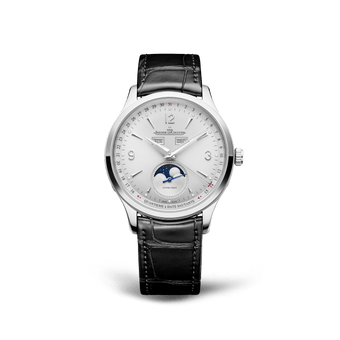
    Jaeger-LeCoultre Master Control Calendar with moonphase and full calendar display
    Jaeger-LeCoultre Master Control Calendar with moonphase and full calendar display

    JLC’s implementation is typically clean: day and month in twin windows at 12 o’clock, date indicated by a central hand pointing to numbers around the dial perimeter, and a moonphase at 6 o’clock. The layout ensures nothing overlaps and everything remains legible, even the small day/month text in the windows.

    Super clones of the Calendar version need functional calendar mechanisms — the day and month discs must advance correctly at midnight, and the central date hand must index accurately through 31 positions. Top factories achieve this with a clone of the genuine JLC calendar caliber, complication plate and all, rather than a calendar module bolted onto a generic base. The moonphase disc should rotate through a proper 29.5-day cycle. It’s a complex piece to replicate correctly, but the results from Tier 1 factories are impressive.

    Master Ultra Thin Moon — The Signature Piece

    If the Master collection has a hero watch — the one that appears in every JLC advertisement, every collector’s wishlist, every “grail watch” forum thread — it’s the Master Ultra Thin Moon. This watch combines the Ultra Thin’s slim profile with a moonphase complication at 6 o’clock, creating what many consider the most beautiful moonphase watch under $15,000 at retail.

    The moon display uses a disc with two moons (diametrically opposite), showing the lunar cycle through a semicircular aperture. JLC’s moons are detailed — you can see craters and surface texture on the gold moon against a deep blue night sky dotted with stars. This level of detail on a moonphase disc is a hallmark of haute horlogerie, and it’s one of the reasons the Master Ultra Thin Moon commands such devotion.

    Quality Check: The moonphase disc is one of the easiest ways to spot cheap replicas. On genuine JLC and top super clones, the moon has visible texture and the stars are individually applied or precisely printed. On cheap replicas, the disc is flat blue paint with a smooth white circle. If the moon looks like a cartoon, the watch is a cartoon.

    The genuine measures 39mm x 8.74mm — slightly thicker than the time-only Ultra Thin due to the moonphase module. Case material options include steel and rose gold, with the steel version featuring an enamel-like blue sector dial that’s become iconic. The blue dial version is the most sought-after in both genuine and replica markets.

    Feature Master UT Moon (Silver) Master UT Moon (Blue)
    Dial Color Silver sunburst Blue enamel sector
    Case Material Steel or rose gold Steel
    Popularity ★★★★ High ★★★★★ Maximum
    Super Clone Quality ★★★★★ Excellent ★★★★ Very good (color match challenge)
    Moonphase Detail Gold moon on blue disc Gold moon on blue disc

    Master Geographic — True Traveler’s Watch

    The Geographic is JLC’s travel watch — and it approaches the problem differently than most GMT watches. Instead of a fourth hand pointing to a 24-hour bezel, the Geographic uses a dedicated subdial showing a second time zone with its own hour and minute hands, plus a city disc that lets you read the time in any of 24 world cities.

    The power reserve indicator at 10 o’clock, the date at 3, the second time zone at 6, and the city disc at the outer edge — it’s a lot of information, but JLC arranges it with characteristic clarity. Nothing overlaps, nothing crowds, and the eye moves naturally from one indication to the next.

    For the super clone market, the Geographic is a niche choice. The city disc mechanism adds mechanical complexity, and the dial layout requires precision in printing and hand alignment. Fewer factories produce it, but those that do deliver impressive results. The dual-time function typically works correctly on Tier 1 versions, with the city disc advancing in proper increments.

    JLC Calibers — The Heart of the Master

    JLC has produced over 1,200 calibers since 1833 — more than any other manufacture. The Master collection uses several of these, each chosen for its specific purpose:

    Model Caliber Type Thickness Power Reserve
    Ultra Thin 849 Manual 1.85mm 35h
    Ultra Thin Moon 925/1 Automatic 4.9mm 45h
    Master Control 899/1 Automatic 4.45mm 43h
    Calendar 866A Automatic 5.66mm 70h
    Geographic 939A Automatic 5.94mm 43h

    The finishing on genuine JLC calibers is exceptional — Geneva stripes on the bridges, polished beveled edges, blued screws, and a custom-engraved rotor. Through the display caseback, the movement decoration is part of the wearing experience. Super clones put that decoration on the clone caliber itself — striping across the bridges, blued screws, an engraved rotor in the right place. At macro level the pattern and screw coloring won’t match genuine, but through a caseback at arm’s length, the visual impression is convincing.

    Super Clone Evaluation — What Matters Most

    Evaluating a JLC Master super clone is different from evaluating a sports watch replica. There’s no bezel alignment to check, no bracelet flex to test. Instead, focus on these specifics:

    Evaluation Point What to Look For Weight
    Case Thickness Must be under 9mm for Ultra Thin, under 10mm for Control ★★★★★
    Dial Finish Sunburst radiating evenly, no blotchy areas ★★★★★
    Applied Indexes Perfectly vertical, matching color, no adhesive visible ★★★★
    Hand Finishing Dauphine hands with crisp facets, no rough edges ★★★★
    Moonphase (if applicable) Textured moon, printed stars, deep blue background ★★★★★
    Caseback Decoration Visible movement with striping and colored screws ★★★
    Crown Feel Smooth winding, no grittiness, JLC logo on crown ★★★

    Case thickness is the single most important criterion for any Master super clone. The entire design philosophy is built around thinness — a thick Master Control defeats its purpose as thoroughly as a slow sports car. Request a profile photo in your QC set and compare it against genuine specifications. If the factory can’t hit their target thickness, the rest of the details become irrelevant.

    Master vs Patrimony vs Calatrava vs Saxonia — The Dress Watch Championship

    Four brands dominate the luxury dress watch category. Here’s how the JLC Master stacks up:

    Attribute JLC Master VC Patrimony PP Calatrava Lange Saxonia
    Thinness ★★★★★ ★★★★★ ★★★★ ★★★
    Movement Heritage ★★★★★ ★★★★★ ★★★★★ ★★★★★
    Brand Recognition ★★★ (moderate) ★★★ (moderate) ★★★★★ ★★★ (enthusiasts)
    Super Clone Quality ★★★★ (very good) ★★★★ (very good) ★★★★ (very good) ★★★ (limited)
    Value Proposition ★★★★★ (best bang for buck) ★★★★ ★★★ ★★★

    The JLC Master wins on value proposition because you get a watch with movement heritage equal to Patek or Vacheron, at a lower recognition risk (fewer people will scrutinize it), with super clone quality that matches or exceeds the competition. The Calatrava has the Patek name, which is both a blessing (prestige) and a curse (scrutiny). The Patrimony is equally refined but the Vacheron name draws slightly more attention. The Saxonia is the dark horse — stunning watches but limited super clone availability.

    Related Articles You Should Read

    FAQ — Jaeger-LeCoultre Master Replica

    Q: What makes the JLC Master different from other dress watches?

    Three things: the Master 1000 Hours Control testing protocol (more rigorous than COSC), JLC’s unmatched movement heritage (1,200+ calibers, supplier to the Holy Trinity), and a case thickness that rivals dedicated ultra-thin specialists. The Master combines quality, heritage, and wearability in a way no other dress watch matches at its price point.

    Q: Which Master model is best for a first JLC super clone?

    The Master Ultra Thin Moon in silver dial. It hits the sweet spot between simplicity and complication — the moonphase adds visual interest without cluttering the dial. It’s also the most photographed and discussed Master, meaning factories invest heavily in getting it right.

    Q: How thin are Master Ultra Thin super clones?

    The best achieve 8-8.5mm — about 0.5-1mm thicker than the genuine 7.45mm. That extra fraction comes from the clone caliber being built slightly taller than JLC’s proprietary Cal. 849, which at 1.85mm is one of the thinnest mechanical movements ever made. On the wrist, the difference is nearly imperceptible. Both slip easily under shirt cuffs.

    Q: Is JLC considered luxury enough for a super clone?

    JLC is one of the most respected names in the industry. They’ve produced movements for Patek Philippe, Audemars Piguet, and Vacheron Constantin. They hold more patents (400+) than most other manufacturers combined. Among watch enthusiasts, JLC commands the same respect as the Holy Trinity. Among the general public, the name is less known — which works in your favor as a replica buyer.

    Q: Does the moonphase function work on Master Ultra Thin Moon replicas?

    On Tier 1 super clones, yes. The moonphase disc rotates through a 29.5-day cycle, accurately tracking the lunar phase. You set it once according to the current lunar calendar, and it maintains accuracy for approximately six months before drifting. The gold moon on the disc has visible texture on quality replicas.

    Q: Can I wear a JLC Master with casual clothing?

    Yes, with intention. The Master looks superb with a navy blazer and chinos, a cashmere sweater and jeans, or a linen shirt with tailored trousers. It struggles with gym clothes and flip-flops — there’s a minimum level of care in your outfit that the Master demands. Think “smart casual” as the lower boundary.

    Q: Master Ultra Thin vs Master Control — which should I buy?

    Ultra Thin if you prioritize elegance and slim profile above everything. Master Control if you want a daily-wearing dress watch with more robustness and a date function. The Ultra Thin is the special occasion piece — the Control is the everyday piece. Both are excellent super clones. If forced to choose one, the Ultra Thin Moon edges ahead on desirability.

    Q: How does the blue dial Master Ultra Thin Moon compare to the silver?

    The blue dial is more eye-catching and modern. The silver is more traditional and versatile. The blue dial in super clones is slightly harder to match to the genuine’s exact shade — it should be a deep, inky blue with a slight gradient, not a flat or electric blue. If your QC photos show the correct blue depth, go for it. If the blue looks too bright or too purple, stick with silver.

    Q: What strap goes best with a JLC Master?

    Dark brown alligator for versatility. Black alligator for formal events. The genuine comes with JLC’s own alligator straps with a pin buckle — super clones typically include a similar strap. If you want to upgrade, aftermarket alligator straps in 20mm width from brands like Hirsch or Di-Modell fit perfectly and significantly improve wrist feel.

    Q: Is the Master Geographic worth the extra complexity?

    Only if you actually travel between time zones regularly. The Geographic’s city disc and dual time zone add genuine utility for frequent travelers. For everyone else, the aesthetic complexity might detract from the Master’s clean design philosophy. The moonphase is a more universally appealing complication than a world timer for most buyers.

    Q: How does a JLC Master compare to a Reverso for daily wear?

    The Master is the safer daily choice. Its round case and standard strap attachment make it more robust for everyday use. The Reverso’s flip mechanism, while durable, adds a potential point of wear over years of daily use. The Master also offers water resistance (50m vs 30m on the Reverso) and a wider comfort zone with casual outfits.

    Q: Will a watchmaker service a JLC Master super clone?

    Any competent independent watchmaker can service the clone caliber inside a Master super clone. It is a conventional mechanical automatic with a standard layout — cleaning, oiling and regulation are routine bench work, and the parts that actually get swapped (mainspring, jewels, crown wheel) are generic rather than JLC-specific. Expect $80-150 for a basic service (cleaning, oiling, regulation) and $150-200 for a full overhaul. Service interval: every 5-7 years.

    Q: What’s the best JLC Master to pair with an Overseas or Royal Oak?

    The Master Ultra Thin (time-only). If you already have a sporty luxury watch like the Overseas or Royal Oak, the Master Ultra Thin provides maximum contrast — thin vs thick, dress vs sport, leather vs bracelet. Two watches that cover every possible occasion with zero overlap.

    Q: How long will a JLC Master super clone last?

    The clone caliber is rated for 5-7 years between services, with a total lifespan exceeding 20 years with proper maintenance. The case and crystal will last indefinitely — 316L steel doesn’t degrade and sapphire crystal doesn’t scratch under normal wear. Your super clone can easily become a watch you hand down.

    Q: Is 39mm too small for the Master Ultra Thin?

    Absolutely not. The watch world’s obsession with 42mm+ is fading. The trend is back toward classic proportions — 38-40mm for dress watches. At 39mm, the Master Ultra Thin sits perfectly on wrists from 6 to 8 inches. Its thin profile makes it wear elegantly rather than modestly. The watch looks refined, not small.

    The Jaeger-LeCoultre Master collection is proof that the quietest watch in the room often commands the most respect. While louder brands compete for attention with bigger cases and busier dials, the Master whispers with a confidence born from 190 years of movement-making excellence. Super clones at the $700-1000 level capture that quiet authority — the thin case, the perfect dial, the decorated movement visible through the caseback. Whether you choose the time-only Ultra Thin, the romantic Moon, or the practical Control, you’re wearing a watch from the brand that taught the Holy Trinity how to make movements. Browse the complete Jaeger-LeCoultre replica collection and discover what the watchmaker’s watchmaker can put on your wrist.

  • Jaeger-LeCoultre Reverso Replica: The Art Deco Icon That Flips the Script on Luxury Watch Design

    Jaeger-LeCoultre Reverso Replica: The Art Deco Icon That Flips the Script on Luxury Watch Design

    Jaeger-LeCoultre Reverso Replica — The Art Deco Icon That Flips the Script on Luxury Watch Design

    No other luxury watch does what the Reverso does. You take it off, you flip the case over, and there’s a completely different face waiting underneath. A second dial. A blank canvas for engraving. A solid caseback that protects the crystal during polo matches. Born in 1931 for British officers in India who kept smashing their watch crystals during sports, the Reverso became something far more significant — the definitive Art Deco wristwatch, and arguably the most innovative case design in horological history.

    I remember the first time I handled a Reverso. I was at a Basel press event in the mid-1990s, and a JLC representative handed me a Reverso Duo in rose gold. I flipped the case, heard that satisfying click as it locked into position, and saw the second dial emerge — a different time zone, a different design, the same watch. That mechanical ingenuity, packed into a case designed 60 years earlier, hooked me permanently. Thirty years later, I’ve owned four Reversos (two genuine, two super clones) and examined hundreds. This is everything I know.

    Jaeger-LeCoultre Reverso Classic with silver dial and Art Deco rectangular case
    Jaeger-LeCoultre Reverso Classic with silver dial and Art Deco rectangular case

    Born from Polo — The 1931 Story

    The year was 1931. British colonial officers stationed in India played polo with a passion that rivaled their devotion to the Crown. The problem? Their wristwatches couldn’t survive the sport. Crystal after crystal shattered from mallet impacts and ball strikes. César de Trey, a Swiss businessman visiting India, heard the complaints and brought the challenge back to Jacques-David LeCoultre at the family manufacture in Le Sentier.

    The solution was brilliantly simple: a case that swivels within a cradle, allowing the wearer to flip the watch and present the solid metal caseback outward during rough activities. No crystal exposed, no damage. When the game ends, flip it back and check the time. The sliding mechanism uses rail guides cut into the case carrier — the watch body slides along these rails and rotates 180 degrees, clicking into place at each end position.

    The design was so effective that it went straight to patent (Swiss patent No. 155361). But what made the Reverso endure wasn’t its practicality — it was its beauty. The rectangular case, the Art Deco proportions, the clean lines, the gadroons (decorative ridges) along the sides — all of this came together in a shape that transcended its sporting origins and became a symbol of elegant restraint.

    Historical Note: The Reverso nearly died. By the 1970s, the quartz crisis had devastated mechanical watchmaking and the Reverso was discontinued. Italian watch dealer Giorgio Corvo convinced Jaeger-LeCoultre to revive it in 1983. That decision saved one of the greatest watch designs ever created.

    Anatomy of the Flip — How the Case Works

    The Reverso case is a mechanical marvel disguised as simplicity. Understanding its construction helps you appreciate what makes a good super clone:

    Component Function Replica Challenge
    Inner Case Houses the movement and dials Must slide smoothly in the carrier ★★★★★
    Carrier Frame Holds the inner case, attaches to strap Rail precision determines flip quality ★★★★★
    Rail Guides Channels for inner case to slide along Must be exactly machined ★★★★
    Pivot Points Allow 180° rotation at each end Click must be firm, not loose ★★★★
    Gadroons Decorative ridged edge on the case Defines the Art Deco character ★★★
    Click Spring Locks case in open/closed position Determines “feel” of the flip ★★★★★

    The flip mechanism is the soul of the Reverso. On the genuine, you push the inner case to the side, it slides along the rails with smooth resistance, reaches the pivot point, and rotates 180 degrees with a satisfying click. The click should be firm — not so tight that you need to force it, not so loose that it flops around. That tactile feedback is what separates a Reverso from every other watch in existence.

    On super clones, the flip mechanism is the single most important quality indicator. A good super clone clicks with authority and stays locked in position without any play or wobble. A bad one feels mushy, has lateral movement when locked, or worse — doesn’t fully lock at all. Before anything else in your QC evaluation, verify the flip.
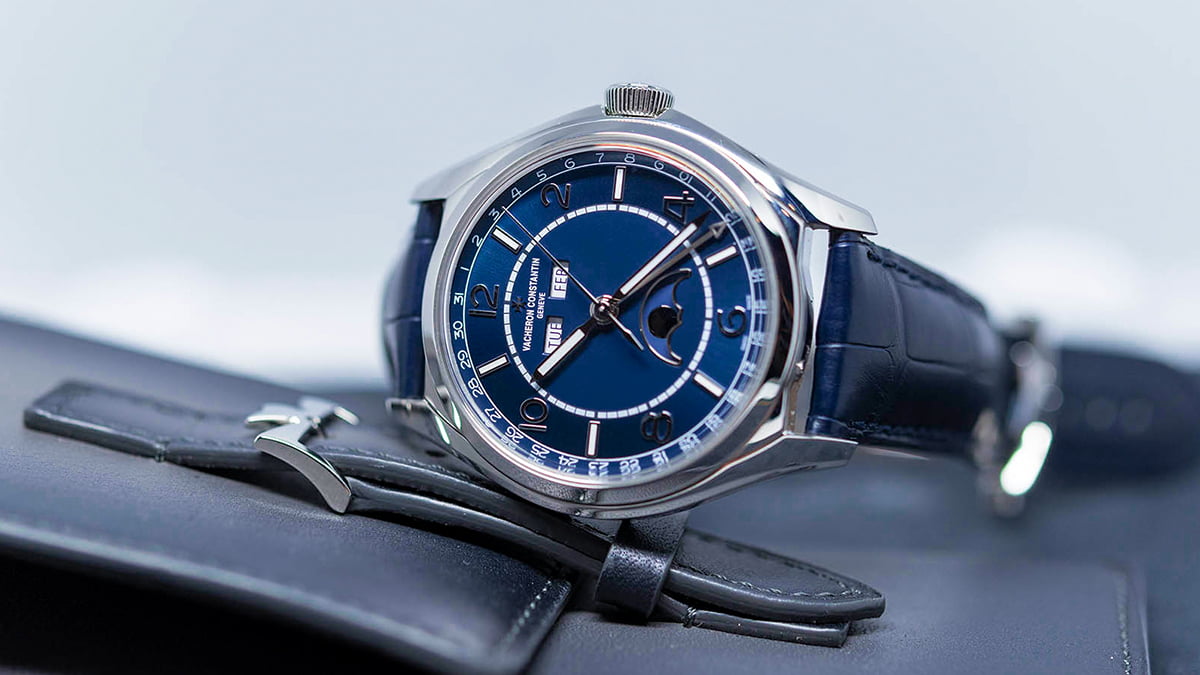
    Reverso Classic — The Pure Original

    The Classic line stays closest to the 1931 original. One dial, manual-wind movement, clean silver or white dial with applied baton indexes, blued steel hands, and a blank caseback ready for engraving. This is the Reverso stripped to its essence — no complications, no dual time zones, just pure Art Deco geometry and mechanical honesty.

    Two sizes dominate: the Medium (40.1mm x 24.4mm) and the Large (45.6mm x 27.4mm). The rectangular case means these measurements work differently than round watches — the Medium wears like a 38mm round watch, and the Large wears like a 42mm. On most male wrists (6.5-7.5 inches), the Large is the better choice. Women or those with slimmer wrists should look at the Medium.

    Specification Classic Medium Classic Large
    Dimensions 40.1mm x 24.4mm 45.6mm x 27.4mm
    Thickness 8.5mm 9.14mm
    Movement Cal. 846 (manual) Cal. 822/2 (manual)
    Power Reserve 38 hours 42 hours
    Water Resistance 30m 30m
    Dial Silver, applied indexes Silver, applied indexes

    The Classic Reverso in stainless steel is the entry point to JLC — and for many collectors, it’s the only JLC they’ll ever want. There’s a purity to it that more complicated models can’t match. When you flip the case and see blank steel, there’s a meditative quality to the gesture. The watch hides its face from the world when you ask it to.

    Reverso Tribute — The Collector’s Choice

    The Tribute line elevates the Reverso into haute horlogerie territory. These are the models that collectors chase — burgundy dials, enamel work, sector dial layouts, and in-house calibers with decoration visible through display casebacks.

    Jaeger-LeCoultre Reverso Tribute with deep burgundy sector dial and applied gold indexes
    Jaeger-LeCoultre Reverso Tribute with deep burgundy sector dial and applied gold indexes

    The Tribute Duoface in blue and burgundy is the current market darling. One side shows a sunray blue dial with dauphine hands and applied hour markers. Flip it over, and a deep burgundy dial with a sector layout appears — different character, different mood, same watch. The in-house caliber 854A/2 powers both dials with a dual time zone function, letting you track home time on one side and travel time on the other.

    For super clone buyers, the Tribute models represent the pinnacle of Reverso replication. The dials require extraordinary color matching — JLC’s burgundy isn’t just “dark red,” it’s a specific shade that shifts between plum and wine depending on the light. The applied indexes must be gold-toned and precisely positioned within a rectangular dial that has zero tolerance for misalignment. Any index that’s even slightly crooked on a rectangular dial is glaringly obvious — more so than on a round dial where the curvature provides visual forgiveness.

    Collector’s Tip: The Reverso Tribute Duoface in blue/burgundy is one of the most photographed watches on Instagram. The two-face design creates incredible content — flip videos consistently go viral in watch communities. If you enjoy sharing your collection online, this is the model to own.

    Reverso Duo/Duoface — Two Time Zones, One Watch

    The Duo and Duoface models are the practical peak of the Reverso concept. Instead of a blank caseback, the reverse side has its own fully independent dial — typically with its own hour and minute hands, a day/night indicator, and sometimes a second time zone. This transforms the Reverso from a clever case design into a genuine travel watch.

    The mechanism works through a differential gear system that allows the movement to drive two separate sets of hands. The front dial shows local time. The back dial shows home time (or any second time zone you set). Advancing the local time on the front doesn’t affect the reference time on the back. It’s mechanically elegant — two faces, one movement, no compromise.

    Super clone versions of the Duoface are particularly impressive because they need to get both dials right. Any imbalance in quality — a perfect front and a sloppy back, or vice versa — breaks the illusion immediately. The best factories maintain consistent dial quality across both faces, with matching index application, hand color, and printing precision.

    Reverso Hybris Mechanica — Ultra-Complication Territory

    JLC has used the Reverso case as a canvas for some of the most ambitious complications in watchmaking. The Hybris Mechanica line includes:

    • Quadriptyque — four functional faces (two visible at once), displaying a full calendar, equation of time, sidereal time, and sunrise/sunset indicators
    • Reverso Grande Complication à Triptyque — three functional displays including a minute repeater, tourbillon, and perpetual calendar
    • Reverso Hybris Artistica Calibre 179 — featuring enamel miniature painting on the caseback

    These are not replicated. At this complication level, the movements are so specialized that no factory attempts them. But knowing they exist helps you understand why JLC commands respect in the industry — they’re not just making pretty rectangular watches. They’re engineering at the absolute frontier while wearing an Art Deco suit.

    Super Clone Guide — The Flip Test and Beyond

    Buying a Reverso super clone requires a specific evaluation framework because the watch has challenges no round watch faces. Here’s the complete QC checklist:

    QC Point What to Check Red Flag
    Flip Mechanism Smooth slide, firm click, no wobble when locked Loose lock, grinding during slide ❌
    Case Proportions Height-to-width ratio matches reference Too square or too narrow ❌
    Gadroons Even ridges along both long edges Uneven spacing, rough edges ❌
    Index Alignment Perfectly straight within rectangular dial Any tilt visible against straight edges ❌
    Dial Color (Tribute) Correct shade of burgundy/blue/silver Flat color without sunburst depth ❌
    Carrier Finish Polished sides, brushed top and bottom All-polished or all-brushed ❌
    Hand Length Tips reach but don’t overlap indexes Short hands or hands extending past dial edge ❌

    The most common failure point on cheap Reverso replicas is the flip mechanism. When it’s done badly, the case wobbles in the locked position, creating visible movement when you flex your wrist. This is unacceptable — the genuine Reverso locks with military precision, and a good super clone matches that. If your QC video shows any lateral play in the locked position, reject the watch.

    Pro Tip: Ask your seller for a video of the flip action, not just photos. A video reveals the smoothness of the slide, the firmness of the click, and any wobble in the locked position. Two seconds of video tells you more about Reverso quality than ten photos combined.

    How to Wear a Rectangular Watch

    The Reverso is a rectangular watch, which means it follows different styling rules than round watches. Here’s what 30 years of wearing rectangular watches has taught me:

    Dress shirts are your best friend. The rectangular case slides under cuffs more easily than any round watch because it sits flat and thin on the wrist. A Reverso under a French cuff shirt is one of the most elegant looks in menswear — just a sliver of steel or gold visible as you reach for your drink.

    Leather straps only. The Reverso was designed for leather. Some modern versions come on alligator, others on calf leather, some on cordovan. All look correct. Metal bracelets? JLC has experimented with them, but the design language screams leather. Stick with it.

    Match the metal to your accessories. A steel Reverso goes with silver cufflinks and a steel belt buckle. A rose gold Reverso matches gold accessories. This isn’t a rule for round sports watches, but rectangular dress watches demand this level of coordination.

    The Reverso works with jeans. Counterintuitive, but true. A steel Reverso Classic on a brown strap with dark jeans, a white Oxford, and a navy blazer is effortless casual elegance. The Art Deco case adds structure to a relaxed outfit without looking overdressed.

    Reverso vs Cartier Tank vs Cartier Santos — The Rectangular Watch Showdown

    Three watches dominate the rectangular/shaped luxury watch market. Here’s how they compare for the super clone buyer:

    Attribute JLC Reverso Cartier Tank Cartier Santos
    Case Shape Rectangle (flip) Rectangle Square
    Unique Feature Reversible case ✅ Roman dial heritage Exposed screws
    Movement In-house manual Cartier MC auto Cartier 1847MC auto
    Heritage 1931 ★★★★★ 1917 ★★★★★ 1904 ★★★★★
    Super Clone Quality ★★★★ (flip mechanism is key) ★★★★★ (simpler design) ★★★★★ (bracelet focus)
    Versatility ★★★★ Formal to smart casual ★★★★ Formal to casual ★★★★★ Anything goes
    Recognition Factor Medium (enthusiasts) High (everyone) High (everyone)

    The Reverso is the watch person’s choice. It’s less instantly recognizable than a Tank or Santos, but anyone who knows watches will recognize it — and respect it more. The flip mechanism gives it mechanical credibility that no Cartier can match. The Tank is pure elegance. The Santos is versatile sportiness. The Reverso is engineering art. Choose based on what resonates with your identity.

    Related Articles You Should Read

    FAQ — Jaeger-LeCoultre Reverso Replica

    Q: Does the flip mechanism actually work on super clone Reversos?

    On Tier 1 super clones, absolutely yes. The inner case slides along the rails, rotates 180 degrees, and clicks firmly into position on both sides. The mechanism is well-engineered in the top replicas and provides the same satisfying tactile experience as the genuine. Cheap replicas may have a loose or wobbly flip — always verify this in QC videos.

    Q: What size Reverso should I choose?

    For wrists 6.5-7.5 inches, the Large (45.6mm x 27.4mm) is ideal — it provides sufficient wrist presence without overwhelming. For wrists under 6.5 inches, the Medium (40.1mm x 24.4mm) works beautifully. Remember, rectangular watches wear differently than round ones — the length extends toward the wrist edges, not top and bottom.

    Q: Can I get the caseback engraved on a super clone?

    Yes, and this is one of the Reverso’s great features. Any jeweler with an engraving machine can engrave the solid caseback. Initials, dates, quotes, even family crests — the flat steel surface accepts engraving beautifully. This personalization option adds sentimental value that few other watches offer.

    Q: Is the Reverso Duoface worth the extra cost over the Classic?

    If you travel between time zones or simply love the idea of two watches in one, yes. The Duoface adds genuine utility and doubles the visual impact. However, the Classic has a purity that the Duoface can’t match. The blank caseback is part of the original Reverso charm. Both are excellent choices.

    Q: How thick is a Reverso super clone compared to genuine?

    Genuine Reverso Classic is approximately 9.14mm. Top super clones hit 9.5-10mm — very close. The Duoface genuine is thicker at around 11mm, and super clones match this well at 11.5-12mm. The extra fraction of a millimeter on replicas comes from the clone caliber being built a touch taller than the genuine in-house movement it copies — a Chinese assembly line works to wider tolerances than Le Sentier, and the difference ends up in the case height.

    Q: What strap width does the Reverso use?

    The Reverso uses non-standard strap widths due to its rectangular case. The Large typically uses 20mm at the lugs tapering to 16mm at the buckle. The Medium uses 17mm to 14mm. Always order straps specifically cut for the Reverso — standard round-watch straps won’t fit the case geometry correctly.

    Q: Is Jaeger-LeCoultre considered high-end enough to justify a super clone?

    JLC is the manufacturer of manufacturers. They’ve supplied movements to Audemars Piguet, Vacheron Constantin, and Patek Philippe throughout history. They hold over 400 patents and have created over 1,200 calibers. In the watch industry, JLC is arguably the most technically accomplished manufacture in existence. Yes, it’s more than high-end enough.

    Q: Will the flip mechanism wear out over time on a super clone?

    The mechanism is metal-on-metal sliding, which means it will wear eventually — but we’re talking years of heavy use. The click spring maintains its tension for a very long time. If you flip the case once or twice a day (which most owners do), expect the mechanism to last 10+ years without noticeable degradation. If it does loosen, a watchmaker can adjust the click spring tension.

    Q: Can I wear a Reverso with a t-shirt?

    You can, but it works best with a deliberate outfit. A Reverso with a plain white tee, dark jeans, and Chelsea boots looks intentionally minimal. A Reverso with a graphic tee and basketball shorts looks mismatched. The watch has inherent formality — work with it, not against it.

    Q: Which is harder to replicate well — the Reverso or the Royal Oak?

    The Reverso, without question. The Royal Oak is a round movement in an octagonal case — difficult but standard in principle. The Reverso requires a functioning flip mechanism, precise rectangular proportions, proper gadroon finishing, and often dual dials. The engineering complexity is significantly higher, which is why fewer factories attempt it.

    Q: What’s the best dial color for a first Reverso?

    Silver or white on a brown leather strap. This combination works with the widest range of outfits and occasions. The silver dial provides enough visual interest through its applied indexes and sunburst finish, while staying neutral enough for any setting. Save the burgundy Tribute or blue Duoface for your second Reverso.

    Q: How does a Reverso compare to a Cartier Tank for formal events?

    Both are perfect for black tie. The Tank has higher general recognition — more people will notice it. The Reverso has deeper credibility among watch enthusiasts — the people who know, will know. For pure elegance, the Tank in yellow gold edges ahead. For conversation and mechanical interest, the Reverso wins by a mile. You can’t flip a Cartier Tank.

    Q: Are JLC super clones as well-made as Rolex super clones?

    The best JLC super clones match Rolex replicas in case and dial quality but face the additional challenge of the flip mechanism (for Reverso) or ultra-thin cases (for Master). Where JLC replicas have an advantage is lower market scrutiny — far fewer people will examine your Reverso closely compared to a Submariner or Daytona.

    Q: What movement is inside a Reverso super clone?

    A top-tier Reverso super clone runs a clone of the genuine JLC caliber rather than a generic Japanese or Chinese base. The Classic Medium gets a clone of the genuine Cal. 846 and the Classic Large a clone of the genuine Cal. 822/2 — both hand-wound, which is period-correct, since genuine Reverso Classics use manual calibers. Duoface models get a clone of the genuine Cal. 854A/2, which drives both dials from a single movement. The shape is why this matters: the genuine Reverso calibers are rectangular, and a round off-the-shelf automatic sits badly in a case 27.4mm across — it pushes the small seconds off the 6 o’clock axis and the dial stops reading correctly. A basic round Miyota or Seagull dropped into a Reverso-shaped case is what the $40-80 end of the market sells, and it is the clearest marker of a low-tier build.

    Q: Is the Reverso a good investment piece in the super clone world?

    Super clones aren’t investments in the financial sense — they don’t appreciate. But the Reverso is an investment in your personal style and mechanical appreciation. Few watches teach you more about case engineering, and few watches generate more genuine pleasure through daily interaction. The flip ritual alone makes it worth the purchase.

    The Reverso isn’t just a watch — it’s a mechanical conversation between you and 93 years of Art Deco engineering. No other timepiece offers the same interactive experience, the same tactile satisfaction, or the same blend of sporting heritage and formal elegance. Super clones at the $700-1000 level capture that experience with a flip mechanism that clicks with authority and dials that honor JLC’s exacting standards. Whether you choose the Classic, the Tribute, or the Duoface, you’re strapping on a piece of horological history that literally turns heads — including its own. Explore the full Jaeger-LeCoultre replica collection and discover the watch that rewrote the rules of case design.

  • Best Vacheron Constantin Super Clone 2026: Holy Trinity Quality Without the Six-Figure Barrier

    Best Vacheron Constantin Super Clone 2026: Holy Trinity Quality Without the Six-Figure Barrier

    Best Vacheron Constantin Super Clone 2026 — Holy Trinity Quality Without the Six-Figure Barrier

    Vacheron Constantin sits at the summit of watchmaking alongside Patek Philippe and Audemars Piguet — the Holy Trinity. But while Patek and AP dominate collector conversations, Vacheron remains the connoisseur’s choice. The brand that watch insiders respect most, that produces some of the most technically accomplished timepieces in existence, and that somehow manages to stay slightly under the radar. That quiet authority makes Vacheron super clones particularly compelling. You’re wearing something that only people who truly know watches will recognize — and they’ll be impressed.

    I’ve handled genuine Vacheron watches at Geneva boutiques, worn them at SIHH press events, and disassembled them at watchmaker benches. I’ve also examined dozens of super clones from every major factory producing VC replicas. What follows is the distilled knowledge of 30 years in this space — which super clones actually deliver the Vacheron experience and which ones fall short.

    Vacheron Constantin Overseas with blue dial and steel bracelet — the sporty Holy Trinity icon
    Vacheron Constantin Overseas with blue dial and steel bracelet — the sporty Holy Trinity icon

    Why Vacheron Stands Apart in the Holy Trinity

    People outside the watch world lump Patek, AP, and Vacheron together. People inside it know each house has a distinct personality. Patek is old money in a banking suit. AP is the disruptor who wore the first steel sports watch to a black tie dinner. Vacheron? Vacheron is the artist. The one who spent three years on a single enamel dial, who put 57 complications into one pocket watch (the Reference 57260), who earned more Hallmarks of Geneva than any other manufacturer.

    What makes Vacheron special for the super clone buyer:

    Advantage What It Means for Replica Buyers
    Under-the-Radar Status Fewer people recognize VC than Rolex or AP — less scrutiny on your wrist
    Subtle Design Language No octagonal bezel or crown guard screaming “expensive watch” — quiet luxury
    Diverse Collections Sports (Overseas), dress (Patrimony), modern (Fiftysix), heritage (Historiques)
    Maltese Cross Identity One signature emblem ties every model together — easy to replicate accurately
    Wearable Sizes Most models 37-41mm — comfortable for any wrist, no oversized complications

    The “under-the-radar” factor deserves emphasis. A Rolex Submariner on your wrist is an advertisement. Everyone from your Uber driver to your CEO recognizes it. A Vacheron Overseas on your wrist? Only people who follow horology will identify it. That selectivity appeals to buyers who want quality without the spotlight. It also means less risk of awkward conversations about how you afforded a $30,000 watch.

    The Four Collections — Ranked for Super Clone Quality

    Not all Vacheron collections are created equal in the super clone world. Some are replicated exceptionally well because factories have perfected the tooling. Others are niche pieces that only one or two factories attempt. Here’s how they rank:

    Collection Super Clone Quality Availability Best Model
    Overseas ★★★★★ Outstanding ★★★★★ Widely available 4500V Blue Dial
    Patrimony ★★★★ Excellent ★★★★ Good selection 85180 White Dial
    Fiftysix ★★★★ Excellent ★★★ Moderate 4600E Petrol Blue
    Historiques ★★★ Good (varies) ★★ Limited American 1921

    The Overseas dominates because it’s the most commercially successful Vacheron line, which means factories invest heavily in tooling. Multiple factories compete on quality, driving standards up. The Patrimony and Fiftysix are well-served because their designs, while beautiful, are technically less challenging — round cases, standard movements, no integrated bracelet complications. The Historiques is the wild card — when done well, these are extraordinary. But availability is limited and quality varies widely between factories.

    Overseas — The Sports Watch of Sophisticates

    If you’re buying one Vacheron super clone, this is it. The Overseas is Vacheron’s answer to the Royal Oak and Nautilus — an integrated-bracelet luxury sports watch that can handle a day at the marina followed by dinner at a Michelin restaurant.

    The reference to chase is the 4500V. It’s the time-only version with date at 3 o’clock, 41mm steel case, and that magnificent blue dial that shifts between navy and electric blue depending on the light. The Maltese cross bezel — six sides matching the brand’s logo — frames the dial perfectly. The bracelet alternates brushed center links with polished outer links, creating a play of light that’s distinctly Vacheron.

    Expert Pick: The blue dial Overseas 4500V is the single best Vacheron super clone available in 2026. Multiple factories produce it at competition-level quality, the bracelet engineering is mature, and the blue dial color — the hardest element to match — has been perfected by the top two factories.

    What makes the Overseas super clone particularly impressive is the interchangeable strap system. Genuine Overseas watches come with a quick-release mechanism that lets you swap between steel bracelet, leather strap, and rubber strap without tools. The best super clones replicate this system exactly — push two small buttons on the back of the lugs, the bracelet clicks out, and a rubber or leather strap clicks in. This level of engineering in a replica was unthinkable five years ago.

    The blue dial deserves its own paragraph. Vacheron’s genuine blue is not a simple color — it’s a sunburst finish that radiates from center to edge, shifting from deep navy to bright blue depending on the angle. Cheap replicas use flat blue paint that looks dead under any light. Top super clones achieve this sunburst through multiple layers of lacquer applied over a textured dial base, then finished with a final clear coat. When you tilt the watch and see that gradient shift, you know you’re looking at a quality piece.

    Shop the collection: all 44 Vacheron Constantin Overseas super clone references, including Dual Time and Chronograph, with the interchangeable strap system.

    Patrimony — Minimalism Perfected

    The Patrimony is one of the thinnest, most elegant dress watches ever made. The 85180 reference in white gold with a silver-opaline dial has become the benchmark for ultra-slim watchmaking. At 8.1mm thick with a 40mm case, it sits on the wrist like a second skin — sliding under shirt cuffs without catching, sitting flat against the wrist top, disappearing until you need to check the time.

    Super clones of the Patrimony face a different challenge than the Overseas. There’s no bracelet to worry about, no bezel complications, no interchangeable system. But the simplicity is the challenge. On a watch this minimal, every imperfection screams. A slightly thick case, a marginally wrong font on the dial, an index that’s 0.1mm off center — there’s nothing to hide behind. The Patrimony is naked watchmaking.

    Vacheron Constantin Patrimony ultra-thin dress watch with clean white dial and gold case
    Vacheron Constantin Patrimony ultra-thin dress watch with clean white dial and gold case

    The best super clone factories nail the Patrimony by focusing on three things: case profile (must be genuinely thin — anything over 9mm is unacceptable), dial quality (the silver-opaline finish requires a specific technique to avoid looking plasticky), and the Maltese cross logo (it should be pad-printed with perfect registration, not screen-printed with bleeding edges). The movement inside is typically a Miyota 9015 with the rotor modified to display a custom engraved rotor through the display caseback.

    Shop the collection: browse every Vacheron Patrimony super clone we stock — 8 ultra-thin references in white and rose gold.

    Fiftysix — Modern Entry to the Holy Trinity

    The Fiftysix arrived in 2018 as Vacheron’s play for younger buyers. Named after the year 1956 — when Vacheron released the Reference 6073, the first watch with the now-iconic Maltese cross lugs — the Fiftysix combines heritage details with modern proportions. The sector dial with its concentric rings, the lugs shaped like the Maltese cross brand symbol, the petrol blue color option that became an instant icon.

    For super clone buyers, the Fiftysix represents exceptional value. It has the full Vacheron pedigree and design language but at a slightly lower “authentication risk” — meaning fewer people in the wild will try to verify it because it’s newer and less known than the Overseas. The petrol blue dial version (Ref. 4600E) is the one to get. That color — a smoky blue-green that no other brand uses — is so distinctive that it immediately reads as Vacheron to anyone who knows the brand.

    Shop the collection: see all 9 Vacheron Fiftysix super clone references, including the petrol blue sector dial.

    Historiques — Archive Watches Made Real

    The Historiques collection draws from Vacheron’s 270-year archive. The American 1921 with its tilted dial, the Cornes de Vache 1955 chronograph, the reissued 222 — each one is a time capsule from a specific era. These are connoisseur pieces that tell stories reaching back to the 18th century.

    Super clone availability is more limited here, but when a top factory gets a Historiques piece right, the result is stunning. The American 1921 is the most commonly replicated Historiques model — its cushion case and 45-degree dial angle make it instantly recognizable. The 222 reissue is becoming more available as factories tool up for the integrated bracelet design.

    Important Note: Historiques super clones require more patience to source. Don’t settle for a mediocre version — the unique case shapes and complication layouts mean a bad Historiques replica looks far worse than a bad Overseas replica. Wait for a top-tier factory release rather than buying whatever’s available.

    Shop the collection: the full Vacheron Historiques super clone line — 14 references including the 222 reissue and the American 1921.

    Factory Breakdown — Who Makes What Best

    The super clone market is organized around factories — large-scale operations that invest in CNC equipment, movement sourcing, and quality control. Different factories specialize in different brands and models. For Vacheron Constantin, the landscape looks like this:

    Factory Tier Overseas Patrimony Historiques
    Tier 1 (Top) ✅ Best blue dial color, bracelet engineering, interchangeable system ✅ Thinnest case profile, best dial finish ✅ American 1921, 222 (limited runs)
    Tier 2 (Good) ✅ Solid bracelet, slightly off dial color ✅ Good overall, slightly thicker case ❌ Rarely attempted
    Tier 3 (Budget) ❌ Loose bracelet, flat dial ❌ Too thick, poor printing ❌ Not available

    The critical difference between Tier 1 and Tier 2 for Overseas comes down to two things: the blue dial color and the bracelet clasp. Tier 1 factories achieve the genuine sunburst blue through a multi-layer lacquer process. Tier 2 factories get close but often have a slightly purple or teal cast that’s visible in direct sunlight. The bracelet clasp on Tier 1 opens and closes with a satisfying snap that feels precise. Tier 2 clasps work fine but lack that refinement.

    For Patrimony, the Tier 1 advantage is thickness. Genuine Patrimony is 8.1mm. Tier 1 super clones achieve 8.5-9mm. Tier 2 versions hit 9.5-10mm. That extra millimeter matters enormously on a dress watch — it’s the difference between disappearing under a cuff and catching on it.

    Super Clone ($700-1000) vs DHGate ($40-80) — The Real Difference

    This comparison matters because first-time buyers often wonder why a super clone costs 10-15 times more than a DHGate special. The answer isn’t marketing — it’s manufacturing.

    Component Super Clone ($700-1000) DHGate ($40-80)
    Case 316L surgical steel, CNC-machined ✅ Alloy or low-grade steel, cast ❌
    Crystal Sapphire with double-sided AR ✅ Mineral glass with blue AR tint ❌
    Movement Miyota 9015 or Seagull, 28,800 bph ✅ Chinese quartz or DG2813 ❌
    Dial Multi-layer lacquer, sunburst finish ✅ Single-coat paint, flat color ❌
    Bracelet Solid links, machined clasp, smooth action ✅ Hollow links, stamped clasp, rattles ❌
    Weight 145-160g (close to genuine) ✅ 80-100g (noticeably light) ❌
    Water Resistance 30-50m tested ✅ None (leaks in rain) ❌
    Longevity 5-10+ years with service ✅ 3-12 months ❌
    QC Photos Provided before shipping ✅ What you see online ≠ what you get ❌

    The weight test alone reveals the truth. Pick up a genuine Overseas — it weighs about 170g on bracelet. A super clone hits 155-160g. A DHGate piece? Maybe 90g. That weight difference comes from solid versus hollow bracelet links, proper caseback thickness, and actual sapphire crystal versus mineral glass. Your wrist knows the difference the moment you clasp it on.

    Hard Truth: A $50 DHGate “Vacheron” will fool nobody. Not because people will examine it closely — but because the overall quality signals “cheap watch” from arm’s length. The lightweight feel, the tinny bracelet sound, the dead flat dial — these are subconscious cues that everyone picks up, even non-watch people. A super clone, by contrast, signals “expensive watch” through those same subconscious channels.

    Smart Buying — QC Photos, Shipping, and Long-Term Service

    Buying a Vacheron super clone follows the same principles as buying any high-end replica, but with a few VC-specific considerations:

    QC Photos — What to Request:

    • Dial macro shot — Check the Maltese cross logo, index alignment, and sunburst finish quality
    • Bracelet/strap detail — For Overseas: link gaps, clasp mechanism, brushed/polished contrast. For Patrimony/Fiftysix: leather quality and stitching
    • Caseback — Movement decoration, rotor engraving, and case edge finishing
    • Profile shot — Case thickness relative to lug length — crucial for Patrimony
    • Crown close-up — Maltese cross engraving should be crisp, not mushy
    • Lume shot — For Overseas: hands and indexes should glow evenly in blue-green

    Shipping Considerations:

    Vacheron super clones ship in the same discrete packaging as other brands — plain box, no branding, standard international parcel appearance. Transit time averages 10-21 days depending on destination. Some dealers offer triangle shipping through intermediate countries for added security. Always choose a shipping method with tracking.

    Long-Term Service:

    A Miyota 9015 movement inside a super clone should run for 5-7 years before needing service. When it does, any independent watchmaker can handle it — the 9015 is one of the most common movements in the world. Cost: $80-150 for a full service including cleaning, oiling, and regulation. That’s once every five years, making the total cost of ownership remarkably low.

    Luxury watch collection featuring Holy Trinity watches — Vacheron, Patek, and Audemars Piguet
    Luxury watch collection featuring Holy Trinity watches — Vacheron, Patek, and Audemars Piguet

    Top 5 Vacheron Super Clones for 2026

    After examining dozens of options, these are the five best Vacheron super clones available right now, ranked by overall quality-to-value ratio:

    Rank Model Why It’s Here Rating
    #1 Overseas 4500V Blue Best dial, bracelet, interchangeable system ★★★★★
    #2 Patrimony 85180 White Thinnest profile, purest minimalism ★★★★★
    #3 Overseas Chrono 5500V Functional chronograph, sporty presence ★★★★
    #4 Fiftysix 4600E Petrol Blue Unique dial color, modern heritage ★★★★
    #5 Historiques American 1921 Maximum conversation impact ★★★★

    If I could only own one Vacheron super clone, it would be the Overseas 4500V in blue. If I could own two, I’d add the Patrimony 85180 — one for every day, one for formal occasions. Together, those two cover every situation you’ll ever face.

    FAQ — Best Vacheron Constantin Super Clone

    Q: Which Vacheron collection is best for a first-time buyer?

    The Overseas 4500V in blue dial. It’s the most versatile, has the best super clone quality, and works as both a daily wearer and a dress piece. The interchangeable strap system adds flexibility no other model matches.

    Q: How does Vacheron super clone quality compare to Rolex or AP replicas?

    The top Vacheron super clones match Rolex and AP replicas in build quality. The advantage of VC replicas is lower scrutiny — fewer people will examine your watch closely because fewer people recognize the brand. This means minor imperfections that might get noticed on a Submariner fly completely under the radar on an Overseas.

    Q: Is the Overseas interchangeable strap system reliable on super clones?

    On Tier 1 super clones, yes. The quick-release buttons function correctly and hold straps securely. Swap between bracelet, leather, and rubber in under 30 seconds. Tier 2 versions sometimes have stiff or imprecise mechanisms — always test this during QC if possible.

    Q: What movement is inside most Vacheron super clones?

    The Miyota 9015 is the standard for Overseas and Fiftysix models — a Japanese automatic with 24 jewels, 28,800 bph, and hackable seconds. For Patrimony models, some factories use the slimmer Miyota 9019 to keep the case thin. Chronograph versions use the Seagull ST1901 or Asian 7750 clone.

    Q: Can a jeweler tell a Vacheron super clone from genuine?

    A trained watchmaker who opens the caseback will identify it immediately — the movement is a decorated Miyota, not Vacheron’s in-house caliber. But from the outside, a Tier 1 super clone is extremely difficult to distinguish. The case finishing, dial quality, and bracelet work are that good. No jeweler will casually spot it across a counter.

    Q: How heavy is a Vacheron Overseas super clone?

    Approximately 155-160g on bracelet. The genuine weighs about 170g. That 10-15g difference comes from the genuine’s thicker bracelet end links and slightly denser steel treatment. On the wrist, the difference is negligible — both feel substantial and premium.

    Q: What’s the Maltese cross and why does it matter?

    The Maltese cross is Vacheron Constantin’s brand emblem since 1880, inspired by the shape of a component in early watch movements. It appears on the crown, the Overseas bezel design, the Fiftysix lugs, and the rotor. On super clones, the quality of the Maltese cross engraving on the crown is one of the quickest quality indicators — it should be sharp and defined, not blob-like.

    Q: Should I buy the Overseas on bracelet or strap?

    Always buy on bracelet if available. The bracelet is the most expensive component to manufacture, so it’s the best indicator of overall quality. Plus, with the interchangeable system, you can always add a leather or rubber strap later. Buying on strap and trying to source a bracelet afterward is expensive and risky.

    Q: How does the Patrimony super clone compare to a Calatrava replica?

    Both are ultra-thin dress watches, but they appeal differently. The Patek Calatrava has more name recognition and slightly more ornate dial work. The Patrimony is more minimal and modern-feeling. In super clone quality, they’re neck and neck. The Patrimony has a slight edge in thinness — the best replicas achieve 8.5mm versus 9mm+ for Calatrava clones.

    Q: Are Vacheron super clones good for smaller wrists?

    Excellent. Most Vacheron models are 37-41mm — the sweet spot for 6-7.5 inch wrists. The Patrimony at 40mm wears smaller because of its thin profile. The Fiftysix at 40mm is ideal. Even the Overseas at 41mm doesn’t overwhelm smaller wrists because the lug-to-lug distance is moderate. Compare that to a 44mm Panerai or 42mm Royal Oak — Vacheron is the friendlier size across the Holy Trinity.

    Q: What color dial should I choose for the Overseas?

    Blue is the consensus pick — it’s the signature Overseas color and the most photographed version. Silver/white is the versatile choice for maximum formality range. Black is understated and stealthy. All three have excellent super clone options. Avoid unusual colors (green, brown) unless you’ve confirmed the factory has perfected that specific dial color.

    Q: How long will a Vacheron super clone last?

    With a Miyota 9015 movement and proper care, 5-10 years before needing a service. After service ($80-150 at an independent watchmaker), another 5-10 years. The case and bracelet will last indefinitely with occasional polishing. Total realistic lifespan: 15-20 years. That’s exceptional value for a $700-1000 investment.

    Q: Can I take my Vacheron super clone to a Vacheron boutique?

    Don’t. While the exterior may pass visual inspection, any attempt at servicing or verification will immediately identify it as non-genuine. Stick with independent watchmakers for service and enjoy the watch for what it is — a beautifully crafted homage that delivers 95% of the genuine experience at a fraction of the cost.

    Q: What’s the best Vacheron super clone to pair with a Royal Oak replica?

    The Patrimony. If you already have an AP Royal Oak for sporty-luxury situations, the Patrimony covers the formal, elegant end perfectly. Two watches, every occasion handled. The Overseas would overlap too much with the Royal Oak — both are integrated bracelet sports watches. The Patrimony provides contrast and completes your collection.

    Vacheron Constantin represents the pinnacle of quiet luxury in watchmaking — the brand that whispers while others shout. The best super clones in 2026 capture that whisper with remarkable fidelity. Whether you choose the versatile Overseas, the refined Patrimony, the modern Fiftysix, or the heritage-rich Historiques, you’re wearing a piece of the Holy Trinity without the six-figure commitment. That’s not a compromise — it’s smart collecting. Browse the complete Vacheron Constantin replica and super clone collection and step into 270 years of Geneva watchmaking.

  • Vacheron Constantin Historiques Replica: Owning 270 Years of Watchmaking Heritage Without the Museum Price

    Vacheron Constantin Historiques Replica: Owning 270 Years of Watchmaking Heritage Without the Museum Price

    Vacheron Constantin Historiques Replica — Owning 270 Years of Watchmaking Heritage Without the Museum Price

    Vacheron Constantin’s Historiques line doesn’t just reference history — it reconstructs it, movement by movement, dial detail by dial detail. These are watches that trace back to actual pocket watches from the 1800s, to Vacheron creations worn by royals and explorers. When a brand has been running continuously since 1755, its archive isn’t a marketing tool. It’s a living library. And the Historiques collection is the reading room.

    I’ve spent three decades watching collectors chase pieces. I’ve seen trends come and go — oversized divers, skeleton tourbillons, ceramic everything. But the people who buy Historiques aren’t chasing trends. They’re chasing provenance. These are watches based on actual references from Vacheron’s archive, many of which were produced in quantities smaller than most limited editions today. The original American 1921 had fewer than 30 pieces made. The Cornes de Vache chronograph? A few dozen.

    That scarcity drives authentic prices into territory that makes even Patek owners blink. And that reality created the super clone market for Historiques — a market that, when done right, captures what makes these watches special without demanding a second mortgage.

    Vacheron Constantin Historiques American 1921 with its distinctive tilted cushion case
    Vacheron Constantin Historiques American 1921 with its distinctive tilted cushion case

    The Oldest Watch House and Its Time Capsule

    Founded in 1755 by Jean-Marc Vacheron in Geneva, this is the oldest continuously operating watch manufacturer on Earth. Not the oldest brand — the oldest one that never stopped. Patek Philippe came later, in 1839. A.Lange & Sohne had a gap during the war years. Vacheron kept its doors open through revolutions, world wars, and the quartz crisis.

    The Historiques collection draws from this unbroken archive. Vacheron’s heritage department maintains original drawings, movement specifications, even correspondence with clients from two centuries ago. When they decide to create a Historiques piece, they go back to the actual blueprints.

    This isn’t like a “heritage-inspired” piece from a younger brand. When Vacheron references the 1920s, they can pull the original invoice showing who bought the watch, what complications it had, and how much it cost in Swiss francs. That depth of documentation is unmatched in the industry.

    Historical Fact: Vacheron Constantin’s archive contains over 1,100 original movement designs dating back to the 18th century. Each Historiques model can be traced to a specific reference number in their historical catalog.

    The Historiques line currently includes around eight active references, each tied to a different era and complication. They range from the Art Deco geometry of the American 1921 to the sporty elegance of the 222 from 1977. Every piece tells a specific story from a specific year.

    American 1921 — The Tilted Legend

    This is arguably the most recognizable Historiques model, and for good reason. The dial sits at a 45-degree angle inside a cushion-shaped case. The crown is at 1:30. The lugs are asymmetric. Nothing about this watch follows convention — and that was exactly the point in 1921.

    The original was commissioned by an American collector who wanted to read the time while driving. With the left hand on the steering wheel, a tilted dial at 45 degrees becomes perfectly legible. The design was so unusual that Vacheron produced fewer than 30 examples. Today, those originals command prices north of $1 million at auction when they surface at all.
    Specification American 1921 Details
    Case Shape Cushion, 40mm x 40mm
    Dial Angle 45° rotation
    Crown Position 1:30 (asymmetric)
    Movement Cal. 4400AS, manual-wind
    Power Reserve 65 hours
    Case Material 18k white or rose gold
    Water Resistance 30m
    Dial Silver opaline, printed indexes

    The modern reissue keeps the original’s DNA intact — the cushion case, the tilted dial, the crown at 1:30. But Vacheron updated the movement to their in-house caliber 4400AS, giving it a 65-hour power reserve and Geneva Seal finishing. The case grew slightly to 40mm, fitting modern wrist expectations without losing the vintage proportions.

    For replica buyers, the American 1921 presents a unique challenge. The cushion case must be perfect — any deviation in the curve, any wrong angle in the tilt, and the whole watch falls apart visually. The crown position at 1:30 requires custom tooling. This is why only the top-tier super clone factories attempt it, and why the results from those factories are so impressive.

    Collector’s Note: The American 1921 is one of the few watches where the case shape matters more than the movement finishing. A good cushion case with proper 45° dial alignment will look correct from across the room. A bad one screams replica at any distance.

    Cornes de Vache 1955 — The Chronograph Collector’s Grail

    The name translates to “cow horns” — a reference to the distinctive shape of the lugs, which curve downward with a pointed elegance that looks exactly like what it sounds like. This chronograph debuted in 1955 with the legendary Lemania-based caliber, and it’s been on collector radar ever since.

    Originals from the 1950s are extraordinarily rare. Vacheron produced them in small numbers, and most that survived ended up in private collections that rarely see auction houses. When one does appear at Christie’s or Phillips, expect six figures minimum. A platinum version with a salmon dial hit $800,000 at Phillips Geneva in 2022.

    Vacheron Constantin Cornes de Vache 1955 chronograph with distinctive cow horn lugs
    Vacheron Constantin Cornes de Vache 1955 chronograph with distinctive cow horn lugs

    The modern reissue uses Vacheron’s in-house caliber 1142, a manual-wind chronograph movement with column wheel and horizontal coupling. The pulsometer scale on the dial adds medical heritage — doctors used these to measure heart rates in the field. The 38.5mm case sits perfectly on the wrist, neither vintage-tiny nor modern-bloated.

    In the super clone world, the Cornes de Vache is considered a badge of factory capability. Getting those lugs right — the precise curve, the taper, the way they sweep downward from the case — takes exceptional metalwork. The chronograph pushers need to be period-correct: thin, mushroom-shaped, with the right resistance. When a factory nails the Cornes de Vache, they can handle anything Vacheron makes.

    Triple Calendrier 1942 — The Complete Calendar

    A triple calendar watch displays the day, date, and month. It’s one of the most useful complications for daily wear — you glance down and get the full date without any mental math. Vacheron’s version from 1942 does this with a cleanliness that makes other triple calendars look cluttered.

    The layout puts the day at 9 o’clock, the month at 3 o’clock, and the date is indicated by a central hand pointing to numbers around the outer edge of the dial. A moonphase aperture sits at 6 o’clock. Four pieces of information, zero visual confusion. That’s the Vacheron way.

    Feature Triple Calendrier 1942 Patek 5320G Perpetual
    Calendar Type Complete (Annual) Perpetual
    Moonphase Yes 🌙 Yes 🌙
    Case Size 40mm 40mm
    Winding Manual Automatic
    Dial Readability ★★★★★ ★★★★
    Manual Correction 5 times/year Never (until 2100)
    Heritage Factor ★★★★★ ★★★★

    The genuine advantage of a complete calendar over a perpetual? Simplicity of the movement, which translates to reliability and slimmer case thickness. Yes, you need to manually correct the date five times per year (at the end of months with fewer than 31 days). But collectors who wear Historiques watches see that as a feature — it forces a moment of interaction with the watch, a ritual that perpetual calendar owners never experience.

    Super clone factories have gotten remarkably good at reproducing the triple calendar layout. The dual windows for day and month require precise printing on the discs beneath, and the central date hand must sweep smoothly through 31 positions without jamming. The moonphase disc is another area where quality separates tiers — cheap replicas use a printed disc that looks flat and lifeless, while top super clones use a proper recessed disc with applied stars against a deep blue background.

    Historiques 222 — The Birth of the Overseas

    In 1977, the same year Star Wars hit theaters, Vacheron Constantin released the 222 — their answer to the Audemars Piguet Royal Oak (1972) and the Patek Philippe Nautilus (1976). Designed by Jorg Hysek, the 222 was Vacheron’s first integrated-bracelet sports watch. It featured a 37mm case with a distinctive notched bezel and a Maltese cross emblem at 6 o’clock.

    The 222 was produced until 1985, replaced by the Phidias and eventually evolving into what we now know as the Overseas collection. But the original 222 has cult status. It’s the missing link, the proto-Overseas, the one that started Vacheron’s journey into luxury sports watches.

    In 2022, Vacheron reissued the 222 as part of the Historiques collection. The reaction was volcanic. The watch world lost its collective mind. A 37mm integrated-bracelet watch in yellow gold, faithful to the original design, powered by the new caliber 2455/2 automatic movement. It sold out before most people finished reading the press release.

    Market Reality: The Historiques 222 reissue in yellow gold had a retail of approximately $48,000. Secondary market prices jumped to $120,000+ within months. The integrated bracelet design and heritage appeal created demand that Vacheron simply couldn’t match with production numbers.

    For the super clone market, the 222 is gold. An integrated bracelet watch with the prestige of the Holy Trinity, the design heritage of the 1970s golden era, and a look that sits between a Royal Oak and a Nautilus without copying either. The bracelet is the challenge — those flat, polished links with their specific taper need precise machining to feel right on the wrist. Top factories use 316L steel with a weight that’s remarkably close to the original’s gold heft.

    Movement DNA Across the Collection

    Vacheron doesn’t share movements across collections like some brands. Each Historiques model uses a caliber chosen specifically for its historical context. The American 1921 gets the 4400AS — a slim manual-winder that fits the dress watch profile. The Cornes de Vache gets the 1142, a chronograph caliber with column wheel. The 222 reissue uses the 2455/2, an automatic with a 40-hour reserve.

    Model Caliber Type Power Reserve
    American 1921 4400AS Manual-wind 65h
    Cornes de Vache 1142 Manual chronograph 48h
    Triple Calendrier 4400QC Manual + calendar 65h
    222 2455/2 Automatic 40h

    All genuine calibers carry the Hallmark of Geneva (Poincon de Geneve) — one of the strictest quality certifications in watchmaking. It governs not just accuracy but finishing quality: beveled edges, polished screw heads, Geneva stripes on the bridges. This is what replica buyers should focus on when evaluating a super clone through caseback photos. Does the movement decoration look systematic and sharp? Or does it look like someone ran a polishing wheel across flat surfaces and called it a day?

    The best super clones use decorated Miyota 9015 or Seagull movements that, while not matching genuine finishing, create a visual impression through the caseback that reads correctly. Striped bridges, blued screws, and a custom rotor with the Maltese cross — these details matter more at the Historiques level than they would on a simpler watch.

    Replica Craft — What Separates Superb from Shoddy

    The Historiques line is where cheap replicas fail hardest. These aren’t tool watches with chunky bezels that hide imperfections. They’re refined dress and complication pieces where every millimeter is visible. A badly applied index on a Submariner disappears under a dive bezel. A badly applied index on an American 1921’s tilted dial? It’s the first thing you see.

    Here’s what to evaluate when looking at Historiques super clones:

    Detail Super Clone ($700-1000) DHGate ($50-80)
    Case Finishing CNC-machined, hand-polished edges ✅ Cast metal, rough surfaces ❌
    Dial Printing Pad-printed, clean text, correct font ✅ Screen-printed, bleeding ink ❌
    Crystal Sapphire with AR coating ✅ Mineral glass, blue-tint AR ❌
    Crown Detail Maltese cross engraved, correct size ✅ Generic cross or plain ❌
    Caseback Display back, decorated movement ✅ Solid back or cheap display ❌
    Strap Genuine leather, proper deployment ✅ Bonded leather, pin buckle ❌
    Movement Miyota 9015 or Seagull, decorated ✅ Cheap Chinese quartz ❌

    The strap deserves special attention on Historiques replicas. Genuine Vacheron uses hand-stitched alligator leather with a specific scale pattern — large square scales on top, smaller ones at the edges. They use a saddleback stitch (visible thread holes alternate sides) rather than a simple running stitch. Top super clone factories source similar alligator-pattern leather and replicate this stitching. It’s a detail that anyone who handles watches regularly will notice immediately.

    Pro Tip: When ordering a Historiques super clone, always request QC (quality control) photos before shipping. Ask specifically for: dial macro shot, caseback detail, crown close-up, lug profile, and strap stitching. These five angles reveal 95% of potential issues before the watch reaches your wrist.

    Historiques Models Compared — Which One Fits Your Style?

    Each Historiques model serves a different purpose and aesthetic. Choosing between them isn’t just about which looks best — it’s about how you dress, what you do, and what story you want on your wrist.

    Model Best For Wrist Presence Versatility
    American 1921 Art lovers, architects ★★★★★ Conversation starter ★★★ Formal + creative
    Cornes de Vache Chronograph purists ★★★★ Refined power ★★★ Formal + casual
    Triple Calendrier Calendar complication fans ★★★ Understated class ★★★★ Daily wearer
    222 Sports luxury collectors ★★★★ Bold heritage ★★★★★ Anything goes

    The 222 wins on versatility because of its integrated bracelet — it transitions from boardroom to beach bar without missing a beat. The American 1921 wins on conversation-starting power — no one walks past that tilted dial without asking about it. The Cornes de Vache is the collector’s choice, the watch you buy when you already have five watches and want something that impresses other watch people. And the Triple Calendrier is the daily driver for the person who wants function and beauty in equal measure.

    Styling Historiques on a Modern Wrist

    Historiques watches are vintage-inspired, which means they work best with outfits that have some texture and personality. Here’s how to wear each one:

    American 1921: This watch pairs brilliantly with double-breasted suits, turtlenecks, and anything with a creative edge. The tilted dial is an instant statement — match it with a silk pocket square that echoes the dial’s warmth. Avoid overly casual settings; the cushion case looks odd with board shorts.

    Cornes de Vache: The pulsometer dial gives it a slightly medical, scientific air. Works beautifully with tweed jackets, Oxford shirts, and loafers. Think university professor who happens to have exceptional taste. The brown alligator strap version pairs with earth tones; the black strap version goes formal.

    Triple Calendrier: This is your everyday dress watch. White or cream dial versions work with nearly anything — navy suits, gray flannels, chinos and a blazer. The moonphase adds a touch of romance that makes it perfect for dinner dates. Just remember to set the date correctly for those five months that don’t have 31 days.

    222: Treat it like you’d treat a Royal Oak or Nautilus — it goes with everything. The integrated bracelet makes it a true all-rounder. Polo shirt and chinos? Perfect. Charcoal suit? Perfect. It’s the one Historiques model that doesn’t demand you think about what you’re wearing.

    Styling Rule: Historiques watches should never compete with your outfit. They should complement it. If your jacket has a bold pattern, let the watch sit quietly. If your outfit is minimal, let the American 1921’s tilted dial or the Cornes de Vache’s pulsometer scale do the talking.

    Vacheron Constantin Historiques 222 reissue in yellow gold with integrated bracelet
    Vacheron Constantin Historiques 222 reissue in yellow gold with integrated bracelet

    Related Articles You Should Read

    FAQ — Vacheron Constantin Historiques Replica

    Q: What makes the Historiques collection different from other Vacheron lines?

    The Historiques line directly recreates historical Vacheron watches from their archive spanning 270 years. Each model traces to a specific vintage reference, unlike Patrimony or Overseas which are modern designs. It’s the difference between a museum reproduction and a contemporary painting.

    Q: Which Historiques model is most popular among replica buyers?

    The American 1921 leads by a wide margin. Its distinctive tilted dial makes it instantly recognizable and creates tremendous wrist presence. The 222 reissue is gaining fast since its 2022 launch, especially among buyers who want integrated bracelet watches beyond the Royal Oak and Nautilus.

    Q: Is 37mm too small for the 222 on a modern wrist?

    Not at all. The integrated bracelet extends the visual width across your wrist, making 37mm wear closer to 40mm in perceived size. The original was designed for 1970s wrist proportions, and the modern reissue kept that sizing deliberately. On wrists up to 7.5 inches, the 37mm 222 looks proportionally ideal.

    Q: Do super clone Historiques use automatic or manual-wind movements?

    Depends on the model. The 222 replicas use automatic movements (typically Miyota 9015 or clone 2824) since the original is automatic. The American 1921 and Cornes de Vache super clones typically use manual-wind Seagull movements, matching the original’s hand-wound character. Always verify movement type with QC photos before purchase.
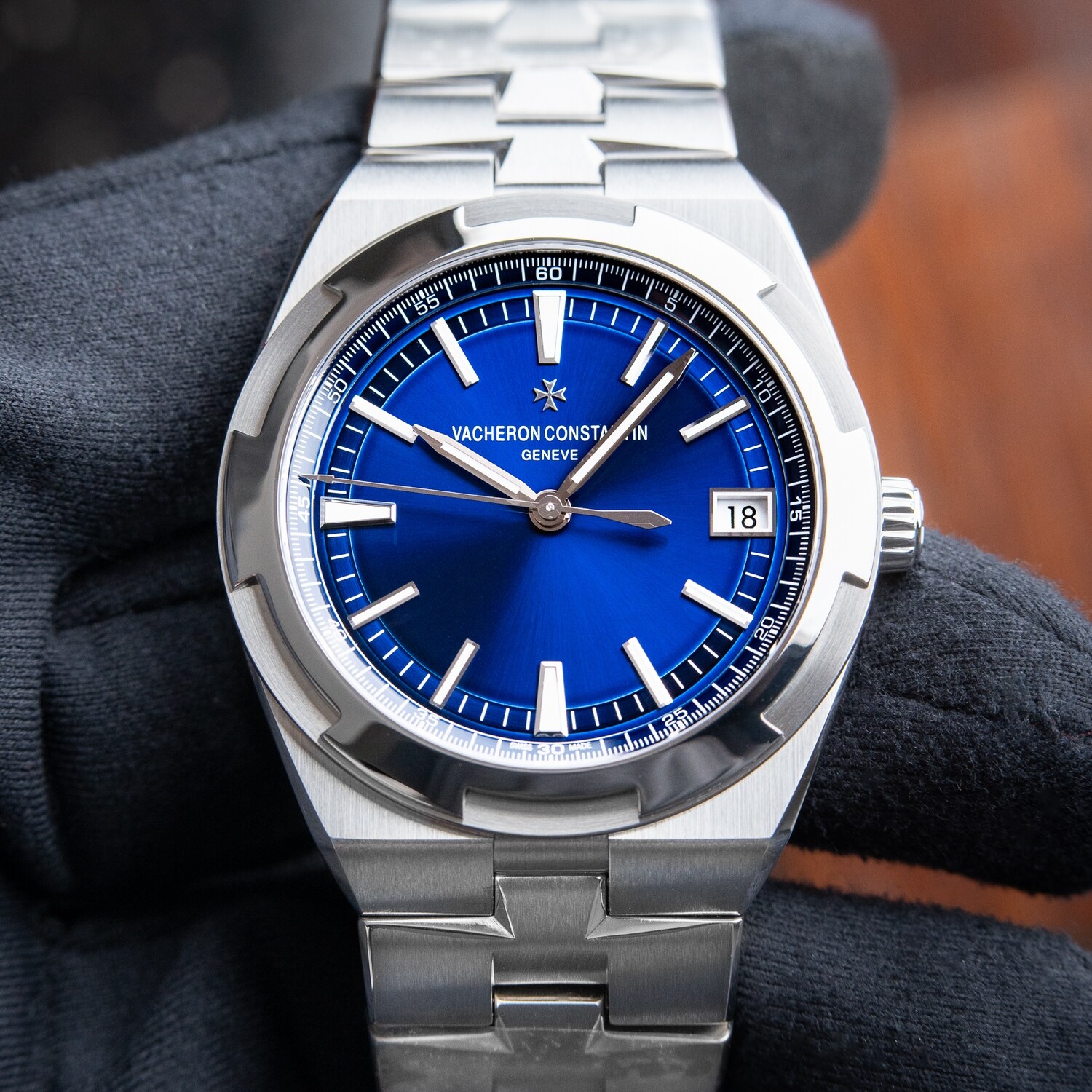
    Q: How accurate is the chronograph function on Cornes de Vache replicas?

    Top-tier super clones use Seagull ST1901 chronograph movements (based on the Venus 175 architecture). These are functional, reliable chronographs that start, stop, and reset correctly. The pulsometer scale on the dial is decorative in practice — the seconds hand sweeps accurately enough for casual timing but not for medical use.

    Q: Can I swim with a Historiques 222 super clone?

    The original 222 was water-resistant to 120m — impressive for 1977. Super clones typically achieve 30-50m resistance when properly assembled. That means rain, hand washing, and accidental splashes are fine. Actual swimming? Risky. The integrated bracelet clasp and crown sealing on replicas aren’t tested to the same pressure standards.

    Q: What’s the difference between the Historiques 222 and the Overseas?

    The 222 is the ancestor of the Overseas. The Overseas evolved from the 222 through the Phidias line in the 1990s. Key differences: the 222 has a simpler bezel without the Overseas’ notched ring, a smaller 37mm case versus the Overseas’ 41mm, and a more vintage overall character. Think of the 222 as the original recipe and the Overseas as the modern interpretation.

    Q: How does the cushion case of the American 1921 sit on the wrist?

    Uniquely. The cushion shape distributes weight differently than a round case — it sits flatter and wider, hugging the top of the wrist. The tilted dial means you naturally rotate your wrist slightly to read the time, which looks more elegant than the typical wrist flip. The case is 40mm point-to-point, but because of the cushion shape, it wears smaller than a 40mm round watch.

    Q: Are Historiques replicas harder to find than Overseas or Patrimony replicas?

    Yes, significantly. Historiques pieces require specialized tooling — the cushion case of the American 1921, the cow horn lugs of the Cornes de Vache, the integrated bracelet of the 222. Not every factory invests in these unique shapes. Expect fewer options and longer wait times compared to mainstream models like the Overseas.

    Q: What strap should I pair with a Historiques replica?

    For the American 1921 and Cornes de Vache, stick with leather — dark brown alligator-pattern is the classic choice. For the Triple Calendrier, black alligator keeps it formal. The 222 should stay on its bracelet — the whole point is the integrated design. If you want to swap straps on the leather models, look for 20mm or 22mm quick-release straps in quality leather.

    Q: Does the moonphase on the Triple Calendrier replica actually work?

    On top-tier super clones, yes. The moonphase disc rotates through a 29.5-day cycle, tracking the actual lunar phase. You’ll need to set it correctly at the start and it will maintain accuracy for about six months before drifting slightly. Cheap replicas often have a fixed or non-functional moonphase — another reason to invest in quality.

    Q: How does Vacheron Historiques compare to Patek vintage reissues?

    Patek doesn’t do direct reissues the way Vacheron does. Patek references heritage through design language but rarely recreates specific vintage references. Vacheron goes further — the American 1921 is a deliberate recreation of Ref. 11677 from 1921. This gives Historiques a documentary quality that Patek’s modern pieces, however beautiful, don’t quite match.

    Q: What’s the best first Historiques super clone to buy?

    The American 1921 if you want maximum impact and conversation-starting power. The 222 if you want an everyday wearer that goes with everything. The Cornes de Vache if you’re a chronograph lover. Skip the Triple Calendrier as a first purchase — it’s a connoisseur’s piece that’s best appreciated after you’ve worn a few high-end replicas.

    Q: Will a watchmaker service a Historiques super clone?

    Independent watchmakers familiar with Miyota and Seagull movements will service these without issue. The movements inside super clones are standard calibers with documented service procedures. Avoid brand boutiques and authorized service centers. A good independent watchmaker charges $50-100 for a basic service and $150-200 for a full movement overhaul.

    Q: How do I verify my Historiques super clone quality before buying?

    Request QC photos from five specific angles: dial macro (check text alignment and printing quality), caseback (movement decoration and engravings), crown close-up (Maltese cross detail), lug profile (correct shape and finishing), and strap/bracelet detail (stitching quality for leather, link fit for bracelet). Compare these against official Vacheron press photos. Any reputable seller will provide these before shipping.

    The Historiques collection represents something rare in watchmaking — a living archive that you can wear. Whether it’s the tilted geometry of the American 1921, the chronograph purity of the Cornes de Vache, the practical elegance of the Triple Calendrier, or the revolutionary spirit of the 222, each piece connects you to a specific moment in the world’s oldest continuously operating watch manufacture. Super clones at the $700-1000 level capture that connection with remarkable accuracy, putting 270 years of Geneva watchmaking on your wrist at a fraction of the authentic cost. Browse the full Vacheron Constantin replica collection and find the piece of history that speaks to you.

  • Vacheron Constantin Fiftysix Replica: The Entry to Holy Trinity Watchmaking at Its Most Accessible

    Vacheron Constantin Fiftysix Replica: The Entry to Holy Trinity Watchmaking at Its Most Accessible

    Vacheron Constantin Fiftysix Replica: The Entry to Holy Trinity Watchmaking at Its Most Accessible

    The Vacheron Constantin Fiftysix replica represents something genuinely unusual in haute horlogerie — a Holy Trinity watch designed for daily wear rather than formal occasions. Named after reference 6073 from 1956, the Fiftysix collection launched in 2018 as Vacheron Constantin’s answer to a simple question: what if the oldest continuously operating watchmaker made a watch for people who actually live in their watches? The result: a 40mm steel watch with a distinctive sector dial, Maltese cross-shaped lugs, and the Geneva Seal at a more accessible positioning. The Fiftysix super clone captures this accessible luxury philosophy in a package that delivers genuine Holy Trinity DNA without the formality of the Patrimony or the sport-luxury positioning of the Overseas.
    Vacheron Constantin Fiftysix replica with blue dial on leather strap
    Vacheron Constantin Fiftysix replica with blue dial on leather strap

    The Fiftysix Concept — Approachable Haute Horlogerie

    Vacheron Constantin Fiftysix replica watches fill a gap that the Patrimony and Overseas can’t — the everyday luxury watch from the world’s oldest watchmaker. The Patrimony is pure formal. The Overseas is sport-luxury with an integrated bracelet. The Fiftysix sits between them: refined enough for a nice restaurant, casual enough for Saturday morning coffee. It’s the Vacheron you don’t think about wearing; you just wear it.

    The original reference 6073 from 1956 was one of Vacheron’s first self-winding watches — a landmark in the brand’s technical history. The Fiftysix collection updates this milestone with modern in-house movements while preserving design elements that link directly to the 1956 original: the case shape, the lug design (inspired by the Maltese cross), and the sector-style dial layout that divides the dial into distinct zones for hours and minutes.

    For the super clone market, the Fiftysix occupies a valuable niche. It’s the most wearable Vacheron Constantin — the 40mm size, moderate 9.6mm thickness, and versatile aesthetic make it a genuine daily wearer. Buyers who find the Patrimony too formal, the Overseas too sporty, and the Historiques too limited in production discover that the Fiftysix provides the Holy Trinity experience for real life.

    Reference Rankings

    Reference Variant Dial Complication Clone Quality
    4600E/000A Automatic Blue/Petrol Date ★★★★★
    4600E/000A Automatic Silver Date ★★★★☆
    4000E/000A Complete Calendar Blue Day/date/moon ★★★★☆
    4400E/000A Day-Date Grey Day + Date ★★★★☆

    The Automatic in blue/petrol (4600E) is the Fiftysix’s flagship — that distinctive blue-green dial color photographs beautifully and sets the watch apart from every other blue-dialed watch on the market. The sector dial layout creates visual interest without busy complication displays. Premium super clones capture this unique dial color with impressive accuracy.

    Design DNA — 1956 Heritage

    Vacheron Constantin Fiftysix replica Maltese cross inspired lug detail
    Vacheron Constantin Fiftysix replica Maltese cross inspired lug detail

    The Fiftysix’s most distinctive design element is its lug shape — inspired by the Maltese cross, the lugs taper in a way that suggests the cross’s arms without literally reproducing them. This subtle reference to Vacheron’s heritage emblem gives the watch visual identity without the assertive bezel treatment of the Overseas. The effect is softer, more organic — the lugs flow from the case rather than projecting from it.

    The box-shaped sapphire crystal adds another heritage touch. Rather than the flat or slightly domed crystals on most modern watches, the Fiftysix uses a crystal with visible edges — a nod to 1950s watchmaking where crystals sat above the bezel rather than flush with it. This detail adds visual character and slight depth enhancement to the dial view.

    The caseback is a visual highlight. The semi-openwork oscillating weight shows the Maltese cross motif (visible from the back) and the Geneva Seal-finished movement beneath. Premium super clones replicate this caseback view with a decorated Asian movement featuring the Maltese cross rotor design — one of the more visually compelling casebacks in the super clone market.

    Movement and Complications

    The Fiftysix Automatic runs on the caliber 1326, a 26-jewel automatic with 48-hour power reserve and 28,800 vph beat rate. It features the Geneva Seal, hacking seconds, and date display. The movement is fully in-house with Vacheron Constantin’s characteristic finishing: Côtes de Genève, polished beveling, and the Maltese cross rotor.

    The Complete Calendar variant uses the caliber 2460 QCL/1 — adding day, date, month, and moon phase to the base movement. This complication creates the most visually dynamic Fiftysix dial with retrograde displays and a moon phase aperture. Super clone quality on the Complete Calendar is good but the simpler Automatic offers more consistent quality and fewer complication-related issues.

    Super clone caliber 1326 replications achieve 38-42 hour power reserve with ±12-15 seconds daily accuracy — reliable daily performer specifications. The movement finishing through the caseback is the quality differentiator: premium factories show clean Côtes de Genève and a well-engraved Maltese cross rotor; budget versions show irregular striping and misaligned rotor text.

    Sector Dial and Color Options

    The Fiftysix’s sector dial divides the dial face into distinct zones — a minute track around the perimeter separated from the inner hour display by a contrasting ring. This Art Deco-inspired layout was common in the 1930s-1950s and gives the Fiftysix more visual complexity than a standard clean dial without adding complications. The sector lines catch light differently from the main dial surface, creating subtle shimmer effects as the wrist moves.

    The petrol blue dial is the Fiftysix’s signature color — a unique blue-green that shifts between teal, navy, and petrol grey depending on lighting. It’s unlike any other luxury watch dial color and gives the Fiftysix instant identity. Silver provides the conservative option. Grey is modern and understated. Each color uses a fumé (graduated) finish that darkens toward the edges, adding three-dimensional depth.

    Tip: The petrol blue is the dial to choose. No other luxury watch super clone offers this specific color — it’s uniquely Fiftysix and provides immediate visual distinction from every blue-dial watch in the market. The fumé gradient adds depth that flat-colored dials can’t match.

    40mm Sweet Spot

    The Fiftysix comes exclusively in 40mm — and that’s a deliberate choice. At 40mm × 9.6mm, it sits in the exact proportional sweet spot where a watch works for virtually every wrist size above 6.25 inches and every wearing occasion from casual to business formal. The box crystal adds approximately 1mm to the visual height, giving the dial a slightly elevated appearance that enhances the sector layout’s three-dimensional quality.

    The 40mm case with Maltese cross-inspired lugs creates a lug-to-lug of approximately 47mm — compact enough for smaller wrists while displaying the dial design at full effect. On a 6.5-inch wrist, the Fiftysix looks perfectly proportioned. On a 7.5-inch wrist, it looks refined without appearing small. This universality is part of the collection’s design brief — one size that works for everyone.

    Fiftysix vs Other Entry Luxury

    Aspect VC Fiftysix Omega Aqua Terra JLC Master Control
    Brand Tier Holy Trinity Luxury Haute horlogerie
    Size 40mm 38-41mm 37-40mm
    Thickness 9.6mm ~13mm ~9mm
    Movement In-house, Geneva Seal Co-Axial, METAS In-house, JLC
    Dial Character Sector, vintage-modern Teak, horizontal Clean, classical
    Daily Wear Excellent Excellent Excellent
    Super Clone Quality Very Good Excellent Good

    The Fiftysix positions above the Aqua Terra in brand heritage and finishing level, while offering a more distinctive dial design than the JLC Master Control. It’s the watch for buyers who want Holy Trinity credentials without the formality of traditional Vacheron or the price-driven demand of Patek/AP steel sport models.

    Quality Assessment

    1. Sector dial lines — The dividing lines between dial zones must be crisp and consistent in width. Budget copies show irregular or blurred sector divisions.
    2. Lug shape — Maltese cross-inspired tapering must be smooth and symmetrical on all four lugs. Any asymmetry is immediately visible.
    3. Box crystal — The crystal should have visible edges rising above the bezel — not flush like modern flat crystals. This vintage element defines the Fiftysix profile.
    4. Dial color — Petrol blue must be the correct blue-green tone with fumé graduation. Compare against genuine reference photos — the color is unique and specific.
    5. Caseback — Maltese cross rotor design clearly visible. Movement finishing should show consistent Côtes de Genève. Engravings crisp and properly positioned.
    6. Case thickness — 9.6mm or close. Over 10.5mm indicates incorrect movement height.

    Frequently Asked Questions

    Vacheron Constantin Fiftysix Replica — 15 Expert Answers

    Q: What makes the Fiftysix different from the Patrimony? The Fiftysix is more casual, has a sector dial (vs clean baton), Maltese cross lugs (vs straight), and box crystal (vs flat/domed). The Patrimony is pure dress. The Fiftysix works daily from casual to business formal.
    Q: Is the Fiftysix a good first Vacheron super clone? The best. It’s the most wearable, most versatile, and has a unique dial design that sets it apart from everything else in the super clone market. The petrol blue is genuinely one-of-a-kind.
    Q: What’s the sector dial? A dial design dividing the face into distinct zones — minute track around the perimeter, separate inner hour display, connected by contrasting rings. Originally from 1930s-1950s watchmaking. Adds visual complexity without complications.
    Q: Can I swim with the Fiftysix? The genuine is rated at 30m — splash-proof only. Keep it dry. For water activities, choose the Overseas with 150m resistance.
    Q: Is the Complete Calendar worth it? For the dial aesthetics with moon phase, yes. The calendar mechanism may require more manual adjustment on the super clone than genuine. The simpler Automatic offers better mechanical reliability.
    Q: What strap works best? Dark leather for formal. Lighter brown for casual. The Fiftysix doesn’t work on rubber or NATO — its design language demands leather. Aftermarket calf or alligator significantly improves the wearing experience.
    Q: How accurate are Fiftysix super clones? ±12-15 seconds daily. The simple automatic movement is reliable and serviceable. Regulatable to ±5-8 seconds by a watchmaker.
    Q: What’s the box crystal? A crystal with visible edges that sits above the bezel rather than flush — vintage-inspired detail from 1950s watchmaking. It adds character and slightly magnifies the sector dial’s detail.
    Q: How does the Fiftysix compare to Omega Aqua Terra? The Fiftysix has higher brand heritage (Holy Trinity vs luxury tier), more distinctive dial design, and thinner profile. The Aqua Terra has better water resistance and more sport capability. Different tiers, different purposes.
    Q: Is the petrol blue hard to replicate? It’s a specific color that premium factories match well — the blue-green shift is captured accurately in current super clone production. Budget versions may produce a flat blue that lacks the genuine’s teal complexity.
    Q: What wrist size suits the Fiftysix? 6.25 inches and above. The 40mm × 9.6mm case with compact 47mm lug-to-lug works on most adult wrists. It’s one of the most universally fitting luxury watch super clones available.
    Q: Can I wear the Fiftysix with a suit? Yes — the 9.6mm thin profile fits under dress shirt cuffs comfortably. On dark leather, it serves as a perfectly appropriate dress watch. It’s less formally pure than the Patrimony but more versatile across dress codes.
    Q: How long does a Fiftysix super clone last? 5-8 years with standard maintenance. The simple automatic movement is durable and serviceable. Steel case shows minimal wear over time.
    Q: Why is the Fiftysix named after a number? It references the year 1956 and the original reference 6073 — one of Vacheron Constantin’s first self-winding watches. The collection celebrates this milestone in the brand’s technical history.
    Q: Is the Fiftysix underrated? Yes. It’s overshadowed by the Overseas and Patrimony but offers arguably the best daily-wearing experience in the entire Vacheron Constantin catalog — and by extension, the best daily-wearing Holy Trinity watch available as a super clone.

    Final Word on Vacheron Constantin Fiftysix Replicas

    The Vacheron Constantin Fiftysix replica is the Holy Trinity’s daily driver — designed for the person who wants the world’s oldest watchmaker on their wrist without the formality restrictions of traditional haute horlogerie. The sector dial adds visual personality, the petrol blue dial provides one-of-a-kind color identity, and the 40mm × 9.6mm case works everywhere. For buyers who want Vacheron Constantin DNA that actually gets worn rather than admired from a watch box, the Fiftysix super clone is the answer. Browse the full Vacheron Constantin replica collection to compare with the Overseas and Patrimony.

  • Vacheron Constantin Patrimony Replica: Pure Dress Watch Perfection from the Oldest Watchmaker

    Vacheron Constantin Patrimony Replica: Pure Dress Watch Perfection from the Oldest Watchmaker

    Vacheron Constantin Patrimony Replica: Pure Dress Watch Perfection from the Oldest Watchmaker

    The Vacheron Constantin Patrimony replica represents dress watchmaking at its absolute zenith. Where other brands add complications and design elements to justify their pricing, the Patrimony removes everything unnecessary until only perfection remains. A round case. A clean dial. Slim baton indices. Dauphine hands. No date window. No chronograph subdials. Just time, expressed through 270 years of accumulated mastery in proportions, finishing, and mechanical refinement. The Patrimony super clone challenges replica manufacturers precisely because there’s nothing to hide behind — every surface, every line, every proportion is exposed and must be perfect. This guide covers the ultra-thin variants, the caliber 1400 manual movement, the 36mm to 40mm size range, and why the Vacheron Constantin Patrimony replica is the ultimate test of super clone quality in 2026.
    Vacheron Constantin Patrimony replica with white dial on leather strap
    Vacheron Constantin Patrimony replica with white dial on leather strap

    The Patrimony Essence — When Less Becomes Supreme

    Vacheron Constantin Patrimony replica watches exist at the philosophical extreme of dress watchmaking. The collection’s design brief can be summarized in five words: remove everything that isn’t essential. No rotating bezels, no chronograph pushers, no exhibition features competing for attention. The Patrimony presents time — hours, minutes, sometimes seconds — with such refined proportions and finishing that the simplicity itself becomes the statement.

    This philosophy traces to Vacheron Constantin’s founding principles from 1755 — the year the company was established in Geneva by Jean-Marc Vacheron. For 270 years, the company has refined what it means to make a watch well. The Patrimony collection concentrates those 270 years of accumulated knowledge into the purest possible expression. Every chamfer, every edge transition, every surface finish reflects accumulated mastery that newer manufacturers haven’t had time to develop.

    For the super clone buyer, the Patrimony’s minimalism is both its appeal and its challenge. There are no mechanical fireworks to distract from imperfect finishing. No busy dials to mask misaligned printing. No chunky cases to hide questionable thickness tolerances. The Patrimony super clone either gets the proportions, the finishing, and the thinness right — or it fails visibly. This makes quality selection critically important but also means that when you find a well-made example, the wearing experience genuinely approaches the aesthetic quality of the genuine.

    Reference Rankings

    Reference Variant Size Thickness Clone Quality
    85180/000G Contemporaine 40mm 8.1mm ★★★★★
    81180/000R Contemporaine 40mm 8.1mm ★★★★★
    1110U/000G Ultra-Thin 36.5mm 6.8mm ★★★★☆
    43075/000R Retrograde Day-Date 42.5mm 9.7mm ★★★★☆
    85180/000R Contemporaine (rose gold) 40mm 8.1mm ★★★★☆

    The 85180 Contemporaine in white gold (white dial with grey-blue hands) is the Patrimony at its most recognizable — the reference that appears in most Vacheron Constantin dress watch photography. At 40mm × 8.1mm, it hits the exact proportions that define modern classical dress watchmaking. Super clone quality on this reference is consistently excellent because the design’s longevity means factories have years of production refinement behind them.

    Tip: The Patrimony Contemporaine 85180 in white gold is one of the finest dress watch super clones available from any brand. If you attend formal events, business meetings, or simply appreciate pure horological elegance, this watch competes with — and in many ways equals — watches costing 50x more in genuine form.

    Ultra-Thin Engineering

    Vacheron Constantin Patrimony replica ultra-thin side profile view
    Vacheron Constantin Patrimony replica ultra-thin side profile view

    The Patrimony Ultra-Thin (1110U series) pushes case thickness to an extreme 6.8mm — thinner than many coins stacked. Achieving this requires a movement just 2.1mm tall (the caliber 1400, one of the thinnest manual-wind movements in production). At this thickness, the watch essentially becomes a second skin — you feel the strap, not the case.

    The ultra-thin construction creates engineering constraints that affect every dimension. The case must be structurally rigid at 6.8mm despite housing a movement, crystal, and caseback. The crystal must be thin enough to contribute to the slim profile but thick enough to resist impacts. The movement must function reliably despite having mainspring, gear train, and escapement compressed into just 2.1mm of vertical space.

    Super clone Ultra-Thin Patrimonys face the greatest manufacturing challenge in the dress watch category. Achieving true 6.8mm thickness requires a movement that matches the genuine caliber 1400’s ultra-slim architecture. Premium super clones reach 7.5-8.5mm — impressively thin but not quite matching the genuine’s extreme. If your “Ultra-Thin” super clone exceeds 9mm, it’s using a standard-thickness movement that compromises the collection’s defining characteristic. The Contemporaine at 8.1mm is actually easier to replicate accurately and provides a more reliable ownership experience.

    Caliber 1400 and 2450 Movements

    The Patrimony uses two primary movement families. The caliber 1400 is a manual-wind movement at just 2.1mm thick — used in the Ultra-Thin models. It’s a marvel of thin movement engineering: 20 jewels, 28,800 vph, 40-hour power reserve, all in a vertical space barely thicker than a heavy credit card. Manual winding is necessary because there’s physically no room for an automatic rotor at this thickness.

    The caliber 2450 (used in the Contemporaine models) is an automatic movement at 3.6mm thick — still remarkably slim for an automatic. It provides 40-hour power reserve with the convenience of automatic winding. The bidirectional 22k gold rotor charges the mainspring efficiently, and the movement features the Geneva Seal and full Vacheron Constantin finishing.

    Caliber Type Height Power Reserve Clone Match
    1400 Manual wind 2.1mm 40 hours ★★★☆☆ (height difficult)
    2450 Automatic 3.6mm 40 hours ★★★★☆
    2460 QCL Automatic, retrograde 5.2mm 40 hours ★★★★☆

    Dial Perfection — Less Is Everything

    The Patrimony dial is a study in negative space. On the Contemporaine, the dial presents: a flat silver or white surface with fine graining, slim applied baton indices at each hour position, and dauphine hands in white gold or rose gold. No date window, no seconds subdial (on most references), no brand text beyond “Vacheron Constantin” and “Genève.” The design vocabulary is so reduced that each remaining element must be executed perfectly — there’s nothing to distract from imperfection.

    Applied indices must sit perfectly perpendicular to the dial surface — any tilt is immediately visible on the clean background. The dauphine hands must be polished to mirror finish with crisp edges — any roughness catches light incorrectly. The dial texture must be uniformly grained with consistent light diffusion. And the printing must be crisp, centered, and properly scaled to the dial diameter.

    Colors in the Patrimony range include silver/white (classic), slate grey (modern), deep blue (contemporary), and rose gold-toned dials. The silver/white is the most traditional and most forgiving of minor finishing variations. The blue requires lacquer application skill similar to the Overseas blue. For super clone purchases, the silver/white Contemporaine provides the highest probability of excellent dial quality.

    36mm to 40mm — Classical Proportions

    Model Diameter Thickness Min Wrist Character
    Ultra-Thin 36.5mm 6.8mm 5.75″ Vintage elegance, extreme thin
    Contemporaine 38 38mm 7.5mm 6.0″ Classical, balanced
    Contemporaine 40 40mm 8.1mm 6.25″ Modern classic, versatile
    Retrograde Day-Date 42.5mm 9.7mm 6.75″ Complicated, substantial

    The 40mm Contemporaine is the modern standard for Patrimony — large enough to be distinctly contemporary but proportioned with classical refinement. The 36.5mm Ultra-Thin is genuinely vintage in proportions — it looks like a watch from the 1960s, which is precisely its appeal for traditionalists.

    Patrimony vs Calatrava vs Saxonia

    Aspect VC Patrimony PP Calatrava Lange Saxonia
    Brand Founded 1755 1839 1845
    Design Philosophy Absolute minimalism Classical Genevan German precision
    Typical Size 36-40mm 37-39mm 35-40mm
    Thinnest Model 6.8mm ~8mm ~7.5mm
    Dial Character Pure negative space Elegant, detailed Clean, silver grain
    Movement Tradition Geneva Seal PP Seal German hand-finishing
    Recognition Connoisseurs High luxury Watch enthusiasts
    Super Clone Quality Very Good Excellent Good

    The Patrimony is the most minimalist of the three — less dial detail than the Calatrava, less movement visual drama than the Saxonia (which shows its balance wheel through the dial on some references). It appeals to the buyer who believes that the absence of decoration is the highest form of design. If that philosophy resonates, the Patrimony is your watch.

    Quality Assessment

    1. Case thickness — Must match specification: 8.1mm for Contemporaine, under 7.5mm for Ultra-Thin. Over-thick cases indicate wrong movement.
    2. Index alignment — All 12 baton indices must be perfectly radial (pointing exactly to center). Any misalignment is fatal on a minimalist dial.
    3. Hand finishing — Dauphine hands must be mirror-polished with crisp edges. Under a loupe, no rough spots or uneven edges should be visible.
    4. Dial surface — Uniform graining across the entire surface. No patches, spots, or variations in texture density.
    5. Case finishing — Polished case should be mirror-finished without distortion. The Patrimony’s simple round case reveals any polishing imperfection immediately.
    6. Crystal profile — Slightly domed sapphire. The dome should be subtle — not flat, not dramatically curved. The correct dome adds elegance without distorting the dial view.
    7. Caseback — Exhibition sapphire with decorated movement visible. Vacheron Constantin engravings should be crisp and properly positioned.
    8. Strap — The Patrimony demands finest-quality leather — alligator or calfskin. Factory-supplied straps should be genuine leather with correct buckle.

    Frequently Asked Questions

    Vacheron Constantin Patrimony Replica — 15 Expert Answers

    Q: What makes the Patrimony different from other dress watches?
    The Patrimony is more minimal than almost any competitor. Where the Calatrava has detailed dials and the Datejust has date function and bracelet, the Patrimony strips to absolute essentials — baton indices, dauphine hands, time display. The restraint itself is the design statement.
    Q: Is the Ultra-Thin at 6.8mm achievable in a super clone?
    Premium super clones reach 7.5-8.5mm — impressive but not matching the genuine’s extreme 6.8mm. The Contemporaine at 8.1mm is more consistently replicated at correct thickness. If ultra-thin is your priority, measure before buying.
    Q: Which Patrimony is best for a first purchase?
    The Contemporaine 85180 (40mm, silver dial). It’s the most recognizable, most accurately replicated, and most versatile Patrimony. The 40mm size works for most wrists and the silver dial forgives minor finishing variations.
    Q: Can I wear the Patrimony casually?
    The Patrimony is primarily a dress watch. It can work smart-casual on a lighter leather strap, but it’s designed for suits, blazers, and formal occasions. For casual wear, the Overseas is the correct Vacheron choice.
    Q: How accurate are Patrimony super clones?
    ±10-15 seconds daily on premium examples. The simple time-only movement is inherently more accurate than complicated calibers. Regulatable to ±5-8 seconds by a watchmaker.
    Q: Is rose gold or white gold better?
    White gold (silver-toned) is more versatile and subtle. Rose gold makes a warmer, more visible luxury statement. Both are PVD-coated on super clones — white gold coating lasts longer as any wear shows silver steel (similar color) rather than contrasting base metal.
    Q: What strap works best with the Patrimony?
    Dark alligator — brown for warmth, black for formality. The Patrimony demands the finest strap quality you can afford. A $40-60 aftermarket alligator strap transforms the super clone’s presence dramatically.
    Q: How does the Patrimony compare to the Overseas?
    Completely different purposes. The Patrimony is pure dress — thin, minimal, formal. The Overseas is sport-luxury — robust, versatile, multi-strap. Together they cover every occasion; individually they serve opposite needs.
    Q: Can I swim with a Patrimony replica?
    No. The genuine is rated at 30m — splash-proof only. The ultra-thin case provides minimal sealing. Keep the Patrimony strictly dry. It’s a dress watch; treat it as one.
    Q: Is the manual-wind Ultra-Thin inconvenient?
    Manual winding takes 20-30 seconds daily — a morning ritual rather than an inconvenience. Many collectors prefer it because the winding feel provides tactile engagement with the movement. The 40-hour reserve means one missed winding day is fine.
    Q: What’s the Retrograde Day-Date?
    A complication where the day and date displays use retrograde (sweeping arc) indicators instead of traditional windows. Visually distinctive and mechanically interesting but harder to replicate accurately in super clone form than the simpler Contemporaine.
    Q: How long does a Patrimony super clone last?
    6-10 years. The simple movement architecture is extremely durable and serviceable. The thin case shows minimal wear. The biggest lifespan factor is strap quality — replace leather as needed.
    Q: Is 40mm too big for a dress watch?
    Modern dress watch standards accept 38-40mm. The Patrimony’s thin profile (8.1mm) means the 40mm reads as elegant rather than oversized. For strict traditionalists, the 36.5mm or 38mm is more classically proportioned.
    Q: Who wears the Patrimony?
    People who appreciate design through subtraction — fewer features, fewer distractions, more refinement. The Patrimony doesn’t announce wealth; it communicates taste. It’s the choice of buyers who know exactly what they want and don’t need external validation.
    Q: Should I choose Patrimony or Patek Calatrava?
    Both are supreme dress watches. The Calatrava has more dial variety and higher brand recognition. The Patrimony has purer minimalism and older brand heritage. The choice is genuinely personal — neither is objectively superior.

    Final Word on Vacheron Constantin Patrimony Replicas

    The Vacheron Constantin Patrimony replica is the dress watch for the buyer who has moved beyond needing a watch to impress others. At its best, the Patrimony super clone communicates something that flashier watches cannot: the confidence to wear simplicity when simplicity is the hardest thing to get right. Every index, every hand, every surface finish must be perfect because nothing else draws the eye. Get it right, and you own a watch that whispers louder than anything that shouts.

    Browse the full Vacheron Constantin replica collection including the versatile Overseas to find the Vacheron that matches your style.

  • Vacheron Constantin Overseas Replica: The Holy Trinity’s Adventure Watch Nobody Expected

    Vacheron Constantin Overseas Replica: The Holy Trinity’s Adventure Watch Nobody Expected

    Vacheron Constantin Overseas Replica: The Holy Trinity’s Adventure Watch Nobody Expected

    The Vacheron Constantin Overseas replica might be the most misunderstood watch in the luxury sport category. While the Royal Oak and Nautilus dominate conversations about luxury steel sports watches, the Overseas quietly delivers what many collectors argue is the better-designed watch — with an interchangeable strap system that neither competitor offers, a Maltese cross bezel that provides genuine visual identity, and finishing that reflects Vacheron Constantin’s position as the oldest continuously operating watch manufacturer (founded 1755). This guide covers the Overseas super clone in detail: the 41mm vs 42.5mm variants, the caliber 5100 movement, the three-strap system, the dial variations, and why the Vacheron Constantin Overseas replica deserves serious consideration alongside its more famous Holy Trinity siblings.
    Vacheron Constantin Overseas replica with blue dial on steel bracelet
    Vacheron Constantin Overseas replica with blue dial on steel bracelet

    The Overseas Position in the Holy Trinity

    Vacheron Constantin Overseas replica watches enter one of watchmaking’s most exclusive conversations. The “Holy Trinity” — Patek Philippe, Audemars Piguet, and Vacheron Constantin — represents the absolute pinnacle of Swiss watchmaking. Each member’s luxury sport watch (Nautilus, Royal Oak, Overseas) competes for the same collector, but the Overseas approaches the competition from a different angle.

    Where the Royal Oak defined the category in 1972 with Gerald Genta’s octagonal bezel, and the Nautilus created its own identity with the porthole case, the Overseas draws from Vacheron Constantin’s Maltese cross emblem. The six-pointed bezel shape reflects the cross that has been the company’s logo since 1880, giving the Overseas a visual identity that’s uniquely Vacheron while avoiding derivative comparisons to Genta’s designs.

    The Overseas was introduced in 1996 (as the successor to the 222), making it the youngest of the three luxury sport watches. This later arrival meant Vacheron Constantin could learn from the Royal Oak and Nautilus, resulting in design decisions that address specific criticisms of both: the integrated bracelet is more comfortable, the case transitions from brushed to polished more smoothly, and the interchangeable strap system adds practical versatility that neither competitor offers.

    Reference Guide and Rankings

    Reference Variant Size Dial Clone Quality
    4500V/110A Automatic 41mm Blue ★★★★★
    4500V/110A Automatic 41mm Silver ★★★★★
    4500V/110A Automatic 41mm Green ★★★★☆
    5500V/110A Chronograph 42.5mm Blue ★★★★☆
    4300V/120G Ultra-Thin 40mm Blue ★★★★☆
    7900V/110A World Time 43.5mm Blue ★★★☆☆

    The 4500V Automatic in blue dominates the Overseas super clone market — it’s the signature reference, the one photographed in every Vacheron Constantin advertisement, and the one that factories have perfected over multiple production cycles. The blue lacquered dial with the Maltese cross pattern embedded in the sunburst finishing creates a visual depth that’s genuinely stunning, and premium super clones capture this finish with impressive accuracy.

    Tip: Start with the 4500V in blue. It’s the most iconic, most accurately replicated, and most visually impressive Overseas reference. The blue dial’s lacquered finish photographs beautifully and creates real-world impact that photographs can’t fully capture.

    The Maltese Cross Bezel

    Vacheron Constantin Overseas replica Maltese cross bezel closeup
    Vacheron Constantin Overseas replica Maltese cross bezel closeup

    The Overseas bezel is defined by six half-Maltese cross shapes that form the bezel’s outer edge, creating a distinctive profile that’s immediately recognizable. This isn’t a decorative afterthought — it’s the integration of Vacheron Constantin’s 270-year-old logo into the watch’s physical structure. Each of the six cross elements is precisely machined, with polished surfaces that contrast against the satin-finished bezel flat.

    On genuine Overseas watches, the Maltese cross elements are machined from the same steel piece as the bezel — not applied or soldered. This integrated construction means the cross shapes have identical material properties and finishing characteristics as the bezel body. Premium super clones replicate this integrated construction, with each cross element showing consistent polish depth and sharp edge definition.

    The quality checkpoint for the bezel is edge sharpness. Each Maltese cross point should be precisely defined — not rounded, not rough, but cleanly machined with a distinct boundary between the polished cross surface and the satin bezel flat. On budget copies, the cross shapes are softer, less defined, and sometimes asymmetric. Under 3x magnification, the genuine and premium super clones show identical sharpness; budget copies show noticeable rounding or irregular geometry.

    Three-Strap Interchangeable System

    The Overseas’s killer feature — the one that sets it apart from the Royal Oak and Nautilus — is the interchangeable strap system. The genuine comes with three straps: a steel bracelet, a leather strap, and a rubber strap. Each attaches via a quick-release mechanism that requires no tools — press a small button, slide the strap out, slide the replacement in. Total swap time: under 30 seconds.

    This system transforms the Overseas from one watch into three distinct wearing experiences. Steel bracelet for professional settings and daily wear. Rubber for sports, travel, and casual weekends. Leather for dress occasions and evening events. No other luxury sport watch in the Holy Trinity offers this level of practical versatility.

    Super clone Overseas watches replicate this system with varying success. Premium examples feature a functional quick-release mechanism with all three strap types included. The mechanism should click positively when seating a strap and release cleanly when the button is pressed. Budget copies may include the straps but with a less refined attachment mechanism — the strap seats but doesn’t click securely, or the button requires excessive force. The steel bracelet quality is the most telling: the links should articulate smoothly, the polished center links should contrast with brushed outer links, and the clasp should fold and lock with precise action.

    Caliber 5100 Movement

    The Overseas Automatic runs on the caliber 5100 — a 27-jewel automatic with 60-hour power reserve, 28,800 vph beat rate, and the Geneva Seal (Poinçon de Genève). The Geneva Seal certifies that the movement meets strict finishing and assembly standards governed by the Canton of Geneva — only watches manufactured within Geneva can receive this seal. It’s a mark of legitimacy that no other certification matches.

    Super clone caliber 5100 replications use modified Asian automatic movements decorated to match the genuine’s visible architecture through the exhibition caseback. The decoration includes Côtes de Genève striping on the bridges, a Vacheron Constantin-branded rotor with 22k gold segment, and polished screw heads. Premium examples achieve 42-48 hour power reserve with ±12-15 seconds daily accuracy.

    The Geneva Seal engraving on the movement is present on super clones but obviously represents decorative marking rather than actual Geneva certification. For caseback viewing, the movement should appear well-finished with consistent stripe patterns, clean screw head polishing, and a properly engraved rotor. Budget copies show irregular striping, misaligned engravings, and visible tool marks on the rotor edge.

    Dial Variations and Finishing

    The Overseas dial features a hidden detail that most people miss: the Maltese cross pattern is embedded within the sunburst finishing itself. Under certain lighting angles, you can see a subtle cross pattern radiating from the center of the dial — created by varying the sunburst brushing direction in cross-shaped sectors. This isn’t printed or applied; it’s achieved through the mechanical brushing process itself.

    Vacheron Constantin Overseas replica with green dial on wrist
    Vacheron Constantin Overseas replica with green dial on wrist

    The blue dial is the signature — a deep lacquered blue that appears almost black in low light, shifting to vivid blue in sunlight. The silver dial offers a more conservative option with the same embedded cross pattern visible as subtle tonal shifts. The green dial (newer addition) captures the current color trend while maintaining Vacheron’s refined restraint — it’s a deep, dark green, not the bright green of Rolex or Audemars Piguet.

    Super clone dial quality on the Overseas is a strong indicator of overall build quality. The lacquered blue must have genuine depth — not flat paint but a multi-layer lacquer application that creates a three-dimensional color effect. The embedded cross pattern should be visible (faintly) under directional lighting. Premium factories achieve this; budget ones produce flat-colored dials that lack the genuine’s optical complexity.

    Size Guide: 41mm and 42.5mm

    Model Diameter Thickness Lug-to-Lug Min Wrist Best For
    Automatic (4500V) 41mm 11.0mm ~48mm 6.5″ Daily versatile
    Chronograph (5500V) 42.5mm 13.7mm ~50mm 6.75″ Sporty luxury
    Ultra-Thin (4300V) 40mm 7.6mm ~47mm 6.25″ Dress occasions
    World Time (7900V) 43.5mm 12.8mm ~51mm 7.0″ Travel / collection

    The 41mm Automatic is the perfect size for the Overseas design — large enough to display the Maltese cross bezel and dial pattern, thin enough at 11mm to work as a dress-sport hybrid. The integrated bracelet means lug-to-lug is relatively short for the diameter, making it comfortable on wrists from 6.5 inches.

    Overseas vs Royal Oak vs Nautilus

    Aspect VC Overseas AP Royal Oak PP Nautilus
    Brand Founded 1755 1875 1839
    Model Introduced 1996 1972 1976
    Bezel Shape Maltese cross Octagonal Porthole
    Size 41mm 41mm 40mm
    Thickness 11.0mm 10.4mm 8.3mm
    Interchangeable Straps Yes (3 included) No No
    Water Resistance 150m 50m 120m
    Recognition Connoisseurs Very high Very high
    Super Clone Quality Very good Excellent Excellent

    The Overseas wins on practical features: highest water resistance, only model with interchangeable straps, and arguably the most refined bracelet comfort. The Royal Oak wins on recognition and design iconography. The Nautilus wins on thinness and understated elegance. For the super clone buyer, the Overseas offers a distinctive advantage: fewer people own the genuine, meaning fewer opportunities for direct comparison. Your Overseas super clone at a dinner table is far less likely to encounter a genuine Overseas across the table than a Royal Oak or Nautilus would.

    Verdict: The Overseas is the connoisseur’s choice among the Holy Trinity sport watches. If you want what the person who knows watches would choose — rather than what everyone recognizes — the Overseas delivers that informed taste with genuinely superior daily versatility through the three-strap system.

    Quality Assessment Guide

    1. Maltese cross bezel — Each of the six cross points must be sharp, symmetrical, and polished to contrast with the satin bezel surface.
    2. Dial finish — Blue lacquer should show depth, not flat color. The embedded cross pattern should be faintly visible under directional light.
    3. Bracelet links — Center links polished, outer links brushed. Each link should articulate independently with no binding or gaps.
    4. Strap change mechanism — Quick-release buttons should be responsive. Straps should click securely when seated and release cleanly when pressed.
    5. Case finishing transitions — The Overseas case transitions from brushed flanks to polished bevels. This transition should be sharp and defined, not blended.
    6. Crown — The Overseas crown features a Maltese cross engraving that should be crisp and centered.
    7. Caseback — Exhibition sapphire with movement visible. The rotor should show Vacheron Constantin branding and 22k gold weight segment.
    8. Date window — Perfectly aligned at 3 o’clock with centered numerals across all 31 dates.

    Related Articles You Should Read

    Frequently Asked Questions

    Vacheron Constantin Overseas Replica — 15 Expert Answers

    Q: What makes the Overseas different from the Royal Oak?
    The Overseas has a Maltese cross bezel (vs octagonal), interchangeable three-strap system (vs fixed bracelet), higher water resistance (150m vs 50m), and comes from the oldest of the Holy Trinity houses (founded 1755). It’s less recognized publicly but more respected among serious collectors.
    Q: Does the three-strap system work on super clones?
    Premium super clones include all three straps (steel, rubber, leather) with a functional quick-release mechanism. The system should allow tool-free strap changes in under 30 seconds. Budget copies may have the straps but with less refined attachment mechanisms.
    Q: Which Overseas dial color is best?
    Blue — it’s the signature, the most photographed, and the most accurately replicated. The deep lacquered blue creates visual depth that other colors don’t match. Silver is the most conservative. Green is the most contemporary.
    Q: Is the Overseas a dress watch or sport watch?
    Both — and that’s its strength. On the steel bracelet, it’s a luxury sport watch. On leather, it’s a refined dress piece. On rubber, it’s a casual weekend companion. The three-strap system makes it the most versatile Holy Trinity watch.
    Q: Can I swim with an Overseas replica?
    The genuine is rated at 150m — serious water resistance for a luxury sport watch. Premium super clones handle casual swimming, but the quick-release strap mechanism is a potential water entry point. Get a pressure test from a watchmaker for peace of mind.
    Q: How accurate is the caliber 5100 super clone?
    Premium examples achieve ±12-15 seconds daily with 42-48 hour power reserve (vs genuine 60h). Regulatable to ±5-8 seconds by a watchmaker. The movement is well-decorated through the exhibition caseback.
    Q: What’s the Maltese cross and why does it matter?
    The Maltese cross has been Vacheron Constantin’s logo since 1880. On the Overseas, it shapes the bezel, appears on the crown, and is subtly embedded in the dial sunburst pattern. It gives the Overseas a visual identity tied to 270 years of watchmaking heritage.
    Q: How does the Overseas compare to the Nautilus?
    The Nautilus is thinner (8.3mm vs 11mm), more recognized, and more expensive in genuine form. The Overseas has better water resistance, interchangeable straps, and stronger brand heritage (Vacheron predates Patek by 84 years). The Nautilus is the more prestigious; the Overseas is the more practical.
    Q: Is the bracelet comfortable?
    The Overseas bracelet is widely regarded as one of the most comfortable integrated bracelets in watchmaking. The links articulate individually, the clasp folds flat, and the tapered width follows the wrist’s contour naturally. Premium super clones replicate this comfort level well.
    Q: What wrist size suits the 41mm Overseas?
    6.5 inches and above. The integrated bracelet’s relatively short lug-to-lug (~48mm) makes the 41mm case manageable for smaller wrists than a standard 41mm watch with regular lugs.
    Q: Is the Overseas Chronograph worth it?
    The Chronograph adds sporting utility at 42.5mm but increases thickness to 13.7mm. If you want chronograph function, it’s well-executed. If you want maximum versatility and comfort, the 41mm Automatic at 11mm thin is the better daily wearer.
    Q: How does the Overseas hold up in the super clone market?
    The Overseas super clone market is smaller but growing. Premium factories produce accurate examples — the bezel execution, dial finishing, and bracelet quality have improved substantially. Less saturated than Royal Oak or Nautilus, which means fewer generic copies diluting the market.
    Q: Can I wear the Overseas with a suit?
    At 11mm thin on leather strap, yes — the Overseas works beautifully with suits. Switch to the leather strap for formal settings; use the bracelet for daily business casual. The strap system makes it suit-appropriate in a way the Royal Oak on bracelet can’t match.
    Q: What’s the Ultra-Thin Overseas?
    The 4300V at 40mm × 7.6mm — one of the thinnest luxury sport watches available. Extremely elegant on wrist but less sporty than the standard Overseas. Super clone availability is more limited; the thin profile demands manufacturing precision.
    Q: How long does an Overseas super clone last?
    5-8 years with standard maintenance. The movement is based on proven Asian automatic architecture. The steel case and bracelet are durable. Annual service maintains accuracy and extends lifespan.

    Final Word on Vacheron Constantin Overseas Replicas

    The Vacheron Constantin Overseas replica is the smart choice among the Holy Trinity sport watches. While the Royal Oak has the recognition and the Nautilus has the prestige, the Overseas has the versatility — three straps, 150m water resistance, and a Maltese cross bezel that carries 270 years of watchmaking authority. For the super clone buyer who values substance over status, the Overseas super clone delivers the most complete daily wearing experience in the luxury sport category.

    Start with the blue 4500V Automatic — it’s the definitive Overseas experience. Add the rubber strap for weekends and the leather for dress occasions, and you have one watch that genuinely replaces three. Browse the full Vacheron Constantin replica collection to explore the complete range.