Category: Uncategorized

  • Patek Philippe Nautilus Replica — 5711, 5712, Tiffany Blue, and Why the 3KF Super Clone Changed Everything

    Patek Philippe Nautilus Replica — 5711, 5712, Tiffany Blue, and Why the 3KF Super Clone Changed Everything

    Patek Philippe Nautilus Replica — 5711, 5712, Tiffany Blue, and Why the 3KF Super Clone Changed Everything

    Last updated: March 2026 • 24-minute read • 30+ Nautilus builds examined across 4 factories

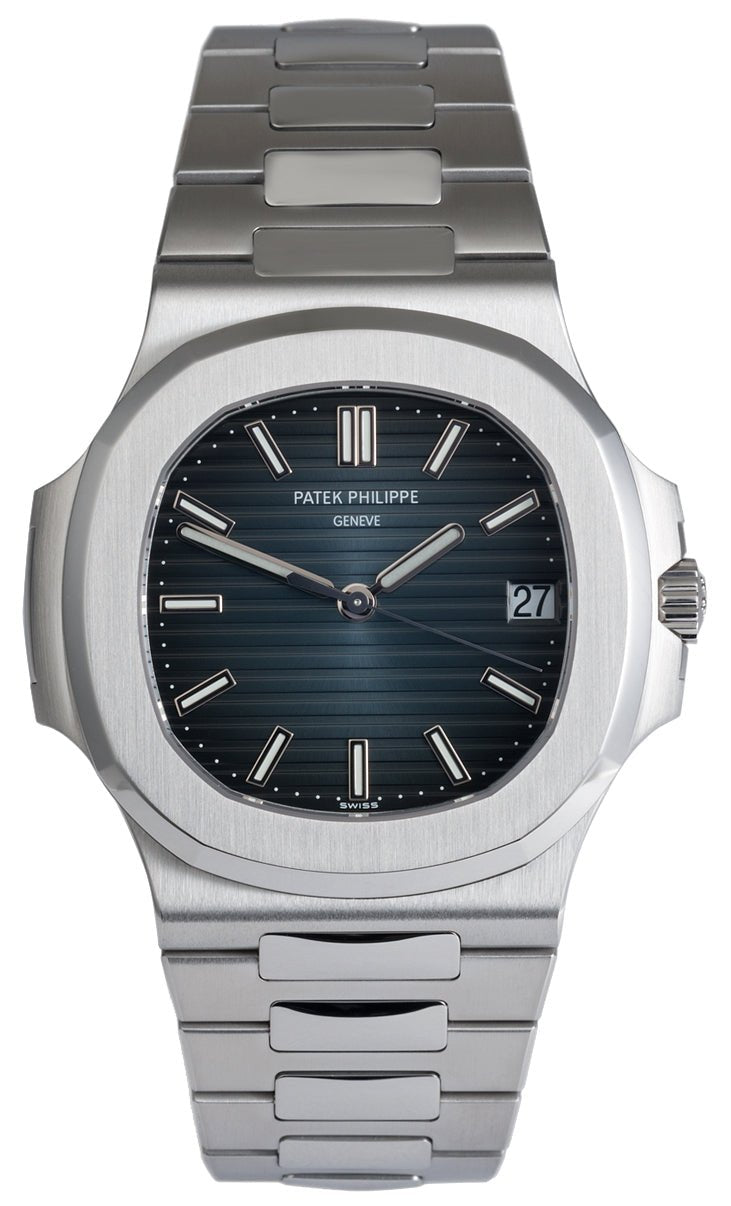
    Patek Philippe Nautilus replica watches occupy the absolute peak of the super clone hierarchy — and for good reason. The genuine Nautilus 5711/1A has become the single most desired luxury sports watch on Earth, with secondary market prices that reached $180,000+ for a watch that retails at approximately $35,000. Patek discontinued the 5711 in 2021 and replaced it with the 5811, creating a frenzy that still hasn’t subsided. The super clone market responded with increasingly sophisticated reproductions, led by 3KF (3K Factory) whose Nautilus is widely considered the best single super clone watch available — regardless of brand. This guide covers the 5711/1A in every dial variant including the legendary Tiffany Blue, the moonphase 5712, the chronograph 5980, factory rankings, the distinctive horizontal embossing dial, and how to navigate QC on what might be the most scrutinized super clone in existence.

    Patek Philippe Nautilus 5711/1A blue dial on steel bracelet
    Patek Philippe Nautilus 5711/1A blue dial on steel bracelet

    The Nautilus Phenomenon

    Gerald Genta designed the Nautilus in 1976, the same year he designed the Royal Oak (1972’s design, released to market alongside the Nautilus four years later). Both watches share the same DNA: luxury sports watches with integrated bracelets, thin cases, and designs inspired by industrial objects — the Royal Oak by a porthole, the Nautilus by a ship’s porthole with the characteristic “ears” on the sides of the case that mimic a porthole’s hinged locking mechanism.

    For decades, the Nautilus was expensive but accessible. You could walk into an authorized Patek Philippe dealer and buy a 5711 at retail if you were willing to wait a few months. Then around 2017-2018, something shifted. Celebrity endorsements, social media exposure, and a growing cohort of young collectors flush with tech money turned the Nautilus into a cultural symbol. Waitlists exploded. Secondary market premiums tripled. When Patek announced the 5711’s discontinuation in 2021, the hysteria peaked — a standard blue dial 5711 traded at five times retail.

    This cultural context is relevant because it explains why the Nautilus super clone market is the most competitive and sophisticated in the industry. Factories know the Nautilus is the most scrutinized watch in the community. Every forum has a dedicated Nautilus identification thread. Every watch reviewer has a “how to spot a fake Nautilus” video. This scrutiny has paradoxically driven quality up — factories that produce convincing Nautilus replicas gain enormous market credibility, which incentivizes continuous improvement.

    5711/1A — The One Everyone Wants
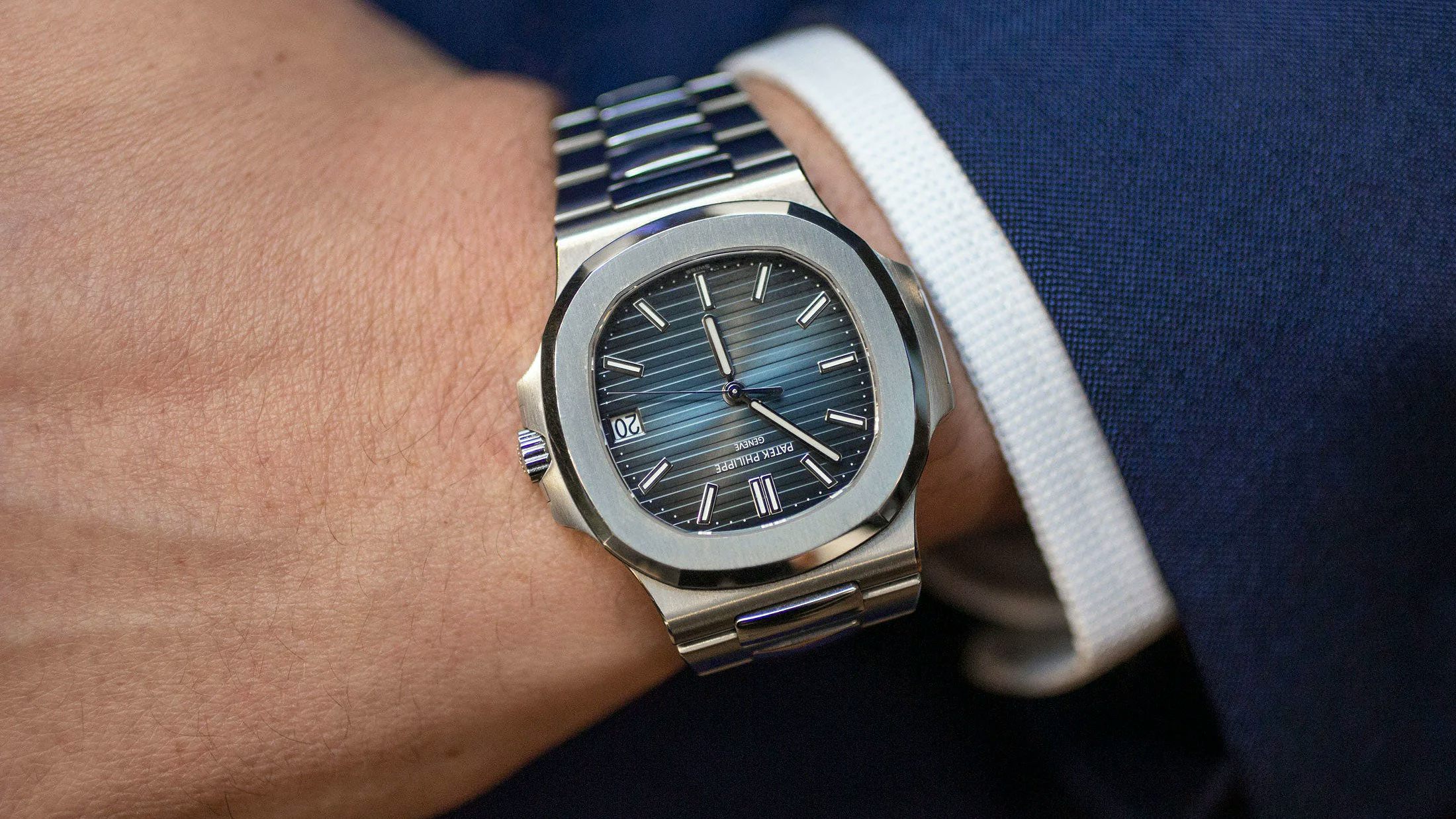
    Patek Philippe Nautilus 5711 blue gradient sunburst dial
    Patek Philippe Nautilus 5711 blue gradient sunburst dial

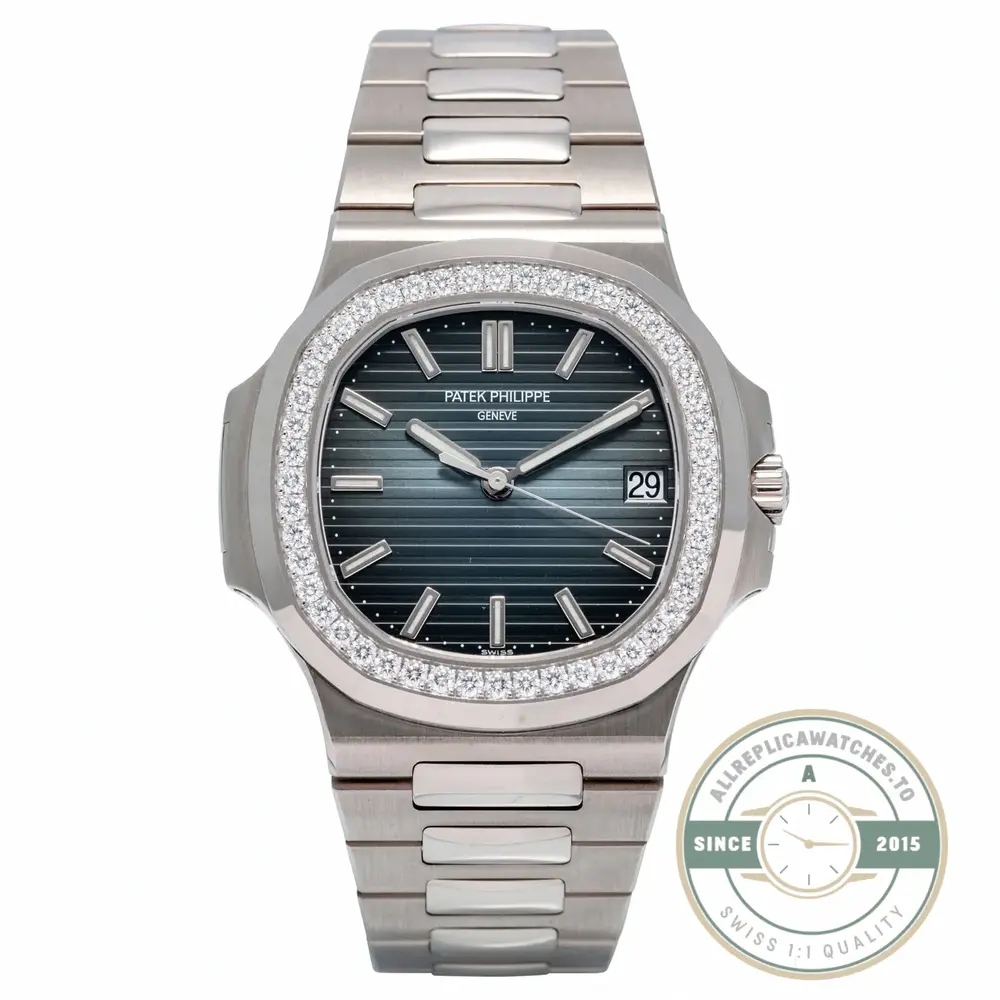
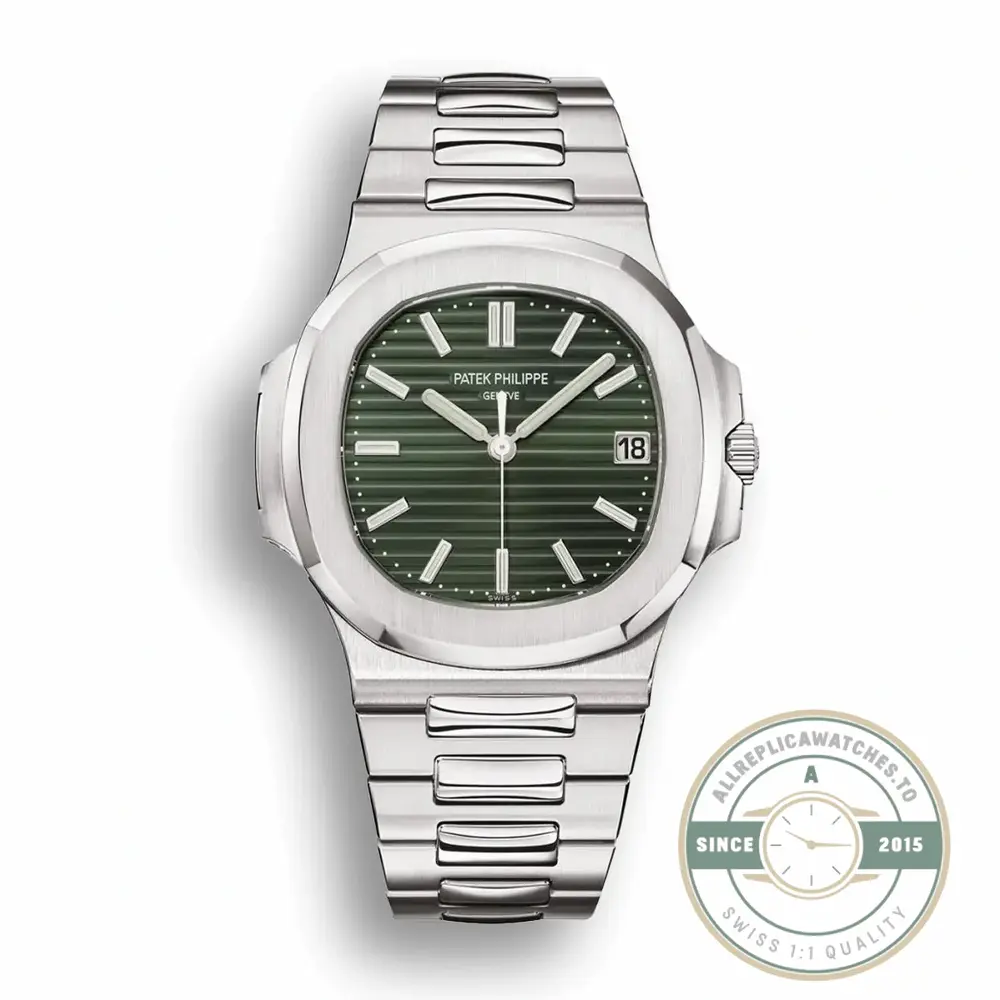
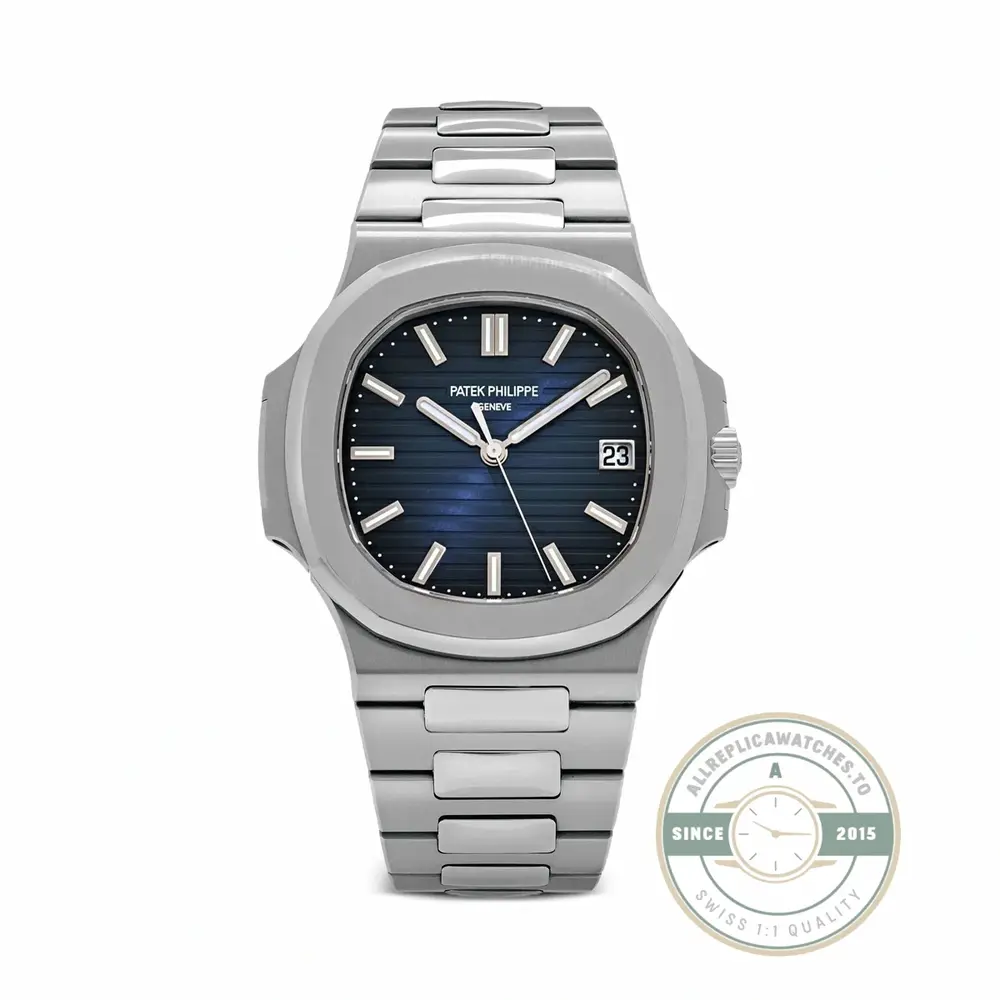
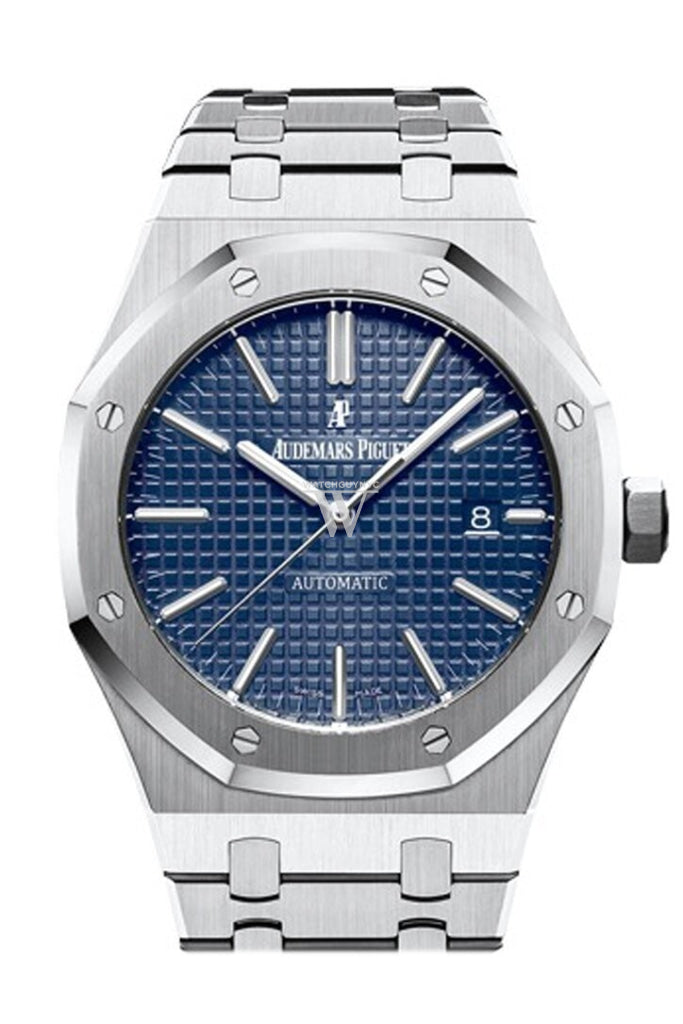
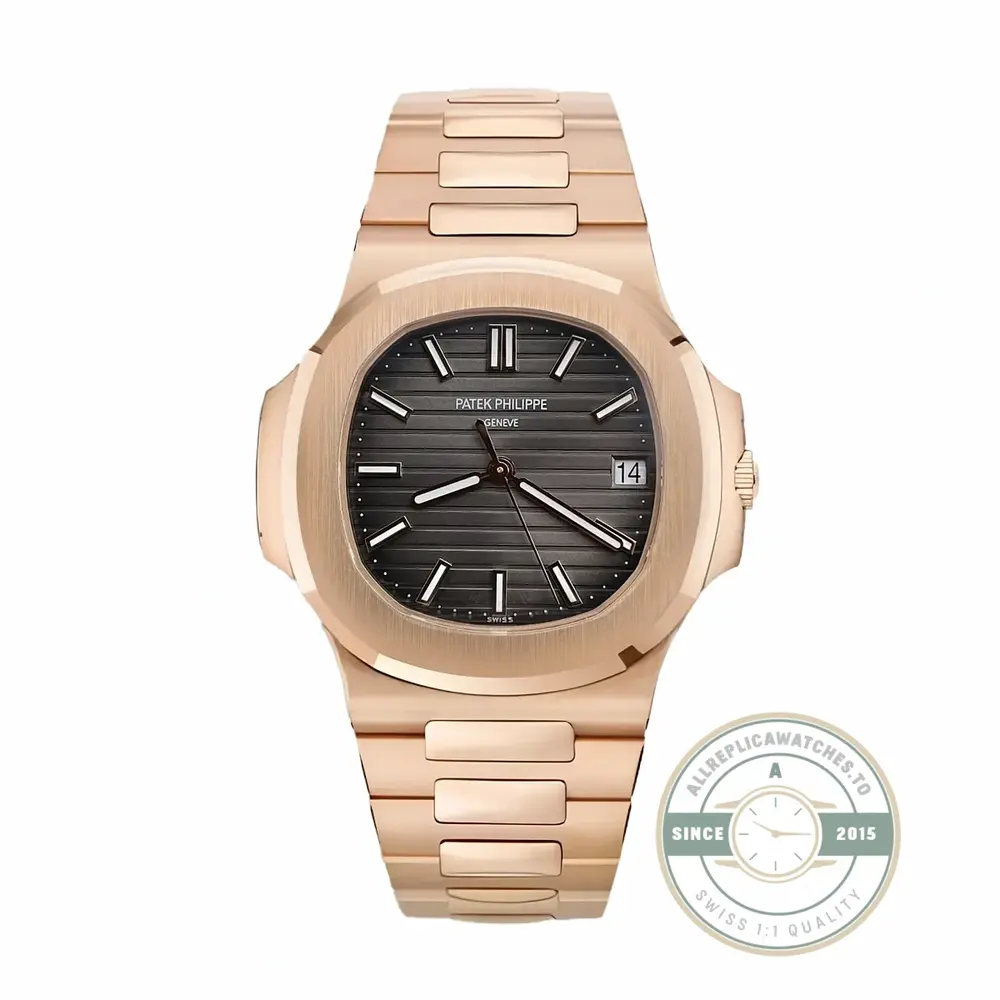
    The 5711/1A-010 — blue-black gradient dial, steel case and bracelet — is the Nautilus. It’s 40mm wide, 8.3mm thin, and weighs approximately 155 grams on the wrist. The case features the distinctive octagonal bezel with rounded porthole “ears” at 3 and 9 o’clock, connected by a horizontal groove that runs across the case face. The integrated bracelet flows from the case with the same seamless transition philosophy as AP’s Royal Oak, though with different link geometry.

    3KF’s 5711 — currently in its third generation — is the reference point. The case dimensions match genuine: 40mm x 8.3mm (3KF achieves 8.5mm — 0.2mm thick, which is within tolerance on the wrist). The case shape is correct, including the subtle curved profile when viewed from the side — the Nautilus case isn’t flat, it follows a gentle arc from lug tip to lug tip. This curvature is why the Nautilus sits so comfortably on the wrist despite being wider than most dress watches. 3KF replicates this curvature accurately.

    The dial is where 3KF earned their reputation. The Nautilus dial has horizontal embossing — parallel lines that run across the entire dial surface, creating a texture that catches light differently from every angle. This embossing is applied to a gradient dial — darker at the outer edges, lighter toward the center — creating a three-dimensional depth effect. 3KF’s gradient matches genuine within a shade, and their embossing depth and spacing are the most accurate in the industry.

    The date window at 3 o’clock has a distinctive Patek feature: a slightly enlarged window with a frame that follows the case design language. 3KF’s date window position, frame proportions, and font weight all match genuine. The font — a proprietary Patek typeface — is one of the hardest details to replicate because any deviation is immediately apparent when compared to genuine photos. 3KF’s current date font is the most accurate available. Every 5711 dial we stock is listed in our Patek Nautilus 5711 replica collection.

    5711/1A Specification 3KF Super Clone Genuine Patek
    Case Diameter 40mm 40mm
    Case Thickness 8.5mm 8.3mm
    Movement Clone Cal. 324 SC (Miyota 9015 base) Cal. 26-330 SC (successor to Cal. 324)
    Dial Gradient 95% accurate — slight edge difference in low light Multi-layer galvanic gradient
    Horizontal Embossing Correct depth and spacing — best in industry Machine-applied precision lines
    Weight ~148g ~155g
    Power Reserve ~42 hours 45 hours (Cal. 26-330 SC: 35-45h)
    Water Resistance 50m tested 120m rated

    The Tiffany Blue — Hype or Masterpiece
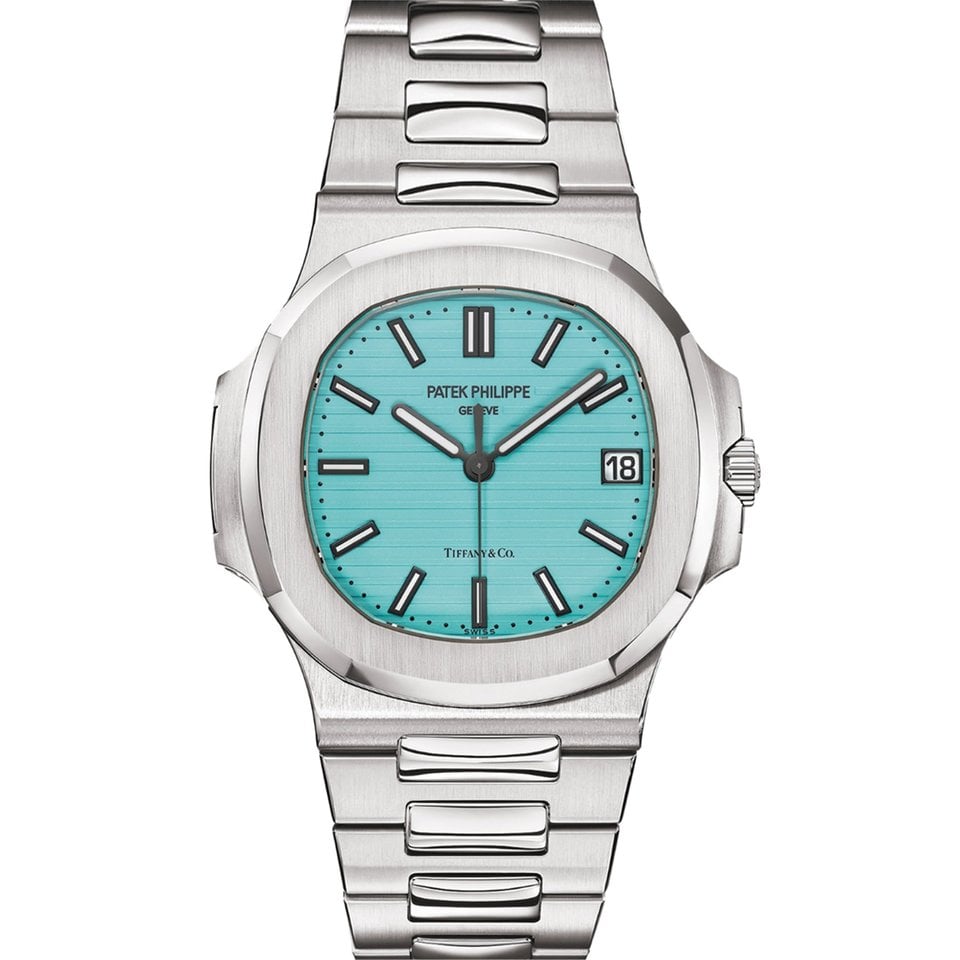
    Patek Philippe Nautilus 5711 Tiffany Blue limited edition dial
    Patek Philippe Nautilus 5711 Tiffany Blue limited edition dial

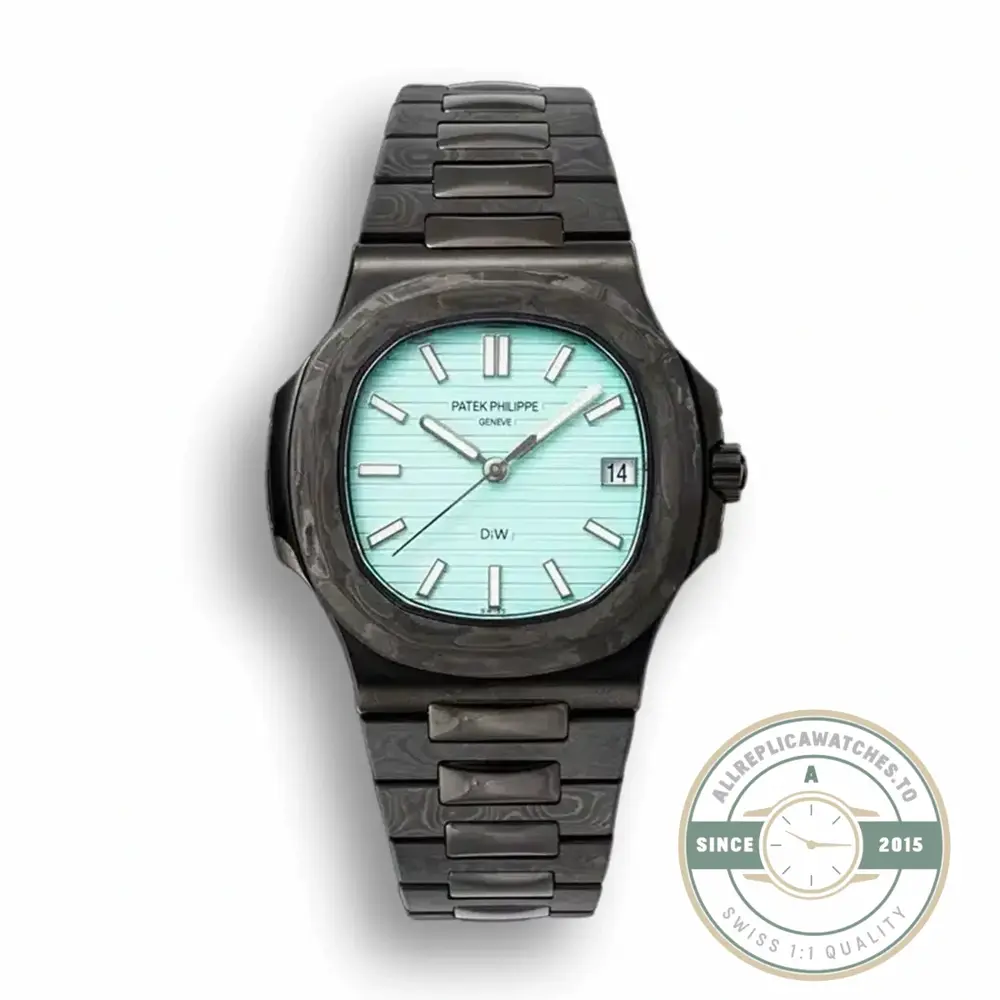
    In December 2021, Patek Philippe and Tiffany & Co. announced a final production run of 170 Nautilus 5711s with Tiffany blue dials — marking both the end of the 5711’s production and the LVMH acquisition of Tiffany. The last piece (serial #001/170) sold at auction for $6.5 million. The remaining 169 pieces went to Tiffany’s top clients at retail ($52,635), and promptly traded on the secondary market at $300,000-$500,000.

    The super clone market responded within weeks. 3KF released a Tiffany blue 5711 with impressive color matching — the specific robin’s egg blue that Tiffany has trademarked (Pantone 1837) requires precise galvanic treatment, and 3KF’s version captures the hue accurately in daylight conditions. Under artificial lighting, there’s a very subtle warmth difference — genuine leans slightly greener, 3KF’s leans slightly more pure blue — but in photographs and in person under natural light, the match is striking.

    The Tiffany blue Nautilus super clone serves a unique purpose in the replica world: it provides access to a watch that’s genuinely unobtainable. Even with unlimited money, buying a genuine Tiffany blue 5711 requires either knowing Tiffany’s most important clients personally or paying auction-house prices that exceed most luxury cars. The super clone isn’t replacing a purchase you’d otherwise make — it’s providing access to a design that’s effectively locked behind an impenetrable velvet rope.

    The horizontal embossing on the Tiffany blue dial is identical in technique to the standard blue-black dial — same depth, same spacing. What changes is how the color interacts with the lines: the lighter blue creates more visible shadow definition in the grooves, making the embossing more prominent than on the darker standard blue. Some collectors prefer this enhanced texture visibility; others find it exposes the embossing to closer scrutiny. On 3KF’s version, the embossing quality holds up well under this increased visibility.

    Reality check: Wearing a Tiffany blue Nautilus — genuine or replica — attracts attention. It’s one of the most recognizable watch dials in recent history. If you prefer subtlety, the standard blue-black or green dial achieves the Nautilus experience without the “I know what that is” reactions from watch enthusiasts.

    5811/1G — The White Gold Successor

    Patek replaced the steel 5711 with the 5811/1G — a white gold version with a slightly larger case (41.3mm vs 40mm) and subtle design refinements. The bezel profile is slightly different, the lugs are marginally thinner, and the bracelet links have been updated. The dial retains the horizontal embossing and gradient but in a blue-green tone that’s distinct from the 5711’s blue-black.

    Super clone factories responded with 5811 versions, though these are newer and less refined than the 5711 copies. 3KF’s 5811 is available but the case shape precision isn’t yet at the level of their 5711 — the updated bezel geometry is still being dialed in. For most buyers, the 5711 remains the better super clone purchase: more refined production, better QC consistency, and the iconic design that made the Nautilus famous.

    5712 — Moon Phase & Power Reserve

    The Nautilus 5712/1A adds three subdials to the Nautilus formula: a date subdial at 7:30, a moon phase at 10:30, and a power reserve indicator at about 1 o’clock. The result is a more information-dense dial that retains the Nautilus’s horizontal embossing as its unifying texture. The 5712 is considered by many collectors to be the more interesting Nautilus — more visually complex, with the moon phase adding a poetic element to the sporty design language.
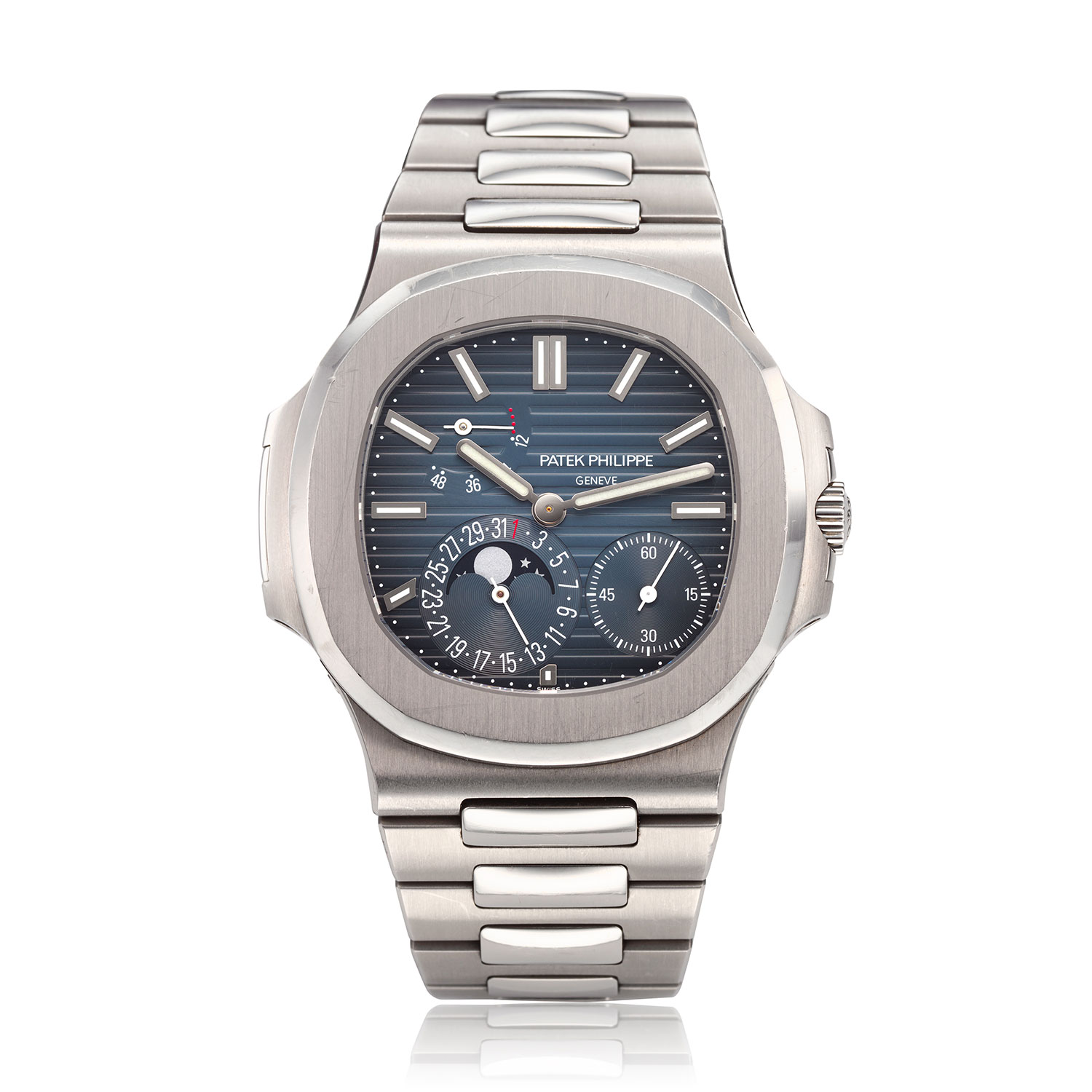
    Patek Philippe Nautilus 5712/1A moonphase power reserve dial
    Patek Philippe Nautilus 5712/1A moonphase power reserve dial

    3KF produces a 5712 with a functioning moon phase — driven by the same 59-tooth gear mechanism used in AP perpetual calendar replicas. The moon disc quality is excellent: gold moon against dark blue sky, properly sized within the aperture. The power reserve indicator is functional — it responds to the actual mainspring tension and shows the remaining power reserve accurately. The date subdial advances automatically at midnight.

    The 5712 is slightly thicker than the 5711 (genuine: 9.0mm vs 8.3mm) due to the additional complication layer. 3KF’s 5712 measures approximately 9.3mm — within acceptable tolerance. The bracelet is identical to the 5711, as is the case shape from the front. The difference is all on the dial — three small windows into additional mechanical functions that transform the Nautilus from a pure time-only watch into a complication piece.

    Feature 5711/1A 5712/1A 5811/1G
    Case Size 40mm x 8.3mm 40mm x 9.0mm 41.3mm x 8.2mm
    Complications Date only Date, moon phase, power reserve Date only
    Clone Quality Best — 3KF V3 Excellent Good — newer production
    Recommended For First Nautilus — iconic, proven Second Nautilus — complication lovers Modern Nautilus fans

    The Horizontal Embossing — Nautilus DNA

    If AP’s tapisserie defines the Royal Oak, the horizontal embossing defines the Nautilus. These parallel lines running across the dial surface create Patek’s signature texture — a subtle, directional pattern that interacts with light differently from every angle. Tilt the watch left and shadows fill the grooves; tilt right and highlights catch the line peaks. The result is a dial that’s never static — it breathes with movement.

    Genuine Patek creates the embossing through a multi-step galvanic and mechanical process: the brass dial blank is first treated with a galvanic gradient (the dark-to-light color transition), then the horizontal lines are pressed using a specialized die. The line depth is approximately 0.08mm — shallower than AP’s tapisserie — with spacing of approximately 0.3mm between lines. This creates a denser pattern that reads as a unified texture rather than individual lines at arm’s length.

    3KF’s embossing replicates the genuine specification closely: correct depth (within 0.01mm), correct spacing, and — critically — consistent line depth from the dial center to the edges. Lesser factories show line depth variation, with lines becoming shallower toward the dial periphery where the press applies less pressure. 3KF uses a updated pressing technique that maintains uniform depth across the full dial surface. Under a loupe, individual lines show clean V-profiles; under normal viewing, the texture reads correctly.

    The gradient is the second critical element. Genuine Nautilus dials transition from near-black at the outer edges to medium blue at the center. This gradient is achieved through controlled galvanic deposition — varying the thickness of the color layer across the dial surface. 3KF’s gradient process produces a convincing transition that matches genuine in daylight and most indoor lighting. Under specific artificial light (warm tungsten bulbs), 3KF’s center blue can appear marginally lighter than genuine — but this requires side-by-side comparison to identify.
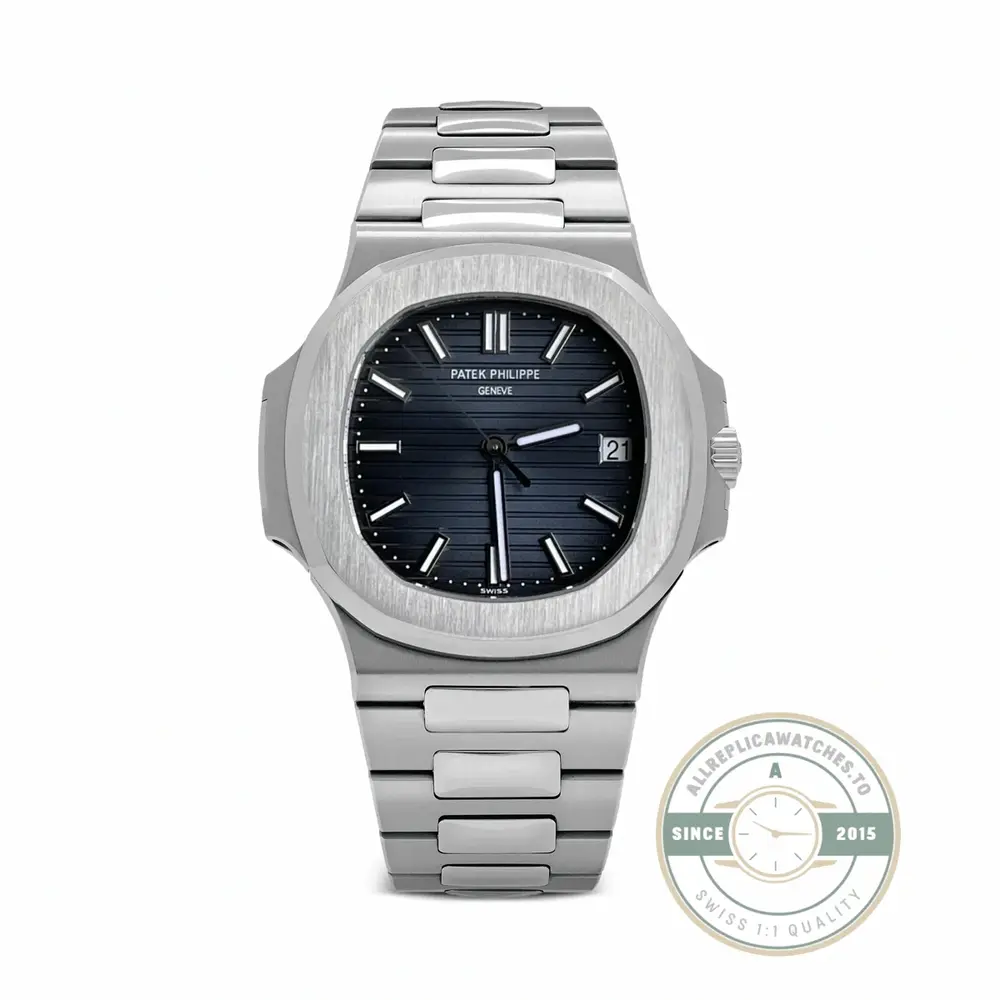
    3KF — Why They Lead the Nautilus
    Patek Philippe Nautilus steel bracelet clasp and link detail
    Patek Philippe Nautilus steel bracelet clasp and link detail

    3K Factory (3KF) has invested more in Nautilus production tooling than any other factory has invested in any single watch reference. Their approach is unusual: rather than spreading their R&D across multiple brands, 3KF concentrated heavily on Patek Philippe — primarily the Nautilus 5711 and its variants. This specialization shows in every component.

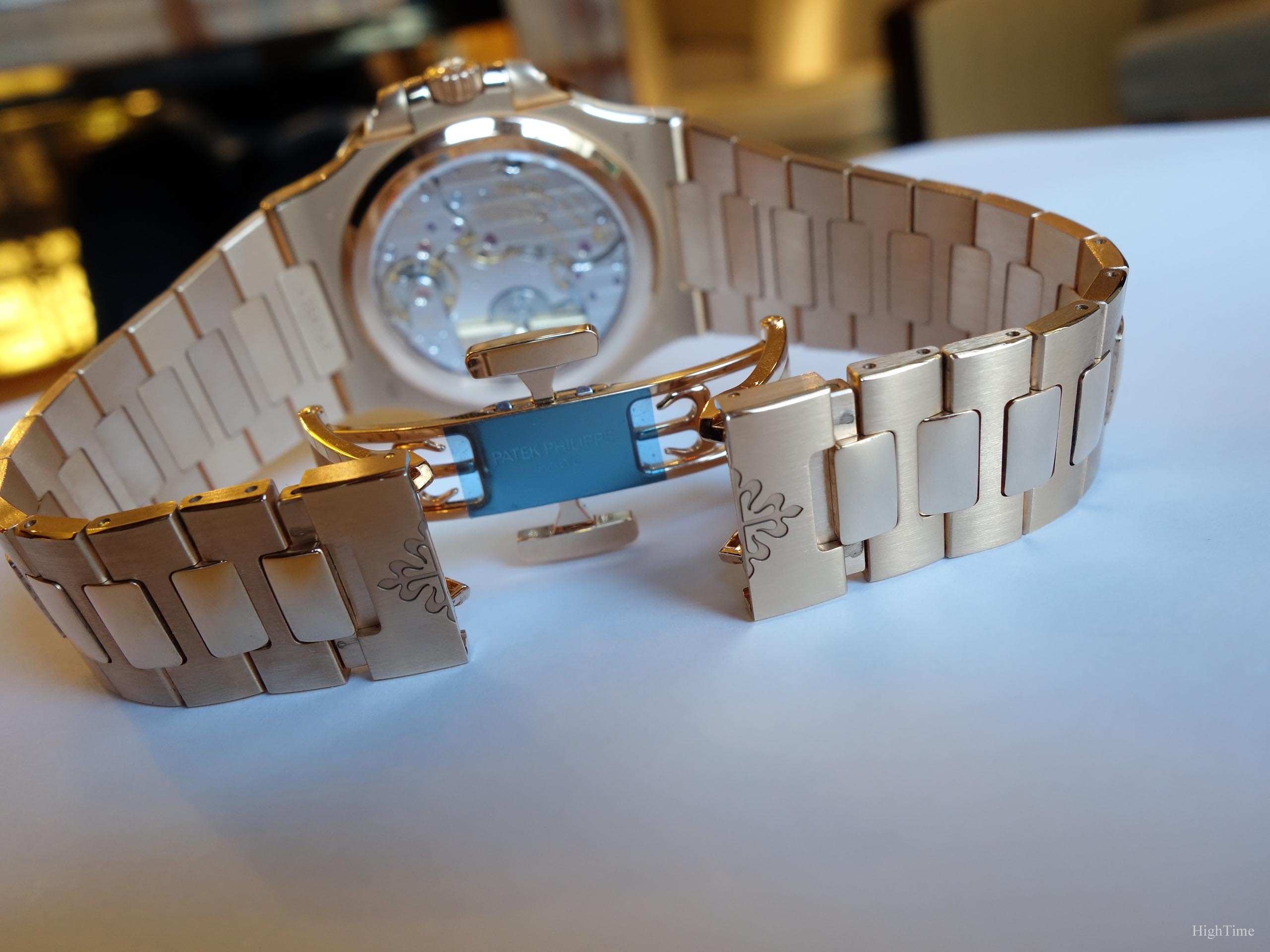
    The bracelet: 3KF’s Nautilus bracelet is the single best integrated bracelet in the super clone industry. The link-to-link transitions are smooth. The clasp — a fold-over design with a PP logo — has a solid snap and stays closed securely. The link surfaces alternate between brushed (flat faces) and polished (edges) with clean transitions between finishes. The bracelet flexibility is controlled — it articulates smoothly without feeling loose or rattly.

    The case: The Nautilus case is deceptively complex. The “ears” at 3 and 9 o’clock create a shape that’s wider than the bezel, and the horizontal groove that runs across the case face must align precisely with the bezel groove. 3KF’s case achieves this alignment consistently. The case sides have alternating brushed and polished surfaces, with the polished chamfer running along the case edge providing visual definition. Case proportions — the ratio of bezel height to case side — match genuine.

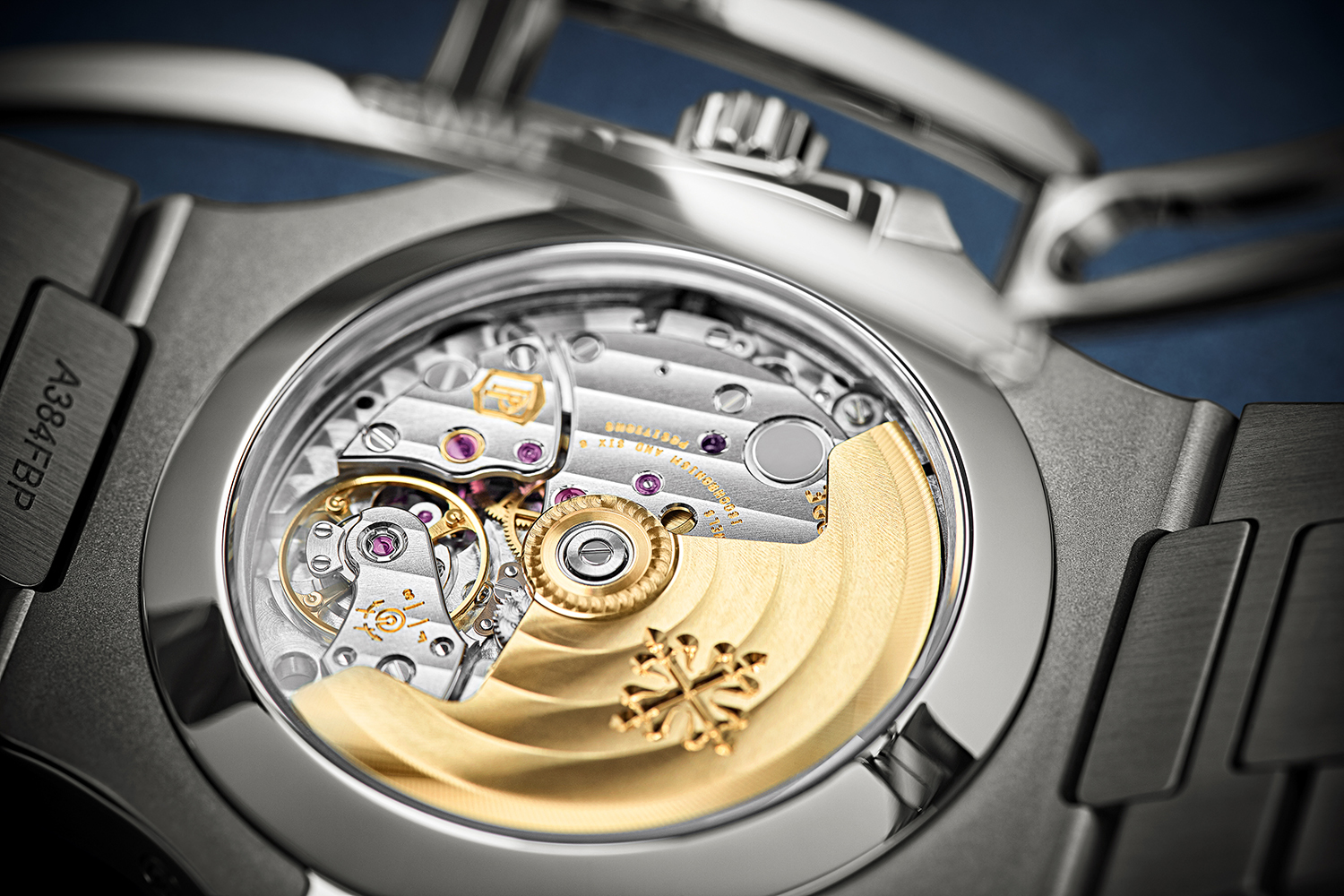
    The clone movement: 3KF developed their own clone Cal. 324 SC that visually matches Patek’s genuine caliber through the display caseback. The rotor carries the PP logo and “Patek Philippe Geneve” text, the bridges show Geneva stripes, and the overall movement architecture is laid out to match the genuine caliber’s visual footprint. Functionally, it’s a decorated Miyota 9015 — the same reliable platform used across the super clone industry.

    Market position: 3KF’s Nautilus is frequently cited on watch forums as the single best super clone available from any brand. This reputation means demand is consistently high, and wait times for specific dial colors (especially Tiffany blue and green) can extend to 2-3 weeks from the factory.

    PPF vs 3KF — The Great Debate

    PPF (PP Factory) was the original Nautilus super clone leader before 3KF arrived. Their 5711 was the benchmark for years, and the community was split on whether 3KF’s challenge was genuine or hype. After extensive comparison, the consensus has settled: 3KF leads in most measurable categories, but PPF still has specific strengths worth noting.

    Component 3KF PPF Notes
    Dial Gradient 9.5/10 8.5/10 3KF’s gradient is more accurate at the dark edges
    Embossing 9.5/10 8/10 3KF deeper and more uniform
    Bracelet 9/10 8.5/10 3KF tighter links, better clasp action
    Case Shape 9/10 9/10 Essentially identical — both excellent
    Movement Decor 9/10 8/10 3KF better rotor text and Geneva stripes
    Date Font 9/10 7.5/10 3KF’s font weight matches genuine better
    QC Consistency High Moderate 3KF less unit-to-unit variation

    PPF’s advantage: they’ve been in production longer, so their model range is wider. If you want a less common Nautilus variant that 3KF hasn’t produced, PPF might be your only super clone option. PPF also occasionally produces better rose gold plating on the 5711R variants. But for the standard 5711/1A-010 blue dial — the most popular Nautilus — 3KF is the clear recommendation.

    Clone Cal. 324 SC Movement

    3KF’s clone Cal. 324 SC is built on the Miyota 9015 platform with extensively custom decoration. The genuine Patek Cal. 26-330 SC (which replaced the Cal. 324 in newer production) features the Patek Philippe seal — one of the highest standards in watchmaking, requiring every component to be finished to specified standards. The clone obviously doesn’t meet those standards — but it does visually approximate the caliber’s appearance through the sapphire caseback.
    Patek Philippe Nautilus display caseback Cal 324 movement
    Patek Philippe Nautilus display caseback Cal 324 movement

    The 21k gold rotor mass (genuine uses 22k) carries “PATEK PHILIPPE” and “GENEVE” text with the PP Cross in the center. 3KF’s text quality has improved with each generation — current production shows sharp lettering with correct spacing. The rotor arm has a sunburst finish that catches light attractively when the rotor spins during wrist movement.

    Bridge finishing follows the same pattern as other super clone movements: laser-applied Geneva stripes that look correct at normal viewing distance but show slightly sharper edges under magnification compared to genuine’s mechanically-applied stripes. The overall movement presentation through the caseback is convincing — it looks like a quality Swiss caliber, which is the intent.

    All Dial Variants Ranked

    Dial Color Accuracy Factory Notes
    Blue-Black Gradient 9.5/10 3KF The classic — most refined, best QC
    Tiffany Blue 9/10 3KF Excellent match — slight warmth variance
    Olive Green 8.5/10 3KF Trending color — green gradient well-done
    White 8.5/10 3KF / PPF Clean — embossing visible, high legibility
    Black 8.5/10 3KF Stealthy — gradient less visible, still embossed
    Brown (Chocolate) 8/10 PPF Warm tone — less popular but distinctive

    Nautilus QC Protocol

    The Nautilus is the most QC’d super clone in the community — expect thorough photos from any reputable dealer. Here’s what to focus on:

    Nautilus-Specific QC Checklist:

    • Dial gradient: Dark edges, lighter center — smooth transition, no abrupt color change
    • Embossing uniformity: Lines should be visible edge-to-edge with consistent depth
    • Case “ears”: Symmetrical at 3 and 9, aligned with the horizontal groove
    • Horizontal groove: Continuous line from one ear to the other — no break or misalignment
    • Date font: Correct weight and position in window (centered, not bold)
    • Bracelet-case junction: Seamless transition, no visible gap
    • Clasp logo: PP Cross sharp and centered on the clasp cover
    • Applied markers: Hour indices straight, lume plots centered
    • Caseback: Correct engravings, movement visible through sapphire
    • Crystal edges: Flush with the bezel, no overhang or gap

    The Ordering Experience

    Ordering a Nautilus super clone follows the same process as any super clone purchase: contact dealer, specify model and factory (3KF 5711/1A-010 blue, for example), pay, wait for QC photos, approve or reject, then ship. A few Nautilus-specific notes:

    Wait times: 3KF Nautilus models — especially Tiffany blue and green dials — can have 2-3 week wait times due to consistent demand. The standard blue-black is usually available within a week. Plan accordingly if you have a timeline in mind.

    QC thoroughness: Because the Nautilus community is educated and demanding, dealers provide more detailed QC photos for Nautilus orders than for most other models. Expect 10-15 photos covering every angle. Some dealers proactively send video. Take advantage of this — evaluate each photo against the checklist above.

    Rejection rate: QC rejections on 3KF Nautilus are lower than average because 3KF’s production consistency is high. If you do RL a unit, be specific about the reason. “The dial gradient breaks at 7 o’clock rather than blending smoothly” is actionable. “It doesn’t look right” is not. Most GL’d 3KF Nautilus units satisfy their buyers.

    First purchase advice: Order the 5711/1A-010 blue-black from 3KF. It’s the most refined super clone available, the QC comparison material online is extensive, and the blue-black gradient is the original Nautilus — the design that started everything. Once you experience 3KF’s quality, you’ll understand why the community rates it so highly.

    FAQ — 20 Nautilus Questions

    Which factory makes the best Nautilus replica?

    3KF (3K Factory). Their V3 5711 is widely considered the best single super clone watch available — any brand, any reference. The dial gradient, horizontal embossing, bracelet, and case shape are all class-leading.

    Is the Tiffany Blue Nautilus replica accurate?

    3KF’s Tiffany blue matches genuine’s Pantone 1837 closely in natural light. Under warm artificial light, there’s a very subtle warmth difference. In photographs and daily wear, the color match is excellent — you’d need genuine side-by-side to spot the variance.

    3KF or PPF — which should I choose?

    3KF for the 5711/1A in any standard color — they lead in dial work, embossing, and bracelet quality. PPF if you need a specific variant that 3KF doesn’t produce, or for some rose gold models where PPF’s plating is competitive.

    How thin is the Nautilus super clone?

    3KF’s 5711 is approximately 8.5mm thick — genuine is 8.3mm. The 0.2mm difference is imperceptible on the wrist. The Nautilus is one of the thinnest sports watches available in both genuine and replica form, and this thinness is a defining characteristic that 3KF preserves.

    What’s the biggest tell on a Nautilus super clone?

    Weight — the super clone is approximately 7g lighter than genuine (148g vs 155g). This is only noticeable on a scale or when holding both simultaneously. On the wrist in isolation, neither feels noticeably heavy or light — both are in the comfortable 145-160g range for a 40mm steel watch.

    Does the 5712 moon phase actually work?

    Yes. The moon phase is driven by a 59-tooth gear that tracks the lunar cycle accurately. The power reserve indicator also functions — it shows actual mainspring tension. The date subdial advances automatically. All three complications work mechanically.

    Should I get the 5711 or 5712?

    5711 for your first Nautilus — it’s the icon, it’s thinner, and 3KF’s version is more refined. The 5712 is an excellent second Nautilus — the moon phase adds character, the dial is more complex, and it offers a different wearing experience from the pure time-only 5711.

    How does the Nautilus bracelet compare to the Royal Oak bracelet?

    Different design philosophy. The Nautilus bracelet has flatter links with a smoother flex characteristic — it drapes over the wrist. The Royal Oak bracelet has thicker links with more rigid articulation. Both are excellent in super clone form; 3KF’s Nautilus bracelet and ZF’s Royal Oak bracelet are considered the two best integrated bracelets available.

    Is the horizontal embossing convincing on the super clone?

    On 3KF — yes. The line depth, spacing, and uniformity match genuine’s specifications closely. The embossing interacts with light correctly, creating the dynamic texture that defines the Nautilus dial. Under a loupe, line profiles are slightly different, but at wearing distance the effect is accurate.

    Can I swim with the Nautilus?

    3KF tests to 50m water resistance (genuine is rated 120m). Swimming is fine. Avoid diving or prolonged submersion. Have the gaskets checked every 2 years. The Nautilus was designed as a sports watch — swimming is within its design brief.

    Nautilus vs Royal Oak — which replica is better?

    Different watches for different tastes. The Nautilus is thinner, softer in design language, more “stealth wealth.” The Royal Oak is more angular, more visually assertive with its octagonal bezel screws. In super clone quality, 3KF’s Nautilus and ZF’s Royal Oak are considered peers — both represent the best of their respective platforms.

    How accurate is the date font?

    3KF’s date font is the most accurate available — correct weight, correct size, centered in the window. PPF’s date font is slightly bolder than genuine. The date font is one of the most scrutinized details in the Nautilus community, and 3KF invested specifically in matching it.

    What about the 5811 — should I wait for that?

    If you specifically want the updated design (41.3mm, revised bezel), 3KF’s 5811 is available but less refined than their 5711. The 5711 is the more proven purchase. Unless the 5811’s specific design changes matter to you, the 5711 delivers a better super clone experience today.

    What movement is inside the Nautilus super clone?

    A decorated Miyota 9015 (clone Cal. 324 SC). Same proven platform as AP super clones. ~42 hour power reserve, hacking seconds, hand-winding capability. The decoration through the display caseback visually matches Patek’s genuine caliber layout.

    How long does delivery take?

    Factory wait: 3-14 days (longer for Tiffany blue and green). QC and shipping: 10-20 days after GL. Total: 2-5 weeks from order to delivery. Plan for approximately one month to be safe, especially for popular dial colors.

    Can a watchmaker service a Nautilus super clone?

    Yes. Same approach as any super clone: tell the watchmaker it’s a Miyota 9015 with cosmetic modifications. The functional components are standard 9015 parts. Service every 3-5 years for optimal longevity.

    Is the Nautilus comfortable for daily wear?

    Extremely. The thin profile (8.5mm) slides under shirt cuffs effortlessly. The integrated bracelet distributes weight evenly. The 40mm diameter suits most wrist sizes (6.25″ and above). The Nautilus was designed for daily wear — both genuine and super clone deliver on that promise.

    What’s the best green Nautilus super clone?

    3KF’s olive green (5711/1A-014) has an excellent gradient from dark olive at the edges to lighter green at the center. The color shifts attractively in different lighting — more khaki in warm light, more forest green in daylight. It’s the trendiest Nautilus color and 3KF’s execution is strong.

    Is this a good first super clone watch?

    The 3KF Nautilus 5711 is arguably the best first super clone for someone who appreciates understated luxury. It’s thin, comfortable, versatile (works with suits and casual wear), and the quality level is the highest available. If your style leans toward quiet elegance rather than bold statement, start here.

    How does the Nautilus compare to a Rolex Submariner replica?

    Completely different watches. The Submariner is a tool watch — thicker, heavier, designed for diving. The Nautilus is a luxury sports watch — thinner, lighter, designed for elegance with athletic capability. The Submariner is more versatile in rough conditions; the Nautilus is more refined in social settings. Both are excellent super clones; choose based on lifestyle.

    Final Word

    The Patek Philippe Nautilus is the watch that redefined what a steel luxury watch could mean. 3KF has redefined what a super clone can achieve. Their 5711 captures the Nautilus’s essential character — the gradient dial, the horizontal embossing, the impossibly thin case, the integrated bracelet that flows like water — with a fidelity that’s earned universal respect in the replica community. Whether you choose the iconic blue-black, the legendary Tiffany blue, or the modern olive green, you’re getting a watch that delivers the Nautilus experience: quiet, confident, and unmistakably special.

    Related guides: Best Replica Watches 2026 • Super Clone vs Cheap Replica • Factory Guide • QC Photos Masterclass • Browse Patek Philippe Collection

  • Audemars Piguet Perpetual Calendar Replica — 26574ST, Moon Phase Complications, and How Close Super Clones Get to Grand Complications

    Audemars Piguet Perpetual Calendar Replica — 26574ST, Moon Phase Complications, and How Close Super Clones Get to Grand Complications

    Audemars Piguet Perpetual Calendar Replica — 26574ST, Moon Phase Complications, and How Close Super Clones Get to Grand Complications

    Last updated: March 2026 • 19-minute read • Perpetual calendar mechanics explained

    Audemars Piguet perpetual calendar replica watches tackle the most intellectually ambitious complication in watchmaking — a mechanism that tracks day, date, month, moon phase, and leap year simultaneously, requiring no manual adjustment until the year 2100. The Royal Oak Perpetual Calendar (ref. 26574ST) packs this grand complication into the Royal Oak’s 41mm case, and super clone factories have created versions that replicate both the appearance and — to varying degrees — the functionality. This guide covers what perpetual calendar super clones actually do versus what genuine AP’s caliber does, which variants are available, how the moon phase complication works in replica form, and the honest limitations you should understand before buying.

    The perpetual calendars discussed here are in stock: see the Royal Oak Perpetual Calendar 26579CE replica and the full AP Royal Oak replica collection.

    AP Royal Oak Perpetual Calendar 26574ST blue dial
    AP Royal Oak Perpetual Calendar 26574ST blue dial

    What a Perpetual Calendar Actually Does

    A perpetual calendar is watchmaking’s answer to the Gregorian calendar’s irregularities. Most months have 30 or 31 days. February has 28 — except during leap years, when it has 29. A standard date watch doesn’t know the difference: it advances the date by one unit every 24 hours and needs manual correction at the end of months with fewer than 31 days. Five times a year, you need to adjust the date. It’s a minor inconvenience, but it represents a problem that watchmakers have been solving mechanically since the 18th century.

    A genuine perpetual calendar movement has a mechanical “memory” — a series of cams and levers programmed with the calendar’s pattern. It knows that April has 30 days, that February usually has 28, and that every fourth year February gets an extra day. This programming is encoded in the shape of physical metal components: a 48-month cam that rotates once every four years, with each “notch” corresponding to a month’s day count. When the date reaches the last day of any month, the cam’s profile tells the mechanism whether to advance to 29, 30, or 31 — or roll to the next month.

    AP’s genuine perpetual calendar (Cal. 5134) displays: day of the week (Monday through Sunday), date (1-31), month (January through December), astronomical moon phase, and a leap year indicator (4-year cycle). All of this on a 41mm Royal Oak dial without looking cluttered — which is a design achievement as impressive as the mechanical one.

    Calendar context: AP’s perpetual calendar is accurate until March 1, 2100 — the next non-leap year that would normally be a leap year (century years divisible by 100 but not 400 aren’t leap years). After that, a one-day manual correction is needed. Your great-grandchildren can worry about it.

    26574ST — The Royal Oak Perpetual

    AP Royal Oak Perpetual Calendar 26574 white dial detail
    AP Royal Oak Perpetual Calendar 26574 white dial detail

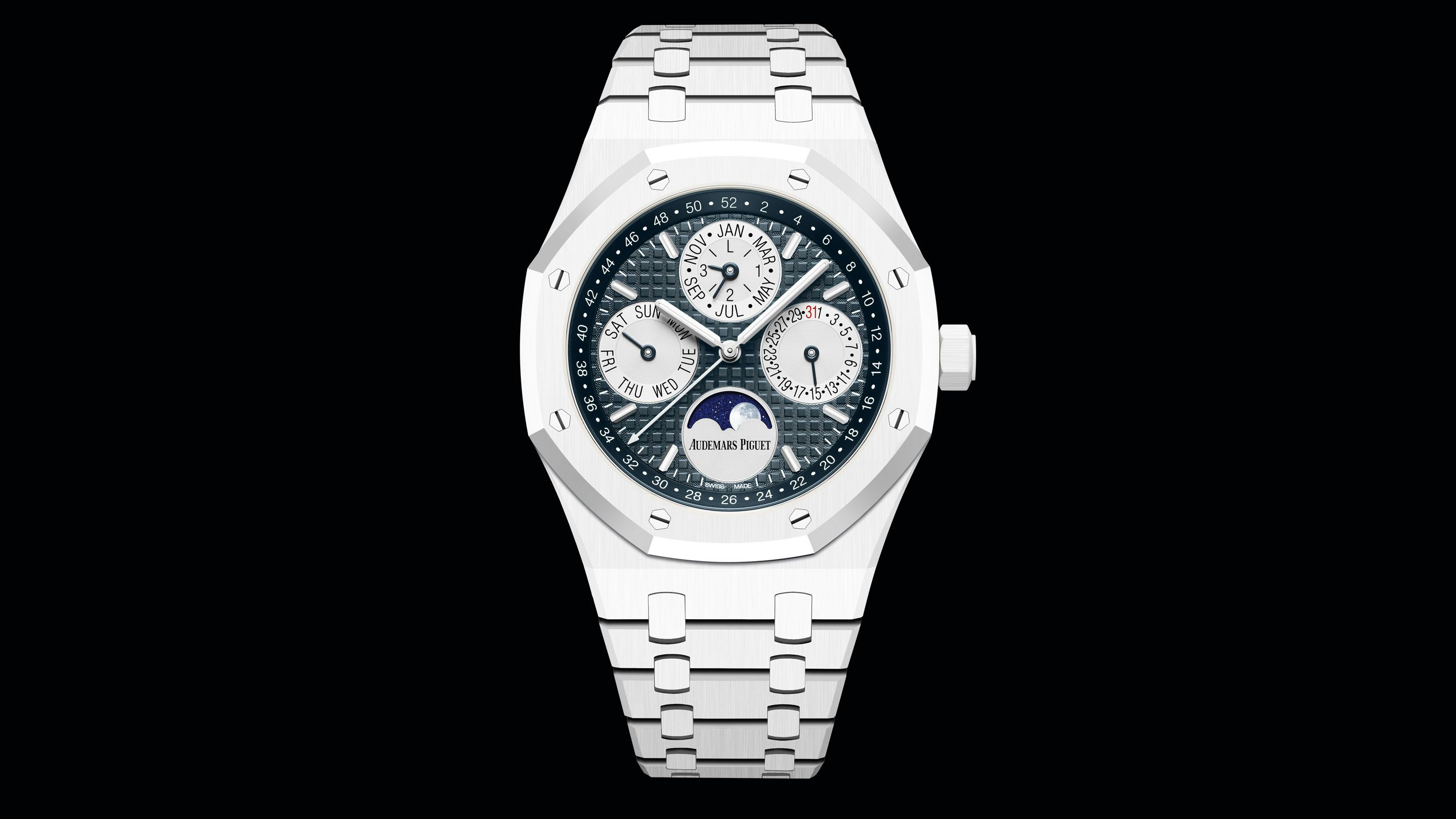
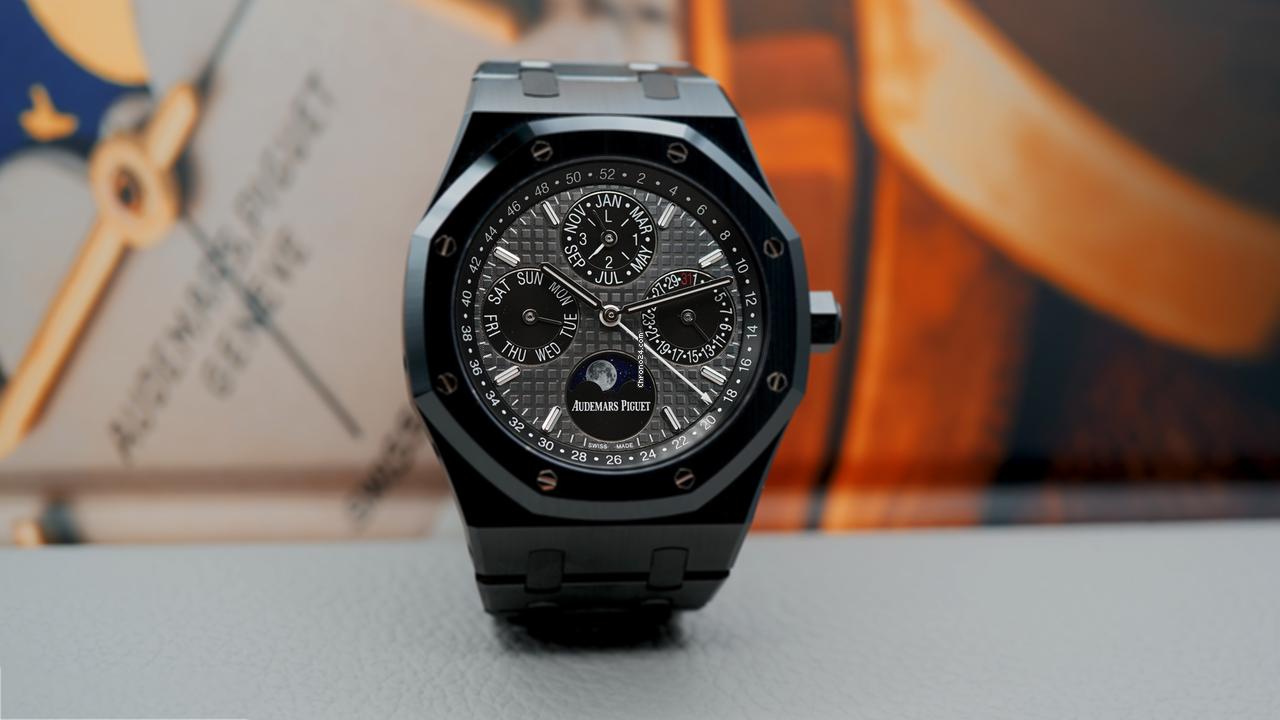
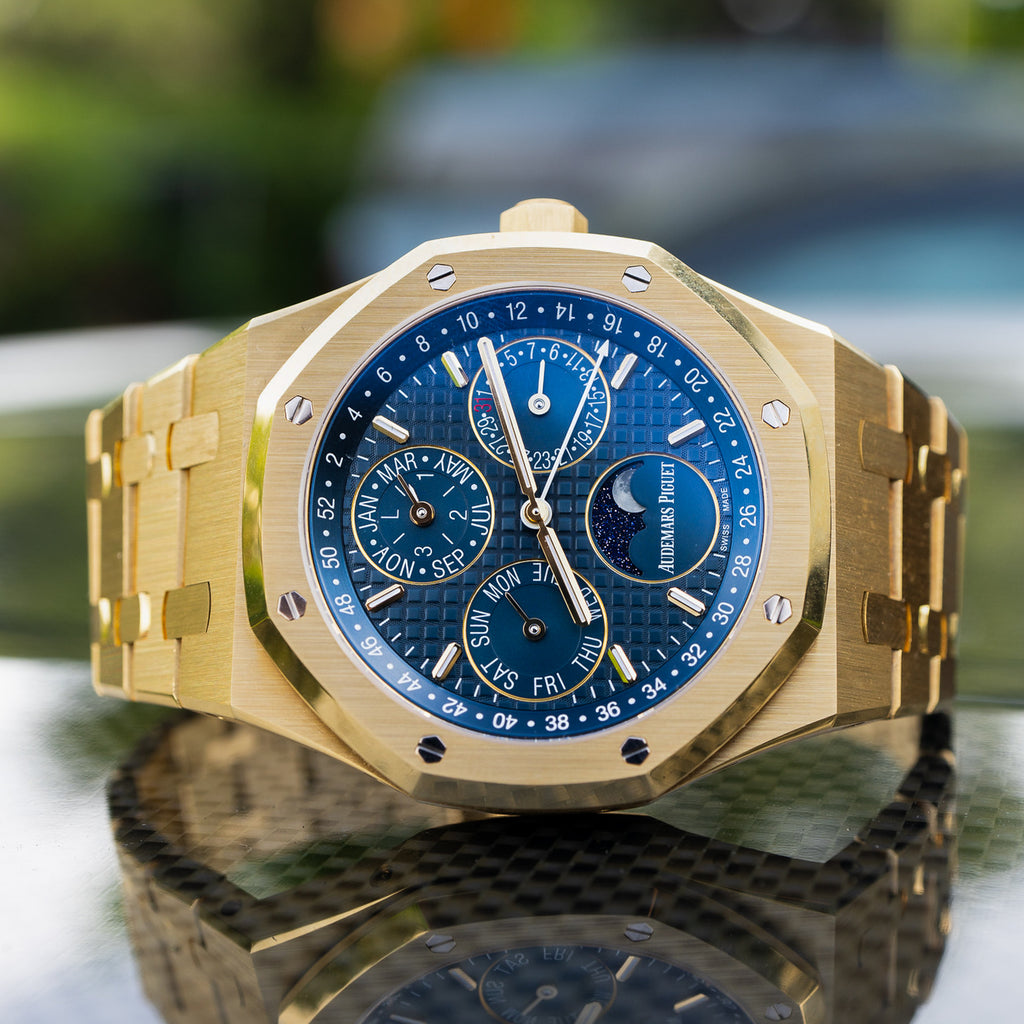
    The Royal Oak Perpetual Calendar ref. 26574ST packages AP’s grand complication expertise into the Royal Oak case. The case is the standard 41mm diameter with the octagonal bezel, integrated bracelet, and tapisserie dial — all the Royal Oak signatures. What differentiates it from a 15500ST are the four subdials: day at 9, date at 3, month at 12, and moon phase at 6. Plus a week-of-year display around the outer chapter ring and a leap year indicator integrated into the month subdial.

    The dial is busier than a standard Royal Oak — necessarily so, since there’s significantly more information to display. AP handles this by using smaller subdials with fine text and hands, the tapisserie pattern providing visual cohesion across the entire dial surface. The moon phase aperture at 6 o’clock is the visual anchor — a small window showing a gold moon disc against a dark blue sky with stars, rotating once every 29.5 days to track the lunar cycle.

    Genuine AP prices the 26574ST in the $70,000-$90,000 range at retail — making it one of the most accessible perpetual calendar watches from a top-tier manufacturer. Compared to Patek Philippe’s Nautilus Perpetual Calendar (north of $100,000 retail, over $200,000 secondary market), AP’s pricing actually represents reasonable value in the context of grand complications. This positioning makes the super clone version particularly interesting: you’re replicating a genuine watch that’s already positioned as the “accessible” grand complication.

    26574ST Specification Genuine Super Clone
    Case Diameter 41mm 41mm
    Case Thickness 9.5mm 10.2mm (+0.7mm)
    Movement Cal. 5134 (true perpetual) Modified Asian movement (simulated QP)
    Perpetual Function Full — 48-month cam, automatic leap year Simulated — subdials display but not linked
    Moon Phase Functional — 29.5 day cycle, ±1 day in 122 years Functional — driven by 29.5-day gear
    Day Display Linked to movement, auto-advances Display only — set manually via corrector
    Month Display Linked to perpetual cam Display only — set manually via corrector
    Power Reserve 40 hours ~42 hours

    Clone vs Genuine — What Works, What Doesn’t

    This is the most important section in this guide, and I’m going to be direct about it: no super clone perpetual calendar replicates the genuine perpetual calendar mechanism. A true perpetual calendar requires a 48-month programmed cam, precision lever work, and an integrated gear train that connects day, date, month, and leap year displays to a single mechanical brain. Building this mechanism requires watchmaking expertise and tooling that clone factories don’t possess — it’s the most complex calendar complication in horology.

    What super clone perpetual calendars do instead: they replicate the visual presentation — all four subdials, the moon phase, the leap year indicator — while implementing simplified mechanics beneath. Here’s what actually works on the super clone and what’s cosmetic:

    What works mechanically:

    • Time: Hours, minutes, seconds — fully functional (Miyota 9015 base)
    • Date: Advances automatically at midnight — standard date complication
    • Moon phase: Functional — driven by a 29.5-day gear train, accurately tracks the lunar cycle
    • Day of week: Functional on some versions — advances automatically with the date

    What’s display-only (cosmetic):

    • Month display: Shows months but doesn’t advance automatically — set manually via case corrector
    • Leap year indicator: Display only — doesn’t track the 4-year cycle independently
    • Automatic month-end adjustment: The date doesn’t “know” if a month has 30 or 31 days — you’ll need to manually advance past short months, same as a standard date watch
    AP Royal Oak Perpetual Calendar moon phase subdial closeup
    AP Royal Oak Perpetual Calendar moon phase subdial closeup

    Is this a dealbreaker? That depends entirely on why you’re buying. If you want a genuine perpetual calendar mechanism — the intellectual satisfaction of owning a 48-month programmed cam — the super clone won’t satisfy that desire. You’d need the genuine AP or another genuine perpetual calendar watch.

    If you want a watch that looks like AP’s most sophisticated Royal Oak, with a functioning moon phase and the visual grandeur of four subdials working together — the super clone delivers that experience. The moon phase is real. The time is real. The date works. The visual complexity is genuine. You’ll need to adjust the month manually at the end of February, April, June, September, and November — but you’d need to do that with any non-perpetual date watch anyway.

    Honest take: The perpetual calendar super clone is best understood as a moon phase Royal Oak with additional subdials. That’s still a remarkable watch — moon phase is a genuine complication, the dial is stunning, and the visual impact of the perpetual calendar layout is preserved. Just don’t expect the 48-month cam that makes the genuine version a horological milestone.

    Moon Phase — The Visual Star

    The moon phase complication is the visual centerpiece of any perpetual calendar, and it’s the one complication on the super clone that works exactly as intended. At 6 o’clock, a small aperture reveals a disc with two gold moons against a dark blue enamel sky scattered with gold stars. This disc rotates continuously, completing one full revolution every 59 days — representing two complete lunar cycles. As the disc rotates, the aperture’s shape creates the visual effect of the moon waxing and waning through its phases.

    Genuine AP’s moon phase disc is lacquered enamel with applied gold moons and stars. The super clone version uses a printed disc — the moons and stars are printed rather than applied. Under normal viewing, the visual effect is the same: gold against deep blue, with the moon’s shape changing daily. Under magnification, the printing is slightly less dimensional than genuine’s applied elements. This is one of those “loupe vs arm’s length” differences that defines the super clone experience.

    The mechanical accuracy of the moon phase is driven by a 59-tooth gear (representing the 59-day double cycle). This is standard moon phase mechanism technology used in watches from $500 to $500,000 — the mechanical principle is identical regardless of price point. The super clone’s moon phase will track the actual lunar cycle accurately for years. Theoretical accuracy is ±1 day in 2.7 years — practically, you’d need to adjust the moon phase once every few years to stay perfectly synchronized.

    Dial Layout and Subdial Architecture

    The perpetual calendar dial is AP’s most information-dense Royal Oak, and the layout balance is critical — too crowded and it looks cluttered, too sparse and the complication doesn’t impress. Genuine AP threads this needle precisely, and the super clone replicates the layout with high accuracy:

    AP Royal Oak Perpetual Calendar 26574 full dial layout
    AP Royal Oak Perpetual Calendar 26574 full dial layout

    12 o’clock — Month display: A small subdial with a hand indicating the current month. On genuine AP, this advances automatically once per month. On the super clone, it’s set manually via a corrector recessed into the case side. The hand and dial printing match genuine’s layout — month abbreviations arranged around the subdial perimeter with the current month indicated by a thin pointer.

    3 o’clock — Date display: The date subdial shows 1-31 with a pointer hand. On both genuine and super clone, this advances automatically at midnight. The only difference: genuine knows to skip from 30 to 1 in April, while the super clone will advance to 31 and need manual correction. The subdial printing, hand shape, and scale markings match genuine.

    6 o’clock — Moon phase: The star of the dial. Gold moon disc against dark blue sky, framed by a small aperture. Fully functional on the super clone. The disc quality and color accuracy vary between factories — the best versions have clean gold printing against deep, saturated blue.

    9 o’clock — Day display: Shows Monday through Sunday with a pointer hand. On some super clone versions, this advances automatically with the date change. On others, it’s set manually. Either way, the visual presentation matches genuine — day abbreviations around the subdial with a centered pointer.

    Leap year indicator: Integrated into the month subdial or as a separate small display between subdials (varies by reference). On the super clone, this is purely decorative — it shows a leap year position but doesn’t mechanically track the 4-year cycle.

    The tapisserie pattern on the perpetual calendar is the same Grande Tapisserie as the standard Royal Oak — providing visual continuity across the AP lineup. The subdials are recessed slightly into the tapisserie surface, creating depth layers that make the dial feel three-dimensional. This recession is replicated on the super clone, though the depth is sometimes marginally shallower (0.1-0.2mm difference).

    Which Factory Makes the Best Perpetual

    The perpetual calendar Royal Oak is produced by fewer factories than the standard Royal Oak or Offshore. The complication movement, even in simplified form, requires additional engineering that not all factories invest in. Here’s the current landscape:

    Factory Dial Accuracy Moon Phase Subdial Function Case/Bracelet
    APS 9/10 9/10 7.5/10 8.5/10
    JF 8/10 8.5/10 8/10 8/10
    ZF 8.5/10 8/10 7/10 9/10

    APS leads for the perpetual calendar specifically. Their dial printing is the most accurate — subdial text is sharp, the scale markings are correctly proportioned, and their moon phase disc has the best color saturation. APS’s strength in dial color work (their advantage on standard Royal Oak blue dials) extends to the perpetual calendar’s more complex dial layout. Their subdials have good functional range — the corrector-adjusted displays feel solid and click into position cleanly.

    JF offers a competitive perpetual calendar with slightly more functional subdials — their day display auto-advances on some models, which is a meaningful advantage for daily wear. The dial work is good but not quite at APS’s level for subdial text sharpness. JF’s strength here is the movement: their modified caliber for the perpetual has better subdial hand alignment and smoother corrector action.

    ZF produces a perpetual calendar version that benefits from their excellent case and bracelet work — the best in the business. The dial is well-executed but their complication movement is the least sophisticated of the three. If you prioritize bracelet feel and case finishing over subdial functionality, ZF is the choice. For the full perpetual calendar experience, APS or JF serve better.

    Available Dial Variants

    AP Royal Oak Perpetual Calendar 26574 black dial variant
    AP Royal Oak Perpetual Calendar 26574 black dial variant

    AP produces the 26574 in several dial colors, and super clone factories replicate the most popular configurations:

    Dial Color Availability Color Accuracy Recommendation
    Blue (26574ST.OO.1220ST.02) APS, JF, ZF Excellent APS — best blue gradient
    White (26574ST.OO.1220ST.01) APS, JF Excellent Either — white is easier to match
    Black (26574ST.OO.1220ST.01) APS, ZF Excellent APS — deepest black, best contrast
    Salmon/Pink Gold Limited — APS only Good APS if available — beautiful but rare

    The blue dial perpetual calendar is the most popular choice and the most photographed online — making QC comparison easy. The tapisserie pattern under the blue color creates the same depth effect as the standard Royal Oak blue, with the added visual layers of the subdials and moon phase creating a dial that rewards extended viewing. Every angle reveals a different interplay between the blue surface, the subdial hands, and the gold moon phase disc.

    Setting and Operating the Functions

    Setting a perpetual calendar super clone is simpler than setting a genuine perpetual calendar — since fewer functions are mechanically linked, there are fewer interdependencies to worry about. Here’s the process:

    Time: Pull the crown to position 2 and set hours and minutes. Standard operation, same as any watch. The seconds hand hacks (stops) when the crown is pulled, allowing precise synchronization.

    Date: Pull the crown to position 1 and turn to advance the date. It advances automatically at midnight during normal wear. At the end of 30-day months (April, June, September, November) and February, manually advance past the extra days. Quick tip: do this before noon to avoid confusing the day-change mechanism.

    Day, month, moon phase: These are set via small corrector pushers recessed into the case side, between the lugs. Use a wooden toothpick or the provided corrector tool (some dealers include one) — never use metal tools that could scratch the case. Each press of a corrector advances its corresponding display by one increment. The correctors are small and require precision — work in good lighting and take your time.

    Setting tip: Set the moon phase first, then the month, then the day. The moon phase changes once per day at midnight, so set it to the current lunar phase and let it track from there. The moon phase is the most satisfying complication to watch change — you can verify it’s advancing correctly by checking against any moon phase app over a few days.

    Who Should Buy a Perpetual Calendar Replica

    Not everyone. The perpetual calendar super clone serves a specific buyer profile, and being honest about who benefits most helps you make a better decision:

    Ideal buyers: People who love the visual complexity of grand complication dials. If you stare at watches as much as you check the time — if you appreciate the artistry of four subdials working together in a 41mm space — the perpetual calendar delivers an aesthetic experience that simpler watches don’t match. The moon phase alone is worth the premium over a standard Royal Oak for some collectors.

    Also ideal: Collectors who already own a standard Royal Oak (solid dial) and want a second AP that’s visually distinct. The perpetual calendar shares the Royal Oak case and bracelet DNA but has a completely different dial personality. It’s the same watch and a different watch simultaneously — perfect for a two-watch AP collection.

    Not ideal: Buyers who expect genuine perpetual calendar functionality. If the mechanical programming — the 48-month cam, the automatic month-end correction — is what draws you to a perpetual calendar, the super clone won’t satisfy that desire. The intellectual marvel of a genuine perpetual calendar is in its mechanical intelligence, not its dial layout. The super clone captures the layout but not the intelligence.

    Also not ideal: First-time AP buyers. The perpetual calendar is an advanced purchase. Start with a 15500ST to fall in love with the Royal Oak platform, then graduate to complications once you appreciate the base design. Skipping straight to the perpetual calendar is like starting with a concert grand piano — technically possible, but you’ll appreciate it more after learning on a simpler instrument.

    QC Protocol for Perpetual Calendar

    Quality controlling a perpetual calendar adds complexity beyond standard Royal Oak QC. You’re checking everything you’d check on a 15500ST plus the subdials and moon phase. Here’s the perpetual-specific protocol:

    Perpetual Calendar QC Checklist:

    • All 4 subdial hands centered in their respective subdials
    • Moon phase disc — clean printing, no smudges, gold on blue clearly defined
    • Subdial text — month names, day abbreviations legible and correctly spelled
    • Hand alignment — all subdial hands point cleanly to their markings, no offset
    • Tapisserie — consistent pattern across the dial including around subdial cutouts
    • Subdial depth — subdials should appear slightly recessed, not flush with main dial
    • Standard RO checks — bezel screws, bracelet gap, crystal, caseback
    • Request function test — ask dealer to advance each corrector one position and photograph the change

    FAQ — 15 Perpetual Calendar Questions

    Does the perpetual calendar function actually work on the super clone?

    Partially. Time, date, and moon phase work mechanically. The month and leap year displays are set manually via correctors. The watch doesn’t automatically know month lengths — you’ll adjust at the end of short months, same as a standard date watch.

    Is the moon phase real?

    Yes. The moon phase is driven by a 59-tooth gear that accurately tracks the 29.5-day lunar cycle. It’s functionally identical to moon phase complications on genuine watches at any price point. Once set, it’ll stay accurate for years with only occasional adjustment.

    Which factory makes the best perpetual calendar replica?

    APS for dial accuracy and moon phase quality. JF for subdial functionality. ZF for case and bracelet finishing. If forced to pick one: APS, because the perpetual calendar is primarily a visual complication in super clone form, and APS’s dial work is the most convincing.

    How thick is the perpetual calendar compared to a standard Royal Oak?

    About 0.7mm thicker — 10.2mm vs 9.5mm on genuine. The super clone adds slightly more (10.2mm) due to the modified movement architecture. On the wrist, this difference is minimal and the watch still wears comfortably under shirt cuffs.

    Is the perpetual calendar harder to maintain than a standard Royal Oak?

    Slightly. The additional subdial mechanics add moving parts that may need attention during servicing. The core movement (Miyota 9015) is the same — any watchmaker can handle it. The complication layer is simpler than a genuine perpetual, so it’s actually easier to service than real grand complications.

    Should I buy the perpetual calendar or the skeleton?

    Different appeals entirely. The perpetual calendar is about information density and visual complexity on the dial surface. The skeleton is about transparency and mechanical visibility. If you love complications and data displays — perpetual. If you love watching gears turn — skeleton.

    How do I set the moon phase?

    Use the moon phase corrector (recessed pusher in the case side) and a wooden toothpick. Advance the moon disc until it matches the current lunar phase — check any moon phase app for today’s phase. Each press advances one day. Set it and let it track from there.

    Can I read the time easily on the perpetual calendar dial?

    Yes. Despite the visual complexity, AP designed the perpetual calendar for legibility. The hour and minute hands are larger and more prominent than the subdial hands, the hour markers have luminous fill, and the tapisserie provides enough contrast for the hands to read clearly against the dial surface.

    Is the perpetual calendar available in rose gold?

    APS and JF produce rose gold plated versions of the perpetual calendar (26574OR reference). The combination of rose gold case, blue dial, and moon phase is spectacular — arguably the most visually impressive AP super clone available. Plating durability: 2-3 years on high-contact surfaces.

    How often do I need to adjust the month display?

    Five times per year — at the end of February, April, June, September, and November. Each time, you’ll use the month corrector to advance to the next month and the date corrector to roll back to 1. Takes about 30 seconds once you’re familiar with the correctors.

    What happens if the watch stops? Do I lose all the settings?

    The time stops and the date won’t advance, but the subdial positions and moon phase stay where they are. When you restart, set the correct time and advance the date manually to catch up. The moon phase may need a few clicks of correction depending on how long the watch was stopped.

    Is this a good investment for a first super clone?

    No. Start with a ZF Royal Oak 15500ST. The perpetual calendar is best as a second or third piece — after you already appreciate the Royal Oak platform and want to explore its complication variants. The additional complexity adds maintenance requirements and the manual month adjustment can frustrate newcomers.

    How does the AP perpetual compare to a Patek Nautilus perpetual replica?

    Similar approach — both use simplified mechanics with manual correctors for month adjustment. The AP has the tapisserie dial as an additional visual element. The Patek Nautilus perpetual has the gradient dial and different dial architecture. Both deliver impressive visual complexity; choose based on which design language you prefer.

    What’s the power reserve?

    Approximately 42 hours — standard for the Miyota 9015 base. The additional complication mechanism doesn’t significantly drain power since the subdials advance incrementally. Easily survives overnight off the wrist; will stop after approximately two full days of non-wear.

    Which dial color should I choose?

    Blue is the most popular and the most accurately replicated. The blue tapisserie with gold moon phase creates a stunning color combination that photographs beautifully. White is the most legible — easiest to read the subdials. Black is the most dramatic. For a first perpetual calendar, blue is the classic choice.

    Final Word

    The AP Royal Oak Perpetual Calendar super clone is a watch that requires honest expectations. It won’t track leap years automatically or know that April has 30 days. What it will do: put a functioning moon phase, four beautifully printed subdials, and AP’s iconic Royal Oak design on your wrist in a 41mm package that commands attention and invites close inspection. The moon phase works. The dial is stunning. The tapisserie adds depth. And the overall impression — a complex grand complication Royal Oak on an integrated bracelet — is maintained. For collectors who understand what they’re getting and appreciate the visual artistry of a complex dial, the perpetual calendar super clone delivers an experience that no simpler watch can match.

    Related guides: Royal Oak Replica Guide • Skeleton Royal Oak Guide • Best AP Super Clone Rankings • Offshore Replica Guide • Browse AP Collection
  • AP Royal Oak Skeleton Replica — Double Balance Wheel, Openworked Dials, and the Art of Seeing Through Time

    AP Royal Oak Skeleton Replica — Double Balance Wheel, Openworked Dials, and the Art of Seeing Through Time

    AP Royal Oak Skeleton Replica — Double Balance Wheel, Openworked Dials, and the Art of Seeing Through Time

    Last updated: March 2026 • 20-minute read • 6 skeleton references compared

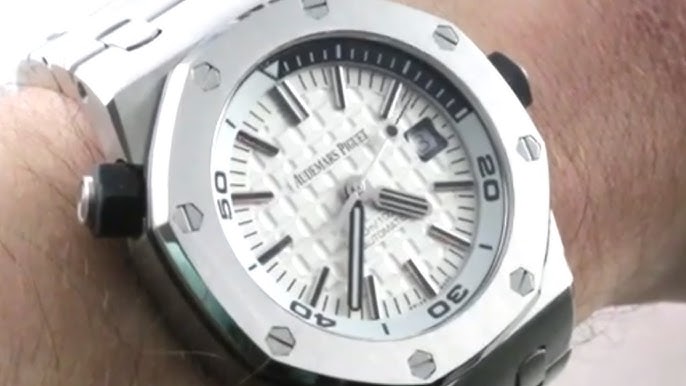
    AP Royal Oak skeleton replica watches represent the pinnacle of what the super clone industry can achieve — and its most honest limitation. An openworked dial hides nothing. Every bridge, every gear, every surface finish is visible from both sides of the watch. JF and ZF both produce skeleton Royal Oaks, and the quality has reached a point where the movement decoration genuinely impresses. But skeleton watches also expose more potential flaws than any solid-dial model. This guide covers the 15407ST Double Balance Wheel, the 15305ST Openworked, the Offshore skeleton variants, and exactly what to examine when evaluating these transparent timepieces.

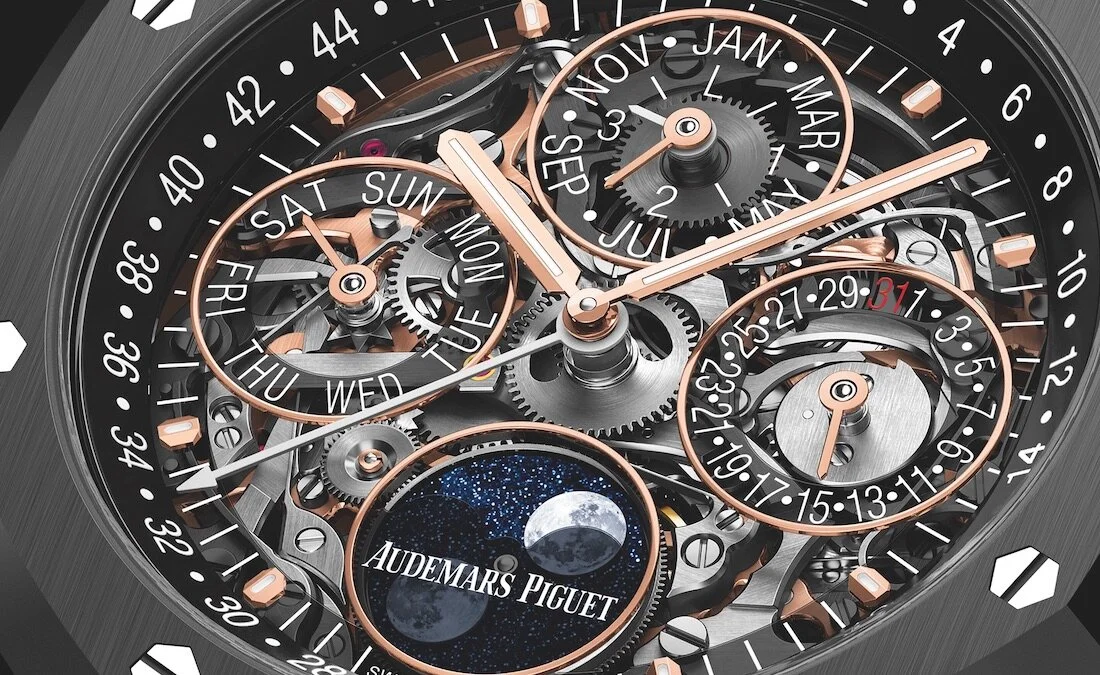
    The openworked references are in our AP Royal Oak replica collection, including the Royal Oak 15500 ceramic and the double balance wheel 15407.

    AP Royal Oak 15407 Double Balance Wheel skeleton dial
    AP Royal Oak 15407 Double Balance Wheel skeleton dial

    Why Skeleton AP Watches Fascinate

    A solid-dial Royal Oak shows you time. A skeleton Royal Oak shows you how time works. The appeal isn’t just aesthetic — though the visual impact is undeniable — it’s philosophical. When you look at a skeleton AP, you see every gear, every spring, every jewel that collaborates to measure time. The balance wheel oscillating at 28,800 beats per hour. The mainspring slowly unwinding. The escape wheel releasing energy in precisely measured pulses. It’s mechanical engineering on full display.

    Audemars Piguet was among the first luxury brands to offer factory skeleton watches rather than having independent artisans modify existing movements. AP’s approach: design the movement architecture so that skeletonization enhances the visual narrative rather than just removing material. The bridges are shaped as structural art — wide enough to showcase finishing techniques, narrow enough to reveal the components beneath. The result is a watch that looks complex but reads clearly, which is the entire challenge of skeleton watchmaking.

    For replica purposes, skeleton watches present an interesting paradox. On one hand, the exposed movement means every detail is visible — there’s nowhere to hide poor finishing or incorrect architecture. On the other hand, skeleton watches are so visually busy that individual flaws disappear in the overall visual complexity. A slightly imperfect Geneva stripe on a skeleton bridge is less noticeable than on a solid movement plate because the eye is processing dozens of surfaces simultaneously rather than focusing on one.

    15407ST — Double Balance Wheel

    AP Royal Oak 15407ST Double Balance Wheel openworked dial
    AP Royal Oak 15407ST Double Balance Wheel openworked dial

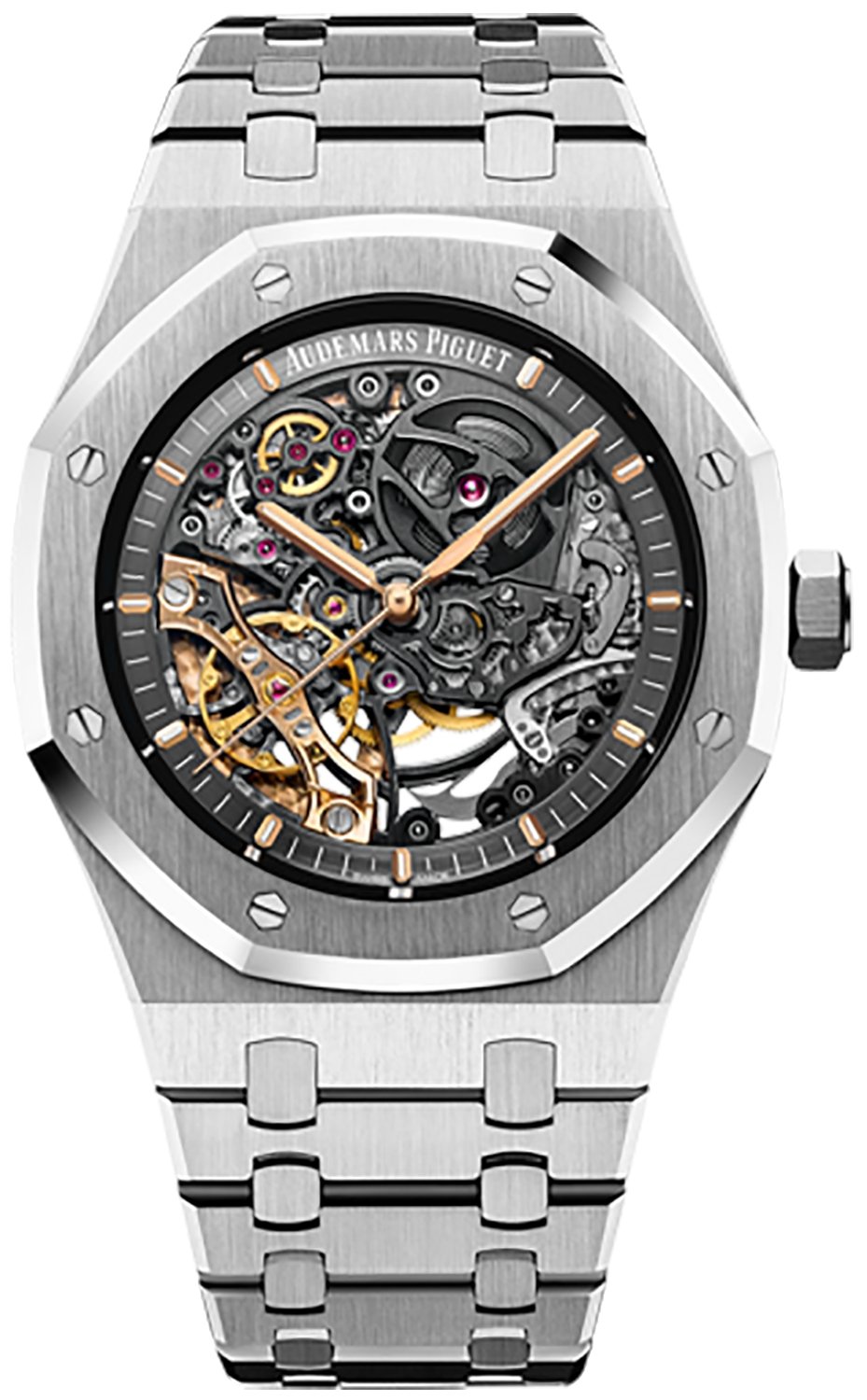
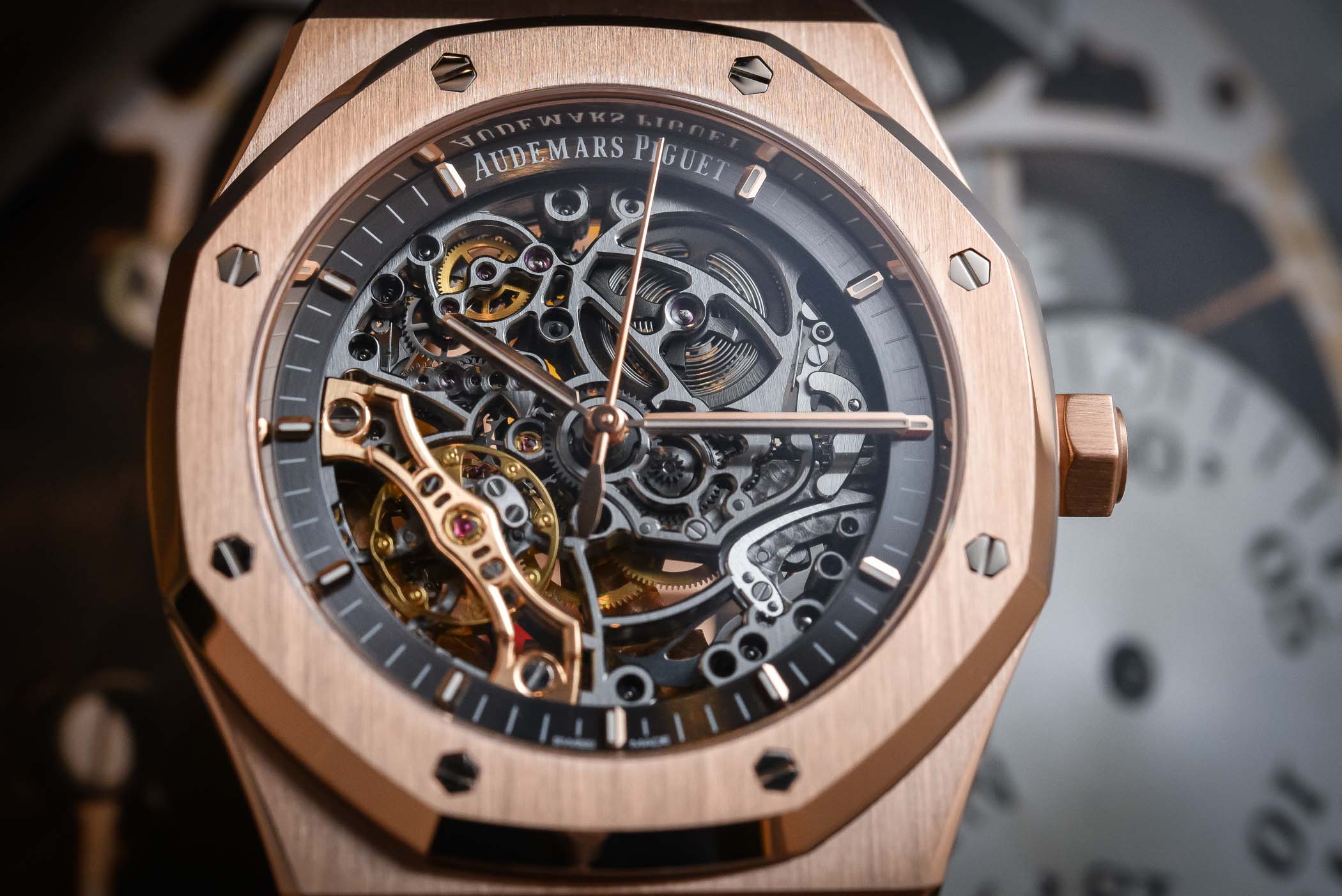
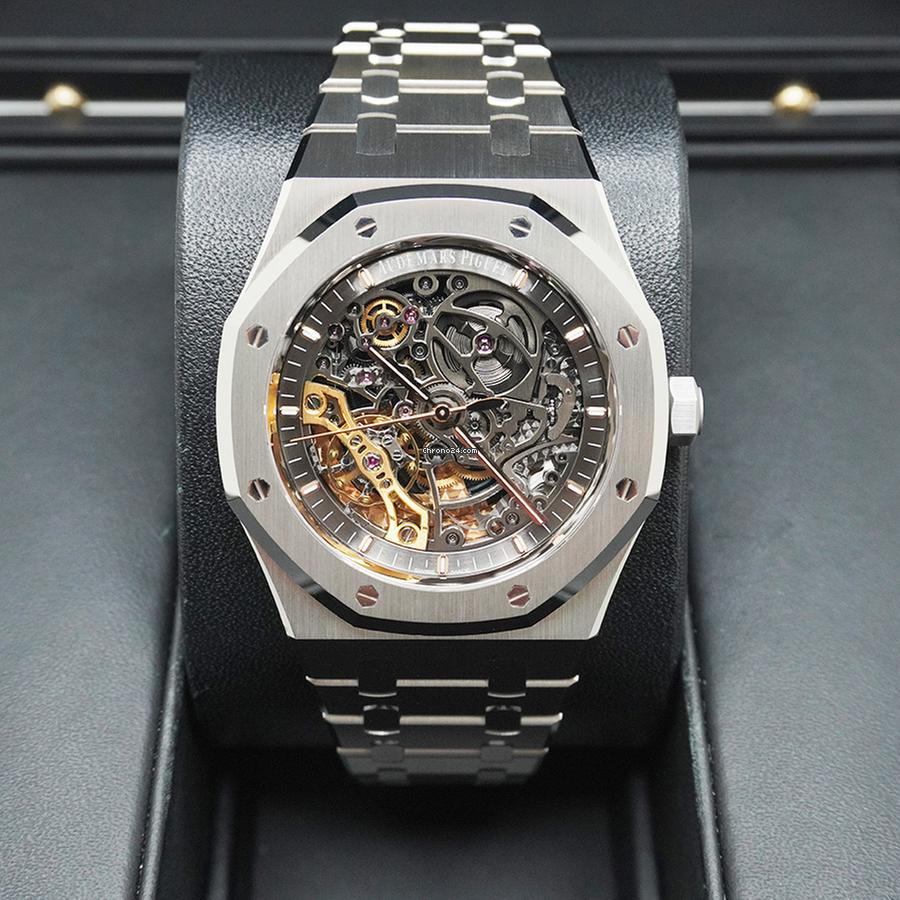
    The Royal Oak Double Balance Wheel Openworked (ref. 15407ST) is AP’s most dramatic skeleton Royal Oak. The headline complication: two balance wheels connected by a shared balance staff, beating in synchronized opposition. Genuine AP’s Cal. 3132 uses this dual-balance system to improve timekeeping stability — similar in concept to Breguet’s Résonance, though mechanically different. The visual impact is immediate: two balance wheels oscillating in mirror rhythm, visible through both the dial and caseback.

    The super clone version approaches this differently. Creating a genuine dual-balance system at this scale requires precision that’s currently beyond clone movement factories. Instead, JF’s version uses a single balance wheel movement with a decorative second balance wheel that rotates freely — it moves from the energy of the mainspring but doesn’t contribute to timekeeping. From a visual perspective at arm’s length, both wheels oscillate and the effect is convincing. Under a loupe, a watchmaker would note the mechanical difference. On the wrist, in motion, during everyday wear — the visual spectacle is maintained.

    The case on the 15407 is standard Royal Oak dimensions — 41mm diameter, the same octagonal bezel, same integrated bracelet. JF’s casework is solid here, using the same molds as their regular Royal Oak production. Where the skeleton model differs from a standard 15500 is the dial — or rather, the absence of one. The bridges are visible from 12 o’clock through to 6, with applied hour markers on a slim ring that circles the movement. The depth effect is remarkable: you’re looking through layers of mechanical architecture.

    15407ST Specs Super Clone Genuine
    Case Size 41mm x 10.4mm 41mm x 10.4mm
    Movement Modified Miyota 9015 + decorative second balance Cal. 3132 — true dual balance
    Balance Wheels 1 functional + 1 decorative (both oscillate) 2 functional synchronized
    Power Reserve ~40 hours 45 hours
    Bridge Finishing Laser-engraved Geneva stripes, hand-touched edges Hand-finished Côtes de Genève, hand-beveled
    Crystal Sapphire front + back, AR coated Sapphire front + back, AR coated

    The bridge architecture on JF’s 15407 follows genuine’s layout closely. The two large symmetrical bridges that frame the balance wheels are positioned at the correct angles, with the correct cutout shapes. The smaller bridges for the gear train are similarly placed. The overall visual architecture — the “map” of where metal and void alternate — matches genuine from dial side and caseback side. This matters because anyone who’s seen photos of a genuine 15407 would recognize if the bridge layout was wrong.

    15305ST — Classic Openworked

    The 15305ST is the “original” skeleton Royal Oak — predating the Double Balance Wheel model and offering a more traditional openworked presentation. Where the 15407 draws attention to the dual balance wheels as a focal point, the 15305 presents the movement more evenly — there’s no single dramatic complication to anchor your eye. Instead, the entire movement architecture is the show. Every bridge, every wheel, every jewel contributes equally to the visual composition.

    AP Royal Oak 15305 Openworked skeleton movement view
    AP Royal Oak 15305 Openworked skeleton movement view

    Genuine AP’s Cal. 3129 in the 15305 is a single-balance movement with conventional architecture — one balance wheel, one barrel, standard gear train. The skeletonization removes material from the bridges and plates to reveal the components beneath while maintaining structural integrity. The challenge: every removed gram of metal reduces the bridge’s stiffness, which can affect timekeeping accuracy if done without careful engineering. AP solved this by designing the bridges with internal ribbing invisible from the surface — engineering strength into the minimal remaining material.

    JF’s 15305 super clone uses the Miyota 9015 with custom skeleton bridges that follow the genuine Cal. 3129’s visual layout. Since the 9015 and 3129 have different internal architectures, the custom bridges serve dual purposes: they visually replicate the genuine’s openworked pattern while properly supporting the 9015’s gear train. The execution is clever — the bridge shapes are correct from a visual standpoint, and the functional requirements of the 9015 are met through internal structural elements hidden behind the decorative surfaces.

    The 15305 is generally considered easier to replicate well than the 15407 because there’s no dual balance wheel complication to address. The movement decoration — Geneva stripes, perlage, anglage on bridge edges — is the primary differentiator between a good and excellent skeleton replica, and JF’s current production shows markedly improved finishing over previous generations.

    Offshore Skeleton Variants

    AP also produces skeleton versions of the Royal Oak Offshore — combining the Offshore’s larger case (42-44mm), rubber strap, and sporty design language with an openworked dial. The visual effect is different from the standard Royal Oak skeleton: the Offshore’s larger case gives the movement more room to breathe visually, and the Mega Tapisserie pattern on the inner ring adds a second texture element that plays against the movement’s mechanical surfaces.

    JF produces the Offshore skeleton chronograph — a watch with both an openworked dial and functioning chronograph pushers. This is genuinely impressive from a manufacturing standpoint. The movement needs to be skeletonized, the chronograph needs to function, and the visual balance between mechanical components and open space needs to work. JF’s version achieves this with the modified Asian 7750 base — the chronograph functions work (start, stop, reset), the subdials are visible through the skeleton bridges, and the overall visual density is appropriate.

    The ceramic Offshore skeleton is the most dramatic variant — a matte black ceramic case framing a visible movement, typically with blue or red accent details on the bridges. JF uses actual ceramic for these models. The contrast between the dark ceramic case and the silver/rhodium movement surfaces creates a visual impact that photographs well and wears even better. The ceramic skeleton Offshore is arguably the most Instagram-ready AP in the super clone catalog.

    Collector note: Skeleton Offshore models are rarer in the super clone market than standard Offshore references. JF produces them in smaller batches, so availability can be inconsistent. If your dealer says a skeleton Offshore is “out of stock,” it genuinely might be — these aren’t always in continuous production like the 15710 Diver or 26470 Chronograph.

    Skeleton Movement Architecture

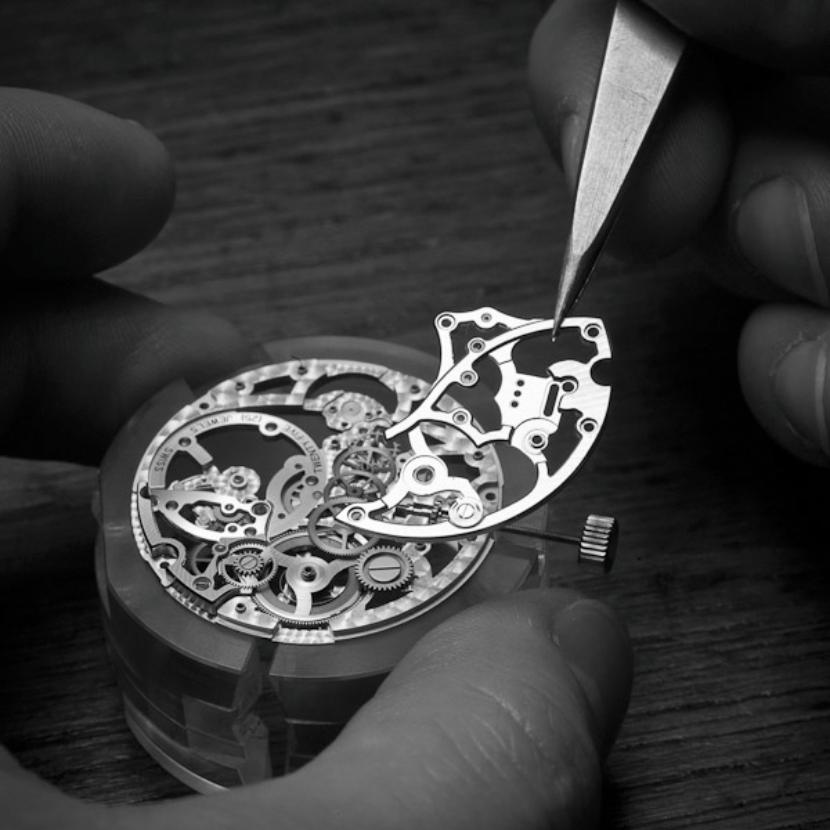
    Understanding how skeleton super clone movements work requires understanding what you’re actually looking at. The movement inside a skeleton Royal Oak super clone is a Miyota 9015 — the same proven Japanese caliber used in solid-dial AP replicas. The difference: the standard 9015 has solid bridges and a solid plate, designed purely for function. The skeleton version replaces these functional components with custom-machined bridges that serve the same structural role but are shaped to visually match AP’s genuine skeleton calibers.

    Skeleton watch movement Geneva stripes bridge finishing
    Skeleton watch movement Geneva stripes bridge finishing

    The custom bridges are CNC-machined from brass or German silver (an alloy of copper, nickel, and zinc), then finished with Geneva stripes, perlage, and edge beveling. The quality of this finishing is what determines whether a skeleton replica looks like fine watchmaking or a science fair project. Here’s what each finishing technique involves:

    Geneva stripes (Côtes de Genève): Parallel decorative lines that run across the bridge surfaces. On genuine AP, these are applied by a rotating abrasive disk that creates perfect, evenly-spaced, slightly overlapping arcs. On super clones, they’re typically laser-etched — the visual result is similar from normal viewing distance, but under magnification the laser lines have slightly sharper edges compared to genuine’s softer, mechanically-applied stripes.

    Perlage (circular graining): Small overlapping circles applied to flat surfaces, usually on the main plate visible through gaps between bridges. Genuine AP applies perlage by hand using a rotating peg coated with abrasive paste. Super clones use a machine-applied process — faster, more consistent, but lacking the subtle irregularities that identify hand work. The visual result is clean and attractive; the philosophical difference is craftsmanship method rather than appearance.

    Anglage (edge beveling): The angled polishing of bridge edges that creates a reflective mirror surface along each edge. This is the single most labor-intensive finishing technique in watchmaking — on genuine AP, anglage is applied by hand, one edge at a time, using a series of increasingly fine abrasive tools. Super clone anglage is machine-polished and generally appears as a matte bevel rather than a mirror-finished bevel. This is the most detectable difference between genuine and super clone skeleton movements under magnification.

    Finishing Technique Super Clone Quality Visibility of Difference Notes
    Geneva Stripes 8.5/10 Loupe only Laser vs mechanical — subtle edge difference
    Perlage 8/10 Loupe only Machine vs hand — too consistent on clone
    Anglage 6.5/10 Close inspection Matte vs mirror bevel — most detectable
    Engravings 8/10 Loupe only Laser vs chemical — clean but less depth
    Jewel Settings 7.5/10 Loupe only Correct color, slightly less polish on chatons

    Movement Finishing Deep Dive

    Since the movement IS the dial on a skeleton watch, the quality of finishing directly determines the watch’s visual impact. Let me break down what current-generation JF and ZF skeleton movements deliver:

    Bridge surface treatment: Both JF and ZF apply Geneva stripes across the full length of each visible bridge. The stripes run in the correct direction for each bridge (perpendicular to the long axis, as per Geneva Convention standards — yes, there’s actually a standard). The stripe spacing is approximately 1.2mm, matching genuine AP’s specification. The visual effect under ambient indoor lighting: clean, reflective parallel lines that shift as you tilt the watch. Exactly what you want.

    Rotor decoration: The oscillating weight (rotor) is the most visible component through the display caseback and is also partially visible from the dial side on skeleton models. JF uses a 21-karat gold mass on the rotor (genuine uses 22k — visually identical). The rotor surface carries “Audemars Piguet” text with the AP logo, and Geneva stripes cover the rotor arm. Current JF production shows improved text clarity compared to older generations — the letters are sharper and more evenly spaced.

    Color treatment: Some skeleton AP references feature colored elements — blue screws, rhodium-plated bridges, rose gold accents. JF handles these with reasonable accuracy. Blue screws are heat-treated to the correct cornflower blue (genuine AP uses thermal bluing, JF uses a chemical process that achieves similar color). Rhodium plating on bridges shows the correct cool silver-grey tone. Rose gold accents on limited editions are plated to match AP’s pink gold (5N gold) warmth.

    The honest assessment: If you hold a genuine AP skeleton and a JF skeleton side by side and examine them with a loupe, you’ll see differences — primarily in anglage quality, the depth of Geneva stripes, and the polish on jewel chatons. If you wear a JF skeleton on your wrist and look at it during a meeting, in a restaurant, at a bar — the movement is beautiful, the finishing catches light attractively, and the visual complexity delivers the “wow” that skeleton watches are supposed to provide.

    Skeleton vs Solid Dial — Which to Buy

    AP Royal Oak solid dial versus skeleton comparison
    AP Royal Oak solid dial versus skeleton comparison

    This decision depends on what you want from your AP. Both are excellent watches — they just serve different purposes and make different impressions. Here’s a straightforward comparison to help you decide:

    Factor Solid Dial (15500ST) Skeleton (15407ST)
    Time Reading Instant — clear dial Slower — busy visual field
    Wrist Presence Refined and understated Dramatic and eye-catching
    Versatility Suits any setting More casual/evening
    Replica Accuracy Higher — tapisserie hides movement Good — visual complexity forgives minor flaws
    Conversation Starter Moderate — watch people notice High — everyone notices
    Best Factory ZF (V4) JF

    If this is your only AP: get the solid dial (ZF 15500ST). It’s more versatile, easier to read, and ZF’s execution is class-leading. The tapisserie dial is what defines the Royal Oak for most people, and you should experience it before exploring variations.

    If this is your second AP: the skeleton is a perfect complement. You already own the classic — now add the dramatic. The skeleton wears the same dimensions but delivers a completely different experience. You’ll find yourself wearing it for evenings out, weekend adventures, and any occasion where you want your watch to be noticed rather than blended.

    If you’re primarily interested in the mechanical spectacle — watching gears turn, balance wheels oscillate, the mainspring slowly unwind — the skeleton is the obvious choice regardless of whether it’s your first or fifth AP. Some people buy watches for status, others for aesthetics, others for engineering appreciation. If you fall in the engineering camp, the skeleton speaks your language.

    QC Specifics for Skeleton Models

    Quality controlling a skeleton AP requires different focus points than a solid-dial model. You’re evaluating movement finishing rather than tapisserie quality, bridge placement rather than date alignment. Here’s a skeleton-specific QC checklist:

    Skeleton QC Checklist:

    • Bridge symmetry: Main bridges should be visually balanced left-right
    • Geneva stripes: Consistent spacing and direction on all visible bridges
    • Dust/debris: No particles trapped between bridges (hard to remove post-assembly)
    • Balance wheel oscillation: Request a video — it should spin freely and smoothly
    • Hour markers: Applied markers on the chapter ring should be straight and secure
    • Hands: Clear visibility against the movement — correct lume fill
    • Rotor text: “Audemars Piguet” clearly legible on the oscillating weight
    • Caseback view: Movement should look identical from the back — mirror of the dial side
    • Screw color: Blued screws (if present) should be consistent shade of blue
    • Bezel and bracelet: Same checks as solid-dial models apply here too

    Important: Always request a video for skeleton models, not just photos. A video shows the balance wheel oscillating, which confirms the movement is running correctly and the “double balance wheel” effect (on 15407) is functioning. Photos alone don’t verify movement function on skeleton watches.

    Factory Comparison for Skeleton

    Fewer factories produce skeleton AP models compared to solid-dial versions. The movement finishing requirements are higher, and the market for skeleton watches is smaller. Here’s where each factory stands:

    JF Factory is the clear leader for skeleton AP. They produce the 15407ST Double Balance Wheel, the 15305ST Openworked, and skeleton Offshore variants. Their movement finishing is the best available in the super clone market for these references. JF’s decade-plus experience with AP gives them a finishing standard that newer factories haven’t matched on skeleton models. Recommendation: JF for any skeleton Royal Oak or Offshore.

    ZF Factory has experimented with skeleton Royal Oaks but their focus remains on solid-dial models where their bracelet and tapisserie advantages matter most. ZF’s skeleton production is smaller in volume and less refined in movement finishing compared to JF. If you want a skeleton AP and ZF is your only option through a particular dealer — it’s acceptable. But given the choice, JF is the better pick for exposed-movement models.

    APS Factory has not significantly entered the skeleton space. Their strength — dial color accuracy — is irrelevant on a watch without a traditional dial. APS may expand into skeleton production in the future, but as of early 2026, they’re not a contender for these references.

    Living with a Skeleton AP

    Skeleton watch on wrist casual lifestyle setting
    Skeleton watch on wrist casual lifestyle setting

    Owning a skeleton watch changes how you interact with time. You don’t just glance at the time and look away — you find yourself watching the mechanism work. The balance wheel’s hypnotic oscillation becomes a meditation anchor during meetings. The rotor’s swing when you gesture becomes a private animation only you can see. It sounds like marketing copy, but it’s genuinely how skeleton watch owners describe the experience.

    Practical considerations: the skeleton dial is slightly harder to read quickly than a solid dial with contrasting hands and markers. The hands on a skeleton Royal Oak are lume-filled, and AP designed them with enough width and luminous material to remain legible against the busy movement background. In good lighting, readability is fine. In dim conditions, the lume helps significantly. In total darkness, the skeleton is actually easier to read than you’d expect because the luminous hands glow against a dark background (the movement doesn’t glow).

    Dust is the skeleton watch owner’s minor enemy. Over time, microscopic particles can find their way between the crystal and movement, settling on bridge surfaces where they’re visible. Genuine or super clone, this happens to all skeleton watches. The solution: periodic cleaning during regular service intervals (every 3-5 years). Between services, avoid exposing the watch to dusty environments without protection — but don’t overthink this. Normal daily wear in normal environments is fine.

    The social aspect: skeleton watches attract attention. People who would walk past a standard Royal Oak without noticing will stop and comment on a skeleton version. “Is that the inside of the watch?” is the most common question. Whether this attention is positive or uncomfortable depends on your personality. If you enjoy sharing your appreciation of mechanical engineering — the skeleton opens those conversations naturally.

    FAQ — 15 Skeleton Questions

    Does the double balance wheel actually work on the super clone?

    The movement uses one functional balance wheel and one decorative wheel that rotates freely. Both oscillate visually — the dual-wheel effect is visually convincing at arm’s length. Functionally, timekeeping relies on the single primary balance wheel.

    Which factory makes the best skeleton AP?

    JF Factory. Their movement finishing — Geneva stripes, bridge shaping, rotor decoration — is the best available for skeleton AP references. They produce both the 15407 Double Balance Wheel and 15305 Openworked.

    Is the movement finishing close to genuine AP?

    At arm’s length and under normal indoor lighting, yes — the Geneva stripes, perlage, and bridge shapes match genuine’s visual character. Under a loupe, differences in anglage (edge beveling) and engraving depth become apparent. The overall visual impression at wearing distance is convincing.

    Can I read the time easily on a skeleton dial?

    Yes, though it takes a fraction of a second longer than a solid dial. The hands have luminous fill that provides contrast against the movement. In bright lighting, readability is straightforward. In dim conditions, the lume activates and makes the hands stand out clearly.

    Is the skeleton more fragile than the solid dial version?

    The case and bracelet are identical in strength. The movement bridges are slightly thinner due to skeletonization, but they’re still robust enough for daily wear. Don’t drop it on tile — but that advice applies to all watches.

    Should a skeleton AP be my first replica watch?

    Probably not. Start with a solid-dial model (ZF 15500ST) to appreciate the Royal Oak’s core design language — the tapisserie, the bracelet, the octagonal bezel. Once you love the platform, the skeleton variant becomes a meaningful second piece rather than a novelty first purchase.

    Do skeleton AP replicas hold up over time?

    Yes. The movement is the same proven Miyota 9015 base as solid-dial models. The decorative bridges don’t affect long-term reliability. Service intervals are the same: every 3-5 years for cleaning and lubrication.

    What about dust getting inside the movement?

    The case is sealed just like solid-dial models — dust can’t enter during normal wear. Over years, microscopic particles may accumulate and become visible on bridge surfaces during servicing. Regular service addresses this. Don’t open the caseback yourself.

    Is the ceramic skeleton Offshore available?

    JF produces ceramic skeleton Offshore models in limited batches. Availability fluctuates — check with your dealer for current stock. When available, they use real ceramic components (not painted metal) with the skeleton movement visible through the openworked dial.

    Can a watchmaker service a skeleton super clone?

    Yes. Tell them it’s a Miyota 9015 with custom decorative bridges. The functional components are standard 9015 parts. The skeleton bridges lift off to expose the same gear train any 9015-experienced watchmaker knows. No special tools required.

    How does the skeleton compare to a Hublot Big Bang skeleton?

    Different design philosophy. Hublot’s skeleton is more industrial and modern — layered materials, visible screws, aggressive angles. AP’s skeleton is classical — Geneva stripes, traditional bridge shapes, refined finishing. Choose based on your aesthetic preference: industrial vs traditional.

    What’s the power reserve on skeleton models?

    Approximately 38-42 hours depending on the specific model. The 15407 Double Balance Wheel runs slightly shorter (~38 hours) due to the additional rotating mass. The 15305 achieves the standard ~42 hours. Both easily handle overnight off the wrist.

    Are there rose gold skeleton Royal Oaks available?

    JF produces skeleton models in rose gold plating — the 15407OR and similar references. The rose gold case and bracelet with visible movement create a striking luxury aesthetic. Plating durability is 2-3 years with daily wear on high-contact areas.

    What QC photos should I request specifically for skeleton?

    In addition to standard photos: a macro dial shot showing bridge finishing quality, a caseback shot showing rotor decoration, and — critically — a short video showing the movement running. The video confirms balance wheel function, rotor spin, and overall movement health.

    Is the 15407 or 15305 better as a first skeleton AP?

    The 15407 Double Balance Wheel has more visual drama — the dual oscillating wheels are mesmerizing. The 15305 is more traditionally elegant with a cleaner movement presentation. For maximum impact, 15407. For understated sophistication, 15305.

    Final Word

    A skeleton Royal Oak is a declaration: you don’t just appreciate the time on your wrist — you appreciate the engineering that measures it. JF Factory’s current skeleton production delivers movement finishing that photographs well, wears impressively, and rewards the kind of repeated close inspection that skeleton watches invite. Whether you choose the dramatic dual-balance 15407 or the classical 15305, you’re getting a watch that turns a mechanical movement from hidden infrastructure into visible art. Pair it with a solid-dial Royal Oak in your collection and you’ve covered both sides of what makes AP special — the iconic tapisserie and the masterful movement beneath it.

    Related guides: Royal Oak Replica Guide • Offshore Replica Guide • Best AP Super Clone Factory Rankings • Best Replica Watches 2026 • Browse AP Collection
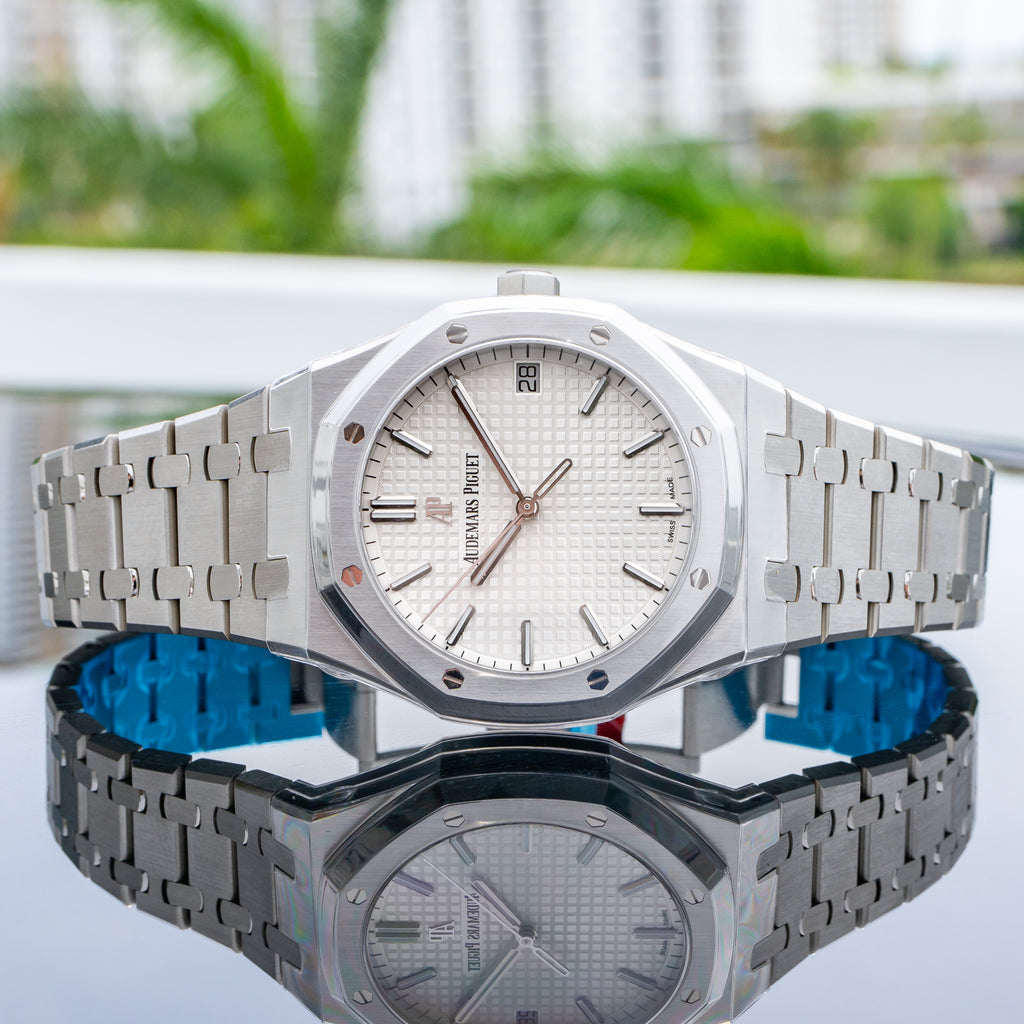
  • Best Audemars Piguet Super Clone — Factory Rankings, Movement Breakdown, and What Your Money Actually Gets You

    Best Audemars Piguet Super Clone — Factory Rankings, Movement Breakdown, and What Your Money Actually Gets You

    Best Audemars Piguet Super Clone — Factory Rankings, Movement Breakdown, and What Your Money Actually Gets You

    Last updated: March 2026 • 22-minute read • Based on 40+ AP builds examined

    Best Audemars Piguet super clone watches come from exactly three factories worth discussing — ZF, JF, and APS. Everyone else is either rebranding their work or producing mid-tier pieces that miss the DNA of what makes an AP special. I’ve handled over forty AP super clones across Royal Oak, Offshore, and Code 11.59 references, and the differences between factories are measurable and consistent. This guide breaks down which factory builds which model best, what movements they use, what you can actually expect at each tier, and how to navigate the ordering process to land the best possible AP on your wrist.

    Ready to buy rather than compare? Browse our AP super clone watches by collection: the AP Royal Oak replica, the Royal Oak Offshore replica and the Code 11.59 replica.

    Audemars Piguet Royal Oak 15500ST blue dial super clone
    Audemars Piguet Royal Oak 15500ST blue dial super clone

    AP Factory Landscape in 2026

    Audemars Piguet is one of the hardest luxury brands to replicate well. The integrated bracelet on the Royal Oak requires sub-millimeter precision at every link junction. The tapisserie dial pattern — that checkered waffle texture — is either convincing or immediately wrong. The octagonal bezel screws need correct hex patterns and flush seating. Miss any of these and the watch reads “off” to anyone who’s seen a genuine AP in person.

    That difficulty is exactly why the factory landscape for AP is concentrated. Building a convincing AP requires serious tooling investment — we’re talking CNC machines programmed specifically for the octagonal bezel geometry, custom dial presses for the tapisserie pattern, and specialized polishing jigs that alternate between brushed and mirror surfaces on the same component. Factories that invested in this tooling produce excellent watches. Factories that didn’t produce watches that look like toys.

    Three factories have made that investment and proven it over years of production: ZF (also called ZF V3 or ZF V4 depending on the generation), JF (J Factory, long the AP specialist), and APS (a newer factory that’s earned its spot through quality execution). Others exist — XF, K1, and various unnamed operations — but their AP output is inconsistent at best. This guide focuses on the three that matter.

    Key insight: Unlike Rolex where you might debate five factories, the AP super clone market is a three-horse race. That simplifies your decision — but makes the details between those three all the more important.

    ZF Factory — The Royal Oak King

    ZF Factory Royal Oak 15500ST detailed casework
    ZF Factory Royal Oak 15500ST detailed casework

    ZF earned their reputation on the Royal Oak 15500ST and have expanded into multiple AP references since. Their current V4 Royal Oak is considered the benchmark — the version against which every other AP super clone is measured. What sets ZF apart isn’t any single component but the overall integration. The case, bezel, bracelet, and dial work together in a way that reads as a single cohesive object rather than an assembly of parts.

    The bracelet is ZF’s signature advantage. AP’s integrated bracelet transitions from case to link with no visible gap — a design feat that Gerald Genta made look effortless but is actually a machining nightmare. ZF’s V4 bracelet achieves this transition with sub-0.2mm tolerance. The links have alternating brushed surfaces with polished chamfers on the edges — exactly matching genuine’s finishing language. Each link feels solid, doesn’t rattle, and the folding clasp has a satisfying snap with resistance that feels premium rather than cheap.

    The bezel screws — those eight hexagonal screws that define the Royal Oak — are correctly shaped in ZF’s current production. Early generations had slightly oversized screwheads or hex patterns that were too deep. The V4 corrected this: screws sit flush with the bezel surface, hex patterns are sharp, and each screw aligns with its intended orientation (they’re not all identical — genuine AP varies the screw alignment subtly).

    ZF’s dial work has matured significantly. The Grande Tapisserie pattern has correct depth and square proportions. The applied AP logo at 12 and the applied hour markers show clean edges without visible glue or alignment issues. The date window at 3 o’clock has a correct font with appropriate weight — one of those details that’s easy to get slightly wrong and hard for a buyer to articulate but noticeable subconsciously.

    ZF Royal Oak Specs Details
    Primary Models 15500ST, 15202ST (Jumbo), 15510ST
    Movement Clone Cal.4302 (based on Miyota 9015, decorated rotor + plates)
    Case Material 316L stainless steel, correct 10.4mm thickness
    Bracelet Tolerance <0.2mm gap at case-bracelet junction
    Tapisserie Quality 9/10 — correct square depth, consistent pattern
    Crystal Sapphire with AR coating, correct purple/blue hue
    Water Resistance 50m tested (genuine: 50m rated)
    Accuracy ±5-10 sec/day (adjustable)

    JF Factory — Offshore Specialist

    JF Factory was producing AP replicas before most current factories existed. Their history with Audemars Piguet goes back over a decade, and their specialization shows most clearly in the Offshore collection — the Diver 15710ST and the Chronograph 26470ST are their strongest references. JF understands the Offshore design language: oversized crown guards, rubber-integrated pushers, the “Mega Tapisserie” dial pattern that’s different from the standard Royal Oak’s “Grande Tapisserie.”
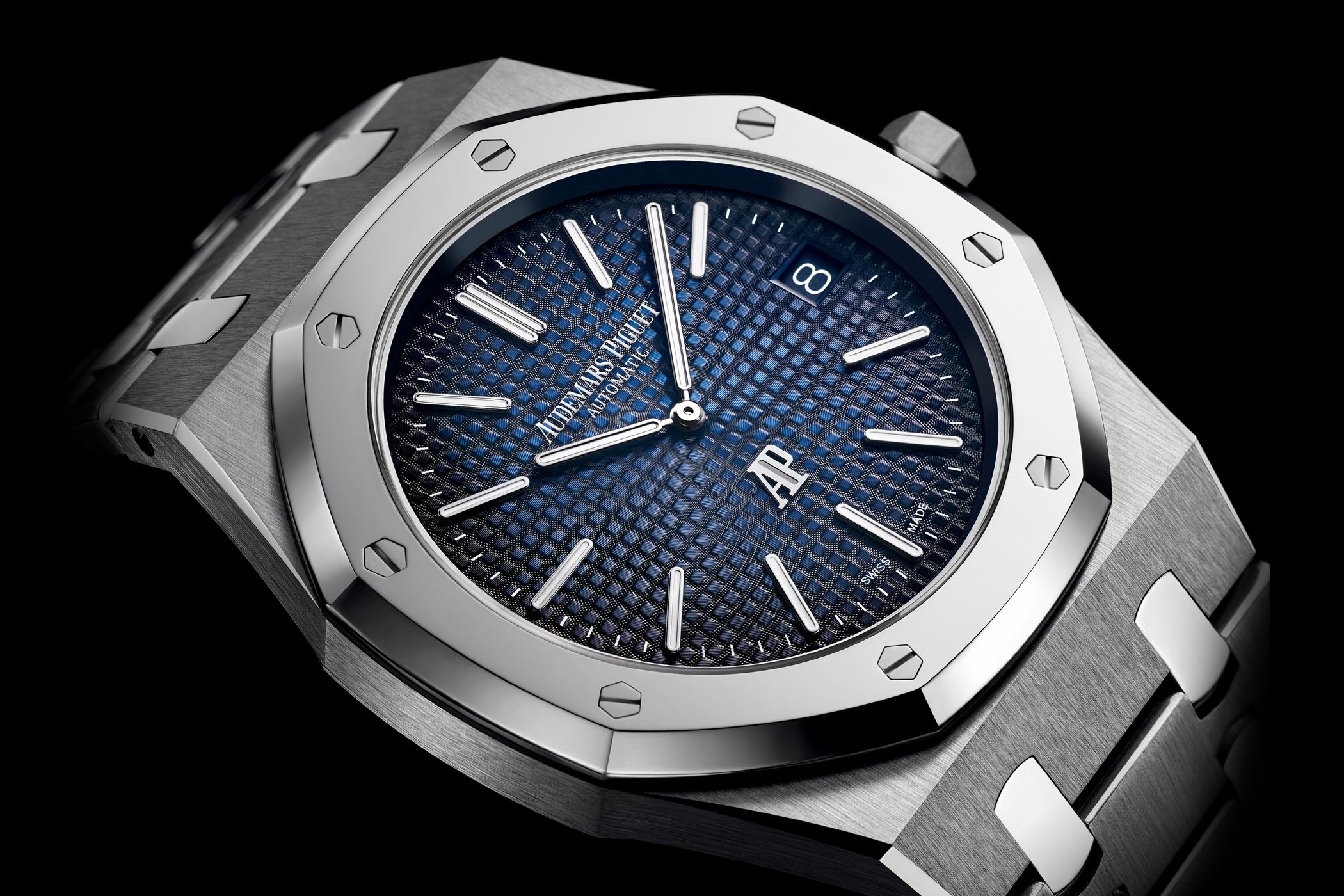
    JF Factory AP Offshore Diver 15710 on rubber strap
    JF Factory AP Offshore Diver 15710 on rubber strap

    The Offshore rubber strap is where JF’s experience becomes obvious. Genuine AP uses a proprietary rubber compound that has specific hardness, texture, and a particular way it curves around the wrist. JF’s rubber is the closest to genuine — not too soft (which feels cheap), not too stiff (which creates uncomfortable pressure points). The tang buckle and strap holes align properly, and the texture pattern on the strap surface matches genuine’s subtle grid pattern.

    Where JF falls slightly behind ZF: the standard Royal Oak. JF’s 15500ST exists, but the bracelet integration isn’t as tight as ZF’s latest version. The tapisserie pattern on JF’s standard Royal Oak dials has been acceptable but not class-leading. This isn’t a criticism — it’s a specialization. JF focuses their R&D budget on Offshore references and it shows in those models.

    JF’s chronograph Offshores use a modified Asian 7750 caliber that positions subdials at the correct 3-6-9 layout. The chronograph functions are smooth: start/stop/reset all operate correctly, and the elapsed seconds hand sweeps rather than ticks. The pushers have correct rubber cladding — a detail some factories omit because it adds manufacturing complexity. JF doesn’t skip it.

    JF Factory Specs Details
    Primary Models 15710ST (Diver), 26470ST (Chrono), ceramic Offshore
    Diver Movement Miyota 9015 base, custom rotor with AP engravings
    Chrono Movement Modified Asian 7750, correct 3-6-9 subdials
    Rubber Strap Proprietary compound, closest to genuine AP feel
    Ceramic Models Real ceramic components, not painted metal
    Water Resistance 100m tested (Diver), genuine rated 300m
    Best For Offshore Diver, Offshore Chronograph, ceramic models

    APS Factory — The Challenger

    APS entered the AP super clone market more recently than ZF or JF, but they’ve made a genuine impact. Their approach is interesting: rather than trying to beat ZF at the Royal Oak or JF at the Offshore, APS identified gaps in the lineup — models that ZF and JF either don’t produce or produce with less focus — and went after those. The result is a factory that complements the other two rather than directly competing on their strongest references.

    APS’s Royal Oak 15400ST was their breakthrough piece. The 15400 (the predecessor to the 15500) has a different dial layout — no seconds subdial, just a date window. APS nailed the proportions on this reference, and when they moved to the 15500 they carried that precision forward. Their tapisserie is slightly different from ZF’s in character — where ZF’s has a crispier, more angular pattern, APS’s has slightly more rounded squares that some collectors actually prefer as a closer match to certain genuine production runs.

    APS Factory AP Royal Oak 15500 white dial on bracelet
    APS Factory AP Royal Oak 15500 white dial on bracelet

    Where APS stands out: dial color accuracy. Their blue dials have a specific gradient that shifts with light angle — moving from deep navy in direct light to a steel blue in overcast conditions. This color shift is a genuine AP characteristic that ZF doesn’t quite capture to the same degree. APS also produces some of the better two-tone (steel and rose gold) Royal Oak variants. Their rose gold plating has improved to 3-5 microns thickness with appropriate warmth — not the overly yellow gold that plagues cheaper options.

    The movement in APS watches is their own clone caliber based on the Miyota 9015 platform but with distinct finishing. The decorated rotor carries AP’s “Audemars Piguet” engraving with a slightly different font weight than ZF’s version — neither is objectively better, and both are close to genuine. APS has been refining their movement finishing with each generation, and their current production shows improved Geneva stripes and perlage that look correct through the display caseback.

    Worth noting: APS has been pushing into the Royal Oak Chronograph space (26331ST) with mixed results. Their time-only Royal Oak models are strong, but the chronograph requires a different movement architecture, and APS is still working out the subdial alignment on this reference. For AP chronographs, JF remains the safer choice.

    AP Clone Movements Explained

    Every AP super clone runs on a movement descended from one of two platforms: the Miyota 9015 (for time-only and date models) or the Asian 7750 (for chronographs). Both are proven Japanese/Chinese calibers with decades of service history. What factories do is modify these base movements with custom bridges, rotors, and plates to visually match AP’s genuine calibers when viewed through the display caseback.

    The Miyota 9015 beats at 28,800 vph (4Hz), matching genuine AP’s Cal. 4302 beat rate exactly. It has a 42-hour power reserve (genuine is 70 hours — this is the one spec where the clone falls short). It’s automatic, it hacks (stops the seconds hand when you pull the crown to set time), and it hand-winds. The 9015 has been in production since the early 2010s, which means watchmakers worldwide know how to service it. Parts are available. It’s not exotic — it’s reliable.

    The decoration layer is what differentiates a cheap Miyota 9015 build from a super clone version. ZF’s clone Cal. 4302 has a custom rotor with the 21-karat gold mass (genuine uses 22k, the difference is invisible), Geneva stripes on the bridges, and perlage on the main plate. The engravings — “Audemars Piguet,” serial numbers, “Geneve” marks — are laser-etched rather than stamped, producing cleaner text at the cost of slightly less depth than genuine’s chemical etching.

    Movement Base Used In Power Reserve Serviceability
    Clone Cal. 4302 Miyota 9015 15500, 15510, 15202 ~42 hours Excellent — any watchmaker
    Clone Cal. 3126 Miyota 9015 15710 Offshore Diver ~42 hours Excellent
    Clone Cal. 3126/3840 Asian 7750 26470 Offshore Chrono, 26331 RO Chrono ~46 hours Good — chrono specialist
    Clone Cal. 2121 Miyota 9015 (extra thin) 15202 Jumbo Ultra-Thin ~38 hours Good — requires careful service

    For the Jumbo 15202ST — the ultra-thin Royal Oak at 8.1mm — ZF uses a specially modified Miyota 9015 that’s been slimmed to fit the tight case. This modification reduces power reserve slightly (around 38 hours vs the standard 42) and means the movement needs more careful servicing since the tolerances are tighter. The trade-off is worth it for the correct case profile — the Jumbo’s thinness is its defining characteristic and a fat movement ruins the entire aesthetic.

    Service tip: When getting your AP super clone serviced, tell the watchmaker it runs a Miyota 9015 base. The custom bridges and rotor are cosmetic — the functional components are standard 9015 parts. Any competent watchmaker can service a 9015, but not all are familiar with “clone caliber” terminology. Speaking the watchmaker’s language gets better results.

    Model-by-Model Factory Picks

    This is the section that saves you weeks of research on forums. For each major AP reference, one factory builds it best. Sometimes the margin is wide, sometimes it’s narrow — but in every case there’s a clear recommendation based on current production quality.

    AP Royal Oak Jumbo 15202ST Extra-Thin on wrist
    AP Royal Oak Jumbo 15202ST Extra-Thin on wrist
    Model Best Factory Runner-Up Why This Factory Wins
    Royal Oak 15500ST ZF APS Tightest bracelet integration, best bezel screws
    Royal Oak 15202ST Jumbo ZF — Only factory with correct 8.1mm slim case
    Royal Oak 15510ST ZF APS Updated dial colors, improved movement decoration
    Royal Oak Chrono 26331ST JF ZF Best chronograph subdial alignment
    Offshore Diver 15710ST JF ZF Best rubber strap, rotating bezel feel
    Offshore Chrono 26470ST JF — Rubber-clad pushers, ceramic bezel accuracy
    RO Two-Tone (Rose Gold) APS ZF Best rose gold plating color and thickness
    Ceramic Offshore JF — Real ceramic components, correct matte finish

    The pattern is clear: ZF for time-only Royal Oak on bracelet, JF for anything Offshore or chronograph, APS for two-tone and specific dial colors. This isn’t random — each factory invested in different tooling. ZF spent on bracelet machines and dial presses for the standard Royal Oak dimensions. JF invested in rubber compounding, pusher tooling, and chronograph movement modification. APS focused on plating technology and dial color matching.

    The Tapisserie Test — What Separates Good from Great

    AP Royal Oak Grande Tapisserie dial pattern macro detail
    AP Royal Oak Grande Tapisserie dial pattern macro detail

    If there’s one element that makes or breaks an AP replica, it’s the tapisserie. This checkered waffle pattern on the dial is AP’s signature — more defining than the octagonal bezel, more distinctive than the exposed screws. Genuine AP creates this pattern using a specialized CNC process that cuts tiny squares into the brass dial blank at precisely controlled depths. The result is a grid of raised squares that catch light from multiple angles simultaneously, creating a visual shimmer that’s unlike any other dial texture in watchmaking.

    There are two types: Grande Tapisserie (on the standard Royal Oak) uses smaller, more numerous squares. Mega Tapisserie (on the Offshore) uses larger squares. Each factory approaches these differently, and the quality range is enormous. Here’s what to look for:

    Square depth: Each square should be cut deep enough to create shadow definition but not so deep that it looks like a grid of holes. Genuine AP’s depth is approximately 0.15mm — you can feel it with a fingernail but can’t catch a fingernail in the grooves. ZF hits this depth consistently. APS is slightly shallower (0.12mm), which actually looks correct in certain lighting but loses definition in low light.

    Square proportion: Each square should be exactly square — not rectangular, not slightly trapezoidal. This seems obvious, but maintaining perfect square proportions across a curved dial surface (AP dials have a subtle convexity) requires precision tooling. ZF and APS both achieve correct proportions. Lower-tier factories frequently show slight rectangular distortion toward the dial edges.

    Grid alignment: The tapisserie grid should align with the dial’s center. On genuine AP, the grid radiates from the dial center point — meaning the lines of the grid pass through 12, 3, 6, and 9 o’clock positions. If the grid is rotated even 1-2 degrees from this alignment, the dial looks “off” in a way most people can’t articulate but absolutely notice. ZF’s alignment is correct. APS is correct. JF’s standard Royal Oak occasionally shows slight rotation — another reason JF is better suited for Offshore where the Mega Tapisserie pattern is more forgiving.

    Tapisserie Factor ZF JF APS
    Square Depth 9.5/10 7.5/10 8.5/10
    Square Proportion 9/10 8/10 9/10
    Grid Alignment 9.5/10 7/10 9/10
    Light Play 9/10 7.5/10 8.5/10
    Color Under Tapisserie 8.5/10 8/10 9/10

    AP-Specific QC Protocol

    Quality control photos are where your purchase succeeds or fails. For AP specifically, there are checks that matter far more than for other brands. The Royal Oak’s design is so precise and geometric that flaws show more obviously than on, say, a round Rolex case. Here’s the exact QC protocol I use when evaluating AP super clones from QC photos:

    AP Royal Oak display caseback showing decorated movement
    AP Royal Oak display caseback showing decorated movement

    1. Bezel screw alignment. Eight screws, each with a hexagonal slot. On genuine AP, these slots are oriented in a specific pattern — not all pointing the same direction. Request a straight-on bezel photo and verify each screw is flush with the bezel surface. No screw should be recessed or protruding. The hex slots should be sharp — no soft edges or burrs.

    2. Bracelet-case transition. The junction where bracelet meets case should show zero visible gap on the sides. Ask for a photo at approximately 45 degrees from the 6 o’clock side — this angle reveals gaps that straight-on photos hide. Any light visible between case and bracelet means the tolerance is off and you should request another unit.

    3. Dial tapisserie under magnification. Request a macro photo of the dial. The tapisserie squares should be uniform across the entire dial face. Look especially at the outer ring of squares near the hour markers — this is where quality drops in lesser factories because the machining approaches the edge of the dial blank.

    4. Date window alignment. The date should be centered vertically and horizontally within the window. AP’s date windows are precisely cut — there’s no room for the date text to sit high, low, or shifted. Check dates with multiple digits (like 22, 28) since wider numbers reveal misalignment more readily.

    5. Applied markers and logo. The AP logo at 12 o’clock and all hour markers are applied (glued on raised metal pieces, not printed). Check that each marker is straight, centered on its index position, and at consistent height. Tilted markers are a reject — they can’t be fixed after assembly.

    6. Caseback engravings. The display caseback should show clean rotor engravings and correct serial number formatting. The “Audemars Piguet” text on the rotor should have consistent letter spacing. The caseback itself should have “AP” stamp, serial number, and material marking. These are all laser-engraved on super clones — check for crispness.

    Quick QC Checklist for AP:

    • All 8 bezel screws flush and sharp
    • Zero gap at bracelet-case junction (both sides)
    • Tapisserie pattern uniform edge to edge
    • Date centered in window (check double-digit date)
    • All markers straight and level
    • AP logo at 12 centered and not tilted
    • Crown operates smoothly (ask dealer to confirm)
    • Caseback text crisp and correctly spelled
    • Lume plots match hour markers in size
    • Clasp snaps shut with solid click (ask dealer)

    The Ordering Process — Step by Step

    Buying a super clone AP isn’t like buying a watch on Amazon. The process is individual, involves direct communication, and includes a quality approval step that doesn’t exist in normal retail. Understanding this process before you start eliminates 90% of the anxiety first-time buyers experience. Here’s exactly how it works:

    Step 1 — Choose your reference. Decide which AP model you want before contacting anyone. Know the reference number (e.g., 15500ST.OO.1220ST.01 for a Royal Oak blue dial) and the factory you want (ZF, JF, or APS based on this guide). Having this information ready demonstrates you’ve done research and generally results in better service.

    Step 2 — Contact a trusted dealer. Dealers act as intermediaries between you and the factory. They handle ordering, QC photography, and shipping. A good dealer has relationships with multiple factories and can source from whichever you specify. Communication is typically via WhatsApp, Telegram, or WeChat — not email. Response times vary from hours to a day depending on time zones (most dealers are in Asia).

    Step 3 — Place your order. Payment methods vary by dealer: bank transfer, cryptocurrency, and sometimes PayPal for established customers. Once payment clears, the dealer orders from the factory. This isn’t picking from a shelf — the factory either has your configuration in current production or starts building one. Wait times range from 3-14 days depending on model availability.

    Step 4 — QC photos arrive. This is the critical step. The dealer photographs your specific watch — not a stock photo, YOUR actual unit. You’ll typically receive 8-15 photos showing every angle: dial straight-on, bezel close-up, side profile, caseback, bracelet clasp, lume shot, and timegrapher reading. Evaluate these against the QC checklist above. Take your time — there’s no rush at this stage.

    Step 5 — GL or RL. “Green Light” (GL) means you approve the watch and the dealer ships it. “Red Light” (RL) means you want a different unit — specify exactly what’s wrong and why. Legitimate issues get a replacement QC round. Unreasonable RLs (expecting gen-level perfection at super clone pricing) will strain your relationship with the dealer. Be specific: “the date is shifted 0.5mm right” is actionable. “The dial looks weird” is not.

    Step 6 — Shipping and delivery. Most dealers ship via triangulated shipping through a hub — the watch goes from China to a transit country, then to your destination. This adds a few days but reduces customs attention. Tracking is provided. Delivery typically takes 10-20 days from GL to your door, depending on destination and shipping method.

    Pro tip: If you’re buying your first AP super clone, start with a ZF 15500ST in a standard color (blue, black, or grey). It’s the most refined AP super clone available, the QC is most consistent, and it’s the reference with the most comparison material online for evaluating your QC photos.

    Common AP Flaws and How to Spot Them

    Every super clone has tells — the question is whether they’re visible at arm’s length, at close inspection, or only under a loupe. The best AP super clones have tells visible only under magnification and only to someone familiar with genuine AP. Here are the most common flaws, ranked by detectability:

    AP Royal Oak hexagonal bezel screws macro detail
    AP Royal Oak hexagonal bezel screws macro detail
    Flaw Visibility Which Factories Notes
    Tapisserie depth Loupe only APS (slightly shallow) Most people never notice
    Power reserve difference Use only All factories 42h vs 70h — no visual tell
    Rotor engraving depth Loupe only ZF, APS Laser vs chemical etching
    Crystal AR coating Side light All factories Slightly more blue than genuine’s purple
    Weight difference Handling All factories ~5-8g lighter (152g vs 160g gen)
    Bracelet flex Handling ZF, APS Slightly more flex than gen’s rigid feel

    The weight difference is worth understanding. Genuine Royal Oak uses a solid steel case and bracelet with extremely tight link-to-link tolerances. Super clone links are made from the same 316L steel but have marginally thinner cross-sections in the link interiors (invisible externally) to simplify manufacturing. This results in approximately 5-8 grams less total weight. On wrist, this is barely perceptible — most people couldn’t distinguish 152g from 160g blindfolded. But if someone places a super clone next to genuine on a scale, the difference is measurable.

    The crystal AR (anti-reflective) coating is the most discussed tell, but also the most overstated. Genuine AP uses a multi-layer AR coating that shows a subtle purple-blue hue when viewed at extreme angles. Super clones typically show a slightly more blue hue. Under normal viewing conditions — looking at the dial to read the time — both look identical. You’d need to tilt the crystal at 45+ degrees under specific lighting to see the difference, and even then it requires comparison with a genuine piece.

    Budget Tiers — What Each Level Gets You

    Not all AP replicas are super clones, and not all super clones are equal. The market has distinct quality tiers, and understanding what each tier delivers helps you set realistic expectations. Here’s a no-nonsense breakdown:

    Tier What You Get Movement Tells at Arm’s Length?
    DHGate / AliExpress Wrong proportions, painted bezel screws, flat dial, foil tapisserie Chinese quartz or cheap auto Instantly — from 3 feet away
    Mid-Tier Correct shape, basic tapisserie, loose bracelet Miyota 8215 (no hack/wind) Some — bracelet gaps visible
    Super Clone (ZF/JF/APS) Correct specs, tight bracelet, proper tapisserie, decorated movement Miyota 9015 clone caliber No — requires loupe or handling

    The difference between a DHGate AP and a ZF Royal Oak isn’t subtle — it’s the difference between a Halloween costume and tailored clothing. A DHGate AP has a flat, stamped foil pattern instead of CNC-cut tapisserie. The bezel screws are printed circles. The bracelet rattles. The crystal has no AR coating. It looks like what it is from across the room.

    The mid-tier sits in an uncomfortable middle ground: close enough to look right in photos, but wrong enough to look off on the wrist. The bracelet has visible gaps at the case junction. The tapisserie pattern exists but lacks depth. The movement works but can’t hack or hand-wind. For most buyers, this tier is the worst value — you spend meaningful money but don’t get the refinement that makes the watch enjoyable to wear.

    The super clone tier — ZF, JF, APS — delivers a watch that functions correctly, looks correct at inspection distance, and provides the tactile experience (weight, bracelet articulation, crown feel) that makes you want to wear it daily. This is where the money-to-enjoyment ratio peaks. You’re getting 95-97% of the genuine experience for a fraction of the cost, and the remaining 3-5% requires specialized tools or direct comparison with genuine to identify.

    Bottom line: If you’re considering an AP super clone, commit to the top tier. The mid-tier will disappoint you within a month. The DHGate tier will disappoint you within five minutes. The super clone tier will satisfy you for years.

    This guide covered the factory landscape for AP super clones. For deep dives into specific models, these guides continue the conversation:

    FAQ — 20 AP Super Clone Questions

    Which factory makes the best AP Royal Oak super clone?

    ZF Factory produces the best Royal Oak 15500ST and 15202ST. Their V4 version has the tightest bracelet integration, most accurate tapisserie dial pattern, and most consistent quality control across units.

    Is ZF or APS better for the Royal Oak?

    ZF leads overall — better bracelet, better bezel screws. APS has slightly better dial colors on blue and grey variants, and better rose gold plating on two-tone models. For a standard steel Royal Oak, ZF is the safer choice.

    Which factory makes the best Offshore?

    JF Factory. They’ve specialized in Offshore models for over a decade. Their rubber strap quality, crown guard finishing, and Mega Tapisserie dial work are class-leading for the Diver 15710 and Chronograph 26470.

    What movement is inside an AP super clone?

    Time-only models use a decorated Miyota 9015 (clone Cal. 4302 or 3126). Chronograph models use a modified Asian 7750 (clone Cal. 3126/3840). Both are reliable, serviceable movements.

    How accurate is the tapisserie dial pattern?

    On ZF and APS Royal Oaks, the tapisserie is 85-90% accurate to genuine — correct square proportions and depth. The remaining difference is in how the pattern interacts with light, which requires direct gen comparison to notice.

    Can a watchmaker service an AP super clone?

    Yes. Tell them it’s a Miyota 9015 base movement. The decorative bridges and rotor are cosmetic — all functional parts are standard 9015 components. Any competent watchmaker can service, regulate, and repair it.

    How long does an AP super clone last?

    With proper care and servicing every 3-5 years, 10+ years is realistic. The Miyota 9015 is a proven workhorse with a documented track record of longevity. The case and bracelet are 316L steel — they won’t degrade.

    What’s the biggest giveaway on an AP super clone?

    Weight. Super clones are 5-8 grams lighter than genuine due to slightly thinner internal link cross-sections. This is only noticeable side-by-side or on a scale — not on the wrist in isolation.

    Is the ceramic Offshore actually ceramic?

    From JF Factory, yes — real ceramic components, not painted metal. The matte finish, weight (lighter than steel), and scratch resistance are correct. Be aware that ceramic is brittle — drops are more dangerous than with steel.

    How does the ordering process work?

    Contact a trusted dealer, specify the model and factory, pay, wait 3-14 days for the factory to produce your unit, receive QC photos of YOUR specific watch, approve or reject, then the dealer ships. Total time from order to delivery: 2-5 weeks.

    What should I check in QC photos?

    For AP specifically: bezel screws flush and sharp, zero bracelet-case gap, tapisserie uniformity, date window alignment, straight applied markers, crisp caseback engravings. Request a macro dial shot and 45-degree side profile.

    Can I swim with an AP Offshore super clone?

    JF’s Offshore Diver is tested to 100m, which is sufficient for swimming and snorkeling. Genuine AP rates it at 300m. Don’t dive with it, but regular swimming is fine. Get the crown and caseback gaskets checked every 2 years.

    What’s the power reserve like?

    About 42 hours on time-only models (Miyota 9015 base). Genuine AP Cal. 4302 has 70 hours. Practically, 42 hours means the watch survives a weekend off your wrist — take it off Friday night, put it on Monday morning, it’s still running.

    Does the chronograph actually work?

    Yes, on JF’s Offshore Chronograph and Royal Oak Chronograph. Start, stop, and reset all function correctly. The elapsed seconds hand sweeps smoothly. Timing accuracy is sufficient for everyday use — not lab-grade, but functional.

    How does the AP bracelet feel compared to genuine?

    ZF’s V4 bracelet is the closest — solid feel, clean articulation, satisfying clasp snap. It has slightly more flex between links than genuine (which is famously rigid), but on the wrist the difference is subtle. The brushed-polished finishing alternation is correct.

    Should I get a Royal Oak or Offshore?

    Royal Oak (15500ST) for everyday elegance — 41mm, integrated bracelet, dressier. Offshore (15710ST) for active lifestyles — 42mm, rubber strap, 300m water resistance. If you wear suits regularly, Royal Oak. If you’re active and want a watch you don’t baby, Offshore.

    Is the rose gold plating durable?

    APS’s rose gold is 3-5 microns thick — enough for 2-3 years of daily wear before showing steel underneath on high-contact points (clasp, crown). Genuine uses solid gold. For maximum longevity on two-tone, rotate with other watches and avoid abrasive surfaces.

    What’s the best first AP super clone to buy?

    ZF Royal Oak 15500ST in blue dial. It’s the most refined AP super clone available, has the most consistent QC, and blue is the most iconic Royal Oak color after the original steel/blue combination Genta designed in 1972.

    Can I replace the bracelet or strap?

    On the Royal Oak — technically possible but the integrated bracelet design makes third-party options limited. On the Offshore — rubber straps can be swapped with aftermarket options in various colors. JF’s Offshore uses standard AP-compatible strap dimensions.

    How much accuracy can I expect?

    Out of the box, ±5-15 seconds per day. A watchmaker can regulate it to ±3-5 seconds for a small fee. Genuine AP’s COSC standard is -4/+6 seconds. A well-regulated super clone falls within COSC range — indistinguishable in daily use.

    Final Word

    Audemars Piguet makes some of the most beautiful watches on the planet — and the best super clone factories have gotten remarkably close to replicating that beauty. ZF for Royal Oak, JF for Offshore, APS for two-tone. The QC process protects you from the occasional off-spec unit. The Miyota 9015 base movement gives you reliable daily service for years. Know which factory builds your reference best, insist on thorough QC photos, and you’ll end up with a watch that delivers 95%+ of the genuine AP experience on your wrist every day.

  • Royal Oak Offshore Replica — Diver, Chronograph, and Survivor Models from JF and ZF Factory

    Royal Oak Offshore Replica — Diver, Chronograph, and Survivor Models from JF and ZF Factory

    Royal Oak Offshore Replica — Diver, Chronograph, and Survivor Models from JF and ZF Factory

    Last updated: March 2026 • 18-minute read • Tested across 8 Offshore variants

    The Royal Oak Offshore is AP’s answer to everyone who said the Royal Oak wasn’t sporty enough. Bigger, bolder, and designed to take punishment — the Offshore takes Genta’s original octagonal DNA and amplifies it to 42-44mm with rubber straps, ceramic bezels, and chronograph complications. JF Factory pioneered the super clone Offshore and remains strong in this space, while ZF has entered with competitive versions. This guide covers the Diver (15710ST), the Chronograph (26470ST), the ceramic variants, and which factory builds each one best.

    The divers and chronographs compared here are in stock in our Audemars Piguet Royal Oak Offshore replica collection.

    AP Royal Oak Offshore Diver 15710 blue rubber strap
    AP Royal Oak Offshore Diver 15710 blue rubber strap

    Offshore DNA — Bold by Design

    When Emmanuel Gueit designed the Royal Oak Offshore in 1993, the watch community reacted with confusion. It was 42mm when most luxury watches were 36-39mm. It had rubber-clad crown guards. It had oversized chronograph pushers. Critics called it the “Beast.” Gueit and AP’s CEO at the time saw it differently — they were building a luxury sports watch for people who actually did sports.

    Three decades later, the Offshore has proven Gueit right. It’s become the go-to watch for athletes, entertainers, and anyone who wants AP’s octagonal DNA in a size and material combination that can handle real physical activity. The rubber strap makes it swim-ready. The 300m water resistance on the Diver model means it’s a legitimate tool watch. The oversized pushers on the chronograph are actually easier to operate with gloves or wet hands.

    For replica purposes, the Offshore has an interesting advantage over the standard Royal Oak: the rubber strap eliminates the integrated metal bracelet — one of the hardest components to replicate accurately. This means factories can focus their precision on the case, bezel, and dial, resulting in a replica that’s often more consistently accurate than the standard Royal Oak despite being a more complex watch on paper.

    AP Royal Oak Offshore Diver 15710 black dial detail
    AP Royal Oak Offshore Diver 15710 black dial detail

    15710ST Diver — The Essential Offshore

    The Offshore Diver (ref. 15710ST) is the time-only Offshore — no chronograph, no complications beyond a date at 3 o’clock. At 42mm with a rotating inner bezel, it’s designed as a real dive watch that happens to carry AP’s luxury design language. The case is thicker than the standard Royal Oak (14.1mm vs 10.4mm) due to the water resistance requirements, but the rubber strap and integrated design keep it wearable.

    JF Factory’s 15710 has been the benchmark for years. Their case shape is accurate, the inner rotating bezel (operated by the crown at 10 o’clock) clicks with correct resistance, and the “Mega Tapisserie” pattern on the dial — larger squares than the standard Royal Oak’s Grande Tapisserie — is well-stamped. The lume on the diver is stronger than the standard Royal Oak, which is correct since this is an actual dive instrument.

    Available dial colors include black, blue, green, and various limited editions. The blue dial on blue rubber is the most popular configuration — a cohesive look that reads as sporty and luxurious simultaneously. JF’s blue matches genuine within a shade, with the Mega Tapisserie creating depth in the blue that makes the dial more interesting than a flat blue surface.

    The movement inside is typically a Miyota 9015 — the same proven base that ZF uses in the standard Royal Oak. Reliable, serviceable, and accurate enough for daily wear. Power reserve is about 42 hours; accuracy is ±8-12 seconds/day.

    26470ST Chronograph — Sport Timing

    AP Royal Oak Offshore Chronograph 26470ST steel
    AP Royal Oak Offshore Chronograph 26470ST steel

    The Offshore Chronograph (ref. 26470ST) is the full-featured Offshore — three subdials, date window, and oversized pushers for chronograph operation. At 42mm and approximately 14.5mm thick, it’s a substantial watch that commands wrist presence. The pushers at 2 and 4 o’clock are rubber-clad on genuine AP, and both JF and ZF replicate this detail with correct rubber gaskets.

    The chronograph movement varies by factory. JF typically uses a modified Asian 7750 that positions subdials correctly at 3, 6, and 9 o’clock. The chrono functions work — start, stop, reset — with acceptable pusher feel and timing accuracy. ZF’s version uses a similar movement base with different finishing on the decorated plate visible through the display caseback.

    Popular configurations: black dial with white subdials (Panda-style) on black rubber, and the safari-style beige/khaki dial on tan rubber. The Panda is the most popular and the most accurately replicated. The ceramic bezel on the 26470 has a tachymeter scale that JF executes well — the engraved numerals are filled with white composite that matches genuine’s appearance.

    Ceramic & Limited Edition Models

    AP produces several Offshore variants in full ceramic — case, bezel, and even crown guards in ceramic material. These models command premium prices in genuine form and have a distinct matte-black appearance that’s different from any metal finish. The ceramic material is lighter than steel, scratch-resistant, and has a unique tactile quality.

    JF produces ceramic Offshore replicas using actual ceramic components — not painted metal. The matte black finish, weight (lighter than steel versions), and surface feel are correct. The challenge with ceramic replicas: ceramic is brittle. A drop onto a hard surface that would scratch a steel watch could crack a ceramic one. Handle with appropriate care.

    Limited editions like the “Survivor” (green and black) and various collaboration models are available from JF with varying accuracy. For the most consistent quality, stick to the mainstream references — 15710ST Diver and 26470ST Chronograph — where production volume keeps quality high and QC variation low.

    JF vs ZF for Offshore

    Category JF Factory ZF Factory
    Offshore Diver Established leader Good alternative
    Offshore Chrono Better pusher feel Better case finishing
    Rubber Strap Superior rubber quality Good
    Mega Tapisserie Good Slightly better depth
    Overall Verdict Best for Offshore overall Best for standard Royal Oak

    Simple Rule: JF for Offshore, ZF for standard Royal Oak. Each factory dominates its respective model. JF’s longer history with the Offshore (they were making them before ZF entered the AP market) gives them the edge in overall construction, rubber strap quality, and design accuracy for the bigger model.

    Rubber Strap Quality & Comfort

    AP Royal Oak Offshore rubber strap and clasp detail
    AP Royal Oak Offshore rubber strap and clasp detail

    The rubber strap is what makes the Offshore a fundamentally different wearing experience from the standard Royal Oak. On a hot day, metal bracelets stick to your wrist and accumulate sweat. Rubber breathes better, doesn’t heat up, and can be washed under running water after a workout or swim. It’s the practical advantage the Offshore has over its dressier sibling.

    JF’s rubber strap quality has set the standard for AP replicas. Their rubber is a vulcanized compound — firm enough to hold its shape but pliable enough to conform comfortably to the wrist. The texture matches genuine AP’s strap — a fine grid pattern on the exterior with a smooth interior surface. The clasp is a folding pin buckle in steel with the AP logo, and JF’s execution is clean with positive snap closure.

    Compared to genuine AP rubber, JF’s strap is marginally firmer when new. Genuine AP uses a softer compound that breaks in faster. After 2-3 weeks of daily wear, JF’s strap softens to a very similar feel. The color matching is accurate across all variants — black, blue, and grey rubber all match genuine tones.

    Offshore QC Checklist

    Offshore-specific QC checks beyond the standard AP items (see our QC guide):

    • Inner bezel rotation (Diver) — The inner diving bezel rotates via crown at 10 o’clock. It should click in precise 60-minute increments in one direction only (unidirectional). Sloppy or bidirectional rotation is a RL.
    • Rubber strap fitting — The strap should integrate seamlessly with the case. Check for gaps between the strap end and the case — any visible gap larger than a hair indicates mismatched strap.
    • Crown guards — The rubber-clad crown guards at 3 o’clock should be symmetrical, properly molded, and securely attached to the case.
    • Pusher feel (Chrono) — Oversized pushers should click positively without excessive play. The rubber gaskets around each pusher should be properly seated.
    • Mega Tapisserie uniformity — The larger checkerboard pattern should be consistent across the entire dial. The pattern is less dense than Grande Tapisserie, making any inconsistency more visible.

    Royal Oak vs Offshore Decision

    AP Royal Oak vs Royal Oak Offshore side by side
    AP Royal Oak vs Royal Oak Offshore side by side

    Choose the standard Royal Oak if: You want the classic Genta design in its purest form. You wear suits or smart-casual regularly. You prefer the integrated metal bracelet’s refined aesthetic. You have wrists 6.5″ and up. See our Royal Oak guide.

    Choose the Offshore if: You want a sports-first luxury watch. You value rubber strap comfort for active days. You want swim-ready water resistance. You prefer a bigger, bolder wrist presence. You have 7″+ wrists or prefer oversized watches.

    Both are available in our Audemars Piguet collection. The QC process is identical — individual selection with detailed photos before you commit.

    FAQ — 15 Offshore Questions

    Can I actually dive with the Offshore Diver replica?

    Pool swimming and snorkeling are fine with the crown screwed down. The genuine is rated to 300m, and JF’s version provides functional water resistance for recreational water activities. For serious scuba diving, use a dedicated dive computer — no replica should be trusted at depth where water resistance is safety-critical.

    How does the rubber strap hold up over time?

    JF’s rubber strap is durable — expect 2-3 years of daily wear before it shows signs of aging (slight surface scuffing, minor color fading). Aftermarket replacement straps compatible with the Offshore case are available from several third-party manufacturers. Clean with mild soap and water periodically to maintain the rubber.

    Is the Offshore too big for small wrists?

    The 42mm Offshore wears large due to the crown guards and thick case profile. On wrists under 7 inches, it can look oversized. If you love the Offshore design but have smaller wrists, the newer 42mm models with shorter lug-to-lug are more wrist-friendly than older 44mm versions. Try a standard Royal Oak if 42mm feels too big.

    JF Diver or JF Chronograph for a first Offshore?

    The Diver (15710) is the simpler, more reliable choice. Fewer complications mean fewer potential issues. It’s also thinner than the Chronograph and more comfortable for daily wear. If you specifically want the chronograph function and don’t mind the extra thickness, the 26470 is a great watch — but start with the Diver if you’re undecided.

    Do the crown guards serve any function?

    On genuine AP, the rubber-clad crown guards protect the crown and pushers from impact. On the replica, they’re accurately shaped and positioned but serve primarily a visual purpose — they’re part of the Offshore’s iconic silhouette. They don’t interfere with crown or pusher operation.

    What’s the Mega Tapisserie vs Grande Tapisserie?

    Grande Tapisserie (standard Royal Oak) has smaller squares — about 1mm x 1mm. Mega Tapisserie (Offshore) has larger squares — about 2mm x 2mm. The bigger pattern is bolder, more casual, and matches the Offshore’s sport-first personality. Both are stamped into the dial surface, but the Mega variant is easier for factories to execute accurately due to the larger scale.

    Can I put a metal bracelet on the Offshore?

    Genuine AP offers some Offshore models with a metal bracelet, but the vast majority are on rubber. Replica versions are almost exclusively rubber. Aftermarket metal bracelets for the Offshore exist but may require modification to fit properly. The rubber strap is part of the Offshore identity — it’s designed for it.

    Is the ceramic Offshore fragile?

    Ceramic is extremely scratch-resistant but brittle — it won’t scratch from daily wear (keys, desk edges) but can crack or chip from a sharp impact onto a hard surface (tile floor, concrete). Treat a ceramic Offshore like you’d treat a phone screen — normal daily activities are fine, but don’t drop it.

    How does the Offshore compare to the Hublot Big Bang?

    Both are big, bold sports watches with rubber straps. The Offshore has AP’s octagonal DNA and higher horological pedigree. The Big Bang has a more avant-garde design with visible screws and layered materials. In the replica world, JF’s Offshore is more accurately produced than most Hublot replicas. If you want AP heritage with sport capability, Offshore wins.

    What’s the most underrated Offshore variant?

    The black dial Diver (15710ST.OO.A002CA.01) on black rubber. It’s the most understated Offshore — all black except for white indices and hands. It doesn’t scream “luxury sports watch” like the colorful variants, but it has a stealth presence that works everywhere from the gym to a casual dinner. It’s also JF’s most consistently produced variant.

    Does the inner bezel on the Diver actually rotate?

    Yes. The crown at 10 o’clock operates the inner rotating diving bezel. Turn it to set the elapsed time marker. On JF’s version, the rotation is smooth with correct resistance — not too loose (accidental movement) and not too tight (hard to turn). The lume pip on the inner bezel glows in the dark, matching the hands and hour markers.

    How thick is the Offshore vs the standard Royal Oak?

    Offshore Diver: approximately 14.1mm. Offshore Chrono: approximately 14.5mm. Standard Royal Oak 15500: approximately 10.4mm. The Offshore is about 40% thicker — a significant difference that changes how the watch sits on the wrist and under a shirt cuff. The Offshore isn’t designed to hide under a sleeve; it sits proudly on top.

    Can I replace the rubber strap myself?

    Technically yes — the strap connects via screws on the case lugs. You’ll need proper tools (small screwdriver, pin bar) and patience. It’s easier than changing a standard watch strap but harder than a quick-release system. Most watch shops can do it in 10-15 minutes. Aftermarket straps in various colors are available.

    Is the Offshore a good gym watch?

    Better than any metal bracelet watch. The rubber strap doesn’t scratch equipment, absorbs sweat without sticking, and washes clean. The case is sturdy enough for weight training. The only caveat: the 42mm size and thick profile can get in the way during certain exercises (pushups, barbell curls). For pure gym use, the Diver (no pushers to snag on things) is better than the Chrono.

    What should I buy first — Royal Oak or Offshore?

    The standard Royal Oak for most people. It’s the original design, more versatile, and ZF’s version is the most accurately produced AP replica. The Offshore is for people who specifically want a bigger, sportier watch with rubber strap comfort. If you already have an RO and want something different — the Offshore adds genuine variety. See our full AP collection.

    Final Word

    The Royal Oak Offshore is AP’s bold sports statement — bigger, louder, and designed for people who use their watches rather than just wearing them. JF Factory’s expertise with this model makes the Offshore Diver one of the most reliably accurate AP replicas available. The rubber strap adds practicality that no metal bracelet can match, and the larger Mega Tapisserie pattern is convincingly reproduced. Whether you choose the clean simplicity of the Diver or the added complexity of the Chronograph, the Offshore delivers genuine sports luxury in a package that doesn’t ask you to be gentle with it. Review our 2026 buyer’s guide for how the Offshore ranks across all brands.

  • Audemars Piguet Royal Oak Replica — ZF Factory Tapisserie, Bezel Screws, and Every Reference Ranked

    Audemars Piguet Royal Oak Replica — ZF Factory Tapisserie, Bezel Screws, and Every Reference Ranked

    Audemars Piguet Royal Oak Replica — ZF Factory Tapisserie, Bezel Screws, and Every Reference Ranked

    Last updated: March 2026 • 22-minute read • Based on examination of 10 Royal Oak references

    The Royal Oak is the watch that proved stainless steel could be luxury. Gerald Genta’s 1972 design turned the industry on its head — an octagonal bezel secured by eight visible hexagonal screws, on a fully integrated bracelet, in steel. Fifty years later, the Royal Oak remains the most architecturally distinctive sports watch in existence, and ZF Factory’s replica is the closest anyone has come to capturing its industrial precision. This guide breaks down every element that makes or breaks a Royal Oak replica — the tapisserie dial pattern, the bezel screw alignment, the integrated bracelet, and the specific references worth buying from ZF’s current production.

    All the references ranked below are in stock in our AP Royal Oak replica collection, from the 15500 to the 26240 chronograph.

    Audemars Piguet Royal Oak 15500ST blue dial steel
    Audemars Piguet Royal Oak 15500ST blue dial steel

    Genta’s Vision — Why the Royal Oak Matters

    Gerald Genta sketched the Royal Oak on a hotel napkin the night before Baselworld 1972. Audemars Piguet needed a design that would justify selling a steel watch for the price of gold. Genta’s answer: make the steel itself the luxury. The octagonal bezel, inspired by a diver’s helmet porthole, transformed a base material into an icon. It was controversial — critics called it “ugly” and “too bold.” Within a decade, it had rewritten the rules of luxury watchmaking.

    The Royal Oak’s design language is built on contrasts. Brushed surfaces against polished chamfers. The octagon of the bezel against the circle of the dial. The industrial aesthetic of exposed screws against the refined tapisserie pattern. These contrasts create visual tension that makes the watch endlessly interesting to look at — it’s never static, always revealing new details as light changes.

    For replica factories, the Royal Oak is a torture test. Every surface has two finishes — brushed top, polished edge. The eight screws must align precisely. The tapisserie must have correct depth and consistency. The integrated bracelet must flow seamlessly from the case. Get any of these wrong, and the watch’s fundamental character changes. ZF Factory has come closest to capturing all of these elements simultaneously, which is why they dominate the Royal Oak replica market the way Clean dominates Submariner.

    AP Royal Oak Grande Tapisserie dial pattern macro
    AP Royal Oak Grande Tapisserie dial pattern macro

    The Tapisserie — AP’s Signature Detail

    The “Grande Tapisserie” pattern is what makes a Royal Oak dial unmistakable. It’s a grid of small raised squares, each bordered by tiny channels, creating a checkerboard texture that plays with light as you move the watch. On genuine AP, this pattern is stamped into the dial with industrial precision — each square measures approximately 1mm x 1mm with channels about 0.15mm deep.

    ZF’s tapisserie has improved dramatically over the past three years. Current production achieves approximately 95% accuracy relative to genuine. The pattern is crisp, the grid alignment is consistent from edge to edge, and the squares have the correct embossed profile — slightly raised in the center with clean borders. Where ZF’s tapisserie still falls marginally short: the depth of the channels between squares is about 10-15% shallower than genuine. This means the shadows between squares are slightly less pronounced under strong direct light. Under normal wearing conditions, this is invisible.

    The tapisserie interacts differently with different dial colors. On the blue dial, the pattern creates a rich play of navy and steel-blue tones as light moves across it. On black, it adds texture without color variation. On white/silver, the pattern is most visible and most scrutinized — any imperfection in the stamping is more apparent on a light background. ZF’s blue dial tapisserie is their strongest; white is where the remaining 5% gap to genuine is most visible.

    Collector Note: The genuine Royal Oak uses a “Petite Tapisserie” pattern on the subdials of chronograph models (smaller squares) and “Grande Tapisserie” on the main dial. ZF replicates both patterns correctly on their respective models — the scale difference between main dial and subdial textures is maintained.

    Bezel Screws — The Eight-Point Test

    AP Royal Oak octagonal bezel hexagonal screws close-up
    AP Royal Oak octagonal bezel hexagonal screws close-up

    The eight hexagonal screws on the Royal Oak bezel are not decorative — on genuine AP, they actually secure the bezel to the case. Each screw is individually polished on its head while the bezel surface between screws is brushed, creating that signature alternating finish. The screws must sit flush with the bezel surface, each one aligned with its corresponding slot oriented in the correct direction.

    ZF’s screw work is their strongest quality point. Each screw is correctly hexagonal with a polished flat head that sits flush with the bezel. The slot alignment follows the correct pattern — on genuine AP, the slots point toward the center of the watch at certain positions and perpendicular at others, following a specific pattern. ZF replicates this pattern correctly on their current production.

    What to check in QC: examine each screw head for consistent polish. They should all have the same level of shine with no dull or scratched heads. The edges of each screw should be sharp and defined — blurry or rounded screw edges indicate lower production quality. The screw heads should be perfectly flat and flush with the bezel surface — no screw should protrude above or sink below the bezel plane.

    The spacing between screws should be visually equal all around. Genuine AP uses CNC positioning to place screws at precise angular intervals. ZF’s positioning accuracy is within 0.2mm of genuine — imperceptible to the naked eye but confirming that they’re using proper CNC tooling rather than manual placement.

    15500ST Blue Dial — The Benchmark

    The 15500ST replaced the legendary 15400ST in 2019, gaining a thinner case profile and updated movement. The blue dial (ref. 15500ST.OO.1220ST.01) is the most popular reference and the one ZF has invested the most development resources into. It’s the Royal Oak equivalent of Clean’s Submariner 126610LN — the hero product that showcases the factory’s best capabilities.

    The case measures 41mm in diameter and 10.4mm thick. ZF achieves this thickness within 0.1mm — their version measures approximately 10.4-10.5mm, which is remarkably close for a watch with this level of finishing complexity. The case shape follows AP’s distinctive design with the porthole-style bezel and integrated bracelet lugs that flow into the first links without visible transition.

    The blue dial on ZF’s 15500 is their best color reproduction — a rich navy blue with the tapisserie creating subtle tonal variations as light plays across it. The applied AP logo at 12 o’clock and the baton indices at each hour position are correctly dimensioned with polished surfaces that reflect light sharply. The date window at 3 o’clock is cleanly cut with the correct frame thickness.

    AP Royal Oak 15500 black dial on wrist
    AP Royal Oak 15500 black dial on wrist

    15500ST Black, White & Grey Dials

    The black dial (15500ST.OO.1220ST.03) is the most versatile Royal Oak — the tapisserie adds texture to the black surface, creating depth that a plain black dial can’t match. ZF’s black dial reproduction is excellent, with the tapisserie pattern clearly visible but not overpowering. It’s the Royal Oak for people who want the design’s architectural impact with maximum daily wearability.

    The white/silver dial (15500ST.OO.1220ST.04) is the most revealing — every detail of the tapisserie is visible on the light background, and any imperfection in the stamping stands out. ZF’s white dial is their most challenging production. Most units are very good, but this is the reference where careful QC photo review is most important. Look at the tapisserie uniformity across the entire dial — any area where the pattern appears inconsistent should trigger an RL.

    The grey/slate dial (15500ST.OO.1220ST.02) offers a middle ground — the tapisserie is visible but the grey tone is forgiving of minor stamping variations. It’s the dial for people who want something less common than blue but less risky than white. The grey shifts between silver and dark grey depending on lighting, making it one of the most photogenically interesting dial options.

    15202 “Jumbo” — The Ultra-Thin

    The 15202ST is the Royal Oak “Jumbo” — the ultra-thin version that stays closest to Genta’s original 1972 design. At 39mm and just 8.1mm thick, it’s the Royal Oak for purists who value the original proportions. The genuine uses AP’s ultra-thin Cal. 2121 (now replaced by Cal. 7121 in the successor 16202).

    ZF produces the 15202 with a modified Miyota 9015 movement that achieves approximately 8.5-8.7mm case thickness — slightly thicker than genuine’s 8.1mm. The difference is small but present in the side profile. For buyers who prioritize the slim aesthetic above all else, the Jumbo offers something the standard 15500 doesn’t — a watch that genuinely disappears under a shirt cuff.

    The “Petite Tapisserie” pattern on the Jumbo (different from the Grande Tapisserie on the 15500) has smaller, more refined squares. ZF’s reproduction of this pattern is competent but slightly less precise than their Grande Tapisserie — the smaller scale makes manufacturing tolerances more critical.

    Royal Oak Chronograph 26331

    AP Royal Oak Chronograph 26331 blue dial Panda
    AP Royal Oak Chronograph 26331 blue dial Panda

    The Royal Oak Chronograph (ref. 26331ST) adds three subdials and pushers to the Royal Oak design, creating a more complex and visually busy watch. The “Panda” configuration — blue tapisserie main dial with silver subdials — is the most popular variant.

    ZF uses a modified Asian chronograph movement (typically based on the Dandong 7750 or equivalent) that positions the subdials at 3, 6, and 9 o’clock — matching the genuine Cal. 2385’s layout. The chronograph functions work: start, stop, reset with the pushers at 2 and 4 o’clock. The case is thicker than the time-only 15500 — approximately 11.5mm versus 10.4mm — which is correct for a watch with a chronograph movement.

    The chronograph Royal Oak is the more complex replica to produce. Additional subdials mean more printing, more tapisserie patterns (Petite Tapisserie on subdials), and more components to align. QC is correspondingly more important — check subdial hand alignment, chrono reset to zero, and pushers feel in addition to the standard Royal Oak checks.

    ZF’s Movement Strategy

    ZF takes a pragmatic approach to movements. Rather than developing a fully cloned AP caliber — which would be expensive and fragile — they use the Miyota 9015 as a base for time-only models. This Japanese automatic has been in production for over two decades, is available globally, and can be serviced by virtually any watchmaker. ZF modifies it with a decorated rotor and adapted date mechanism to match the genuine’s functionality.

    Movement Detail Genuine Cal. 4302 ZF (Miyota 9015 mod)
    Beat Rate 28,800 bph 28,800 bph
    Power Reserve 60 hours ~42 hours
    Display Caseback Decorated caliber visible Decorated plates + custom rotor
    Accuracy ±5 s/day ±8-12 s/day
    Serviceability AP service centers only Any watchmaker

    The display caseback is worth discussing. The Royal Oak shows its movement through the sapphire back, which means ZF needs to make the movement look right. They add Geneva stripes (Cotes de Geneve) to the plates, perlage on the base plate, and a custom rotor with the AP logo. At arm’s length through the sapphire, the visual impression is correct. Under a loupe, a watchmaker would identify it as a Miyota derivative — but that’s an inspection scenario that doesn’t occur during normal wear.

    Royal Oak QC Checklist

    Watch inspection close-up quality control
    Watch inspection close-up quality control

    Royal Oak QC is more detailed than most Rolex models because of the complex finishing. In addition to the standard checks from our QC photos guide:

    • All eight bezel screws — Each must be flush, polished, correctly aligned, and consistently sized. A single misaligned or dull screw is grounds for RL on a Royal Oak.
    • Tapisserie uniformity — Check the entire dial for consistent pattern depth. Common issue: the tapisserie is slightly shallower near the date window cutout. Verify from edge to edge.
    • Brushing direction — Horizontal brushing on case sides. Radial (circular) brushing on bezel flats. If any surface shows the wrong direction or inconsistent brushing, the watch’s visual harmony breaks.
    • Chamfer lines — The transition between brushed and polished surfaces should be a clean, sharp line. Blurred or wavy chamfer lines indicate lower finishing quality.
    • Bracelet integration — Where the bracelet meets the case should show no visible gap or misalignment. The integrated design means case and bracelet must flow as one piece.
    • AP logo — The applied “AP” logo at 12 o’clock should be sharp, correctly sized, and centered. The crown at 3 should have a properly executed AP logo.

    Royal Oak vs Offshore

    AP Royal Oak Offshore Diver chronograph
    AP Royal Oak Offshore Diver chronograph

    The Royal Oak Offshore is the Royal Oak’s bigger, bolder sibling — typically 42-44mm, thicker, with rubber strap options and more aggressive design elements. The Offshore was designed for people who want the AP DNA but in a sportier, more contemporary package.

    In the replica world, ZF and JF both produce Offshore models. The Offshore Diver (ref. 15710ST) at 42mm is the most popular variant. The rubber strap eliminates the integrated bracelet challenge, which actually makes the Offshore easier to replicate accurately than the standard Royal Oak. The ceramic bezel on the Offshore Diver is well-executed by both factories.

    Choose Royal Oak if: You want the original design language, the integrated bracelet, and a watch that works in both formal and casual settings. Choose Offshore if: You want a larger, sportier watch with rubber strap comfort and don’t mind sacrificing some of the Royal Oak’s dressed-up elegance.

    Browse our complete Audemars Piguet collection to see all available Royal Oak and Offshore models.
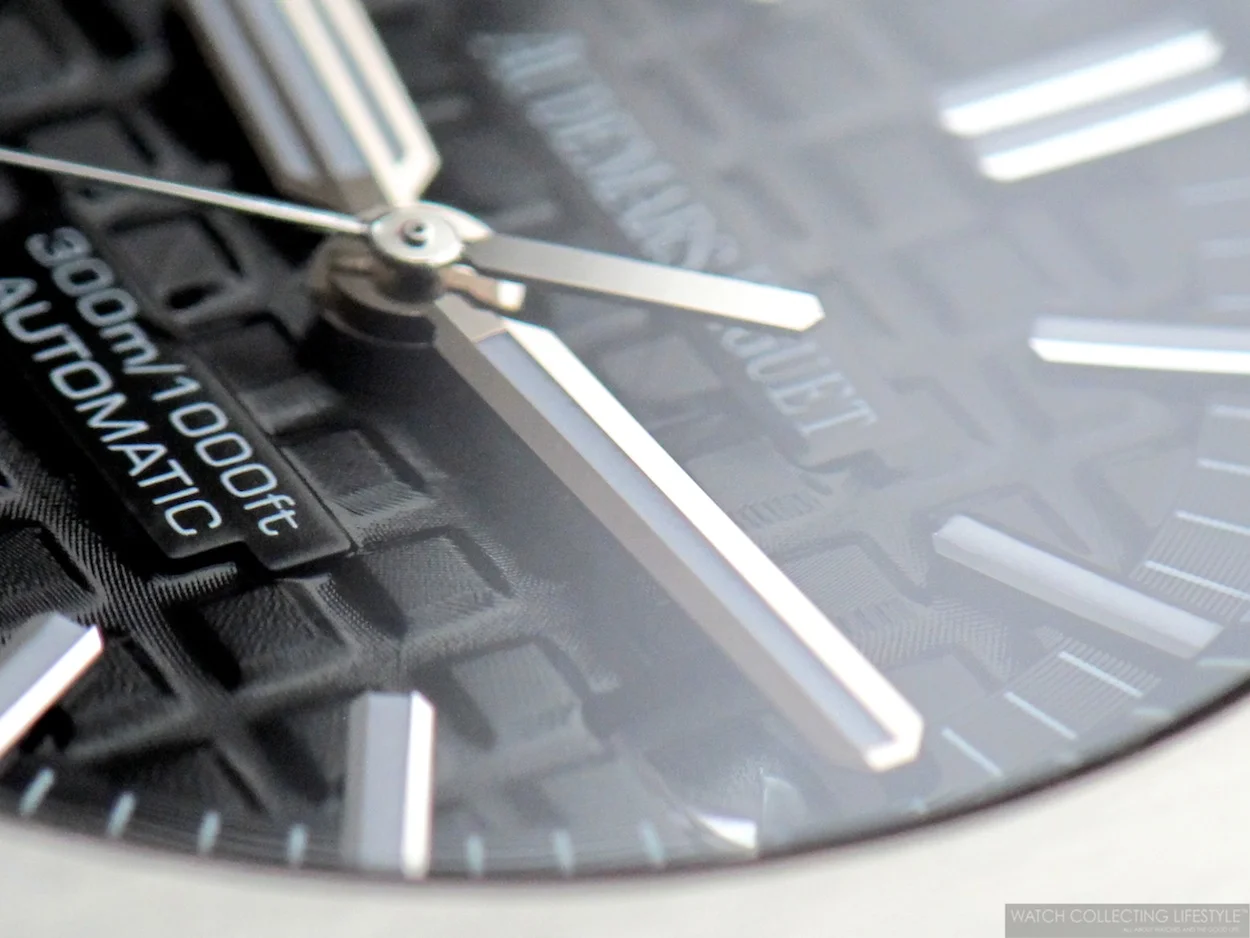
    FAQ — 15 Royal Oak Questions

    How close is ZF’s tapisserie to genuine?

    Approximately 95%. The pattern is correct in dimensions and layout. The remaining 5% is depth — ZF’s channels between squares are slightly shallower, producing less dramatic shadow play under direct light. Under normal viewing conditions (arm’s length, indoor lighting), the difference is invisible.

    Is ZF the only option for Royal Oak?

    ZF is the best for time-only models (15500, 15202). JF was the original Royal Oak clone leader and still produces acceptable versions. For the Offshore, both ZF and JF are viable. For the standard Royal Oak, ZF is the clear choice — better finishing, better tapisserie, more consistent QC.

    Blue or black dial?

    Blue is the iconic choice — the Royal Oak blue dial is one of the most recognized watch dials in the world. ZF’s blue reproduction is their best color. Black is more versatile and shows the tapisserie differently — texture without color change. For a first Royal Oak, blue is the recommendation. For daily versatility, black.

    Can the Miyota 9015 be seen through the caseback?

    Yes — the Royal Oak has a display caseback. ZF decorates the movement with Geneva stripes and a custom AP-engraved rotor. The visual impression at arm’s length is correct. A watchmaker would identify it under close inspection, but casual observers see an attractively decorated movement that matches the expected look.

    What wrist size works best for the Royal Oak?

    The 15500 at 41mm wears large due to its 50mm lug-to-lug span and angular design. Wrists 6.5″ and up carry it well. For smaller wrists, the 15202 “Jumbo” at 39mm is more proportionate. The Offshore at 42mm needs a 7″ wrist minimum to avoid looking oversized.

    How does the brushing/polishing compare to genuine?

    ZF’s alternating finish is the best in the market for AP replicas. The brushed surfaces have consistent directionality and grain. The polished chamfers are clean and reflective. The transition line between finishes is sharp. Genuine AP’s finishing is slightly more refined under magnification, but at normal viewing distances, ZF’s work is convincing.

    Can I swim with the Royal Oak replica?

    Genuine Royal Oak is rated to only 50m — it’s not designed for swimming despite being a “sports” watch. The replica provides basic splash resistance with the crown pushed in. Avoid submerging it. For water activities, use a Submariner or the Royal Oak Offshore Diver, which is designed for water exposure.

    Are the screws actually functional on the replica?

    On ZF’s version, the screws are decorative — they’re fixed in place and the bezel is secured differently than genuine. This has no practical impact on the watch’s function or durability. The screw heads are correctly shaped and positioned; they just don’t unscrew like genuine AP’s do.

    Royal Oak or Nautilus replica?

    The Royal Oak is bolder — its octagonal bezel and exposed screws demand attention. The Nautilus is more subtle — thin, smooth, understated. ZF’s Royal Oak is slightly more accurately replicated than 3KF’s Nautilus (95% vs 94%). The Royal Oak is for people who want their watch noticed. The Nautilus is for people who want their taste noticed. Read our icon comparison for the full breakdown.

    How does the bracelet comfort compare to genuine?

    ZF’s integrated bracelet is comfortable for daily wear — the links articulate smoothly and the butterfly clasp folds flat. Genuine AP’s bracelet has slightly more lateral flex between links, which some people prefer. The overall wearing experience is very similar — both are well-balanced watches that sit flat on the wrist.

    What’s the biggest tell on a Royal Oak replica?

    Tapisserie depth under strong direct light. In a well-lit environment with the light hitting the dial at a steep angle, the shallower channels on ZF’s version produce slightly less shadow contrast than genuine. Under normal indoor lighting or in photos, this is not detectable.

    Does ZF make gold Royal Oaks?

    Yes — ZF produces rose gold (15500OR) and yellow gold versions with their gold wrap technology. The rose gold Royal Oak is a stunning piece, but the same gold durability considerations from the Rolex Day-Date apply. For a first Royal Oak, the steel 15500ST is the strongest recommendation.

    15500 or 15202 for a first Royal Oak?

    The 15500. It’s ZF’s most refined Royal Oak production, offers more dial choices, and the 41mm size gives it presence on the wrist. The 15202 is for experienced collectors who specifically want the ultra-thin “Jumbo” proportions and don’t mind the slightly less precise tapisserie at that scale.

    How long will the Miyota 9015 last?

    With proper service every 3-5 years, the Miyota 9015 will run for a decade or more. It’s one of the most proven Japanese automatic movements in existence. Parts are cheap and abundantly available. Even if the movement fails completely, a replacement 9015 can be installed by any competent watchmaker for minimal cost.

    What factory handles Royal Oak best overall?

    ZF Factory, without question. For the standard Royal Oak, they produce the best tapisserie, the best bezel screw work, the best case finishing, and the most consistent overall quality. For a complete guide to all factories, see our factory guide. Browse our full AP collection.

    Final Word

    The Royal Oak is one of those watches that either clicks with you immediately or doesn’t. If the octagonal bezel, the tapisserie texture, and the industrial-luxury design language speak to you — ZF Factory produces a replica that captures approximately 95% of the genuine experience. The remaining 5% is in tapisserie depth and finishing refinement that only a direct side-by-side comparison under ideal conditions would reveal. For daily wear, the ZF Royal Oak delivers the presence, the wrist feel, and the visual impact that makes this watch one of the most desired timepieces in the world. The individual QC process is critical for this model — take your time reviewing the bezel screws, tapisserie uniformity, and brushing direction before you GL. See our complete 2026 guide for how the Royal Oak fits into the broader replica landscape.

  • Rolex Day-Date 40 President Replica — Gold Quality, Movement, and Every Dial Worth Buying

    Rolex Day-Date 40 President Replica — Gold Quality, Movement, and Every Dial Worth Buying

    Rolex Day-Date 40 “President” Replica — Gold Quality, Movement, and Every Dial Worth Buying

    Last updated: March 2026 • 18-minute read • Tested in yellow gold, Everose, and white gold

    The Rolex Day-Date — the “President” — is the most powerful watch in Rolex’s lineup. Every US president since Eisenhower has been photographed wearing one. It’s the only Rolex produced exclusively in precious metals — no steel option exists. As a replica, the Day-Date tests the limits of gold wrap technology because every visible surface is gold. EW Factory and BP Factory lead this category, each taking different approaches to capturing the presence of a $40,000+ gold Rolex in a super clone. This guide covers gold quality, the President bracelet, every popular dial option, and what to expect from the ownership experience.

    Rolex Day-Date 40 President yellow gold green dial
    Rolex Day-Date 40 President yellow gold green dial

    The President’s Power

    No watch communicates success as directly as the Day-Date. It doesn’t hint at wealth — it states it. The all-gold case, the distinctive President bracelet with its semicircular links, the day of the week spelled out in full at 12 o’clock — every design element says “I’ve arrived.” It’s the watch worn by Lyndon Johnson, Winston Churchill, and Warren Buffett. It’s the watch Tony Montana wears in Scarface. It’s simultaneously the most aspirational and most polarizing Rolex ever made.

    As a replica, the Day-Date is different from every other Rolex model because there’s no steel version to compare against. Every surface you see and touch is supposed to be precious metal. This makes the gold wrap quality the single most important factor in the ownership experience — more important than movement accuracy, more important than dial quality. If the gold looks wrong or wears through prematurely, the watch loses its entire identity.

    The good news: current factory technology has made Day-Date replicas better than ever. The gold wraps are thicker, the color matching is closer to Rolex’s specific alloys, and the President bracelet construction has improved to the point where the wearing experience is genuinely luxurious. This guide helps you navigate the options and avoid the mistakes that plagued earlier generations of gold Rolex replicas.

    Rolex Day-Date President bracelet gold links detail
    Rolex Day-Date President bracelet gold links detail

    The Gold Question — Wrap vs Plating

    The critical distinction in gold Rolex replicas is gold wrap vs gold plating. Understanding this difference is the single most important piece of knowledge for any Day-Date buyer.

    Gold plating (PVD/IP) — A thin layer of gold-colored material deposited on the steel surface. Thickness: typically 1-5 microns. Looks good initially but wears through within 6-12 months on high-contact areas (bracelet edges, crown, clasp). When it wears, you see the silver steel underneath — immediately identifying the watch as non-genuine. Cheap replicas use this method. Avoid it.

    Gold wrap — A thick layer of 18k gold-colored alloy mechanically bonded to the steel substrate. Thickness: significantly more than plating (varies by factory). This is what EW Factory and BP Factory use on their Day-Date production. The result is a surface that behaves much more like solid gold — the color has depth, it responds to polishing, and it lasts years rather than months. When it eventually wears (3-5+ years with daily use), the transition is gradual rather than the sudden “patch of silver” you see with plating.

    A genuine Rolex Day-Date uses solid 18k gold throughout — case, bracelet, bezel, crown. The weight of a genuine 228238 (yellow gold, 40mm) is approximately 210 grams. A gold-wrapped replica weighs around 170-180 grams — lighter because the core is steel, not gold. This weight difference is the one thing that cannot be replicated without using actual gold. In practical terms, only someone who has held the exact same genuine model would notice.

    EW vs BP Factory

    Rolex Day-Date 40 yellow gold olive green dial
    Rolex Day-Date 40 yellow gold olive green dial
    Category EW Factory BP Factory
    Gold Color Closer to Rolex alloy Slightly warmer
    Gold Thickness Thicker wrap Standard wrap
    Dial Quality Very good Excellent — better day/date fonts
    Movement A3255 clone A2836 (reliable, less accurate)
    President Bracelet Better link finishing Good, minor gaps possible
    Fluted Bezel Good Slightly sharper flutes
    Overall Best for gold quality Best for dial & bezel

    My Recommendation: EW Factory if gold longevity is your top priority — their thicker wrap lasts longer and has the more accurate gold tone. BP Factory if dial accuracy and fluted bezel sharpness matter more — their day/date fonts are the closest to genuine Rolex printing. Both are legitimate choices; the priority depends on what you value most.

    Yellow Gold — The Classic

    The yellow gold Day-Date (ref. 228238) is the original — the configuration that started the “President” legend. Rolex’s 18k yellow gold has a specific warm tone that’s less brassy than fashion gold and less pink than rose gold. It’s a refined, rich yellow that photographs beautifully and looks different depending on the lighting.

    EW Factory’s yellow gold tone is the closest match to Rolex’s alloy currently available. It has the correct depth and warmth without veering into the overly yellow territory that cheaper replicas sometimes exhibit. Under natural daylight — the most revealing lighting for gold color — EW’s yellow sits within a shade of genuine. Under warm artificial lighting, the match is essentially perfect.

    Popular dial combinations for yellow gold: champagne (classic), olive green (modern), black (bold contrast), and the iconic day/date in matching gold tone. The champagne dial on yellow gold is the most traditional — it’s the configuration most people picture when they think “Rolex President.” The olive green is the contemporary choice that’s dominated social media feeds.

    Everose Gold — Modern Power

    Rolex Day-Date 40 Everose rose gold chocolate dial
    Rolex Day-Date 40 Everose rose gold chocolate dial

    Rolex’s Everose (ref. 228235) is their proprietary rose gold alloy that includes platinum to prevent color fading. Standard rose gold can shift toward a more copper tone over decades; Everose stays stable. As a replica, the challenge is matching this specific pink-gold shade — too pink looks like copper, too yellow defeats the purpose of choosing rose gold.

    Both EW and BP produce Everose Day-Dates with warm pink tones that capture the spirit of Rolex’s alloy. The replica gold won’t fade regardless (it’s not actual rose gold), so the “anti-fade” benefit is irrelevant — what matters is the starting color accuracy. Current production from both factories achieves a convincing Everose tone that sits in the correct range between yellow and copper.

    The Everose Day-Date with chocolate dial is the standout configuration. The brown sunburst dial with rose gold indices creates a warm, cohesive look that’s less flashy than yellow gold but equally luxurious. It’s the choice for people who want the Day-Date’s presence without the traditional “gold watch” stereotype.

    White Gold — Stealth Wealth

    The white gold Day-Date (ref. 228239) is the ultimate stealth wealth play. To the untrained eye, it could be a Datejust — white metal, fluted bezel, classic proportions. Only the President bracelet and the day window at 12 o’clock give away that this is a $38,000 watch in genuine form.

    As a replica, the white gold Day-Date is actually the easiest to execute convincingly. Since white gold and polished/plated steel are nearly identical in appearance, the gold color accuracy issue that challenges yellow and rose gold versions doesn’t apply here. EW’s white gold Day-Date looks correct right out of the box — the rhodium plating matches white gold’s cool tone naturally.

    The weight discrepancy is less of a factor too — 18k white gold is only slightly denser than steel, so the weight difference between genuine and replica is smaller than with yellow gold. This makes the white gold Day-Date the most “passable” precious metal Rolex replica overall.

    Best Dial Colors Ranked

    Rolex Day-Date champagne dial gold President bracelet
    Rolex Day-Date champagne dial gold President bracelet
    Dial Best On Replica Rating Character
    Olive Green Yellow Gold 95% Modern classic
    Champagne Yellow Gold 96% Traditional power
    Chocolate Everose 95% Warm sophistication
    Black Any metal 97% Bold contrast
    Ice Blue White Gold / Platinum 93% Exclusive cool
    Silver/Rhodium White Gold 96% Understated elegance

    The day and date displays are unique to this model and deserve special attention. The day of the week is spelled out in full at 12 o’clock (MONDAY, TUESDAY, etc.) and the date appears at 3 o’clock. BP Factory’s day/date fonts are slightly more accurate than EW’s — the letter spacing and font weight are closer to genuine Rolex’s specific typeface. Both are readable and correct; BP just edges ahead on typographic precision.

    The President Bracelet

    The President bracelet is as iconic as the watch itself. Its semicircular three-link design — with rounded center links and tapered outer links — creates a look that’s instantly recognizable. It’s the dressiest bracelet Rolex makes, and it’s exclusive to the Day-Date and some Day-Date II/40 models.

    EW Factory’s President bracelet is the better of the two — the link finishing is more uniform, the articulation is smoother, and the Crownclasp (Rolex’s concealed clasp under the center link) folds with a satisfying click. The clasp has the correct Rolex crown logo on the interior and the proper safety catch. The bracelet tapers correctly from the case (20mm) to the clasp (approximately 16mm), matching genuine proportions.

    BP’s President bracelet is functional but occasionally shows minor gaps between links and slightly less smooth articulation. For a first-time Day-Date buyer, EW’s bracelet quality may justify choosing their version even if you prefer BP’s dial work.

    Gold Durability & Longevity

    Gold watch bracelet polished surface macro detail
    Gold watch bracelet polished surface macro detail

    The number one concern with any gold Rolex replica is how long the gold lasts. Here’s what to expect:

    Year 1-2: The gold wrap looks fresh. No wear-through on any surface. The watch looks identical to how it arrived. Minor surface scratches can be polished out — the gold layer is thick enough to handle light polishing.

    Year 2-4: High-friction areas may start showing wear. The clasp edges, the sides of the crown, and the bracelet link edges (where they rub against each other) are the first areas affected. The wear is gradual and subtle — not a sudden reveal of steel, but a slight change in color/sheen in localized areas.

    Year 4-6: Wear becomes more visible on daily-wear watches. The bezel and case (lower friction surfaces) still look good. Bracelet edges and clasp show clear wear. At this point, some owners choose to have the bracelet re-wrapped or plated by a local jeweler — this extends the life for another 2-3 years at modest cost.

    Longevity Tips: Rotate the Day-Date with other watches rather than wearing it daily. Apply a nano-ceramic coating to high-wear areas. Remove the watch before activities that involve hand friction (gym, manual work). Store it in a soft watch roll, not on a hard surface. These simple habits can extend the gold’s life by 50% or more.

    FAQ — 15 Day-Date Questions

    Will people notice it’s not solid gold?

    Under normal social circumstances — no. The gold wrap color, weight, and feel are all convincing enough for daily wear. The weight difference (lighter than solid gold) is the main tell, but only someone who lifts a genuine Day-Date regularly would notice. Nobody picks up your watch and weighs it at dinner.

    EW or BP — which should I buy?

    EW for gold quality and bracelet construction. BP for dial accuracy and fluted bezel sharpness. If gold longevity is your top concern (and on a Day-Date, it should be), EW gets the recommendation. If you’re buying the white gold version where gold color is less critical, BP’s dial and bezel advantages become more relevant.

    Can I change the day language?

    Genuine Day-Dates offer day display in 26 languages via a quick-set mechanism. Most replicas come with English and Chinese day wheels. Some dealers can source units with different language options, but English is the standard and most commonly available. The day wheel advances via a pusher or by cycling through midnight.

    Is the Day-Date appropriate for young professionals?

    The Day-Date makes a strong statement. On a 25-year-old startup founder, it reads as ambitious. On a 25-year-old junior associate, it might raise eyebrows. Consider the white gold version for a more understated presence, or start with a Datejust and work up to the Day-Date. Context matters.

    How much does the replica weigh compared to genuine?

    Genuine yellow gold Day-Date 40: approximately 210 grams. EW replica: approximately 175 grams. BP replica: approximately 170 grams. The difference (30-40 grams) is noticeable if you’re directly comparing, but not something anyone would detect on your wrist in isolation.

    Yellow gold or Everose for a first Day-Date?

    Yellow gold is the classic — it’s the color most associated with the “President” watch. Everose is the modern choice that’s less ostentatious and pairs better with contemporary fashion. If you wear a lot of warm colors and earth tones, Everose works beautifully. If you want the full “Presidential” experience, go yellow gold.

    Can a jeweler re-plate the watch when the gold wears?

    Yes. A local jeweler or plating service can apply a new layer of gold PVD/IP over the existing wrap, restoring the appearance. This costs a fraction of the original watch price and gives another 1-2 years of wear. Some owners plan for this as routine maintenance rather than seeing it as a failure.

    What movement does the Day-Date use?

    EW uses a clone 3255 (A3255) — similar to the VR3235 but with the day complication added. BP uses an A2836 — a proven Asian automatic that’s less technically impressive but extremely reliable. EW’s movement is closer to genuine functionality; BP’s is simpler and easier to service.

    Day-Date or Datejust two-tone?

    The Datejust two-tone is a more practical choice — the steel components reduce gold wear concerns, the watch is lighter, and it’s more versatile across casual and formal settings. The Day-Date is the statement piece — all gold, President bracelet, day display. If you want luxury presence and don’t mind the gold maintenance considerations, Day-Date. If you want a reliable daily driver with gold accents, Datejust two-tone.

    Can I swim with a Day-Date replica?

    Not recommended. The Day-Date isn’t a water sports watch — even genuine is only rated to 100m and Rolex advises against routine water exposure with the President bracelet. On a replica, protecting the gold wrap from chlorine and saltwater extends its life. Remove it before swimming.

    Is the ice blue dial only for platinum?

    On genuine Rolex, the ice blue dial is exclusive to the platinum Day-Date. Replicas typically put it on a white gold version since platinum’s weight and color are extremely difficult to replicate. The ice blue color itself is well-reproduced — a light glacial blue that shifts to almost grey in certain lighting. It’s the most distinctive Day-Date dial option.

    Does the crown logo on the clasp look correct?

    EW’s Crownclasp has a well-executed Rolex crown logo on the interior that matches genuine placement and depth. BP’s clasp logo is slightly less refined — the edges are softer. Since the clasp is hidden under the bracelet during wear, this is purely an unboxing detail rather than a daily visibility concern.

    What’s the best olive green Day-Date configuration?

    Yellow gold case with olive green sunburst dial and fluted bezel on President bracelet (ref. 228238). This is the configuration that broke Instagram — the warm gold with cool green creates a stunning contrast. EW Factory’s version is the pick — their gold tone and dial color are both accurate. It’s arguably the most photogenic Day-Date available.

    How does the Day-Date compare to other gold watches?

    In the replica world, the Day-Date competes with gold AP Royal Oak, gold Nautilus, and gold Cartier Santos. The Day-Date has the most recognizable identity and the best gold wrap technology. It’s the gold replica that reads as most convincingly “real” — largely because the Day-Date’s design language is so deeply associated with actual wealth that people don’t question it.

    Where does the Day-Date fit in a Rolex collection?

    The Day-Date is the crown jewel — the watch you add after you’ve covered your bases with a Submariner and Datejust. It’s not an everyday beater — it’s the watch for important occasions and deliberate impressions. Explore our full Rolex collection to build your ideal lineup.
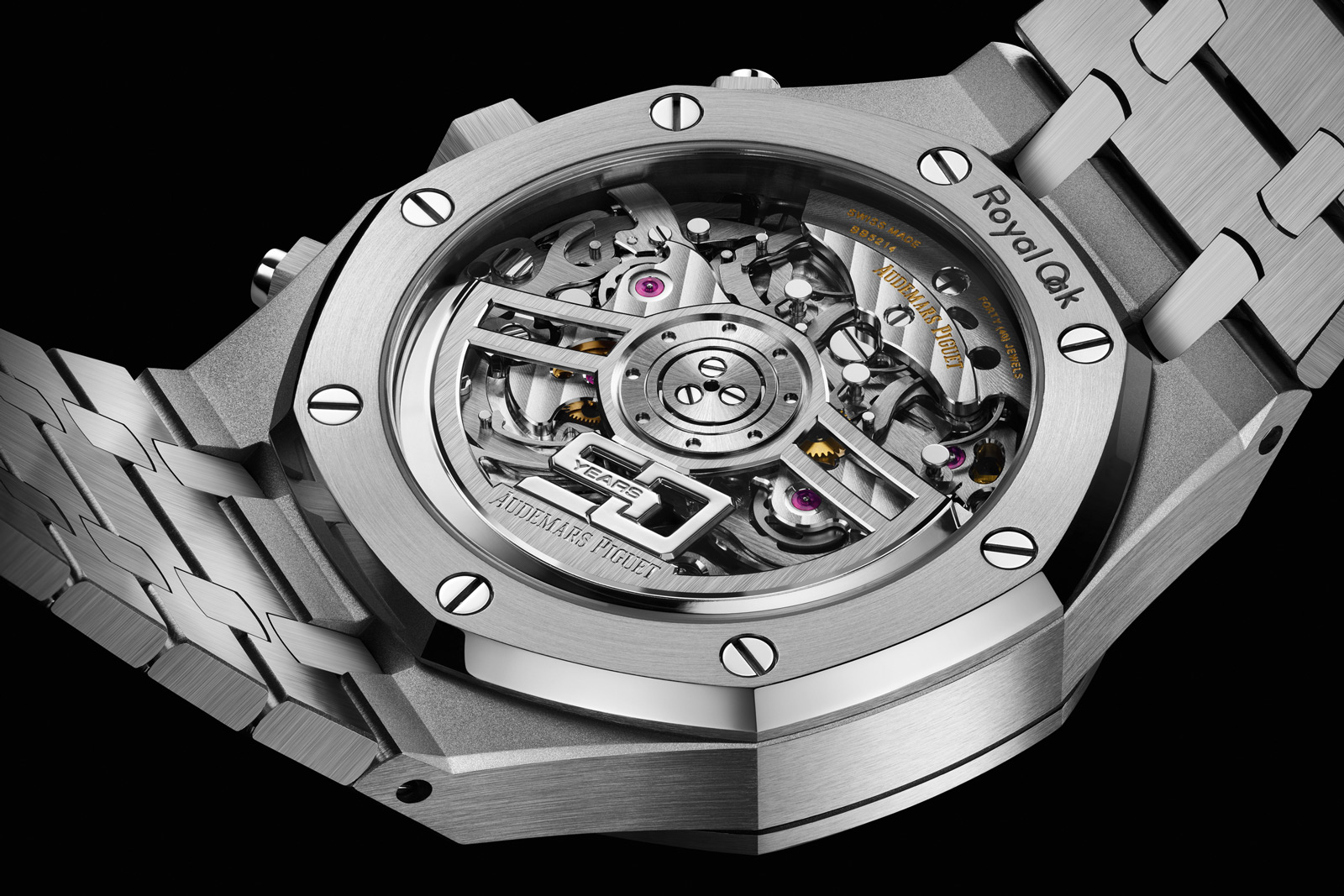
    Final Word

    The Day-Date is the boldest Rolex replica you can own — and the one that requires the most informed purchase decision. Gold wrap quality, factory choice, dial selection, and realistic expectations about longevity all factor into whether the experience lives up to the “President” name. EW Factory leads on gold quality and bracelet construction. BP Factory leads on dial accuracy and bezel detail. Either delivers a watch that captures the Day-Date’s unique presence — that feeling of wearing something that commands attention simply by existing on your wrist. The individual QC process ensures your specific unit represents the best of whichever factory you choose. For the complete picture of replica Rolex options, see our 2026 buyer’s guide.

  • Rolex Datejust 41 Replica — Every Dial, Fluted Bezel Accuracy, and Clean Factory Breakdown

    Rolex Datejust 41 Replica — Every Dial, Fluted Bezel Accuracy, and Clean Factory Breakdown

    Rolex Datejust 41 Replica — Every Dial, Fluted Bezel Accuracy, and Clean Factory Breakdown

    Last updated: March 2026 • 18-minute read • 15 dial variants compared hands-on

    The Datejust is Rolex’s most versatile watch — and potentially the best value in the replica world when you consider what you get. A fluted white gold bezel, Jubilee bracelet, 15+ dial options, and the same VR3235 movement that powers the Submariner — all in a thinner, dressier package. Clean Factory produces the Datejust 41 (126334/126331) across an enormous range of dial colors and configurations. This guide covers every variant worth buying, explains what makes the fluted bezel replicas so impressive, and helps you choose the right combination for your style.

    Rolex Datejust 41 blue dial fluted bezel Jubilee bracelet
    Rolex Datejust 41 blue dial fluted bezel Jubilee bracelet

    The Most Versatile Rolex

    The Submariner gets the hype. The Daytona gets the waitlists. But the Datejust is the Rolex that works everywhere — boardroom, beach, black-tie dinner, Sunday brunch. Its combination of fluted bezel elegance, available dial variety, and moderate 41mm case size makes it genuinely suited to every situation a watch could encounter.

    In the replica world, the Datejust 41 is quietly becoming one of the best value propositions. Clean Factory uses the same VR3235 movement, the same 904L steel, and the same level of finishing attention they invest in the Submariner. But because the Datejust doesn’t have a rotating bezel, chronograph pushers, or GMT complication, there are fewer complex components to get wrong — which means higher consistency and fewer QC issues.

    The Datejust also offers something no other Rolex sports model does: genuine aesthetic variety. With 15+ dial colors, the option of fluted or smooth bezel, and Jubilee or Oyster bracelet — you can configure a Datejust that looks completely different from anyone else’s. Two people wearing Submariners look like they’re wearing the same watch. Two people wearing Datejusts might have entirely different looks.

    Rolex Datejust fluted bezel white gold detail close-up
    Rolex Datejust fluted bezel white gold detail close-up

    Fluted Bezel — Clean’s Secret Weapon

    The fluted bezel is what makes the Datejust look like a Datejust. Those parallel grooves — called “flutes” — catch and reflect light as you move your wrist, creating a dynamic shimmer that plain bezel watches can’t match. On genuine Rolex, the fluted bezel on steel Datejust models is 18k white gold (not steel), which adds subtle weight and a specific reflective quality.

    Clean’s fluted bezel is steel with heavy rhodium plating that matches the appearance of white gold almost perfectly. The flutes are cut with CNC precision — each groove has the correct V-shaped profile with sharp edges that create clean light reflections. The count (traditionally 62 flutes on a 41mm) is correct, and the spacing is uniform around the circumference.

    Comparing Clean’s fluted bezel to genuine under a loupe reveals the only real difference: the depth of each flute is marginally shallower on the replica — maybe 0.05mm. This translates to slightly less dramatic light reflection in direct sunlight compared to genuine’s deeper cuts. In any normal lighting situation, this is invisible. The fluted bezel is genuinely one of the areas where Clean’s Datejust production excels — it might be the best fluted bezel in the replica market.
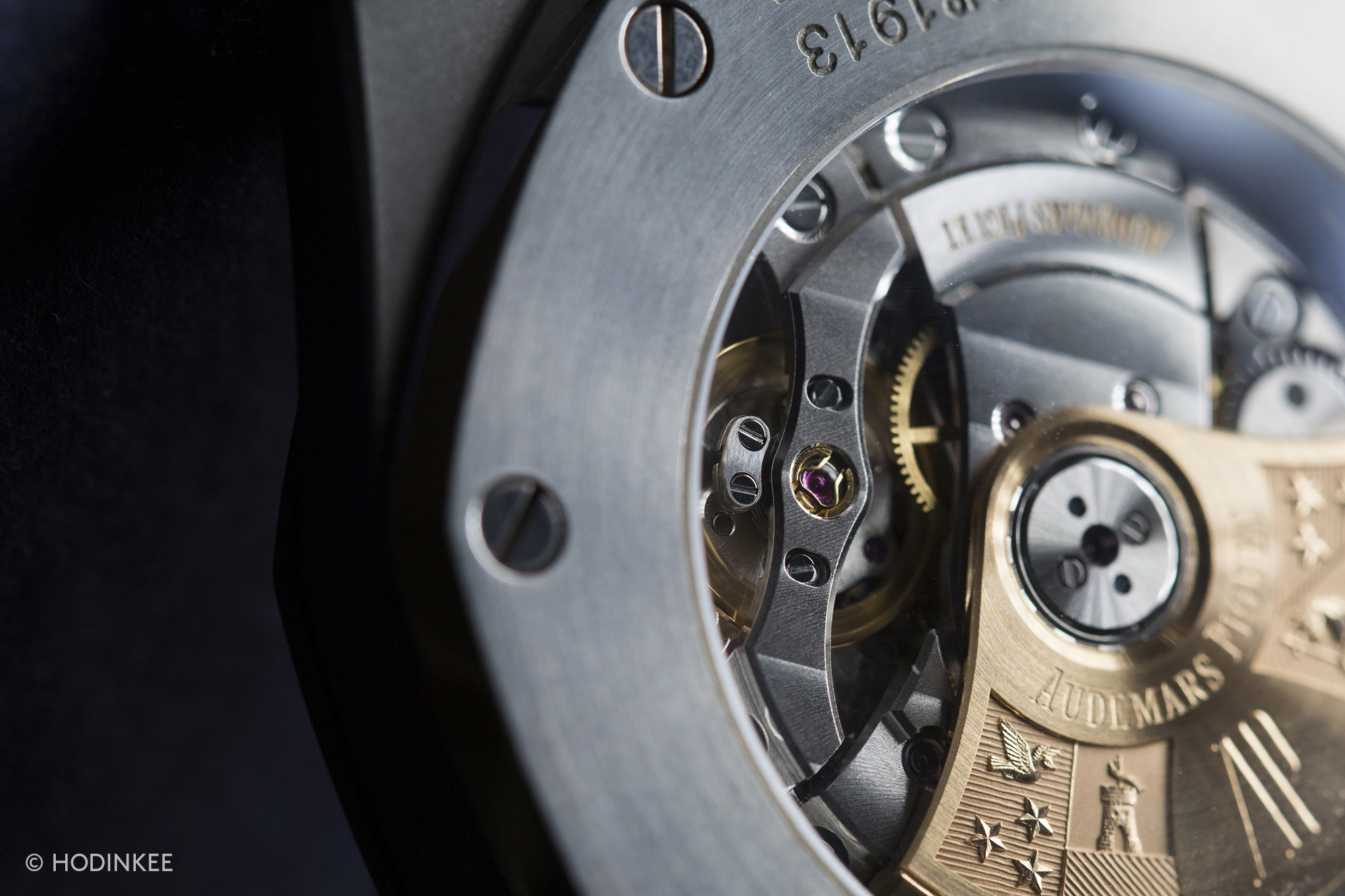
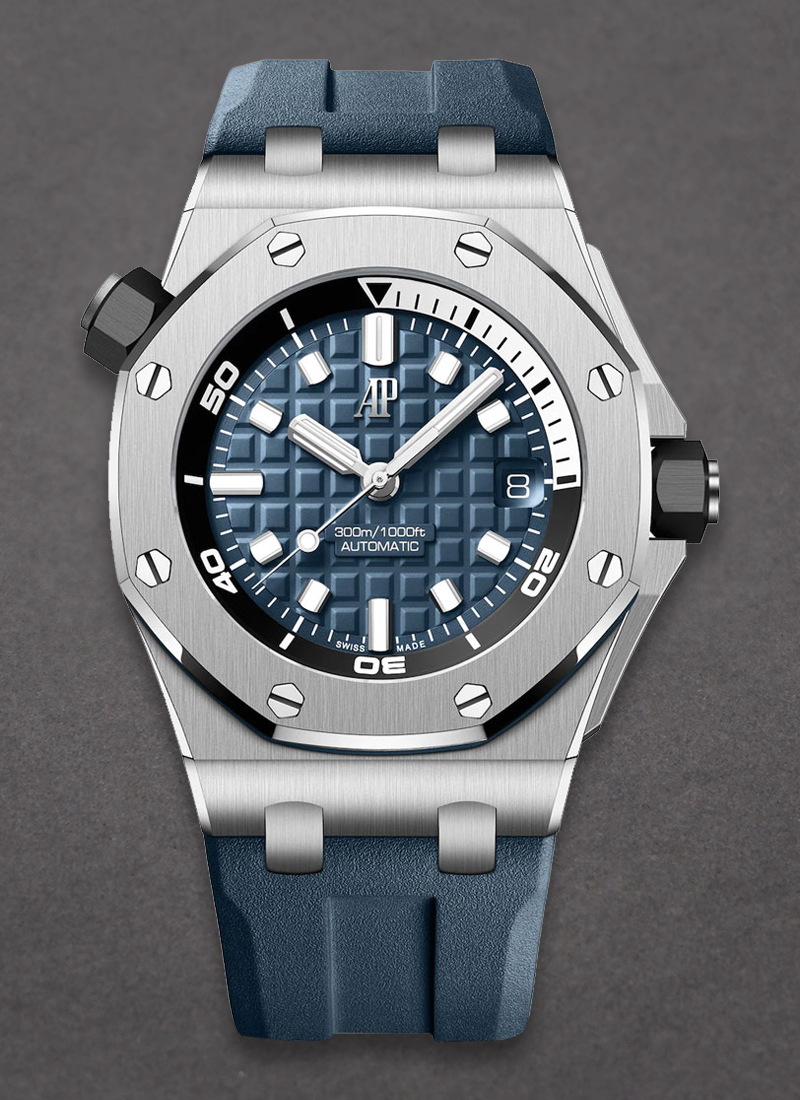
    Dial Color Guide — All 15 Options

    Rolex Datejust various dial color options collection

    Rolex Datejust various dial color options collection
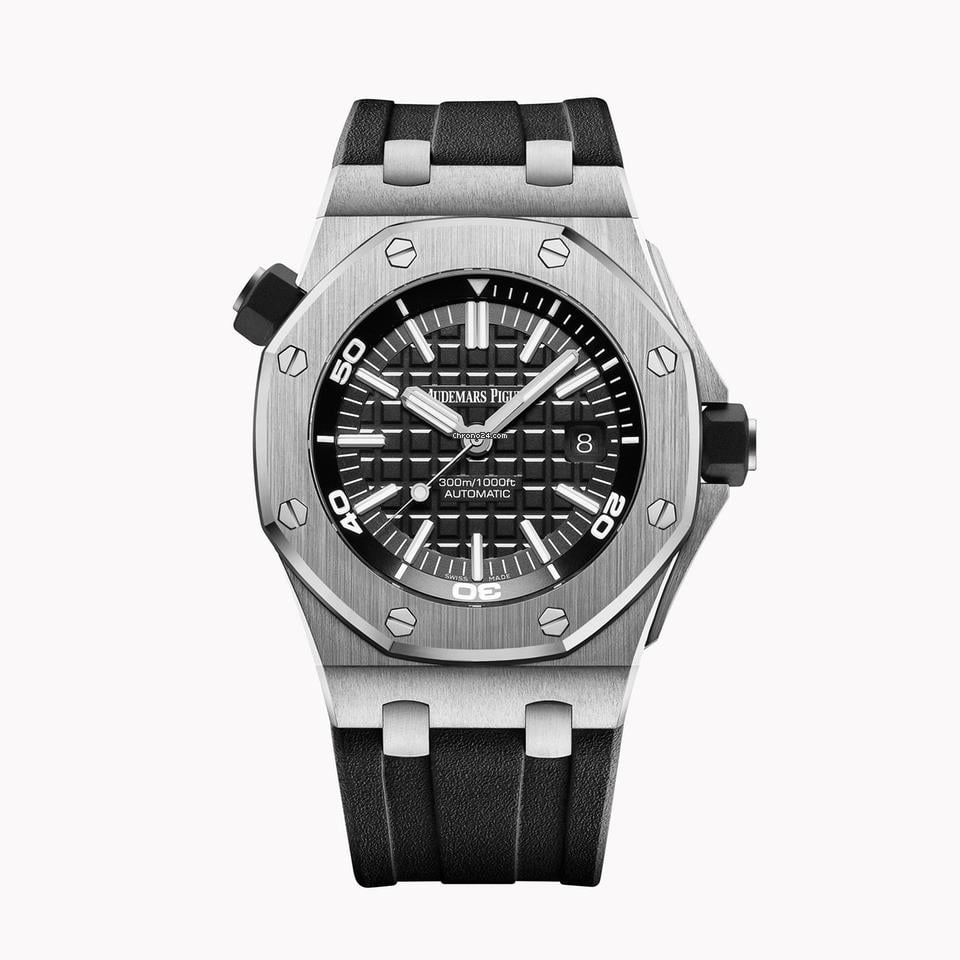
    Clean Factory produces the Datejust 41 in more dial colors than any other Rolex model. Here’s the complete lineup with notes on replica accuracy for each:
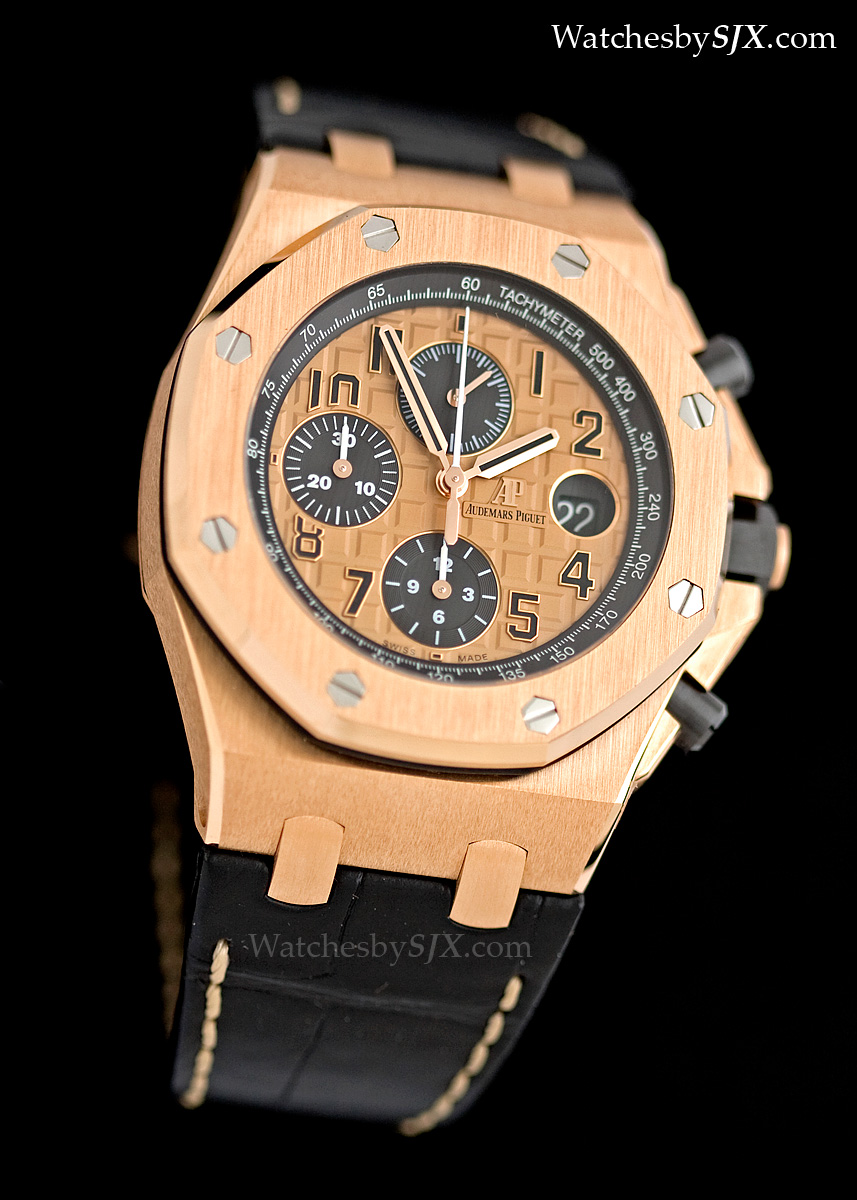
    Dial Reference Accuracy Best For
    Blue Sunburst 126334 97% All occasions
    Silver/Rhodium 126334 96% Business, dressy
    Slate Grey 126334 96% Modern, understated
    Black 126334 97% Sporty, any wardrobe
    Mint Green 126334 94% Fashion-forward
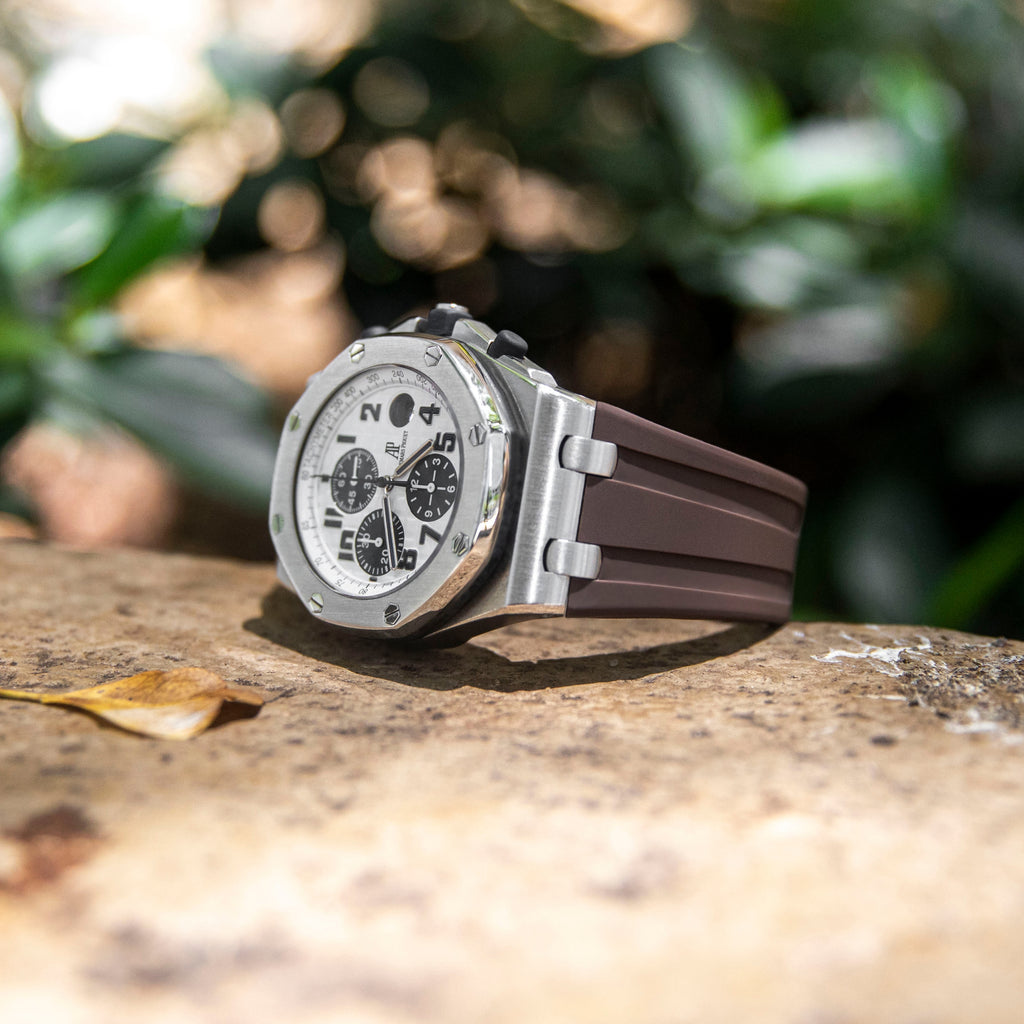
    Wimbledon 126334 93% Sporty-dress hybrid
    Fluted Motif (Blue) 126334 95% Unique texture lovers
    Palm Motif (Green) 126334 92% Bold, tropical

    Blue Dial — The Most Popular

    The blue sunburst Datejust 41 on Jubilee with fluted bezel is the most requested Datejust configuration — and for good reason. The blue dial has a rich depth that shifts from near-black in dim interiors to a vivid royal blue in sunlight. The sunburst finish creates radial lines that emanate from the center, catching light as you move.

    Clean’s blue dial matches genuine within a shade. The sunburst effect is well-executed with proper radial brushing. Applied indices at each hour position have correct proportions — rectangular sticks at 3, 6, 9 (with the date window at 3), triangular at 12, and round dots for the remaining positions. Each index has a light-catching faceted surface that works with the sunburst to create visual movement.

    The combination of blue dial, fluted bezel, and Jubilee bracelet creates what many consider the perfect dress-sport watch. It’s formal enough for a suit and casual enough for jeans. The blue adds personality without being flashy. This is the Datejust I recommend to first-time buyers who want something other than a Submariner.

    Slate, Mint Green & Wimbledon

    Rolex Datejust 41 mint green dial close-up
    Rolex Datejust 41 mint green dial close-up

    The slate grey dial is the sophisticated choice — a medium grey with a slight blue undertone that reads as professional and modern. Clean’s version captures the subtle warmth of genuine slate. It pairs beautifully with both silver and gold elements, making it ideal for two-tone configurations.

    The mint green dial is Rolex’s nod to current color trends. Released in 2023, it’s a light, almost pastel green with a sunburst finish. Clean’s mint green is close — perhaps 5% more saturated than genuine’s whisper-soft green tone. The color is eye-catching without being aggressive, and it gives the Datejust a distinctly contemporary personality.

    The Wimbledon dial — named for its association with the tennis tournament — has a slate-green base with Roman numeral hour markers in a lighter tone. It’s the sportiest Datejust dial option, designed to be read quickly. Clean’s Wimbledon reproduction captures the dual-tone dial well, though the Roman numerals can show slight printing variation between units. Check the numerals carefully in QC photos.

    Fluted Motif & Palm Dials

    Rolex’s textured dials — the fluted motif and palm motif — represent the brand’s move toward decorative dial surfaces. The fluted motif has vertical grooves that mirror the bezel’s fluting. The palm motif has actual palm leaf impressions stamped into the dial surface.

    Clean’s fluted motif is well-executed — the vertical lines have correct depth and spacing, creating a satisfying visual texture. The blue and silver versions are the most accurate. Clean’s palm motif is the most challenging dial to replicate — the organic leaf shapes require precise stamping that can vary between batches. Results are generally good but less consistent than the simpler sunburst dials.

    If you want a textured dial, the fluted motif is the safer choice for replica consistency. The palm motif is more distinctive but carries higher risk of visible manufacturing variation. Either way, check the texture carefully in QC photos — look for uniform stamping across the entire dial surface.

    Jubilee vs Oyster on Datejust

    Rolex Datejust 41 on Oyster bracelet smooth bezel
    Rolex Datejust 41 on Oyster bracelet smooth bezel

    The Datejust bracelet choice changes the entire character of the watch more dramatically than on the GMT:

    Jubilee + Fluted bezel = Maximum dress watch. This is the classic Datejust configuration. The combination of sparkling fluted bezel and polished Jubilee center links creates a watch that shimmers from every angle. Paired with a blue or silver dial, it’s boardroom perfection.

    Oyster + Smooth bezel = Modern sport-casual. This combination strips the Datejust of its dressy elements and turns it into something closer to an Oyster Perpetual with a date. It’s the configuration for people who want Datejust size and dial variety without the “jewelry” feel of fluting and Jubilee.

    Jubilee + Smooth bezel = A rare but interesting mix. The Jubilee adds refinement while the smooth bezel keeps things understated. This is the configuration for people who find the fluted bezel too flashy but don’t want the pure sport look of the Oyster.

    Clean produces all configurations with equal quality. The Jubilee bracelet is identical to their GMT version — well-articulated, comfortable, with proper Easylink adjustment. The Oyster matches their Submariner production.

    Two-Tone & Everose Options

    The Datejust is Rolex’s most popular two-tone model (ref. 126331 for Everose, 126333 for yellow gold). Clean produces both with their gold wrap technology.

    The Everose (rose gold) + steel combination has become increasingly popular. Clean’s Everose tone is a warm pink gold that’s close to Rolex’s proprietary alloy. On a Jubilee bracelet, the alternating steel and rose gold links create a sophisticated pattern. The rose gold fluted bezel catches light with a warm glow that’s distinctly different from yellow gold or white gold versions.

    The yellow gold + steel is the classic two-tone — the original Datejust configuration from 1945. Clean’s yellow gold is slightly warmer than some genuine Rolex two-tone pieces, but the difference is minor. This is the configuration for people who want unmistakable luxury presence.

    Two-Tone Advice: If you’re choosing your first two-tone Datejust, the Everose (rose gold) is the more modern choice. It pairs with a wider range of clothing colors and doesn’t carry the “flashy gold watch” connotation that yellow gold sometimes does. The chocolate dial on Everose is particularly stunning.

    Datejust QC Focus Points

    The Datejust has specific QC areas beyond the standard Rolex checklist. See our QC photos guide for general principles, then add these Datejust-specific checks:

    • Fluted bezel symmetry — All flutes should be uniform in depth and spacing. Look for any area where the fluting appears compressed or stretched. The bezel should sit flush with the case all around.
    • Dial color consistency — Sunburst dials should have even radial brushing with no blotchy areas. On colored dials (blue, green, slate), the tone should be consistent from edge to edge.
    • Index alignment — All applied indices should be perfectly straight and centered on their positions. Even a 1-degree tilt on a single index is visible on the Datejust’s clean dial.
    • Date wheel centering — The date numerals should sit centered in the date window, both vertically and horizontally. Misaligned date wheels are more noticeable on the Datejust than on the Submariner because the dial is less busy.
    • Cyclops alignment — Same as Submariner: the Cyclops should center perfectly over the date window with correct 2.5x magnification.

    Datejust vs Day-Date vs Oyster Perpetual

    Rolex Datejust and Day-Date watches comparison
    Rolex Datejust and Day-Date watches comparison

    These three Rolex models occupy overlapping territory. Here’s how they differ:

    The Datejust shows the date at 3 o’clock. Available in steel, two-tone, and precious metals. This is the mainstream choice — massive dial variety, both Jubilee and Oyster bracelets, and affordable replica pricing.

    The Day-Date (“President”) shows both the day and date, and is only available in precious metals (gold, platinum). As a replica, the Day-Date’s full gold case presents the same gold-wrap durability questions as any all-gold replica. The President bracelet — semicircular links — is the most formal Rolex bracelet design.

    The Oyster Perpetual has no date at all. It’s the stripped-down Rolex — time only, smooth bezel, Oyster bracelet. Replicas exist but the OP is less popular because buyers tend to want more features for their money. The OP 36 and 41 in turquoise, yellow, and coral dials have become collector items but are harder to replicate accurately.

    For most buyers, the Datejust hits the sweet spot: enough complication (date), enough style (fluted bezel, Jubilee option), and the widest dial selection. Browse our Rolex collection to see all available Datejust configurations.
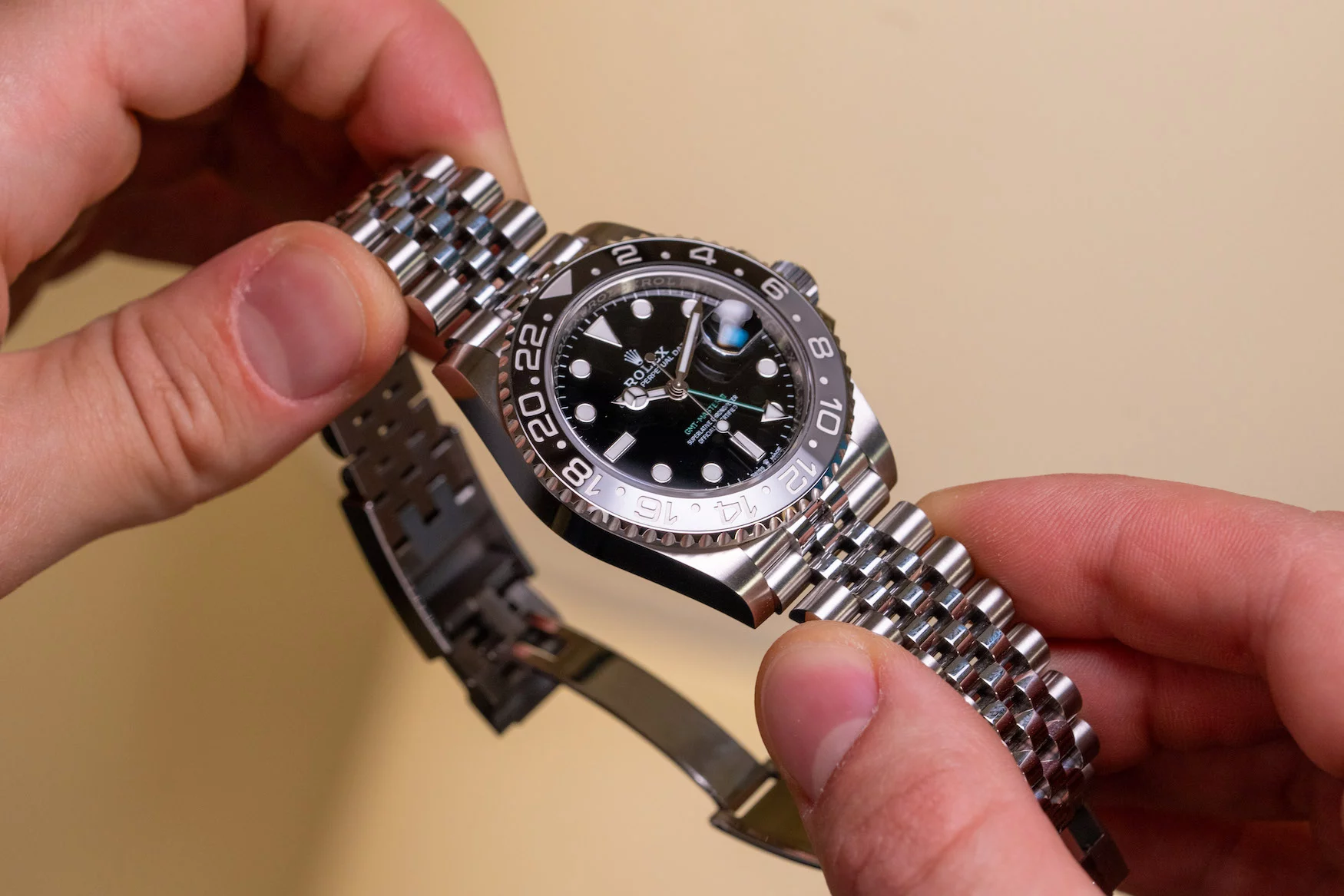
    FAQ — 15 Datejust Questions

    Is the fluted bezel actually white gold on the replica?

    No — it’s steel with rhodium plating that matches the appearance of white gold. The visual difference is negligible. Genuine Rolex uses 18k white gold on steel Datejust fluted bezels, but the look is identical to well-plated steel because white gold and polished steel are already very close in appearance.

    Which dial color is safest for a first Datejust?

    Blue sunburst. It’s the most versatile, pairs with everything, and Clean’s reproduction accuracy is highest for this specific dial. Silver/rhodium is a close second for more conservative dressers. Black is the safest if you want something that matches any outfit without thinking about it.

    Datejust 36 or 41?

    The 41mm is the more popular size and the one Clean focuses most production on. The 36mm is available but has fewer dial options in replica form. For wrists 6.5″ and up, the 41 is the natural choice. For smaller wrists or people who prefer vintage proportions, the 36 works well.

    Can the Datejust pass as genuine?

    Under normal social conditions — yes. The Datejust is one of the most common Rolex models, worn by millions of people worldwide. Nobody questions a Datejust the way they might question a rare sports model. Clean’s fluted bezel, dial quality, and bracelet finishing are all at levels that don’t invite scrutiny.

    Is the Datejust thinner than the Submariner?

    Yes — genuine Datejust 41 is 11.9mm vs Submariner’s 12.5mm. Clean’s Datejust measures approximately 12.0-12.1mm. The thinner profile makes it noticeably more comfortable under a dress shirt cuff and gives it a sleeker side profile.

    Fluted or smooth bezel?

    Fluted is the classic Datejust identity — if you want the watch to look like a Datejust, choose fluted. Smooth bezel turns the Datejust into something more understated and modern, closer to the Oyster Perpetual aesthetic. Fluted + Jubilee is the most popular configuration by a wide margin.

    How long does the two-tone gold last?

    Clean’s gold wrap on two-tone Datejusts lasts 3-5 years with daily wear before showing wear on high-contact areas. The fluted bezel, which sees less friction, lasts longer. Some owners apply clear nano-coating to extend the gold life. Compared to thin PVD gold, Clean’s wrap is significantly more durable.

    What’s the movement inside the Datejust?

    The same VR3235 used in the Submariner. Identical reliability, accuracy (±5-8 s/day), power reserve (68-70 hours), and serviceability. The Datejust uses the Cal. 3235 in genuine form, and Clean matches this with their proven VR3235.

    Datejust or Submariner as my first Rolex replica?

    If you wear suits regularly or work in a professional environment — Datejust. It’s the more appropriate watch for business settings and looks intentionally elegant rather than sporty. If you live in casual clothes and want a do-anything watch — Submariner. The Datejust is arguably the smarter choice for people who want their watch to project competence rather than adventure.

    Can I swim with a Datejust replica?

    The genuine Datejust is rated to 100m water resistance. Clean’s version provides functional water resistance for hand washing, rain, and light splashing with the crown screwed down. Swimming is possible but not recommended — the Datejust isn’t designed as a water sports watch. Use a Submariner for swimming.

    Are diamond indices available?

    Clean produces Datejusts with crystal-set indices that replicate the diamond hour markers found on certain genuine references. These use high-quality CZ stones rather than real diamonds. The visual effect is convincing — they sparkle correctly and are sized accurately. Available primarily on the champagne and mother-of-pearl dial variants.

    What’s the biggest tell on a Datejust replica?

    The depth of the fluted bezel grooves. Under strong magnification or direct sunlight, the replica’s flutes are marginally shallower than genuine, producing slightly less dramatic light play. Under any normal viewing condition, this difference is invisible. For smooth bezel variants, the tells are identical to the Submariner (rehaut, lume duration, etc.).

    Can I put an aftermarket strap on the Datejust?

    Yes — the Datejust has 21mm lugs that accept aftermarket straps from companies like Everest and Rubber B. A leather or rubber strap transforms the Datejust into a completely different watch. Blue leather on a blue dial is a particularly striking combination for summer.

    Is the palm motif dial worth the QC risk?

    If you want something truly unique and don’t mind potentially RL-ing a unit or two to get a good palm pattern — yes. The palm motif is the most eye-catching Datejust dial when done well. But it carries the highest manufacturing variation of any Datejust dial. The fluted motif is the safer choice for textured dial lovers.

    What other Rolex models complement the Datejust?

    A Datejust and Submariner make the perfect two-watch collection — one for dress, one for sport. If you already have both, add a GMT-Master II for travel or a Daytona for chronograph functionality. See our full Rolex collection.
    Final Word

    The Datejust 41 might be Clean Factory’s most underrated product. It uses the same proven VR3235 movement, the same 904L steel, and the same finishing standards as their celebrated Submariner — but offers far more personalization through dial variety, bezel options, and bracelet choices. The fluted bezel is genuinely one of Clean’s best-executed components. Whether you choose the classic blue on Jubilee, the trendy mint green, or the exotic palm motif — you’re getting a watch that works anywhere and draws attention without demanding it. The complete buyer’s guide covers the Datejust’s place in the broader replica landscape.

  • Rolex GMT-Master II Replica — Pepsi, Batman, Sprite, and Every Bezel Compared

    Rolex GMT-Master II Replica — Pepsi, Batman, Sprite, and Every Bezel Compared

    Rolex GMT-Master II Replica — Pepsi, Batman, Sprite, and Every Bezel Compared

    Last updated: March 2026 • 18-minute read • All bezel variants tested side by side

    The Rolex GMT-Master II sits right behind the Submariner as the second most popular Rolex replica — and it might actually be the more interesting watch. Dual time zone functionality, iconic bi-color ceramic bezels, and the independent GMT hand that lets you track home time while traveling. Clean Factory produces the definitive GMT replicas across four bezel colorways — Pepsi (blue/red), Batman (black/blue), Sprite (green/black), and Root Beer (brown/black). This guide compares every variant, breaks down the clone 3285 GMT movement, and helps you pick the right bezel for your style.

    Rolex GMT-Master II Pepsi 126710BLRO blue red bezel
    Rolex GMT-Master II Pepsi 126710BLRO blue red bezel

    Why the GMT-Master II Appeals to Travelers

    The GMT-Master was born in 1955 because Pan Am pilots needed to track two time zones simultaneously. That practical DNA still defines the watch today — the independent GMT hand (with the arrow tip) points to a second time zone on the 24-hour bezel, while the standard hour and minute hands show local time. Set your GMT hand to home time before you travel, adjust the local hour hand when you land, and you always know what time it is in both places without doing math.

    Clean Factory’s clone 3285 replicates this functionality correctly. The GMT hand moves independently — pull the crown to position 2 and rotate to set local hour while the GMT hand and minutes stay fixed. This “jumping hour” function is what separates a real GMT complication from watches that just have a decorative 24-hour hand. It works identically to genuine Rolex GMT-Master II operation.

    Beyond function, the GMT-Master II has something the Submariner doesn’t — color. The bi-color ceramic bezels give each variant a distinct personality that the monochrome Submariner can’t match. The Pepsi’s red and blue say “confident.” The Batman’s blue and black say “refined.” The Sprite’s green and black say “different.” These watches aren’t just tools — they’re statements.

    Rolex GMT-Master II Batman 126710BLNR black blue bezel
    Rolex GMT-Master II Batman 126710BLNR black blue bezel

    126710BLRO Pepsi — The Legend

    The red and blue “Pepsi” bezel is the original GMT colorway, dating back to the 1950s. Rolex brought it back in ceramic on a Jubilee bracelet in 2018, and the watch world lost its mind. The combination of heritage colorway, modern ceramic durability, and the dressy Jubilee created something that felt simultaneously classic and fresh.

    Clean Factory’s Pepsi gets the bezel color transition right — the precise point where red meets blue should be at the 6/18 position on the 24-hour scale. This transition zone is the single most scrutinized detail on a Pepsi GMT. On genuine Rolex, it’s a clean, sharp line. Clean’s current production achieves a transition that’s nearly as sharp, with minimal bleeding between colors. Earlier versions had a slightly fuzzy boundary; current batches have corrected this.

    The red tone is critical. Genuine Rolex uses a specific shade of cherry red on their Cerachrom — not bright fire-engine red, not dark maroon. Clean matches this shade well. Under certain artificial lighting, the replica red can appear a fraction more blue-shifted (slightly more magenta) than genuine, but in daylight the match is very close.

    The blue side is easier to match and Clean gets it right — a deep royal blue that darkens in low light. On bracelet, the standard Pepsi comes on a Jubilee — five-link, center polished, outer brushed — which gives the watch a dressier character than the sporty Oyster bracelet of the Submariner.

    126710BLNR Batman — Blue/Black Stealth

    Rolex GMT-Master II Batman blue black ceramic bezel detail
    Rolex GMT-Master II Batman blue black ceramic bezel detail

    The “Batman” — dark blue and black — is the most wearable GMT variant. The color combination is subtle enough for any setting while still maintaining the dual-color visual interest that makes the GMT special. Many collectors who find the Pepsi too flashy gravitate to the Batman as the sweet spot between personality and restraint.

    Clean’s Batman bezel is arguably their best GMT bezel production. The black-to-blue transition is cleaner than the Pepsi’s red-to-blue, partly because the two colors are closer in value (both dark) so any slight bleeding is less visible. The blue half has correct depth — dark enough to read as almost black in dim lighting, distinctly blue in bright conditions.

    The Batman is available on both Jubilee and Oyster bracelets from Clean. On Jubilee, it’s a refined travel watch. On Oyster, it’s closer to a sportier Submariner aesthetic with the added GMT function. Both bracelet options are well-executed — if you’re torn, the Oyster gives the Batman a more unique identity distinct from the Pepsi (which is Jubilee-only from Rolex).

    126720VTNR Sprite — Left-Handed GMT

    Rolex surprised everyone in 2022 with the “Sprite” — green and black bezel with the crown on the LEFT side of the case. This isn’t just a color variant; it’s a different watch with the crown at 9 o’clock instead of 3, originally designed for left-handed wearers but adopted by enthusiasts who simply want something different.

    Clean Factory produces the Sprite with correct crown placement — left side, which means the date window also moves to the left of center (between 8 and 9 o’clock). The green-black bezel uses a deep forest green similar to the Submariner Starbucks but in a different shade — the Sprite’s green is slightly darker, almost hunter green in certain light conditions. Clean matches this shade accurately.

    The left-crown design has a practical implication: the crown doesn’t dig into the back of your wrist during pushups or when you bend your hand back. Some righties who wear watches on their left wrist find this more comfortable than the traditional crown position. It also makes the watch visually distinct — instantly recognizable as the Sprite even from across a room.

    Rolex GMT-Master II on Jubilee bracelet wrist
    Rolex GMT-Master II on Jubilee bracelet wrist

    126711CHNR Root Beer — Brown/Black Two-Tone

    The “Root Beer” comes in Everose gold and steel — Rolex’s proprietary pink gold alloy paired with Oystersteel. The bezel is brown and black ceramic, creating a warm tone that pairs beautifully with the rose gold accents on the center links, crown, and crown guard.

    Clean’s Root Beer uses their gold wrap technology for the Everose components. The color is a warm pink gold that’s close to Rolex’s proprietary alloy — slightly less pink than some competitors’ interpretations. The brown bezel half has a rich chocolate tone that shifts to a warmer cognac in direct sunlight. The black half matches the standard GMT black.

    This is the most “luxury” feeling GMT variant. The combination of warm gold tones, the chocolate bezel, and the Jubilee bracelet creates a watch that reads as dressy and sophisticated. If you wear earth tones, brown leather, and warm colors — the Root Beer is your GMT.

    Clone 3285 GMT Movement

    Rolex GMT automatic movement caliber mechanism
    Rolex GMT automatic movement caliber mechanism

    The genuine Rolex Cal. 3285 is based on the 3235 architecture (same as the Submariner) with the addition of the GMT complication — an independent hour hand that jumps in one-hour increments. Clean’s clone 3285 (often labeled VR3285) adds this GMT module to the proven VR3235 base.

    The GMT function works correctly: pull the crown to position 2, and the hour hand jumps independently while the GMT hand (arrow-tipped) and minute hand remain stationary. This lets you change local time when traveling without affecting your home time reference. The date also advances correctly when jumping hours past midnight.

    Power reserve mirrors the VR3235 at approximately 68-70 hours. Accuracy, hacking, and hand-winding behave identically to the Submariner’s movement. The GMT module adds some complexity — there are more components that can fail — but the VR3285 has proven reliable through several years of production. Service interval is the same 3-4 years recommended for the VR3235.

    Bezel Variant Reference Default Bracelet Color Accuracy Vibe
    Pepsi 126710BLRO Jubilee 95% Bold classic
    Batman 126710BLNR Jubilee or Oyster 97% Subtle sophistication
    Sprite 126720VTNR Jubilee or Oyster 94% Unconventional
    Root Beer 126711CHNR Jubilee 93% Warm luxury

    Jubilee vs Oyster Bracelet

    The GMT-Master II is the only Rolex sports watch offered on the Jubilee bracelet from the factory. This creates a choice that the Submariner doesn’t offer: sporty Oyster or refined Jubilee?

    Clean’s Jubilee is well-made — five-link design with polished center links that catch light and brushed outer links for contrast. The clasp uses the Easylink extension (5mm fine adjustment) rather than the Glidelock found on the Oyster. The Jubilee drapes more fluidly on the wrist — it’s thinner, more flexible, and feels dressier. The trade-off: polished center links show fingerprints and fine scratches more readily than the Oyster’s fully brushed surface.

    The Oyster bracelet on the GMT is identical to the Submariner’s — same three-link design, same Glidelock clasp with micro-adjustments. It gives the GMT a sportier, more tool-watch personality. On the Batman especially, the Oyster bracelet creates a look that’s closer to a Submariner with a dual-color bezel — all sport, no dress.

    Bracelet Advice: If you already own a Submariner on Oyster, get the GMT on Jubilee — it gives you two different wearing experiences. If the GMT is your only Rolex, choose based on your style: Jubilee for office/travel, Oyster for a more casual/active lifestyle.

    GMT QC Checklist

    GMT-specific checks add to the standard Rolex QC list. In addition to everything from our QC photos guide, check:

    • Bezel color transition — On Pepsi: the red/blue boundary should be sharp and positioned at 6/18 on the scale. On Batman: the blue/black line should be equally sharp. Any bleeding or uneven transition is grounds for RL.
    • GMT hand alignment — The arrow-tipped GMT hand should point precisely at the correct 24-hour position on the bezel. If the GMT hand is between markers when the minute hand is at 12, the movement needs regulation.
    • Independent hour jump — Ask the dealer to demonstrate the jumping hour function. The hour hand should click cleanly in one-hour increments without affecting the GMT hand or minutes. Any dragging or imprecise jumping means the GMT module isn’t properly adjusted.
    • Bezel bidirectional rotation — Unlike the Submariner’s unidirectional bezel, the GMT rotates both ways. It should click in 120 increments in both directions with equal tension and precision.
    • Jubilee bracelet (if applicable) — Check the center link polish is consistent and the clasp folds flat without any gap at the end links.

    GMT vs Submariner — Which to Choose

    Rolex watches collection various models display
    Rolex watches collection various models display
    This is the most common “one or the other” question in the Rolex world. Here’s the practical breakdown:

    Factor Submariner GMT-Master II
    Versatility Slightly more universal Great but color-dependent
    Functionality Dive timer Dual time zone (more useful)
    Visual Impact Classic, understated More colorful, eye-catching
    Replica Accuracy 97% (higher) 94-97% (bezel color dependent)
    Bracelet Options Oyster only Jubilee + Oyster
    Water Resistance 300m (swim-ready) 100m (splash-proof)

    Buy the GMT if: You travel regularly, you want color on your wrist, you prefer the Jubilee bracelet option, or you already own a Submariner. Buy the Submariner if: You want the single most versatile watch, maximum water resistance, or the absolute highest replica accuracy possible. Both are available in our Rolex collection.

    FAQ — 15 GMT Questions

    Does the jumping hour function actually work?
    Yes. Clean’s VR3285 has a fully functioning independent hour hand that jumps in one-hour increments when you adjust it. This is the core GMT function and it works correctly — pull the crown to position 2, turn, and the hour hand clicks to the next hour while minutes and GMT hand stay fixed.
    Which bezel color is most accurately replicated?

    The Batman (blue/black). Because both colors are dark and the transition is less dramatic than red-to-blue, Clean achieves the highest accuracy with this bezel. The Pepsi is close behind. The Sprite’s green shade has the most variation from genuine — still good, but the green is the hardest color to match perfectly in ceramic.
    Pepsi or Batman for a first GMT?

    Batman is more versatile and pairs with more outfits. Pepsi is more iconic and makes more of a statement. If you wear a lot of earth tones or dark colors, Batman blends in better. If you want the “classic GMT” look that people instantly recognize, Pepsi is the answer. Both are excellent from Clean.

    Can I swim with the GMT-Master II replica?

    Light swimming is fine with the crown fully screwed down. The genuine GMT is rated to 100m (less than the Submariner’s 300m), and the replica has comparable water resistance for recreational use. It’s not a dive watch — don’t take it deep. But pool and beach are fine.

    Is the Sprite’s left crown uncomfortable for lefties?

    The left crown was designed for right-wrist wear (for left-handed people). If you’re right-handed wearing it on your left wrist, the crown sits away from your hand — some people actually find this more comfortable than the traditional right-side crown. Try it — many righties have switched to the Sprite full-time after discovering this.

    How do I set the GMT hand?

    Pull the crown to position 3 (fully out). Rotate to set the GMT hand to your home time using the 24-hour bezel markers. Push the crown to position 2. Now rotate to set local time — the hour hand jumps in one-hour increments while the GMT hand stays fixed. Push the crown fully in to lock.

    Do the bezel colors fade over time?

    No. Ceramic bezels are essentially color-stable for life — the color is baked into the material, not painted on. The same is true for Clean’s ceramic inserts. UV exposure, saltwater, chemicals — none of these affect the color. This is one of the major advantages ceramic has over the old aluminum bezels that would fade beautifully over decades.

    Is the Jubilee bracelet comfortable?

    Very. The five-link design is more flexible than the three-link Oyster, conforming better to wrist curves. It’s thinner and lighter, which some people prefer for all-day wear. The Easylink adjustment gives you 5mm of fine-tuning. The main downside: polished center links show micro-scratches more than brushed Oyster links.

    VR3285 vs VR3235 — how different are they?

    The VR3285 is a VR3235 with the GMT module added. Base architecture, reliability, power reserve, and accuracy are identical. The GMT module adds the fourth hand (GMT) and the jumping hour mechanism. Serviceability is slightly more complex due to the additional components, but any watchmaker who services VR3235 can handle the VR3285.

    Can I track three time zones?

    Yes. The standard hour hand shows local time. The GMT hand (arrow) shows home time via the 24-hour bezel. By rotating the bezel, you can offset a third time zone — read the GMT hand position against the rotated bezel markings. This triple-zone trick works the same on genuine Rolex and Clean’s replica.

    What’s the biggest tell on a GMT replica?

    The bezel color transition zone. On Pepsi especially, the exact shade of red and the sharpness of the red-blue boundary are the areas where keen-eyed collectors might notice a difference. Under normal conditions (not direct side-by-side comparison), Clean’s current bezels pass visual inspection without issue.

    How does the GMT handle date changes when jumping hours?

    Correctly. When you jump the hour hand past midnight (12 to 1), the date advances by one. When jumping backward past midnight (1 back to 12), the date goes back by one. This bidirectional date change is a key feature of the genuine 3285 and is replicated by Clean’s VR3285.

    Root Beer or Pepsi for a second GMT?

    If your first GMT was a Batman, the Pepsi adds more color contrast. If your first was a Pepsi, the Root Beer adds warmth and a completely different aesthetic. The Root Beer’s two-tone gold adds a luxury dimension that pure steel variants don’t have. Both are excellent second choices.

    Is Clean the only factory for GMT replicas?

    Clean dominates the GMT market similarly to how they dominate Submariner. Other factories produce GMT-Master II replicas, but none match Clean’s bezel color accuracy and movement reliability. For the GMT specifically, Clean is the recommended choice without serious alternatives.

    What other Rolex sports watches should I consider?

    The Submariner is the closest sibling — similar DNA with a dive focus instead of travel. The Daytona adds chronograph complexity. For something completely different, check our icon comparison or the full Rolex collection.

    Final Word

    The GMT-Master II from Clean Factory offers something the Submariner doesn’t — color, personality, and genuine dual-timezone functionality that’s useful every time you travel. Whether you go Pepsi for heritage, Batman for versatility, Sprite for originality, or Root Beer for warmth — each variant delivers Clean’s trademark accuracy with the VR3285 GMT movement backing it up. The individual selection process with QC photos is especially important for GMT variants, where bezel color accuracy varies more between units than on a single-color Submariner. Take your time reviewing the bezel transition photos, GL the right unit, and you’ll have a travel companion that performs as well as it looks.

  • BT vs Clean Factory Daytona — Clone 4130, Chronograph Accuracy and Every Dial Ranked

    BT vs Clean Factory Daytona — Clone 4130, Chronograph Accuracy and Every Dial Ranked

    BT vs Clean Factory Daytona — Clone 4130, Chronograph Accuracy and Every Dial Ranked

    Last updated: March 2026 • 22-minute read • Hands-on comparison of 8 Daytona references

    The Rolex Daytona is the most complicated Rolex replica to get right — and the most rewarding when a factory succeeds. A functioning chronograph with correct subdial spacing, the tachymeter bezel, and a movement that actually times events accurately demands engineering that pushes factories far beyond what a simple three-hand watch requires. BT Factory and Clean Factory both produce Daytonas worth owning, but they take different approaches and excel in different areas. If you are choosing between a Clean Factory Daytona and a BT Factory Daytona, the comparison below covers every point that matters. This guide compares them head to head across every Daytona reference available as a super clone — Panda, reverse Panda, ceramic, gold, and meteorite dials included.

    Rolex Daytona 116500LN Panda white dial ceramic bezel
    Rolex Daytona 116500LN Panda white dial ceramic bezel

    Why the Daytona Is the Hardest Replica

    The Submariner is a three-hand watch with a date. That’s fundamentally simple. The Daytona is a chronograph — three subdials, pushers at 2 and 4 o’clock, a tachymeter bezel, and a column-wheel integrated movement that has to coordinate multiple functions simultaneously. Replicating this is exponentially harder than making a good Sub.

    Rolex’s genuine Cal. 4130 is a vertically-integrated chronograph — the chrono mechanism is built into the movement rather than bolted on as a module. This architecture makes the movement thinner and more reliable, but also much harder to clone. Early Daytona replicas used cheap Asian chrono movements (Dandong 7750 variants) that were thicker, less accurate, and positioned the subdials at slightly wrong angles — a dead giveaway to anyone who’d seen a genuine Daytona.

    Modern clone 4130 movements changed everything. Both BT Factory and Clean Factory use versions of this movement that replicate the genuine architecture — column wheel, vertical clutch, and correct subdial positioning at 3, 6, and 9 o’clock with the exact spacing. The result is a Daytona replica that not only looks right but functions as a legitimate chronograph you could actually use to time something.

    But “harder to replicate” also means “more to go wrong.” Daytona QC requires checking items that don’t exist on a Submariner: pusher feel and resistance, subdial hand alignment, chrono reset to zero, and the smoothness of the chrono start/stop/reset cycle. This guide helps you navigate all of it.

    Rolex Daytona chronograph pushers close-up detail
    Rolex Daytona chronograph pushers close-up detail

    BT vs Clean Factory — Complete Comparison

    The Daytona market isn’t as clear-cut as the Submariner (where Clean dominates). Two factories produce Daytonas worth considering: BT Factory and Clean Factory. Each has distinct strengths.

    Category BT Factory Clean Factory
    Dial Quality Superior — better printing & texture Very good
    Subdial Spacing Matches genuine exactly Correct, minor variation
    Case Finishing Very good Better — sharper chamfers
    Bezel Insert Good, slightly thin engravings Better color & engraving depth
    Movement (Clone 4130) Better chrono feel Good, slightly heavier pushers
    Bracelet Good Better SEL & link finishing
    Thickness 12.5-12.6mm 12.4-12.5mm
    Overall Verdict Best for dial accuracy Best for case & bracelet

    My Take: If the dial is your priority (and on a Daytona, the dial IS the watch), BT Factory gets the nod. Their Panda dial reproduction is the best in the market — subdial depth, printing quality, and that characteristic cream-white tone are all closer to genuine than Clean’s version. But if case finishing and bracelet quality matter more to you, Clean’s Daytona is the pick. Honest answer: you can’t go wrong with either.

    An important caveat: unlike the Submariner (where Clean has dominated for years), the Daytona landscape is more competitive and more recent. Neither BT nor Clean has the decade-long refinement history with this model that Clean has with the Sub. Both factories are still actively improving their Daytona production, so the gap between them — and the remaining gap to genuine — continues to shrink with each production batch.

    Rolex Daytona 116500LN black dial reverse Panda
    Rolex Daytona 116500LN black dial reverse Panda

    116500LN Panda — The Icon

    The white dial Daytona with black subdials — the “Panda” — is arguably the most desirable sports watch configuration Rolex has ever produced. Genuine examples trade for $45,000+ on the secondary market, and the wait list at authorized dealers hasn’t dropped below 5 years in most markets. It’s the watch that made the Daytona a cultural phenomenon beyond just car racing enthusiasts.

    BT Factory’s Panda gets the critical details right. The white dial has the correct off-white/cream tone — not stark white, which is a common mistake on lesser replicas. The black subdials have the fine concentric circular texturing that catches light as you move the watch. The red “DAYTONA” text at 6 o’clock is the right shade of crimson and positioned correctly relative to the subdial. The tachymeter scale on the Cerachrom bezel has white enamel-filled numerals with the correct font weight — not too bold, not too thin.

    Clean’s Panda is also excellent, with a slightly cooler white tone on the dial that’s marginally further from genuine’s warm cream. The difference is subtle — you’d need to hold both versions side by side under neutral lighting to see it. Clean compensates with superior case finishing: the lug chamfers are crisper, the polished surfaces have fewer micro-swirls, and the transition from brushed to polished surfaces is more defined.

    116500LN Black Dial — Reverse Panda

    The black dial Daytona reverses the Panda formula — black main dial with silver/grey subdials. It’s the more understated choice that reads as “serious watch” rather than “watch enthusiast.” Many collectors actually prefer the black dial for daily wear because it’s less flashy while maintaining all of the Daytona’s design DNA.

    From a replica perspective, the black dial is slightly easier to get right than the Panda. Black lacquer is more forgiving of minor printing imperfections, and the silver subdials don’t demand the precise cream tone that the Panda dial requires. Both BT and Clean produce excellent black dial versions, with the difference between them being even smaller than on the Panda. If you’re choosing between BT and Clean and can’t decide, the black dial is the reference where factory choice matters least — both are outstanding.

    Rolex Daytona gold Oysterflex rubber strap
    Rolex Daytona gold Oysterflex rubber strap

    Gold & Two-Tone Daytonas

    Rolex produces the Daytona in several precious metal configurations: full yellow gold (116508), Everose gold (116505), white gold with meteorite dial (116509), and two-tone steel/gold (116503). Replica versions exist for all of these, with varying degrees of success.

    The yellow gold 116508 with green dial is a head-turner. BT’s version uses a thick gold wrap with a champagne green sunburst dial that shifts color depending on the angle. The gold tone is close to Rolex’s specific 18k yellow gold alloy. On Oysterflex rubber strap, the weight difference between gold-wrapped steel and solid gold is less noticeable than on a full metal bracelet — making the rubber strap version the smarter choice for precious metal replicas.

    The meteorite dial Daytona (116509) is one of the most exotic Rolex references in existence. The genuine uses an actual slice of meteorite as the dial material, creating a unique pattern on each watch. BT and Clean both produce versions with synthetic meteorite-pattern dials that approximate the genuine’s random crystal structure. The result is visually convincing but not identical — genuine meteorite has an organic randomness that manufactured patterns can’t fully replicate.

    For gold Daytonas, the Oysterflex strap versions are generally the better replica choice. The rubber strap eliminates the gold bracelet — which is the component most prone to color discrepancy and wear-through over time. A gold Daytona on rubber looks intentionally sporty and modern, and the strap itself is easy to maintain.

    Clone 4130 Movement — How It Works

    Rolex Daytona clone 4130 chronograph movement
    Rolex Daytona clone 4130 chronograph movement

    The clone 4130 is the reason modern Daytona replicas work at all. Before this movement existed, Daytona replicas used modified Asian 7750 chronograph movements — thick, noisy, and with subdials positioned at 12, 6, and 9 (wrong for the Daytona’s 3, 6, 9 layout). The clone 4130 solved all of these problems by replicating the genuine architecture from scratch.

    The genuine Rolex 4130 uses a column wheel and vertical clutch — two key components that define how the chronograph operates. The column wheel coordinates the start, stop, and reset functions with precise mechanical timing. The vertical clutch (as opposed to a horizontal clutch in cheaper chronographs) allows the chrono seconds hand to start instantly without the telltale “jitter” that horizontal clutch movements exhibit. Both BT and Clean’s clone 4130 use these same components.

    Functional accuracy: the clone 4130 measures elapsed time accurately. Start the chrono, time a minute on your phone, and the chrono seconds hand will be within 1-2 seconds — acceptable for any practical timing purpose. The minute counter at 3 o’clock advances every 60 seconds with a clean snap. The running seconds subdial at 6 o’clock sweeps continuously at the correct 28,800 bph.

    Power reserve is 72 hours, the same figure Rolex quotes for the genuine Cal. 4130. In practice, if you wear the watch daily, it never runs down, and it keeps running through a weekend off the wrist.

    Movement Spec Genuine Cal. 4130 Clone 4130 (BT/Clean)
    Type Column wheel + vertical clutch Column wheel + vertical clutch
    Beat Rate 28,800 bph 28,800 bph
    Power Reserve 72 hours 72 hours
    Chrono Start Instant (vertical clutch) Instant (vertical clutch)
    Subdial Layout 3, 6, 9 o’clock 3, 6, 9 o’clock (correct)
    Serviceability Rolex-only Specialist required

    Important: The clone 4130 is significantly more complex than the VR3235. Servicing requires a watchmaker who specifically knows chronograph movements — not every general watchmaker can handle it. Keep this in mind when considering long-term ownership costs.

    Chronograph Function & Accuracy

    The pushers at 2 and 4 o’clock control the chronograph. Top pusher starts and stops the timer. Bottom pusher resets to zero. The feel should be distinct — a clean, positive click with moderate resistance. Not mushy, not dangerously light.

    BT Factory’s pushers have a slight edge in feel — the actuation point is more defined and the return spring has the right tension. Clean’s pushers are functional but marginally heavier — you need slightly more force to click them. Neither is bad; BT just feels more like genuine. The pusher tubes (the threaded sleeves the pushers screw into for water resistance) are correctly implemented on both — screw down the pushers when not timing, and the watch maintains its water resistance.

    Reset behavior: when you press the bottom pusher to reset, all three chrono hands should snap back to their zero positions instantly and simultaneously. On a well-adjusted clone 4130, this happens cleanly. Occasionally, a unit will have the chrono seconds hand resetting to very slightly off-zero (a hair past 12 o’clock). This is an acceptable variance that also occurs on genuine Rolex Daytonas — Rolex’s own tolerance for reset position is not absolute zero.

    Dial Details & Subdial Spacing

    Rolex Daytona dial subdials close-up macro shot
    Rolex Daytona dial subdials close-up macro shot

    Subdial spacing is the single biggest tell on a Daytona replica. The genuine places its three subdials at mathematically precise positions relative to the dial center. If a replica’s subdials are even 0.5mm off from genuine positioning, the dial looks “wrong” to anyone familiar with the watch — even if they can’t articulate why.

    This was the fatal flaw of 7750-based Daytonas: the movement physically placed the subdials at different positions than the genuine 4130. The clone 4130 solved this by matching the genuine’s subdial arbor positions. BT Factory goes one step further — their dial blanks are punched with hole positions that match genuine to within 0.1mm, resulting in subdials that sit exactly where your eye expects them.

    On the Panda dial, look at the subdial rings — the printed circles that define each subdial’s boundary. On genuine, these rings have a very fine concentric texture and are printed with precision that creates a perfectly circular edge. BT’s version is nearly identical in ring definition. Clean’s version occasionally shows a very slight variation in ring thickness at certain points around the circle — visible under 5x magnification but invisible to the naked eye.

    The “DAYTONA” text in red at 6 o’clock is another detail that separates good from great. Genuine Rolex prints this in a specific shade of red (not fire-engine red, not maroon — a medium warmish red). BT matches this shade very closely. Clean’s red is occasionally a touch cooler. Both are acceptable; BT is marginally more accurate.

    Daytona-Specific QC Checks

    Watch quality control inspection close-up
    Watch quality control inspection close-up

    Standard QC checks (bezel alignment, SEL gaps, dial printing, timegrapher) apply to the Daytona just as they do to the Submariner. But the chronograph adds several Daytona-specific items to your checklist. Review our QC photos masterclass for general principles, then add these:

    • Subdial hand positions at rest — All three chrono hands should point precisely to their zero positions. The running seconds at 6 sweeps continuously; the chrono seconds (central) and chrono minutes (at 3) should sit at 12 o’clock zero when not timing.
    • Chrono reset to zero — Ask the dealer to start the chrono, let it run for at least 10 seconds, then reset. The central chrono hand should snap back to 12 o’clock. Any misalignment greater than a hair’s width is a RL.
    • Pusher feel — While you can’t feel pushers through photos, ask the dealer to describe them. They should click positively, not feel loose or require excessive force.
    • Subdial alignment symmetry — Check that all three subdials appear visually centered and symmetrical relative to the main dial. Compare the spacing between each subdial and the nearest index.
    • Bezel tachymeter scale — The “UNITS PER HOUR” text and numbers should be sharp white with consistent fill. Missing or partially filled numerals indicate a bezel insert with manufacturing defects.
    • Timegrapher with chrono running — Ask for a timegrapher reading with the chronograph engaged. Some clone 4130 units lose amplitude when the chrono is running — amplitude below 240 with chrono engaged suggests adjustment is needed.

    Which Dial Should You Choose?

    The Daytona comes in more dial variations than any other Rolex sports model. Here’s a practical ranking based on replica quality and daily wearability:

    116500LN Panda (White)

    The most iconic. Maximum visual impact. Best from BT Factory. The watch that defines the modern Daytona.

    116500LN Black Dial

    More versatile, more subtle. Equally good from BT or Clean. The pragmatic daily driver choice.

    116508 Gold Green Dial

    Bold statement. Best on Oysterflex rubber. The gold wrap quality determines everything.

    116509 Meteorite

    The exotic choice. Synthetic meteorite pattern is convincing but not identical to genuine. Conversation piece.

    Ordering Your Daytona

    The ordering process for a Daytona follows the same individual selection approach as every watch we source. Choose your reference and preferred factory (BT for dial priority, Clean for case/bracelet priority), we source from the factory, you receive QC photos with Daytona-specific checks, and you GL or RL based on your assessment.

    Lead times for Daytonas are typically 5-7 business days — slightly longer than Submariners because production volume is lower and QC rejection rates are higher (chronograph complexity means more units get rejected at the factory level). For the Panda dial specifically, availability fluctuates — it’s the highest-demand Daytona and occasionally goes out of stock at both BT and Clean.

    Browse our Rolex collection to see available Daytona references. For a broader look at how the Daytona fits into the Rolex replica lineup, see our Submariner guide and our complete 2026 buyer’s guide.

    FAQ — 15 Daytona Questions

    Does the chronograph actually work?

    Yes. Both BT and Clean use clone 4130 movements with functioning chronograph. Start, stop, reset — all work correctly. You can use it to time laps, parking meters, or cooking. The timing accuracy is within 1-2 seconds per minute of elapsed time.

    Is the clone 4130 reliable enough for daily wear?

    As a timekeeping watch — yes, very reliable. The base automatic function (time and date) works as well as any clone movement. The chrono mechanism adds complexity and potential failure points, but in practice, most clone 4130 movements run for 3-5 years without issues if serviced properly. Avoid leaving the chrono running continuously — use it for timing, then reset.

    BT or Clean — if I can only pick one?

    For the Panda (white dial): BT Factory — their dial reproduction is the best. For the black dial: either factory, the difference is minimal. For precious metal versions: BT has a slight edge on dial detail, Clean has better case finishing. Overall, BT for the Daytona specifically.

    How thick is the replica compared to genuine?

    Genuine Daytona is 12.2mm. BT measures 12.5-12.6mm. Clean measures 12.4-12.5mm. The difference (0.2-0.4mm) is within the range that’s imperceptible on the wrist. The Daytona is already a relatively thin chronograph — this doesn’t change the wearing experience.

    Can a watchmaker service the clone 4130?

    Yes, but it needs to be someone experienced with chronograph movements. Not every general watchmaker handles chronos — the additional components (column wheel, vertical clutch, coupling mechanism) require specific knowledge. Finding the right watchmaker is part of the ownership experience. Ask in watch communities for recommendations.

    Should I run the chronograph constantly?

    No. Running the chronograph continuously puts additional load on the movement and reduces the power reserve. Use the chrono when you need to time something, then reset and stop it. Treating the chronograph as a “just for show” feature that runs all the time will shorten the movement’s service life.

    What’s the biggest tell on a Daytona replica?

    The bezel engravings. The tachymeter scale has very fine numerals that need precise width and fill. Under strong magnification, the engravings on replicas tend to be slightly less sharp than genuine — the edges of the filled channels aren’t as defined. Under normal viewing, this is invisible.

    Daytona vs Submariner — which is the better purchase?

    The Submariner is the safer, more practical, more refined replica. The Daytona is the more exciting, more complicated, more visually striking one. If this is your first Rolex, the Submariner is the logical choice. If you already have a Sub and want something different — the Daytona adds genuine horological interest to your collection.

    Is the Oysterflex strap or metal bracelet better?

    For steel models (116500LN), the metal bracelet is standard and well-executed by both factories. For gold models, the Oysterflex rubber strap is the better choice — it eliminates the gold bracelet (which is the weakest component on gold replicas) and looks intentionally modern and sporty. The Oysterflex strap on replicas is comfortable and durable.

    Do the pushers screw down for water resistance?

    Yes. Both BT and Clean replicate the screw-down pusher mechanism. When screwed in, the pushers lock and the watch maintains water resistance for swimming and daily exposure. When unscrewed for chrono use, avoid water contact.

    How does the Daytona wear compared to the Submariner?

    The Daytona is 40mm vs the Sub’s 41mm, and slightly thinner (12.2mm genuine vs 12.5mm Sub). On the wrist, it feels slightly more compact and dressy. The pushers at 2 and 4 add visual bulk to the case profile, but the overall footprint is slightly smaller. It’s a more refined wearing experience — less tool watch, more precision instrument.

    Can I get the Daytona with a different colored strap?

    Genuine Rolex only offers Oysterflex in black for the Daytona. If you want a colored rubber strap, aftermarket options from companies like Rubber B or Everest fit Clean and BT Daytonas. Green, blue, and tan rubber straps are popular aftermarket choices that give the watch a different character.

    What’s the difference between 7750-based and clone 4130 Daytonas?

    Everything. The 7750 is thicker, has different subdial positions (12-6-9 vs Daytona’s 3-6-9), and requires a spacer ring to fit the case — making the watch noticeably thicker than genuine. The clone 4130 matches genuine architecture. If you see a Daytona advertised at a suspiciously low price, it’s almost certainly 7750-based. Avoid it.

    Is the tachymeter bezel functional?

    Yes, the same way it works on genuine Rolex. To measure speed: start the chrono, drive a known distance (like one mile), stop the chrono when you’ve completed the distance. The number on the bezel where the chrono seconds hand points is your speed in units per hour. It’s a functional tool — and it works correctly on both BT and Clean versions.

    What’s coming next for Daytona replicas?

    Both BT and Clean are working on improved versions with better power reserve and thinner case profiles. The clone 4130 is still a relatively young movement compared to the VR3235, so expect significant improvements in the next 1-2 years. The trend is toward matching the genuine’s 12.2mm thickness exactly.

    Final Word

    The Daytona is the most rewarding Rolex replica for enthusiasts who appreciate mechanical complexity. The clone 4130 movement delivers a genuinely functional chronograph in a package that’s visually faithful to one of the most coveted watches in the world. BT Factory leads on dial accuracy, Clean Factory leads on case and bracelet quality — both produce Daytonas that justify their position as the second-most popular Rolex replica after the Submariner. The individual QC process is especially important here — chronograph watches have more variables than three-hand models, making careful unit selection the difference between a great Daytona and a merely good one. See our full Rolex collection for all available references.